基本信息
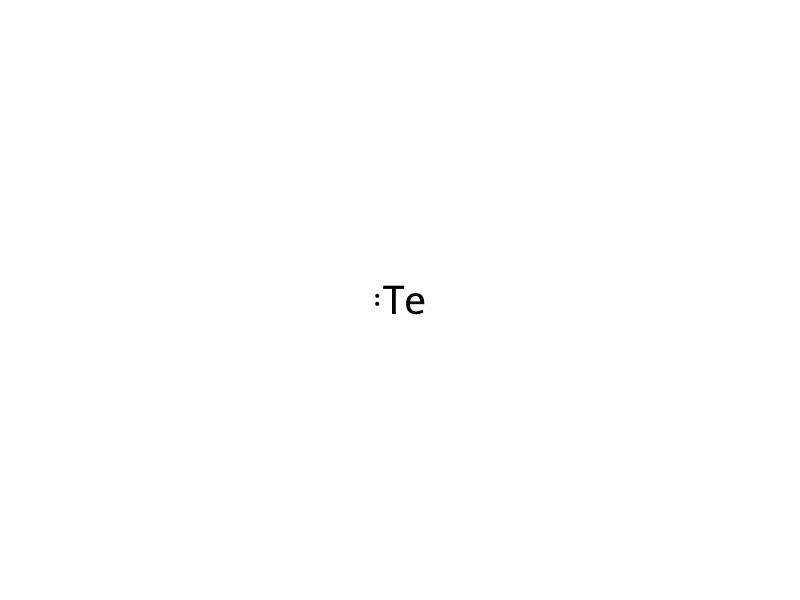
- 标准SMILES
[Te]- InChIKey
PORWMNRCUJJQNO-UHFFFAOYSA-N- 分子式
- Te
- 平均分子量
- 127.6 g/mol
- 单同位素质量
- 129.9062244
概述
Grayish-white, lustrous, brittle, crystalline solid; dark-gray to brown, amorphous powder with metallic characteristics. Used as a coloring agent in chinaware, porcelains, enamels, glass; producing black finish on silverware; semiconductor devices and research; manufacturing special alloys of marked electrical resistance. Improves mechanical properties of lead; powerful carbide stabilizer in cast iron, tellurium vapor in "daylight" lamps, vulcanization of rubber. Blasting caps. Semiconductor research. (EPA, 1998)
名称与标识
- 首选名称
- Tellurium
- IUPAC
- tellurium
- 中文名
- 碲
- 英文名
- Tellurium
- 分子式
- Te
- 分子量
- 127.6
名称与别名
TELLURIUM13494-80-9Tellurium elementTellurium, metallicTelloyTellurTellurium, elementalAurum paradoxumMetallum problematumTENCI-C60117NQA0O090ZJ
展开更多名称
碲碲丸碲片碲粉碲粒纯碲碲珠高纯碲碲颗粒单质碲TELLERIUMurium LTelluniumTellurStckeelluriumatom
DTXSID9032119TELLURIUM METALLICUMCHEBI:30452RefChem:389303DTXCID7012119236-813-4Tellurium AtomTellurium powder
数据库标识
- CAS
13494-80-9、7783-09-7- PubChem CID
- 6327182
- DTXSID
DTXSID9032119- ChEBI
CHEBI:30452- UNII
- 7F4735942K、NQA0O090ZJ
- EC Number
- 236-813-4
- Nikkaji
- J95.176E、J95.290G
性质
结构计算性质
- 极性表面积
- 0 Ų
- 氢键供体
- 0
- 氢键受体
- 0
- 可旋转键
- 0
- 重原子
- 1
- 形式电荷
- 0
- 复杂度
- 0
实验与物化性质
Chemical Classes
Metals -> Metalloid Compounds (Tellurium)
Flammable agents - 3rd degree
SpringerMaterials Propertiesphonon wavenumber
OdorOdorless.
Density
6.24 (EPA, 1998) - Denser than water; will sink
6.11-6.27
6.0-6.25 g/cm³
6.24
6.232 @25 °C
6.24
Viscosity1.8-1.95 cP
Color/Form
Grayish-white, lustrous, brittle, crystalline solid, hexagonal, rhombohedral structure
Dark-gray to brown, amorphous powder with metal characteristics
Solubility
Insoluble (NIOSH, 2024)
Insol in benzene, carbon disulfide
INSOL IN HOT & COLD WATER, HYDROCHLORIC ACID; SOL IN NITRIC ACID, AQ REGIA, POTASSIUM CYANIDE, POTASSIUM HYDROXIDE, SULFURIC ACID
Solubility in water: none
Insoluble
Boiling Point
1814 °F amorphous powder; 2534 °F crystalline solid (EPA, 1998)
989.9 °C
989.8 °C
1814 °F
988 °C @760 [mm Hg]
1814 °F
DecompositionWhen heated to decomposition it emits toxic fumes of /tellurium/.
Melting Point
842 °F (EPA, 1998)
449.8 °C
449.5 °C
842 °F
449.51 °C
842 °F
Vapor Pressure
1 mmHg at 968 °F (EPA, 1998)
Vapor pressure between 511 and 835 °C is given by equation logP(kPa)= 6.7249-(5960.2/K)
0 mmHg (approx)
0.75 [mm Hg] @502 °C
0 mmHg (approx)
Refractive IndexINDEX OF REFRACTION: 1.0025; SADTLER REFERENCE NUMBER: 5272 (IR, PRISM)
物理化学性质
- 熔点
- 450 °C · 450 °C (lit.)
- 沸点
- 990 °C · 990 °C (lit.)
- 密度
- 6.24 g/mL · 6.24 g/mL at 25 °C (lit.)
- 蒸气压
- 0 Pa · 0Pa at 25℃
- 储存条件
- Sealed in dry,Room Temperature
- 溶解度
- 2 O, · insoluble in H2O, benzene, CS2
- 形态
- shot
- 颜色
- Silver-white
- 比重
- 6.24 · 6.24
- Flame Color
- Pale green
- PH值
- 0.5 · 0.5 (20°C in H2O)
- 电阻率 (resistivity)
- 5.8 · 5.8-33 μΩ-cm, 20°C
- 电导率
- 10000 S/m · 10000 S/m
- 水溶解性
- 2 O, · insoluble H2O, benzene, CS2 [MER06]
- 热导率
- 3 W/ · 3 W/(m·K)
- 比热容
- 0.2 J/ · Cp(crystal): 0.2 J/(g·K); Cp(gas): 0.16 J/(g·K), at 25℃
- Merck
- 13 · 13,9201
- 暴露限值
- 0.1 mg/m3,as · ACGIH:TLV-TWA 0.1 mg/m3,as TeOSHA:PEL-TWA 0.1 mg/m3NIOSH:REL-TWA 0.1 mg/m3
- InChI
- 1S/Te
- InChIKey
- VTLHPSMQDDEFRU-UHFFFAOYSA-N
- SMILES
- [Te]
- Modulus of Elasticity
- 40 GPa · 40.0 GPa
- Shear Modulus
- 15.16 GPa · 15.16 GPa
- Poissons Ratio
- 0.33 · 0.33
- Hardness, Brinell
- 25 · 25
- CAS 数据库
- 13494 · 13494-80-9(CAS DataBase Reference)
- EPA化学物质信息
- Tellurium (13494-80-9)
化学性质
斜方晶系银白色结晶。 溶于硫酸、硝酸、王水、氰化钾、氢氧化钾;不溶于冷水和热水、二硫化碳。
安全与法规
GHS分类
GHS Classification
Danger
H360Df: May damage the unborn child; Suspected of damaging fertility [Danger Reproductive toxicity]
P203, P260, P263, P264, P270, P280, P318, P405, and P501 (click each P-code to see the statement)
This chemical does not meet GHS hazard criteria for 0.8% (4 of 527) of reports.
Danger
H301 (18.6%): Toxic if swallowed [Danger Acute toxicity, oral]
危害信息
Regulatory Information
Chemical: Tellurium
Hazard Traits - Reproductive Toxicity
Tellurium is listed on the EPA's Chemical Data Reporting (CDR) system. Manufacturers and importers of Tellurium are required to report information about their production and use of this chemical to the EPA under the Toxic Substances Control Act (TSCA). (40 eCFR Part 711)
Status: Active Update: 16-11-2022 https://echa.europa.eu/registration-dossier/-/registered-dossier/14525
Tellurium: Does not have an individual approval but may be used under an appropriate group standard
The New Jersey Worker and Community Right to Know Act requires public and private employers to provide information about hazardous substances at their workplaces. (N.J.S.A. 34:5A-1 et. seq.)
DOT LabelPoison
Fire Hazards
A finely divided suspension of elemental tellurium in air will explode. Burning tellurium produces toxic tellurium oxide gas. Avoid solid sodium, halogens, interhalogens, metals, hexalithium disilicide. Reacts with nitric acid; reacts with concentrated sulfuric acid forming a red solution. Dissolves in potassium hydroxide in the presence of air with formation of deep red solution; combines with halogens. Avoid antimony and chlorine trifluoride; chlorine trifluoride reacts vigorously with tellurium producing flame. Fluorine and tellurium react with incandescence. Lithium silicide attacks tellurium with incandescence. Reaction with zinc is accompanied by incandescence (same potential with cadmium, only hazard is less). A vigorous reaction results when liquid tellurium is poured over solid sodium. (EPA, 1998)
Excerpt from ERG Guide 151 [Substances - Toxic (Non-Combustible)]:
Combustible. Finely dispersed particles form explosive mixtures in air.
Fire Potential
FIRE HAZARD: MODERATE, IN FORM OF DUST WHEN EXPOSED TO HEAT OR FLAME OR BY CHEM REACTION WITH OXIDIZING AGENTS.
ELEMENTAL TELLURIUM WILL BURN SLOWLY IN AIR.
Health Hazards
Causes central nervous system depression. Moderate skin and eye irritant. Tellurium is capable of doing harm within the body by replacing the essential element sulfur. (EPA, 1998)
Excerpt from ERG Guide 151 [Substances - Toxic (Non-Combustible)]:
Hazards Summary
The TLV excludes the compound hydrogen telluride (H2Te). Garlic odor of the breath, urine, and sweat are signs of tellurium absorption. Foundry workers exposed to 0.01-0.1 mg/m3 with a peak of 0.74 mg/m3 complained of metallic taste, somnolence, and garlic odor. Signs of tellurium poisoning in experimental animals include pneumonitis, hemolytic anemia, hematuria, paralysis, convulsions, and coma. In 2 cases of human poisoning after instillation of 2 grams of sodium tellurite by ureteral catheter, the patients suffered cyanosis, stupor, and signs of liver injury and died 6 hours after the accident. There have not been any reports of serious occupational illnesses or deaths. [ACGIH] Causes damage to the nervous system, liver, kidneys, and heart in animal experiments; [Nordberg, p. 1217] In high-dose animal studies, tellurium produces birth defects (hydrocephalus). [Frazier] Tellurium is a hepatotoxic agent. [Zimmerman, p. 4] Tellurium is a skin and respiratory tract irritant. It can have effects on the CNS and liver. [ICSC] See Tellurium hexafluoride.
Reactive Group
Metals, Less Reactive
Metals, Less Reactive
Reactivity AlertsPyrophoric
OSHA StandardsPermissible Exposure Limit: Table Z-1 8-hr Time Weighted Avg: 0.1 mg/cu m. /Tellurium and compounds, as Te/
Reactivity Profile
TELLURIUM is attacked by chlorine fluoride with incandescence. When tellurium and potassium are warmed in an atmosphere of hydrogen, combination occurs with incandescence [Mellor 11:40. 1946-47]. Burning tellurium produces toxic tellurium oxide gas. Avoid solid sodium, halogens, interhalogens, metals, hexalithium disilicide. Reacts with nitric acid; reacts with concentrated sulfuric acid forming a red solution. Dissolves in potassium hydroxide in the presence of air with formation of deep red solution; combines with halogens. Avoid antimony and chlorine trifluoride; chlorine trifluoride reacts vigorously with tellurium producing flame. Fluorine and tellurium react with incandescence. Lithium silicide attacks tellurium with incandescence. Reaction with zinc is accompanied by incandescence (same potential with cadmium, only hazard is less). A vigorous reaction results when liquid tellurium is poured over solid sodium [EPA, 1998].
Mixtures of tellurium tetrabromide or tellurium tetrachloride with ammonia produces tellurium nitride complexes that are explosive upon heating. Tellurium trioxide is a powerful oxidant, which reacts violently when heated with a variety of metallic and non metallic materials. Noncombustible, substance itself does not burn but may decompose upon heating to produce corrosive and/or toxic fumes.
Chemical Dangers
Upon heating, toxic fumes are formed. Decomposes on heating. This produces toxic fumes. Reacts vigorously with halogens and interhalogens. This generates fire hazard. Reacts with zinc with incandescence. Lithium silicide attacks tellurium with incandescence.
Flammable LimitsCombustible Solid
安全与防护
Fire Fighting
Straight water streams will scatter molten tellurium oxide. Wear goggles, rubber gloves, and proper respirator with filter.
Excerpt from ERG Guide 151 [Substances - Toxic (Non-Combustible)]:
Use foam, carbon dioxide, dry powder.
First Aid Measures
Fresh air, rest. Artificial respiration may be needed. Refer for medical attention.
Remove contaminated clothes. Rinse and then wash skin with water and soap.
First rinse with plenty of water for several minutes (remove contact lenses if easily possible), then refer for medical attention.
Rinse mouth. Induce vomiting (ONLY IN CONSCIOUS PERSONS!). Refer for medical attention .
First Aid
Signs and Symptoms of Acute Tellurium Exposure: Signs and symptoms of acute exposure to tellurium may include drowsiness, malaise, lassitude, weakness, and dizziness. Gastrointestinal symptoms may include nausea, vomiting, anorexia, and constipation. A metallic taste, garlicky breath, and profuse sweating may be noted. Kidney damage, liver injury, and pulmonary effects may also occur. Dermal exposure may result in dermatitis (red, inflamed skin).
Excerpt from ERG Guide 151 [Substances - Toxic (Non-Combustible)]:
(General first aid procedures)
Safe StorageSeparated from halogens and interhalogens.
Cleanup Methods
1. VENTILATE AREA OF SPILL OR LEAK. 2. COLLECT SPILLED MATERIAL IN THE MOST CONVENIENT & SAFE MANNER & DEPOSIT IN SEALED CONTAINERS FOR RECLAMATION OR FOR DISPOSAL IN A SECURED SANITARY LANDFILL. LIQUIDS CONTAINING TELLURIUM & CMPD SHOULD BE ABSORBED IN VERMICULITE, DRY SAND, EARTH, OR A SIMILAR MATERIAL.
Nonfire Spill Response
Caution : When heated to decomposition, toxic fumes of tellurium oxide will be emitted. Avoid sources of extreme heat.
Excerpt from ERG Guide 151 [Substances - Toxic (Non-Combustible)]:
Spillage Disposal
Personal protection: particulate filter respirator adapted to the airborne concentration of the substance. Sweep spilled substance into covered sealable containers. Carefully collect remainder. Then store and dispose of according to local regulations.
Preventive Measures
SRP: The scientific literature for the use of contact lenses in industry is conflicting. The benefit or detrimental effects of wearing contact lenses depend not only upon the substance, but also on factors including the form of the substance, characteristics and duration of the exposure, the uses of other eye protection equipment, and the hygiene of the lenses. However, there may be individual substances whose irritating or corrosive properties are such that the wearing of contact lenses would be harmful to the eye. In those specific cases, contact lenses should not be worn. In any event, the usual eye protection equipment should be worn even when contact lenses are in place.
SRP: Contaminated protective clothing should be segregated in such a manner so that there is no direct personal contact by personnel who handle, dispose, or clean the clothing. Quality assurance to ascertain the completeness of the cleaning procedures should be implemented before the decontaminated protective clothing is returned for reuse by the workers. Contaminated clothing should not be taken home at end of shift, but should remain at employee's place of work for cleaning.
Isolation and EvacuationExcerpt from ERG Guide 151 [Substances - Toxic (Non-Combustible)]:
Eye PreventionWear safety goggles or eye protection in combination with breathing protection if powder.
Fire PreventionNO open flames. Closed system, dust explosion-proof electrical equipment and lighting. Prevent deposition of dust.
Inhalation RiskEvaporation at 20 °C is negligible; a harmful concentration of airborne particles can, however, be reached quickly when dispersed.
毒理信息
Interactions
Selenium is known to form complexes with heavy metals in the blood and thus increase the retention time of the metals in several organs, especially in the reticulo-endothelial system. Selenium may similarly cause retention of mercury in the lung after metallic mercury (Hg0) inhalation. This study, comparing the effects of tellurium with those of selenium (both in group '6b' of the periodical system), showed that Te(IV) was as effective as Se(IV) and Se(VI) (all given in a dose of 10 mumol/kg body wt.) in retaining inhaled 203Hg0 (1.5 mumol/kg body wt.) in the lung (presumably 203Hg2+ after oxidation). Te(VI) had to be given in a dose of 100 mumol/kg body wt to produce the same effect. As in the lung, also in other organs tellurium caused a dose-dependent increase in mercury retention. At a dose level of 10 mumol Te(IV) per kg body wt. the mercury retention ratios (treated/control) were 140 for the lung and 8.6 for the whole body. The corresponding figures for Te(VI) (10, 30 and 100 mumol/kg body wt.) were 10, 73 and 120 and 3.7, 3.9 and 4.3, respectively. Retention of i.v. injected 203HgCl2 was increased by pre-administration of tellurium, again in a dose-dependent manner and Te(IV) being 3-10 times more effective than Te(VI). The kidney and the spleen were the dominant organs, as is the case after Se pretreatment. Anions of other elements, arsenite, arsenate, chromate, molybdate and wolframate (30 mumol/kg body wt.), did not affect the retention of 203Hg in lung or any other organ, or in the whole body after inhalation of 203Hg0. It is suggested that Te(IV) may easily be reduced to Te2- (in analogy with selenium) which may complex with Hg2+. The liability for Te(VI) to be reduced to Te2- appears to be approx. 10 times lower.
Target OrgansSkin, central nervous system, blood
Adverse EffectsNeurotoxin - Other CNS neurotoxin
Exposure Routes
The substance can be absorbed into the body by inhalation of its aerosol.
inhalation, ingestion, skin and/or eye contact
Signs and Symptoms
Drowsiness. Metallic taste. Headache. Garlic odour. Nausea.
Redness. Pain.
Abdominal pain. Constipation. Vomiting. Further see Inhalation.
Garlic breath, sweating; dry mouth, metallic taste; drowsiness; anorexia, nausea, no sweating; dermatitis; In Animals: central nervous system, red blood cell changes
Medical SurveillanceIf the avg urinary tellurium concn for a whole shift of workers exceeds 0.05 mg/l, the working conditions for the shift should be investigated.
Human Toxicity Excerpts
... EXPOSURE TO TELLURIUM FUME OCCURRED ... POURING ... TELLURIUM-COPPER ALLOY ... ONLY ... SYMPTOM ... GARLIC ODOR. TELLURIUM WAS PRESENT IN URINE IN AMT FROM 0.008 TO 0.106 MG/L. SKIN LESIONS ... DRY, SCALY ITCHING PATCHES & LOSS OF SWEAT FUNCTION ... .
Tellurium is one of the rarest elements on earth. Intoxications are rare & almost exclusively occupationally exposed workers are affected. Only a few cases of non- occupational poisoning have been reported so far. Severe poisoning results in respiratory depression & circulatory collapse. After occupational exposure main symptoms & signs include loss of appetite, dryness of the mouth, suppression of sweating, a metallic taste in the mouth, & most notable, a sharp garlic odor of the breath, sweat & urine.
THE GARLIC ODOR OF SWEAT WAS A GOOD INDICATOR OF THE ABSORPTION OF TELLURIUM.
Exposure of iron foundry workers to concns of 0.01 & 0.1 mg Te/cu m for 22 months produced mild GI distress, the characteristic garlic odor, dryness of the mouth, metallic taste, & somnolence.
For more Human Toxicity Excerpts (Complete) data for TELLURIUM, ELEMENTAL (7 total), please visit the HSDB record page.
Non-Human Toxicity Excerpts
... IN CATS, CHRONIC POISONING ... INDUCED BY INJECTION OF OILY SUSPENSION OF METALLIC TELLURIUM SC OR IM, & ... FOUND AFTER 3 MO TO CAUSE DEGENERATIVE CHANGES IN GANGLION CELLS OF RETINA & IN BRAIN ... RETINAL GANGLION CELLS ... DEVELOPED HONEYCOMBED VACUOLAR DEGENERATION ... .
... POISONING OF MONKEYS ... PRODUCED ENCEPHALOPATHY & CHANGES IN RETINAL GANGLION CELLS, OPTIC NERVES, OPTIC TRACTS, & IN LATERAL GENICULATE BODIES. NO DESCRIPTION ... PUBLISHED ON EFFECTS ON VISION OR ON RELATED CLINICAL OBSERVATIONS.
BRAINS OF RATS TREATED ORALLY WITH 0.2 G TELLURIUM DAY FOR 2-6 MO SHOWED INCR IN LIPOFUSCIN PIGMENTS IN NEURONAL PARENCHYMA.
RATS FED 0.2 G/DAY TELLURIUM SHOWED BLACK BRAIN CAUSED BY DARK TELLURIUM PARTICLES LOCALIZED IN LIPOFUSCIN GRANULES IN NEURON CYTOPLASM THROUGHOUT BRAIN, PROBABLY DUE TO EFFECTS OF TELLURIUM ON BRAIN MITOCHONDRIA.
For more Non-Human Toxicity Excerpts (Complete) data for TELLURIUM, ELEMENTAL (35 total), please visit the HSDB record page.
Antidote and Emergency Treatment
Basic treatment: Establish a patent airway. Suction if necessary. Watch for signs of respiratory insufficiency and assist ventilations if needed. Administer oxygen by nonrebreather mask at 10 to 15 L/min. Monitor for pulmonary edema and treat if necessary ... . Monitor for shock and treat if necessary ... . Anticipate seizures and treat if necessary ... . For eye contamination, flush eyes immediately with water. Irrigate each eye continuously with normal saline during transport ... . Do not use emetics. For ingestion, rinse mouth and administer 5 ml/kg up to 200 ml of water for dilution if the patient can swallow, has a strong gag reflex, and does not drool ... . Cover skin burns with dry sterile dressings after decontamination ... . /Poison A and B/
Advanced treatment: Consider orotracheal or nasotracheal intubation for airway control in the patient who is unconscious, has severe pulmonary edema, or is in respiratory arrest. Positive pressure ventilation techniques with a bag valve mask device may be beneficial. Monitor cardiac rhythm and treat arrhythmias as necessary ... . Start an IV with D5W /SRP: "To keep open", minimal flow rate/. Use lactated Ringer's if signs of hypovolemia are present. Watch for signs of fluid overload. Consider drug therapy for pulmonary edema ... . For hypotension with signs of hypovolemia, administer fluid cautiously. Watch for signs of fluid overload ... . Treat seizures with diazepam (Valium) ... . Use proparacaine hydrochloride to assist eye irrigation ... . /Poison A and B/
... BAL VALUELESS IN THERAPY OF EXPOSURE TO TELLURIUM ... IT ENHANCES ITS TOXICITY, POSSIBLY BY FORMATION OF DIMERCAPROL-TELLURIUM COMPLEX.
THERE IS PRESENTLY NO ANTIDOTE FOR TELLURIUM POISONING.
For more Antidote and Emergency Treatment (Complete) data for TELLURIUM, ELEMENTAL (6 total), please visit the HSDB record page.
Toxicity DataLC50 (rat) > 2,420 mg/m3/4h
Non-Human Toxicity Values
LD50 Rat oral 83 mg/kg
LD50 Rabbit oral 67 mg/kg
LD50 Guinea pig oral 45 mg/kg
安全数据
- wgk
- 3
- tsca
- TSCA listed
- 毒性
- A member element of group IVa in the Periodic Table with both metallic and non-metallic properties. Tellurium compounds of biological interest include the elemental form, as well as compounds with valences of 12 (telluride), 14 (tellurite), and 16 (tellurate). Commercial applications of tellurium include its use as a coloring agent and as an alloy with other metals. Industrial hazards generally involve the volatile forms including tellurium dioxide and hydrogen telluride rather than the less toxic elemental form. Exposure to potassium tellurite may also occur; this compound is known to cause hemolysis of erythrocytes, probably via its reduction product, telluride. Other non-nervous system effects of exposure to tellurium compounds include weight loss, blue/ black discoloration of skin, and a characteristic garlic breath odor. Animal models have clearly implicated tellurium in induction of specific neuropathological findings. These include its action as a teratogen in the induction of communicating hydrocephalus (treated rats give rise to affected offspring), lipofuscinosis, and peripheral neuropathy.
- RTECS号
- WY2625000
- 包装类别
- III
- 危险等级
- 8
- 存储类别
- 6.1D - Non-combustible acute toxic Cat.3toxic hazardous materials or hazardous materials causing chronic effects
- 安全说明
- 45-28A
- 海关编码
- 28045000
- 危险品标志
- T
- 危险性类别
- Acute Tox. 4 InhalationAquatic Chronic 4Lact.Repr. 1BSkin Sens. 1B
- 危险类别码
- 25
- 毒害物质数据
- 13494-80-9(Hazardous Substances Data)
- 职业暴露等级
- D
- 职业暴露限值
- TWA: 0.1 mg/m3 [*Note: The REL also applies to other tellurium compounds (as Te) except Tellurium hexafluoride and Bismuth telluride.]
- 危险品运输编号
- UN 3288 6.1/PG 3
- 立即威胁生命和健康浓度
- 25 mg Te/m3
毒性防护
毒性高毒。粉尘有毒,吸人粉尘能造成口干,放出金属味,食欲不振,流涎不止、恶心、呕吐、呼吸带蒜味等症状。应使吸入粉尘的患者脱离污染区,安置休息并保暖。眼睛受刺激用水冲洗,并就医诊治,皮肤接触先用水冲洗,再用肥皂彻底洗涤。误服立即漱口,速送医院救治。
急性毒性腹腔-大鼠LDL0: 200毫克/公斤; 口服- 豚鼠 LD50: 45 毫克/ 公斤
职业标准TLV-TWA 0.1 毫克(碲)/ 立方米; STEL 0.3 毫克(碲)/立方米
包装储运
爆炸物危险特性碲粉与空气混合可爆
可燃性危险特性高热、明火碲粉可燃产生有毒碲氧化物烟雾
储运特性库房通风低温干燥; 与氧化剂、食品添加剂分开存放
灭火剂干粉、砂土
化学与工业
药理信息
BionecessityThere is no evidence that tellurium is essential either for man or animals. /Tellurium/
Mechanism of Action
The efficacy of garlic as a lipid-lowering agent is being increasingly recognized, but the biochemical mechanisms underlying this action are currently unknown. It is proposed that organic tellurium compounds, which are found in high concentration in fresh garlic buds, may contribute to this action by inhibiting squalene epoxidase, the penultimate enzyme in the synthetic pathway of cholesterol. Weanling rats fed a diet rich in tellurium develop a demyelinating polyneuropathy due to inhibition of this enzyme in peripheral nerves. Chronic exposure to small amounts of tellurium found in garlic might reduce endogenous cholesterol production through inhibition of hepatic squalene epoxidase and so reduce cholesterol levels. Tellurium may also contribute to the characteristic odor of garlic since the most obvious clinical sign of tellurium poisoning is a garlic-like odor.
Inclusion of 1.1% tellurium in the diet of developing rats causes a highly synchronous primary demyelination of peripheral nerves, which is followed closely by a period of rapid remyelination. The demyelination is related to the inhibition of squalene epoxidase activity, which results in a block in cholesterol synthesis and accumulation of squalene. We now report that the demyelination resulting from this limiting of the supply of an intrinsic component of myelin (cholesterol) leads to repression of the expression of mRNA for myelin-specific proteins. Tellurium exposure resulted in an increase in total RNA (largely rRNA) in sciatic nerve, which could not be accounted for by cellular proliferation; these increased levels of rRNA may be a reactive response of Schwann cells to toxic insult and may relate to the higher levels of protein synthesis required during remyelination. In contrast, steady-state levels of mRNA, determined by Northern blot analysis, for P0 and myelin basic protein were markedly decreased (levels after 5 days of tellurium exposure were only 10-15% of control levels as a fraction of total RNA and 25-35% of control levels when the increased levels of total RNA were taken into account). Message levels increased during the subsequent period of remyelination and reached near-normal levels 30 days after beginning tellurium exposure. Although message levels for the myelin-associated glycoprotein showed a similar temporal pattern, levels did not decrease as greatly and subsequently increased sooner than did levels for P0 and myelin basic protein. The coordinate alterations in message levels for myelin proteins indicate that Schwann cells can down-regulate and then up-regulate the synthesis of myelin in response to alterations in the supply of membrane components.
Biological Half-Life
Rats in blood: 9 days; Rats in kidneys: 23 days; In bone: 600 days; [Nordberg, p. 815]
... THE WHOLE BODY RETENTION MODEL FOR MAN ASSUMES BIOLOGICAL HALF-TIME OF ABOUT 3 WK.
Metabolism/MetabolitesA very small amt of tellurium is exhaled (about 0.1%) presumably as dimethyltelluride ... in animals and man after exposure to elemental tellurium and tellurium(IV) cmpd. /Elemental tellurium & tellurium(IV) compounds/
Absorption, Distribution and Excretion
In the nervous system, tellurium accumulates in the gray matter, not the white matter, when injected intracerebrally. The metal is found in phagocytic & ependymal cells & in lysosomes as fine needles.
Elemental tellurium is poorly absorbed. ... Soluble tellurium can be absorbed through the skin, although ingestion or inhalation of fumes presents the greatest industrial hazard. A metallic taste in the mouth may result from excessive absorption. The characteristic sign of absorption is the garlic-like odor ... in the breath & sweat.
Urinary, fecal, & biliary excretion also occur. Urinary excretion is probably more important than respiratory excretion in eliminating absorbed tellurium.
EXCRETION BY BREATH ... IS NOT ... IMPORTANT CHANNEL. ... EXCRETION IN SALIVA ... SUGGESTED ... AS EXPLANATION OF METALLIC TASTE IN MOUTH ... .
For more Absorption, Distribution and Excretion (Complete) data for TELLURIUM, ELEMENTAL (9 total), please visit the HSDB record page.
用途与制造
Uses
Used in semiconductor devices, storage batteries, tellurium vapor lamps, alloys (lead, copper, tin, steel, and iron), blasting caps, isotopes for medical imaging; Also used as a pigment in enamels and glass, to produce a black finish on silverware, and to vulcanize rubber; [HSDB] Bismuth telluride is used in thermoelectric devices. Organic tellurium compounds are used in bactericides, pharmaceuticals, photographic development, etching solutions, and water treatment chemicals. Tellurium is present in garlic, milk, nuts, and fish. In the body, tellurium is converted to dimethyl telluride, which gives a garlic odor to the breath and sweat. [Rom, p. 1094]
Steel Producing [Category: Industry]
Coloring agent in chinaware, porcelains, enamels, glass; producing black finish on silverware
Semiconductor devices and research; mfr special alloys of marked electrical resistance
Improve the crop strength of tin and the mechanical properties of lead.
As a catalyst
Impurities
Commercial grade: copper, 0.01 wt%; lead, 0.003 wt%; selenium, 0.01 wt%; silica, 0.04 wt%; iron, 0.01 wt%
High purity grade: other impurities, 10 ppm.
U.S. Production
2023: 250,000 - <550,000 lb
(1975) 150-200 tons (approx)
Consumption Patterns
The largest use for tellurium was as an additive to free- machining steel, about one-half of the market. Chemicals and catalyst usage made up about 25% of the market. Additives to nonferrous alloys accounted for slightly more than 10% of total use, and photoreceptor and thermoelectric applications accounted for slightly less than 10%. Other uses were about 5%.
Consumer UsesSemiconductor and photovoltaic agent
Industry UsesSemiconductor and photovoltaic agent
Methods of Manufacturing
Most commercial tellurium is recovered from electrolytic copper refinery slimes. The tellurium content of the slimes can range from trace up to 10%. Typically, the removal of copper in slimes is accomplished by the autoclaving of slimes at elevated temperatures with sulfuric acid and oxygen. Using temperatures of 120 °C and oxygen pressures of 345 kPa (50 psig) allows almost complete copper extraction and tellurium extractions ranging from 50-80%. Tellurium is recovered from solution by cementation with copper at elevated (>90 °C) temperature. Copper telluride is leached with caustic soda and air to produce a sodium tellurite solution. This solution with excess free caustic soda is then electrolyzed in a cell using stainless steel anodes to produce tellurium metal.
To produce commercial (99.5%) tellurium metal, tellurium dioxide is dissolved in hydrochloric acid. The tellurium solution is saturated with sulfur dioxide gas to yield commercial tellurium powder, which is washed, dried, and melted.
TELLURIUM ... EXTRACTED CHIEFLY FROM RESIDUES OF BISMUTH ORES ... DISSOLVED IN HYDROGEN CHLORIDE, TELLURIUM PRECIPITATES BY ADDING SODIUM SULFITE ... PURIFIED BY BOILING WITH SODIUM SULFIDE, POWDERED SULFUR & SODIUM SULFITE.
Reduction of telluric oxide with sulfur dioxide; by dissolving the oxide in a caustic soda solution and plating out the metal.
Formulations/Preparations
Powder, sticks, slabs, and tablets, 99.5% pure, crystals up to 99.999% pure.
Commercial grade: 99.7 wt% tellurium; High purity grade: 99.999 wt% tellurium
Commercial grade: Tablets, slabs, sticks, powder; high purity: cast cakes, chunks
General Manufacturing Information
Electrical Equipment, Appliance, and Component Manufacturing
Tellurium: ACTIVE
DISCOVERED BY VON REICHENSTEIN IN 1782; NAMED BY KLAPROTH IN 1798.
A tellurium containing catalyst from an industrial plant caused a serious odor problem during biological treatment of wastewater from about 35 plants producing organic and inorganic chemicals in the Netherlands. Odor problems, not noticeable during the first years of wastewater plant operation, developed on the skin of the operators and at a distance of 0.5 to 1 km from the plant. It was determined that the odor producing organic tellurium compound was produced under anoxic conditions in the denitrification step. Faint odor was detected with addition of as little as 0.01 mg/l of tellurium tetrachloride. This odor was apparent earlier under anoxic conditions than under aerobic conditions. Strong odor was produced under anoxic conditions after 20 hr at concentrations of 0.02, 0.05, and 0.10 mg/l. Under aerobic conditions the higher concentrations produced faint odor except for one trial. To avoid odor problems a process was developed to reduce the tellurium content of the wastewater to 5 to 10% of the usual values before leaving the plant of origin.
应用领域
简介碲是1782年赖兴施泰因在含金的矿石中发现的L1 J,也有说法是1798年M.H.克拉普罗兹在一种白色金属中首先发现了碲。碲及硒、铼等一般被称作“稀有元素”、“分散元素”或“稀散金属”。 它在地壳中平均丰度值很低(6×10⁻⁵),碲与镉、锗、镓、硒、铟、铊、钪、铼等均属分散元素。在自然界,碲矿物除了自然碲外,主要是与Au、Ag和铂族元素以及Pb、Bi、Cu、Fe、Zn、Ni等金属元素形成碲化物、碲硫(硒)化物以及碲的氧化物和含氧盐等矿物种类L2 J。
应用稀散元素碲被誉为“现代工业、国防与尖端技术的维生素,创造人间奇迹的桥梁”,“是当代高技术新材料的支撑材料”。这是因为随着宇航、原子能、电子工业等领域对包括碲在内的稀散金属的需求与日俱增,使得碲已经成为电子计算机、通讯及宇航开发、能源、医药卫生所需新材料的支撑材料。
用途供半导体器件、合金、化工原料及铸铁、橡胶、玻璃等工业作添加剂用。
用途用以制备碲化合物。并用作半导体研究材料。
用途用于碲化合物的制备,还用作催化剂
用途碲加到钢中,可增加钢得延展性;铸铁中的痕量碲可使铸件表面坚硬、耐磨;碲还用作电池的极板印刷铅字,以及蓝、棕、红色玻璃的着色剂。
用途用作陶瓷与玻璃的着色剂、橡胶的硫化剂、石油裂化的催化剂等,也用于制癸、合金,是极有前途的半导体材料 用于碲化合物的制备,还用作催化剂
制备方法
生产方法以碲粉为原料,用多硫化钠抽提精制而得,制得高纯碲纯度为99.999%。
生产方法将铜电解过程所得含碲阳极泥焙烧物用碱处理,制成粗亚碲酸碱溶液(PH>10.8),加入硫化碱,使铅、铜、银、铁等变成硫化物而沉淀分离。滤液用盐酸中和则沉淀出二氧化碲。过滤。把二氧化碲溶于6 mol/L盐酸中(碲的浓度为200 g/L)并加热至90℃,在每升溶液中加入13g盐酸羟胺,将杂质硒沉淀过滤分离除去,将用水和稀硫酸洗涤过的二氧化硫气体通入上述滤液中,使碲沉淀,经过滤、水洗、干燥得到碲,再经多硫化钠抽提法提纯,制得碲成品。
上下游产品信息
上游原料
下游产品
试剂价格
- 045108 · 1pc
- 碲 锭/块, ≈38mm (1.5in) 直径 x 6mm (0.24in) 厚Tellurium ingot/button, ≈38mm (1.5in) dia x 6mm (0.24in) thick, 99.9% (metals basis) — 1293元
- 043960 · 250g
- 碲粉, -18+60 目, Puratronic®, 99.999% (metals basis)Tellurium powder, -18+60 mesh, Puratronic™, 99.999% (metals basis), Thermo Scientific Chemicals — 9851元
供应商50 家
国药集团化学试剂有限公司86-21-63210123 · [email protected]
北京华美互利生物化工010-56205725 · [email protected]
郑州阿尔法化工有限公司+86-18530059196 · [email protected]
上海阿拉丁生化科技股份有限公司400-6206333 13167063860 · [email protected]
湖南韵邦生物科技股份有限公司85561037 15386497078 · [email protected]
安徽旺山旺水特种气体有限公司15906197626 · [email protected]
天津市光复科技发展有限公司022-85689490 13132141716 · [email protected]
武汉楚江浩宇化工科技发展有限公司027-85881289; 15871235046 · [email protected]
宁波化工原料有限公司13306607903;13306607903 · [email protected]
湖南省华中特种气体有限公司0734-8755555 15674722888 · [email protected]
山东中图化工有限公司17864755731 · [email protected]
毕佳索(上海毕得医药科技股份有限公司)400-6005915 · [email protected]
四川高纯材料科技有限公司[email protected]
上海迈瑞尔生化科技有限公司4006356688 18621169109 · [email protected]
阿法埃莎(中国)化学有限公司400-6106006 · [email protected]
安耐吉化学&3A(安徽泽升科技股份有限公司)400-0056266 · [email protected]
上海景颜化工科技有限公司13817811078 · [email protected]
山东西亚化学有限公司13355009207 13355009207 · [email protected]
四川库利南科技有限公司400-1166-196 18981987031 · [email protected]
天津希恩思生化科技有限公司400 638 7771 · [email protected]
南京化学试剂股份有限公司025-58369808 17895012682 · [email protected]
斯百全化学(上海)有限公司021-021-021-67601398-809-809-809 15221380277 · [email protected]
艾科试剂4008-755-333 18080918076 · [email protected]
赛默飞世尔科技(中国)有限公司800-810-5118 · [email protected]
北京伊诺凯科技有限公司400-810-7969 010-59572699 · [email protected]
上海健超生物科技有限公司150-2103-5486 18017383231 · [email protected]
上海将来实业股份有限公司400-0066400 13621662912 · [email protected]
上海将来实业股份有限公司021-61552785 · [email protected]
HBCChem, Inc.+1-510-219-6317 · [email protected]
成都零六生物科技有限公司400-1166-196 13458535857 · [email protected]
上海德榜化工有限公司021-61531158 · [email protected]
上海麦克林生化科技股份有限公司15221275939 15221275939 · [email protected]
杭州杰恒化工有限公司0571-87396432 · [email protected]
江苏艾康生物医药研发有限公司025-66028182 17714375163 · [email protected]
上海兴鲁化工科技有限公司02120970332 · [email protected]
成都润泽本土化工有限公司13096311329 028-88469284 616445927 · [email protected]
池州凯隆进出口贸易有限公司[email protected]
Sigma-Aldrich西格玛奥德里奇(上海)贸易有限公司021-61415566 800-8193336 · [email protected]
九鼎化学(上海)科技有限公司4009209199 · [email protected]
杭州鼎燕化工有限公司0571-87157530-8003 18267553885 · [email protected]
上海卜微应用材料技术有限公司021-64112762 18930491979
厦门志信化学有限公司+86-5922680277 +86-13806087780 · [email protected]
四川高纯材料科技有限公司18180503237 · [email protected]
上海玻尔化学试剂有限公司19102157732 · [email protected]
Alfa Chemistry+1-5166625404 · [email protected]
成都润泽本土化工有限公司028-88469284 18000562381 · [email protected]
陕西缔都医药化工有限公司+86-29-81139210 +86-17392587031 · [email protected]
北京华威锐科化工科技有限公司89508211 18501085097 · [email protected]
艾万拓威达优尔国际贸易(上海)有限公司400-821-8006 · [email protected]
上海西陇生化科技有限公司021-52907766-8042
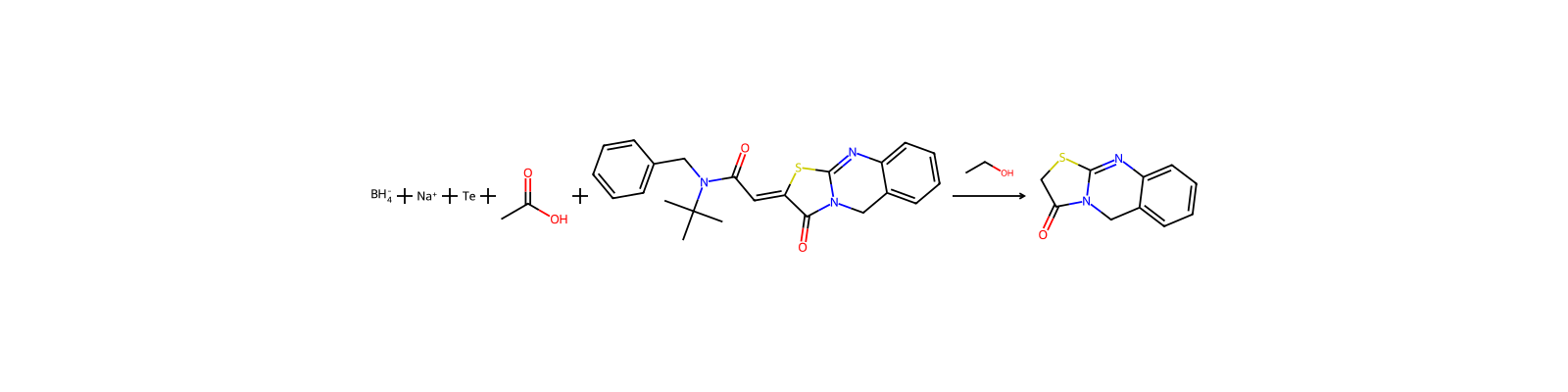
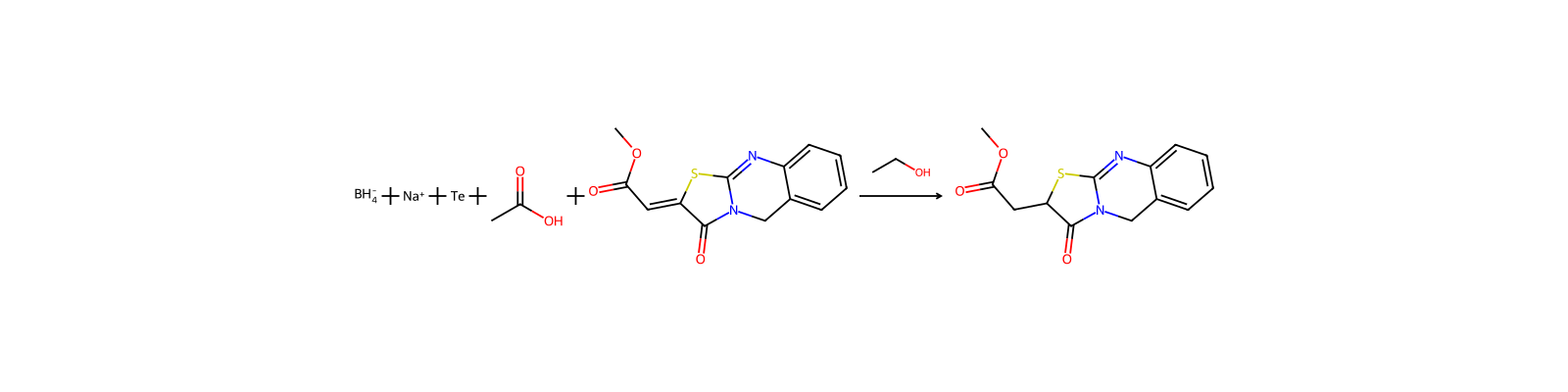
相关反应
12 条

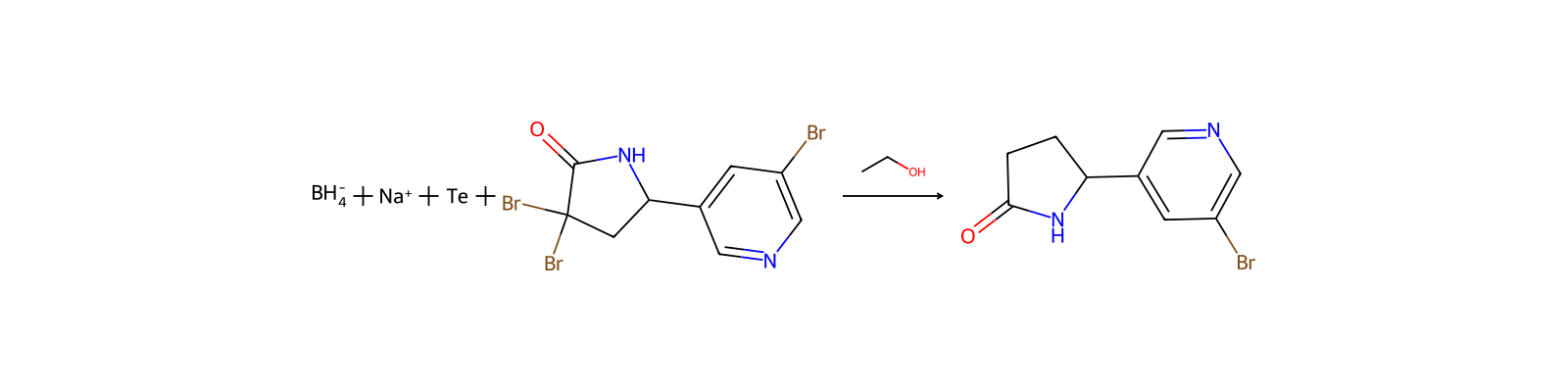
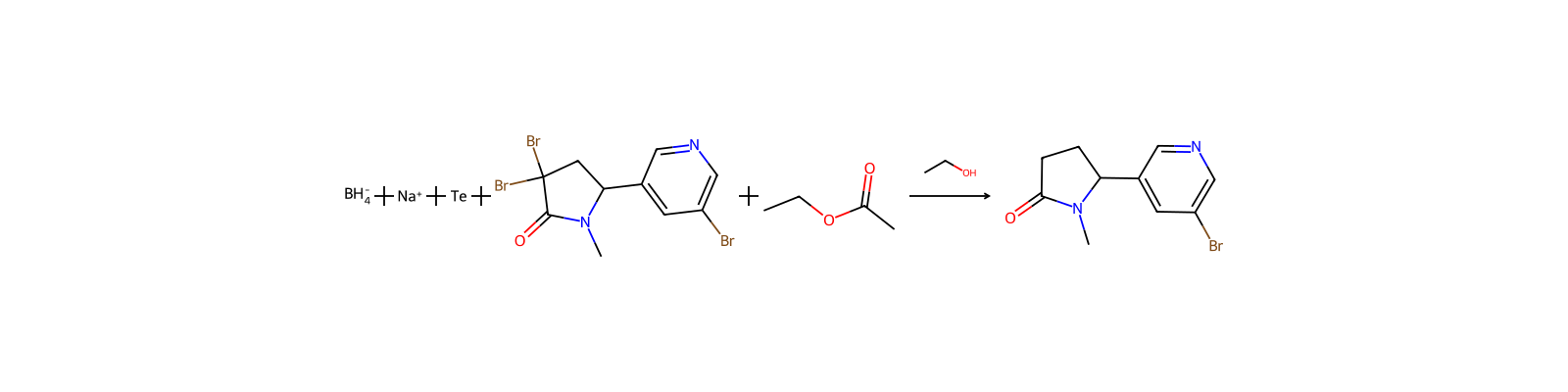


关联笔记
加载中…