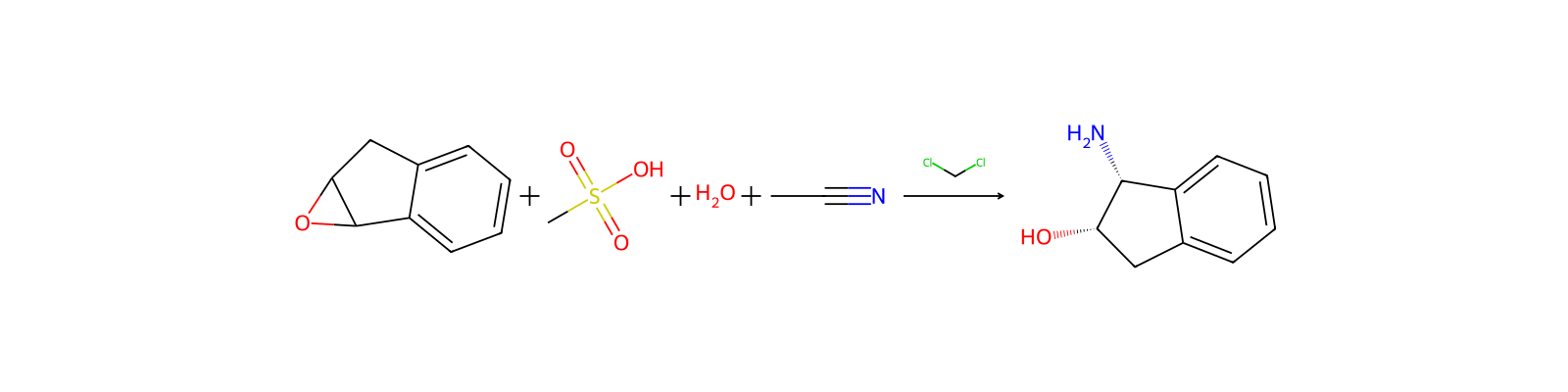
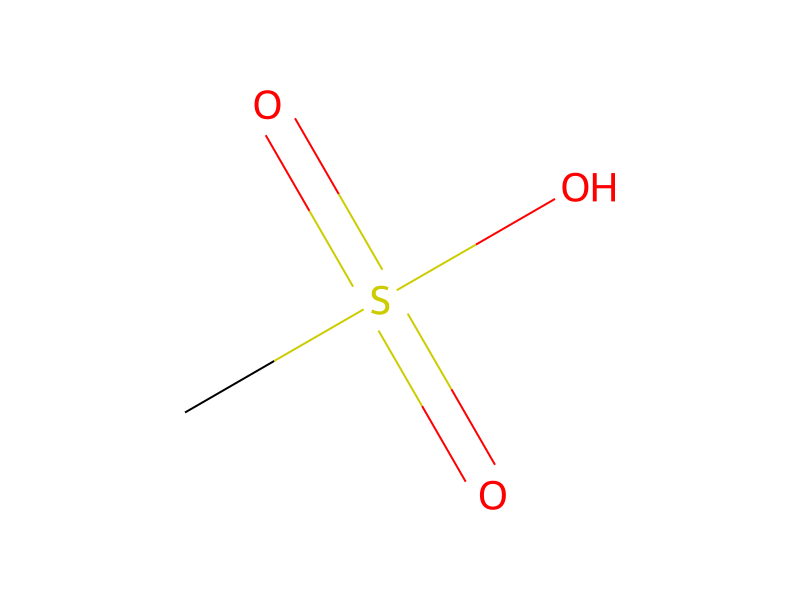
基本信息
- 标准SMILES
CS(=O)(=O)O- InChIKey
AFVFQIVMOAPDHO-UHFFFAOYSA-N- 分子式
- CH4O3S
- 平均分子量
- 96.11 g/mol
- 单同位素质量
- 95.98811499
概述
Methanesulfonic acid is an alkanesulfonic acid in which the alkyl group directly linked to the sulfo functionality is methyl. It has a role as an Escherichia coli metabolite. It is an alkanesulfonic acid and a one-carbon compound. It is a conjugate acid of a methanesulfonate.
名称与标识
- 首选名称
- Methanesulfonic Acid
- IUPAC
- methanesulfonic acid
- 中文名
- 甲基磺酸
- 英文名
- Methanesulfonic acid
- 分子式
- CH4O3S
- 分子量
- 96.11
名称与别名
METHANESULFONIC ACID75-75-2Methylsulfonic acidMethanesulphonic acidKyselina methansulfonovaDTXSID4026422NSC-371812EH9M7279J1.465FDTXCID806422CHEBI:27376NSC3718
展开更多名称
甲磺酸甲烷磺酸烷基磺酸甲磺甲基黄酸基磺酸甲基磺酸甲烷硫酸甲基磺酸厂家甲基磺酸70MSAMeSO3HMesic acidacidemethanesulfoniqueMETHANE SULFONIC ACID 70%Methylsulphonicacid
RefChem:6013200-898-6MesylateMesylic acidSulfomethaneMsOHMethansulfonsaeureCH4O3S
数据库标识
- CAS
75-75-2- PubChem CID
- 6395
- DTXSID
DTXSID4026422- ChEMBL
CHEMBL3039600- ChEBI
CHEBI:27376- UNII
- 12EH9M7279
- EC Number
- 200-898-6
- Nikkaji
- J1.465F
性质
结构计算性质
- XLogP
- -0.9
- 极性表面积
- 62.8 Ų
- 氢键供体
- 1
- 氢键受体
- 3
- 可旋转键
- 0
- 重原子
- 5
- 形式电荷
- 0
- 复杂度
- 92.6
实验与物化性质
Chemical Classes
Other Classes -> Sulfonic Acids, Alkyl
Corrosives
Ionic Liquids
Density
1.4812 g/cu cm at 18 °C
1.4812 @ 18°C
Color/Form
Solid
Liquid at room temperature
Solubility
Solubility at 26-28 °C in wt %: hexane, 0; benzene, 1.5; methylcyclopentane, 0; toluene, 0.38; o-chlorotoluene, 0.23; ethyl disulfide, 0.47
Soluble in alcohol, ether
Soluble in water
In water, 1X10+6 mg/L at 20 °C /Miscible/
CorrosivityCorrosive to iron, steel, brass, copper, lead
Flash Point
110 °C
189 °C closed cup
Boiling Point167 °C at 10 mm Hg
DecompositionHazardous decomposition products formed under fire conditions: Carbon oxides, Sulfur oxides
Melting Point
20 °C
20 °C
Vapor Pressure
0.000428 [mmHg]
4.28X10⁻⁴ mm Hg at 25 °C
Surface Tension5.0584X10-2 N/m at melting point
Refractive IndexIndex of refraction: 1.4317 at 18 °C
物理化学性质
- 熔点
- 17 · 17-19 °C (lit.)
- 沸点
- 167 °C/10 · 167 °C/10 mmHg (lit.)
- 密度
- 1.475 · 1.475-1.485 g/mL at 20 °C 1.481 g/mL at 25 °C (lit.)
- 蒸气密度
- 3.3 · 3.3 (vs air)
- 蒸气压
- 1 mm · 1 mm Hg ( 20 °C)
- 折射率
- 20 · n20/D 1.429(lit.)
- 闪点
- 230 °F · >230 °F
- 储存条件
- 2 · 2-8°C
- 溶解度
- 1 · water: soluble1,000 g/L at 20°C
- 形态
- Solution
- 酸度系数(pKa)
- -2.6 · -2.6(at 25℃)
- 颜色
- brown
- 比重
- 1.48 · 1.48 (18/4℃)
- 生物来源
- synthetic
- 水溶解性
- Miscible with water. Slightly miscible with benzene and toluene. Immiscible with paraffins.
- 最大波长(λmax)
- 240 · λ: 240-320 nm Amax: <0.4
- 敏感性
- Light Sensitive & Hygroscopic
- Merck
- 14 · 14,5954
- BRN
- 1446024 · 1446024
- Henry's Law Constant
- 7.3 · 7.3×103 mol/(m3Pa) at 25℃, Wang et al. (2017)
- 稳定性
- Stable. Moisture sensitive. Incompatible with amines, bases, water, common metals. Releases a substantial amount of heat when diluted with water (add acid to water with care if diluting).
- InChI
- 1S/CH4O3S/c1-5(2,3)4/h1H3,(H,2,3,4)
- InChIKey
- AFVFQIVMOAPDHO-UHFFFAOYSA-N
- SMILES
- O=S(O)(C)=O
- CAS 数据库
- 75 · 75-75-2(CAS DataBase Reference)
- NIST化学物质信息
- 3 SO3H · CH3SO3H(75-75-2)
- EPA化学物质信息
- Methanesulfonic acid (75-75-2)
化学性质
无色或微棕色油状液体,低温下为固体。熔点20℃,沸点167℃(13.33kPa),122℃(0.133kPa)。相对密度1.4812(18℃),折射率1.4317(16℃)。溶于水、醇和醚,不溶于烷烃、苯、甲苯等,对沸水、热碱液不分解,对金属铁、铜和铅等有强烈腐蚀作用。
安全与法规
GHS分类
GHS Classification
Danger
H314: Causes severe skin burns and eye damage [Danger Skin corrosion/irritation]
P260, P264, P280, P301+P330+P331, P302+P361+P354, P304+P340, P305+P354+P338, P316, P321, P363, P405, and P501 (click each P-code to see the statement)
This chemical does not meet GHS hazard criteria for < 0.1% (1 of 1373) of reports.
Danger
H290 (32.3%): May be corrosive to metals [Warning Corrosive to Metals]
危害信息
Regulatory Information
Chemical: Methanesulfonic acid
Methanesulfonic acid is listed on the EPA's Chemical Data Reporting (CDR) system. Manufacturers and importers of Methanesulfonic acid are required to report information about their production and use of this chemical to the EPA under the Toxic Substances Control Act (TSCA). (40 eCFR Part 711)
Status: Active Update: 06-01-2022 https://echa.europa.eu/registration-dossier/-/registered-dossier/14198
Methanesulphonic acid: HSNO Approval: HSR003638 Approved with controls
The New Jersey Worker and Community Right to Know Act requires public and private employers to provide information about hazardous substances at their workplaces. (N.J.S.A. 34:5A-1 et. seq.)
Hazards SummaryCorrosive to skin; [Quick CPC] CNS depression occurs in high-dose animal studies; [HSDB] Causes burns; Inhalation of high concentration can cause chemical pneumonitis; [Aldrich MSDS]
Special Reports
European Chemicals Bureau; IUCLID Dataset, Methanesulphonic Acid (75-75-2) (2000 CD-ROM edition) contains information on use, toxicology, and environmental effects of this chemical as supplied to the European Union by industry.[Available from, as of October 1, 2009: http://ecb.jrc.ec.europa.eu/IUCLID-]
EPA Safer ChemicalChemical: Methanesulfonic acid
Toxic Combustion ProductsHazardous decomposition products formed under fire conditions: Carbon oxides, Sulfur oxides
Hazard Classes and Categories
Met. Corr. 1 (32.3%)
Skin corrosion - category 1B
Acute toxicity (Oral) - Category 3
Corrosives
Skin Corr. 1B
Shipment Methods and Regulations
Methanesulfonic acid is shipped in tank trucks and in plastic 55-gal drums or smaller containers with polyethylene inserts.
The freight classification is Alkyl Sulfonic Acid, Liquid; 8 Corrosive Material, UN 2586, Chemical N01BN.
Shipping Name/ Number DOT/UN/NA/IMOUN3265, Class 8, Corrosive liquid, acidic, organic, n.o.s. (Methanesulfonic acid)[Sigma-Aldrich Material Safety Data Sheet for Methanesulfonic acid (CAS: 75-75-2). Available from, as of November 20, 2009: http://www.sigmaaldrich.com]
Explosive Limits and Potential
Lower explosive limit: 11.4% (by volume); upper explosive limit: 24.3% (by volume)
Electrolysis of a mixture /of hydrogen fluoride and methanesulfonic acid/ produced oxygen difluoride which exploded.
Hazardous Reactivities and Incompatibilities
Materials to avoid: Amines, strong reducing agents, strong oxidizing agents, bases
Explosive reaction with ethyl vinyl ether.
Incompatible with hydrogen fluoride.
Methanesulfonic acid is too powerful a catalyst for O-alkylation with the vinyl ether, causing explosive polymerisation of the latter on the multimol scale. Dichloroacetic acid is a satisfactory catalyst on the 3 g mol scale.
安全与防护
Fire Fighting Procedures
Suitable extinguishing media: Use water spray, alcohol-resistant foam, dry chemical or carbon dioxide.
Special protective equipment for fire-fighters: Wear self contained breathing apparatus for fire fighting if necessary.
Storage ConditionsStore in cool place. Keep container tightly closed in a dry and well-ventilated place. Containers which are opened must be carefully resealed and kept upright to prevent leakage. Recommended storage temperature: 2 - 8 °C. Heat sensitive.
Cleanup Methods
SRP: Wastewater from contaminant suppression, cleaning of protective clothing/equipment, or contaminated sites should be contained and evaluated for subject chemical or decomposition product concentrations. Concentrations shall be lower than applicable environmental discharge or disposal criteria. Alternatively, pretreatment and/or discharge to a permitted wastewater treatment facility is acceptable only after review by the governing authority and assurance that "pass through" violations will not occur. Due consideration shall be given to remediation worker exposure (inhalation, dermal and ingestion) as well as fate during treatment, transfer and disposal. If it is not practicable to manage the chemical in this fashion, it must be evaluated in accordance with EPA 40 CFR Part 261, specifically Subpart B, in order to determine the appropriate local, state and federal requirements for disposal.
Personal precautions: Use personal protective equipment. Avoid breathing vapors, mist or gas. Ensure adequate ventilation. Evacuate personnel to safe areas. Environmental precautions: Do not let product enter drains. Methods for cleaning up: Soak up with inert absorbent material and dispose of as hazardous waste. Keep in suitable, closed containers for disposal.
Disposal Methods
SRP: The most favorable course of action is to use an alternative chemical product with less inherent propensity for occupational harm/injury/toxicity or environmental contamination. Recycle any unused portion of the material for its approved use or return it to the manufacturer or supplier. Ultimate disposal of the chemical must consider: the material's impact on air quality; potential migration in soil or water; effects on animal and plant life; and conformance with environmental and public health regulations.
Observe all federal, state, and local environmental regulations. Contact a licensed professional waste disposal service to dispose of this material. Dissolve or mix the material with a combustible solvent and burn in a chemical incinerator equipped with an afterburner and scrubber.
Preventive Measures
Hygiene measures: Handle in accordance with good industrial hygiene and safety practice. Wash hands before breaks and at the end of workday.
In case of skin contact: Take off contaminated clothing and shoes immediately. Wash off with soap and plenty of water. Consult a physician.
In case of eye contact: Rinse thoroughly with plenty of water for at least 15 minutes and consult a physician.
Protective Action Criteria (PAC)
0.18 [ppm]
2.8 [ppm]
17 [ppm]
Personal Protective Equipment (PPE)
Respiratory protection: Where risk assessment shows air-purifying respirators are appropriate use a full-face respirator with multipurpose combination (US) or type ABEK (EN 14387) respirator cartridges as a backup to engineering controls. If the respirator is the sole means of protection, use a full-face supplied air respirator. Use respirators and components tested and approved under appropriate government standards such as NIOSH (US) or CEN (EU).
Hand protection: The selected protective gloves have to satisfy the specifications of EU Directive 89/686/EEC and the Standard EN 374 derived from it. Handle with gloves.
Eye protection: Safety glasses.
Skin and body protection: Choose body protection according to the amount and concentration of the dangerous substance at the work place.
毒理信息
Ecotoxicity Values
EC50; Species: Daphnia magna (Crustacea); Concentration 1.7 mg/L for 24 hr; Effect: immobilization /Conditions of bioassay not specified in source/
EC50; Species: Daphnia pulex (Crustacea); Concentration: 33 mg/L for 24 hr /Conditions of bioassay not specified in source/
EC50; Species: Daphnia pulex (Crustacea); Concentration: 12 mg/L for 48 hr/ Conditions of bioassay not specified in source/
EC50; Species: Selenastrum capricornutum /Freshwater algae/; Conditions: freshwater, static (pH 7.5-9.4); Concentration: 7.2 mg/L for 96 hr (pH 8.3); Effect: inhibition of cell multiplication
For more Ecotoxicity Values (Complete) data for Methanesulfonic acid (9 total), please visit the HSDB record page.
Environmental Fate
TERRESTRIAL FATE: Based on a classification scheme(1), an estimated Koc value of 1(SRC), determined from a structure estimation method(2), indicates that methanesulfonic acid is expected to have very mobility in soil(SRC). The pKa of methanesulfonic acid is -1.86(3), indicating that this compound will exist almost entirely in the anion form in the environment and anions generally do not adsorb more strongly to soils containing organic carbon and clay than their neutral counterparts(4). Volatilization from moist soil is not expected because the acid exists as an anion and anions do not volatilize. Methanesulfonic acid is not expected to volatilize from dry soil surfaces(SRC) based upon a vapor pressure of 4.28X10⁻⁴ mm Hg at 25 °C(5). Utilizing the Japanese MITI test, 100% of the Theoretical BOD was reached in four weeks(6) indicating that biodegradation is an important environmental fate process in soil(SRC).
AQUATIC FATE: Based on a classification scheme(1), an estimated Koc value of 1(SRC), determined from a structure estimation method(2), indicates that methanesulfonic acid is not expected to adsorb to suspended solids and sediment(SRC). A pKa of -1.86(3) indicates methanesulfonic acid will exist almost entirely in the anion form at pH values of 5 to 9 and therefore volatilization from water surfaces is not expected to be an important fate process(4). Methanesulfonic acid is miscible with water(5) and therefore bioconcentration in aquatic organisms is low(SRC). Utilizing the Japanese MITI test, 100% of the Theoretical BOD was reached in four weeks(6) indicating that biodegradation is an important environmental fate process in water(SRC).
ATMOSPHERIC FATE: According to a model of gas/particle partitioning of semivolatile organic compounds in the atmosphere(1), methanesulfonic acid, which has a measured vapor pressure of 4.28X10⁻⁴ mm Hg at 25 °C(2), is expected to exist solely as a vapor in the ambient atmosphere. Vapor-phase methanesulfonic acid is degraded in the atmosphere by reaction with photochemically-produced hydroxyl radicals(SRC); the half-life for this reaction in air is estimated to be 58 days(SRC), calculated from its rate constant of 2.8X10⁻¹³ cu cm/molecule-sec at 25 °C(SRC) that was derived using a structure estimation method(3). Methanesulfonic acid does not contain chromophores that absorb at wavelengths >290 nm(4) and therefore is not expected to be susceptible to direct photolysis by sunlight(SRC).
Adverse EffectsNeurotoxin - Other CNS neurotoxin
Soil Adsorption/Mobility
Using a structure estimation method based on molecular connectivity indices(1), the Koc of methanesulfonic acid can be estimated to be 1(SRC). According to a classification scheme(2), this estimated Koc value suggests that methanesulfonic acid is expected to have very high mobility in soil. The pKa of methanesulfonic acid is -1.86(3), indicating that this compound will almost entirely exist in the anion form in the environment and anions generally do not adsorb more strongly to soils containing organic carbon and clay than their neutral counterparts(4).
TSCA Test Submissions
Methansulfonic acid (CAS # 75-75-2) undiluted, was evlauated for acute peroral toxicity. The LD50 for non-fasted male rats was 0.281 ml/kg. Dosage and mortality data are as follows: 0.25 (2/5), 0.5 (5/5), and 1.0 (2/3) ml/kg. Clinical signs at all doses included sluggishnes and unsteady gait. Gross pathology included livers mottled and burned; stomachs burned; pylorus hemorrhaged and gas filled; intestines hemorrhaged, injected, and gas filled; and kidneys mottled and slightly congested. The test substance was found to be highly toxic following acute peroral intubation.
Methansulfonic acid (CAS # 75-75-2) was evlauated for subchronic toxicity. The test substance was administered to Harlan-Wistar albino rats at doses of 0, 10, 50, 200, or 500 mg/kg in the diets. As no effect was visible after the first day of dosing, the 10 mg/kg was increased to 2000 mg/kg. None of the rats died in this study. There was no significant effect during the remainder of the 7 days of treatment and none of the criteria of stress measured (appetite, body weight change, liver and kidney weight) were significantly altered.
Methanesulfonic acid was evaluated in an epidemiology study. The methodology used to assess health effects from potential exposure included a work/family history questionnaire; physical measurements; chest x-ray; pulmonray function tests; general blood chemistries; CBC with indices and differential; urinalysis; urinary phenol; sputum cytology; and a physician's examination. The workforce consisted of 10 male employees. Chest x-rays, sputum cytology, all liver and kidney function tests, and urine pheonol were normal; and no serious blood disorder or skin disorder was reported. It was determined that there was no evidence of hematolgoical, biochemical or clinical aberrations caused by occupational exposures. One person may have an allegic response to contact with cellosolve.
Natural Pollution SourcesMethanesulfonic acid is produced by atmospheric hydrolysis of dimethyl sulfoxide(1), which itself is produced from the atmospheric photochemical oxidation of dimethyl sulfide, which comes from marine algae and salt marsh plants(2).
Atmospheric Concentrations
URBAN/SUBURBAN: Methanesulfonic acid concentration in air particle samples collected from atop an office building in Kobe City, Japan, 1 km distant from Osaka Bay(1).
RURAL/REMOTE: Methanesulfonic acid had sub-micrometer-aerosol concentration peaks of approximately 0.47 and 0.4 mol/cu m in February and December, respectively, in the atmosphere at Cape Grim off of Australia in 1989(1). Methanesulfonic acid was found at the highest levels in atmospheric samples collected around noon and concentrated in the smaller size particles (0.25-2 um in diameter) at concentrations of 5.3, 5.5, and 15.7 ng/cu meter in samples taken from the Southern Bahamas, the Northern Bahamas, and the Sargasso Sea, respectively(2). Methanesulfonic acid was found in Germany at concentrations of 0.02 - 0.43 ug/cu m in atmospheric samples taken in October and November of 1978(3). Aerosol methanesulfonic acid was detected at six stations in the Pacific at mean concentrations of 0.097, 0.029, 0.044, 0.026, 0.021, and 0.024 ug/cu m(4). Aerosol methanesulfonic acid has been found at mean concentrations of 9.27X10⁻⁹ and 1.14X10⁻⁹ mol/cu m in July of 1985 and December of 1986 in the marine atmosphere of the British Isles(5).
RURAL/REMOTE: Methanesulfonic acid was detected in 62 out of 62 air samples collected from the UK to Antarctica between Mar 10, 1992 to Oct 1, 1993 at concentrations ranging from 1.72 to 362 ng/cu m, average 77 ng/cu m(1). Methanesulfonic acid was detected in 18 out of 18 air samples collected from the UK to the Falkland Islands between Mar 10, 1992 to Jan 11, 1992 at concentrations ranging from 1.72 to 39.7 ng/cu m, average 14.3 ng/cu m(1). Methanesulfonic acid was detected in 44 out of 44 air samples collected from areas south of the Falkland Islands between May 11, 1992 to Oct 1, 1993 at concentrations ranging from 1.94 to 362 ng/cu m, average 103 ng/cu m(1). Methanesulfonic acid was detected in 23 out of 23 air samples collected from the Halley Bay in the east Weddell Sea between Aug 12, 1992 to Oct 1, 1993 at concentrations ranging from 2.48 to 362 ng/cu m, average 136 ng/cu m(1). Methanesulfonic acid was detected in the upper limit of 39 samples collected from the Atlantic ocean between March 1987 to September 1988 at concentrations ranging from 3.9-8.5 ng/cu m(2). Methanesulfonic acid was detected in the upper limit of 4 samples collected from the English channel between April 1987 to September 1988 at concentrations ranging from 13.8-24.3 ng/cu m(2). Methanesulfonic acid was detected in the upper limit of 43 samples collected from the North Sea between April 1986 to April 1989 at concentrations ranging from 12.8 to 66.2 ng/cu m(2).
Human Toxicity Excerpts
/SIGNS AND SYMPTOMS/ Corrosive to tissues (eyes, skin, mucous membranes).
/SIGNS AND SYMPTOMS/ May be harmful if inhaled. Material is extremely destructive to the tissue of the mucous membranes and upper respiratory tract. May be harmful if absorbed through skin. Causes skin burns. Causes eye burns.
Artificial Pollution SourcesMethanesulfonic acid's production and use as a catalyst in esterification, alkylation, olefin polymerization, peroxidation reactions(1) and as a solvent(2) may result in its release to the environment through various waste streams(SRC).
Environmental BiodegradationAEROBIC: Methanesulfonic acid, present at 100 mg/L, reached 100% of its theoretical BOD in 4 weeks using an activated sludge inoculum at 30 mg/L in the Japanese MITI test(1).
Environmental BioconcentrationMethanesulfonic acid is miscible with water(1) and therefore bioconcentration in aquatic organisms is low(SRC).
Volatilization from Water/Soil
A pKa of -1.86(1) indicates methanesulfonic acid will exist almost entirely in the anion form at pH values of 5 to 9 and therefore volatilization from water surfaces or moist soil surfaces is not expected to be an important fate process(2). Methanesulfonic acid is not expected to volatilize from dry soil surfaces(SRC) based upon its vapor pressure of 4.28X10⁻⁴ mm Hg(3).
安全数据
- wgk
- 1
- tsca
- TSCA listed
- 毒性
- LD50 orally in Rabbit: 649 mg/kg LD50 dermal Rabbit 200 - 2000 mg/kg
- RTECS号
- PB1140000
- 包装类别
- III
- 危险等级
- 8
- 存储类别
- 8A - Combustible corrosive hazardous materials
- 安全说明
- 26-36-45-1/2-36/37/39
- 海关编码
- 29041000
- 危险品标志
- C
- 危险性类别
- Acute Tox. 4 DermalAcute Tox. 4 OralEye Dam. 1Met. Corr. 1Skin Corr. 1BSTOT SE 3
- 危险类别码
- 34-22-21/22-35
- 毒害物质数据
- 75-75-2(Hazardous Substances Data)
- 危险品运输编号
- UN 3265 8/PG 2
毒性防护
急性毒性口服- 大鼠 LDL0: 200 毫克/ 公斤
包装储运
可燃性危险特性可燃; 受热分解有毒的甲醛和二氧化硫烟雾
储运特性库房通风低温干燥; 与氧化剂、碱类分开存放。
灭火剂砂土、泡沫、雾状水
化学与工业
药理信息
Mechanism of Action
Methylating agents are potent carcinogens that are mutagenic and cytotoxic towards bacteria and mammalian cells. Their effects can be ascribed to an ability to modify DNA covalently. Pioneering studies of the chemical reactivity of methylating agents towards DNA components and their effectiveness as animal carcinogens identified O(6)-methylguanine (O(6)meG) as a potentially important DNA lesion. Subsequent analysis of the effects of methylating carcinogens in bacteria and cultured mammalian cells - including the discovery of the inducible adaptive response to alkylating agents in Escherichia coli - have defined the contributions of O(6)meG and other methylated DNA bases to the biological effects of these chemicals. More recently, the role of O(6)meG in killing mammalian cells has been revealed by the lethal interaction between persistent DNA O(6)meG and the mismatch repair pathway. Here, ...the results which led to the identification of the biological consequences of persistent DNA O(6)meG are reviewed. ... The possible consequences for a human cell of chronic exposure to low levels of a methylating agent /are considered/. Such exposure may increase the probability that the cell's mismatch repair pathway becomes inactive. Loss of mismatch repair predisposes the cell to mutation induction, not only through uncorrected replication errors but also by methylating agents and other mutagens. /Alkylating agents/
Metabolism/Metabolites
Marinosulfonomonas methylotropha strain TR3 is a marine methylotroph that uses methanesulfonic acid (MSA) as a sole carbon and energy source. The genes from M. methylotropha strain TR3 encoding methanesulfonate monooxygenase, the enzyme responsible for the initial oxidation of MSA to formaldehyde and sulfite, were cloned and sequenced. They were located on two gene clusters on the chromosome of this bacterium. A 5.0-kbp HindIII fragment contained msmA, msmB, and msmC, encoding the large and small subunits of the hydroxylase component and the ferredoxin component, respectively, of the methanesulfonate monooxygenase, while a 6.5-kbp HindIII fragment contained duplicate copies of msmA and msmB, as well as msmD, encoding the reductase component of methanesulfonate. Both sets of msmA and msmB genes were virtually identical, and the derived msmA and msmB sequences of M. methylotropha strain TR3, compared with the corresponding hydroxylase from the terrestrial MSA utilizer Methylosulfonomonas methylovora strain M2 were found to be 82 and 69% identical. The msmA gene was investigated as a functional gene probe for detection of MSA-utilizing bacteria. PCR primers spanning a region of msmA which encoded a unique Rieske [2Fe-2S] binding region were designed. These primers were used to amplify the corresponding msmA genes from newly isolated Hyphomicrobium, Methylobacterium, and Pedomicrobium species that utilized MSA, from MSA enrichment cultures, and from DNA samples extracted directly from the environment. The high degree of identity of these msmA gene fragments, compared to msmA sequences from extant MSA utilizers, indicated the effectiveness of these PCR primers in molecular microbial ecology.
Absorption, Distribution and ExcretionNot absorbed /through skin/; excreted /unchanged/ in rats after 1 g/kg administered sc. /From table/
用途与制造
Uses
Used as a solvent, catalyst, and chemical intermediate; Also used in metal plating, printed circuit board manufacturing, electrolytic metal finishing, and to regenerate ion-exchange resins; [HSDB]
Electroplating [Category: Plate]
Chem int to form secondary methane sulfonates from olefins; chem int for trifluoromethane sulfonic acid, methane sulfonyl chloride
Catalyst in esterification, alkylation, olefin polymerization, peroxidation reactions.
Solvent
The anhydrous acid is ... useful as a solvent.
U.S. Production
2023: 5,500,000 - <7,000,000 lb
(1977) Probably greater than 2.27X10+6 g
(1979) Probably greater than 2.27X10+6 g
Methanesulfonic acid is listed as a High Production Volume (HPV) chemical (65FR81686). Chemicals listed as HPV were produced in or imported into the U.S. in >1 million pounds in 1990 and/or 1994. The HPV list is based on the 1990 Inventory Update Rule. (IUR) (40 CFR part 710 subpart B; 51FR21438).
Production volumes for non-confidential chemicals reported under the Inventory Update Rule. [Table#4993]
Production volume for non-confidential chemicals reported under the 2006 Inventory Update Rule. Chemical: Methanesulfonic acid. Aggreated National Production Volume: 1 to <10 million pounds.
Consumer UsesNot Known or Reasonably Ascertainable
Industry UsesEtching agent
Methods of Manufacturing
Oxidation of methyl mercaptan
Prepared from sulfur trioxide and methane; ... by oxidn of dimethyl disulfide.
Formulations/Preparations
Grade: 70%
Methanesulfonic acid (MSA) soln - containing 50 mg MSA (Eastman Kodak Co No 6320)/mL chloroform; prepn fresh daily.
Household ProductsInformation on 1 consumer products that contain Methanesulfonic acid in the following categories is provided:
Use Classification
EPA Safer Chemical Functional Use Classes -> Processing Aids and Additives
Safer Chemical Classes -> Green circle - The chemical has been verified to be of low concern
General Manufacturing Information
Not Known or Reasonably Ascertainable
Methanesulfonic acid: ACTIVE
The popularity of MSA as an electrolyte in electrochemical applications has developed as a result of the following unique physical and chemical properties: (1) exhibits low corrosivity and is easy to handle, (2) nonoxidizing, (3) manufacturing process yields a high purity acid, (4) exceptional electrical conductivity, (5) high solubility of metal salts permits broad applications, (6) MSA-based formulations are simpler, (7) biodegradable, and (8) highly stable to heat and electrical current.
应用领域
用途用作酯化催化剂、烷化剂,以及用于氧化反应。
用途用作溶剂以及烷化、酯化和聚合反应的催化剂,医药中间体,70% 浓度的用于电镀。
用途甲基磺酸是医药和农药的原料,还可用作脱水剂、涂料固化促进剂、纤维处理剂、溶剂,浣化、酯化和聚合反应催化剂。
用途用作溶剂、烷化、酯化和聚合反应的催化剂,也用于医药及电镀行业
制备方法
生产方法由硫氰酸甲酯经硝酸氧化而得。将硝酸及效负水小心加热至80-88℃,分次加入硫氰酸甲酯,温度自动上升至105℃左右。待反应缓和后,加热到120℃、反应5小时,得粗品。将粗品用交换水冲稀,加25%氢氧化钡溶液调至pH值为8-9,过滤。滤液深缩至有结晶析出,结晶用甲醇洗去硝酸根,得甲烷磺酸钡。再将基加入交换水煮沸,趁热加硫酸分解,过滤,滤液减压浓缩至不出水为止,即得成品。另一种制法是由甲基异硫脲硫酸盐经氯化、氧化、水解而得。将甲基异硫脲硫酸盐加入水中,于20-25℃通入氯气,至溶液颜色转黄,并在瓶底出现油层、温度下降、排气管有大量余氯排出等现象,则为反应终点。反应液用氯仿提取,提取液经干燥后在60-62℃常压蒸出氯仿,然后减压蒸馏,收集60-65℃(2.67kPa)馏分,得甲基磺酰氯。将基在搅拌下滴加80℃热水中,保温水解约2h,至反应液内油滴状物完成消失为止。反应液减压浓缩至糖浆状,加水稀释,再减压浓缩至蒸不出水分为止,得甲烷磺酸。
上下游产品信息
上游原料
下游产品
试剂价格
- A17803 · 2500ml
- 甲磺酸, 70% 水溶液Methanesulfonic acid, 70% aq. soln. — 1553元
- A13565 · 500g
- 甲磺酸,98+% Methanesulfonic acid, 98+% — 685元
供应商50 家
国药集团化学试剂有限公司86-21-63210123 · [email protected]
梯希爱(上海)化成工业发展有限公司021-67121386 · [email protected]
上海阿拉丁生化科技股份有限公司400-6206333 13167063860 · [email protected]
上海协瑞实业发展有限公司021-64695700 · [email protected]
武汉博莱特化工有限公司+86-027-85583407 +86-13554014698 · [email protected]
科瑞迪化学400-821-5857 021-64326257 · [email protected]
Syntechem Co.,Ltd[email protected]
上海迈瑞尔生化科技有限公司4006356688 18621169109 · [email protected]
武汉易泰科技有限公司上海分公司18930552037 · [email protected]
阿法埃莎(中国)化学有限公司400-6106006 · [email protected]
上海德默医药科技有限公司400-021-7337 2355568890 · [email protected]
安耐吉化学&3A(安徽泽升科技股份有限公司)400-0056266 · [email protected]
石家庄斯迪亚诺精细化工有限公司0311-89250318 13582355795 · [email protected]
上海瀚鸿科技股份有限公司021-54306202 13764082696 · [email protected]
上海柯维化学技术有限公司021-64609169 18901607656 · [email protected]
上海景颜化工科技有限公司13817811078 · [email protected]
嘉兴市艾森化工有限公司0573-85285100 18627885956 · [email protected]
池州捷峰生物科技有限公司0566-8928158 · [email protected]
上海泰坦科技股份有限公司400-6009262 15618770481 · [email protected]
上海易盛汇生物医药科技有限公司021-61453981 0316-7696480 · [email protected]
合肥天健化工有限公司551-65418679 15856988503;15837135945 · [email protected]
山东艺鸿化工有限公司15253143303 15269100373
泰州市苏宁化工有限公司13641586663
山东西亚化学有限公司13355009207 13355009207 · [email protected]
唐山默内德贸易有限公司0315-8309571 15633399667 · [email protected]
玛雅试剂+86 (573) 82222445 (0)18006601000 452520369 · [email protected]
四川库利南科技有限公司400-1166-196 18981987031 · [email protected]
天津希恩思生化科技有限公司400 638 7771 · [email protected]
南京维奥化工有限公司Please Send Email 18652950785 · [email protected]
斯百全化学(上海)有限公司021-021-021-67601398-809-809-809 15221380277 · [email protected]
艾科试剂4008-755-333 18080918076 · [email protected]
上海思域化工科技有限公司86-21-34053660 · [email protected]
赛默飞世尔科技(中国)有限公司800-810-5118 · [email protected]
北京伊诺凯科技有限公司400-810-7969 010-59572699 · [email protected]
TCI AMERICA800-4238616 · [email protected]
TOKYO CHEMICAL INDUSTRY CO., LTD.03-36680489 · [email protected]
TCI Europe320-37350700 · [email protected]
上海贤鼎生物科技有限公司4009209199 · [email protected]
深圳康特腾科技有限公司86-0755-86635001 · [email protected]
越林试剂021-62960152 · [email protected]
苏州安尼康药物研发有限公司0512-69369885 · [email protected]
北京环宇世纪化学科技有限公司hysj_bj.com
上海湄水化工科技有限公司021-60549325 18616193163
上海将来实业股份有限公司400-0066400 13621662912 · [email protected]
上海将来实业股份有限公司021-61552785 · [email protected]
HBCChem, Inc.+1-510-219-6317 · [email protected]
日照力德士化工有限公司010-51268198 · [email protected]
郑州阿尔法化工有限公司0371-53732842 15981811963 · [email protected]
上海爱蝶实业有限公司021-58957966 18930537195 · [email protected]
成都零六生物科技有限公司400-1166-196 13458535857 · [email protected]
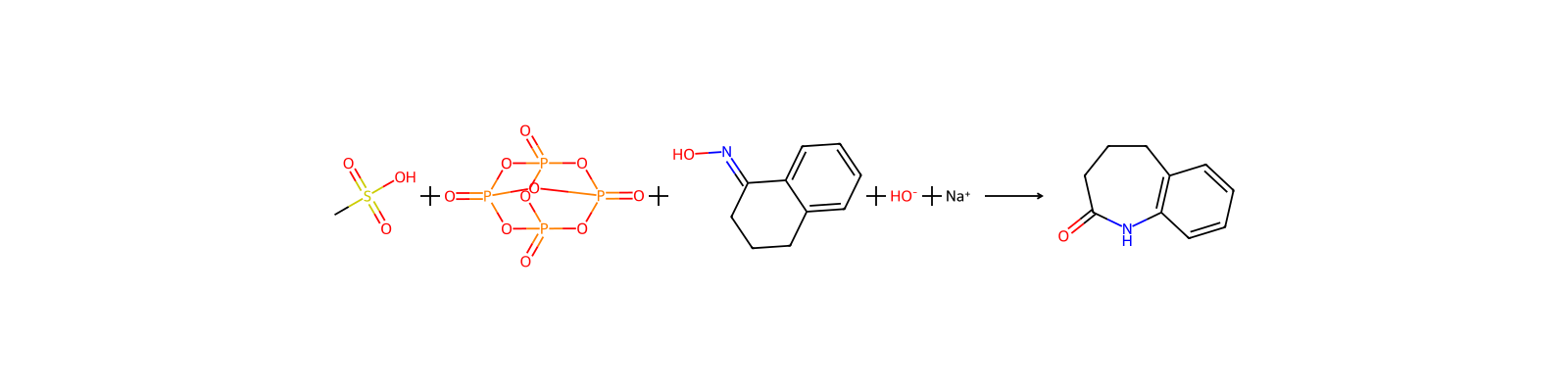
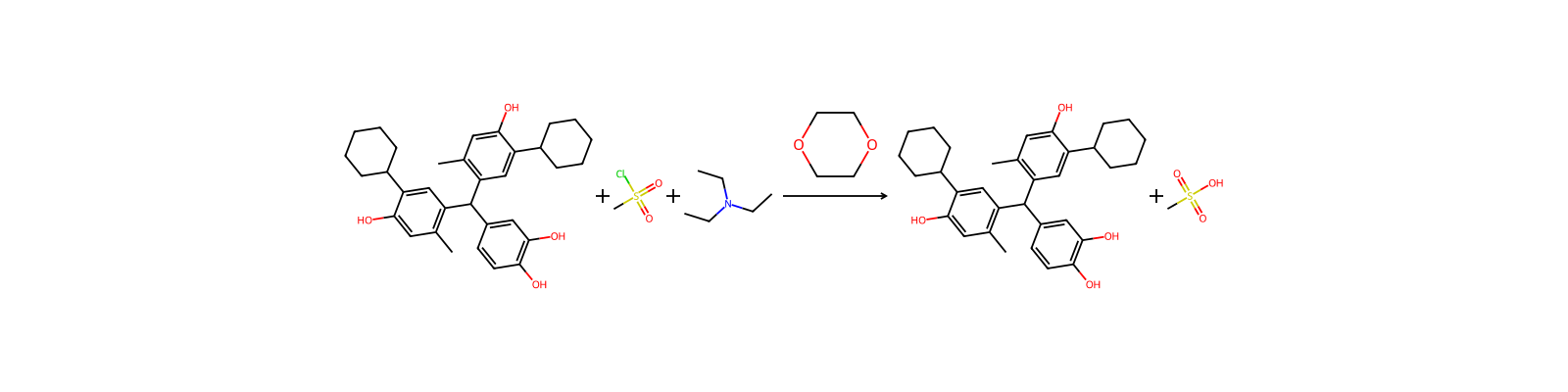
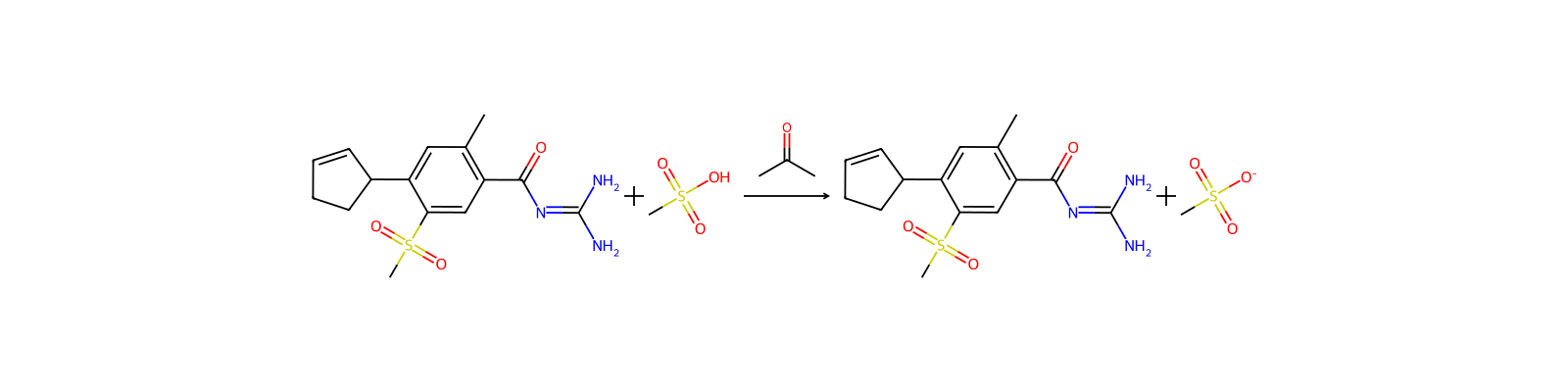
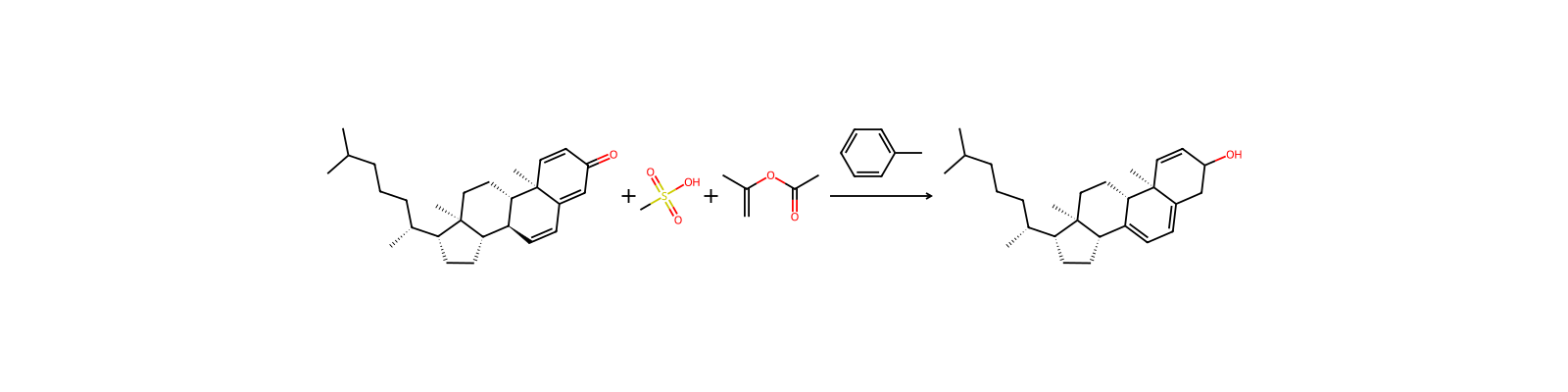
相关反应
4,587 条



关联笔记
加载中…