
基本信息
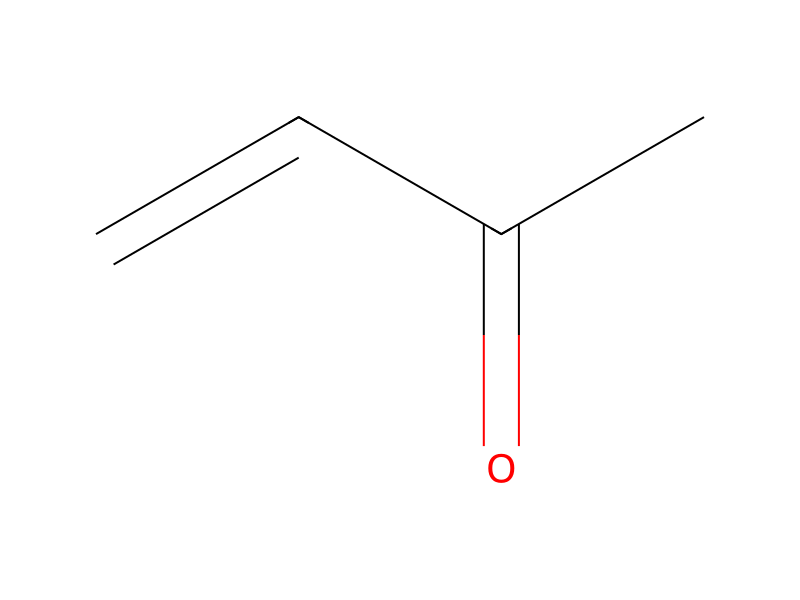
- 标准SMILES
C=CC(C)=O- InChIKey
FUSUHKVFWTUUBE-UHFFFAOYSA-N- 分子式
- C4H6O
- 平均分子量
- 70.09 g/mol
- 单同位素质量
- 70.04186481
概述
Methyl vinyl ketone appears as a clear colorless liquid with a pungent odor. Flash point 20 °F. May polymerize with the release of heat under exposure to heat or contamination. Less dense than water. Highly toxic by inhalation. Causes burns to skin, eyes and mucous membranes.
名称与标识
- 首选名称
- Methyl vinyl ketone
- IUPAC
- but-3-en-2-one
- 中文名
- 丁烯酮
- 英文名
- Methyl vinyl ketone
- 分子式
- C4H6O
- 分子量
- 70.09
名称与别名
METHYL VINYL KETONE3-Buten-2-one78-94-4but-3-en-2-oneVinyl methyl ketoneMethylene acetone2-ButenoneAcetyl ethyleneMethylvinylketon1-Buten-3-oneMethyl ethenyl ketone3-Butene-2-one
展开更多名称
丁烯酮DX铜亚甲基丙酮甲基乙烯酮甲基乙烯基酮甲基乙烯基甲酮3-丁烯-2酮3-丁烯-2-酮甲基乙烯基(甲)酮甲基乙烯酮 剧毒品MVKButenoneCH2=CHCOCH3buten-2-one3-Buten-2-onacetylethylene
Methylvinyl ketoneMethylvinylketone3-Butenone-2Acetone, methylene-Ketone, methyl vinylMethyl-vinyl-cetonegamma-Oxo-alpha-butylene3-oxo-1-butene
数据库标识
- CAS
78-94-4- PubChem CID
- 6570
- DTXSID
DTXSID3025671- ChEMBL
CHEMBL1600824、CHEMBL73639- ChEBI
CHEBI:48058- UNII
- AR7642I1MP
- EC Number
- 201-160-6
- Nikkaji
- J7H
性质
结构计算性质
- XLogP
- 0.5
- 极性表面积
- 17.1 Ų
- 氢键供体
- 0
- 氢键受体
- 1
- 可旋转键
- 1
- 重原子
- 5
- 形式电荷
- 0
- 复杂度
- 54.7
实验与物化性质
Chemical Classes
Toxic Gases & Vapors -> Other Toxic Gases & Vapors
Flammable agents - 3rd degree
LipidsFatty Acyls [FA] -> Oxygenated hydrocarbons [FA12]
SpringerMaterials PropertiesSchoenflies notation
LogP0.117 (estimated)
Odor
Pungent odor
Odor concn (low) = 0.5720 mg/cu m. Odor concn (high) = 0.5720 mg/cu m.
Density
0.8407 to 0.8636 at 68 to 77 °F (EPA, 1998)
0.8636 at 20 °C/4 °C; 0.8407 at 25 °C/4 °C
Saturated vapor density = 0.01714 lb/cu ft at 70 °F
Relative density (water = 1): 0.86
0.8407
0.86 @ 20°C
Viscosity0.807 Cp at 70 °F
Color/FormColorless liquid
Solubility
greater than or equal to 100 mg/mL at 72 °F (NTP, 1992)
Easily sol in methanol, ethanol, ether, acetone, glacial acetic acid; slightly sol in hydrocarbons.
Slightly soluble in carbon tetrachloride; soluble in benzene
Solubility in water: good
Flash Point
20 °F (EPA, 1998)
20 °F (-7 °C) (Closed cup)
30 °F (open cup)
-7 °C c.c.
20 °F
Boiling Point
179 °F at 760 mmHg (EPA, 1998)
81.4 °C
Forms binary azeotrope with water; BP: 75 °C at 760 mm Hg (12% water) ... polymerizes on standing.
81 °C
179 °F
81.4 °C @760 [mm Hg]
Melting Point
20 °F (EPA, 1998)
FP: 20 °F = -7 °C = 266 deg K
-7 °C
20 °F
-7 °C
物理化学性质
- 熔点
- -7 °C · -7°C
- 沸点
- 80 °C · 80 °C
- 密度
- 0.864 g/mL · 0.864 g/mL at 25 °C(lit.)
- 蒸气密度
- 1.3 · 1.3 (vs air)
- 蒸气压
- 310 mm · 310 mm Hg ( 55 °C)
- 折射率
- 20 · n20/D 1.411(lit.)
- 闪点
- 20 °F · 20 °F
- 储存条件
- 2 · 2-8°C
- 溶解度
- Chloroform (Sparingly), Methanol (Slightly)
- 形态
- Liquid
- 颜色
- Clear colorless to pale yellow, may discolor to brown on storage
- 比重
- 0.864 · 0.864
- 气味 (Odor)
- 100 % · at 100.00%. sweet
- 爆炸极限值(explosive limit)
- 15.64 % · 15.64%
- 水溶解性
- MISCIBLE
- Merck
- 14 · 14,6134
- BRN
- 506021 · 506021
- Henry's Law Constant
- 4 · 4.0×10-1 mol/(m3Pa) at 25℃, Burkholder et al. (2019)
- 稳定性
- Stable. Incompatible with strong bases, strong oxidizing agents, strong reducing agents. Heat and light sensitive. May undergo autopolymerization. Highly flammable. Refrigerate.
- InChI
- 1S/C4H6O/c1-3-4(2)5/h3H,1H2,2H3
- InChIKey
- FUSUHKVFWTUUBE-UHFFFAOYSA-N
- SMILES
- O=C(C)C=C
- LogP
- 0.142 · 0.142 (est)
- CAS 数据库
- 78 · 78-94-4(CAS DataBase Reference)
- NIST化学物质信息
- Methyl vinyl ketone(78-94-4)
- EPA化学物质信息
- Methyl vinyl ketone (78-94-4)
化学性质
具有刺激性臭的无色液体。 易溶于水、甲醇、乙醇、乙醚、丙酮和冰醋酸,微溶于烃类。
安全与法规
GHS分类
GHS Classification
Danger
H225 (99.4%): Highly Flammable liquid and vapor [Danger Flammable liquids]
P210, P233, P240, P241, P242, P243, P260, P261, P262, P264, P264+P265, P270, P271, P272, P273, P280, P284, P301+P316, P301+P330+P331, P302+P352, P302+P361+P354, P303+P361+P353, P304+P340, P305+P354+P338, P316, P317, P320, P321, P330, P333+P317, P361+P364, P362+P364, P363, P370+P378, P391, P403+P233, P403+P235, P405, and P501 (click each P-code to see the statement)
Aggregated GHS information provided per 154 reports by companies from 14 notifications to the ECHA C&L Inventory. Each notification may be associated with multiple companies.
Danger
H225: Highly Flammable liquid and vapor [Danger Flammable liquids]
危害信息
Hazards IdentificationToxic/poison by inhalation (TIH/PIH)
Regulatory Information
Chemical: 3-Buten-2-one
Status: Active Update: 20-10-2022 https://echa.europa.eu/registration-dossier/-/registered-dossier/10900
Methyl vinyl ketone: HSNO Approval: HSR003027 Approved with controls
The New Jersey Worker and Community Right to Know Act requires public and private employers to provide information about hazardous substances at their workplaces. (N.J.S.A. 34:5A-1 et. seq.)
DOT LabelPoison Inhalation Hazard Flammable Liquid Corrosive
Fire Hazards
Vapors form flammable mixtures with air, and may travel a considerable distance to a source of ignition and flash back. Polymerization may take place in containers, possibly with violent rupture of containers. Upon exposure to heat or flame, it emits toxic and irritating fumes. Container may explode in heat of fire. Vapor explosion and poison hazard indoors, outdoors, or in sewers. Polymerizes on standing. Hazardous polymerization may occur. Avoid heat or sunlight. (EPA, 1998)
· HIGHLY FLAMMABLE: Will be easily ignited by heat, sparks or flames.
Highly flammable. Vapour/air mixtures are explosive.
Fire Potential
Dangerous fire hazard when exposed to hest, flame, or oxidizers.
... Flammable liquid ...
Health Hazards
This material is readily absorbed through the skin, causing general poisoning, similar to other ketones; inhalation has central nervous system depressant effects. It is irritating to mucous membranes and respiratory tract and to the skin; it is a lachrymator and can cause eye injury. (EPA, 1998)
· TOXIC; may be fatal if inhaled, ingested or absorbed through skin.
Hazards Summary
TLV Basis is upper respiratory damage and leukopenia; No human studies available; Sufficient data were not available to assign Skin, DSEN, RSEN or carcinogenicity notations. [ACGIH] Highly toxic; [Quick CPC] A lachrymator; Can cause liver injury (animal studies); Potential for pulmonary edema after heavy inhalation exposure; [HSDB] Causes lachrymation; May cause skin sensitization; [ICSC] Liquid causes second or third degree burns on short contact; [CHRIS] May polymerize exothermically if heated, exposed to sunlight, or contaminated; [CAMEO] Danger of skin sensitization; [MAK] A severe skin irritant (1% solution); Causes acute pulmonary edema, emphysema, and other liver changes in inhalation lethal-concentration studies of rats; Causes impaired liver function tests in repeated-dose inhalation studies of rats; [RTECS] Methyl vinyl ketone, stabilized (UN1251) has warning of explosive polymerization; [ERG 2016]
The major hazards encountered in the use and handling of methyl vinyl ketone stem from its toxicologic properties and flammability. Toxic by all routes (ie, inhalation, ingestion, and dermal contact), exposure to this colorless, pungent-smelling liquid may occur from its use as an alkylating agent, as an intermediate in the synthesis of steroids and vitamin A, and as a precursor in the production of plastics and polymers for packaging materials. Effects from exposure may include contact burns to the skin and eyes, tachycardia, nausea, shortness of breath, headache, dizziness, fainting, coma and death. In activities or situations where over-exposure is possible, wear a self-contained breathing apparatus with full face piece, and full chemical protective clothing specifically recommended by the shipper or producer, including rubber gloves, and boots, and bands around the arms and legs to prevent any skin contact. If contact should occur. immediately flush affected skin or eyes with running water for at least 15 minutes, and remove contaminated clothing and shoes at the site. Methyl vinyl ketone may be easily ignited by heat, sparks, or flame (flash point: 30 °F, open cup) in a wide range of concentrations (flammable limits - lower: 2.1%, upper: 15.6%). Its heavier than air vapor may travel to a source of ignition and flash back, or result in the build-up of explosive concentrations in enclosed spaces such as sewers. Also, containers may explode in the heat of a fire. Fires involving methyl vinyl ketone may be extinguished with dry chemical, CO2, Halon, water spray, alcohol or standard foam, water spray or fog (solid streams of water may be ineffective). Since methyl vinyl ketone fires may produce toxic fumes, when tank cars and trucks are involved, isolate the area for 1/2 mile in all directions. Fight fire from as far distance as possible, and dike fire control water. Methyl vinyl ketone should be stored in cool, well ventilated areas, away from direct sunlight, sources of ignition and shipped via air, rail, road, and water in containers bearing the label, "Flammable liquid". Small spills of methyl vinyl ketone may be taken up with sand or other noncombustible absorbent and placed into containers for later disposal. Before implementing land disposal of waste methyl vinyl ketone, consult with environmental regulatory agencies for guidance.
DOT ID and Guide1251 131P
Reactive GroupKetones
UN ClassificationUN Hazard Class: 6.1; UN Subsidiary Risks: 3 and 8; UN Pack Group: I
Reactivity AlertsHighly Flammable
Reactivity ProfileMETHYL VINYL KETONE is incompatible with strong oxidizers and strong bases. It polymerizes spontaneously upon exposure to heat or sunlight. This polymerization may cause violent ruptures in containers. (NTP, 1992).
安全与防护
Fire Fighting
Use water to keep fire-exposed containers cool. Keep unnecessary people away; isolate hazard area and deny entry. Stay upwind; keep out of low areas. Wear positive pressure breathing apparatus and special protective clothing. Isolate for 1/2 mile in all directions if tank car or truck is involved in fire.
Use water spray, powder, alcohol-resistant foam, carbon dioxide. In case of fire: keep drums, etc., cool by spraying with water.
First Aid Measures
Fresh air, rest. Half-upright position. Artificial respiration may be needed. Refer for medical attention.
Remove contaminated clothes. Rinse skin with plenty of water or shower. Refer for medical attention .
First rinse with plenty of water for several minutes (remove contact lenses if easily possible), then refer for medical attention.
Rinse mouth. Do NOT induce vomiting. Give one or two glasses of water to drink. Refer for medical attention .
Accidental Release Measures
· CALL 911. Then call emergency response telephone number on shipping paper. If shipping paper not available or no answer, refer to appropriate telephone number listed on the inside back cover.
· ELIMINATE all ignition sources (no smoking, flares, sparks or flames) from immediate area.
First Aid
Warning: This material is readily absorbed through the skin, causing general poisoning similar to other ketones.
General First Aid:
Safe StorageFireproof. Cool. Keep in the dark. Separated from strong reducing agents, strong oxidants and strong bases. Store only if stabilized.
Firefighting Hazards
... The inhibited monomer may ... polymerize if heated sufficiently (by exposure to fire) and lead to rupture of the containing vessel.
Vapors are heavier than air and may travel to a source of ignition and flash back. Closed containers may rupture violently when heated. Reacts violently with a broad range of materials under fire conditions. Combustion may produce irritants and toxic gases.
... Vapors are uninhibited and may form polymers and block the vents ... A harmful contamination of the air can be reached very quickly on evaporation of this substance at 20 °C.
Exposure Control and Personal Protection
· Wear positive pressure self-contained breathing apparatus (SCBA).
TIH (Toxic Inhalation Hazard) - Term used to describe gases and volatile liquids that are toxic when inhaled. Some are TIH materials themselves, e.g., chlorine, and some release TIH gases when spilled in water, e.g., chlorosilanes. [ERG 2016].
Fire Fighting Procedures
Use dry chemical, "alcohol resistant" foam, carbon dioxide, or water spray. Water may be ineffective. Use water spray to keep fire-exposed containers cool. fight fire from protected location or maximum possible distance. Approach fire from upwind to avoid hazardous vapors and toxic decomp products.
If material on fire or involved in fire: Do not extinguish fire unless flow can be stopped. Use water in flooding quantities as fog. Solid streams of water may be ineffective. Cool all affected containers with flooding quantities of water. Apply water from as far a distance as possible. Use "alcohol" foam, dry chemical or carbon dioxide. /Methyl vinyl ketone, stabilized/
Evaculation: If fire becomes uncontrollable or container is exposed to direct flame consider evacuation of one-half (1/2) mile radius. /Methyl vinyl ketone, stabilized/
Storage Conditions
3-Buten-2-one can only be stored in stabilized form at room temperature.
Store in a cool, dry, well-ventilated location. Store away from heat, oxidizing materials, and sunlight. Separate from alkalies, reducing agents. Outside or detached storage is preferred.
Fireproof ... Keep in the dark ... Store only if stabilized.
Cleanup Methods
Environmental considerations: air spill: Apply water spray or mist to knock down vapors. /Methyl vinyl ketone, stabilized/
Environmental considerations: water spill: Use natural barriers or oil spill control booms to limit spill travel. Remove trapped material with suction hoses. /Methyl vinyl ketone, stabilized/
Environmental considerations: land spill: Dig a pit, pond, lagoon, holding are to contain liquid or solid material. /SRP: If time permits, pits, ponds, lagoons, soak holes, or holding areas should be sealed with an impermeable flexible membrane liner./ Dike surface flow using soil, sand bags, foamed polyurethane, or foamed concrete. Absorb bulk liquid with fly ash, cement powder, or commercial sorbents. /Methyl vinyl ketone, stabilized/
Eliminate all ignition sources. Stop or control the leak, if this can be done without indue risk. Use water spray to cool and disperse vapors, protect personnel, and dilute spills to form nonflammable mixtures. Control runoff and isolate discharged material for proper disposal.
Collect leaking and spilled liquid in sealable containers as far as possible. Absorb remaining liquid in sand or inert absorbent and remove to safe place. Personal protection: chemical protection suit including self-contained breathing apparatus.
Nonfire Spill ResponseExcerpt from ERG Guide 131 [Flammable Liquids - Toxic; polymerization hazard]:
Disposal Methods
SRP: The most favorable course of action is to use an alternative chemical product with less inherent propensity for occupational exposure or environmental contamination. Recycle any unused portion of the material for its approved use or return it to the manufacturer or supplier. Ultimate disposal of the chemical must consider: the material's impact on air quality; potential migration in soil or water; effects on animal, aquatic, and plant life; and conformance with environmental and public health regulations.
毒理信息
Body BurdenIn a pilot study of pollutants in the milk of women living in 4 urban industrial areas in the USA, methyl vinyl ketone was detected in 1 of 8 samples(1).
InteractionsAn added stabilizer or inhibitor can influence the toxicological properties of this substance, consult an expert.
Ecotoxicity Values
EC50; Species: Pseudokirchneriella subcapitata (Green algae); Conditions: freshwater; static; Concentration: 120 ug/L (95% confidence limit: 0 to 610 ug/L) for 96 hr; Effect: population, biomass /active ingredient/
EC50; Species: Tetrahymena pyriformis (ciliated protozoan); Conditions: not specified; Concentration: 2.17 mg/L/40 hr; Effects: cell-multiplication inhibition
EC50; Species: Selenastrum capricornutum (algae)); Conditions: not specified; Concentration: 0.13 mg/L/96 hr; Effects: biomass
Environmental Fate
TERRESTRIAL FATE: Based on a classification scheme(1), an estimated Koc value of 3.8(SRC), determined from a structure estimation method(2), indicates that methyl vinyl ketone is expected to have very high mobility in soil(SRC). Volatilization of methyl vinyl ketone from moist soil surfaces is expected to be an important fate process(SRC) given a Henry's Law constant of 4.65X10⁻⁵ atm-cu m/mole(3). Methyl vinyl ketone is expected to volatilize from dry soil surfaces(SRC) based upon an estimated vapor pressure of 152 mm(4). A 0% theoretical BOD in 5 days using an acclimated sewage inoculum(5,6) suggests that biodegradation may not be an important environmental fate process in soil(SRC).
AQUATIC FATE: Based on a classification scheme(1), an estimated Koc value of 3.8(SRC), determined from a structure estimation method(2), indicates that methyl vinyl ketone is not expected to adsorb to suspended solids and sediment(SRC). Volatilization from water surfaces is expected(3) based upon a Henry's Law constant of 4.65X10⁻⁵ atm-cu m/mole(4). Using this Henry's Law constant and an estimation method(3), volatilization half-lives for a model river and model lake are 18 hours and 8.1 days, respectively(SRC). According to a classification scheme(5), an estimated BCF of 3.2(SRC), from an estimated log Kow of 0.41(6) and a regression-derived equation(7), suggests the potential for bioconcentration in aquatic organisms is low(SRC). A 0% theoretical BOD in 5 days using an acclimated sewage inoculum(8,9) suggests that biodegradation may not be an important environmental fate process in water(SRC).
ATMOSPHERIC FATE: According to a model of gas/particle partitioning of semivolatile organic compounds in the atmosphere(1), methyl vinyl ketone, which has an estimated vapor pressure of 152 mm Hg at 25 °C(SRC), determined from a fragment constant method(2), is expected to exist solely as a vapor in the ambient atmosphere. Vapor-phase methyl vinyl ketone is degraded in the atmosphere by reaction with photochemically-produced hydroxyl radicals(SRC); the half-life for this reaction in air is estimated to be 20 hours(SRC), calculated from its rate constant of 1.88X10⁻¹¹ cu cm/molecule-sec at 25 °C(3). The rate constant for the vapor-phase reaction of methyl vinyl ketone with ozone has been estimated as 4.7X10⁻¹⁶ cu cm/molecule-sec at 25 °C(SRC) that was derived using a structure estimation method(4). This corresponds to an atmospheric half-life of about 2.4 days at an atmospheric concentration of 7X10+11 ozone molecules per cu cm(5). The rate constant for the vapor-phase reaction of methyl vinyl ketone with nitrate has been estimated as 1.62X10⁻¹⁴ cu cm/molecule-sec at 25 °C(6). This corresponds to an atmospheric half-life of about 2.1 days at an atmospheric concentration of 2.4X10+8 nitrate molecules per cu cm(7).
Food Survey ValuesMethyl vinyl ketone has been identified, not quantified, in chicken and pork(1).
Adverse EffectsOccupational hepatotoxin - Secondary hepatotoxins: the potential for toxic effect in the occupational setting is based on cases of poisoning by human ingestion or animal experimentation.
Exposure RoutesThe substance can be absorbed into the body by inhalation, through the skin and by ingestion.
Milk ConcentrationsENVIRONMENTAL: In a pilot study of pollutants in the milk of women living in 4 urban industrial areas in the USA, methyl vinyl ketone was detected in 1 of 8 samples(1).
Ecotoxicity Excerpts
/AQUATIC SPECIES/ A 24 hr germination test with the mold Cladosporium cladosporioides with methyl vinyl ketone showed an almost complete, yet reversible, suppression of spore germination as of 0.2 mg/L.
/AQUATIC SPECIES/ ... 24 hr and 48 hr EC0 /no effect/ values of 0.25 mg/L and 0.125 mg/L, respectively, were found with respect to the swimming inability of Daphnia magna.
Plant ConcentrationsMethyl vinyl ketone has been identified in the volatile emissions from southern red oak(1), aspen(2) and European oak(2) trees.
Signs and Symptoms
Burning sensation. Cough. Sore throat. Shortness of breath. Laboured breathing. Headache. Dizziness. Tremor. Symptoms may be delayed.
MAY BE ABSORBED! Redness. Pain. Skin burns. Further see Inhalation.
Watering of the eyes. Redness. Pain. Severe deep burns.
Burning sensation. Abdominal pain. Shock or collapse. Further see Inhalation.
Ongoing Test Status
The following link will take the user to the National Toxicology Program (NTP) Test Agent Search Results page, which tabulates all of the "Standard Toxicology & Carcinogenesis Studies", "Developmental Studies", and "Genetic Toxicity Studies" performed with this chemical. Clicking on the "Testing Status" link will take the user to the status (i.e., in review, in progress, in preparation, on test, completed, etc.) and results of all the studies that the NTP has done on this chemical. [http://ntp-apps.niehs.nih.gov/ntp_tox/index.cfm?fuseaction=ntpsearch.searchresults&searchterm=78-94-4]
法规信息
CERCLA Reportable Quantities
Releases of CERCLA hazardous substances are subject to the release reporting requirement of CERCLA section 103, codified at 40 CFR part 302, in addition to the requirements of 40 CFR part 355. Methyl vinyl ketone is an extremely hazardous substance (EHS) subject to reporting requirements when stored in amounts in excess of its threshold planning quantity (TPQ) of 10 lbs.
安全数据
- F
- 8-10-19-23
- wgk
- 3
- tsca
- TSCA listed
- RTECS号
- EM9800000
- 包装类别
- I
- 危险等级
- 6.1
- 存储类别
- 3 - Flammable liquids
- 安全说明
- 16-26-28-36/37/39-45-60-61-38
- 海关编码
- 29141990
- 自燃温度
- 491°C
- 危险品标志
- F,T+,N
- 危险性类别
- Acute Tox. 1 DermalAcute Tox. 1 InhalationAcute Tox. 2 OralAquatic Acute 1Aquatic Chronic 1Eye Dam. 1Flam. Liq. 2Skin Corr. 1BSkin Sens. 1
- 危险类别码
- 11-26/27/28-34-43-50/53-26/28-68-40
- 毒害物质数据
- 78-94-4(Hazardous Substances Data)
- 危险品运输编号
- UN 1251
毒性防护
急性毒性口服- 大鼠 LD50:30 毫克/ 公斤; 口服- 小鼠 LD50: 33 毫克/ 公斤
职业标准STEL 0.1 毫克/ 立方米
包装储运
可燃性危险特性遇明火、高温、氧化剂易燃; 高热放出有毒刺激烟雾
储运特性库房通风低温干燥; 与氧化剂、酸类分开存放
灭火剂干粉、干石粉、二氧化碳、泡沫
化学与工业
药理信息
Mechanism of Action
... Alpha,beta-unsaturated ketones occurring in the neutral fraction (28% of the semi-volatile fraction) of cigarette smoke concentrates, including MVK, /was described/ as highly reactive electrophiles that can combine with biochemical nucleophiles and constitute a highly cytotoxic group of compounds ...
MVK has been described as a model alkylating agent and Michael acceptor which binds to cellular protein sulfhydryl groups and glutathione (GSH) ... The effect of MVK on respiration of isolated rat liver mitochondria /was examined/ and ... /MVK's/ high affinity for sulfhydryl groups /was documented/ ... MVK's cytotoxicity to freshly isolated rat kidney nephron cells /was/ described /as causing/ irreversible cellular injury with distal tubular cells showing greater susceptibility to injury from MVK than proximal tubular cells. Incubation of cells with MVK led to altered cellular GSH status and pronounced inhibition of mitochondria. MVK has been reported ... to be an excellent substrate for induction of glutathione-S-transferase based on studies with Hepa 1c1c7 murine hepatoma cells ... /It was/ postulated that such Phase II enzyme inducers may have potential chemoprotective properties.
In the study of the sensitivity of rat liver mitochondrial processes to inhibition by methyl vinyl ketone, 3 different sites were apparent: glutamate transport, inorganic phosphate transport, and succinate dehydrogenase. Methyl vinyl ketone was less effective than acrolein by one order of magnitude.
... Evidence of the mutagenicity of MVK /was cited/ as strongly suggestive that this chemical is capable of reacting with cellular DNA ... The formation under mild experimental conditions (24.3 mmoles added to 75 mL of phosphate buffer at pH 7.0 containing 1.1 mmoles of deoxyguanosine) of 2 major deoxyguanosine-MVK adducts /was demonstrated/. Two guanine adducts produced under basic conditions were also identified ... These adducts formed in vitro could play a role in the mutagenicity and/or potential tumorigenicity of this chemical /was speculated/ ...
For more Mechanism of Action (Complete) data for METHYL VINYL KETONE (6 total), please visit the HSDB record page.
Metabolism/Metabolites
... In a study of alpha,beta-unsaturated ketone reactivity toward glutathione (GSH) ... methyl vinyl ketone (MVK) /was compared/ to N-ethylmaleimide which has been documented to have high selectivity and reactivity toward sulfhydryl groups ... /and was found/ that MVK reacted 30 times slower with GSH than N-ethylmaleimide. /Alpha,beta-unsaturated ketones/
Compounds with ketone functionality are known to react reversibly with glutathione (GSH). Alpha,beta-unsaturated ketones are considered classic substrates for a reversible Michael 1,4-addition reaction in which the whole GSH molecule is added to the substrate to form conjugates ... /which/ may not always be the endpoint; reformation of reactive species may occur with significant implications relative to effects at sites distant from the site of initial exposure and/or initial conjugation. /Alpha,beta-unsaturated ketones/
... The interaction of MVK with hepatic microsomal cytochrome P-450 and its effect on hepatic microsomal drug metabolizing enzymes /was studied/ ... MVK bound to hepatic microsomal P-450 in a type I manner and that it enhanced CO-inhibitable NADPH oxidation in vitro. In rat liver mitochondria, MVK is an alkylating agent and inhibitor of cellular (mitochondrial) respiration, less potent than acrolein by one order of magnitude. It is an inhibitor of glutamate transport, inorganic phosphate transport, and succinate dehydrogenase activity.
Ketones are known to undergo metabolic transformations to the corresponding alcohols, diols, epoxides and various other metabolites. Conversion in mammals to the relatively less toxic alcohols is reported to proceed slowly. /ketones/
3-buten-2-one is a known human metabolite of butadiene.
Absorption, Distribution and Excretion
... /Methyl vinyl ketone/ can be absorbed into the body by inhalation, through the skin and by ingestion.
Readily absorbed through skin causing general poisoning of the organism.
用途与制造
Uses
Used as an intermediate in chemical synthesis, an alkylating agent, and a monomer in resins; it is present in cigarette smoke; [HSDB] Used as a monomer to make styrene-MVK polymers for packaging applications; [ACGIH]
Smoking cigarettes [Category: Food & Drugs]
Alkylating agent; commercial starting material for plastics; as intermediate in synthesis of steroids and vitamin A
Component of ionomer resins
Precursor of styrene-methyl vinyl ketone polymers which are useful as photodegradable polymers in packaging applications
The Diels-Alder adduct with cyclopentadiene, methyl (5-norbornen-2-yl) ketone, is used as a precursor for pharmaceuticals such as Akineton (Knoll). Derivatives of alpha-vinyl lactic acid nitrile (from 3-buten-2-one and hydrocyanic acid) are used as fungicides, eg, Ronilan (BASF). The most important product based on 3-buten-2-one is 3-methyl-2-penten-4-in-1-ol, a building block in an industrial synthesis of vitamin A.
U.S. ProductionProduction volumes for non-confidential chemicals reported under the Inventory Update Rule. [Table#2024]
Methods of Manufacturing
... By condensation of acetone and formaldehyde to 3-ketobutanol and dehydration to methyl vinyl ketone.
Preparation from vinylacetylene: Conaway, US 1967225 (1934 to DuPont)
The Mannich reaction of diethylamine, acetone, and formaldehyde. ... The diethylamine hydrochloride released by thermolysis of the Mannich base can be recycled for use in the reaction with acetone and formaldehyde.
Condensation of acetone with formaldehyde [66], [67] and subsequent elimination of water. ... The water can be eliminated from 4-hydroxy-2-butanone in the liquid or gas phase.
General Manufacturing Information3-Buten-2-one: ACTIVE
应用领域
用途用作聚合反应单体制取阴离子树脂,还可用作烷基化剂和合成甾族化合物及维生素A的中间体
用途该品具有很强的反应能力,用作聚合物的单体,制取阴离子树脂、胶片乳化剂;还用作烷基化剂和合成甾族化合物及维生素A等的中间体。
制备方法
生产方法由丙酮与甲醛缩合得到乙酰乙醇,再在草酸存在下脱水而制得甲基乙烯酮。甲醛溶液与丙酮按1:30混合进入管道反应器(温度51-53℃),控制流量,保持反应停留时间3-4min,将反应液移至盛有柠檬-丙酮的反应罐中,回流10min,回收丙酮,蒸尽水分后,加草酸进行脱水,再加少量氢醌,常压蒸馏,得甲基乙烯酮与水的共沸液。用精盐盐析,分层,将有机层加氯化钙脱水,加氢至精馏,收集80-83℃馏分,即为甲基乙烯酮,收率42%。此外,也可采用汞、银、铜等的硫酸盐作催化剂、由乙烯基乙炔经水合而得到甲基乙烯酮。
上下游产品信息
上游原料
下游产品
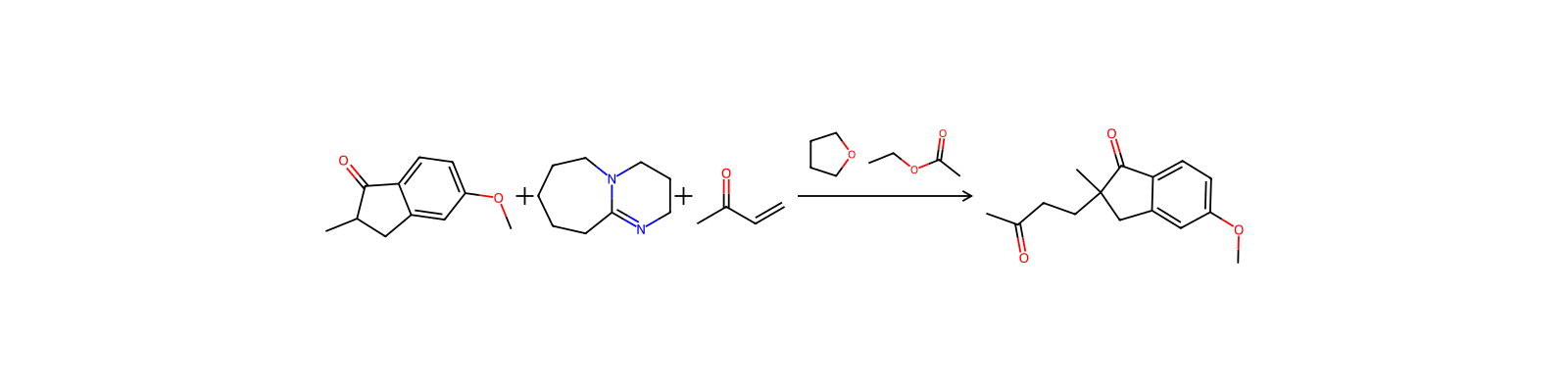
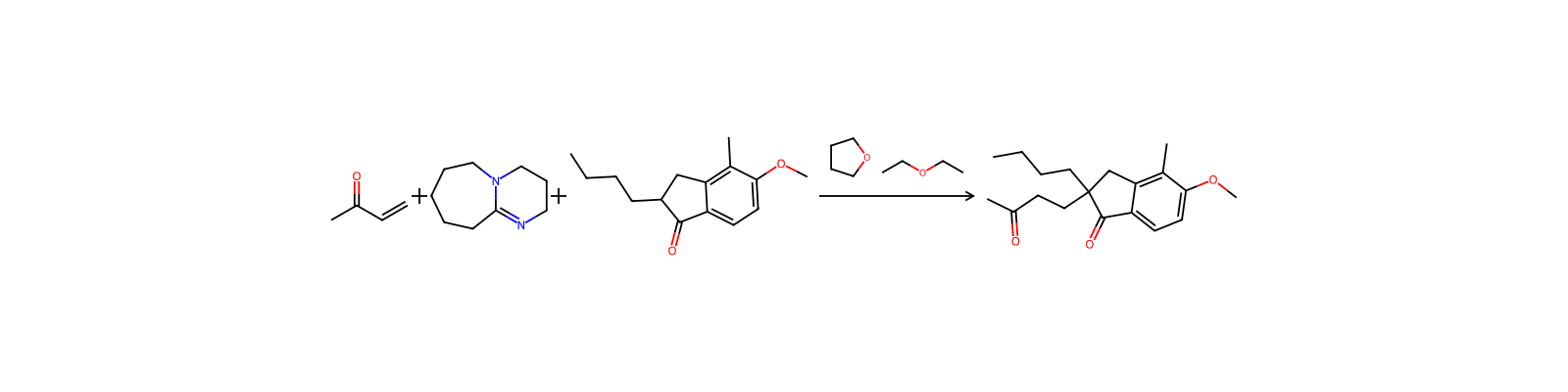
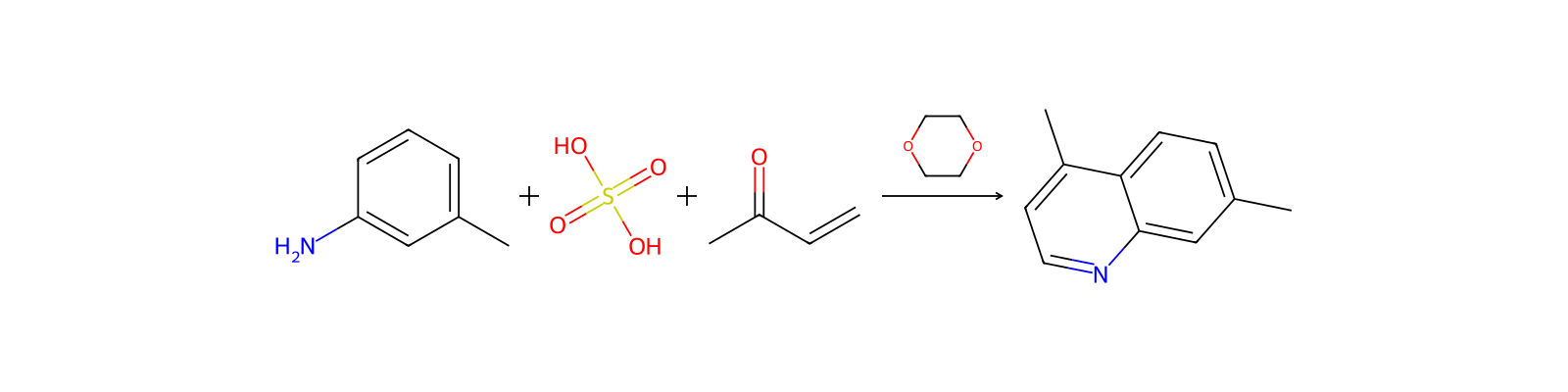
相关反应
499 条


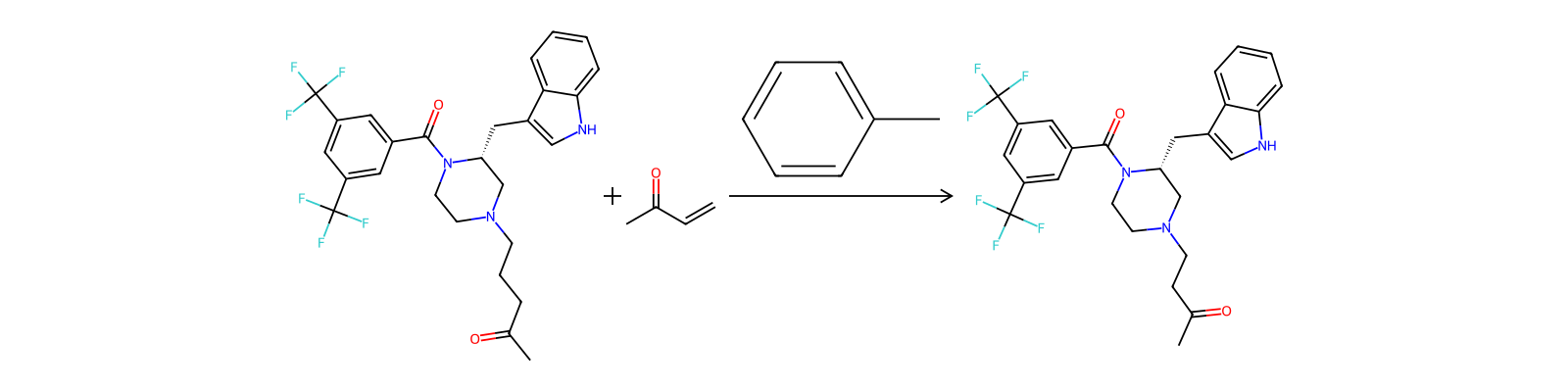
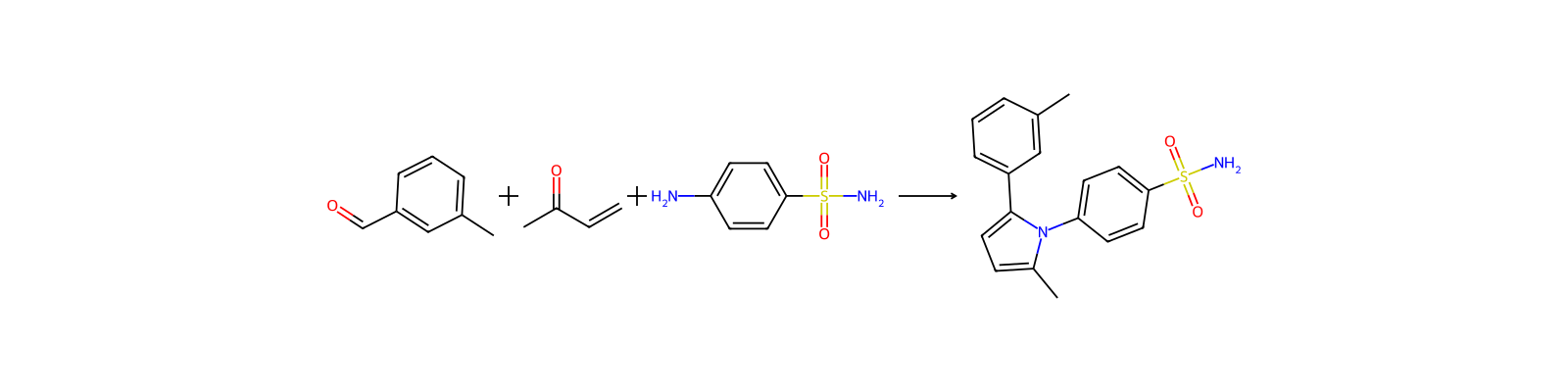
关联笔记
加载中…