
基本信息
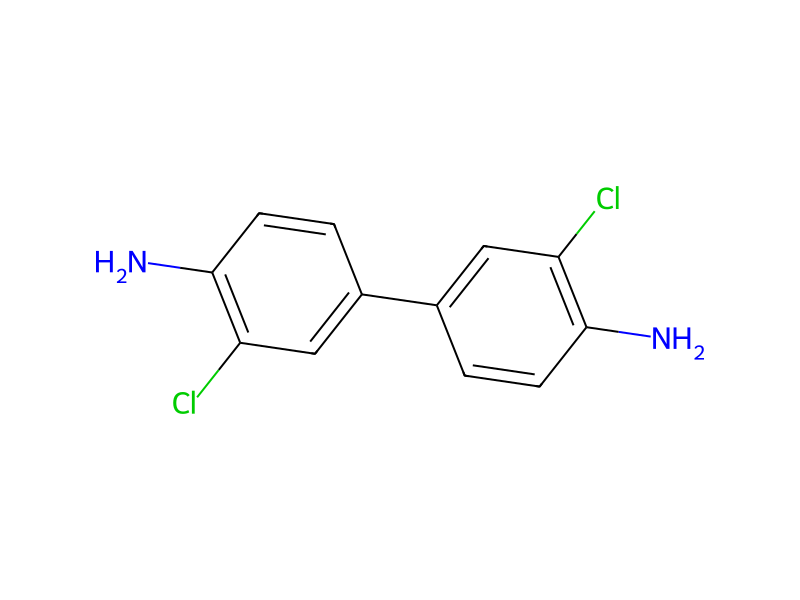
- 标准SMILES
Nc1ccc(-c2ccc(N)c(Cl)c2)cc1Cl- InChIKey
HUWXDEQWWKGHRV-UHFFFAOYSA-N- 分子式
- C12H10Cl2N2
- 平均分子量
- 253.12 g/mol
- 单同位素质量
- 252.02210368
概述
3,3'-Dichlorobenzidine is a gray-to-purple colored crystalline solid. It changes from a solid to a gas very slowly. 3,3'-Dichlorobenzidine salt is the major form in actual use. It is a stable, off-white colored crystalline solid that does not evaporate. Neither 3,3'-dichlorobenzidine nor its salt are found naturally in the environment. They are manufactured for pigments for printing inks, textiles, plastics and enamels, paint, leather, and rubber.
名称与标识
- 首选名称
- 3,3'-Dichlorobenzidine
- IUPAC
- 4-(4-amino-3-chlorophenyl)-2-chloroaniline
- 中文名
- 3,3'-二氯联苯胺
- 英文名
- 3,3'-Dichlorobenzidine
- 分子式
- C12H10Cl2N2
- 分子量
- 253.13
名称与别名
3,3'-DICHLOROBENZIDINE91-94-13,3'-Dichlorobiphenyl-4,4'-diamineDichlorobenzidine base3,3-Dichlorobenzidineo,o'-Dichlorobenzidine3,3'-Dichlorbenzidin3,3'-DichlorobenzidinaCurithane C126RCRA waste number U0733,3'-Dichloro-4,4'-biphenyldiamineBenzidine, 3,3'-dichloro-
展开更多名称
-二氯联苯胺联苯胺&3,3-二氯联苯胺3'-二氯联苯-43,3′-二氯联苯胺邻,邻'-二氯联苯胺3:3'-二氯聯苯胺3,3'-二氯联苯胺3,3'-双氯苯甲酸酯联苯胺,3,3'-二氯-Dichlorobenzidineci23060c.i.23060CCRIS 220curithanec1263.3'-DichlorobBenzidine &
3,3'-Dichloro-4,4'-diaminobiphenyl3,3'-Dichloro-p,p'-bianilineDTXSID60204323,3'-Dichloro-[1,1'-biphenyl]-4,4'-diamine3,3'-Dichlorobenzidine baseortho,ortho'-DichlorobenzidineC.I. 230603,3'-Dichloro-4,4'-diaminodiphenyl
数据库标识
- CAS
86349-58-8、91-94-1- PubChem CID
- 7070
- DTXSID
DTXSID6020432- ChEMBL
CHEMBL314470- ChEBI
CHEBI:82315- UNII
- 1SDI2328UX
- EC Number
- 202-109-0
- Nikkaji
- J3.926H
性质
结构计算性质
- XLogP
- 3.5
- 极性表面积
- 52 Ų
- 氢键供体
- 2
- 氢键受体
- 2
- 可旋转键
- 1
- 重原子
- 16
- 形式电荷
- 0
- 复杂度
- 213
实验与物化性质
Chemical Classes
Hazardous Air Pollutants (HAPs)
Nitrogen Compounds -> Benzidine and Derivatives
Carcinogens
Semi-Volatile Organic Compound (SVOC)
pHWeak base
SpringerMaterials PropertiesCrystal structure
PesticidesPesticide -> EPA IRIS
LogP
log Kow = 3.51
3.51
3.51
Color/Form
Needles from alcohol or benzene
White crystalline solid
Gray to purple, crystalline solid
Solubility
0.07 % at 59 °F (NIOSH, 2024)
Solubility in water: 2-4% at 22 °C and pH 4.6 to pH 8.9 /Dihydrochloride salt/
In water, 3.1 mg/L at 25 °C
Moderately soluble in alcohol; readily soluble in ether
Soluble in acetic acid, benzene, and ethanol
Slightly soluble in dilute hydrochloric acid
Boiling Point
788 °F at 760 mmHg (NIOSH, 2024)
368 °C
788 °F
402 °C @760 [mm Hg]
788 °F
DecompositionWhen heated to decomposition it emits very high toxic fumes of /hydrogen chloride and nitrogen oxides./
Melting Point
270 to 271 °F (NTP, 1992)
132.5 °C
132-133 °C
270-271 °F
132.5 °C
271 °F
Physical Description
3,3'-dichlorobenzidine is a gray to purple crystalline powder. Insoluble in water. Very toxic. Used in the dye industry, curing agent for isocyanate terminated resins.
Gray to purple, crystalline solid; [NIOSH]
GREY-TO-PURPLE CRYSTALS.
Gray to purple, crystalline solid.
Gray to purple, crystalline solid.
Dissociation ConstantspKa1 = 1.6; pKa2 = 3.2
物理化学性质
- 熔点
- 132.5 °C · 132.5°C
- 沸点
- 398.89 °C · 398.89°C (rough estimate)
- 密度
- 1.3171 · 1.3171 (rough estimate)
- 蒸气压
- 4.2 x · 4.2 x 10-7 at 25 °C (estimated, Howard, 1989)
- 折射率
- 1.64 · 1.6400 (estimate)
- 闪点
- 10 °C · 10 °C
- 储存条件
- 2 · 2-8°C
- 溶解度
- Soluble in ethanol, benzene, and glacial acetic acid (Windholz et al., 1983)
- 酸度系数(pKa)
- 2.7 · 2.70±0.10(Predicted)
- 水溶解性
- 3.114 mg/L · 3.114mg/L(25 ºC)
- Henry's Law Constant
- 4.5 x · 4.5 x 10-8 atmm3/mol at 25 °C (estimated, Howard, 1989)
- 稳定性
- Stable. Incompatible with strong oxidizing agents.
- 主要应用
- cleaning productscosmeticsenvironmentalfood and beveragespersonal care
- InChI
- 1S/C12H10Cl2N2/c13-9-5-7(1-3-11(9)15)8-2-4-12(16)10(14)6-8/h1-6H,15-16H2
- InChIKey
- HUWXDEQWWKGHRV-UHFFFAOYSA-N
- SMILES
- Clc1c(ccc(c1)c2cc(c(cc2)N)Cl)N
- CAS 数据库
- 91 · 91-94-1(CAS DataBase Reference)
- (IARC)致癌物分类
- 2 B · 2B (Vol. 29, Sup 7) 1987
- NIST化学物质信息
- 1 · [1,1'-Biphenyl]-4,4'-diamine, 3,3'-dichloro-(91-94-1)
- EPA化学物质信息
- 3 · 3,3'-Dichlorobenzidine (91-94-1)
化学性质
灰色至紫色固体结晶
安全与法规
GHS分类
GHS Classification
Danger
H312: Harmful in contact with skin [Warning Acute toxicity, dermal]
P203, P261, P272, P273, P280, P302+P352, P317, P318, P321, P333+P317, P362+P364, P391, P405, and P501 (click each P-code to see the statement)
Danger
H312 (100%): Harmful in contact with skin [Warning Acute toxicity, dermal]
P203, P261, P272, P273, P280, P302+P352, P317, P318, P321, P333+P317, P362+P364, P391, P405, and P501 (click each P-code to see the statement)
危害信息
Regulatory Information
Chemical: [1,1'-Biphenyl]-4,4'-diamine, 3,3'-dichloro-
3,3-Dichlorobenzidine: Does not have an individual approval but may be used as a component in a product covered by a group standard. It is not approved for use as a chemical in its own right.
The New Jersey Worker and Community Right to Know Act requires public and private employers to provide information about hazardous substances at their workplaces. (N.J.S.A. 34:5A-1 et. seq.)
Other Safety InformationIMAP assessments - [1,1'-Biphenyl]-4,4'-diamine, 3,3'-dichloro-: Environment tier I assessment
DOT LabelPoison
Fire Hazards
Combustible. (NTP, 1992)
Combustible. Gives off irritating or toxic fumes (or gases) in a fire.
Health HazardsExcerpt from NIOSH Pocket Guide for 3,3'-Dichlorobenzidine (and its salts):
Hazards Summary
3,3'-Dichlorobenzidine is a gray-to-purple colored crystalline solid. It changes from a solid to a gas very slowly. 3,3'-Dichlorobenzidine salt is the major form in actual use. It is a stable, off-white colored crystalline solid that does not evaporate. Neither 3,3'-dichlorobenzidine nor its salt are found naturally in the environment. They are manufactured for pigments for printing inks, textiles, plastics and enamels, paint, leather, and rubber.
3,3'-Dichlorobenzidine was used in the past in the production of dyes and pigments; it is no longer used to manufacture dyes in the United States. No information is available on the acute (short-term), reproductive or developmental effects of 3,3'-dichlorobenzidine in humans. Chronic (long-term) exposure may result in effects on the gastrointestinal, respiratory, and central nervous system (CNS) in humans. A human study detected a possible association between benzidine-based azodyes (including 3,3'-dichlorobenzidine). Animal studies, via the oral route, have reported an increased incidence of tumors at a variety of sites. EPA has classified 3,3'-dichlorobenzidine as a Group B2, probable human carcinogen.
Liver injury occurs in animals in subchronic feeding studies. [ACGIH] A skin, eye, and respiratory tract irritant; [ICSC] See 3,3'-Dichlorobenzidine dihydrochloride. See Benzidine.
Reactive GroupAryl Halides
EC ClassificationSymbol: T, N; R: 45-21-43-50/53; S: 53-45-60-61; Note: E
Special Reports
USEPA; Ambient Water Quality Criteria Doc: Dichlorobenzidine (1980) EPA 440/5-80-040.[USEPA; Ambient Water Quality Criteria Doc: Dichlorobenzidine (1980) EPA 440/5-80-040; Available from, as of February 25, 2015: http://water.epa.gov/scitech/swguidance/standards/upload/2001_10_12_criteria_ambientwqc_dichlorobenzidine80.pdf]
FDA/NCTR; Acute Toxicity of Aromatic Amines, 5th Rpt FDA/77-1029 (1979).
NCTR; Metabolism of Azo Dyes to Potentially Carcinogenic Aromatic Amines, Technical Rpt for Exp No 196/NIOSH; FDA/224-78-0004 (1979).
DHHS/ATSDR; Toxicological Profile for 3,3'-Dichlorobenzidine (1989) ATSDR/TP-89/09, NTIS PB90-171455[HHS/ ATSDR; Toxicological Profile for 3,3'-Dichlorobenzidine (December 1998). Available from, as of February 25, 2015: http://www.atsdr.cdc.gov/toxprofiles/index.asp]
For more Special Reports (Complete) data for 3,3'-DICHLOROBENZIDINE (7 total), please visit the HSDB record page.
RCRA Requirements
U073; As stipulated in 40 CFR 261.33, when 3,3'-dichlorobenzidine, as a commercial chemical product or manufacturing chemical intermediate or an off-specification commercial chemical product or a manufacturing chemical intermediate, becomes a waste, it must be managed according to Federal and/or State hazardous waste regulations. Also defined as a hazardous waste is any residue, contaminated soil, water, or other debris resulting from the cleanup of a spill, into water or on dry land, of this waste. Generators of small quantities of this waste may qualify for partial exclusion from hazardous waste regulations (40 CFR 261.5).
OSHA Standards
This section applies to any area in which the 13 carcinogens addressed by this section are manufactured, processed, repackaged, released, handled, or stored, but shall not apply to transshipment in sealed containers, except for the labeling requirements under paragraphs (e)(2), (3) and (4) of this section. 3,3'-Dichlorobenzidine (and its salts) is one of the 13 carcinogens.
Reactivity Profile
A halide- and amine-substituted aromatic compound. Amines are chemical bases. They neutralize acids to form salts plus water. These acid-base reactions are exothermic. The amount of heat that is evolved per mole of amine in a neutralization is largely independent of the strength of the amine as a base. Amines may be incompatible with isocyanates, halogenated organics, peroxides, phenols (acidic), epoxides, anhydrides, and acid halides. Flammable gaseous hydrogen is generated by amines in combination with strong reducing agents, such as hydrides.
安全与防护
Fire Fighting
This compound is not very flammable but any fire involving this compound may produce dangerous vapors. You should evacuate the area. All firefighters should wear full-body protective clothing and use self-contained breathing apparatuses. You should extinguish any fires involving this chemical with a dry chemical, carbon dioxide, foam, or halon extinguisher. (NTP, 1992)
Use fine water spray, dry powder, carbon dioxide.
First Aid Measures
Fresh air, rest. Seek medical attention if you feel unwell.
Remove contaminated clothes. Rinse and then wash skin with water and soap. Seek medical attention if you feel unwell.
Rinse with plenty of water (remove contact lenses if easily possible).
Rinse mouth. Refer for medical attention .
First Aid
EYES: First check the victim for contact lenses and remove if present. Flush victim's eyes with water or normal saline solution for 20 to 30 minutes while simultaneously calling a hospital or poison control center. Do not put any ointments, oils, or medication in the victim's eyes without specific instructions from a physician. IMMEDIATELY transport the victim after flushing eyes to a hospital even if no symptoms (such as redness or irritation) develop.
(General first aid procedures)
Safe StorageProvision to contain effluent from fire extinguishing. Separated from food and feedstuffs. Well closed. Store only in original container. Store in an area without drain or sewer access.
Fire Fighting Procedures
Wear self contained breathing apparatus for fire fighting if necessary.
Use water spray, alcohol-resistant foam, dry chemical or carbon dioxide.
Storage Conditions
Stable under recommended storage conditions.
PRECAUTIONS FOR "CARCINOGENS": Storage site should be as close as practical to lab in which carcinogens are to be used, so that only small quantities required for ... expt need to be carried. Carcinogens should be kept in only one section of cupboard, an explosion-proof refrigerator or freezer (depending on chemicophysical properties ...) that bears appropriate label. An inventory ... should be kept, showing quantity of carcinogen & date it was acquired ... Facilities for dispensing ... should be contiguous to storage area. /Chemical Carcinogens/
Cleanup Methods
Use of sodium hypochlorite bleach solution to decontaminate 3,3'-dichlorobenzidine was partially effective. An aqueous solution of 5% tetrapotassium pyrophosphate and 10% sodium ethyl hexyl sulfate when blended in a jet sprayer effectively removed 3,3'-dichlorobenzidine from a worker area (90-99% reduction). Once removed from the work site and collected in a central location, it was then determined that the diazotization reaction (the addition of sulfate, ice and sodium nitrate occurred to eliminate any detectable dichlorobenzine from the washings.
PRECAUTIONS FOR "CARCINOGENS": A high-efficiency particulate arrestor (HEPA) or charcoal filters can be used to minimize amt of carcinogen in exhausted air ventilated safety cabinets, lab hoods, glove boxes or animal rooms ... Filter housing that is designed so that used filters can be transferred into plastic bag without contaminating maintenance staff is avail commercially. Filters should be placed in plastic bags immediately after removal ... The plastic bag should be sealed immediately ... The sealed bag should be labelled properly ... Waste liquids ... should be placed or collected in proper containers for disposal. The lid should be secured & the bottles properly labelled. Once filled, bottles should be placed in plastic bag, so that outer surface ... is not contaminated ... The plastic bag should also be sealed & labelled. ... Broken glassware ... should be decontaminated by solvent extraction, by chemical destruction, or in specially designed incinerators. /Chemical Carcinogens/
ACCIDENTAL RELEASE MEASURES /Personal precautions, protective equipment and emergency procedures/ Use personal protective equipment. Avoid dust formation. Avoid breathing vapours, mist or gas. Ensure adequate ventilation. Evacuate personnel to safe areas. Avoid breathing dust.
Prevent further leakage or spillage if safe to do so. Do not let product enter drains. Discharge into the environment must be avoided.
Pick up and arrange disposal without creating dust. Sweep up and shovel. Keep in suitable, closed containers for disposal.
Nonfire Spill Response
SMALL SPILLS AND LEAKAGE: You should dampen the solid spill material with acetone, then transfer the dampened material to a suitable container. Use absorbent paper dampened with acetone to pick up any remaining material. Seal your contaminated clothing and the adsorbent paper in a vapor-tight plastic bag for eventual disposal. Solvent wash all contaminated surfaces with acetone followed by washing with a strong soap and water solution. Do not reenter the contaminate area until the Safety Officer (or other responsible person) has verified that the area has been properly cleaned.
Disposal Methods
Generators of waste (equal to or greater than 100 kg/mo) containing this contaminant, EPA hazardous waste number U073, must conform with USEPA regulations in storage, transportation, treatment and disposal of waste.
A potential candidate for rotary kiln incineration at a temperature range of 820 to 1,600 °C and residence times of seconds for liquids and gases, and hours for solids.
Incineration (820 °C, 0.5 sec for primary combustion; 1200 °C, 1.0 sec for secondary combustion). The formation of elemental chlorine can be prevented through injection of steam or methane into the combustion process. Nitrogen oxide may be abated through the use of thermal or catalytic devices. Recommendable method: Incineration. Not recommendable method: Discharge to sewer.
Incineration: (1500 °F, 0.5 sec for primary combustion; 2200 °F, 1.0 sec for secondary combustion). The formation of elemental chlorine can be prevented through injection of steam or methane into the combustion process. Nitrogen oxide may be abated through the use of thermal or catalytic devices.
For more Disposal Methods (Complete) data for 3,3'-DICHLOROBENZIDINE (11 total), please visit the HSDB record page.
Spillage Disposal
Personal protection: complete protective clothing including self-contained breathing apparatus. Do NOT let this chemical enter the environment. Sweep spilled substance into sealable containers. If appropriate, moisten first to prevent dusting. Carefully collect remainder. Then store and dispose of according to local regulations.
Preventive Measures
Employees working with 3,3'-dichlorobenzidine (or its salts) within an isolated system, such as a "glove box" shall wash their hands and arms upon completion of the assigned task and before engaging in other activities not associated with the isolated system.
SRP: Contaminated protective clothing should be segregated in a manner such that there is no direct personal contact by personnel who handle, dispose, or clean the clothing. The completeness of the cleaning procedures should be considered before the decontaminated protective clothing is returned for reuse by the workers. Contaminated clothing should not be taken home at the end of shift, but should remain at employee's place of work for cleaning.
SRP: Local exhaust ventilation should be applied wherever there is an incidence of point source emissions or dispersion of regulated contaminants in the work area. Ventilation control of the contaminant as close to its point of generation is both the most economical and safest method to minimize personnel exposure to airborne contaminants. Ensure that the local ventilation moves the contaminant away from the worker.
Employees shall be required to shower after the last exit of the day.
For more Preventive Measures (Complete) data for 3,3'-DICHLOROBENZIDINE (23 total), please visit the HSDB record page.
Isolation and EvacuationExcerpt from ERG Guide 154 [Substances - Toxic and/or Corrosive (Non-Combustible)]:
毒理信息
Toxicological InformationCDC-ATSDR Toxicological Profile
TreatmentTreatment for 3,3'-dichlorobenzidine poisoning is usually supportive. (L124)
Cancer Sites
Reproductive
[in animals: liver & bladder cancer]
Interactions
Admin in conjunction with other chem: 9 groups of 22 (& 1 of 96) male Wistar rats were given the following cmpd alone or in sequence for a period of 4 wk per cmpd: Ortho-N-butyl-N-(4-hydroxybutyl)nitrosamine (0.01% in drinking-water), N-(4-(5-nitro-2-furyl)-2-thiazolyl)formamide (0.15% in diet), N-fluorenylacetamide (0.025% in diet), & 3,3'-dichlorobenzidine (0.3% in diet). An untreated control group consisted of 12 rats. The animals were killed when 40 wk old. 3,3'-Dichlorobenzidine when given in sequence with 1 or more of the other cmpd induced histological changes of liver (cystic change of bile ducts & oval cell proliferation) in 44-60% of animals (p< 0.05 when compared with ... /control group/). No change was seen in liver when 3'3-dichlorobenzidine was given alone. Incidence of urinary bladder tumors was not significantly incr when 3,3'-dichlorobenzidine was added to diet.
A synergistic role for 3,3'-dichlorobenzidine in the development of bladder cancer has been suggested. This was proposed in a study in which no carcinomas were found in any rats admin one of the following: 0.03% 3,3'-dichlorobenzidine in the diet, 0.001% BBN (N-butyl-N-(hydroxybutyl)nitrosamine) in drinking water, 0.0005% 2-acetylaminofluorene (2-AAF) in the diet, or 0.04% N-[4-(5-nitro-2-furyl)-2-thiazolyl]formamide (FANFT) in the diet for a period of 40 wk ... . However, when BBN plus 3,3'-dichlorobenzidine were fed together at the same dose levels as above, there was a marked incr in the presence of papillary or nodular hyperplasia in the rat bladder, and the appearance of one papilloma. Based on these findings, the authors suggested that 3,3'-dichlorobenzidine had a synergistic effect on the cacinogenicity of BBN. In rats sequentially admin BBN (0.01%), FANFT (0.15%), 2-AAF (0.025%), and 3,3'-dichlorobenzidine (0.03%) for 4 wk each, the incidence of bladder cancer after admin of the 4 chemicals was no different than after admin of the first 3, suggesting no interactive effect of any type for 3,3'-dichlorobenzidine ...
DCB, 3,3'-dichlorobenzidine, is used primarily as an intermediate in the manufacture of diarylide yellow or azo red pigments for printing ink, textile, paint, and plastics. It is also used in tattoo inks. In this article, we investigate light-induced toxicity of DCB in both bacteria and human Jurkat T-cells. DCB itself is not toxic or mutagenic to Salmonella typhimurium TA102, but is photomutagenic at concentrations as low as 2 microM and phototoxic at concentrations >100 microM when bacteria are exposed to DCB and light at the same time (1.2 J/cm2 of UVA and 2.1 J/cm2 of visible light). Furthermore, DCB is both photocytotoxic and photogenotoxic to human Jurkat T-cells. Under a light irradiation dose of 2.3 J/cm2 of UVA and 4.2 J/cm2 of visible light, it causes the Jurkat T-cells to become nonviable in a DCB dose-dependent manner and the nonviable cells reaches 60% at DCB concentrations higher than 50 microM. At the same time, DNA fragmentation is observed for cells exposed to both DCB and light, determined by single cell gel electrophoresis (alkaline comet assay). As much as 5% (average) DNA fragmentation was observed when exposed to 200 microM DCB and light irradiation. This suggests that DCB can penetrate the cell membrane and enter the cell. Upon light activation, DCB in the cells can cause various cellular damages, leading to nonviable Jurkat T-cells. It appears, the nonviable cells are not caused solely by fragmentation of cellular DNA, but by other damages such as to proteins and cell membranes, or DNA alkylation. Therefore, persons exposed to DCB through environmental contamination or through tattoo piercing using DCB-containing inks must not only concern about its toxicity without exposing to light, but also its phototoxicity.
Target Organs
Cancer, Dermal (Skin), Hepatic (Liver), Renal (Urinary System or Kidneys)
Bladder, liver, lung, skin, gastrointestinal tract
Health EffectsThe salt form of 3,3'-dichlorobenzidine may cause respiratory infections, stomach upset, and dermatitis. 3,3'-Dichlorobenzidine is also believed to be a possible carcinogen. (L124)
Ecotoxicity Values
LC50; Species: Daphnia magna (Water Flea) age <24 hr neonate; Conditions: freshwater, renewal, 22.3. (22-22.6 °C), pH 8.43 (8.33-8.61), hardness 170 (163-183) mg/L CaCO3, alkalinity 108 (88-131) mg/L CaCO3, dissolved oxygen 98.4% (94.8-100.8%); Concentration: 1050 ug/L for 48 hr (95% confidence interval: 810-1360 ug/L) /98% purity/
LC50; Species: Pimephales promelas (Fathead Minnow) age 30 days, length 20 mm, weight 0.103 g; Conditions: freshwater, flow through, 22 (21.7-22.5) °C, pH 7.24 (6.76-7.54), hardness 51.6 (50.9-51.9) mg/L CaCO3, alkalinity 43 (36-46) mg/L CaCO3, dissolved oxygen 83.1% (73.7-88.5%); Concentration: 2080 ug/L for 96 hr /98% purity/
LC50; Species: Pimephales promelas (Fathead Minnow) age 30 days, length 20 mm, weight 0.103 g; Conditions: freshwater, flow through, 21.5 (20.7-22) °C, pH 6.83 (6.55-7.11), hardness 50.9 (50.1-52.7) mg/L CaCO3, alkalinity 49.6 (46.4-51.2) mg/L CaCO3, dissolved oxygen 81.2% (74.3-85.4%); Concentration: 1770 ug/L for 96 hr (95% confidence interval: 1640-1920 ug/L) /98% purity/
LC50; Species: Pimephales promelas (Fathead Minnow) age 30 days, length 15 mm, weight 0.053 g; Conditions: freshwater, static, 22.3 (21.8-22.7) °C, pH 6.67 (6.45-6.77), hardness 49 (47.9-49.9) mg/L CaCO3, alkalinity 49.7 (48.4-51.2) mg/L CaCO3, dissolved oxygen 76.7% (67.3-84%); Concentration: 1050 ug/L for 96 hr (95% confidence interval: 820-1340 ug/L) /98% purity/
For more Ecotoxicity Values (Complete) data for 3,3'-DICHLOROBENZIDINE (6 total), please visit the HSDB record page.
Environmental Fate
TERRESTRIAL FATE: Based on a classification scheme(1), Koc values of 33,720 and 15,885 measured in two soils(2) and a Koc range of 721 to 3,965 measured in a variety of sediment soils(3) indicate that 3,3'-dichlorobenzidine is expected to have low to no mobility in soil(SRC). 3,3'-Dichlorobenzidine is a weak base with pKa values of 3.2 and 1.6(4), indicating that this compound will exist primarily in the neutral form. Aromatic amines like 3,3'-dichlorobenzidine and substituted anilines are known to bind to soils containing a large organic carbon content due to the ability of the aromatic amino group to form covalent bonds with humic and fulvic material in soils(5); these complexes are often irreversibly bound and immobile(5). Volatilization of 3,3'-dichlorobenzidine from moist soil surfaces is not expected to be an important fate process(SRC) given an estimated Henry's Law constant of 2.8X10⁻¹¹ atm-cu m/mole(SRC), developed using a fragment constant estimation method(6). 3,3'-Dichlorobenzidine is not expected to volatilize from dry soil surfaces(SRC) based upon an estimated vapor pressure of 4.1X10⁻⁶ mm Hg(SRC), determined from a fragment constant method(6). A 1% of theoretical BOD using activated sludge in the Japanese MITI test indicates that 3,3'-dichlorobenzidine is not readily biodegradable(7). Biodegradation is expected to occur slowly in soils(SRC) and it has been reported that 3,3'-dichlorobenzidine may last for months in soil(8). When incubated in soil under aerobic conditions, only 2% mineralization occurred in 32 weeks(2); under anaerobic conditions no mineralization occurred in a year(2). 3,3'-Dichlorobenzidine absorbs strongly at wavelengths >290 nm(9) and has been shown to photolyze rapidly in aqueous solution(10); therefore, it may be susceptible to direct photolysis on soil surfaces exposed to sunlight(SRC).[(1) Swann RL et al; Res Rev 85: 17-28 (1983) (2) Boyd SA et al; Environ Toxicol Chem 3: 201-8 (1984) (3) Donaldson FP, Nyman MC; Environ Toxicol Chem 24: 1022-28 (2005) (4) Nyman MC et al; Environ Sci Technol 31: 1068-73 (1997) (5) Adrian P et al; Chemosphere 18: 1599-609 (1989) (6) US EPA; Estimation Program Interface (EPI) Suite. Ver. 4.11. Nov, 2012. Available from, as of Mar 21, 2015: http://www.epa.gov/oppt/exposure/pubs/episuitedl.htm (7) NITE; Chemical Risk Information Platform (CHRIP). Biodegradation and Bioconcentration. Tokyo, Japan: Natl Inst Tech Eval. Available from, as of Mar 22, 2015: http://www.safe.nite.go.jp/english/db.html (8) USEPA; High Production Volume (HPV) Challenge Program. Test Plan for 3,3-Dichlorobenzidine Dihydrochloride (CAS No. 612-83-9), June 2006. Available from, as of Mar 21, 2015: http://www.epa.gov/chemrtk/pubs/summaries/viewsrch.htm (9) NIST; NIST Chemistry WebBook.
AQUATIC FATE: Based on a classification scheme(1), Koc values of 33,720 and 15,885 measured in two soils(2) and a Koc range of 721 to 3,965 measured in a variety of sediments(3) indicate that 3,3'-dichlorobenzidine is expected to adsorb to suspended solids and sediment(SRC). Volatilization from water surfaces is not expected(4) based upon an estimated Henry's Law constant of 2.8X10⁻¹¹ atm-cu m/mole(SRC), developed using a fragment constant estimation method(5). According to a classification scheme(6), a BCF range of 43-856 measured in fish(7-9), suggest bioconcentration in aquatic organisms is moderate to high. A 1% of theoretical BOD using activated sludge in the Japanese MITI test indicates that 3,3'-dichlorobenzidine is not readily biodegradable(9). 3,3'-Dichlorobenzidine is expected to biodegrade slowly in water. The half-life of 3,3'-dichlorobenzidine in a lake water and sediment slurry was approximately 150 days(2). Half-lives of 4-26 weeks and 16-101 weeks have been estimated for the biodegradation of 3,3'-dichlorobenzidine in surface water and anaerobic groundwater, respectively(11). 3,3'-Dichlorobenzidine has been shown to undergo rapid photolysis in aqueous solution yielding monochlorobenzidine, benzidine and other water insoluble products(12,13). The short half-life of this reaction (approximately 1 minute)(13) suggests that photolysis in sunlit surface waters will be an important environmental fate process(SRC). Hydrolysis is not an important environmental fate process for 3,3'-dichlorobenzidine(14).
ATMOSPHERIC FATE: According to a model of gas/particle partitioning of semivolatile organic compounds in the atmosphere(1), 3,3'-dichlorobenzidine, which has an estimated vapor pressure of 4.1X10⁻⁶ mm Hg at 25 °C(SRC), determined from a fragment constant method(2), is expected to exist in both the vapor and particulate phases in the ambient atmosphere. Vapor-phase 3,3'-dichlorobenzidine is degraded in the atmosphere by reaction with photochemically-produced hydroxyl radicals(SRC); the half-life for this reaction in air is estimated to be 10 hours(SRC), calculated from its rate constant of 4.0X10⁻¹¹ cu cm/molecule-sec at 25 °C(SRC) determined using a structure estimation method(2). 3,3'-Dichlorobenzidine absorbs strongly at wavelengths >290 nm(3) and has been shown to photolyze rapidly in aqueous solution(4); therefore, it is expected to be susceptible to direct photolysis by sunlight(SRC). Particulate-phase 3,3'-dichlorobenzidine may be removed from the air by wet and dry deposition(SRC).[(1) Bidleman TF; Environ Sci Technol 22: 361-367 (1988) (2) US EPA; Estimation Program Interface (EPI) Suite. Ver. 4.11. Nov, 2012. Available from, as of Mar 21, 2015: http://www.epa.gov/oppt/exposure/pubs/episuitedl.htm (3) NIST; NIST Chemistry WebBook.
Adverse EffectsOccupational hepatotoxin - Secondary hepatotoxins: the potential for toxic effect in the occupational setting is based on cases of poisoning by human ingestion or animal experimentation.
Exposure Routes
The substance can be absorbed into the body by inhalation of its aerosol, through the skin and by ingestion.
inhalation, skin absorption, ingestion, skin and/or eye contact
Oral (L124) ; inhalation (L124) ; dermal (L124)
Toxicity Summary
IDENTIFICATION AND USE: 3,3'-Dichlorobenzidine (DCB) is gray to purple, crystalline solid. It is used in the United States primarily in the manufacture of pigments for printing ink, textiles, paper, paint, rubber, and plastics and as a curing agent for isocyanate-containing polymers and solid urethane plastics. HUMAN EXPOSURE AND TOXICITY: Dermal exposure to 3,3'-DCB base has caused dermatitis in dye workers. A significant increase in cancer of the blood cells (mostly leukemia) was found among dye-manufacturing workers exposed only to 3,3'-DCB. DCB is capable of inducing DNA damage and some cellular stress responses in HepG2 cells. It has caused unscheduled DNA synthesis in human fibroblasts. Effective biological monitoring was achieved by a combination of monitoring hemoglobin adducts with spot samplings of urinary DCB excretion. DCB is reasonably anticipated to be a human carcinogen. ANIMAL STUDIES: DCB or its dihydrochloride caused tumors in several species of experimental animals, at several different tissue sites, and by several different routes of exposure. Dietary administration of DCB caused mammary-gland cancer (adenocarcinoma) in rats of both sexes, granulocytic leukemia and Zymbal-gland cancer (carcinoma) in male rats, urinary-bladder cancer (transitional-cell or papillary transitional-cell carcinoma) in hamsters and in female dogs, and liver cancer (hepatocellular carcinoma) in female dogs. Subcutaneous injection of DCB caused skin and mammary-gland tumors in rats. Prenatal exposure to DCB in mice caused lymphoid leukemia, and dietary exposure caused liver cancer (hepatocellular carcinoma) in males. Purified and technical grade DCB had some direct mutagenic activity toward Salmonella typhimurium TA1538, but this was increased over 50-fold by activation. DCB injected ip into mice at low concentration increased, and at high concentration, decreased the sister chromatid exchange frequency in bone marrow cells.
3,3’-Dichlorobenzidine's mechanism of toxicity derives mainly from the adduction of DNA by its metabolites. The formation of nitroso derivatives during metabolism, yielding a sulfinic acid amide with hemoglobin in erythrocytes, is suggested to be a mechanism for this adduct formation. 3,3’-Dichlorobenzidine can act on the aryl hydrocarbon receptor to induce the activity of cytochrome p-450 enzymes, which metabolize 3,3’-dichlorobenzidine, along with other polyhalogenated aromatics, into their toxic intermediates. (L124, A89, A90)
Signs and Symptoms
Cough. Sore throat.
MAY BE ABSORBED!
Skin sensitization, dermatitis; headache, dizziness; caustic burns; frequent urination, dysuria; hematuria (blood in the urine); gastrointestinal upset; upper resp infection; [potential occupational carcinogen]
The salt form of 3,3'-dichlorobenzidine may cause sore throat, respiratory infections, stomach upset, headache, dizziness, caustic burns, and dermatitis. (L124)
法规信息
RCRA Requirements
U073; As stipulated in 40 CFR 261.33, when 3,3'-dichlorobenzidine, as a commercial chemical product or manufacturing chemical intermediate or an off-specification commercial chemical product or a manufacturing chemical intermediate, becomes a waste, it must be managed according to Federal and/or State hazardous waste regulations. Also defined as a hazardous waste is any residue, contaminated soil, water, or other debris resulting from the cleanup of a spill, into water or on dry land, of this waste. Generators of small quantities of this waste may qualify for partial exclusion from hazardous waste regulations (40 CFR 261.5).
Atmospheric Standards
Listed as a hazardous air pollutant (HAP) generally known or suspected to cause serious health problems. The Clean Air Act, as amended in 1990, directs EPA to set standards requiring major sources to sharply reduce routine emissions of toxic pollutants. EPA is required to establish and phase in specific performance based standards for all air emission sources that emit one or more of the listed pollutants. 3,3'Dichlorobenzidine is included on this list.
CERCLA Reportable Quantities
Persons in charge of vessels or facilities are required to notify the National Response Center (NRC) immediately, when there is a release of this designated hazardous substance, in an amount equal to or greater than its reportable quantity of 1 lb or 0.454 kg. The toll free number of the NRC is (800) 424-8802. The rule for determining when notification is required is stated in 40 CFR 302.4 (section IV.D.3.b).
Clean Water Act Requirements
The levels which may result in incremental increase of cancer risk over the lifetime are estimated at 10-5, 10-6, and 10-7. The corresponding recommended criteria are 0.103 ug/l, 0.010 ug/L, and 0.001 ug/L, respectively.
Toxic pollutant designated pursuant to section 307(a)(1) of the Federal Water Pollution Control Act and is subject to effluent limitations. /Dichlorobenzidene/
State Drinking Water Guidelines
(AZ) ARIZONA 0.020 ug/L
(FL) FLORIDA 7.5 ug/L
(MN) MINNESOTA 0.8 ug/L
(NH) NEW HAMPSHIRE 0.021 ug/L
安全数据
- wgk
- 3
- tsca
- TSCA listed
- 毒性
- Acute oral LD50 for rats as free base or dihydrochloride are 7,070 and 3,820, respectively (Gerade and Gerade, 1974).
- RTECS号
- DD0550000
- 危险等级
- IRRITANT
- 存储类别
- 6.1C - Combustible acute toxic Cat.3toxic compounds or compounds which causing chronic effects
- 安全说明
- 53-45-60-61-36/37-16-7
- 海关编码
- 29215900
- 危险品标志
- T,N,F
- 危险性类别
- Acute Tox. 4 DermalAquatic Acute 1Aquatic Chronic 1Carc. 1BSkin Sens. 1
- 危险类别码
- 45-21-43-50/53-52/53-39/23/24/25-23/24/25-11-51/53
- 毒害物质数据
- 91-94-1(Hazardous Substances Data)
- 危险品运输编号
- UN 3077 9/PG 3
毒性防护
急性毒性口服-大鼠 LD50: 3820 毫克/公斤口服-小鼠 LD50: 2464 毫克/公斤
包装储运
可燃性危险特性可燃; 受热放出有毒氯化氢, 氮氧化物气体
储运特性库房通风低温干燥; 与氧化剂, 食品分开储运
灭火剂干粉, 砂土, 泡沫, 二氧化碳
化学与工业
药理信息
Mechanism of Action
Although data from the existing human and animal studies indicate that 3,3'-dichlorobenzidine is minimally toxic, its mechanism of toxicity appears to be well defined, deriving mainly from adduction of DNA. The available data suggest that the metabolism of 3,3'-dichlorobenzidine begins with the formation of nitroso derivatives which yield a sulfinic acid amide with hemoglobin in erythrocytes. This has been suggested to be a mechanism for adduct formation. However, N-oxidation at one of the two nitrogens could occur in the parent diamine, the monoacetyl, or the diacetyl derivative. N-Hydroxy-dichlorobenzidine and N-hydroxy-N'-acetyl-dichlorobenzidine could arise from either direct N-oxidation of the amino group or by deacetylation of the hydroxamic acid. Peroxidative activation of 3,3'-dichlorobenzidine will yield 3,3'-dichlorobenzidine diimine which causes DNA damage in bladder which might be responsible for tumor formation in this target in dogs and possibly humans. In rodents, N-oxidation of the monoacetyl derivative is an important step of metabolic activation ... .
Biological Half-Life
No reports found; [TDR, p. 486]
Male Wistar rats & male beagles given (14)C-3,3'-dichlorobenzidine (0.2 mg/kg body wt), IV dissolved in 0.5% Tween 20R in water displayed multiphasic blood clearances. The final phase, predominated by 24 hr after treatment, had half-life of 68 hr in rats & 86 hr in dogs.
The disposition of the carcinogen, 3,3'-dichlorobenzidine, was studied in the male rat following oral admin. (14)C-3'3-dichlorobenzidine was absorbed by the rat with the maximum plasma radioactivity levels being found within 8 hr after dosing. ... The elimination of radioactivity from the plasma, liver, kidney and lung was biphasic, showing an initial rapid decline (half-lives 1.68, 5.78, 7.14, and 3.85 hr, respectively) followed by a slower disappearance phase (half-lives 33.0, 77.0, 138.6, and 43.3 hr, respectively).
... About 8% of administered radioactivity was excreted in the urine of dogs and 84% in feces in 7 days when dogs were injected iv with radioactive material. It cleared from the blood with a half-life of 0.3 to 1.7 hours during the first few hours; after 24 hours clearance is much slower (half-life 88 hours). ...
Male Wistar rats (110 to 300 g) were given 0.2 mg/kg (14)C-dichlorobenzidine by injection into the tail vein, the label disappeared from the blood with a half-life of 0.2 to 1.4 hours during the early phase and 65 hours after 24 hours. ...
For more Biological Half-Life (Complete) data for 3,3'-DICHLOROBENZIDINE (6 total), please visit the HSDB record page.
Metabolism/Metabolites
Administration of a single oral dose (20 mg/kg) of U-14(C) 3,3'-dichlorobenzidine to rats resulted in the in vivo covalent binding of the compound to hepatic lipids. More than 70% of the lipid 3,3'-dichlorobenzidine adducts were accounted for in microsomes. Loss of the lipid bound 3,3'-dichlorobenzidine residues from either total liver or endoplasmic reticulum occurred in at least two phases an initial fast phase and a terminal slow phase. In vitro studies with hepatic microsomes in the presence of antibodies to specific p450 isozymes and chemical inhibitors to determine the enzymes that activate 3,3'-dichlorobenzidine to the lipid binding derivative(s) implicated cytochrome p450 dependent The 3,3'-dichlorobenzidine bound microsomal lipids were not mutagenic to Salmonella TA98 in the Ames test. The results suggest that adduct formation between 3,3'-dichlorobenzidine and membrane lipids may provide a measure of 3,3'-dichlorobenzidine activation.
Covalent binding of benzidine and some congeners to hemoglobin was studied in female Wistar rats after oral administration. Hemoglobin adducts were hydrolyzed under alkaline conditions, and the arylamines analyzed by high performance liquid chromatography. With benzidine, three cleavage products were observed, the major component being monoacetylbenzidine. This indicates that 4-nitroso-4'-N- acetylaminobiphenyl is the major reactive metabolite in erythrocytes. In addition benzidine and 4-aminobiphenyl were identified. With 3,3'-dichlorobenzidine dihydrochloride, 3,3'-dimethoxybenzidine and 3,3'-dimethylbenzidine two cleavage products were observed, the parent diamines being present in excess to or in amounts comparable to the monoacetyl derivative. With 3,3',5,5'-tetramethylbenzidine a hemoglobin adduct could not be found. When the azo dye direct red 28 was administered to the animals, the three cleavage products typical for benzidine were found, indicating that benzidine became bioavailable after reductive cleavage of the azo compound. In this case the fraction of 4-aminobiphenyl was greater than after benzidine. It is proposed to use the analysis of hemoglobin adducts in human blood to control the exposure of individuals to these carcinogenic chemicals in the course of biochemical effect monitoring.
... During the first few hours after administration of benzidine to monkeys, its metabolites were primarily detected in the urine, whereas 3,3'-dichlorobenzidine was excreted almost entirely as the unchanged base. The urinary (14)C-labeled benzidine metabolites appeared to be N-acetylated cmpds.
Mongrel dogs (sex unspecified) given 1 g 3,3'-dichlorobenzidine ip as suspension in gum tragacanth excreted less than 2% in feces & less than 0.2% in urine as parent cmpd. Thus, 3'3-dichlorobenzidine is probably degraded rapidly in vivo. ... One metabolite obtained from monkey urine /following iv admin/ co-chromatographed with monoacetyl benzidine, a urinary metabolite of benzidine in monkeys.
For more Metabolism/Metabolites (Complete) data for 3,3'-DICHLOROBENZIDINE (26 total), please visit the HSDB record page.
3,3'-Dichlorobenzidine is absorbed via ingestion, inhalation, and dermal routes. The major path of metabolism is believed to be N-acetylation via hepatic N-acetyltransferases, producing metabolites such as N-acetyl-3,3’-dichlorobenzidine and N,N-diacetyl-3,3’-dichlorobenzidine. 3,3'-Dichlorobenzidine may also be activated to toxic intermediates by certain cytochrome P-450 monooxygenases. Metabolites are excreted primarily in urine and to a lesser extent in faeces. (L124)
MeSH Pharmacological ClassificationSubstances that increase the risk of NEOPLASMS in humans or animals. Both genotoxic chemicals, which affect DNA directly, and nongenotoxic chemicals, which induce neoplasms by other mechanism, are included.
Absorption, Distribution and Excretion
... intestinal or dermal absorption of 3,3'-dichlorobenzidine in experimental animals; the appearance of systemic toxicity following oral admin or dermal application indicates some degree of absorption by way of these routes.
Constituents that co-chromatographed with 3,3'-dichlorobenzidine were isolated from urine of workers occupationally exposed to 3,3'-dichlorobenzidine. In one worker drenched with a slurry of this cmpd in water, urinary excretion was incr approx 10-fold over the rate observed in other workers.
3,3'-Dichlorobenzidine crosses the placenta of mice as demonstrated by growth changes in explanted kidneys of embryos from BALB/c mice treated during pregnancy ... & by incr tumor incidences in offspring /exposed in utero to 3,3'-dichlorobenzidine/. ...
Four hr after iv admin of 14(C)-labeled benzidine or 3,3'-dichlorobenzidine to dogs, radioactivity levels in urine & bladder were 30 & 42% higher, respectively, for benzidine than for 3,3'-dichlorobenzidine. In general, the excretion rates were similar, with excretion practically ceasing simultaneously 1 wk after treatment.
For more Absorption, Distribution and Excretion (Complete) data for 3,3'-DICHLOROBENZIDINE (19 total), please visit the HSDB record page.
用途与制造
Uses
3,3-Dichlorobenzidine is no longer used to manufacture dyes in the United States. In the past, it as used in the manufacture of pigments for printing ink, textiles, plastics, and crayons and as a curing agent for solid urethane plastics.
Used as an intermediate in the manufacture of azo dyes and benzidine yellow pigments; also used as a curing agent for urethane plastics; [ACGIH]
Carcinogen--See 29CFR1910.1003 (Code of Federal Regulations).
Plastic Composites Manufacturing [Category: Industry]
Manufacture of azo dyes and pigments; as an intermediate for the Benzidine Yellow pigments. As curing agent for isocyanate polymers and solid urethane plastics.
3,3'-Dichlorobenzidine is used primarily in the production of yellow, and some red and orange pigments for the printing ink, textile, paper, paint, rubber, plastic, and related industries. It also has application as a compounding ingredient for rubber and plastics. 3,3'-Dichlorobenzidine is also used with 4,4'-methylenebis(2-chloroaniline) (MOCA) as a curing agent for polyurethane elastomers.
U.S. Imports
(1979) 208,000 lb
(1980) 1.47 X 10+8 g
(1984) 1,104,370 lb 3,3'-Dichlorobenzidine base & salts
(1980) 324,000 lbs.
U.S. Production
(1985) Not disclosed
(1988) No data provided /3,3'-Dichlorobenzidine and its salts/
(1977) 1 to 10 million lbs
(1972) 5 million lbs
(1971) 3.5 million lbs
Methods of Manufacturing
3,3'-Dichlorobenzidine is made from o-nitrochlorobenzene by reduction with zinc dust and sodium hydroxide solution and subsequent rearrangement with dilute hydrochloric acid or sulfuric acid.
Preparation from o-chloronitrobenzene.
Formulations/Preparations
As 3,3'-dichlorobenzidine dihydrochloride /which/ is available in USA as moist white crystals with following specifications: 67% min purity (as 3,3'-dichlorobenzidine); 11% max moisture; 1.9 to 2.1 mol hydrochloric acid per mol 3,3'-dichlorobenzidine; No sulfate content (The Upjohn Company). ... It is avail from another company as a white to light-grey powder with following specifications: 60% min purity (as 3,3'-dichlorobenzidine) .... .
General Manufacturing Information
[1,1'-Biphenyl]-4,4'-diamine, 3,3'-dichloro-: ACTIVE
3,3'-Dichlorobenzidine was 1st synthesized from ortho-chloronitrobenzene in 1900
应用领域
用途用作染料、颜料中间体
制备方法
生产方法将邻硝基氯苯用锌在碱性条件下偶联还原,然后在酸性条件使还原产物发生重排得到3,3’-二氯联苯胺盐酸盐。
上下游产品信息
下游产品
供应商50 家
北京华美互利生物化工010-56205725 · [email protected]
上海阿拉丁生化科技股份有限公司400-6206333 13167063860 · [email protected]
宁波君龙新材料有限公司0574 88552216 19032109277 · [email protected]
Hebei Chuanghai Biotechnology Co., Ltd+86-17732866630 · [email protected]
上海莉凯化工技术有限公司16628776521 · [email protected]
广州佳途科技股份有限公司81960175 18933936954 · [email protected]
上海泰矶林实业有限公司02150630626 17717886015 · [email protected]
河北枫嘉新材料科技有限公司+86-0311-87836622 +86-18712993135 · [email protected]
梯希爱(上海)化工贸易有限公司021-61109150 · [email protected]
南通合润生物科技有限公司18362409333 · [email protected]
上海艾梯西生物科技有限公司18721763493
山东西亚化学有限公司13355009207 13355009207 · [email protected]
四川库利南科技有限公司400-1166-196 18981987031 · [email protected]
斯百全化学(上海)有限公司021-021-021-67601398-809-809-809 15221380277 · [email protected]
安徽科迪达化工有限公司0554-2106669 · [email protected]
天津阿尔塔科技有限公司022-65378550-8551 · [email protected]
陕西缔都医药化工有限公司+86-029-81138252 +86-173 9270 1263 · [email protected]
杭州杰恒化工有限公司0571-87396432 · [email protected]
天津荣燊化工有限公司18317763565; 18317763565 · [email protected]
常州安奈凯医药科技有限公司+86-0519-8359-8696 · [email protected]
HANGZHOU LEAP CHEM CO., LTD.+86-571-87711850 +86-15355479329 · [email protected]
嘉兴市德亿化工有限公司0573-85866609 13325730825 · [email protected]
陕西缔都医药化工有限公司029-029-81120477 17792793610 · [email protected]
青岛海力诺化工有限公司[email protected]
南京艾比克斯生化科技有限公司025-87193546 18652950785 · [email protected]
上海源叶生物科技有限公司13636370518 · [email protected]
广东翁江化学试剂有限公司0751-2886750 13927877953 · [email protected]
上海巍涛化工有限公司02150630626 17717886015 · [email protected]
上海贤鼎生物科技有限公司021-021-52271985 17721149837 · [email protected]
常州阿桑奇科技有限公司18961267976 · [email protected]
盼得(上海)国际贸易有限公司80159919 18662931292 · [email protected]
巴师傅(上海)生物医药科技有限公司60662071 18117346937 · [email protected]
厦门盈融达化工有限公司+86-0592-6210733 · [email protected]
医恩医疗系统研发(上海)有限公司021-58958002 18930822973 · [email protected]
career henan chemical co+86-0371-86658258 · [email protected]
湖北康鑫源顺医药化工有限公司027-51831887 15337167856 · [email protected]
北京坛墨质检科技有限公司010-52889049 · [email protected]
深圳聚合生化科技有限公司+86-400-002-6226 · [email protected]
海蔚化学86-21-51086038 · [email protected]
Aladdin Scientific[email protected]
XIAMEN AMITY INDUSTRY AND TRADE CO., LTD.+8618950047208 · [email protected]
湖北中隆康盛精细化工有限公司027-027-83850178 18162590268 · [email protected]
Henan Yufu New Materials Co.,Ltd[email protected]
SUZHOU SENFEIDA CHEMICAL CO.,LTD+86-0512-83500002 +86-15195660023 · [email protected]
武汉卡米克科技有限公司18162538168 · [email protected]
上海宝杨宝欣生物科技有限公司021-56698539 19921169802 · [email protected]
上海安谱实验科技股份有限公司18502138905 · [email protected]
重庆卡兰医药有限公司[email protected]
DAYANG CHEM (HANGZHOU) CO.,LTD+86-88938639 +86-17705817739 · [email protected]
上海珅桔化工有限公司13167128868 13248068001 · [email protected]
相关反应
7 条



关联笔记
加载中…