γ-丁内酯
丁内酯 · 丁丙脂 · Γ丁内酯 · Γ 丁内酯 · 4-丁内酯 · 伽马丁内酯 · 丫-丁内酯 · Y-丁内酯
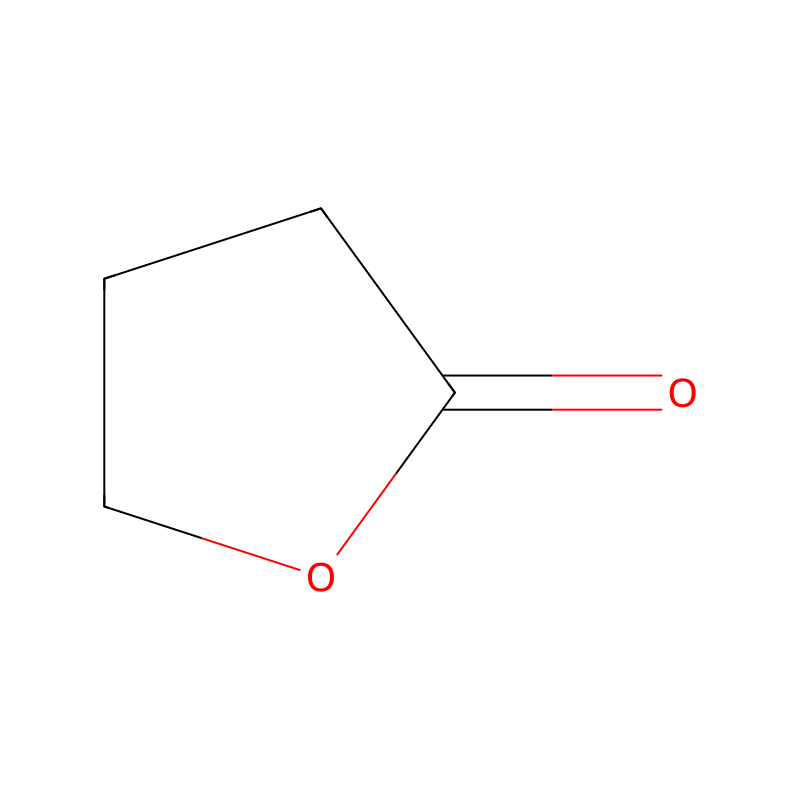
标识与物理属性
| CAS No. | 96-48-0 |
|---|---|
| 分子式 | C4H6O2 |
| 平均分子量 | 86.09 g/mol |
| 单同位素质量 | 86.03677943 g/mol |
| SMILES | O=C1CCCO1 |
| InChIKey | YEJRWHAVMIAJKC-UHFFFAOYSA-N |
| PubChem CID | 7302 |
| ChEMBL | CHEMBL95681 |
| ChEBI | CHEBI:42639 |
| EC No. | 202-509-5 |
| DTXSID | DTXSID6020224 |
| 中文名 | γ-丁内酯 |
化学与物理性质
| XLogP | -0.6 |
|---|---|
| 极性表面积 | 26.3 |
| 氢键供体 | 0 |
| 氢键受体 | 2 |
| 可旋转键 | 0 |
| 重原子 | 6 |
| 形式电荷 | 0 |
| 复杂度 | 67.9 |
| 物质类别 | Other Classes -> Lactones |
| 药物 | Pharmaceuticals -> Listed in ZINC15 |
| 脂质 | Fatty Acyls [FA] -> Fatty esters [FA07] -> Lactones [FA0704] |
| 化妆品 | Solvent |
| SpringerMaterials Properties | Boiling point |
| 香料 | Fragrance Ingredient (4-Hydroxybutanoic acid lactone) -> IFRA transparency List |
| LogP(油水分配系数) | log Kow = -0.64 |
| 气味 | Pleasant odorFaint odorat 100.00 %. creamy oily fatty caramel |
| 食品添加剂 | FLAVORING AGENT OR ADJUVANT -> FDA Substance added to food |
| 密度 | 1.1286 at 59 °F (NTP, 1992) - Denser than waterwill sink1.1296 g/cu cm at 20 °CDensity: 1.1441 at 0 °C/0 °C1.1286 at 15 °C/0 °CRelative density (water = 1): 1.13 (20 °C)1.120-1.1301.41 @ 0°C1.12 g/mL at 25 °C (lit.) |
| 食用香料 | EU Flavoring substances |
| Viscosity | 1.75 centipoise at 25 °C |
| 熔点 | -45 °C (lit.) |
| 沸点 | 204-205 °C (lit.) |
| 蒸气密度 | 3 (vs air) |
| 蒸气压 | 1.5 mm Hg ( 20 °C) |
| 折射率 | n20/D 1.436(lit.) |
| FEMA | 3291 | 4-HYDROXYBUTANOIC ACID LACTONE |
| 闪点 | 209 °F |
| 储存条件 | 2-8°C |
| 溶解性 | DMF: 10 mg/mlDMSO: 10 mg/mlEthanol: 10 mg/mlPBS (pH 7.2): 1 mg/mlMISCIBLE |
| 形态 | liquid |
| 颜色 | Clear colorless |
| pH | 4-5 (20°C, 100g/L in H2O) |
| 酸碱指示剂变色ph值范围 | 4 at 100 g/l at 20 °C |
| 香型 | creamy |
| 生物来源 | synthetic |
| 爆炸极限 | 16% |
| 比热容 | Cp(liquid): 1.64 J/(g·K), at 25℃ |
| Merck | 13,1596 |
| JECFA Number | 219 |
| BRN | 105248 |
| 亨利常数 | 1.9×10² mol/(m3Pa) at 25℃, Duchowicz et al. (2020) |
| 介电常数 | 40.960000000000001 |
| 稳定性 | Stable. Hygroscopic. Incompatible with strong oxidizing agents, strong acids, strong bases, strong reducing agents. |
| 主要应用 | cleaning productscosmeticsflavors and fragrancesfood and beveragespersonal care |
| 化妆品成分功效 | FRAGRANCEPERFUMINGSOLVENT |
| InChI | 1S/C4H6O2/c5-4-2-1-3-6-4/h1-3H2 |
| InChIKey | YEJRWHAVMIAJKC-UHFFFAOYSA-N |
| SMILES | O=C1CCCO1 |
| LogP(油水分配系数) | -0.566 at 25℃ |
| CAS 数据库 | 96-48-0(CAS DataBase Reference) |
| (IARC)致癌物分类 | 3 (Vol. 11, Sup 7, 71) 1999 |
| NIST化学物质信息 | «gamma»-Butyrolactone(96-48-0) |
| EPA化学物质信息 | .gamma.-Butyrolactone (96-48-0) |
化学性质
无色透明液体。 与水及一般有机溶剂可以互溶。在脂肪烃中微溶。
安全与法规
| GHS 分类 | This chemical does not meet GHS hazard criteria for 0.4% (16 of 3692) of reports.DangerH302 (99.6%): Harmful if swallowed [Warning Acute toxicity, oral]P261, P264, P264+P265, P270, P271, P280, P301+P317, P302+P352, P304+P340, P305+P351+P338, P305+P354+P338, P316, P317, P319, P321, P330, P332+P317, P337+P317, P362+P364, P403+P233, P405, and P501 (click each P-code to see the statement)Aggregated GHS information provided per 3692 reports by companies from 55 notifications to the ECHA C&L Inventory. Each notification may be associated with multiple companies. |
|---|---|
| 法规信息 | Chemical: 2(3H)-Furanone, dihydro-List I Chemical: A chemical specified by regulation that, in addition to legitimate uses, is used in manufacturing a controlled substance in violation of the Act and is important to the manufacture of a controlled substance. (21 eCFR 1310.02)Regulation (EC) No 1831/2003 (amended)2(3H)-Furanone, dihydro- is listed on the EPA's Chemical Data Reporting (CDR) system. Manufacturers and importers of 2(3H)-Furanone, dihydro- are required to report information about their production and use of this chemical to the EPA under the Toxic Substances Control Act (TSCA). (40 eCFR Part 711)Status: Active Update: 23-02-2023 https://echa.europa.eu/registration-dossier/-/registered-dossier/149902(3H)-Furanone, dihydro-: Does not have an individual approval but may be used under an appropriate group standard |
| 火灾危害 | This chemical is combustible. (NTP, 1992)Combustible. Gives off irritating or toxic fumes (or gases) in a fire. Risk of fire and explosion on contact with incompatible substances. See Chemical Dangers. |
| 火灾可能性 | Combustible when exposed to heat or flame ... |
| 健康危害 | SYMPTOMS: Symptoms of exposure to this compound may include irritation of the eyes, skin and mucous membranes. |
| 危害概述 | Inhalation of butyrolactone produces anesthesia in experimental animals[HSDB] An eye irritantInhalation of high concentrations can cause CNS depression[ICSC] |
| FDA 要求 | The following chemicals have been specifically designated by the Administrator of the Drug Enforcement Administration as the listed chemicals subject to the provisions of this part and parts 1309 and 1313 of this chapter. Each chemical has been assigned the DEA Chemical Code Number set forth opposite it. gamma-Butyrolactone (DEA Code Number: 2011) is included on List 1 chemicals. |
| 反应性基团 | Esters, Sulfate Esters, Phosphate Esters, Thiophosphate Esters, and Borate Esters |
| Special Reports | BG ChemieToxicological Evaluation No. 7: gamma-Butyrolactone (96-48-0) p.54 (11/2000). Avaliable from the query page: http://www.bgchemie.de/toxicologicalevaluations as of March 17, 2008DHHS/NTPToxicology & Carcinogenesis Studies of gamma-Butyrolactone in F344/N Rats and B6C3F1 Mice (Gavage Studies) Technical Report Series No. 406 (1992) NIH Publication No. 92-3137 |
| FIFRA 要求 | Residues of gamma-butyrolactone are exempted from the requirement of a tolerance when used as a solvent in accordance with good agricultural practice as inert (or occasionally active) ingredients in pesticide formulations applied to growing crops only. |
| Reactivity Profile | 4-BUTYROLACTONE can react with oxidizing materials, inorganic acids and bases, alcohols and amines. Rapidly hydrolyzed by bases and slowly hydrolyzed by acids. It is volatile with steam. (NTP, 1992). The combination of the lactone, butanol, 2,4-dichlorophenol, and sodium hydroxide in the attempted synthesis of 2,4-dichlorophenoxybutyric acid caused a thermal runaway reaction that eventually exploded, [CISHC Chem. Safety Summ., 1977, 48, 3]. |
| Chemical Dangers | Reacts with acids, bases, alcohols, amines and oxidants. This generates fire and explosion hazard. Decomposes on burning. This produces irritating fumes. |
| Air and Water Reactions | Hygroscopic. Soluble in water. |
| 消防 | Fires involving this material can be controlled with a dry chemical, carbon dioxide or Halon extinguisher. (NTP, 1992)Use water spray, powder, alcohol-resistant foam, carbon dioxide. In case of fire: keep drums, etc., cool by spraying with water. |
| 急救措施 | Fresh air, rest. Seek medical attention if you feel unwell.Wear protective gloves when administering first aid. Rinse skin with plenty of water or shower.Rinse with plenty of water for several minutes (remove contact lenses if easily possible). Refer immediately for medical attention.Rinse mouth. Refer for medical attention . |
| 急救 | EYES: First check the victim for contact lenses and remove if present. Flush victim's eyes with water or normal saline solution for 20 to 30 minutes while simultaneously calling a hospital or poison control center. Do not put any ointments, oils, or medication in the victim's eyes without specific instructions from a physician. IMMEDIATELY transport the victim after flushing eyes to a hospital even if no symptoms (such as redness or irritation) develop. |
| 安全储存 | Store only in original container. Separated from acids, alcohols, amines, bases and oxidants. Dry. Well closed. Store in an area without drain or sewer access. |
| 灭火程序 | Alcohol foam.To fight fire, use foam, ... carbon dioxide, dry chemical. |
| 储存条件 | Butyrolactone can be stored indefinitely. The pure product is noncorrosive and therefore can be stored and transported in carbon steel containers. Butyrolactone becomes slightly yellow on prolonged storage in carbon steel vessels without nitrogen padding. In this case stainless steel containers are recommended. The hygroscopicity of the product requires some precautions. Butyrolactone attacks concrete vigorously.Separated from acids, alcohols, amines and bases. Dry. |
| 清理方法 | /Lab quantity/. Absorb on paper. Evaporate on a glass or an iron dish in hood. Burn the paper.Collect leaking liquid in sealable containers. Absorb remaining liquid in sand or inert absorbent and remove to safe place. (Extra personal protection: filter respirator for organic gases and vapors). |
| 非火灾泄漏应对 | SMALL SPILLS AND LEAKAGE: If you spill this chemical, FIRST REMOVE ALL SOURCES OF IGNITION. Then, use absorbent paper to pick up all liquid spill material. Seal the absorbent paper, as well as any of your clothing which may be contaminated, in a vapor-tight plastic bag for eventual disposal. Wash any surfaces you may have contaminated with a soap and water solution. Do not reenter the contaminated area until the Safety Officer (or other responsible person) has verified that the area has been properly cleaned. |
| 处置方法 | SRP: At the time of review, criteria for land treatment or burial (sanitary landfill) disposal practices are subject to significant revision. Prior to implementing land disposal of waste residue (including waste sludge), consult with environmental regulatory agencies for guidance on acceptable disposal practices. |
| 泄漏处置 | Personal protection: filter respirator for organic gases and vapours adapted to the airborne concentration of the substance. Do NOT let this chemical enter the environment. Collect leaking liquid in sealable containers. Absorb remaining liquid in sand or inert absorbent. Then store and dispose of according to local regulations. |
| Preventive Measures | SRP: Contaminated protective clothing should be segregated in such a manner so that there is no direct personal contact by personnel who handle, dispose, or clean the clothing. Quality assurance to ascertain the completeness of the cleaning procedures should be implemented before the decontaminated protective clothing is returned for reuse by the workers. Contaminated clothing should not be taken home at end of shift, but should remain at employee's place of work for cleaning. |
| Eye Prevention | Wear safety goggles. |
| Treatment | In case of oral exposure, administer a benzodiazepine IV. There is no antidote. Treatment is symptomatic and supportive. (T36) |
| 健康影响 | CNS depressionamnesia and hypotonia. Rarely, hypertension, orthostatic hypotension, apnea, dyskinesias, dystonias, and hypomania occur. |
| 环境归趋 | TERRESTRIAL FATE: Based on a classification scheme(1), an estimated Koc value of 11(SRC), determined from a log Kow of -0.64(2) and a regression-derived equation(3), indicates that butyrolactone is expected to have very high mobility in soil(SRC). Volatilization of butyrolactone from moist soil surfaces is not expected to be an important fate process(SRC) given an estimated Henry's Law constant of 5.3X10⁻⁸ atm-cu m/mole(SRC), derived from its vapor pressure, 0.45 mm Hg(4), and assigned value for water solubility of 1X10+6 mg/L (miscible)(5). Butyrolactone is not expected to volatilize from dry soil surfaces(SRC) based upon a vapor pressure of 0.45 mm Hg(4). Butyrolactone, present at 100 mg/L, reached 77% of its theoretical biological oxygen demand in 2 weeks using an activated sludge inoculum at 30 mg/L and the Japanese MITI test(6), suggesting that biodegradation in soil is an important environmental fate process(SRC).AQUATIC FATE: Based on a classification scheme(1), an estimated Koc value of 11(SRC), determined from a log Kow of -0.64(2) and a regression-derived equation(3), indicates that butyrolactone is not expected to adsorb to suspended solids and sediment(SRC). Volatilization from water surfaces is not expected(3) based upon an estimated Henry's Law constant of 5.3X10⁻⁸ atm-cu m/mol(SRC), derived from its vapor pressure, 0.45 mm Hg(4), and assigned value for water solubility of 1X10+6 mg/L (miscible)(5). Hydrolysis in neutral aqueous solutions proceeds slowly at room temperature and more rapidly at acidic conditions and elevated temperaturesunder alkaline conditions hydrolysis is rapid and irreversible(6). According to a classification scheme(7), an estimated BCF of 3.2(SRC), from its log Kow of -0.64(2) and a regression-derived equation(8), suggests the potential for bioconcentration in aquatic organisms is low(SRC). Butyrolactone reached 77% of its theoretical biological oxygen demand in 2 weeks using the Japanese MITI test(9), suggesting that biodegradation in water is an important environmental fate process(SRC).ATMOSPHERIC FATE: According to a model of gas/particle partitioning of semivolatile organic compounds in the atmosphere(1), butyrolactone, which has a vapor pressure of 0.45 mm Hg at 25 °C(2), is expected to exist solely as a vapor in the ambient atmosphere. Vapor-phase butyrolactone is degraded in the atmosphere by reaction with photochemically-produced hydroxyl radicals(SRC)the half-life for this reaction in air is estimated to be 6.9 days(SRC), calculated from its rate constant of 2.3X10⁻¹² cu cm/molecule-sec at 25 °C(SRC) that was derived using a structure estimation method(3). Butyrolactone does not contain chromophores that absorb at wavelengths >290 nm(4) and therefore is not expected to be susceptible to direct photolysis by sunlight(SRC). |
| 食品调查数值 | Using high-flow dynamic headspace isolation and capillary GC/MS analysis, butyrolactone was found in rice cakes at concns ranging from 750 to 1000 ppb(1). Butyrolactone has been identified as a constituent of coffee aroma(2), an odor compound in frankfurters(3), a volatile flavor component of roasted filberts(4), and a volatile component of chickpeas(5). Using a dry method, popcorn contained 22,000 ug/kg of butyrolactone(6). Butyrolactone was detected at a concn of 50 ppb in pureed mango(7) and was qualitatively detected in the tropical fruit rambutan(8). Raw earth almonds have been found to contain 0.4% butyrolactone(9). |
| 不良影响 | Neurotoxin - Acute solvent syndrome |
| 暴露途径 | The substance can be absorbed into the body by inhalation of its vapour, by ingestion and through the skin.Inhalation (A626)oral (A626)injection (A626)dermal (A626). |
| 毒性概述 | Gamma-butyrolactone is rapidly converted to gamma-hydroxybutyrate. This may account for the subsequent central nervous system depressant. Gamma-butyrolactone is an anesthetic that causes a selective increase in brain dopamine by antagonizing transmitter release from nerve terminal. It is also an endogenous brain metabolite that may be derived from glutamate through gamma-aminobutyrate. GBL binds to the picrotoxin receptor (A566, A318). |
| Average Daily Intake | Annual consumption is 1866.67 lb. Individual consumption is 0.001581 mg/kg/day. |
| Signs and Symptoms | Cough. Sore throat. Drowsiness.MAY BE ABSORBED!Redness. Pain.Vomiting. Drowsiness. Laboured breathing. Unconsciousness.Headache, confusion, ataxia, urinary incontinence or urgency, difficulty breathing, bradycardia, uncontrollable shaking, hallucinations, seizure-like activity (uncontrollable or unusual movements), and acidosis. Hypothermia has been reported in adults and children following exposure (T36). |
| Ongoing Test Status | The following link will take the user to the National Toxicology Program (NTP) Test Agent Search Results page, which tabulates all of the "Standard Toxicology & Carcinogenesis Studies", "Developmental Studies", and "Genetic Toxicity Studies" performed with this chemical. Clicking on the "Testing Status" link will take the user to the status (i.e., in review, in progress, in preparation, on test, completed, etc.) and results of all the studies that the NTP has done on this chemical. [http://ntp-apps.niehs.nih.gov/ntp_tox/index.cfm?fuseaction=ntpsearch.searchresults&searchterm=96-48-0] |
| ICSC Environmental Data | The substance is harmful to aquatic organisms. |
| Soil Adsorption/Mobility | The Koc of butyrolactone is estimated as 11(SRC), using a log Kow of -0.64(1) and a regression-derived equation(2). According to a classification scheme(3), this estimated Koc value suggests that butyrolactone is expected to have very high mobility in soil. |
| 水危害等级(WGK) | 1 |
| TSCA 清单状态 | TSCA listed |
| 毒性 | LD50 orally in rats: 17.2 ml/kg (Smyth) |
| RTECS 号 | LU3500000 |
| 储存类别 | 10 - Combustible liquids |
| 安全说明(S) | 26-36-39-36/37-16 |
| 海关编码 | 29322980 |
| 自燃温度 | 851 °F |
| 危险品标志 | Xn,F |
| 危险类别 | Acute Tox. 4 OralEye Dam. 1STOT SE 3 |
| 危险类别码(R) | 22-36-67-41-20/21/22-11 |
| 毒害物质数据 | 96-48-0(Hazardous Substances Data) |
急性毒性
口服-大鼠 LD50: 1540 毫克/公斤; 口服-小鼠 LD50: 1720 毫克/公斤
爆炸物危险特性
与丁醇, 2,4-二氯酚和氢氧化钠混合物反应可爆
可燃性危险特性
遇热,明火易燃; 可与氧化剂反应;热分解排出有毒辛辣刺激烟雾
储运特性
库房通风低温干燥; 与氧化剂分开存放; 防火
灭火剂
干粉、二氧化碳、泡沫
用途与应用
简介
γ-丁内酯是无色油状液体,有类似丙酮气味,沸点范围为201~206℃,凝固点约为-43℃,密度(20℃)为1.13g/cm3,闪点为104℃。能与水、醇、酮、酯及芳烃混溶。有限溶解于脂肪烃和环脂烃。
用途
γ-丁内酯用途广泛,在聚氨酯领域,可用作聚氨酯的黏度改性剂(活性稀释剂)以及聚氨酯和氨基涂料体系的固化剂。
用途
γ-丁内酯是植物生长调节剂吲哚丁酸的中间体。
用途
用于生产环丙胺、吡咯烷酮等药品,也是工业的溶剂、稀释剂、固化剂等
用途
用作气相色谱固定液、合成丁酸、丁二酸等中间体及溶剂
用途
γ-丁内酯是一种溶解性强、无毒、使用管理安全方便的高沸点溶剂,在石油加工中用作丁二烯、芳烃、高级润滑脂的抽提剂;在化纤行业中用作丙烯腈纤维的纺丝溶剂,是羊毛、尼龙、丙烯腈等纤维的染色助剂。在有机合成中,GBL也有广泛的用途,它是合成α-吡咯烷酮、N-甲基吡咯烷酮、乙烯基吡咯烷酮、乙酰基-γ-丁内酯、环丙胺等的原料,是合成杀虫剂、除草剂、药物脑复康、环丙氟哌酸、维生素B1,叶绿素等的中间体。还用于合成氯苯氧基丁酸类除莠剂,植物生长调节剂。
制备与合成方法
生产方法
1.顺酐加氢法该法是70年代发展的先进工艺,用一段加氢反应,能以任意比例生产四氢呋喃和γ-丁内酯,通常的比例是四氯呋喃:γ-丁内酯=3-4:1。生产企业较多,但规模小,平均300t/a。该法产能占国内总产能的30%。2.1,4-丁二醇脱氢法反应器为列管式,装填片状的铜催化剂(以氧化锌为载体)。反应温度控制在230-240℃。反应产物粗γ-丁内酯经减压蒸馏而得成品,收率77%以上。
生产方法
其制备方法是以1,4-丁二醇为原料,先预热,与氢气在铜催化剂存在下反应,温度控制在230~240℃,得到γ-丁内酯粗品,经减压蒸馏而得产品。目前已用顺酐法经加氢而得丁二酸酐,再进一步加氢脱水得产品。