基本信息
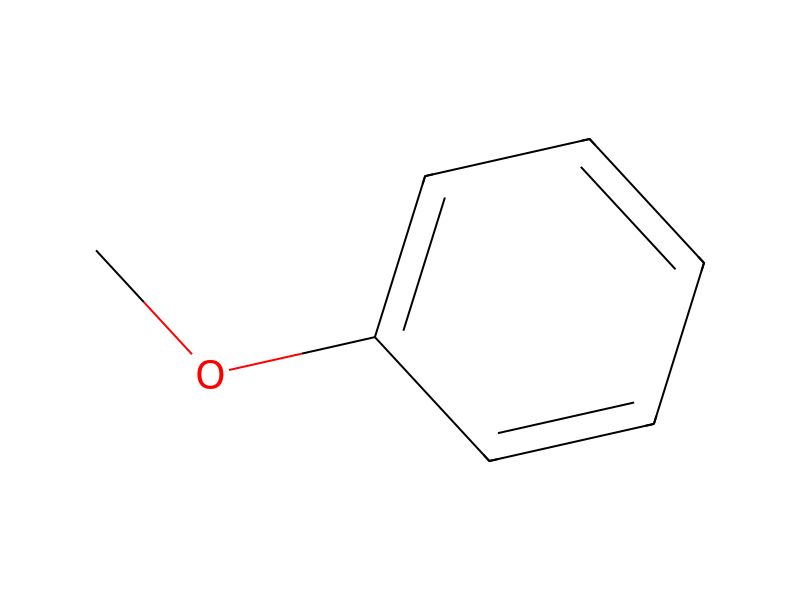
- 标准SMILES
COc1ccccc1- InChIKey
RDOXTESZEPMUJZ-UHFFFAOYSA-N- 分子式
- C7H8O
- 平均分子量
- 108.14 g/mol
- 单同位素质量
- 108.05751487
名称与标识
- 首选名称
- Anisole
- IUPAC
- anisole
- 中文名
- 苯甲醚
- 英文名
- Anisole
- 分子式
- C7H8O
- 分子量
- 108.14
名称与别名
ANISOLEMethoxybenzene100-66-3Benzene, methoxy-Methyl phenyl etherPhenoxymethaneAnisolPhenyl methyl etherAnizolPhenol methyl etherEther, methyl phenylBenzene, methoxy
展开更多名称
苯甲醚茴香醚水苯甲醚甲氧基苯無水苯甲醚苯基甲基醚甲基苯基醚苯甲醚CP无水苯甲醚超干苯甲醚MOBFEMA 2097MethoxybenzineANISLOE
FEMA No. 2097B3W693GAZHNSC-7920DTXSID4041608CHEBI:16579RefChem:5555DTXCID2021608202-876-1
数据库标识
- CAS
100-66-3- PubChem CID
- 7519
- DTXSID
DTXSID4041608- ChEMBL
CHEMBL278024- ChEBI
CHEBI:16579- UNII
- B3W693GAZH
- EC Number
- 202-876-1
- Nikkaji
- J4.012F
性质
结构计算性质
- XLogP
- 2.1
- 极性表面积
- 9.2 Ų
- 氢键供体
- 0
- 氢键受体
- 1
- 可旋转键
- 1
- 重原子
- 8
- 形式电荷
- 0
- 复杂度
- 55
实验与物化性质
LogP
Log Kow = 2.11
2.11
2.11
Odor
SWEET ANISE-LIKE ODOR
Agreeable aromatic odor
Spicy-sweet
TasteSWEET
Density
0.9956 AT 18 °C/4 °C
PER CENT IN SATURATED AIR: 0.41; DENSITY OF SATURATED AIR: 1.1 (AIR= 1)
Relative density (water = 1): 0.99
0.990-0.993
1.515 @25 °C
Viscosity1.52 centipoise at 15 °C; 0.778 centipoise at 30 °C
Color/Form
MOBILE LIQUID, CLEAR STRAW COLOR
Colorless liquid
Solubility
SOLUBLE IN ALCOHOL AND ETHER
VERY SOLUBLE IN ACETONE
Water solubility = 1520 mg/L
Water solubility = 10,400 mg/L
Water solubility = 143 mg/L
1.04 mg/mL at 25 °C
Flash Point
125 °F (NFPA, 2010)
52 °C
125 °F (52 °C) (OPEN CUP)
52 °C o.c.
Boiling Point
155.5 °C AT 760 MM HG
153.00 to 155.00 °C. @ 760.00 mm Hg
155 °C
154 °C
153.8 °C @760 [mm Hg]
DecompositionWhen heated to decomp, emits acrid fumes.
Melting Point
-37.3 °C
-37.5 °C
-37 °C
-37.3 °C
Vapor Density
3.72 (AIR= 1)
Relative vapor density (air = 1): 3.7
物理化学性质
- 熔点
- -37 °C · -37 °C (lit.)
- 沸点
- 154 °C · 154 °C (lit.)
- 密度
- 0.995 g/mL · 0.995 g/mL at 25 °C (lit.)
- 蒸气密度
- 3.7 · 3.7 (vs air)
- 蒸气压
- 10 mm · 10 mm Hg ( 42.2 °C)
- 折射率
- 20 · n20/D 1.516(lit.)
- FEMA
- 2097 · 2097 | ANISOLE
- 闪点
- 125 °F · 125 °F
- 储存条件
- 30 °C · Store below +30°C.
- 溶解度
- 1.71 g/l · 1.71g/l
- 形态
- Liquid
- 颜色
- Clear colorless
- 相对极性
- 0.198 · 0.198
- 气味 (Odor)
- phenol, anise odor
- 嗅觉阈值(Odor Threshold)
- 0.057 ppm · 0.057ppm
- 香型
- phenolic
- 生物来源
- synthetic
- 爆炸极限值(explosive limit)
- 0.34 · 0.34-6.3%(V)
- 水溶解性
- 1.6 g/L · 1.6 g/L (20 ºC)
- 热导率
- 0.145 W/ · 0.145 W/(m·K) at 25 ℃
- Merck
- 14 · 14,669
- JECFA Number
- 1241 · 1241
- BRN
- 506892 · 506892
- Henry's Law Constant
- 2.9 · 2.9×10-2 mol/(m3Pa) at 25℃, Brockbank (2013)
- 介电常数
- 4.3 · 4.3(20℃)
- 稳定性
- Stable. Flammable. Incompatible with strong oxidizing agents.
- 化妆品成分功效
- PERFUMING
- InChI
- 1S/C7H8O/c1-8-7-5-3-2-4-6-7/h2-6H,1H3
- InChIKey
- RDOXTESZEPMUJZ-UHFFFAOYSA-N
- SMILES
- COc1ccccc1
- LogP
- 2.62 at · 2.62 at 30℃
- CAS 数据库
- 100 · 100-66-3(CAS DataBase Reference)
- NIST化学物质信息
- Benzene, methoxy-(100-66-3)
- EPA化学物质信息
- Anisole (100-66-3)
化学性质
无色液体,具有芳香气味。 不溶于水,溶于乙醇、乙醚。
安全与法规
GHS分类
GHS Classification
This chemical does not meet GHS hazard criteria for < 0.1% (1 of 2013) of reports.
Warning
H226 (> 99.9%): Flammable liquid and vapor [Warning Flammable liquids];H315 (76.5%): Causes skin irritation [Warning Skin corrosion/irritation];H319 (78.1%): Causes serious eye irritation [Warning Serious eye damage/eye irritation];H336 (13.1%): May cause drowsiness or dizziness [Warning Specific target organ toxicity, single exposure; Narcotic effects]
P210, P233, P240, P241, P242, P243, P261, P264, P264+P265, P271, P280, P302+P352, P303+P361+P353, P304+P340, P305+P351+P338, P319, P321, P332+P317, P337+P317, P362+P364, P370+P378, P403+P233, P403+P235, P405, and P501 (click each P-code to see the statement)
Aggregated GHS information provided per 2013 reports by companies from 29 notifications to the ECHA C&L Inventory. Each notification may be associated with multiple companies.;Reported as not meeting GHS hazard criteria per 1 of 2013 reports by companies.;There are 28 notifications provided by 2012 of 2013 reports by companies with hazard statement code(s).;Information may vary between notifications depending on impurities, additives, and other factors. The percentage value in parenthesis indicates the notified classification ratio from companies that provide hazard codes. Only hazard codes with percentage values above 10% are shown. For more detailed information, please visit ECHA C&L website.
危害信息
Regulatory Information
Chemical: Benzene, methoxy-
Commission Regulation (EC) No 1565/2000 (Repealed by Com. Implementing Reg. (EU) No 872/2012)
Benzene, methoxy- is listed on the EPA's Chemical Data Reporting (CDR) system. Manufacturers and importers of Benzene, methoxy- are required to report information about their production and use of this chemical to the EPA under the Toxic Substances Control Act (TSCA). (40 eCFR Part 711)
Status: Active Update: 06-10-2022 https://echa.europa.eu/registration-dossier/-/registered-dossier/14423;Status: Active Update: 16-09-2015 https://echa.europa.eu/registration-dossier/-/registered-dossier/16204;Status: Active Update: 21-11-2012 https://echa.europa.eu/registration-dossier/-/registered-dossier/6974;Status: Active Update: 03-07-2020 https://echa.europa.eu/registration-dossier/-/registered-dossier/31271
Benzene, methoxy-: HSNO Approval: HSR001037 Approved with controls
The New Jersey Worker and Community Right to Know Act requires public and private employers to provide information about hazardous substances at their workplaces. (N.J.S.A. 34:5A-1 et. seq.)
DOT LabelFlammable Liquid
Fire Hazards
Excerpt from ERG Guide 128 [Flammable Liquids (Water-Immiscible)]:;HIGHLY FLAMMABLE: Will be easily ignited by heat, sparks or flames. Vapors may form explosive mixtures with air. Vapors may travel to source of ignition and flash back. Most vapors are heavier than air. They will spread along the ground and collect in low or confined areas (sewers, basements, tanks, etc.). Vapor explosion hazard indoors, outdoors or in sewers. Those substances designated with a (P) may polymerize explosively when heated or involved in a fire. Runoff to sewer may create fire or explosion hazard. Containers may explode when heated. Many liquids will float on water. Substance may be transported hot. For hybrid vehicles, ERG Guide 147 (lithium ion or sodium ion batteries) or ERG Guide 138 (sodium batteries) should also be consulted. If molten aluminum is involved, refer to ERG Guide 169. (ERG, 2024)
· HIGHLY FLAMMABLE: Will be easily ignited by heat, sparks or flames.;· Vapors may form explosive mixtures with air.;· Vapors may travel to source of ignition and flash back.;· Most vapors are heavier than air. They will spread along the ground and collect in low or confined areas (sewers, basements, tanks, etc.).;· Vapor explosion hazard indoors, outdoors or in sewers.;· Those substances designated with a (P) may polymerize explosively when heated or involved in a fire.;· Runoff to sewer may create fire or explosion hazard.;· Containers may explode when heated.;· Many liquids will float on water.;· Substance may be transported hot.;· For hybrid vehicles, GUIDE 147 (lithium ion or sodium ion batteries) or GUIDE 138 (sodium batteries) should also be consulted.;· If molten aluminum is involved, refer to GUIDE 169.
Flammable. Above 52 °C explosive vapour/air mixtures may be formed.
Health Hazards
Excerpt from ERG Guide 128 [Flammable Liquids (Water-Immiscible)]:;CAUTION: Petroleum crude oil (UN1267) may contain TOXIC hydrogen sulphide gas. Inhalation or contact with material may irritate or burn skin and eyes. Fire may produce irritating, corrosive and/or toxic gases. Vapors may cause dizziness or asphyxiation, especially when in closed or confined areas. Runoff from fire control or dilution water may cause environmental contamination. (ERG, 2024)
CAUTION: Petroleum crude oil (UN1267) may contain TOXIC hydrogen sulphide gas.;· Inhalation or contact with material may irritate or burn skin and eyes.;· Fire may produce irritating, corrosive and/or toxic gases.;· Vapors may cause dizziness or asphyxiation, especially when in closed or confined areas.;· Runoff from fire control or dilution water may cause environmental contamination.
Hazards SummaryCauses CNS depression in high-dose animal studies; [HSDB] A skin, eye, and respiratory tract irritant; [ICSC] May cause irritation; [MSDSonline]
DOT ID and Guide2222 128
FDA Requirements
Anisole is a food additive permitted for direct addition to food for human consumption as a synthetic flavoring substance and adjuvant in accordance with the following conditions: 1) the quantity added to food does not exceed the amount reasonably required to accomplish its intended physical, nutritive, or other technical effect in food, and 2) when intended for use in or on food it is of appropriate food grade and is prepared and handled as a food ingredient.
Reactive GroupEthers
UN ClassificationUN Hazard Class: 3; UN Pack Group: III
Special Reports
OPDYKE DL J; MONOGRAPHS ON FRAGRANCE RAW MATERIALS. ANISOLE; FOOD TOXICOL 17(3) 243 (1979). A REVIEW WITH 37 REF ON ANISOLE INCLUDING TOXICITY, IRRITATION, SENSITIZATION, METAB, PHARMACOLOGY, TUMOR PROMOTING ACTIVITY, & CYTOTOXICITY.
Schultz TW et al; J Appl Toxicol 13 (6): 429-34 (1993). Predicted toxicities of aryl alkanols and related compounds /including anisole to Tetrahymena pyriformis in a population growth impairment assay/.
Reactivity AlertsHighly Flammable;Peroxidizable Compound
Reactivity Profile
Ethers, such as ANISOLE can act as bases. They form salts with strong acids and addition complexes with Lewis acids. The complex between diethyl ether and boron trifluoride is an example. Ethers may react violently with strong oxidizing agents. In other reactions, which typically involve the breaking of the carbon-oxygen bond, ethers are relatively inert.
安全与防护
Fire Fighting
Excerpt from ERG Guide 128 [Flammable Liquids (Water-Immiscible)]:;CAUTION: The majority of these products have a very low flash point. Use of water spray when fighting fire may be inefficient. CAUTION: For mixtures containing alcohol or polar solvent, alcohol-resistant foam may be more effective.;SMALL FIRE: Dry chemical, CO2, water spray or regular foam. If regular foam is ineffective or unavailable, use alcohol-resistant foam.;LARGE FIRE: Water spray, fog or regular foam. If regular foam is ineffective or unavailable, use alcohol-resistant foam. Avoid aiming straight or solid streams directly onto the product. If it can be done safely, move undamaged containers away from the area around the fire.;FIRE INVOLVING TANKS, RAIL TANK CARS OR HIGHWAY TANKS: Fight fire from maximum distance or use unmanned master stream devices or monitor nozzles. Cool containers with flooding quantities of water until well after fire is out. For petroleum crude oil, do not spray water directly into a breached tank car. This can lead to a dangerous boil over. Withdraw immediately in case of rising sound from venting safety devices or discoloration of tank. ALWAYS stay away from tanks in direct contact with flames. For massive fire, use unmanned master stream devices or monitor nozzles; if this is impossible, withdraw from area and let fire burn. (ERG, 2024)
Use foam, powder, carbon dioxide. In case of fire: keep drums, etc., cool by spraying with water.
First Aid Measures
Fresh air, rest.
Remove contaminated clothes. Rinse and then wash skin with water and soap.
First rinse with plenty of water for several minutes (remove contact lenses if easily possible), then refer for medical attention.
Rinse mouth. Do NOT induce vomiting. Refer for medical attention .
Accidental Release Measures
· CALL 911. Then call emergency response telephone number on shipping paper. If shipping paper not available or no answer, refer to appropriate telephone number listed on the inside back cover.;· Keep unauthorized personnel away.;· Stay upwind, uphill and/or upstream.;· Ventilate closed spaces before entering, but only if properly trained and equipped.
· ELIMINATE all ignition sources (no smoking, flares, sparks or flames) from immediate area.;· All equipment used when handling the product must be grounded.;· Do not touch or walk through spilled material.;· Stop leak if you can do it without risk.;· Prevent entry into waterways, sewers, basements or confined areas.;· A vapor-suppressing foam may be used to reduce vapors.;· Absorb or cover with dry earth, sand or other non-combustible material and transfer to containers.;· Use clean, non-sparking tools to collect absorbed material.;Large Spill;· Dike far ahead of liquid spill for later disposal.;· Water spray may reduce vapor, but may not prevent ignition in closed spaces.
First Aid
Excerpt from ERG Guide 128 [Flammable Liquids (Water-Immiscible)]:;Refer to the "General First Aid" section. Specific First Aid: Wash skin with soap and water. In case of burns, immediately cool affected skin for as long as possible with cold water. Do not remove clothing if adhering to skin. (ERG, 2024)
General First Aid:;· Call 911 or emergency medical service.;· Ensure that medical personnel are aware of the material(s) involved, take precautions to protect themselves and avoid contamination.;· Move victim to fresh air if it can be done safely.;· Administer oxygen if breathing is difficult.;· If victim is not breathing:;-- DO NOT perform mouth-to-mouth resuscitation; the victim may have ingested or inhaled the substance.;-- If equipped and pulse detected, wash face and mouth, then give artificial respiration using a proper respiratory medical device (bag-valve mask, pocket mask equipped with a one-way valve or other device).;-- If no pulse detected or no respiratory medical device available, provide continuous compressions. Conduct a pulse check every two minutes or monitor for any signs of spontaneous respirations.;· Remove and isolate contaminated clothing and shoes.;· For minor skin contact, avoid spreading material on unaffected skin.;· In case of contact with substance, remove immediately by flushing skin or eyes with running water for at least 20 minutes.;· For severe burns, immediate medical attention is required.;· Effects of exposure (inhalation, ingestion, or skin contact) to substance may be delayed.;· Keep victim calm and warm.;· Keep victim under observation.;· For further assistance, contact your local Poison Control Center.;· Note: Basic Life Support (BLS) and Advanced Life Support (ALS) should be done by trained professionals.;Specific First Aid:;· Wash skin with soap and water.
Safe StorageFireproof.
Exposure Control and Personal Protection· Wear positive pressure self-contained breathing apparatus (SCBA).;· Structural firefighters' protective clothing provides thermal protection but only limited chemical protection.
Fire Fighting Procedures
If material on fir or involved in fire: Do not extinguish fire unless flow can be stopped or safely confined. Use water in flooding quantities as fog. Solid streams of water may be ineffective. Cool all affected containers with flooding quantities of water. Apply water from as far a distance as possible. Use foam, dry chemical, or carbon dioxide. Keep run-off water out of sewers and water sources.
Nonfire Spill Response
Excerpt from ERG Guide 128 [Flammable Liquids (Water-Immiscible)]:;ELIMINATE all ignition sources (no smoking, flares, sparks or flames) from immediate area. All equipment used when handling the product must be grounded. Do not touch or walk through spilled material. Stop leak if you can do it without risk. Prevent entry into waterways, sewers, basements or confined areas. A vapor-suppressing foam may be used to reduce vapors. Absorb or cover with dry earth, sand or other non-combustible material and transfer to containers. Use clean, non-sparking tools to collect absorbed material.;LARGE SPILL: Dike far ahead of liquid spill for later disposal. Water spray may reduce vapor, but may not prevent ignition in closed spaces. (ERG, 2024)
Disposal Methods
SRP: At the time of review, criteria for land treatment or burial (sanitary landfill) disposal practices are subject to significant revision. Prior to implementing land disposal of waste residue (including waste sludge), consult with environmental regulatory agencies for guidance on acceptable disposal practices.
Spillage DisposalVentilation. Remove all ignition sources. Collect leaking and spilled liquid in sealable containers as far as possible. Absorb remaining liquid in sand or inert absorbent. Then store and dispose of according to local regulations.
Preventive Measures
If material not on fire and not involved in fire: keep sparks, flames, and other sources of ignition away. Keep material out of water sources and sewers. Build dikes to contain flow as necessary. Attempt to stop leak if without undue personnel hazard. Use water spray to knock-down vapors.
Personnel protection: Avoid breathing vapors. Keep upwind. Avoid bodily contact with the material. ... Do not handle broken packages unless wearing appropriate personal protective equipment. Wash away any material which may have contacted the body with copious amounts of water or soap and water. ... If contact with the material anticipated, wear appropriate chemical protective clothing.
Isolation and Evacuation
Excerpt from ERG Guide 128 [Flammable Liquids (Water-Immiscible)]:;IMMEDIATE PRECAUTIONARY MEASURE: Isolate spill or leak area for at least 50 meters (150 feet) in all directions.;LARGE SPILL: Consider initial downwind evacuation for at least 300 meters (1000 feet).;FIRE: If tank, rail tank car or highway tank is involved in a fire, ISOLATE for 800 meters (1/2 mile) in all directions; also, consider initial evacuation for 800 meters (1/2 mile) in all directions. (ERG, 2024)
Immediate precautionary measure;· Isolate spill or leak area for at least 50 meters (150 feet) in all directions.;Large Spill;· Consider initial downwind evacuation for at least 300 meters (1000 feet).;Fire;· If tank, rail tank car or highway tank is involved in a fire, ISOLATE for 800 meters (1/2 mile) in all directions; also, consider initial evacuation for 800 meters (1/2 mile) in all directions.
毒理信息
Environmental Fate
TERRESTRIAL FATE: Based on a recommended classification scheme(2), the experimentally-determined Koc value for anisole of 35(1) suggests that it will be highly mobile in soil and may leach(SRC). Its estimated Henry's Law constant(3), 4.35X10⁻³ atm-cu m/mole(SRC), vapor pressure, 3.4 mm Hg at 25 °C(5), and low adsorptivity to soil indicate that volatilization may be an important fate process from both moist and dry soil surfaces(4,SRC). Anisole has been demonstrated to be readily biodegradable in screening tests(6-8) and therefore may readily biodegrade in soil(SRC).
AQUATIC FATE: Anisole should volatilize from water based on its estimated Henry's Law constant of 4.4X10⁻³ atm-cu m/mole(SRC), derived from a fragment constant estimation method(3). Estimated half-lives for a model river and model lake are 3.2 hr and 4.2 days, respectively(4,SRC). Anisole has been demonstrated to be readily biodegradable in screening tests(5,6) and therefore may biodegrade in natural water(SRC). When anisole was added to a model aquatic ecosystem with fish, mosquito larva, alga, daphnia, and snails and incubated for 24 hr, the concentration of anisole was considerably reduced (by approximately 93%) and degradation products were found in the water(1). A Russian study reported that anisole was stable in water for 4 days(2). The details of the study were not available. According to a recommended classification scheme(8), experimental bioaccumulation factors obtained from a model aquatic ecosystem along with evidence of metabolism in aquatic organisms(1) suggests that bioaccumulation of anisole should not be a concern(SRC).
ATMOSPHERIC FATE: According to a theory of gas/particle partitioning of semivolatile organic compounds in the atmosphere(2), anisole, which has a vapor pressure of 3.5 mm Hg at 25 °C(3) will exist in the ambient atmosphere as a vapor(SRC). Vapor-phase anisole is degraded in the atmosphere by reaction with photochemically-produced hydroxyl radicals(SRC); the half-life for this reaction in air is estimated to be 22 hr(1,SRC). Anisole's water solubility in water is 1520 mg/L(4), and therefore it may be washed out of the atmosphere by rain(SRC).
Food Survey ValuesAnisole is a meat flavor volatile(1).
Adverse EffectsNeurotoxin - Acute solvent syndrome
Exposure RoutesThe substance can be absorbed into the body by inhalation.
Signs and Symptoms
Burning sensation. Cough. Sore throat.
Dry skin. Redness.
Redness. Pain.
Effluent Concentrations
In a comprehensive survey of wastewater from 4000 industrial and publicly owned treatment works (POTWs) sponsored by the Effluent Guidelines Division of the U.S. EPA, anisole was identified in discharges of the following industrial category (positive occurrences, median concn in ppb): organics and plastics (5; 64.8) and organic chemicals (30; 25.4)(1). The highest effluent concn in these industrial categories was 8660 ppb and 753 ppb, respectively(1). Anisole was found in 1 of 3 samples of trench leachate from the West Valley waste disposal site at a concn of 2.7 mg/L(2). Anisole was found in ponds holding wastes from olive oil production(3). It has also been detected in wastewater from coal gasification plants(4,5) and in one case reported to be 0.2 mg/L(4). Anisole was present in raw wastewater and final effluent from a dye manufacturing plant at levels of 37-190 ppb and 5-71 ppb, respectively(6).
Soil Adsorption/Mobility
An experimental Koc of 35 has been reported for anisole(1). Using an estimation method based on molecular connectivity indices(2), the Koc for anisole is estimated to be 118(SRC). According to a suggested classification scheme(3), these Koc values respectively suggest that anisole would be very highly mobile and highly mobile in soil and would readily leach(SRC).
Natural Pollution Sources
Anisole was identified as a compound isolated from essential oil of ocmum selloi.
Anisole has been found in lakes in the vicinity of Mount St Helens that received pyroclastic flow resulting from the volcanic eruption(1). It may also be formed during the combustion of hydrocarbons(2-4). This suggests that anisole may be formed naturally in the environment when hydrocarbons are burned(SRC). Since anisole has been reported as a meat flavor volatile(5), it may naturally occur in meat or be formed during cooking(SRC).
Human Toxicity Excerpts... Human volunteers exposed to 200 mg/cu m /exposure time not specified/ experienced burning in the throat, irritation of the eyes and a foreign taste in the mouth.
Artificial Pollution Sources
Anisole may be released to the environment during its manufacture, transport, disposal, and use(SRC) as an intermediate in the manufacture of organic compounds, for example fragrances and pharmaceuticals, and as a solvent and heat transfer medium(2). Anisole is formed as an impurity in the production of o-cresol and 2,6-xylenol by the alkylation of phenol with methanol(1). Anisole may be emitted from kerosine space heaters(3) and may occur in automobile exhaust(4,5).
Environmental Biodegradation
In a 2-week biodegradation screening test (MITI test) using anisole (100 ppm) and an activated sludge inoculum, 56% of BOD was removed and at the end of the 2-week period there was an upward trend in BOD consumption(1). Anisole was readily biodegradable in another screening test; >70% DOC and >60% BOD were removed in this test(3). Anisole completely degraded in a biodegradation test that utilized a soil inoculum(2).
Environmental Bioconcentration
Using its log Kow, 2.11(2), one estimates a BCF of 24 for anisole using a recommended regression equation(3). The bioconcentration of anisole in aquatic organisms was determined in a model aquatic ecosystem maintained at 26.7 °C with 12 hr of simulated daylight exposure(1). After 24 hr exposure, the ecological magnification for anisole was (organism, bioaccumulation factor): fish, 22; mosquito larva, 27; algae, 563; daphnia, 771; snails, 899(1). There were signs of considerable metabolism in all species. O-dealkylate occurred in fish and snail, hydroxylation to o- and p-methoxyphenols occurred in all species except daphnia, and conjugation occurred in alga and snails(1). According to a recommended classification scheme(4), this BCF value and its metabolism in aquatic organisms would indicate that anisole has a low potential for bioconcentration in fish and aquatic organisms(SRC).
法规信息
Regulatory Information
Chemical: Benzene, methoxy-
Commission Regulation (EC) No 1565/2000 (Repealed by Com. Implementing Reg. (EU) No 872/2012)
Benzene, methoxy- is listed on the EPA's Chemical Data Reporting (CDR) system. Manufacturers and importers of Benzene, methoxy- are required to report information about their production and use of this chemical to the EPA under the Toxic Substances Control Act (TSCA). (40 eCFR Part 711)
Status: Active Update: 06-10-2022 https://echa.europa.eu/registration-dossier/-/registered-dossier/14423;Status: Active Update: 16-09-2015 https://echa.europa.eu/registration-dossier/-/registered-dossier/16204;Status: Active Update: 21-11-2012 https://echa.europa.eu/registration-dossier/-/registered-dossier/6974;Status: Active Update: 03-07-2020 https://echa.europa.eu/registration-dossier/-/registered-dossier/31271
Benzene, methoxy-: HSNO Approval: HSR001037 Approved with controls
The New Jersey Worker and Community Right to Know Act requires public and private employers to provide information about hazardous substances at their workplaces. (N.J.S.A. 34:5A-1 et. seq.)
FDA Requirements
Anisole is a food additive permitted for direct addition to food for human consumption as a synthetic flavoring substance and adjuvant in accordance with the following conditions: 1) the quantity added to food does not exceed the amount reasonably required to accomplish its intended physical, nutritive, or other technical effect in food, and 2) when intended for use in or on food it is of appropriate food grade and is prepared and handled as a food ingredient.
安全数据
- wgk
- 2
- tsca
- TSCA listed
- 毒性
- LD50 orally in rats: 3700 mg/kg (Taylor)
- RTECS号
- BZ8050000
- 包装类别
- III
- 危险等级
- 3
- 存储类别
- 3 - Flammable liquids
- 安全说明
- 37/39-26-16-24/25
- 海关编码
- 29093090
- 自燃温度
- 887 °F
- 危险品标志
- Xn,Xi
- 危险性类别
- Flam. Liq. 3STOT SE 3
- 危险类别码
- 10-38-20-36/37
- 毒害物质数据
- 100-66-3(Hazardous Substances Data)
- 危险品运输编号
- UN 2222
毒性防护
毒性GRAS(FEMA)。LD50 3700mg/kg(大鼠,经口)。
急性毒性口服- 大鼠 LD50: 3700 毫克/ 公斤; 口服- 小鼠 LD50: 2800 毫克/ 公斤
刺激数据皮肤- 兔子 500 毫克/ 24小时 中度
职业标准STEL 10 毫克/ 立方米
包装储运
可燃性危险特性遇明火、高温、强氧化剂可燃;燃烧排放刺激烟雾
储运特性包装完整、轻装轻放; 库房通风、远离明火、高温、与氧化剂分开存放
灭火剂泡沫、二氧化碳、干粉、砂土
化学与工业
药理信息
Metabolism/Metabolites
ANISOLE YIELDS GUAIACOL, P-METHOXYPHENOL, AND PHENOL IN RABBITS. /FROM TABLE/
SEVERAL STRAINS OF ASPERGILLUS NIGER HYDROXYLATED ANISOLE TO GIVE O-HYDROXYANISOLE AS THE MAIN PRODUCT.
... THE MAJOR METABOLITE OF ANISOLE ... /IS/ P-HYDROXYPHENYL METHYL ETHER, WHICH WAS EXCRETED UNCONJUGATED (2%) AND CONJUGATED WITH GLUCURONIC ACID (48%) AND SULFURIC ACID (29%).
... ADMINISTERING ANISOLE TO THE DOG CAUSED AN INCREASE IN THE EXCRETION OF ETHEREAL SULFATE.
For more Metabolism/Metabolites (Complete) data for ANISOLE (7 total), please visit the HSDB record page.
Absorption, Distribution and Excretion
IN SITU PERFUSION IN RAT USED TO STUDY GASTROINTESTINAL ABSORPTION OF 4 FOOD ADDITIVES DERIVED FROM METHOXYBENZENE INCL ANISOLE. CMPD LARGELY WERE ABSORBED FROM DIGESTIVE TRACT BY PASSIVE DIFFUSION. ABSORPTION KINETICS VARY & ARE EXPLAINED BY DIFFERENCES IN LIPOSOLUBILITY.
Cellular LocationsCytoplasm;Extracellular
用途与制造
Uses
Used as a vermicide, flavoring agent, solvent, and heat transfer medium; Used in the production of fragrances, pharmaceuticals, and other organic compounds; [HSDB]
IN PERFUMERY; IN ORGANIC SYNTHESES
VERMICIDE; FLAVORING
Important intermediate in the manufacture of organic compounds, for example fragrances and pharmaceuticals. It is also used as a solvent and heat transfer medium.
U.S. Imports(1983) 9.01X10+6 g
U.S. Production
2023: 50,000 - <250,000 lb;2022: 250,000 - <550,000 lb;2021: 250,000 - <550,000 lb;2020: 50,000 - <250,000 lb
(1972) 8.85X10+7 GRAMS
(1975) PROBABLY GREATER THAN 9.1X10+5 GRAMS
Industry UsesSolvent
Methods of Manufacturing
REACTION OF PHENOL AND METHYL CHLORIDE IN THE PRESENCE OF SODIUM HYDROXIDE
FROM BROMOBENZENE; BY PASSING METHYL CHLORIDE INTO SUSPENSION OF SODIUM PHENOLATE IN LIQ AMMONIA. ...
Use Classification
Fragrance Ingredients
Flavouring Agent -> FLAVOURING_AGENT -> JECFA Functional Classes
Flavoring Agents -> JECFA Flavorings Index
Flavouring Agent -> FLAVOURING_AGENT -> JECFA Functional Classes
Flavouring Agent -> FLAVOURING_AGENT -> JECFA Functional Classes
Flavouring Agent -> FLAVOURING_AGENT -> JECFA Functional Classes
General Manufacturing Information
Computer and Electronic Product Manufacturing
Benzene, methoxy-: ACTIVE
18 ORG SOLVENTS INCL ANISOLE WERE SELECTED ON BASIS OF SUITABILITY FOR TOPICAL APPLICATION TECHNIQUE, SOLVENT POWER OVER RANGE OF ACARICIDES, & TOXICITY TO MITES TO BE TESTED AGAINST TETRANYCHUS URTICAE. 9 ACARICIDES WERE TESTED. ANISOLE WAS AN OUTSTANDING SOLVENT.
ANISOLE WAS IDENTIFIED AS A COMPD ISOLATED FROM ESSENTIAL OIL OF OCMUM SELLOI.
For the manufacture of phenol ethers with short-chained aliphatic groups, dialkyl sulfates are often used as alkylating agents.
应用领域
用途GB 2760—1996规定为允许使用的食品用香料。主要用于配制香草、茴香和啤酒型香精。
用途用作分析试剂、溶剂,也用于香料及肠内杀虫剂制备
用途用于生产香料、染料、医药、农药,也用作溶剂
用途用于有机合成,也用作溶剂、香料和驱虫剂。
用途用作重结晶的溶剂,恒温器填充剂,测折光率,香料、有机合成中间体
制备方法
生产方法由甲基化剂硫酸二甲酯在碱性溶液中与苯酚反应制得。将苯酚与氢氧化钠溶液混合,于10℃以下缓缓加入硫酸二甲酯。加毕,升温至40℃回流反应18h,然后静置分出油层,用无水氯化钙干燥后减夺蒸馏而得苯甲醚。
生产方法将甲基氯通入苯酚钠的液氨中反应而得。由苯酚和甲醇共热而得。由苯酚和硫酸二甲酯在氢氧化钠存在下反应而得。
上下游产品信息
上游原料
下游产品
试剂价格
- A12997 · 500g
- 苯甲醚, 99% Anisole, 99% — 612元
- 42925 · 1L
- 苯甲醚Anisole, 99%, Extra Dry, AcroSeal™, Thermo Scientific Chemicals — 5678元
供应商50 家
国药集团化学试剂有限公司86-21-63210123 · [email protected]
梯希爱(上海)化成工业发展有限公司021-67121386 · [email protected]
上海阿拉丁生化科技股份有限公司400-6206333 13167063860 · [email protected]
爱斯特(成都)生物制药股份有限公司+86-28-85122536 85324413 · [email protected]
上海迈瑞尔生化科技有限公司4006356688 18621169109 · [email protected]
宁波亿诺化学品有限公司86-574-27787657 · [email protected]
阿法埃莎(中国)化学有限公司400-6106006 · [email protected]
安耐吉化学&3A(安徽泽升科技股份有限公司)400-0056266 · [email protected]
上海景颜化工科技有限公司13817811078 · [email protected]
上海泰坦科技股份有限公司400-6009262 15618770481 · [email protected]
山东西亚化学有限公司13355009207 13355009207 · [email protected]
玛雅试剂+86 (573) 82222445 (0)18006601000 452520369 · [email protected]
四川库利南科技有限公司400-1166-196 18981987031 · [email protected]
天津希恩思生化科技有限公司400 638 7771 · [email protected]
斯百全化学(上海)有限公司021-021-021-67601398-809-809-809 15221380277 · [email protected]
艾科试剂4008-755-333 18080918076 · [email protected]
上海思域化工科技有限公司86-21-34053660 · [email protected]
赛默飞世尔科技(中国)有限公司800-810-5118 · [email protected]
北京伊诺凯科技有限公司400-810-7969 010-59572699 · [email protected]
AdooQ BioScience, LLC+1 (866) 930-6790 · [email protected]
TCI AMERICA800-4238616 · [email protected]
TOKYO CHEMICAL INDUSTRY CO., LTD.03-36680489 · [email protected]
TCI Europe320-37350700 · [email protected]
深圳康特腾科技有限公司86-0755-86635001 · [email protected]
上海乐晨国际贸易有限公司021-67256163 · [email protected]
上海倍卓生物科技有限公司021-61119791,13386096464 · [email protected]
上海康泺新材料科技有限公司021-021-51601195 19512239872
北京环宇世纪化学科技有限公司hysj_bj.com
上海将来实业股份有限公司021-61552785 · [email protected]
安徽科迪达化工有限公司0554-2106669 · [email protected]
HBCChem, Inc.+1-510-219-6317 · [email protected]
日照力德士化工有限公司010-51268198 · [email protected]
上海爱蝶实业有限公司021-58957966 18930537195 · [email protected]
成都零六生物科技有限公司400-1166-196 13458535857 · [email protected]
广拓化学(上海)有限公司021-60899189-8001 18918189673 · [email protected]
上海恒岳化工科技有限公司51691706 13391095697 · [email protected]
上海御略医药科技有限公司021-60345187 13671753212 · [email protected]
上海麦克林生化科技股份有限公司15221275939 15221275939 · [email protected]
杭州杰恒化工有限公司0571-87396432 · [email protected]
上海永叶生物科技有限公司86-021-61559134 15921386130 · [email protected]
上海有朋化工有限公司021-69005955 13701776567 · [email protected]
上海凯赛化工有限公司021-33516722 13701817765 · [email protected]
上海彤源化工有限公司021-021-69182866 13701855675 · [email protected]
成都润泽本土化工有限公司13096311329 028-88469284 616445927 · [email protected]
上海蓝润化学有限公司021-69515658 ; 69515628 13701998368 · [email protected]
上海容立化学科技有限公司021-69992220 13701886816 · [email protected]
上海康拓化工有限公司021-69185552 13701777608 · [email protected]
池州凯隆进出口贸易有限公司[email protected]
Sigma-Aldrich西格玛奥德里奇(上海)贸易有限公司021-61415566 800-8193336 · [email protected]
上海米修化工有限公司18101936766 · [email protected]
相关反应
3,245 条
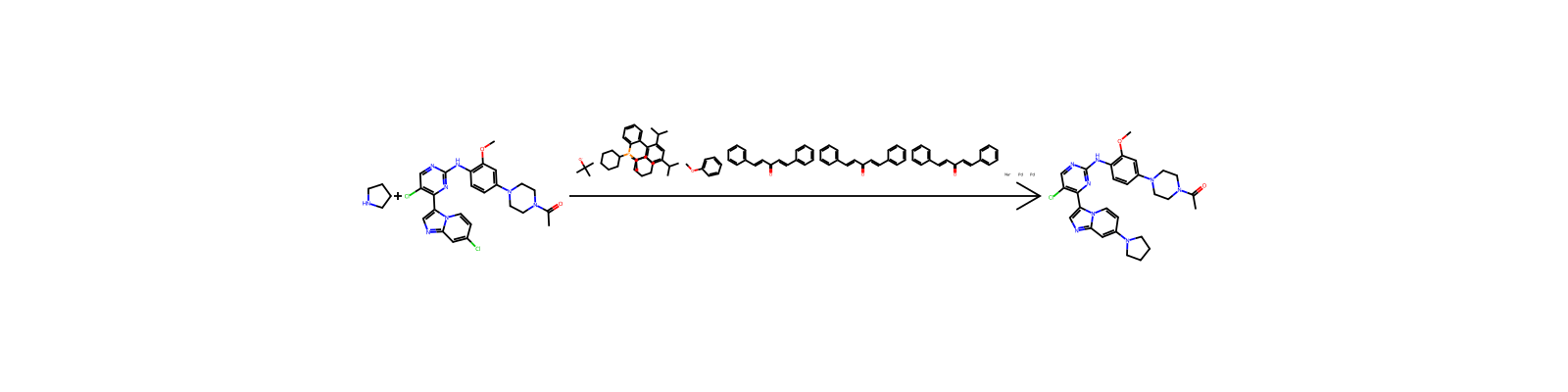


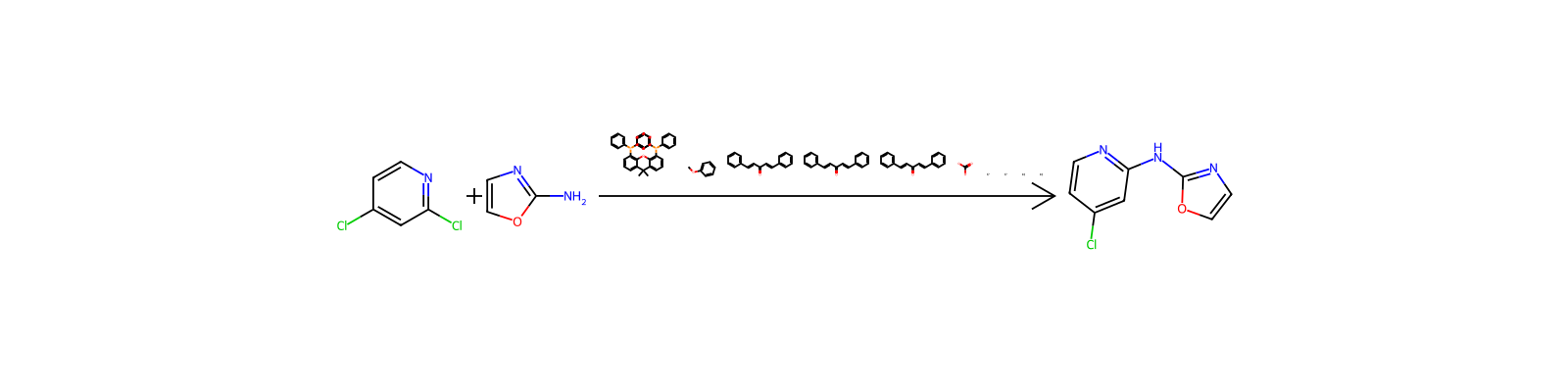
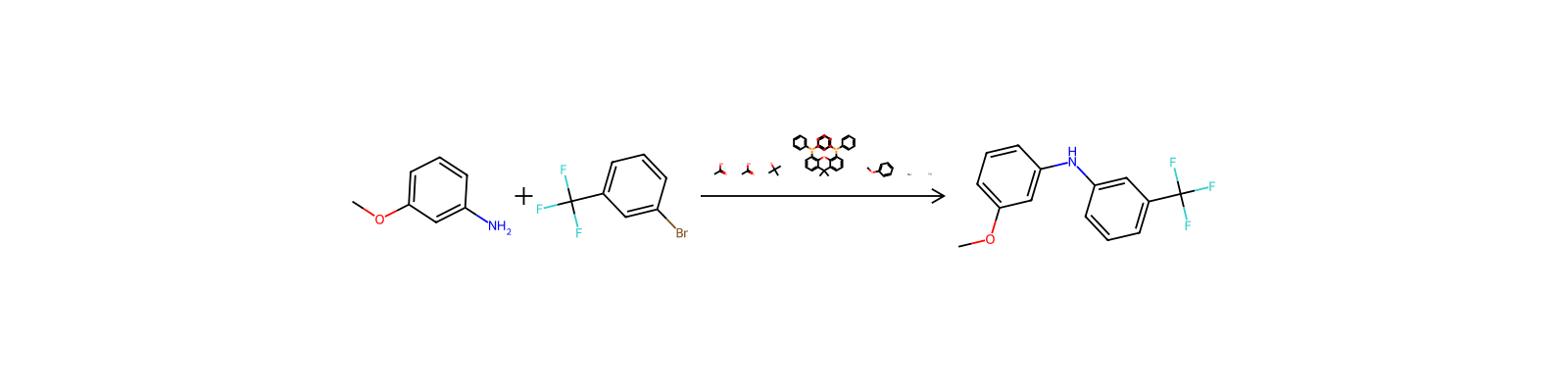
关联笔记
加载中…