硼酸
硼酸 · 硼酸片 · 原硼酸 · 正硼酸 · 硼酸粉 · 农业硼酸 · 硼酸 限 · 工业硼酸
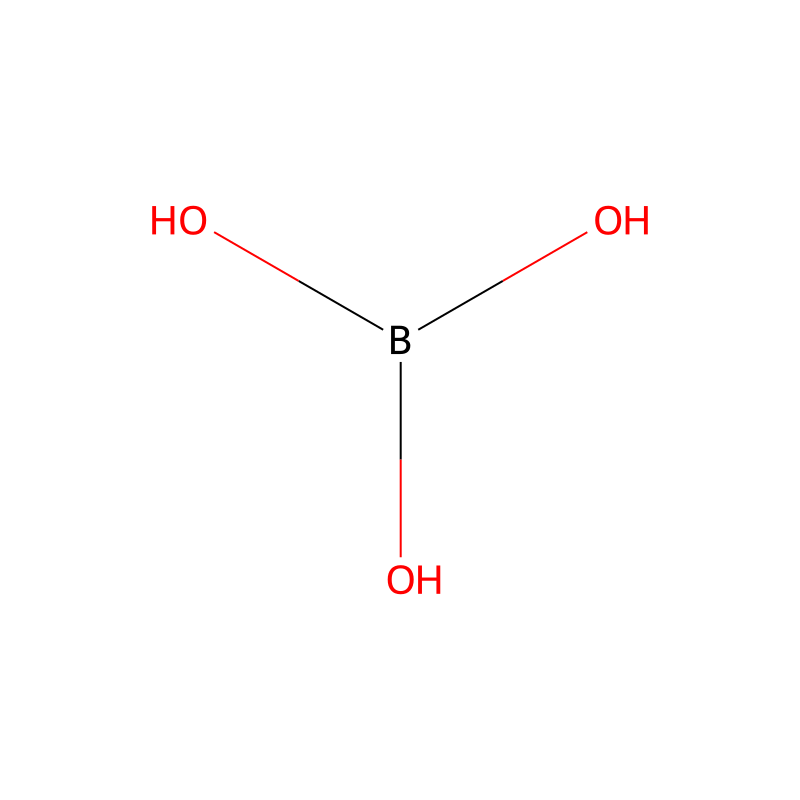
标识与物理属性
| CAS No. | 10043-35-3 |
|---|---|
| 分子式 | BH3O3 |
| 平均分子量 | 61.84 g/mol |
| 单同位素质量 | 62.01752436 g/mol |
| SMILES | OB(O)O |
| InChIKey | KGBXLFKZBHKPEV-UHFFFAOYSA-N |
| PubChem CID | 7628 |
| ChEMBL | CHEMBL42403 |
| ChEBI | CHEBI:33118 |
| EC No. | 233-139-2 |
| DTXSID | DTXSID1020194 |
| 中文名 | 硼酸 |
化学与物理性质
| 极性表面积 | 60.7 |
|---|---|
| 氢键供体 | 3 |
| 氢键受体 | 3 |
| 可旋转键 | 0 |
| 重原子 | 4 |
| 形式电荷 | 0 |
| 复杂度 | 8 |
| 物质类别 | Metals -> Metalloid Compounds (Boron) |
| 化妆品 | Cosmetic ingredients (Boric Acid) -> CIR (Cosmetic Ingredient Review)Antimicrobial |
| pH | 3,8-4,8 (3,3 % aqueous solution)pH = 5.1 (0.1 Molar)3.6-4.4 (25℃, saturated solution in H2O) |
| 农药 | InsecticidesActive substance -> EU Pesticides database: Not approved |
| LogP(油水分配系数) | log Kow = 0.1750.18-1.09 |
| 气味 | Odorless |
| 味道 | Faintly bitter |
| 食品添加剂 | LUBRICANT OR RELEASE AGENT -> FDA Substance added to food |
| 密度 | 1.435 at 68 °F (USCG, 1999) - Denser than waterwill sink1.5 g/cu cmRelative density (water = 1): 1.51.435 @25 °C1.440 g/cm3 |
| Color/Form | Colorless, transparent crystals or white granules or powderColorless triclinic crystalsWhite waxy triclinic solid plates |
| 溶解性 | 10 to 50 mg/mL at 66 °F (NTP, 1992)Soluble in hot water, partially soluble in cold waterSlightly unctuous to touchvolatile with steamsolubility in water increased by hydrochloric, citric or tartaric acidsSolubility: in glycerol 17.5% at 25 °Cethylene glycol 18.5% at 25 °Cin methanol 173.9 g/L at 25 °Cin ethanol 94.4 g/L at 25 °Cin acetone 0.6% at 25 °Cethyl acetate 1.5% at 25 °CWater solubility: 2.52% at 0 °C3.49% at 10 °C4.72% at 20 °C6.23% at 30 °C8.08% at 40 °C10.27% at 50 °C12.97% at 60 °C15.75% at 70 °C19.10% at 80 °C23.27% at 90 °C27.53% at 100 °CSolubility in water is increased by hydrochloric acidH2O: soluble49.5 g/L (20 ºC) |
| Animal Drugs | Pharmaceuticals -> UK Veterinary Medicines Directorate List |
| 熔点 | 160 °C (dec.) (lit.) |
| 沸点 | 219-220 °C (9.7513 mmHg) |
| 堆积密度 | 400-600kg/m3 |
| 蒸气压 | 2.6 mm Hg ( 20 °C) |
| 折射率 | n20/D 1.330-1.340 |
| 储存条件 | Store at +5°C to +30°C. |
| pKa(酸度系数) | 8.91±0.43(Predicted) |
| 形态 | working solution |
| 颜色 | ≤10(APHA) |
| 比重 | 1.435 |
| 酸碱指示剂变色ph值范围 | 3.8 - 4.8 |
| 比热容 | Cp(crystal): 1.39 J/(g·K), at 25℃ |
| 敏感性 | Hygroscopic |
| 最大波长(λmax) | λ: 260 nm Amax: 0.05λ: 280 nm Amax: 0.05 |
| Merck | 14,1336 |
| BRN | 1697939 |
| 亨利常数 | 3.8×10⁶ mol/(m3Pa) at 25℃, HSDB (2015) |
| 暴露限值 | ACGIH: TWA 2 mg/m3STEL 6 mg/m3 |
| 化妆品成分功效 | BUFFERINGDENATURANTANTIMICROBIAL |
| 化妆品成分评估 | Boric acid (10043-35-3) |
| InChI | 1S/BH3O3/c2-1(3)4/h2-4H |
| InChIKey | KGBXLFKZBHKPEV-UHFFFAOYSA-N |
| SMILES | OB(O)O |
| LogP(油水分配系数) | -1.09 at 22℃ |
| CAS 数据库 | 10043-35-3(CAS DataBase Reference) |
| NIST化学物质信息 | B(OH)3(10043-35-3) |
| EPA化学物质信息 | Orthoboric acid (10043-35-3) |
| Absorption | ≤0.05 at 260 in H2O at 1M≤0.05 at 280 in H2O at 1M |
化学性质
硼酸晶体的结构单元是平面三角形的“BO3”。硼原子采用sp2杂化,其中氧原子除以共价键与一个硼原子结合外,还通过共价键和氢键与另外两个氢原子结合,成为片状大分子。因氢键结合力小,故受热后大分子遭破坏,溶解度增加。硼酸是一元酸,酸性极弱 (Ka= 5.8×10⁻¹⁰),与硅酸相似 (K1=2×10⁻¹⁰),在水中电离时不是失去质子,而是与水中的OH-根结合:H3BO3+2H2O-->(H3O+)+B(OH)4-,这与硼化合物缺电子结构特点有关,硼酸中硼原子可作为电子对接受体与一个OH-根结合,OH-根中氧离子是电子对给予体,硼酸是典型的路易斯酸。当硼酸中加入甘油 (丙三醇)或甘露醇[CH2(OH)(CHOH)4CH2OH]时,其酸性增强,这是因为硼酸与甘油结合生成配阴离子后,将H+推到外界,易于电离:硼酸与甲醇或乙醇作用生成易挥发的硼酸三甲酯或硼酸三乙酯:H3BO3+3C2H5OH=B(OC2H5)3+3H2O,根据这一反应原理可使硼酸或硼酸盐从酸溶性矿物中分离出来。硼酸三甲酯 (或硼酸三乙酯) 燃烧时,生成绿色火焰,利用这一特性可定性地鉴定硼酸或其盐的存在。
化学性质
实际上是氧化硼的水合物,为白色粉末状结晶或三斜轴面的鳞片状带光泽结晶。有滑腻手感,无臭味。 溶于水、酒精、甘油、醚类及香精油中。
安全与法规
| GHS 分类 | DangerH360FD: May damage fertilityMay damage the unborn child [Danger Reproductive toxicity]P203, P280, P318, P405, and P501 (click each P-code to see the statement) |
|---|---|
| 法规信息 | Chemical: Boric acid (H3BO3)Chemical: Boric acidHazard Traits - Reproductive ToxicityRegulation (EC) No 257/2010Boric acid (H3BO3) is listed on the EPA's Chemical Data Reporting (CDR) system. Manufacturers and importers of Boric acid (H3BO3) are required to report information about their production and use of this chemical to the EPA under the Toxic Substances Control Act (TSCA). (40 eCFR Part 711)2004/129/EC |
| 其他安全信息 | IMAP assessments - Boric acid and precursors to boric acid: Environment tier II assessment |
| 火灾危害 | Literature sources indicate that this compound is nonflammable. (NTP, 1992)Not combustible. Gives off irritating or toxic fumes (or gases) in a fire. |
| 火灾可能性 | Not flammable |
| 健康危害 | Although no adverse effects have been reported from inhaling boric acid dust, it is absorbed through mucous membranes. Ingestion of 5 grams or more may irritate gastrointestinal tract and affect central nervous system. Contact with dust or aqueous solutions may irritate eyesno chronic effects have been recognized, but continued contact should be avoided. Dust and solutions are absorbed through burns and open wounds but not through unbroken skin. (USCG, 1999) |
| 危害概述 | In typical cases of poisoning by ingestion, the victims have vomiting and diarrhea, skin desquamation, mucosal erosions, and injury to the liver and kidneysEvidence of neurotoxicity includes seizures, delirium, and coma. The mechanism of toxicity is not known. [Ford, p. 750-1] A skin irritant[Quick CPC] In high-dose reproductive studies of animals, boric acid causes testicular damage and fetal loss. [Frazier, p. 252-4] The basis for the TLV for inorganic borate compounds (including boric acid) is irritation of the nose and respiratory tract. Studies of workers exposed to sodium borate dusts found no evidence of pulmonary function or reproductive impairment. [ACGIH] A skin, eye, and respiratory tract irritantMay have effects on the GI tract, liver, and kidneysCan be absorbed through skinMay cause adverse effects to human reproduction, based on animal studies[ICSC] Not likely to pose a hazard to human reproduction, based on usual human exposures being well below the doses considered to have adverse effects on reproduction[REPROTOX] A mild skin irritantMay cause reproductive effects[Alfa Aesar MSDS] See Boron. |
| FDA 要求 | Boric acid is an indirect food additive for use only as a component of adhesives.Drug products containing certain active ingredients offered over-the-counter (OTC) for certain uses. A number of active ingredients have been present in OTC drug products for various uses, as described below. However, based on evidence currently available, there are inadequate data to establish general recognition of the safety and effectiveness of these ingredients for the specified uses: boric acid is included in topical acne drug productsdandruff/seborrheic dermatitis/psoriasis drug productsskin protectant drug productsastringent drug productsfever blister and cold sore treatment drug productsinsect bite and sting drug productspoison ivy, poison oak, poison sumac drug productsophthalmic anti-infective drug productsdiaper rash drug productsand antiseptic drug products. |
| 反应性基团 | Acids, Weak |
| 欧共体分类 | R: 60-61S: 53-45Symbol: T |
| Special Reports | Siegel E, Wason SPediatr Clin North Am 33 (2): 363-67 (1986)USEPA/OWRSQuality Criteria for Water 1986 Boron (1986) EPA 440/5-86-001DHHS/ATSDRToxicological Profile for Boron (1992) ATSDR/TP-91/05DHHS/NTPToxicology and Carcinogenesis Studies of Boric Acid (CAS No. 10043-35-3) in B6C3F1 Mice (Feed Studies) Technical Report Series No. 324 (1987) NIH Publication No. 88-2580[Available from, as of April 4, 2003: http://ntp.niehs.nih.gov/ntp/htdocs/LT_rpts/tr324.pdf]For more Special Reports (Complete) data for BORIC ACID (7 total), please visit the HSDB record page. |
| EPA Safer Chemical | Chemical: Orthoboric acid |
| FIFRA 要求 | Residues of boric acid are exempted from the requirement of a tolerance when used in accordance with good agricultural practice as inert (or occasionally active) ingredients in pesticide formulations applied to growing crops only. Use: sequestrant. Limit: none.An exemption from the requirement of a tolerance is established for residues of the pesticidal chemical boric acid and its salts, borax (sodium borate decahydrate), disodium octaborate tetrahydrate, boric oxide (boric anhydride), sodium borate and sodium metaborate, in or on raw agricultural commodities when used as an active ingredient in insecticides, herbicides, or fungicides preharvest or postharvest in accordance with good agricultural practices.Based on the reviews of the generic data for the active ingredients of boric acid and its sodium salts, the Agency has sufficient information on the health effects of boric acid and its sodium salts and their potential for causing adverse effects in fish and wildlife and the environment. Therefore, the Agency concludes that products containing boric acid and its sodium salts for all uses are eligible for reregistration. The Agency has determined that boric acid and its sodium salts, labeled and used as specified in the RED document, will not pose unreasonable risks or adverse effects to humans or the environment.As the federal pesticide law FIFRA directs, EPA is conducting a comprehensive review of older pesticides to consider their health and environmental effects and make decisions about their continued use. Under this pesticide reregistration program, EPA examines newer health and safety data for pesticide active ingredients initially registered before November 1, 1984, and determines whether the use of the pesticide does not pose unreasonable risk in accordance to newer saftey standards, such as those described in the Food Quality Protection Act of 1996. Borax is found on List A, which contains most food use pesticides and consists of the 194 chemical cases (or 350 individual active ingredients) for which EPA issued registration standards prior to FIFRA '88. Case No: 0024Pesticide type: insecticide, fungicide herbicideRegistration Standard Date: 11/01/85Case Status: RED Approved 9/93OPP has made a decision that some/all uses of the pesticide are eligible for reregistration, as reflected in a Reregistration Eligibility Decision (RED) document .Active ingredient (AI): boric acidData Call-in (DCI) Date(s): 2/16/94AI Status: OPP has completed a Reregistration Eligibility Decision (RED) for the case/AI. |
| 消防 | Fire Extinguishing Agents: Water fog. (USCG, 1999)In case of fire in the surroundings, use appropriate extinguishing media. |
| 急救措施 | Fresh air, rest.Rinse and then wash skin with water and soap.Rinse with plenty of water (remove contact lenses if easily possible).Rinse mouth. Do NOT induce vomiting. Refer immediately for medical attention. |
| 急救 | EYES: First check the victim for contact lenses and remove if present. Flush victim's eyes with water or normal saline solution for 20 to 30 minutes while simultaneously calling a hospital or poison control center. Do not put any ointments, oils, or medication in the victim's eyes without specific instructions from a physician. IMMEDIATELY transport the victim after flushing eyes to a hospital even if no symptoms (such as redness or irritation) develop. |
| 安全储存 | Separated from strong bases. |
| 暴露控制与个人防护 | 10.0 [mg/m3], inhalable fraction[German Research Foundation (DFG)] |
| 储存条件 | Preserve in well-closed containers. |
| 非火灾泄漏应对 | SMALL SPILLS AND LEAKAGE: If you spill this chemical, you should dampen the solid spill material with water, then transfer the dampened material to a suitable container. Use absorbent paper dampened with water to pick up any remaining material. Seal your contaminated clothing and the absorbent paper in a vapor-tight plastic bag for eventual disposal. Wash all contaminated surfaces with a strong soap and water solution. Do not reenter the contaminated area until the Safety Officer (or other responsible person) has verified that the area has been properly cleaned. |
| 处置方法 | SRP: The most favorable course of action is to use an alternative chemical product with less inherent propensity for occupational exposure or environmental contamination. Recycle any unused portion of the material for its approved use or return it to the manufacturer or supplier. Ultimate disposal of the chemical must consider: the material's impact on air qualitypotential migration in soil or watereffects on animal, aquatic, and plant lifeand conformance with environmental and public health regulations. |
| 泄漏处置 | Personal protection: particulate filter respirator adapted to the airborne concentration of the substance. Sweep spilled substance into covered containers. If appropriate, moisten first to prevent dusting. Wash away remainder with plenty of water. |
| Preventive Measures | SRP: The scientific literature for the use of contact lenses by industrial workers is inconsistent. The benefits or detrimental effects of wearing contact lenses depend not only upon the substance, but also on factors including the form of the substance, characteristics and duration of the exposure, the uses of other eye protection equipment, and the hygiene of the lenses. However, there may be individual substances whose irritating or corrosive properties are such that the wearing of contact lenses would be harmful to the eye. In those specific cases, contact lenses should not be worn. In any event, the usual eye protection equipment should be worn even when contact lenses are in place.Containers of boric acid should bear an autoclavable poison label.Avoid depositing product onto exposed food and feed processing, preparation and serving surfaces, or introducing material into air. Do not apply when food processing facility is in operation. Any product visible after application must be brushed into cracks and crevices, or removed. Place product in areas that are inaccessible to children and pets. |
| Eye Prevention | Wear safety spectacles or eye protection in combination with breathing protection. |
| Inhalation Risk | Evaporation at 20 °C is negligiblea harmful concentration of airborne particles can, however, be reached quickly , especially if powdered. |
| 体内负荷 | In serum (children): Conventional reference range: < 7 mg/Linternational recommended reference range: < 119 umol/L /From table, borate/In serum (male adult): Conventional reference range: < 2 mg/Linternational recommended reference range: < 34 umol/L /From table, borate/In serum (toxic concn): Conventional reference range: > 20 mg/Linternational recommended reference range: > 340 umol/L /From table, borate/ |
| Treatment | EYES: irrigate opened eyes for several minutes under running water. INGESTION: do not induce vomiting. Rinse mouth with water (never give anything by mouth to an unconscious person). Seek immediate medical advice. SKIN: should be treated immediately by rinsing the affected parts in cold running water for at least 15 minutes, followed by thorough washing with soap and water. If necessary, the person should shower and change contaminated clothing and shoes, and then must seek medical attention. INHALATION: supply fresh air. If required provide artificial respiration. |
| 相互作用 | ... Genetic effects of boric acid and borax (2.5, 5 and 10 microm) on cultures with and without TiO(2) addition. No significant increase in /sister-chromatid exchanges/ (SCE) and micronuclei frequencies were observed at all concentrations of boron compounds. However, TiO(2)-induced SCE and micronuclei could be reduced significantly by the presence of boric acid and borax. In conclusion, this study indicated for the first time that boric acid and borax led to an increased resistance of DNA to damage induced by TiO(2).Boric acid enhanced action of hypnotics, but devoid of activity itself.The usefulness of N-acetylcysteine (NAC) as a chelating agent was studied for ... boric acid. Mature Sprague-Dawley rats were intoxicatedurinary excretion rates of intoxicant and total urine volume were determined during treatment. N-acetylcysteine proved to be the most effective agent at increasing the excretion of boron and was also able to reverse the oliguria associated with this chemical.... Previous results have shown that exposure of pregnant rats on GD10 to either hyperthermia (42C) or boric acid (BA) specifically targets segmentation patterns. Exposure to hyperthermia increased the prevalence of fused and/or reduced numbers of vertebrae and ribs, primarily in the thoracic area. BA (500-1000 mg/kg, single oral dose) resulted in a significant increase in segmentation defects similar to those seen after hyperthermia, with a greater incidence in lumbar defects. In this study, we focused on the interaction of these two agents and their effects on axial skeletal development. Pregnant rats were treated on GD10 as follows: Anesthesia with Nembutal (30 mg/kg), followed by oral dosing with either water or BA (500 mg/kg) and immersion in a water bath at 37C (30 min) or 42C (rectal temp maintained at 42C for 5 min). After delivery, pups were evaluated on postnatal day (PND) 1 and 3 for number, sex, and weight. No differences were seen in litter size, pup survival, or pup weight in any of the groups. On PND3, pups were examined and processed for skeletal staining with alizarin red and alcian blue. Preliminary data indicate an increase in skeletal alterations with BA+37C (47%), water+42C (75%), or BA+42C (67%), as compared to water+37C controls (0%). Alterations included defects in ribs and vertebrae and a decrease in the number of presacral vertebrae. Because the incidence of segmentation defects in the water+42C group was high, any interaction between BA and hyperthermia might have been obscured... |
| 生态毒性数值 | LC50Species: Oncorhynchus mykiss (Rainbow trout)Concentration: 100 ppm for 96 hr (soft water)exposure was initiated subsequent to fertilization and maintained through 4 days posthatching /Conditions of bioassay not specified in source examined/Concentration: 79 ppm for 96 hr (hard water)Species: Ictalurus punctatus (Channel catfish)Concentration: 155 ppm for 96 hr (soft water)Concentration: 22 ppm for 96 hr (hard water)For more Ecotoxicity Values (Complete) data for BORIC ACID (46 total), please visit the HSDB record page. |
| 环境归趋 | TERRESTRIAL FATE: The pKa of boric acid is 9.24 at 25 °C(1), indicating that this compound will exist primarily in the undissociated form at an environmental pH range between pH 5 and pH 9, although the anion form will partially exist in alkaline soils(SRC). Adsorption of boron in soils depends on pH, organic content and types of clay and minerals in the soil(1). At acidic pH, boron exists in solutions in the form of undissociated boric acidat alkaline pH, presence of borate ion occurs, which reaches maximum adsorption at pH 8.5-9(2). Field studies have observed boron to leach readily in soil(1)undissociated boric acid is transported in soil with little adsorption(2). Volatilization of boric acid from moist soil surfaces is not expected to be an important fate process(SRC) given an estimated Henry's Law constant of 2.6X10⁻¹² atm-cu m/mole(SRC), based upon its vapor pressure, 1.6X10⁻⁶ mm Hg(3), and water solubility, 5X10+4 mg/L(4). Boric acid is not expected to volatilize from dry soil surfaces(SRC) based upon its vapor pressure. No biotransformation processes have been reported for boron compounds, including boric acid(2).AQUATIC FATE: The pKa of boric acid is 9.24 at 25 °C(1), indicating that this compound will exist primarily in the undissociated form at an environmental pH range between 5 and 9, although the anion form will partially exist in alkaline waters(SRC). Boric acid leaches readily in soils(2) which indicates adsorption to suspended solids and sediment in water will not be an important fate process(SRC). Volatilization from water surfaces is not expected(3) based upon an estimated Henry's Law constant of 2.6X10⁻¹² atm-cu m/mole(SRC), derived from its vapor pressure, 1.6X10⁻⁶ mm Hg(4), and water solubility, 5X10+4 mg/L(5). However, evaporation of seawater itself is reported to be the biggest environmental contribution of boric acid to air(2). No biotransformation processes have been reported for boron compounds, including boric acid(2).ATMOSPHERIC FATE: According to a model of gas/particle partitioning of semivolatile organic compounds in the atmosphere(1), boric acid, which has a vapor pressure of 1.6X10⁻⁶ mm Hg at 25 °C(2), will exist in both the vapor and particulate phases in the ambient atmosphere. One monitoring study found that approximately 90% of boric acid in the atmosphere is in gaseous form and 10% in particulate form(3). Vapor-phase boric acid is degraded in the atmosphere by reaction with photochemically-produced hydroxyl radicals(SRC)the half-life for this reaction in air is estimated to be about 38 days(SRC), calculated from its rate constant of 4.2X10⁻¹³ cu cm/molecule-sec at 25 °C(SRC) that was derived using a structure estimation method(4). Particulate-phase boric acid may be removed from the air by wet or dry deposition(SRC). |
| 不良影响 | Neurotoxin - Other CNS neurotoxin |
| 暴露途径 | The substance can be absorbed into the body by inhalation of dust and by ingestion. |
| 毒性概述 | The Expert Panel concludes that Sodium Borate and Boric Acid, in concentrations less than or equal to 5 percent, are safe as cosmetic ingredients when used as currently recommendedhowever, cosmetic formulations containing free Sodium Borate or Boric Acid at this concentration should not be used on infant skin or injured skin. Note: In 2003, the CIR Expert Panel considered available new data on these ingredients and reaffirmed the above conclusion.Safe for use in cosmetics, with qualifications |
| 生态毒性摘录 | /AQUATIC SPECIES/ As a contribution to the investigation of properties of macrophytic water plants as bio-indicators the submerged softwater-macrophytes Myriophyllum alterniflorum, Ranunculus penicillatus and Elodea canadensis were polluted in an aquarium system with oligotrophic, Ca-poor water up to 4 wk with increasing concentrations of /boron/ (B) (H3BO3-/boric acid/) and with different compounds of B. The effect of the test substances was measured as a change of the net photosynthesis. Low B concentrations up to 2 mg B/L, which can be found in highly polluted waters, had only a small negative effect on R. penicillatus and E. canadensis. Stronger damages occurred with 5 mg B/l on M. alterniflorum and with 10 mg/L on the other 2 spp. The toxicity of different B compounds to E. canadensis at 2 mg B/L increased from boric acid and perborate to metaborate and borax. Boron trioxide had no negative influence after 21 test days in comparison with the control. Ecophysiological tests demonstrated that M. alterniflorum is a highly competitive species in oligotrophic softwater. The opinion of B as an environmental hazard has to be revised. At least in softwater systems, B had a much higher toxicity than formerly assumed./AQUATIC SPECIES/ A static renewal procedure, with batch-wise replacement of test and control solutions at regular intervals...was... /conducted using Daphnia magna/. ... There were 4 replicates for each test concentration and the control, resulting in 5 daphnids per replicate or a total of 20 organisms per concentration. ...The chronic study began by placing one neonate in each tube, where the daphnid remained for the entire study. Each Monday, Wednesday, and Friday the young produced by each adult were counted and discarded, and adult survival was recorded. In addition, on the same days, the dissolved oxygen, pH, and temperature in each test concentration and the control were measured and recorded. After enumeration of the young, the adults were transferred to clean beakers containing fresh test and control solutions, in addition to a new supply of food. The boric acid test concentrations used for the chronic test were 7, 14, 28, 56, and 105 mg/L as boron. ...The mean boron concentration was 0, 6.4, 13.6, 29.4, and 59.3 at 0, 7, 14, 28, and 56 mg/L, respectively. ...Throughout the chronic test the dissolved oxygen and temperature ranged from 7.3-8.0 mg/L and 19.5-20.5 °C, respectively. Mortality during the 21-day test was 0, 0, 10, 5, and 40% at 0, 7, 14, 28, and 56 mg/L, respectively. /No/... daphnids exposed to the highest concentration of boric acid (105 mg/L as boron) ... survived to reproductive age. Time to first reproduction was not affected by the test concentrations. The mean number of broods per daphnid, mean total young per daphnid, mean brood size per daphnid, and mean size all differed significantly from control at 13.6 mg/L. It appeared that the most biologically, as well as statistically, important endpoints for this study were those associated with reproduction and growth. Therefore, determination of the /maximum acceptable toxicant concentration/ (MATC) was based on the endpoints of mean total young per replicate, mean brood size, and mean size. The MATC of boric acid was estimated to lie between 6.4 and 13.6 mg/L as boron./AQUATIC SPECIES/ Static 96-hr exposures /of Oncorhynchus tshawytscha (Chinook salmon) and Oncorhynchus kisutch (Coho salmon)/ were conducted in 19.6-L glass jars containing 15 L of test solution /of boric acid/ and maintained at 12 +/-1 °C in temperature-controlled water baths. Each test consisted of exposing groups of 10 fish to a series of toxicant concentrations that differed by 60% between treatments, and a control. For large, advanced fry, duplicate sets of jars were used and only 5 fish were stocked in each jar to maintain loading densities of 0.8 g/L or lower. Observations of mortality and abnormal behavioral responses were made at 24-hour intervals, and all dead fish were removed after each observation. In 1 set of tests, 2 life stages of Chinook salmon and Coho salmon were tested with boric acid. One life stage composed of swim-up fry 8-12 weeks old (post hatch) tested in fresh water. The 2nd life stage composed of advanced fry 15-21 weeks old tested in brackish water. Chinook salmon were also tested in soft water. In tests conducted in the 2 site-specific waters, pH was measured at the beginning and end of the test. Eyed eggs, alevins, and swim-up fry of Chinook salmon were tested in soft water to determine the relative sensitivity of those various life stages to boron. ...Groups of 25 eggs, 10 alevins, or 10 swim-up fry were exposed to a series of toxicant concentrations that differed by 56% between treatments, and a control. Criteria of death for eggs were the presence of an opaque (whitened) membrane. Alevins were examined under 30x magnification for the absence of a heartbeat, which was the criterion for death. The 24-hr LC50 of Chinook and Coho salmon (fresh or brackish water) was >1000 mg/L. Boron was relatively non-toxic. Young Coho salmon tested in fresh water were less tolerant than older fish tested in brackish water and Chinook salmon tested in either dilution water. The relative sensitivity of various early life stages of Chinook salmon to boron changed significantly as the fish developed. Fry were consistently more sensitive than either the embryos or alevins to boron. The pH in test concentrations and controls were not markedly different, ranging from 6.5 to 8.1. No significant differences in 96-hr LC50 values were found among dilution water qualities, thus indicating that differences in water quality characteristics tested did not modify the toxicity of these chemicals./AQUATIC SPECIES/ /Water flea/ screening test was performed for 48-hours /in which Ceriodaphnia dubia were exposed/ to nominal concentrations of 0, 0.10, 1, 10, 100, and 1000 mg/L /boric acid, purity >99%/. At the end of the test there was 0% survival at 1000 mg/L, 10% survival at 100 mg/L, and 100% survival at all lower concentrations. ...Water quality parameters were within acceptable limits throughout the study. Dissolved oxygen concentrations were always above 7.8 mg/L. During the test, the mean temperature was 24.4 °C, the mean conductivity was 350 umhos/cm, and the pH ranged from 7.1 to 8.3. Hardness ranged from 88 to 100 mg/L in control vessels and from 88 to 108 mg/L in vessels containing 100 mg/L of the test substance. Alkalinity ranged from 16 to 21 mg/L in control vessels and from 16 to 23 mg/L in vessels containing 100 mg/L of the test substance. The percentage of surviving adults was not significantly reduced at any tested concentration, and sublethal effects were not observed at any concentration. The mean number of young per surviving adult was significantly lower than the control at the 3 highest tested concentrations (25, 50, and 100 mg/L). The most sensitive biological endpoint was production of young. The NOEC, LOEC, and MATC were 12.5, 25, and 17.7 mg/L, respectively.For more Ecotoxicity Excerpts (Complete) data for BORIC ACID (12 total), please visit the HSDB record page. |
| Signs and Symptoms | Cough. Sore throat.No acute symptoms expected.Redness. Pain.Nausea. Vomiting. Diarrhoea. Abdominal pain. Skin rash. Headache. Drowsiness. Convulsions. |
| Ongoing Test Status | The following link will take the user to the National Toxicology Program (NTP) Test Agent Search Results page, which tabulates all of the "Standard Toxicology & Carcinogenesis Studies", "Developmental Studies", and "Genetic Toxicity Studies" performed with this chemical. Clicking on the "Testing Status" link will take the user to the status (i.e., in review, in progress, in preparation, on test, completed, etc.) and results of all the studies that the NTP has done on this chemical.[Available from: http://ntp-apps.niehs.nih.gov/ntp_tox/index.cfm?fuseaction=ntpsearch.searchresults&searchterm=10043-35-3] |
| Medical Surveillance | No specific considerations are needed for boric acid or borates except for general health and liver and kidney function. /Boric acid and borates/ |
| 州饮用水指南 | (CA) CALIFORNIA 1000 ug/L /Boron/(NH) NEW HAMPSHIRE 630 ug/L /Boron/(ME) MAINE 1,400 ug/L /Boron/(MN) MINNESOTA 1,000 ug/L /Boron/(WI) WISCONSIN 960 ug/L /Boron/ |
| 联邦饮用水指南 | EPA 600 ug/L /Boron/ |
| F | 3 |
| 水危害等级(WGK) | 2 |
| TSCA 清单状态 | TSCA listed |
| 毒性 | LD50 orally in rats: 5.14 g/kg (Smyth). |
| RTECS 号 | ED4550000 |
| 储存类别 | 6.1C - Combustible acute toxic Cat.3toxic compounds or compounds which causing chronic effects |
| 安全说明(S) | 26-36-53-45-37/39-36/37/39-22-24/25-23 |
| 海关编码 | 28100090 |
| 危险品标志 | Xi,T,Xn |
| 危险类别 | Repr. 1B |
| 危险类别码(R) | 36/37/38-60-63-62-61 |
| 毒害物质数据 | 10043-35-3(Hazardous Substances Data) |
急性毒性
口服-大鼠 LD50: 2660 毫克/公斤; 口服-小鼠 LD50: 3450 毫克/公斤
刺激数据
皮肤-人 15 毫克/3天 轻度
可燃性危险特性
儿童口服5克死亡; 成人口服5-20克死亡
储运特性
库房通风低温干燥, 与金属钾分开存放; 与(CH3CO)2O分开存放
灭火剂
水,干粉、干砂、二氧化碳、泡沫、1211灭火剂
用途与应用
简介
硼酸是三氧化二硼溶于水生成的结晶化合物,属无机酸,主要有四硼酸H2B4O7(又称焦硼酸),偏硼酸(HBO2)n与正硼酸H3BO3(也称为原硼酸)。其中正硼酸含水量最多,最稳定。正硼酸也简称硼酸,外观为白色粉末状结晶或三斜轴面的鳞片状结晶体,有光泽。有轻微的苦涩味。与皮肤接触有滑腻感。无臭味,溶于水、乙醇、甘油、醚类及香精油中,水溶液呈现弱酸性,正硼酸加热至70-100℃时逐渐脱水成偏硼酸,150℃-160℃时成焦硼酸,300℃时成硼酸酐(B2O3)。硼酸对人体有毒。在水中的溶解度:0℃时2.77、10℃时3.65、20℃时4.87、 25℃时5.74、30℃时6.77、40℃时8.90、 50℃时11.39、60℃时14.89、80℃时23.54、100℃ 时38.00。水溶液呈弱酸性是典型的路易斯酸,在有盐酸、柠檬酸或酒石酸存在时,可促进在水中的溶解度。故可用重结晶法提纯。
用途
硼酸主要用于玻璃制品中,尤其用于耐热及耐化学品侵蚀的玻璃制品中。由硼酸制成的碳化硼可作研磨剂。另外可用于珐琅、陶瓷釉药和无机颜料、肥料及冶金生产中。
用途
用作pH值调节剂、消毒剂、抑菌防腐剂等
用途
硼酸可用于电容器制造及电子元件工业,高纯分析试剂,药用消毒防腐及配制已曝光感光材料冲洗加工药液。
用途
用于玻璃、搪瓷、陶瓷、医药、冶金、皮革、染料、农药、肥料、纺织等工业
用途
用作色谱分析试剂,也用于缓冲剂的配制
用途
大量用于玻璃(光学玻璃、耐酸玻璃、耐热玻璃、绝缘材料用玻璃纤维)工业,可以改善玻璃制品的耐热、透明性能,提高机械强度,缩短熔融时间。在搪瓷、陶瓷业中,用以增强搪瓷产品的光泽和坚牢度,也是釉药和颜料的成分之一。冶金工业中作添加剂、助溶剂,特别是硼钢具有高硬度和良好的轧延性,可以代替镍钢。硼酸有防腐性,可作防腐剂,如木材防腐。在金属焊接、皮革、照相等行业以及染料、耐热防火织物、人造宝石、电容器、化妆品的制造方面都用到它。还可作杀虫剂和催化剂用。农业上含硼微量元素肥料,对许多作物有肥效,能增进作物品质和提高产量。硼酸也是生产其他硼化物的基本原料之一,由它生产的硼化合物广泛应用于国防及其他工业部门和科研单位。
制备与合成方法
制备
用硫酸作用于硼砂解的热溶液可制得硼酸:Na2B4O7+H2SO4+5H2O=Na2SO4+4H3BO3,冷却时就可结晶析出。 我国东北有丰富的硼镁矿MgB2O5·H2O或2MgO·B2O5·H2O。直接用硫酸分解硼镁矿也可制得硼酸:Mg2B2O5·H2O+2H2SO4=2MgSO4+2H3BO3。
生产方法
硼砂硫酸中和法将硼砂溶解成相对密度30~32°Bé的溶液,滤去杂质,然后放入酸解罐,于90℃时加入当量硫酸,使溶液在Ph2~3时进行反应。反应完成液经冷却、结晶、分离、干燥后制得硼酸成品。其Na2B4O7·10H2O+H2SO4→4H3BO3+Na2SO4+5H2O碳氨法将焙烧后的硼矿粉与碳酸氢铵混合,在浸取釜内加热物料至140℃、压力1.5~2.0 Mpa反应4h左右,放出剩余气体,经吸氨塔将氨回收,当温度降至110℃时即可放料。经过滤机过滤洗涤后,排除废渣,溶液送入蒸氨塔进行脱氨,可回收氨水。当蒸至氨硼比低于0.04(摩尔比)时再经浓缩、冷却、结晶、分离、干燥后,制得硼酸产品。其2MgO·B2O3+2NH4HCO3+H2O→2(NH4)H2BO3+2MgCO3↓4(NH4)H2BO3[aq]→(NH4)2B4O7+2NH3↑+5H2O(NH4)2B4O7[aq]→(NH4)HB4O7+NH3↑5(NH4)HB4O7[aq]→4NH4B5O8+NH3↑+3H2ONH4B5O8[aq]→5H3BO3+NH3↑盐酸法将硼精矿粉用母液和水调配至适当浓度后,送入酸解罐,徐徐加入盐酸到指定的酸量后,搅拌一定时间,再升温至95~100℃,反应2h,然后过滤,弃去滤渣,滤液经冷却、结晶、离心分离、水洗、干燥、包装,制得硼酸产品。其2MgO·B2O3+4HCI+H2O→2H3BO3+2MgCl2电解电渗析法把碳碱法硼砂来的碳解液,加入冷凝水调节到规定的含硼浓度,作为阳极室的原料液,碳酸钠经碳化后的含有碳酸氢钠的碳化液,作为阴极室的原料液;分别经控制过滤后用泵打人电解电渗析槽的相应极室内。待流量稳定后,通入直流电,调节到规定的操作电流。当阳极室流出液达到规定的Ph值时,则送去蒸发,再经冷却结晶、离心分离、干燥,制得硼酸成品。多硼酸钠法将硼镁矿焙烧粉碎成一定细度的矿粉,按照低于理论量的配碱比与纯碱溶液配成适当液固比的料浆,通入不同浓度的二氧化碳气体,在一定温度和压力下进行碳解反应,反应后的料浆经过滤弃去泥渣。将得到的多硼酸钠溶液经蒸浓后加入硫酸中和,冷却结晶、离心分离,干燥,制得硼酸成品。其b(2MgO·B2O3)+aNa2CO3+(2b-a)CO2[aq]→aNa2O·b B2O3+2bMgCO3Na2O·(3.5-4.5)B2O3+H2SO4+(9.5-12.5)H2O→(7-9)H3BO3+Na2SO4井盐卤水盐酸法 由含硼卤水与盐酸一起蒸煮,再经脱水、冷却结晶、离心分离、干燥,制得硼酸成品。
生产方法
重结晶法将工业硼酸溶于蒸馏水中,经除杂,提纯,过滤,结晶,离心分离,干燥制得成品。