
基本信息
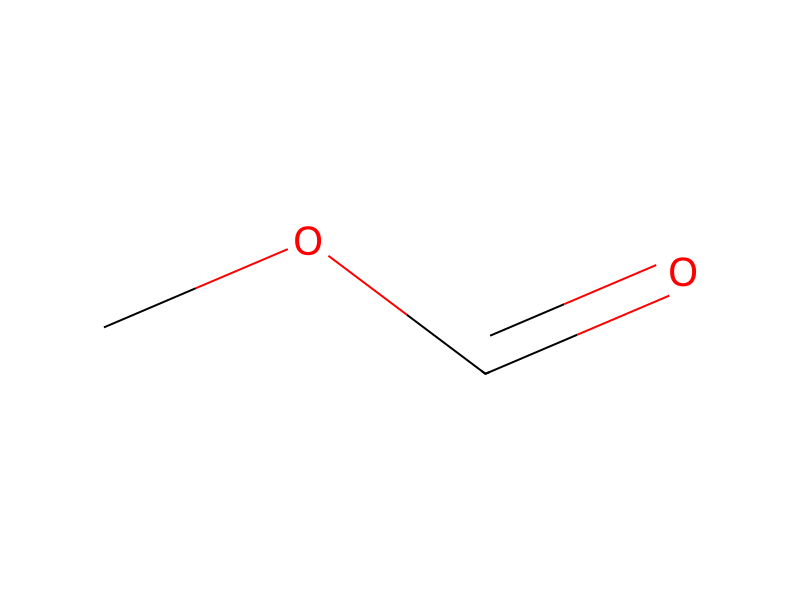
- 标准SMILES
COC=O- InChIKey
TZIHFWKZFHZASV-UHFFFAOYSA-N- 分子式
- C2H4O2
- 平均分子量
- 60.05 g/mol
- 单同位素质量
- 60.02112937
概述
Methyl formate appears as a clear colorless liquid with an agreeable odor. Flash point -27 °F. Less dense than water Vapors heavier than air.
名称与标识
- 首选名称
- Methyl formate
- IUPAC
- methyl formate
- 中文名
- 甲酸甲酯
- 英文名
- Methyl formate
- 分子式
- C2H4O2
- 分子量
- 60.05
名称与别名
METHYL FORMATE107-31-3Formic acid, methyl esterMethyl methanoateFormic acid methyl esterMethylformiatFormiate de methyleMethylformiaatMravencan methylnatymethanoic acid methyl esterDTXSID5025609Methylester kyseliny mravenci
展开更多名称
蚁酸甲酯甲酸甲酯甲基甲酸酯甲酸甲酯CP甲酸甲酯 纯甲酸甲酯-GCS甲酸甲酯 蚁酸甲酯甲酸甲酯(标准品)二硫化碳中甲酸甲酯甲酸甲酯/超干溶剂HCOOCH3Methyl formate analytical standardMetilformiatedemethyleformiatedemethyle(french)Methyl forMate (C1:0) SolutionMETHYL FORMATE FOR SYNTHESIS 1 LMETHYL FORMATE FOR SYNTHESIS 100 MLacid-Me
Metil (formiato di)Methyle (formiate de)Methyl ester of formic acid1MPH591FTGDTXCID305609CHEBI:77699RefChem:6021203-481-7
数据库标识
- CAS
107-31-3- PubChem CID
- 7865
- DTXSID
DTXSID5025609- ChEMBL
CHEMBL295026- ChEBI
CHEBI:77699- UNII
- 1MPH591FTG
- EC Number
- 203-481-7
- Nikkaji
- J4.064I
性质
结构计算性质
- XLogP
- 0
- 极性表面积
- 26.3 Ų
- 氢键供体
- 0
- 氢键受体
- 2
- 可旋转键
- 1
- 重原子
- 4
- 形式电荷
- 0
- 复杂度
- 18
实验与物化性质
Chemical ClassesFlammable agents - 4th degree
SolventsSolvents -> Esters (<C12)
SpringerMaterials PropertiesCoriolis coupling
LogP
log Kow = 0.03
-0.21
Odor
Agreeable
Pleasant odor.
Density
0.977 at 68 °F (USCG, 1999) - Less dense than water; will float
0.987 at 15 °C/15 °C
DENSITY OF SATURATED AIR: 1.83 (AIR= 1)
Relative density (water = 1): 0.97
0.98
0.975 @ 20°C
Flavoring AgentsEU Flavoring substances
Viscosity0.325 mPa-s at 25 °C
Color/FormColorless liquid [Note: A gas above 89 degrees F].
Solubility
greater than or equal to 100 mg/mL at 72 °F (NTP, 1992)
28.35 kJ/mol at 25 °C
Soluble in ether, chloroform; miscible with ethanol
In water, 230,000 mg/L at 25 °C
Solubility in water, g/100ml at 20 °C: 30 (good)
30%
Flash Point
-26 °F (NTP, 1992)
-2 °F
-2 °F (-19 °C) (Closed Cup)
-19 °C
-26 °F
-2 °F
Boiling Point
88.7 °F at 760 mmHg (NTP, 1992)
31.5 °C
32 °C
89 °F
31.5 °C @760 [mm Hg]
89 °F
物理化学性质
- 熔点
- -100 °C · -100 °C (lit.)
- 沸点
- 32 · 32-34 °C (lit.)
- 密度
- 0.974 g/mL · 0.974 g/mL at 20 °C (lit.)
- 蒸气密度
- 2.1 · 2.1 (vs air)
- 蒸气压
- 32.91 psi · 32.91 psi ( 55 °C)
- 折射率
- 20 · n20/D 1.343(lit.)
- 闪点
- 16 °F · −16 °F
- 储存条件
- 30 °C · Store below +30°C.
- 溶解度
- 300 g/l, · 300g/l, 25% soluble in water, miscible with alcohol, Propylene glycol, Glycerin and oils.
- 形态
- Liquid
- 颜色
- Clear colorless
- 气味 (Odor)
- Pleasant; agreeable.
- PH值
- 4 · 4-5 (200g/l, H2O, 20℃)
- 嗅觉阈值(Odor Threshold)
- 130 ppm · 130ppm
- 香型
- fruity
- 生物来源
- synthetic
- 爆炸极限值(explosive limit)
- 5 · 5-23%(V)
- 水溶解性
- 300 G/L · 300 G/L (20 ºC)
- 比热容
- 1.98 J/ · Cp(liquid): 1.98 J/(g·K); Cp(gas): 1.07 J/(g·K), at 25℃
- 热导率
- 0.187 W/ · 0.187 W/(m·K) at 25 ℃
- 最大波长(λmax)
- 259 nm · λ: 259 nm Amax: 1.00λ: 260 nm Amax: 0.70λ: 265 nm Amax: 0.20λ: 270 nm Amax: 0.04λ: 310-400 nm Amax: 0.01
- Merck
- 14 · 14,6077
- BRN
- 1734623 · 1734623
- Henry's Law Constant
- 0.9 at · 0.90 at 5.00 °C, 1.18 at 10.00 °C, 1.51 at 15.00 °C, 1.91 at 20.00 °C, 2.36 at 25.00 °C (column stripping-UV, Kutsuna et al., 2005)
- 暴露限值
- 50 ppm · ACGIH:TLV-TWA 50 ppm (123 mg/m3); TLV-STEL 100 ppm (245 mg/m3)OSHA:PEL-TWA 100 ppm (250 mg/m3)NIOSH:REL-TWA 100 ppm; REL-STEL 150 ppm
- 介电常数
- 8.5 · 8.5(20℃)
- 稳定性
- Stable. Extremely flammable. Readily forms explosive mixtures with air. Note low flash point and very wide explosion limits. Incompatible with oxidizing agents.
- 主要应用
- cleaning productscosmeticsflavors and fragrancesfood and beveragespersonal care
- InChI
- 1S/C2H4O2/c1-4-2-3/h2H,1H3
- InChIKey
- TZIHFWKZFHZASV-UHFFFAOYSA-N
- SMILES
- [H]C(=O)OC
- LogP
- -0.21 at · -0.21 at 25℃
- CAS 数据库
- 107 · 107-31-3(CAS DataBase Reference)
- NIST化学物质信息
- Methyl formate(107-31-3)
- EPA化学物质信息
- Methyl formate (107-31-3)
化学性质
无色液体,易挥发,有香味。 在水中的溶解度30.4g/100ml(20℃)。与乙醇混溶,溶于乙醚、甲醇。
安全与法规
GHS分类
GHS Classification
Danger
H224: Extremely flammable liquid and vapor [Danger Flammable liquids]
P210, P233, P240, P241, P242, P243, P261, P264, P264+P265, P270, P271, P280, P301+P317, P303+P361+P353, P304+P340, P305+P351+P338, P317, P319, P330, P337+P317, P370+P378, P403+P233, P403+P235, P405, and P501 (click each P-code to see the statement)
This chemical does not meet GHS hazard criteria for 1.4% (11 of 764) of reports.
Danger
H224 (98.6%): Extremely flammable liquid and vapor [Danger Flammable liquids]
危害信息
Regulatory Information
Chemical: Formic acid, methyl ester
Commission Regulation (EC) No 1565/2000 (Repealed by Com. Implementing Reg. (EU) No 872/2012)
Formic acid, methyl ester is listed on the EPA's Chemical Data Reporting (CDR) system. Manufacturers and importers of Formic acid, methyl ester are required to report information about their production and use of this chemical to the EPA under the Toxic Substances Control Act (TSCA). (40 eCFR Part 711)
Status: Active Update: 07-04-2021 https://echa.europa.eu/registration-dossier/-/registered-dossier/2054
Formic acid, methyl ester: HSNO Approval: HSR001192 Approved with controls
The New Jersey Worker and Community Right to Know Act requires public and private employers to provide information about hazardous substances at their workplaces. (N.J.S.A. 34:5A-1 et. seq.)
Other Safety InformationIMAP assessments - Formic acid, methyl ester: Environment tier I assessment
DOT LabelFlammable Liquid
Fire Hazards
Behavior in Fire: Vapor is heavier than air and may travel considerable distance to a source of ignition and flash back. (USCG, 1999)
· HIGHLY FLAMMABLE: Will be easily ignited by heat, sparks or flames.
Extremely flammable. Vapour/air mixtures are explosive. Heating will cause rise in pressure with risk of bursting. Risk of fire and explosion on contact with strong oxidants.
Fire Potential
Flammable liquid.
Mixes with water. Flammable, irritating vapor is produced.
Very dangerous fire hazard when exposed to heat or flame.
Health Hazards
Inhalation causes irritation of mucous membranes. Prolonged inhalation can produce narcosis and central nervous symptoms, including some temporary visual disturbance. Contact with liquid irritates eyes and may irritate skin if allowed to remain. Ingestion causes irritation of mouth and stomach and central nervous system depression, including visual disturbances. (USCG, 1999)
· May cause toxic effects if inhaled or absorbed through skin.
Hazards Summary
TLV Basis is CNS impairment, upper respiratory tract irritation, and eye damage. In animal inhalation studies, narcosis, pulmonary edema, and death occur at concentrations in the range of 5000 ppm to 10,000 ppm for one to three hours of exposure. Human volunteers exposed to 100 ppm for 8 hours have increased fatigue. Foundry workers exposed to 36 ppm had no adverse effects. Methyl formate breaks down into methanol and formic acid. Formic acid causes optic neuropathy in cases of methanol poisoning. Exposure to methyl formate at 50 ppm is equivalent to methanol exposure at the TLV. [ACGIH] Intravenous doses of approximately 4g/kg cause significant methemoglobinemia in experimental dogs. [HSDB] No reported cases of toxic pneumonitis in humans; May cause slight skin irritation; [CHEMINFO] A skin and eye irritant that causes CNS effects at high concentrations; [ICSC]
DOT ID and Guide
1243 129
1243 129
Reactive GroupEsters, Sulfate Esters, Phosphate Esters, Thiophosphate Esters, and Borate Esters
EC ClassificationSymbol: F+, Xn; R: 12-20/22-36/37; S: (2)-9-16-24-26-33
UN ClassificationUN Hazard Class: 3; UN Pack Group: I
Special Reports
EPA/Office of Pollution prevention and toxics; High production Volume (HPV) Challenge program's Robust summaries and Test Plans. Availible form: http://www.epa.gov/chemrtk/viewsrch.htm on Formates (December 2001) as of July 12, 2005.
European Chemicals Bureau; IUCLID Dataset, Methyl formate (107-31-3) (2000 CD-ROM edition). Available from the database query page: http://ecb.jrc.it/esis/esis.php as of July 12, 2005.
安全与防护
Fire Fighting
Excerpt from ERG Guide 129 [Flammable Liquids (Water-Miscible / Noxious)]:
Use powder, alcohol-resistant foam, water spray, carbon dioxide. In case of fire: keep drums, etc., cool by spraying with water.
First Aid Measures
Fresh air, rest. Refer for medical attention.
Remove contaminated clothes. Rinse skin with plenty of water or shower.
First rinse with plenty of water for several minutes (remove contact lenses if easily possible), then refer for medical attention.
Rinse mouth. Do NOT induce vomiting. Rest. Refer for medical attention .
Accidental Release Measures
· CALL 911. Then call emergency response telephone number on shipping paper. If shipping paper not available or no answer, refer to appropriate telephone number listed on the inside back cover.
· ELIMINATE all ignition sources (no smoking, flares, sparks or flames) from immediate area.
First Aid
EYES: First check the victim for contact lenses and remove if present. Flush victim's eyes with water or normal saline solution for 20 to 30 minutes while simultaneously calling a hospital or poison control center. Do not put any ointments, oils, or medication in the victim's eyes without specific instructions from a physician. IMMEDIATELY transport the victim after flushing eyes to a hospital even if no symptoms (such as redness or irritation) develop.
General First Aid:
(General first aid procedures)
Safe StorageFireproof. Separated from strong oxidants. Cool.
Firefighting HazardsVapors are heavier than air (vapor density, 2.07) and may travel to a source of ignition and flash back.
Exposure Control and Personal Protection
· Wear positive pressure self-contained breathing apparatus (SCBA).
50.0 [ppm]
Fire Fighting Procedures
If material on fire or involved in fire: Do not extinguish unless flow can be stopped. Use "alcohol" foam, dry chemical or carbon dioxide. Cool all affected containers with flooding quantities of water. Apply water from as far a distance as possible. Do not use water on material itself.
Water may be ineffective. /Use/ alcohol foam.
Storage ConditionsStore in cool, dry, well-ventilated location. Seperate from alkalis, oxidizing materials, and moisture. Outside or detached storage is prefered.
Cleanup Methods
1. Remove all ignition sources. 2. Ventilate area of spill or leak. 3. For small quantities, absorb on paper towels. Evaporate in a safe place (such as a fume hood). Allow sufficient time for evaporating vapors to completely clear the hood ductwork. Burn the paper in a suitable location away from combustible materials. Large quantities can be reclaimed or collected and atomized in a suitable combustion chamber.
Nonfire Spill ResponseExcerpt from ERG Guide 129 [Flammable Liquids (Water-Miscible / Noxious)]:
Disposal Methods
SRP: The most favorable course of action is to use an alternative chemical product with less inherent propensity for occupational exposure or environmental contamination. Recycle any unused portion of the material for its approved use or return it to the manufacturer or supplier. Ultimate disposal of the chemical must consider: the material's impact on air quality; potential migration in soil or water; effects on animal, aquatic, and plant life; and conformance with environmental and public health regulations.
Methyl formate may be disposed of by atomizing in a suitable combustion chamber.
毒理信息
Target OrgansEyes, respiratory system, central nervous system
Ecotoxicity Values
LC50 Leuciscus idus (Ide) about 120 mg/L/96 hr; static /97.7% pure/
EC50 Daphnia magna (Water flea; immobilization) >500 mg/L/24 hr /Conditions of bioassay not specified in source examined/
EC50 Scenedesmus subspicatus (Green algae; cell multiplication inhibition) 240 mg/L/72 hr /Conditions of bioassay not specified in source examined/
EC50 Scenedesmus subspicatus (Green algae; cell multiplication inhibition) 190 mg/L/96 hr /Conditions of bioassay not specified in source examined/
EC50 Pseudomonas putida (aquatic bacteria; cell multiplication inhibition) >10,000 mg/L/17 hr /Conditions of bioassay not specified in source examined/
Environmental Fate
TERRESTRIAL FATE: Based on a classification scheme(1), an estimated Koc value of 25(SRC), determined from a log Kow of 0.03(2) and a regression-derived equation(3), indicates that methyl formate is expected to have very high mobility in soil(SRC). Volatilization of methyl formate from moist soil surfaces is expected to be an important fate process(SRC) given a Henry's Law constant of 2.2X10⁻⁴ atm-cu m/mole(4). Methyl formate is expected to volatilize from dry soil surfaces(SRC) based upon a vapor pressure of 5.9X10+2 mm Hg(5). Methyl formate is expected to undergo hydrolysis in moist soil. A base-catalyzed second-order hydrolysis rate constant of 16 L/mole-sec(SRC) was estimated using a structure estimation method(6); this corresponds to half-lives of 5.1 and 12 days at pH values of 7 and 8, respectively(6).
AQUATIC FATE: Based on a classification scheme(1), an estimated Koc value of 25(SRC), determined from a log Kow of 0.03(2) and a regression-derived equation(3), indicates that methyl formate is not expected to adsorb to suspended solids and sediment(SRC). Volatilization from water surfaces is expected(3) based upon a Henry's Law constant of 2.2X10⁻⁴ atm-cu m/mole(4). Using this Henry's Law constant and an estimation method(3), volatilization half-lives for a model river and model lake are 5.3 hours and 4.0 days, respectively(SRC). According to a classification scheme(5), an estimated BCF of 3.2(SRC), from its log Kow(2) and a regression-derived equation(6), suggests the potential for bioconcentration in aquatic organisms is low(SRC). Hydrolysis is expected to be an important fate process for methyl formate. A base-catalyzed second-order hydrolysis rate constant of 16 L/mole-sec(SRC) was estimated using a structure estimation method(7); this corresponds to half-lives of 5.1 and 12 days at pH values of 7 and 8, respectively(7).
ATMOSPHERIC FATE: According to a model of gas/particle partitioning of semivolatile organic compounds in the atmosphere(1), methyl formate, which has a vapor pressure of 5.9X10+2 mm Hg at 25 °C(2), is expected to exist solely as a vapor in the ambient atmosphere. Vapor-phase methyl formate is degraded in the atmosphere by reaction with photochemically-produced hydroxyl radicals(SRC); the half-life for this reaction in air is estimated to be 71 days(SRC), calculated from its rate constant of 2.3X10⁻¹³ cu cm/molecule-sec at 25 °C(3). Methyl formate did not undergo direct photolysis when irradiated with UV light >300 nm(4).
Food Survey Values
Methyl formate was detected in the volatiles of chicken, beef, and pork flavor(1). Methyl formate was identified as a volatile constituent in brewed, roasted, and dried coffee(2). It has also been detected as an aroma substance in apples(3).
Adverse EffectsNeurotoxin - Acute solvent syndrome
Exposure Routes
The substance can be absorbed into the body by inhalation of its vapour, through the skin and by ingestion.
inhalation, skin absorption, ingestion, skin and/or eye contact
Ecotoxicity Excerpts/AQUATIC SPECIES/ Threshold /CNS depressant/ concentration to tadpoles (Rana pipiens): 240 mmol/L at room temperature.
Signs and Symptoms
Cough. Shortness of breath. Headache. Drowsiness.
Redness.
Redness. Pain.
Sore throat. Further see Inhalation.
irritation eyes, nose; chest tightness, dyspnea (breathing difficulty); visual disturbance; central nervous system depression; In Animals: pulmonary edema; narcosis
Effluent ConcentrationsThe amount of methyl formate detected in exhaust gases from the combustion of various hydrocarbon fuels ranged from <0.1 to 0.7 ppm(1).
Soil Adsorption/Mobility
The Koc of methyl formate is estimated as 25(SRC), using a log Kow of 0.03(1)and a regression-derived equation(2). According to a classification scheme(3), this estimated Koc value suggests that methyl formate is expected to have very high mobility in soil.
Natural Pollution SourcesMethyl formate was identified as an aroma substance in apples(1).
Atmospheric ConcentrationsRURAL/REMOTE: Methyl formate was qualitatively detected in vapor-phase ambient air samples collected in the Kanawha Valley, WV in Sept 1977(1).
法规信息
TSCA Requirements
Section 8(a) of TSCA requires manufacturers of this chemical substance to report preliminary assessment information concerned with production, exposure, and use to EPA as cited in the preamble in 51 FR 41329.
Pursuant to section 8(d) of TSCA, EPA promulgated a model Health and Safety Data Reporting Rule. The section 8(d) model rule requires manufacturers, importers, and processors of listed chemical substances and mixtures to submit to EPA copies and lists of unpublished health and safety studies. Methyl formate is included on this list.
Atmospheric Standards
This action promulgates standards of performance for equipment leaks of Volatile Organic Compounds (VOC) in the Synthetic Organic Chemical Manufacturing Industry (SOCMI). The intended effect of these standards is to require all newly constructed, modified, and reconstructed SOCMI process units to use the best demonstrated system of continuous emission reduction for equipment leaks of VOC, considering costs, non air quality health and environmental impact and energy requirements. Methyl formate is produced, as an intermediate or final product, by process units covered under this subpart.
DHS Chemicals of Interest (COI)
Methyl formate
1
10000
Flammable chemical that can be released at a facility.
安全数据
- wgk
- 1
- tsca
- TSCA listed
- 毒性
- LD50 orally in Rabbit: 1500 mg/kg LD50 dermal Rat > 4000 mg/kg
- RTECS号
- LQ8925000
- 包装类别
- I
- 危险等级
- 3
- 存储类别
- 3 - Flammable liquids
- 安全说明
- 9-16-24-26-33
- 海关编码
- 2915 13 00
- 自燃温度
- 842 °F
- 危险品标志
- F+,Xn
- 危险性类别
- Acute Tox. 3 DermalAcute Tox. 3 InhalationAcute Tox. 3 OralEye Irrit. 2Flam. Liq. 1STOT SE 1STOT SE 3
- 危险类别码
- 12-20/22-36/37
- 毒害物质数据
- 107-31-3(Hazardous Substances Data)
- 职业暴露等级
- A
- 职业暴露限值
- TWA: 100 ppm (250 mg/m3), STEL: 150 ppm (375 mg/m3)
- 危险品运输编号
- UN 1243
- 立即威胁生命和健康浓度
- 4,500 ppm
毒性防护
急性毒性口服- 大鼠 LD50: 475 毫克 / 公斤; 口服-小鼠 LD50: 675 毫克/公斤
职业标准TWA 250 毫克/ 立方米; STEL 375 毫克/ 立方米
包装储运
爆炸物危险特性与空气混合可爆
可燃性危险特性遇明火、高温、氧化剂易燃; 燃烧产生刺激烟雾
储运特性库房通风低温干燥; 与氧化剂分开存放
灭火剂干粉、二氧化碳、泡沫、1211灭火剂
化学与工业
药理信息
Metabolism/Metabolites
The products of hydrolysis have been found in significant quantity upon incubation of methyl formate with body fluids. Oxidation of the formic acid fraction may be carried out by the liver and striated muscle but not the kidney. No further metabolism of the methanol fraction has been observed in tissue slices.
...Methyl formate may be formed, under the action of alcohol dehydrogenase, in the bodies of animals exposed to formaldehyde and methanol.
Methyl formate is biotransformed via hydrolysis in the body to yield methanol and formic acid.
Absorption, Distribution and Excretion
This ester can be absorbed into body through respiratory and digestive systems and it may also penetrate skin.
Small quantities of the parent compound have been found in the blood of animals killed by methyl formate vapor.
用途与制造
Uses
Used as a solvent (cellulose acetate and quick drying finishes), fumigant and larvicide (food and tobacco crops), and chemical intermediate; Also used as a refrigeration solvent, blowing agent for foam insulation, and binding agent in mold cores in iron foundries; [ACGIH]
Molding and Core Making [Category: Foundry]
Smoking cigarettes [Category: Food & Drugs]
For Methyl formate (USEPA/OPP Pesticide Code: 053701) there are 0 labels match. /SRP: Not registered for current use in the U.S., but approved pesticide uses may change periodically and so federal, state and local authorities must be consulted for currently approved uses./
High-boiling refrigerant for house appliances /SRP: Formerly/
Solvent; intermediate for dimethylformamide
U.S. Production
2023: 100,000,000 - <500,000,000 lb
Formic acid, methyl ester is listed as a High Production Volume (HPV) chemical (65FR81686). Chemicals listed as HPV were produced in or imported into the U.S. in >1 million pounds in 1990 and/or 1994. The HPV list is based on the 1990 Inventory Update Rule. (IUR) (40 CFR part 710 subpart B; 51FR21438).
(1972) PROBABLY GREATER THAN 4.54X10+5 GRAMS
(1986) > 10 million - 50 million pounds
(1990) > 1 million - 10 million pounds
For more U.S. Production (Complete) data for METHYL FORMATE (8 total), please visit the HSDB record page.
Consumer UsesIntermediate
Industry UsesProcessing aids not otherwise specified
Methods of Manufacturing
Reaction of methanol, carbon monoxide, and steam, over a charcoal or sodium methoxide catalyst at 200 degrees C and 200 atmospheres of pressure.
Methyl formate is produced by base-catalyzed carbonylation of methanol.
By heating methanol with sodium formate and hydrochloric acid with subsequent distillation.
Formulations/PreparationsGrade: Technical, refined, FCC
General Manufacturing Information
All Other Basic Organic Chemical Manufacturing
Formic acid, methyl ester: ACTIVE
Areginal: mixture of methyl formate and ethyl formate.
As a general industrial solvent it is often mixed with other esters such as ethyl formate, methyl acetate and ethyl acetate.
应用领域
用途用作醋酸纤维、DMF的原料,农药多菌灵杀虫剂的溶剂,在酚醛树脂中用作固化剂,用于水果、各类烟草的熏蒸剂
用途用作有机合成的原料,可制甲酸、甲酰胺、二甲基甲酰胺、乙二醇、氯甲酸三氯甲酯、乙二酸酯、醋酐、醋酸等。还用于杀虫剂、军用毒气及溶剂等产品的生产;甲酸甲酯也用作硝酸纤维素和醋酸纤维素的溶剂、医药制造的中间体以及熏蒸杀菌剂。
用途用作色谱分析标准物质及乙酸纤维的溶剂,也用于有机合成
用途气相色谱标准物质,溶剂,有机合成,杀菌剂,杀虫剂,烟熏剂。
用途用作醋酸纤维、DMF的原料,农药多菌灵杀虫剂的溶剂,在酚醛树脂中用作固化剂,用于水果、各类烟草的薰蒸剂
制备方法
生产方法1.直接酯化法 由甲酸与甲醇进行酯化而得。将无水氯化钙和甲酸混合,搅拌冷却。慢慢加入甲醇。回流2.5h,蒸馏即得成品。反应时也可以不加氯化钙将甲酸与甲醇加热回流,蒸馏收集相对密为0.947的馏出液,得甲酸甲酯,收率为90%。原料消耗定额:甲酸845kg/t、甲醇600kg/t。2.二氧化碳法在三氟化硼的甲醇溶液中,以铱络合物作催化剂,通入二氧化碳和氢气,在100℃,5.88MPa下反应生成甲酸甲酯。3.甲醇羰基化法。4.甲醇脱氢法。5.甲醇氧化脱氢法。6.合成气一步合成法。
上下游产品信息
上游原料
下游产品
试剂价格
- F0057 · 25ML
- 甲酸甲酯Methyl Formate — 185元
- S0299 · 5ML
- 甲酸甲酯[标准物质]Methyl Formate [Standard Material for GC] — 490元
供应商50 家
国药集团化学试剂有限公司86-21-63210123 · [email protected]
梯希爱(上海)化成工业发展有限公司021-67121386 · [email protected]
Shandong chuangyingchemical Co., Ltd.18853181302 · [email protected]
南通润丰石油化工有限公司66017690 19952660367 · [email protected]
山东利尔邦新材料有限公司15253390963 15853386234 · [email protected]
武汉欣扬瑞和化学科技有限公司153-07155313 15307155313 · [email protected]
河北创海生物科技有限公司+86-86-13131129325 · [email protected]
Baoji Guokang Healthchem co.,ltd+8615604608665 15604608665 · [email protected]
Hebei Yanxi Chemical Co., Ltd.+86-17531190177 · [email protected]
Henan Xiangtong Chemical Co., Ltd.86-371-61312303 · [email protected]
Syntechem Co.,Ltd[email protected]
上海迈瑞尔生化科技有限公司4006356688 18621169109 · [email protected]
阿法埃莎(中国)化学有限公司400-6106006 · [email protected]
上海德默医药科技有限公司400-021-7337 2355568890 · [email protected]
安耐吉化学&3A(安徽泽升科技股份有限公司)400-0056266 · [email protected]
上海瀚鸿科技股份有限公司021-54306202 13764082696 · [email protected]
上海合勒化学科技有限公司16621266837 · [email protected]
Cangzhou Wanyou New Material Technology Co.,Ltd18631714998 · [email protected]
西安泽邦生物科技有限公司[email protected]
上海沃化化工有限公司021-57681602-802 17302146015 · [email protected]
上海景颜化工科技有限公司13817811078 · [email protected]
嘉兴市艾森化工有限公司0573-85285100 18627885956 · [email protected]
合肥天健化工有限公司551-65418679 15856988503;15837135945 · [email protected]
南京蓝白化工有限公司025-85499326 15366059326;13813836665 · [email protected]
山东西亚化学有限公司13355009207 13355009207 · [email protected]
玛雅试剂+86 (573) 82222445 (0)18006601000 452520369 · [email protected]
四川库利南科技有限公司400-1166-196 18981987031 · [email protected]
天津希恩思生化科技有限公司400 638 7771 · [email protected]
Xiamen AmoyChem Co., Ltd+86-86-5926051114 · [email protected]
淄博铂维生物科技有限公司130-53332153 13053332153 · [email protected]
Connect Chemicals GmbH+49 2102 2077 19 · [email protected]
斯百全化学(上海)有限公司021-021-021-67601398-809-809-809 15221380277 · [email protected]
艾科试剂4008-755-333 18080918076 · [email protected]
上海思域化工科技有限公司86-21-34053660 · [email protected]
赛默飞世尔科技(中国)有限公司800-810-5118 · [email protected]
北京伊诺凯科技有限公司400-810-7969 010-59572699 · [email protected]
TCI AMERICA800-4238616 · [email protected]
TOKYO CHEMICAL INDUSTRY CO., LTD.03-36680489 · [email protected]
TCI Europe320-37350700 · [email protected]
北京环宇世纪化学科技有限公司hysj_bj.com
上海将来实业股份有限公司021-61552785 · [email protected]
天津阿尔塔科技有限公司022-65378550-8551 · [email protected]
成都零六生物科技有限公司400-1166-196 13458535857 · [email protected]
上海恒岳化工科技有限公司51691706 13391095697 · [email protected]
上海麦克林生化科技股份有限公司15221275939 15221275939 · [email protected]
上海有朋化工有限公司021-69005955 13701776567 · [email protected]
上海凯赛化工有限公司021-33516722 13701817765 · [email protected]
上海彤源化工有限公司021-021-69182866 13701855675 · [email protected]
成都润泽本土化工有限公司13096311329 028-88469284 616445927 · [email protected]
凯试(上海)科技有限公司021-50135380 · [email protected]
相关反应
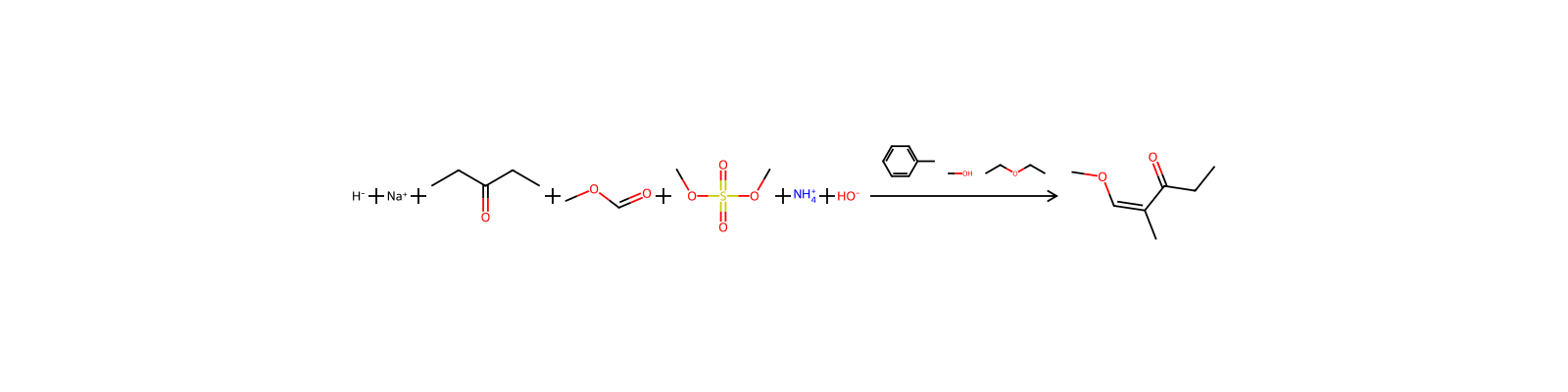
547 条



关联笔记
加载中…