

基本信息
- 标准SMILES
CC(C)CC(C)O- InChIKey
WVYWICLMDOOCFB-UHFFFAOYSA-N- 分子式
- C6H14O
- 平均分子量
- 102.17 g/mol
- 单同位素质量
- 102.10446507
概述
Methyl isobutyl carbinol appears as a clear colorless liquid. Flash point 120 °F. Less dense than water. Vapors heavier than air.
名称与标识
- 首选名称
- 4-Methyl-2-Pentanol
- IUPAC
- 4-methylpentan-2-ol
- 中文名
- 4-甲基-2-戊醇
- 英文名
- 4-Methyl-2-pentanol
- 分子式
- C6H14O
- 分子量
- 102.17
名称与别名
4-METHYL-2-PENTANOL4-Methylpentan-2-ol108-11-2Isobutylmethylcarbinol2-Pentanol, 4-methyl-Methyl isobutyl carbinol2-Methyl-4-pentanolMethylisobutylcarbinolMIBCIsobutylmethylmethanol1,3-Dimethylbutanol3-MIC
展开更多名称
甲异醇仲己醇2-己醇甲基戊醇1-乙基丁醇甲基吲哚甲酸四甲基二戊醇甲基異丁基甲醇甲基异丁基甲醇MIBC起泡剂4-methyl-2-pentanoFEMA 3351METHYL AMYL ALCOHOL1,3-Dimethyl-1-butanolISOBUTYL METHYL CARBINOL
4-Methylpentanol-2MAOHMetilamil alcoholMethylisobutyl carbinoldl-Methylisobutylcarbinol4-Methyl-2-amyl alcoholAlcool methyl amylique4-Methyl-2-pentyl alcohol
数据库标识
- CAS
108-11-2- PubChem CID
- 7910
- DTXSID
DTXSID2026781- ChEMBL
CHEMBL448896- UNII
- 8U34XJK0R0
- EC Number
- 203-551-7
- Nikkaji
- J2.414G
性质
结构计算性质
- XLogP
- 1.7
- 极性表面积
- 20.2 Ų
- 氢键供体
- 1
- 氢键受体
- 1
- 可旋转键
- 2
- 重原子
- 7
- 形式电荷
- 0
- 复杂度
- 41.4
实验与物化性质
Chemical Classes
Flammable agents - 2nd degree
Volatile Organic Compound (VOC)
SolventsSolvents -> Alcohols (<C12)
FragrancesFragrance Ingredient (4-Methyl-2-pentanol) -> IFRA transparency List
LogP
log Kow= 1.43
1.43
OdorMild odor.
Density
0.807 at 68 °F (USCG, 1999) - Less dense than water; will float
0.8075 @ 20 °C/4 °C
% IN SATURATED AIR: 0.46 @ 20 °C; DENSITY OF SATURATED AIR: 1.01 (AIR= 1)
Relative density (water = 1): 0.82
0.81
0.81
Flavoring AgentsEU Flavoring substances
Color/Form
COLORLESS LIQ
Colorless liquid.
Solubility
2 % (NIOSH, 2024)
SOL IN ALC & ETHER.
MISCIBLE WITH MOST COMMON ORG SOLVENTS.
Water solubility of 1.64X10+4 mg/kg (experimental).
Solubility in water, g/100ml: 2
2%
Flash Point
106 °F (USCG, 1999)
105 °F
105 °F (OPEN CUP)
41 °C
106 °F
106 °F
Boiling Point
269.2 °F at 760 mmHg (USCG, 1999)
133 °C @ 760 MM HG
132 °C
271 °F
271 °F
Melting Point
less than -130 °F (USCG, 1999)
-90 °C
-90 °C
-130 °F
-130 °F
物理化学性质
- 熔点
- -90 °C · -90 °C
- 沸点
- 134 · 134-135 °C(lit.)
- 密度
- 0.802 g/mL · 0.802 g/mL at 25 °C(lit.)
- 蒸气密度
- 3.5 · 3.5 (vs air)
- 蒸气压
- 3.7 mm · 3.7 mm Hg ( 20 °C)
- 折射率
- 20 · n20/D 1.415(lit.)
- 闪点
- 107 °F · 107 °F
- 储存条件
- 30 °C · Store below +30°C.
- 溶解度
- 16.4 g/l · 16.4g/l
- 形态
- Liquid
- 酸度系数(pKa)
- 15.31 · 15.31±0.20(Predicted)
- 颜色
- Clear colorless
- 气味 (Odor)
- Sharp; mild and nonresidual.
- 香型
- pungent
- 爆炸极限值(explosive limit)
- 1 · 1-5.5%(V)
- 水溶解性
- 2 g/100 · 2 g/100 mL
- 比热容
- 2.67 J/ · Cp(liquid): 2.67 J/(g·K), at 25℃
- BRN
- 1098268 · 1098268
- Henry's Law Constant
- 2.2 · 2.2×10-1 mol/(m3Pa) at 25℃, Brockbank (2013)
- 暴露限值
- 20 ppm; · ACGIH:TLV-TWA 20 ppm; TLV-STEL 40 ppmOSHA:PEL-TWA 25 ppm (100 mg/m3)NIOSH:REL-TWA 25 ppm; REL-STEL 40 ppm
- 稳定性
- Stable. Flammable. Incompatible with oxidizing agents, acids, acid chlorides.
- 化妆品成分功效
- PERFUMING
- InChI
- 1S/C6H14O/c1-5(2)4-6(3)7/h5-7H,4H2,1-3H3
- InChIKey
- WVYWICLMDOOCFB-UHFFFAOYSA-N
- SMILES
- CC(C)CC(C)O
- LogP
- 1.57 at · 1.57 at 20℃
- CAS 数据库
- 108 · 108-11-2(CAS DataBase Reference)
- NIST化学物质信息
- 2 · 2-Pentanol, 4-methyl-(108-11-2)
- EPA化学物质信息
- 4 · 4-Methyl-2-pentanol (108-11-2)
化学性质
无色稳定液体。熔点-90℃,凝固点-90℃,沸点132℃,相对密度0.8083(20/20℃),折射率1.4112,闪点40.6℃,蒸气压(20℃)0.373kPa,粘度5.2mPa·s。在低于-90℃时固化为玻璃体。蒸气与空气形成爆炸性混合物,爆炸极限1%-5.5%。能与多种有机溶剂混溶,微溶于水,20℃时在水中的溶解为1.9%。
安全与法规
GHS分类
GHS Classification
Warning
H226: Flammable liquid and vapor [Warning Flammable liquids]
P210, P233, P240, P241, P242, P243, P261, P271, P280, P303+P361+P353, P304+P340, P319, P370+P378, P403+P233, P403+P235, P405, and P501 (click each P-code to see the statement)
Warning
H226 (100%): Flammable liquid and vapor [Warning Flammable liquids]
P210, P233, P240, P241, P242, P243, P261, P264+P265, P271, P280, P303+P361+P353, P304+P340, P305+P351+P338, P319, P337+P317, P370+P378, P403+P233, P403+P235, P405, and P501 (click each P-code to see the statement)
危害信息
Regulatory Information
Chemical: 2-Pentanol, 4-methyl-
Commission Regulation (EC) No 1565/2000 (Repealed by Com. Implementing Reg. (EU) No 872/2012)
2-Pentanol, 4-methyl- is listed on the EPA's Chemical Data Reporting (CDR) system. Manufacturers and importers of 2-Pentanol, 4-methyl- are required to report information about their production and use of this chemical to the EPA under the Toxic Substances Control Act (TSCA). (40 eCFR Part 711)
Status: Active Update: 03-04-2023 https://echa.europa.eu/registration-dossier/-/registered-dossier/16189
2-Pentanol, 4-methyl-: HSNO Approval: HSR001193 Approved with controls
The New Jersey Worker and Community Right to Know Act requires public and private employers to provide information about hazardous substances at their workplaces. (N.J.S.A. 34:5A-1 et. seq.)
Other Safety InformationIMAP assessments - 2-Pentanol, 4-methyl-: Environment tier I assessment
DOT LabelFlammable Liquid
Fire Hazards
Excerpt from ERG Guide 129 [Flammable Liquids (Water-Miscible / Noxious)]:
· HIGHLY FLAMMABLE: Will be easily ignited by heat, sparks or flames.
Flammable. Above 41 °C explosive vapour/air mixtures may be formed.
Fire PotentialMODERATE FIRE RISK.
Health Hazards
Vapor irritates eyes and nose; may cause anesthesia. Prolonged contact with liquid causes irritation and cracking of skin; also irritates eyes. (USCG, 1999)
· May cause toxic effects if inhaled or absorbed through skin.
Hazards SummaryIn acute animal studies, high concentrations induce narcosis and anesthesia. [ACGIH] Inhalation of high concentrations can cause CNS depression; A skin, eye, and respiratory tract irritant; [ICSC]
DOT ID and Guide
2053 129
2053 129
Reactive GroupAlcohols and Polyols
EC ClassificationSymbol: Xi; R: 10-37; S: (2)-24/25
UN ClassificationUN Hazard Class: 3; UN Pack Group: III
OSHA Standards
Permissible Exposure Limit: Table Z-1 8-hr Time-Weighted Avg: 25 ppm (100 mg/cu m). Skin Designation.
Vacated 1989 OSHA PEL TWA 25 ppm (100 mg/cu m); STEL 40 ppm (165 mg/cu m), skin designation, is still enforced in some states.
安全与防护
Fire Fighting
Excerpt from ERG Guide 129 [Flammable Liquids (Water-Miscible / Noxious)]:
Use water spray, powder, alcohol-resistant foam, carbon dioxide.
First Aid Measures
Fresh air, rest. Artificial respiration may be needed. Refer for medical attention.
Remove contaminated clothes. Rinse skin with plenty of water or shower. Refer for medical attention .
First rinse with plenty of water for several minutes (remove contact lenses if easily possible), then refer for medical attention.
Rinse mouth. Rest. Refer for medical attention .
Accidental Release Measures
· CALL 911. Then call emergency response telephone number on shipping paper. If shipping paper not available or no answer, refer to appropriate telephone number listed on the inside back cover.
· ELIMINATE all ignition sources (no smoking, flares, sparks or flames) from immediate area.
First Aid
Excerpt from NIOSH Pocket Guide for Methyl isobutyl carbinol:
General First Aid:
(General first aid procedures)
Safe StorageFireproof if in building. Separated from strong oxidants. Cool.
Exposure Control and Personal Protection
· Wear positive pressure self-contained breathing apparatus (SCBA).
20.0 [ppm]
Fire Fighting ProceduresALCOHOL FOAM.
Nonfire Spill ResponseExcerpt from ERG Guide 129 [Flammable Liquids (Water-Miscible / Noxious)]:
Spillage Disposal
Personal protection: filter respirator for organic gases and vapours adapted to the airborne concentration of the substance. Ventilation. Collect leaking liquid in sealable containers. Absorb remaining liquid in sand or inert absorbent. Then store and dispose of according to local regulations. Do NOT wash away into sewer.
Preventive Measures
The worker should immediately wash the skin when it becomes contaminated.
Work clothing that becomes wet or significantly contaminated should be removed and replaced.
SRP: The scientific literature for the use of contact lenses in industry is conflicting. The benefit or detrimental effects of wearing contact lenses depend not only upon the substance, but also on factors including the form of the substance, characteristics and duration of the exposure, the uses of other eye protection equipment, and the hygiene of the lenses. However, there may be individual substances whose irritating or corrosive properties are such that the wearing of contact lenses would be harmful to the eye. In those specific cases, contact lenses should not be worn. In any event, the usual eye protection equipment should be worn even when contact lenses are in place.
Isolation and Evacuation
Excerpt from ERG Guide 129 [Flammable Liquids (Water-Miscible / Noxious)]:
Immediate precautionary measure
Eye PreventionWear safety goggles.
毒理信息
Target OrgansEyes, skin, central nervous system
Ecotoxicity ValuesLD50 Goldfish 360 mg/l/24 hr (modified ASTM D 1345)
Environmental Fate
TERRESTRIAL FATE: If 4-methyl-2-pentanol is released to soil, it will be expected to exhibit high to very high mobility in soil(1,SRC) based upon estimated Koc of 143 and 21 estimated from log Kow(2) and water solubility(3), respectively, using a recommended regression equations(4,SRC). It may, therefore, leach through soil(SRC). It will not hydrolyze in moist soil(4), but it may be subject to volatilization from near surface soil based upon estimated rates for its volatilization from water(4-6). It may be subject to biodegradation in soil based upon the rapid biodegradation observed in laboratory aqueous screening tests using sewage and activated sludge inoculum(7,8).
AQUATIC FATE: If 4-methyl-2-pentanol is released to water, it will not be expected to adsorb to sediment and suspended particulate matter or to bioconcentrate in aquatic organisms based upon estimated Koc and BCF, respectively, estimated(2,SRC) from the measured log Kow (1) and water solubility(3). It will not be expected to hydrolyze(2) or directly photolyze(4,SRC). It may be subject to biodegradation in natural waters based upon the rapid biodegradation observed in laboratory aqueous screening tests using sewage and activated sludge inoculum(5,6). It will be subject to volatilization from surface waters based upon half-lives of 23 hr for volatilization from a model river one meter deep flowing 1 m/sec with a wind velocity of 3 m/sec(2,SRC) and 10.6 days for volatilization from a model pond(7,SRC), respectively, estimated using a measured Henry's Law constant(8).
ATMOSPHERIC FATE: If 4-methyl-2-pentanol is released to the atmosphere, it can be expected to exist mainly in the vapor-phase in the ambient atmosphere(1,SRC) based upon an experimental vapor pressure of 5.3 mm Hg at 25 °C(2,SRC). The measured rate constant for vapor-phase reaction with photochemically produced hydroxyl radicals of 7.1X10⁻¹² cu cm/molecule-sec at 25 °C(3) corresponds to an atmospheric half-life of 2.3 days at an atmospheric concentration of 5X10+5 hydroxyl radicals per cu cm(SRC). 4-Methyl-2-pentanol has been rated a moderately reactive (Class III) compound(4) with respect to ozone formation as observed in smog chamber tests(5). 4-Methyl-2-pentanol will not be expected to directly photolyze in the atmosphere(6,SRC).
Food Survey Values4-Methyl-2-pentanol was qualitatively detected in the mixture of volatiles from mountain Beaufort cheese(1).
Adverse EffectsNeurotoxin - Acute solvent syndrome
Exposure Routes
The substance can be absorbed into the body by inhalation of its vapour and through the skin.
inhalation, skin absorption, ingestion, skin and/or eye contact
Signs and Symptoms
Cough. Sore throat. Unconsciousness.
Dry skin. Redness. Pain.
Redness. Pain.
irritation eyes, skin; headache, drowsiness; dermatitis; In Animals: narcosis
Effluent Concentrations
4-Methyl-2-pentanol was detected at a concn of 136 ppb in a sample of influent water from an unspecified municipal wastewater treatment plant(1). It was not indicated whether the compound was detected in final effluent from the plant(1). It was detected at a concn of 45 ppb in effluent samples taken from the Los Angeles County wastewater treatment plant discharge, Palos Verdes, CA between Nov 1980 and Aug 1981(2). A concn of 140 ppm was found in samples of leachate or samples of groundwater plume taken at an unspecified industrial landfill at an unspecified time(3). 4-Methyl-2-pentanol was qualitatively detected in 4 of 16 samples of concentrate derived from large volume (>400 gallons) samples of advanced treatment concentrate from 4 of 6 cities (Lake Tahoe, CA, Oct 1974; Pomona, CA, 1975; Orange County, CA, Feb 1976; Blue Plains, Washington, DC, May 1975)(4).
Soil Adsorption/Mobility
Based upon an experimental log Kow of 1.43(1), a Koc of 143 has been estimated using a recommended regression equation(2). Based upon an experimental water solubility of 1.64X10+4 mg/kg(3), a Koc of 21 has been estimated using a recommended regression equation(2). Based upon these estimated Koc, 4-methyl-2-pentanol will be expected to exhibit high to very high mobility in soil(4). 4-Methyl-2-pentanol, therefore, may leach through soil to groundwater if it does not volatilize or biodegrade first(SRC).
Natural Pollution Sources4-Methyl-2-pentanol was qualitatively detected in the mixture of volatiles from mountain Beaufort cheese(1) which indicates that the compound may be formed naturally(SRC).
Atmospheric Concentrations
4-Methyl-2-pentanol was qualitatively detected in ambient air samples taken Nov 20, 1979 at the BFI Landfill in New Jersey(1). It was detected in ambient air during an air pollution peak at concn ranging from 0.9 to 7.0 ppb; date and location not specified(2).
Human Toxicity Excerpts
THE LIQ MAY BE VERY SLIGHTLY IRRITATING TO SKIN & IS SLIGHTLY TOXIC WHEN INGESTED.
... EYE IRRITATION WAS PRODUCED @ 50 PPM, ALTHOUGH ODOR WAS NOT OBJECTIONABLE @ THIS LEVEL.
法规信息
Atmospheric Standards
This action promulgates standards of performance for equipment leaks of Volatile Organic Compounds (VOC) in the Synthetic Organic Chemical Manufacturing Industry (SOCMI). The intended effect of these standards is to require all newly constructed, modified, and reconstructed SOCMI process units to use the best demonstrated system of continuous emission reduction for equipment leaks of VOC, considering costs, non air quality health and environmental impact and energy requirements. Methyl isobutyl carbinol is produced, as an intermediate or final product, by process units covered under this subpart.
安全数据
- wgk
- 1
- tsca
- TSCA listed
- 毒性
- LD50 orally in Rabbit: 2590 mg/kg LD50 dermal Rabbit 2884 mg/kg
- RTECS号
- SA7350000
- 包装类别
- III
- 危险等级
- 3
- 存储类别
- 3 - Flammable liquids
- 安全说明
- 24/25-26
- 海关编码
- 29051900
- 自燃温度
- 305 °C
- 危险品标志
- Xi
- 危险性类别
- Eye Irrit. 2Flam. Liq. 3STOT SE 3
- 危险类别码
- 10-37-36/37/38
- 毒害物质数据
- 108-11-2(Hazardous Substances Data)
- 职业暴露等级
- A
- 职业暴露限值
- TWA: 25 ppm (100 mg/m3), STEL: 40 ppm (165 mg/m3) [skin]
- 危险品运输编号
- UN 2053
- 立即威胁生命和健康浓度
- 400 ppm
毒性防护
急性毒性口服-大鼠 LD50: 2590 毫克/公斤; 腹腔-小鼠 LD50: 812 毫克/公斤
职业标准TLV-TWA 100 毫克/立方米; STEL 160 毫克/立方米
包装储运
爆炸物危险特性蒸气与空气混合可爆
可燃性危险特性易燃; 火场释放辛辣刺激烟雾
储运特性库房通风低温干燥; 与氧化剂分开储运
灭火剂干粉, 二氧化碳, 1211, 泡沫
化学与工业
药理信息
Metabolism/Metabolites
... UNDERGOES IN RABBIT SOME GLUCURONIC ACID CONJUGATION. AVG AMT GLUCURONIDE EXCRETED FOLLOWING DOSE ADMIN BY STOMACH TUBE WAS 33.7% OF DOSE. URINE CONTAINED ALSO A SMALL AMT METHYL KETONE (PRESUMABLY ISOBUTYL METHYL KETONE) & AFTER EXTRACTION WITH 1:4 ETHANOL ETHER A GLUCURONIDE (TRIACETYL METHYL ESTER) GUM.
用途与制造
Uses
Used primarily in the production of additives for anti-wear and corrosion inhibitors; Used secondarily as a flotation agent (copper ores, coal and tar sand mining); Also used as an additive to surface coatings and solvent to improve binder softness; Usually used in closed systems except as a floating agent; [ACGIH, 2020]
Solvent for dyestuffs, oils, gums, resins, waxes, nitrocellulose, and ethylcellulose; organic synthesis; froth flotation; brake fluids.
In the manufacture of lubricant additives, solvents, plasticizers, lacquers.
U.S. Production
2023: 70,000,000 - <85,000,000 lb
(1972) 1.81X10+10 GRAMS
Consumer UsesSolvent
Industry UsesSurfactant (surface active agent)
Methods of Manufacturing... PREPARED COMMERCIALLY BY REDN OF MESITYL OXIDE IN ACETIC ACID SOLN WITH PLATINUM, OR OVER REDUCED COPPER ON ASBESTOS @ 120 °C.
Formulations/PreparationsGRADE: TECHNICAL
Use ClassificationFragrance Ingredients
General Manufacturing Information
All Other Basic Organic Chemical Manufacturing
2-Pentanol, 4-methyl-: ACTIVE
应用领域
用途4-甲基-2-戊醇是优良的中沸点溶剂。主要用作染料、石油、橡胶、树脂、石蜡、硝基纤维素和乙基纤维素等的溶剂,用作硝化纤维素漆的惰性溶剂,可增加涂料的光泽和平整性,改进泛红性能;在润滑油添加剂制造中用作溶剂等。用于有机合成的原料,矿物浮选洗剂,如萃取硅和硫酸铜矿;还可用于刹车液。
制备方法
生产方法先由丙酮在碱性催化剂存在下,加压缩合转化成二丙酮醇(见11360)。使用的催化剂为氢氧化钙或氢氧化钡。当催化剂粒子很小、表面积很大时,这一液相接触反应接近于均相反应。反应过程放出热量,低温下平衡转化率大。因此,原料丙酮要预冷,反应在0-10℃下操作。然后,二丙酮醇脱水生成异丙叉丙酮。过程获得的二两样酮醇,一般含量为10-15%,采用常压蒸馏浓缩至80%,同时分离和回收未转化的丙酮。在硝酸、硼酸或苯磺酸等酸性催化剂存在下,加热至100-200℃,二丙酮醇脱水生成异丙叉丙酮,转化率为80-85%。但二丙酮醇能受热分解成丙酮,因此脱水产物需回收基中的丙酮。最后上步反应是异丙叉两样酮加氢生成4-甲基-2-戊醇。实际上,如果以镍或铜为催化剂,气相加氢在常压下进行的条件比较温和时,则得到较多的部分加氢产物甲基异丁基甲酮。当温度控制为170-210℃,氢与异丙叉丙酮的摩尔配比加大时,则较多获得完全加氢产物甲基异丁基甲醇。而一般情况下得到的是两者混合物,精馏分离时采用减压蒸馏系统。也可以甲基-异丁基(甲)酮经镍催化加氢制成,经精馏塔分馏,得成品。
上下游产品信息
上游原料
下游产品
试剂价格
- M0386 · 25ML
- 4-甲基-2-戊醇4-Methyl-2-pentanol — 220元
- M0386 · 100ML
- 4-甲基-2-戊醇4-Methyl-2-pentanol — 270元
供应商50 家
国药集团化学试剂有限公司86-21-63210123 · [email protected]
梯希爱(上海)化成工业发展有限公司021-67121386 · [email protected]
上海阿拉丁生化科技股份有限公司400-6206333 13167063860 · [email protected]
湖北鑫杰成化工科技有限公司13554075426 · [email protected]
河北创海生物科技有限公司+86-86-13131129325 · [email protected]
爱斯特(成都)生物制药股份有限公司+86-28-85122536 85324413 · [email protected]
上海赫文斯化工有限公司15721252604 17321035817 · [email protected]
Dayang Chem (Hangzhou) Co.,Ltd.+86-0571-88938639 17705817739 · [email protected]
淄博丽硕化工贸易有限公司13853320569
Syntechem Co.,Ltd[email protected]
山东喜玛供应链管理有限公司0533-13011607593; 13011607593
上海迈瑞尔生化科技有限公司4006356688 18621169109 · [email protected]
武汉易泰科技有限公司上海分公司18930552037 · [email protected]
阿法埃莎(中国)化学有限公司400-6106006 · [email protected]
安耐吉化学&3A(安徽泽升科技股份有限公司)400-0056266 · [email protected]
上海瀚鸿科技股份有限公司021-54306202 13764082696 · [email protected]
山东洛克化工有限公司17653113209 13065062079 · [email protected]
上海泰坦科技股份有限公司400-6009262 15618770481 · [email protected]
合肥天健化工有限公司551-65418679 15856988503;15837135945 · [email protected]
南京蓝白化工有限公司025-85499326 15366059326;13813836665 · [email protected]
山东西亚化学有限公司13355009207 13355009207 · [email protected]
玛雅试剂+86 (573) 82222445 (0)18006601000 452520369 · [email protected]
四川库利南科技有限公司400-1166-196 18981987031 · [email protected]
天津希恩思生化科技有限公司400 638 7771 · [email protected]
南京维奥化工有限公司Please Send Email 18652950785 · [email protected]
Hebei Qige Biological Technology Co. Ltd+86 +8618733132031
斯百全化学(上海)有限公司021-021-021-67601398-809-809-809 15221380277 · [email protected]
艾科试剂4008-755-333 18080918076 · [email protected]
上海思域化工科技有限公司86-21-34053660 · [email protected]
赛默飞世尔科技(中国)有限公司800-810-5118 · [email protected]
北京伊诺凯科技有限公司400-810-7969 010-59572699 · [email protected]
上海遐瑞医药科技有限公司+86 21 61551611
TCI AMERICA800-4238616 · [email protected]
TOKYO CHEMICAL INDUSTRY CO., LTD.03-36680489 · [email protected]
TCI Europe320-37350700 · [email protected]
深圳康特腾科技有限公司86-0755-86635001 · [email protected]
安徽科迪达化工有限公司0554-2106669 · [email protected]
成都零六生物科技有限公司400-1166-196 13458535857 · [email protected]
上海麦克林生化科技股份有限公司15221275939 15221275939 · [email protected]
上海有朋化工有限公司021-69005955 13701776567 · [email protected]
上海凯赛化工有限公司021-33516722 13701817765 · [email protected]
上海彤源化工有限公司021-021-69182866 13701855675 · [email protected]
上海兴鲁化工科技有限公司02120970332 · [email protected]
成都润泽本土化工有限公司13096311329 028-88469284 616445927 · [email protected]
凯试(上海)科技有限公司021-50135380 · [email protected]
上海蓝润化学有限公司021-69515658 ; 69515628 13701998368 · [email protected]
上海容立化学科技有限公司021-69992220 13701886816 · [email protected]
上海康拓化工有限公司021-69185552 13701777608 · [email protected]
池州凯隆进出口贸易有限公司[email protected]
Sigma-Aldrich西格玛奥德里奇(上海)贸易有限公司021-61415566 800-8193336 · [email protected]
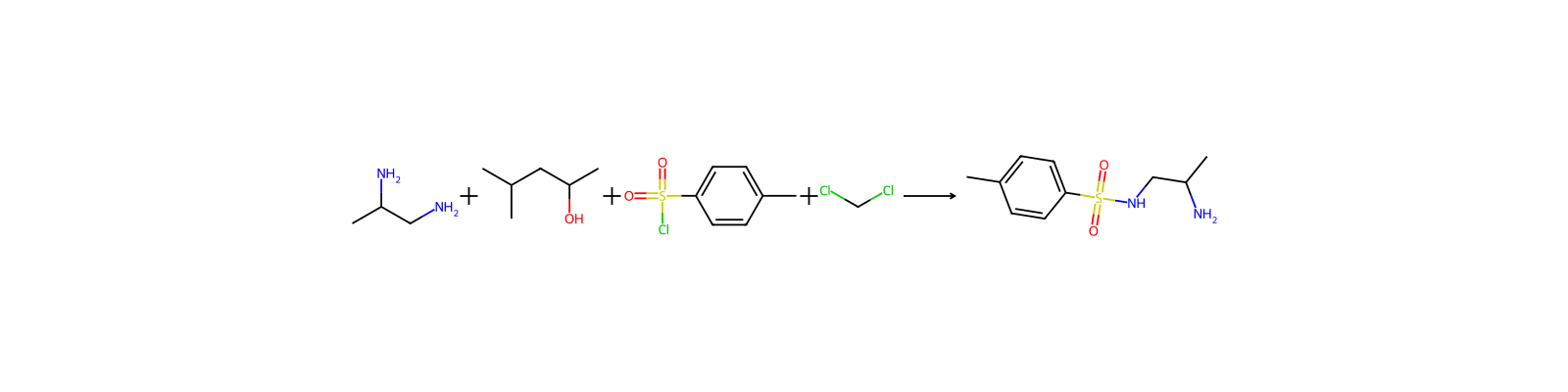
相关反应
96 条






关联笔记
加载中…