
基本信息
- 标准SMILES
Nc1cccc(N)c1- InChIKey
WZCQRUWWHSTZEM-UHFFFAOYSA-N- 分子式
- C6H8N2
- 平均分子量
- 108.14 g/mol
- 单同位素质量
- 108.06874826
概述
1,3-phenylenediamine appears as colorless or white colored needles that turn red or purple in air. Melting point 64-66 C. Density 1.14 g / cm3. Flash point 280 F. May irritate skin and eyes. Toxic by skin absorption, inhalation or ingestion. Used in aramid fiber manufacture, as a polymer additive, dye manufacturing, as a laboratory reagent, and in photography.
名称与标识
- 首选名称
- M-Phenylenediamine
- IUPAC
- benzene-1,3-diamine
- 中文名
- 间苯二胺
- 英文名
- m-Phenylenediamine
- 分子式
- C6H8N2
- 分子量
- 108.14
名称与别名
m-Phenylenediamine108-45-2benzene-1,3-diamine1,3-Phenylenediamine1,3-BENZENEDIAMINE1,3-Diaminobenzene3-Aminoanilinem-Diaminobenzenem-Aminoanilinemeta-PhenylenediamineDeveloper CDeveloper 11
展开更多名称
二胺苯间二苯胺间苯二胺间苯二铵間一苯二胺3-苯二胺M-苯二胺间二氨基苯3-二氨基苯1,3-苯二胺MPDAMETA PHENYLENE DIAMINEdiaminobenzenebenzenediamine
3-PhenylenediamineMetaphenylenediaminem-BenzenediamineDeveloper HDeveloper MDirect Brown BRDirect Brown GGm-Fenylendiamin
数据库标识
- CAS
108-45-2- PubChem CID
- 7935
- DTXSID
DTXSID4021137- ChEMBL
CHEMBL1595914- ChEBI
CHEBI:8092- UNII
- OE624J2447
- EC Number
- 203-584-7
- Nikkaji
- J369G
性质
结构计算性质
- XLogP
- -0.3
- 极性表面积
- 52 Ų
- 氢键供体
- 2
- 氢键受体
- 2
- 可旋转键
- 0
- 重原子
- 8
- 形式电荷
- 0
- 复杂度
- 64.9
实验与物化性质
Chemical ClassesNitrogen Compounds -> Amines, Aromatic
CosmeticsCosmetic ingredients (m-Phenylenediamine) -> CIR (Cosmetic Ingredient Review)
SpringerMaterials Properties13C nuclear magnetic resonance spectrum
PesticidesPesticide -> EPA IRIS
LogP
log Kow = -0.33
-0.33
0.0
Density
1.0696 at 136 °F (NTP, 1992) - Denser than water; will sink
1.0096 g/cu cm at 58 °C
Density = 1.139
1.14 g/cm³
1.0696 at 136 °F
1.139 @25 °C
Color/Form
WHITE CRYSTALS BECOMING RED ON EXPOSURE TO AIR
Colorless needles
RHOMBIC CRYSTALS FROM ALCOHOL
COLORLESS RHOMBIC NEEDLES
Dark oxidation products /are/ present in compound exposed to moist air.
Solubility
less than 1 mg/mL at 66 °F (NTP, 1992)
SOL IN WATER, METHANOL, ETHANOL, CHLOROFORM, ACETONE, DIMETHYLFORMAMIDE, METHYL ETHYL KETONE, DIOXANE; SLIGHTLY SOL IN ETHER, CARBON TETRACHLORIDE, ISOPROPANOL, DIBUTYL PHTHALATE. VERY SLIGHTLY SOL IN BENZENE, TOLUENE, XYLENE, BUTANOL.
In water, 2.38X10+5 mg/l at 20 deg
Solubility in water: soluble
Flash Point
280 °F (NTP, 1992)
187 °C c.c.
280 °F
Boiling Point
540 to 543 °F at 760 mmHg (NTP, 1992)
284-287 °C
284-287 °C
540-543 °F
287 °C @760 [mm Hg]
DecompositionWHEN HEATED TO DECOMP, IT EMITS TOXIC FUMES OF NITROGEN OXIDES.
Melting Point
145 to 147 °F (NTP, 1992)
145-147 °F
62-63 °C
62-63 °C
145-147 °F
65 °C
物理化学性质
- 熔点
- 64 · 64-66 °C
- 沸点
- 282 · 282-284 °C
- 堆积密度
- 600 kg/m3 · 600kg/m3
- 密度
- 1 · 1,139 g/cm3
- 蒸气密度
- 3.7 · 3.7 (vs air)
- 蒸气压
- 0.62 mm · 0.62 mm Hg ( 100 °C)
- 折射率
- 1.6339 · 1.6339
- 闪点
- 230 °F · >230 °F
- 储存条件
- 30 °C · Store below +30°C.
- 溶解度
- 350 g/l · 350g/l
- 酸度系数(pKa)
- 5.11 · 5.11, 2.50(at 20℃)
- 形态
- pellets
- 颜色
- Yellow to light tan or brown gray
- PH值
- 8 · 8 (100g/l, H2O, 20℃)
- 水溶解性
- 350 g/L · 350 g/L (25 ºC)
- 比热容
- 1.48 J/ · Cp(crystal): 1.48 J/(g·K), at 25℃
- 敏感性
- Air Sensitive
- Merck
- 14 · 14,7283
- BRN
- 471357 · 471357
- Henry's Law Constant
- 7.9 · 7.9×103 mol/(m3Pa) at 25℃, Duchowicz et al. (2020)
- 暴露限值
- 0.1 mg/m3 · ACGIH: TWA 0.1 mg/m3
- 稳定性
- AIR SENSITIVE
- 化妆品成分功效
- HAIR DYEING
- 化妆品成分评估
- m-Phenylenediamine (108-45-2)
- InChI
- 1S/C6H8N2/c7-5-2-1-3-6(8)4-5/h1-4H,7-8H2
- InChIKey
- WZCQRUWWHSTZEM-UHFFFAOYSA-N
- SMILES
- Nc1cccc(N)c1
- LogP
- -0.39 at · -0.39 at 20℃
- CAS 数据库
- 108 · 108-45-2(CAS DataBase Reference)
- NIST化学物质信息
- 1 · 1,3-Benzenediamine(108-45-2)
- (IARC)致癌物分类
- 3 · 3 (Vol. 16, Sup 7) 1987
- EPA化学物质信息
- 1 · 1,3-Phenylenediamine (108-45-2)
化学性质
无色针状晶体。 溶于水、乙醚和乙醇。
安全与法规
GHS分类
GHS Classification
Danger
H301: Toxic if swallowed [Danger Acute toxicity, oral]
P203, P261, P262, P264, P264+P265, P270, P271, P272, P273, P280, P301+P316, P302+P352, P304+P340, P305+P351+P338, P316, P318, P321, P330, P333+P317, P337+P317, P361+P364, P362+P364, P391, P403+P233, P405, and P501 (click each P-code to see the statement)
Danger
H301+H311+H331 (23.9%): Toxic if swallowed, in contact with skin or if inhaled [Danger Acute toxicity, oral; acute toxicity, dermal; acute toxicity, inhalation]
P203, P261, P262, P264, P264+P265, P270, P271, P272, P273, P280, P301+P316, P302+P352, P304+P340, P305+P351+P338, P316, P318, P321, P330, P333+P317, P337+P317, P361+P364, P362+P364, P391, P403+P233, P405, and P501 (click each P-code to see the statement)
危害信息
Regulatory Information
Chemical: 1,3-Benzenediamine
1,3-Benzenediamine is listed on the EPA's Chemical Data Reporting (CDR) system. Manufacturers and importers of 1,3-Benzenediamine are required to report information about their production and use of this chemical to the EPA under the Toxic Substances Control Act (TSCA). (40 eCFR Part 711)
Status: Active Update: 28-05-2020 https://echa.europa.eu/registration-dossier/-/registered-dossier/14386
1,3-Phenylenediamine: Does not have an individual approval but may be used under an appropriate group standard
The New Jersey Worker and Community Right to Know Act requires public and private employers to provide information about hazardous substances at their workplaces. (N.J.S.A. 34:5A-1 et. seq.)
Other Safety InformationIMAP assessments - 1,3-Benzenediamine: Human health tier II assessment
DOT LabelPoison
Fire Hazards
This chemical is combustible. Dust may form explosive mixtures in air (NTP, 1992)
Combustible. Gives off irritating or toxic fumes (or gases) in a fire.
Fire Potential
FIRE POINT: 175 °C.
Combustible when exposed to heat or flame.
Health Hazards
SYMPTOMS: Symptoms of exposure to this chemical may include skin sensitization reactions, eye irritation and injury, skin irritation, dermatitis, blackened skin and bronchial asthma. Other symptoms may include allergic skin reactions, irritation of the mucous membranes, nose, throat and lungs, coughing, burning sensation, runny nose, sore throat, methemoglobinemia, cyanosis, headache, dizziness, drowsiness, mental confusion, pulmonary edema, kidney and liver damage, central nervous system effects and conjunctivitis. Eye contact may cause discomfort, tearing, blurring of vision, reddening, partial clouding of the cornea and swelling of the eye and surrounding tissue. Dysuria and eosinophiluria may also occur. Exposure may also result in respiratory tract irritation.
Hazards Summary
In acute studies at lethal doses (650 mg/kg), animals have tremors, convulsions, cyanosis, and methemoglobinemia. In subchronic studies, rats have increased liver weights. Critical Effects are irritation; liver; Confirmed Animal Carcinogen with Unknown Relevance to Humans; [ACGIH] Danger of skin sensitization; [MAK]
Reactive GroupAmines, Aromatic
EC ClassificationSymbol: T, N; R: 23/24/25-36-43-50/53-68; S: (1/2)-28-36/37-45-60-61
UN ClassificationUN Hazard Class: 6.1; UN Pack Group: III
Special Reports
ITC/USEPA; Information Review #102 (Draft) m-Phenylenediamine (1979)
TRDB/USEPA; Technical Support Document (Draft) Phenylenediamines (1984)
NIOSH: Current Intelligence Bulletin 2,4-Diaminoanisole #19 (1978)
TSCA CHIPs present a preliminary assessment of 1,4-Benzenediamine's potential for injury to human health & the environment (available at EPA's TSCA Assistance Office: (202) 554-1404 or (800) 424-9065).
USEPA; PHENYLENEDIAMINES; RESPONSE TO INTERAGENCY TESTING COMMITTEE; FED REGIST 47(5) 973 (1982). EVIDENCE IS GIVEN SUPPORTING TESTING OF THE CLASS OF COMPOUNDS PHENYLENEDIAMINES FOR THEIR TOXIC EFFECTS ON HUMAN HEALTH AND THE ENVIRONMENT. THE RESULTS OF TOXICITY TESTING OF 22 COMPOUNDS ARE TABULATED AS ARE THE EFFECTS FOR WHICH TESTING IS BEING CONSIDERED FOR 13 COMPOUNDS, AND THE USES OR POTENTIAL USES OF 47 PHENYLENEDIAMINES.
TSCA Requirements
Pursuant to section 8(d) of TSCA, EPA promulgated a model Health and Safety Data Reporting Rule. The section 8(d) model rule requires manufacturers, importers, and processors of listed chemical substances and mixtures to submit to EPA copies and lists of unpublished health and safety studies. 1,3-Benzenediamine is included on this list.
Manufacturers and processors of meta-phenylenedimine are required to conduct health efffects, chemical fate and environmental effects testing under TSCA section 4.
安全与防护
Fire Fighting
Excerpt from ERG Guide 153 [Substances - Toxic and/or Corrosive (Combustible)]:
Use water spray, powder.
First Aid Measures
Fresh air, rest. Refer for medical attention.
Remove contaminated clothes. Rinse and then wash skin with water and soap. Refer for medical attention .
First rinse with plenty of water for several minutes (remove contact lenses if easily possible), then refer for medical attention.
Rinse mouth. Refer for medical attention .
First Aid
EYES: First check the victim for contact lenses and remove if present. Flush victim's eyes with water or normal saline solution for 20 to 30 minutes while simultaneously calling a hospital or poison control center. Do not put any ointments, oils, or medication in the victim's eyes without specific instructions from a physician. IMMEDIATELY transport the victim after flushing eyes to a hospital even if no symptoms (such as redness or irritation) develop.
Safe StorageSeparated from strong oxidants and food and feedstuffs. Keep in the dark. Well closed.
Storage ConditionsKEEP WELL CLOSED & PROTECTED FROM LIGHT.
Nonfire Spill ResponseExcerpt from ERG Guide 153 [Substances - Toxic and/or Corrosive (Combustible)]:
Disposal Methods
SRP: At the time of review, criteria for land treatment or burial (sanitary landfill) disposal practices are subject to significant revision. Prior to implementing land disposal of waste residue (including waste sludge), consult with environmental regulatory agencies for guidance on acceptable disposal practices.
Recommendable method: Incineration. Peer-review: (Peer-review conclusions of an IRPTC expert consultation (May 1985))
Spillage Disposal
Personal protection: complete protective clothing including self-contained breathing apparatus. Do NOT let this chemical enter the environment. Sweep spilled substance into covered containers. If appropriate, moisten first to prevent dusting. Carefully collect remainder. Then store and dispose of according to local regulations.
Isolation and EvacuationExcerpt from ERG Guide 153 [Substances - Toxic and/or Corrosive (Combustible)]:
Eye PreventionWear safety goggles, face shield or eye protection in combination with breathing protection.
Fire PreventionNO open flames.
Inhalation RiskA harmful contamination of the air will not or will only very slowly be reached on evaporation of this substance at 20 °C; on spraying or dispersing, however, much faster.
毒理信息
Interactions
Paraoxon (diethyl-p-nitrophenylphosphate) is the toxic, but non-mutagenic metabolite of the organophosphorus ester insecticide parathion. ... A mutagenic synergy when paraoxon was incubated with plant activated m-phenylenediamine (mPDA) or with direct acting 2-acetoxyacetylaminofluorene ... and Salmonella typhimurium tester strains /was discovered/. ... /With/ non-toxic concn of plant activated mPDA and paraoxon a 10-fold incr in the mutant yield of S. typhimurium was observed. The mutagenicity of the plant activated mPDA product required that O-acetyltransferase (OAT) be expressed by the S. typhimurium tester strain. However, the paraoxon dependent mutagenic synergy was observed using the direct acting arylamine metabolite, 2AAAF, with strains YG1024, TA98 and TA98/1,8-DNP6 regardless of their OAT activity. This mutagenic synergy is dependent upon the presence of an activated acetylated form of the arylamine. The data presented here demonstrate that this mutagenic synergy is limited to paraoxon and not to the parent compound (parathion) or to a major metabolite of parathion (p-nitrophenol).
Target OrgansHepatic
Environmental Fate
TERRESTRIAL FATE: Based on a recommended classification scheme(1), an estimated Koc value of 16(SRC), determined from a measured log Kow of -0.33(2) and a recommended regression-derived equation(3), indicates that 1,3-benzenediamine is expected to have very high mobility in soil(SRC). However, anilines are expected to bind strongly to humus or organic matter in soils due to the high reactivity of the aromatic amino group(4,5); therefore, mobility may be much lower in some soils(SRC). Volatilization of 1,3-benzenediamine is not expected to be important from moist soil surfaces(SRC) given an estimated Henry's Law constant of 1.3X10⁻⁹ atm-cu m/mole(SRC), from its extrapolated vapor pressure, 2.1X10⁻³ mm Hg(6), and measured water solubility, 2.4X10+5 mg/l(7). 1,3-Benzenediamine is not expected to volatilize from dry soil surfaces based on its extrapolated vapor pressure(6). Limited biodegradation data indicate 1,3-benzenediamine may be resistant to biodegradation in soil; soil microflora did not cleave the benzene ring of 1,3-benzenediamine in 64 days(8).
AQUATIC FATE: Based on a recommended classification scheme(1), an estimated Koc value of 16(SRC), determined from a measured log Kow of -0.33(2) and a recommended regression-derived equation(3), indicates that 1,3-benzenediamine is not expected to adsorb to suspended solids and sediment in water(SRC). However, aromatic amines are recognized as having a strong affinity to organic carbon, suggesting that this compound may bind strongly to suspended organic material in water(4,5). 1,3-Benzenediamine is not expected to volatilize from water surfaces(3,SRC) based on an estimated Henry's Law constant of 1.3X10⁻⁹ atm-cu m/mole(SRC), derived from its extrapolated vapor pressure, 2.1X10⁻³ mm Hg(6), and measured water solubility, 2.4X10+5 mg/l(7). 1,3-Benzenediamine may exist partially in the ionized form at environmental pH's based on pKa values of 2.65 and 4.88 at 25 °C(8). Volatilization of the ionized form is not expected to be an important fate process(SRC). According to a classification scheme(9), BCF values of 1.3 to 4.6 and <1.6 to 24 measured for 1,3-benzenediamine in carp at 2 and 0.2 mg/l, respectively(10), suggest that bioconcentration in aquatic organisms is low(SRC). 1,3-Benzenediamine in the water column may be susceptible to significant photooxidation via hydroxyl and peroxy radicals; half-lives for these photooxidations may be on the order of 19-30 sunlight hours(11). Aqueous screening studies indicate 1,3-benzenediamine may be susceptible to microbial degradation(SRC); 60% degradation was observed after 5 days using an acclimated activated sludge inoculum(12). 1,3-Benzenediamine was reported to be toxic to 3 unacclimated sludges at concns greater than 50 ppm(13).
ATMOSPHERIC FATE: According to a model of gas/particle partitioning of semivolatile organic compounds in the atmosphere(1), 1,3-benzenediamine, which has an extrapolated vapor pressure of 2.1X10⁻³ mm Hg at 25 °C(2), is expected to exist solely as a vapor in the ambient atmosphere. Vapor-phase 1,3-benzenediamine is degraded in the atmosphere by reaction with photochemically-produced hydroxyl radicals(SRC); the half-life for this reaction in air is estimated to be about 1.9 hours(3,SRC). 1,3-Benzenediamine absorbs light in the environmental spectrum(4), which suggests a potential for direct photolysis in the environment(SRC).
Adverse EffectsOccupational hepatotoxin - Secondary hepatotoxins: the potential for toxic effect in the occupational setting is based on cases of poisoning by human ingestion or animal experimentation.
Exposure RoutesThe substance can be absorbed into the body by inhalation of its vapour, through the skin and by ingestion.
Toxicity Summary
On the basis of the animal and clinical data included in this report, the CIR Expert Panel concludes that m-Phenylenediamine and m-Phenylenediamine Sulfate are safe for use in hair dyes at concentrations of up to 10%.
Safe for use in cosmetics, with qualifications
Signs and Symptoms
Blue lips, fingernails and skin. Confusion. Convulsions. Dizziness. Headache. Nausea. Unconsciousness.
MAY BE ABSORBED! Redness. Further see Inhalation.
Redness. Pain.
See Inhalation.
ICSC Environmental DataThe substance is toxic to aquatic organisms.
EPA IRIS Information
m-Phenylenediamine
Hepatic
6 x 10 ^-3 mg/kg-day
Soil Adsorption/Mobility
The Koc of 1,3-benzenediamine is estimated as approximately 16(SRC), using a measured log Kow of -0.33(1) and a regression-derived equation(2,SRC). According to a recommended classification scheme(3), this estimated Koc value suggests that 1,3-benzenediamine is expected to have very high mobility in soil(SRC). However, anilines are expected to bind strongly to humus or organic matter in soils due to the high reactivity of the aromatic amino group(4,5); therefore, mobility may be much lower in some soils(SRC).
TSCA Test Submissions
m-Phenylenediamine (CAS # 108-45-2) commercial grade, was evaluated for dermal carcinogenicity in 24-month skin-painting study with male and female C3H and C57BL/6 mice (40 and 20/sex/group, respectively) exposed daily to doses of 0.6 or 3.0 mg/day. Mice were sacrificed for histologic evaluation at a rate and time determined by incidence of tumor-bearing mice during the course of treatment. Study lethalities and survivors killed at termination of study were necropsied for examination of major organ systems and the brain to determine degree of substance absorption and potential systemic toxicity. Diagnosis of any gross pathology upon these analyses were confirmed histologically. In 24-month study, mortality was significantly higher in the 3 mg, B6 males, however no increased risk of skin tumors was established for either strain or sex of mice in association with treatment.
meta-Phenylenediamine (CAS # 108-45-2) was evaluated for clastogenic effects in male and female Crl:CDBR mice (5-6/sex/group) following gavage dosing (2 doses, 24 hours apart) at concentrations of 0, 16, 33, and 65 mg/kg bodyweight. Five animals/sex/group were sacrificed for harvest of femur bone marrow and 1000 polychromatic erythrocytes/animal at 24 hours (all treatment groups) and 48 hours (0 and 65 mg/kg/day groups) after a second dose. Bone marrow smears were analyzed for treatment-related incidence of micronuclei in polychromatic erythrocytes. At all dose levels, in vivo observations included lethargy, half-closed eyes, and labored and/or rapid breathing. A solitary 65 mg/kg/day male found dead 24 hours after a second dose comprised the study mortality and weight loss in 33 and 65 mg/kg/day treatment groups was statistically significant. Upon cytogenetic evaluation, there was no statistically significant increase in micronucleated polychromatic erythrocytes in any treatment group relative to vehicle control (deionized water). The only statistically significant (p < 0.05; Dunnett's test) finding from all bone marrow smears was a reduction in young, polychromatic erythrocytes.
m-Phenylenediamine (CAS # 108-45-2) was evaluated for acute oral neurotoxicity in Crl:CDBR rats (12/sex/group) administered single gavage doses of 0, 75, 150, and 300 mg/kg (10 ml/kg in sterile water). Bodyweight, feed consumption, clinical signs, functional observational battery performance, fore-, and hindlimb grip strength, foot splay, and motor activity were assessed prior to treatment (baseline values), and at 1 hour, 24 hours, and 4 days post-treatment. Toxicity was demonstrated at all dose levels and generally to a greater extent in females. Females at the 150 and 300 mg/kg dose level, one and eight rats, respectively, were found dead prior to scheduled sacrifice, death occurring from 2-4 days after treatment. All study lethalities were found with pallor and staining. Significant weight loss within one day of dosing and persisting throughout Day 4 was common to 150 and 300 mg/kg treatment groups, while food consumption was adversely affected in a dose-related manner. A rebounding of food consumption and bodyweights was noted thereafter. Clinical signs were apparent from day of dosing and included dose-related pallor in females, and irregular head movements, coloration of urine and a tip-toe gait in males and females. The functional observational battery revealed significant general malaise, postural changes, and palpebral closure. High-dose females also showed diminished arousal. Measurements of fore- and hindlimb grip strength and foot splay were not indicative of a neurotoxicity at any treatment level. Motor activity was significantly depressed following treatment in all treatment groups relative to control (p </= .01), exhibiting a dose-related rate of recovery in the respective groups. Study authors attributed depressed motor activity to a general condition of malaise and reported no evidence of neurotoxicity.
meta-Phenylenediamine (CAS # 108-45-2) was evaluated for subchronic oral neurotoxicity in male and female Crl:CDBR rats (10/sex/group) administered daily gavage doses of 0, 5, 10, and 20 mg/kg for 90 consecutive days. A functional observational battery and motor activity tests were conducted prior to dosing and at weeks 4, 8, and 13 during treatment. Male rats only exhibited minimal dose-related reductions in both horizontal (10 and 20 mg/kg groups) and vertical motor activity (20 mg/kg group) during treatment weeks 4 and 8 relative to controls. Study authors attributed these findings, which were not statistically significant, to general malaise characterized by lethargy rather than a direct effect of treatment on the central nervous system. Neuropathological evaluation at termination of study yielded no anomalies within the nervous system or skeletal muscle.
For more TSCA Test Submissions (Complete) data for 1,3-BENZENEDIAMINE (8 total), please visit the HSDB record page.
Natural Pollution Sources1,3-Benzenediamine is of anthropogenic origin and is not known to be produced by natural sources. (SRC)
法规信息
TSCA Requirements
Pursuant to section 8(d) of TSCA, EPA promulgated a model Health and Safety Data Reporting Rule. The section 8(d) model rule requires manufacturers, importers, and processors of listed chemical substances and mixtures to submit to EPA copies and lists of unpublished health and safety studies. 1,3-Benzenediamine is included on this list.
Manufacturers and processors of meta-phenylenedimine are required to conduct health efffects, chemical fate and environmental effects testing under TSCA section 4.
安全数据
- F
- 8-10-23
- wgk
- 2
- tsca
- TSCA listed
- 毒性
- LD50 in rats (mg/kg): 650 orally; 283 i.p. (Burnett)
- RTECS号
- SS7700000
- 包装类别
- III
- 危险等级
- 6.1
- 存储类别
- 6.1C - Combustible acute toxic Cat.3toxic compounds or compounds which causing chronic effects
- 安全说明
- 28-36/37-45-60-61-28A
- 海关编码
- 29215119
- 自燃温度
- 560 °C
- 危险品标志
- T,N
- 危险性类别
- Acute Tox. 3 DermalAcute Tox. 3 InhalationAcute Tox. 3 OralAquatic Acute 1Aquatic Chronic 1Eye Irrit. 2Muta. 2Skin Sens. 1
- 危险类别码
- 23/24/25-36-43-50/53-68-40
- 毒害物质数据
- 108-45-2(Hazardous Substances Data)
- 危险品运输编号
- UN 1673 (PHENYLENEDIAMINES (o-, m-, p-))
毒性防护
急性毒性口服-大鼠 LD50: 280 毫克/公斤; 口服-小鼠 LD50: 67.7 毫克/公斤
职业标准TWA 0.1 毫克/立方米
包装储运
可燃性危险特性明火可燃; 受热放出有毒苯胺类气体
储运特性库房通风低温干燥; 与食品原料分开储运
灭火剂雾状水、二氧化碳、砂土
化学与工业
药理信息
Mechanism of Action
In all experiments concerning the absorption of m-phenylenediamine through the skin, increases in ferrihemoglobin (methemoglobin) concentration of various degrees were observed. ... The delay of the ferrihemoglobin formation /indicates that/ a transformation of the m-phenylenediamine is necessary for ferrihemoglobin formation. ... 6 mg of m-phenylenediamine/kg injected intravenously, ... took more than two hours before the formation of ferrihemoglobin had attained its maximum speed.
Metabolism/Metabolites
m-Phenylenediamine is metabolized in the liver ... as well as being excreted unchanged in the urine.
Groups of seven male Wistar rats were dermally exposed for 24 hr to 556 mumol (14)C-meta-phenylenediamine (MPD; 1,3-diaminobenzene) in either aqueous solution (Group 2) or 4% hydrogen peroxide (Group 3). ... Three N-acetylated metabolites (N-acetyl-1,3-diaminobenzene, N,N'-diacetyl-2,4-diaminophenol and N,N-diacetyl-1,3-diaminobenzene) accounted for 49 and 37% of the urinary excretion of group 2 and 3 rats, respectively, indicating that such metabolites represent important pathways in the metabolism of MPD. Minor exception of at least one highly hydrophilic, unidentified metabolite of MPD was demonstrated. ...
Absorption, Distribution and Excretion
The absorption of m-phenylenediamine ... through dog skin, was studied by determining its concentration in the blood. ... After the gel containing 1.5 g of m-phenylendiamine had been applied to the skin, the m-phenylenediamine concentration in the blood rose quickly. In one hour, it approached the level which was maintained through /to/ the last hour of the dermal contact. ... Three hours after the m-phenylenediamine had been washed off the skin, no detectable concentration was found in the blood.
After the /dog abdominal/ skin was washed, m-phenylenediamine concentration in the blood was observed to decline more rapidly than was the case with p-phenylenediamine and 2,5-diaminotoluene.
META-PHENYLENEDIAMINE IS EXCRETED RAPIDLY, UNCHANGED, WITH LITTLE ABSORPTION.
. Groups of seven male Wistar rats were dermally exposed for 24 hr to 556 mumol (14)C-meta-phenylenediamine (MPD; 1,3-diaminobenzene) in either aqueous solution (Group 2) or 4% hydrogen peroxide (Group 3). The percutaneous absorption and the amount of non-excreted radioactivity were significantly higher in Group 2 rats. Radioactivity associated with DNA purified from the liver and kidneys was demonstrated. Urine was the principal route of excretion, especially in Group 2 rats. Rats in Group 3 excreted significantly more MPD in the faeces than did Group 2 rats. Urinary excretion of material that constituted two of the peaks in the high-performance liquid chromatogram demonstrated first-order elimination kinetics. ...
用途与制造
Uses
CIR ingredient: m-Phenylenediamine
Used to make diisocyanates for the production of polyurethane foams and other resins and polymers; Also used as a corrosion inhibitor, curing agent, photographic developer, and intermediate for other chemical products; [CHEMINFO] Used to make dyes, to develop dyes, to dye hair, and to cure epoxy resins; [ACGIH]
Plastic Composites Manufacturing [Category: Industry]
MFR DYES; RUBBER CURING AGENTS; ION EXCHANGE RESINS, DECOLORIZING RESINS, FORMALDEHYDE CONDENSATES; RESINOUS POLYAMIDES, BLOCK POLYMERS, TEXTILE FIBERS, URETHANES, PETROLEUM ADDITIVES, RUBBER CHEMICALS; IN CORROSION INHIBITORS; IN PHOTOGRAPHY; AS REAGENT FOR GOLD & BROMINE
Dyestuff manufacture, detection of nitrite, textile developing agent, laboratory reagent, vulcanizing agent.
IT IS ... EMPLOYED AS CURING AGENT TO HARDEN EPOXY RESINS USED IN CASTING & PLASTIC TOOLING, LAMINATING APPLICATIONS & IN ADHESIVES. IT IS ADDED TO ISOPHTHALOYL CHLORIDE TO PRODUCE POLY-META-PHENYLENE ISOPHTHALAMIDE RESIN, A POLYAMIDE FIBER (NOMEX) USED IN HIGH-TEMP APPLICATIONS, EG PROTECTIVE CLOTHING ...
Impurities
m-Phenylenediamine: purity 99.5% minimum /with the following constituents:/ water-insoluble matter, 0.1% maximum; moisture content, 0.1% maximum; moisture content, 0.1% maximum; dinitrobenzene, 0.1% maximum; p-Phenylenediamine, 500 mg/kg maximum; o-Phenylenediamine, 200 mg/kg maximum.
In Japan, m-phenylenediamine is available with a minimum purity of 98.5%. ... Dinitrobenzene and phenylenediamine isomers are /found/ as impurities.
U.S. Imports
(1977) 8.31X10+6 GRAMS (PRINCPL CUSTMS DISTS)
0-135,700 lb (1976-1982)
U.S. Production
2023: 10,000,000 - <25,000,000 lb
(1977) AT LEAST 4.54X10+7 GRAMS
(1983) < 20,000,000 lb (estimate)
Production figures for m-phenylenediamine are not available. ... From an analysis of two of its principle uses ... infer that production for the 1976-1977 time period could have been as high as 6 million pounds.
Consumer UsesAdhesion/cohesion promoter
Industry UsesAdhesion/cohesion promoter
Methods of Manufacturing
PREPN: PREPARED BY THE REDUCTION OF M-DINITROBENZENE: KUHN, US PATENT 2,768,209 (1956 TO RINGWOOD); FAUST, J PRAKT CHEM 6, 14 (1958); NEILSON ET AL, J CHEM SOC 1962, 371; TALLEE, PELTIER, COMPT REND 259, 400 (1964).
PREPN: REDUCTION OF META-DINITROBENZENE OR NITROANILINE WITH IRON & HYDROCHLORIC ACID. PURIFIED BY CRYSTALLIZATION.
Formulations/PreparationsGRADES: TECHNICAL; 99% MIN PURITY.
Household ProductsInformation on 1 consumer products that contain 3-Phenylenediamine in the following categories is provided:
General Manufacturing Information
Plastics Material and Resin Manufacturing
1,3-Benzenediamine: ACTIVE
应用领域
用途主要用作染料中间体及环氧树脂固化剂
用途偶氮染料和吖嗪染料的中间体,主要用于制造直接耐晒黑RN、碱性橙、碱性棕G、直接耐晒黑G等染料,并用作毛皮染料,在日本,偶氮染料消费的间苯二胺占总消费量的90%。也用作环氧树脂的固化剂、水泥的促凝剂,并用于染发水、媒染剂、显色剂等方面。
用途用作分析试剂、树脂固化剂和阻聚剂,也用于染料的合成
用途分光光度测定亚硝酸盐,检定溴酸盐、溴化物、铬酸盐、臭氧、金、铜、重铬酸盐、铁、氧和铂,测定活性氯、铬、铱、亚硝酸盐和钯。
制备方法
生产方法硝基苯经混酸硝化成间、邻、对二硝基苯的混合物,再经亚硫酸钠和液碱精制得间二硝基苯,然后用铁粉还原或加氢还原制得间苯二胺。原料消耗定额:硝基苯1400kg/t、硝酸787kg/t、硫酸(98%)780kg/t、铁粉3083kg/t。
上下游产品信息
上游原料
下游产品
试剂价格
- P1911 · 5G
- 间苯二胺1,3-Phenylenediamine — 120元
- P1911 · 25G
- 1,3-苯二胺1,3-Phenylenediamine — 250元
供应商50 家
国药集团化学试剂有限公司86-21-63210123 · [email protected]
梯希爱(上海)化成工业发展有限公司021-67121386 · [email protected]
衢州润东化工有限公司0570-8789886 18892685668 · [email protected]
上海阿拉丁生化科技股份有限公司400-6206333 13167063860 · [email protected]
河北创海生物科技有限公司+86-86-13131129325 · [email protected]
T&W GROUP021-61551611 13296011611 · [email protected]
北京安司莫森技术有限公司010-82954736 13391601435 · [email protected]
山东信恒化工有限公司15269160602 15269160602
Syntechem Co.,Ltd[email protected]
上海迈瑞尔生化科技有限公司4006356688 18621169109 · [email protected]
阿法埃莎(中国)化学有限公司400-6106006 · [email protected]
安耐吉化学&3A(安徽泽升科技股份有限公司)400-0056266 · [email protected]
上海瀚鸿科技股份有限公司021-54306202 13764082696 · [email protected]
上海景颜化工科技有限公司13817811078 · [email protected]
超彩实业有限公司0574-83851061 · [email protected]
合肥天健化工有限公司551-65418679 15856988503;15837135945 · [email protected]
南京蓝白化工有限公司025-85499326 15366059326;13813836665 · [email protected]
山东西亚化学有限公司13355009207 13355009207 · [email protected]
玛雅试剂+86 (573) 82222445 (0)18006601000 452520369 · [email protected]
四川库利南科技有限公司400-1166-196 18981987031 · [email protected]
天津希恩思生化科技有限公司400 638 7771 · [email protected]
斯百全化学(上海)有限公司021-021-021-67601398-809-809-809 15221380277 · [email protected]
济南邦德化工技术有限公司86-531-88280989 · [email protected]
艾科试剂4008-755-333 18080918076 · [email protected]
上海思域化工科技有限公司86-21-34053660 · [email protected]
赛默飞世尔科技(中国)有限公司800-810-5118 · [email protected]
北京伊诺凯科技有限公司400-810-7969 010-59572699 · [email protected]
上海遐瑞医药科技有限公司+86 21 61551611
南京诺利斯医药科技有限公司13901585132 · [email protected]
TCI AMERICA800-4238616 · [email protected]
TOKYO CHEMICAL INDUSTRY CO., LTD.03-36680489 · [email protected]
上海贤鼎生物科技有限公司4009209199 · [email protected]
北京环宇世纪化学科技有限公司hysj_bj.com
HBCChem, Inc.+1-510-219-6317 · [email protected]
美岚实业(上海)有限公司021-58958189 · [email protected]
上海爱蝶实业有限公司021-58957966 18930537195 · [email protected]
成都零六生物科技有限公司400-1166-196 13458535857 · [email protected]
雷丁试剂0510-85629785 18013409632 · [email protected]
上海麦克林生化科技股份有限公司15221275939 15221275939 · [email protected]
杭州杰恒化工有限公司0571-87396432 · [email protected]
上海嵩爰化工科技有限公司010-1234567 18521000990 · [email protected]
上海有朋化工有限公司021-69005955 13701776567 · [email protected]
上海凯赛化工有限公司021-33516722 13701817765 · [email protected]
上海彤源化工有限公司021-021-69182866 13701855675 · [email protected]
成都润泽本土化工有限公司13096311329 028-88469284 616445927 · [email protected]
凯试(上海)科技有限公司021-50135380 · [email protected]
上海蓝润化学有限公司021-69515658 ; 69515628 13701998368 · [email protected]
上海容立化学科技有限公司021-69992220 13701886816 · [email protected]
上海康拓化工有限公司021-69185552 13701777608 · [email protected]
池州凯隆进出口贸易有限公司[email protected]
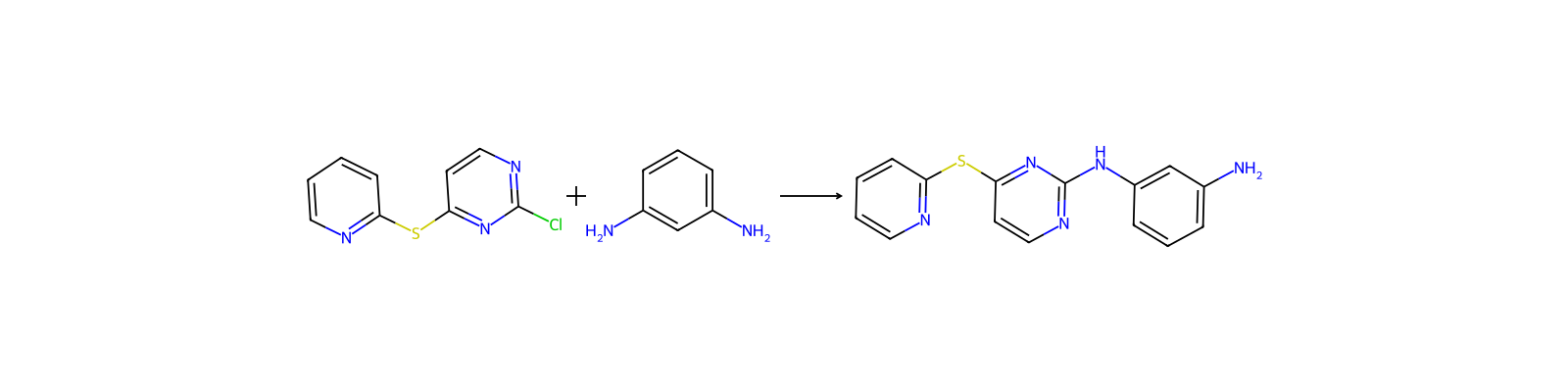
相关反应
188 条



关联笔记
加载中…