

基本信息
- 标准SMILES
ClCCCBr- InChIKey
MFESCIUQSIBMSM-UHFFFAOYSA-N- 分子式
- C3H6BrCl
- 平均分子量
- 157.44 g/mol
- 单同位素质量
- 155.93413997
概述
1-Bromo-3-Chloropropane can cause cancer according to California Labor Code.
名称与标识
- 首选名称
- 1-Bromo-3-chloropropane
- IUPAC
- 1-bromo-3-chloropropane
- 中文名
- 1-溴-3-氯丙烷
- 英文名
- 1-Bromo-3-chloropropane
- 分子式
- C3H6BrCl
- 分子量
- 157.44
名称与别名
1-BROMO-3-CHLOROPROPANE109-70-6Trimethylene chlorobromidePropane, 1-bromo-3-chloro-3-Bromopropyl chloride3-Chloropropyl bromide1-Chloro-3-bromopropane3-Chloro-1-bromopropane3-Bromo-1-chloropropaneTrimethylene bromide chlorideomega-ChlorobromopropaneKA4WR2LS00
展开更多名称
3-氯丙基溴1,3-溴丙烷曲唑酮杂质131,3-溴氯丙烷3-氯-1-溴丙烷1-氯-3-溴丙烷1-溴-3-氯丙烷三亚甲基氯溴化合物3-溴-1-氯丙烷1,溴-3一氯丙烷BROMOCHLOROPROPANE1,3-BCPCHLOROBROMOPROPANENSC 9183
NSC-9183DTXSID1051565RefChem:75105DTXCID5030117203-697-1I-BCP1,3-ChbpTrimethylene bromochloride
数据库标识
- CAS
109-70-6- PubChem CID
- 8006
- DTXSID
DTXSID1051565- ChEMBL
CHEMBL156560- ChEBI
CHEBI:189106- UNII
- KA4WR2LS00
- EC Number
- 203-697-1
- Nikkaji
- J29.156K
性质
结构计算性质
- XLogP
- 1.9
- 极性表面积
- 0 Ų
- 氢键供体
- 0
- 氢键受体
- 0
- 可旋转键
- 2
- 重原子
- 5
- 形式电荷
- 0
- 复杂度
- 16.4
实验与物化性质
Chemical ClassesOther Classes -> Halogenated Aliphatics, Saturated
SpringerMaterials PropertiesSchoenflies notation
LogP
Log P = 2.18
2.18
Density
1.5969 @ 20 °C/4 °C
Relative density (water = 1): 1.6
Color/FormCOLORLESS LIQUID
Solubility
Very sol in alc, ether, chloroform
SOL IN METHANOL
Soluble in oxygenated and chlorinated solvents.
In water = 2240 mg/l at 25 °C.
Solubility in water, g/100ml at 25 °C: 0.224
Flash Point
57 °C
57 °C
Boiling Point
143.3 °C @ 760 MM HG
143.3 °C
Melting Point
-58.90 °C
-58.9 °C
Vapor DensityRelative vapor density (air = 1): 5.4
Vapor Pressure
6.38 [mmHg]
Vapor pressure, kPa at 25 °C: 0.85
Refractive IndexINDEX OF REFRACTION: 1.4864 @ 20 °C/D
物理化学性质
- 熔点
- -59 °C · -59 °C
- 沸点
- 144 · 144-145 °C (lit.)
- 密度
- 1.592 g/mL · 1.592 g/mL at 25 °C (lit.)
- 蒸气压
- 7.5 hPa · 7.5 hPa (20 °C)
- 折射率
- 20 · n20/D 1.486(lit.)
- 闪点
- 81 °C · 81 °C
- 储存条件
- room temp
- 溶解度
- 2.24 g/l · 2.24g/l insoluble
- 形态
- liquid
- 颜色
- Clear liquid
- 爆炸极限值(explosive limit)
- 3.2 · 3.2-8.6%(V)
- 水溶解性
- insoluble
- BRN
- 605278 · 605278
- Henry's Law Constant
- 3.9 · 3.9×10-2 mol/(m3Pa) at 25℃, HSDB (2015)
- 稳定性
- Volatile
- InChI
- 1S/C3H6BrCl/c4-2-1-3-5/h1-3H2
- InChIKey
- MFESCIUQSIBMSM-UHFFFAOYSA-N
- SMILES
- ClCCCBr
- CAS 数据库
- 109 · 109-70-6(CAS DataBase Reference)
- (IARC)致癌物分类
- 2 B · 2B (Vol. 125)
- NIST化学物质信息
- 1 · Propane, 1-bromo-3-chloro-(109-70-6)
- EPA化学物质信息
- 1 · Propane, 1-bromo-3-chloro- (109-70-6)
化学性质
无色液体。沸点142-143℃,相对密度1.592(20/4℃),折射率1.4851,溶于乙醇、醚及氯仿,不溶于水。
安全与法规
GHS分类
GHS Classification
Danger
H226 (28.6%): Flammable liquid and vapor [Warning Flammable liquids]
P203, P210, P233, P240, P241, P242, P243, P261, P264, P264+P265, P270, P271, P273, P280, P301+P317, P302+P352, P303+P361+P353, P304+P340, P305+P351+P338, P316, P317, P318, P319, P321, P330, P332+P317, P337+P317, P362+P364, P370+P378, P403+P233, P403+P235, P405, and P501 (click each P-code to see the statement)
Aggregated GHS information provided per 189 reports by companies from 26 notifications to the ECHA C&L Inventory. Each notification may be associated with multiple companies.
Danger
H226: Flammable liquid and vapor [Warning Flammable liquids]
危害信息
Regulatory Information
Chemical: Propane, 1-bromo-3-chloro-
Hazard Traits - Carcinogenicity
Propane, 1-bromo-3-chloro- is listed on the EPA's Chemical Data Reporting (CDR) system. Manufacturers and importers of Propane, 1-bromo-3-chloro- are required to report information about their production and use of this chemical to the EPA under the Toxic Substances Control Act (TSCA). (40 eCFR Part 711)
Status: Active Update: 12-10-2018 https://echa.europa.eu/registration-dossier/-/registered-dossier/24661
1-Bromo-3-chloropropane: Does not have an individual approval but may be used under an appropriate group standard
The New Jersey Worker and Community Right to Know Act requires public and private employers to provide information about hazardous substances at their workplaces. (N.J.S.A. 34:5A-1 et. seq.)
Other Safety InformationEvaluation - 1-bromo-3-chloropropane and 1,3-dibromopropane
DOT LabelPoison
Fire Hazards
Excerpt from ERG Guide 159 [Substances (Irritating)]:
· Some of these materials may burn, but none ignite readily.
Flammable. Gives off irritating or toxic fumes (or gases) in a fire. Above 57 °C explosive vapour/air mixtures may be formed.
Health Hazards
Excerpt from ERG Guide 159 [Substances (Irritating)]:
· Inhalation of vapors or dust is extremely irritating.
Hazards Summary
May cause CNS effects and liver injury; [ICSC] No significant adverse gross or histopathological changes observed with regard to body weight, kidneys, or male reproductive organs in two week feeding study with rats; Emergency medical treatment: see Dibromochloropropane; [HSDB] A strong eye and respiratory tract irritant; [CAMEO] Observations in four hour inhalation study with rats include pulmonary hemorrhages, fatty degeneration of the liver and heart, albuminoid degeneration of the kidney, and edema and swelling of brain neural tissue; No gross or histopathological changes observed in another inhalation study; Classified as not irritating to skin and eyes of rabbits (some corneal opacity and conjunctival irritation/redness observed, but cleared by day 8 in all studies); Observations in 24 day study with rats include liver degeneration, increased frequency of chromosomal aberrations in bone marrow, and decrease in testicular weight coefficient and spermatozoa motility; Not mutagenic to various Salmonella typhimurium strains; No significant adverse effects to male reproductive system observed in five week feeding or two week gavage studies with rats; [IUCLID]
DOT ID and Guide2688 159
Reactive GroupHalogenated Organic Compounds
UN ClassificationUN Hazard Class: 6.1; UN Pack Group: III
Reactivity Profile
Halogenated aliphatic compounds, such as 1-BROMO-3-CHLOROPROPANE, are moderately or very reactive. Halogenated organics generally become less reactive as more of their hydrogen atoms are replaced with halogen atoms. Materials in this group are incompatible with strong oxidizing and reducing agents. Also, they are incompatible with many amines, nitrides, azo/diazo compounds, alkali metals, and epoxides.
Chemical DangersDecomposes on burning. This produces toxic and corrosive gases including hydrogen bromide (see ICSC 0282) and hydrogen chloride (see ICSC 0163).
Packaging and LabellingDo not transport with food and feedstuffs.
安全与防护
Fire Fighting
Excerpt from ERG Guide 159 [Substances (Irritating)]:
Use water spray, powder, foam, carbon dioxide. In case of fire: keep drums, etc., cool by spraying with water.
First Aid Measures
Fresh air, rest. Refer for medical attention.
Remove contaminated clothes. Rinse and then wash skin with water and soap.
Rinse with plenty of water for several minutes (remove contact lenses if easily possible).
Rinse mouth. Refer for medical attention .
Accidental Release Measures
· CALL 911. Then call emergency response telephone number on shipping paper. If shipping paper not available or no answer, refer to appropriate telephone number listed on the inside back cover.
· Do not touch or walk through spilled material.
First Aid
Excerpt from ERG Guide 159 [Substances (Irritating)]:
General First Aid:
Safe StorageSeparated from food and feedstuffs. Well closed. Store in an area without drain or sewer access.
Exposure Control and Personal Protection· Wear positive pressure self-contained breathing apparatus (SCBA).
Nonfire Spill ResponseExcerpt from ERG Guide 159 [Substances (Irritating)]:
Disposal Methods
SRP: At the time of review, criteria for land treatment or burial (sanitary landfill) disposal practices are subject to significant revision. Prior to implementing land disposal of waste residue (including waste sludge), consult with environmental regulatory agencies for guidance on acceptable disposal practices.
Spillage Disposal
Personal protection: filter respirator for organic gases and vapours adapted to the airborne concentration of the substance. Do NOT let this chemical enter the environment. Collect leaking and spilled liquid in sealable containers as far as possible. Absorb remaining liquid in sand or inert absorbent. Then store and dispose of according to local regulations.
Preventive MeasuresAVOID INHALATION OF FUMES.
Isolation and Evacuation
Excerpt from ERG Guide 159 [Substances (Irritating)]:
Immediate precautionary measure
Eye PreventionWear safety spectacles.
毒理信息
Environmental Fate
TERRESTRIAL FATE: Based on a recommended classification scheme(1), an estimated Koc value of 63(SRC), determined from a measured water solubility(2) and a regression-derived equation(3,SRC), indicates that 1-bromo-3-chloropropane will have high mobility in soil(SRC). Volatilization of 1-bromo-3-chloropropane may be important from moist soil surfaces(SRC) given an estimated Henry's Law constant of 2.5X10⁻⁴ atm-cu m/mole(SRC), determined using a fragment constant estimation method(4). Volatilization from dry soil surfaces(SRC) is expected based on an extrapolated vapor pressure of 6.4 mm Hg(5,SRC). Based on limited data, this compound is expected to be resistant to aerobic biodegradation(SRC); 1-bromo-3-chloropropane, inoculated with effluent from a biological waste treatment plant, reached 3% of the theoretical BOD in 5 days(6).
AQUATIC FATE: Based on a recommended classification scheme(1), an estimated Koc value of 63(SRC), determined from a measured water solubility(2) and a regression-derived equation(1,SRC), indicates that 1-bromo-3-chloropropane should not adsorb to suspended solids and sediment in water(SRC). 1-Bromo-3-chloropropane should volatilize from water surfaces(1,SRC) given an estimated Henry's Law constant of 2.5X10⁻⁴ atm-cu m/mole(SRC), developed using a fragment constant estimation method(3). Estimated half-lives for a model river and model lake are 8 hours and 6 days, respectively(1,SRC). According to a classification scheme(5), an estimated BCF value of 27(1,SRC), from a measured log Kow(4), suggests that bioconcentration in aquatic organisms is low(SRC). Based on limited data, this compound is expected to be resistant to aerobic biodegradation(SRC); 1-bromo-3-chloropropane, inoculated with effluent from a biological waste treatment plant, reached 3% of the theoretical BOD in 5 days(6).
ATMOSPHERIC FATE: According to a model of gas/particle partitioning of semivolatile organic compounds in the atmosphere(1), 1-bromo-3-chloropropane, which has an extrapolated vapor pressure of 6.4 mm Hg at 25 °C(2,SRC), will exist solely as a vapor in the ambient atmosphere. Vapor-phase 1-bromo-3-chloropropane is degraded in the atmosphere by reaction with photochemically-produced hydroxyl radicals(SRC); the half-life for this reaction in air is estimated to be about 18 days(3,SRC).
Adverse EffectsNeurotoxin - Other CNS neurotoxin
Exposure RoutesThe substance can be absorbed into the body by inhalation of its vapour and by ingestion.
Signs and Symptoms
Tremor. Drowsiness.
See Inhalation.
ICSC Environmental DataThe substance is harmful to aquatic organisms.
Soil Adsorption/Mobility
The Koc of 1-bromo-3-chloropropane is estimated as approximately 63(SRC), using a measured water solubility of 2240 mg/l at 25 °C(1) and a regression-derived equation(2,SRC). According to a recommended classification scheme(3), this estimated Koc value suggests that 1-bromo-3-chloropropane has high mobility in soil(SRC).
TSCA Test Submissions
Toxicity of 1-chloro-3-bromopropane (CBP) with respect to testicular changes was evaluated in male albino Wistar rats (10/treated group, 20 in arachis oil vehicle control group) exposed orally to CBP by gavage at dosage levels of 40 or 160 mg/kg/day for 14 days. On day 15, the animals were sent for pathological examination. Significant differences between treated and control animals were not observed at any dose level. No significant differences between treated and control animals were observed in the following: body weights, body weight gain, testes weights, morphology, or detailed macroscopic and microscopic examination of the kidneys, testes, epididymides, ductuli efferentes, and vasa deferentes.
Atmospheric Concentrations
URBAN/SUBURBAN: Source-dominated air samples contained 1-bromo-3-chloropropane at a median concentration of 2 parts/trillion(1). Air samples collected from a geographic area associated with the bromine industry in Arkansas contained 1-bromo-3-chloropropane at unreported concentrations(2). Ambient concentrations of 1-bromo-3-chloropropane in air surrounding the Ethyl Corporation, Magnolia, AK in July 1977 ranged from trace levels to 1,688 ng/cu m(3). Ambient concentrations of 1-bromo-3-chloropropane in air surrounding the Great Lakes Corporation and the Michigan Chemical Corporation in El Dorado, AK in July 1977 ranged from not detected to trace levels and trace to 63 ng/cu m, respectively(3).
Human Toxicity Excerpts
Mortality rates in workers exposed to brominated chemicals in manufacturing research facilities from 1935 to 1976 were investigated epidemiologically. These workers were potentially exposed to 1,2-dibromo-3-chloropropane, polybrominated biphenyls, tris(2,3-dibromopropyl)phosphate, trimethylene chlorobromide, and DDT as well as various organic and inorganic bromides. Data was collected from personnel records and death certificates. Standardized mortality ratios were calculated for comparison against rates for American white males. In all, 2,806 male workers were identified as living, 578 workers were identified as deceased. Almost half of the cohort had worked less than 6 mo. The average term of employment was 3 yr 9 mo. Overall, the standardized mortality ratio for workers was lower than that of American white males. Deaths from diabetes mellitus occurred more frequently in these workers, with rates more than twice the number expected. Overall cancer death rates were comparable among the workers and the comparison population. Stomach cancer rates were lower among workers than expected; otherwise, differences in site specific cancer deaths were not statistically significant. The workers showed lower than expected death rates for diseases of the circulatory and digestive systems and pneumonia. There was no incr trend in mortality with length of employment. /Results indicate/ that this study has identified a number of potential health problems and should be continued with a longer observation period to establish mortality trends.
A historical prospective mortality study was conducted for 3579 white male workers employed between 1935 and 1976 at four Vesicol Chemical Corporation facilities. The members of the study cohort were potentially exposed to brominated compounds including 1,2-dibromo-3-chloropropane (DBCP), tris(2,3-dibromopropyl)phosphate, trimethylene chlorobromide. Some were exposed to DDT, polybrominated biphenyls (PBB) and others to radiation from rare earths process. Overall mortality was lower than expected, particularly in diseases of the circulatory system, nonmalignant respiratory diseases and diseases of the digestive system. No significant overall or cause specific mortality excess was noted among those potentially exposed to either TRIS or DDT. No cancer death was noted among the rare earth employees. Mortality from diabetes mellitus was significantly elevated among the maintenance workers hired in the early 1940's. A significant mortality excess due to diseases of the circulatory system was observed among workers potentially exposed to DBCP and or rare earth process. Mortality from testicular cancer was significantly higher in those exposed to organic bromides. The common potential exposure of the testicular cancer decedents was methyl bromide. A number of other cause specific mortality excesses were also noted.
Artificial Pollution Sources1-Bromo-3-chloropropane's production and use in organic syntheses and in the production of pharmaceuticals(1) may result in its release to the environment through various waste streams(SRC).
Environmental Biodegradation1-Bromo-3-chloropropane, inoculated with effluent from a biological waste treatment plant, reached 3% of the theoretical BOD in 5 days(1).
Carcinogen Classification
1-Bromo-3-chloropropane
Group 2B: Possibly carcinogenic to humans
Volume 125: (2020) Some Industrial Chemical Intermediates and Solvents
2020 online
2019
安全数据
- wgk
- 3
- tsca
- TSCA listed
- 毒性
- LD50 orally in Rabbit: 1100 - 1200 mg/kg LD50 dermal Rat > 2000 mg/kg
- RTECS号
- TX4113000
- 包装类别
- III
- 危险等级
- 6.1
- 存储类别
- 6.1C - Combustible acute toxic Cat.3toxic compounds or compounds which causing chronic effects
- 安全说明
- 16-45-36/37/39-26
- 海关编码
- 29034980
- 危险品标志
- Xn
- 危险性类别
- Acute Tox. 3 InhalationAcute Tox. 4 OralAquatic Chronic 3Muta. 2STOT SE 3
- 危险类别码
- 10-22-36/37/38-20/21/22-20/22-68-52/53-37
- 毒害物质数据
- 109-70-6(Hazardous Substances Data)
- 危险品运输编号
- UN 2688
毒性防护
急性毒性口服- 大鼠 LD50: 930 毫克/ 公斤; 口服- 小鼠 LD50:1290 毫克/ 公斤
职业标准STEL 3 毫克/ 立方米
包装储运
可燃性危险特性明火可燃; 与氧化剂反应; 高热分解及遇酸放出有毒氯、溴化物气体
储运特性库房通风低温干燥; 与氧化剂、酸类、食品添加剂分开存放
灭火剂雾状水、泡沫、二氧化碳、砂土
化学与工业
药理信息
Mechanism of Action
The present study examines how variations in position, number, and type of halogen substituents affect renal and testicular necrosis, renal and testicular DNA damage, and the tissue distribution of the halogenated propanes. Groups of five male MOL:WIST rats were given single ip injections, ranging from 85 to 3000 um/kg of 1,2-dibromo-3-chloropropane (DBCP), 1,2,3-tribromopropane (TBP), 1,3-dichloro-2-bromopropane (DB2CP), or 1-bromo-2,3-dichloropropane (B2,3DCP), 1,3-dibromopropane, 1,2-dibromopropane, 1,2,3-trichloropropane or 1-bromo-3-chloropropane. The most potent in causing organ damage in both kidney and testes were DBCP and TBP. DB2CP was less organ toxic than DBCP or TBP, but induced more organ damage than B2,3DCP and DC2BP. The ability of the halogenated propanes to induce DNA damage in vivo correlated well with their ability to induce organ damage. However, DNA damage occurred at lower doses and after a shorter period of exposure. DNA damage may be an initial event in the development of organ necrosis by halogenated propanes in general. Testicular DNA damage induced by the halogenated propanes in vivo correlated well with the DNA damage observed in isolated testicular cells in vitro, showing that toxicity was due to in situ activation. The findings established a good relationship between in vivo organ necrogenic effects and DNA damage for a series of halogenated propanes. Both the type, the number, and the position of the halogens affected the toxic potential. The most toxic of the halogenated propanes contained three halogens with at least two vicinal bromines.
用途与制造
Uses
Used as a chemical intermediate for organic synthesis (i.e. pharmaceuticals); [HSDB]
IN ORGANIC SYNTHESIS; IN PHARMACEUTICALS
CHEM INT FOR PHARMACEUTICALS-EG, ACETOPHENAZINE MALEATE
CHEM INT FOR ORG SYNTH, EG, DIALKYLAMINOPROPYL CHLORIDES
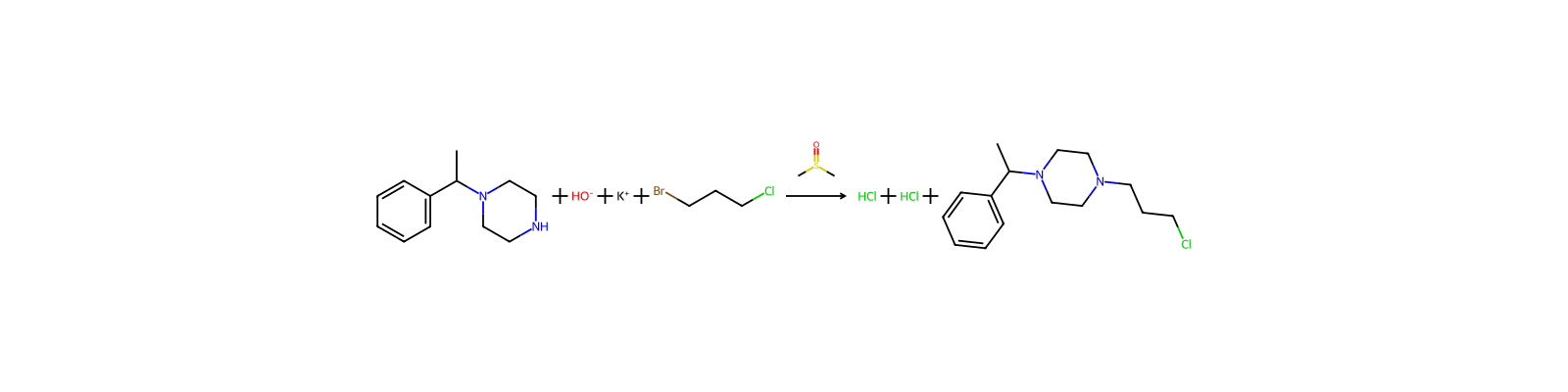
Used as a chemical intermediate for the synthesis of cyclomethycaine; fluphenazine; opipramol; pentoxifylline; perphenazine; piperocaine; prochlorperazine; propentofylline; reproterol; trazodone; trifluoperazine; urapidil; verapamil.
1-Bromo-3-chloropropane is a useful reaction intermediate to prepare gamma-chloropropyl derivatives...for example, the cyanide displacement of 1-bromo-3-chloropropane forms gamma-chlorobutyronitrile, an intermediate used for the production of herbicides, pesticides, pharmaceuticals, and other commercial products.
U.S. Production
2023: <50,000 lb
(1978) PROBABLY GREATER THAN 2.27X10+6 GRAMS
Industry UsesIntermediate
Methods of Manufacturing
1-Bromo-3-chloropropane is virtually always produced by the free-radical addition of anhydrous hydrogen bromide to allyl chloride.
1-Bromo-3-chloropropane can be made from ethylene and methylene chlorobromide.
General Manufacturing Information
All Other Basic Organic Chemical Manufacturing
Propane, 1-bromo-3-chloro-: ACTIVE
The yield of crude product, which typically consists of 95% primary and 5% secondary bromochloropropanes, is about 95% based on converted allyl chloride. The minor isomer can easily be separated by distillation if product specifications call for higher purity.
应用领域
用途用于合成医药炎镇痛、氟奋乃静、三氟拉嗪等,还用于其他有机合成。用作医药中间体,主要用于氯丙嗪、三氟拉嗪、奋乃静、氯丙咪嗪、炎痛静、盐酸多塞平、泰尔登等产品的合成用于有机合成及制药工业
用途用于氯丙嗪、吉非罗齐、三氟拉嗪、奋乃静、甲丙嗪等吩噻嗪类、炎病静、五氟利多、异博定、泰尔登、盐酸多虑平、眩晕停、克冠草、己酮可可碱等。另外也大量用于环丙沙星中间体环丙胺合成中等。
用途用于有机合成及制药工业
制备方法
生产方法由α-氯丙烯与溴化氢加成而得将α-氯丙烯吸入溴化罐内,加入少量过氧化苯甲酰,再将溴化氢通入罐底部,反应温度控制在18℃,当相对密度达到1.5以上时为终点。将产物进行水洗、碱洗(2%氢氧化钠),再水洗,分尽水层,以无水氯化钙脱水24h,经常压分馏,分出130℃以下的低沸物,然后减压蒸馏,收集70℃以上(21.3kPa)馏分,即得成品。生产中所用的溴化氢用下面方法产生:将氢溴酸加入溴化钠中,升温至60℃滴加硫酸,在80-90℃保温反应放出溴化氢气体。
上下游产品信息
上游原料
下游产品
试剂价格
- B0575 · 25G
- 1-溴-3-氯丙烷1-Bromo-3-chloropropane — 90元
- B0575 · 100G
- 1-溴-3-氯丙烷1-Bromo-3-chloropropane — 250元
供应商50 家
国药集团化学试剂有限公司86-21-63210123 · [email protected]
梯希爱(上海)化成工业发展有限公司021-67121386 · [email protected]
上海阿拉丁生化科技股份有限公司400-6206333 13167063860 · [email protected]
T&W GROUP021-61551611 13296011611 · [email protected]
爱斯特(成都)生物制药股份有限公司+86-28-85122536 85324413 · [email protected]
南京兰亚化工贸易有限公司+86-25-8331-5620 · [email protected]
科瑞迪化学400-821-5857 021-64326257 · [email protected]
上海迈瑞尔生化科技有限公司4006356688 18621169109 · [email protected]
宁波亿诺化学品有限公司86-574-27787657 · [email protected]
阿法埃莎(中国)化学有限公司400-6106006 · [email protected]
上海德默医药科技有限公司400-021-7337 2355568890 · [email protected]
安耐吉化学&3A(安徽泽升科技股份有限公司)400-0056266 · [email protected]
上海瀚鸿科技股份有限公司021-54306202 13764082696 · [email protected]
上海景颜化工科技有限公司13817811078 · [email protected]
嘉兴市艾森化工有限公司0573-85285100 18627885956 · [email protected]
合肥天健化工有限公司551-65418679 15856988503;15837135945 · [email protected]
山东西亚化学有限公司13355009207 13355009207 · [email protected]
玛雅试剂+86 (573) 82222445 (0)18006601000 452520369 · [email protected]
四川库利南科技有限公司400-1166-196 18981987031 · [email protected]
天津希恩思生化科技有限公司400 638 7771 · [email protected]
南京维奥化工有限公司Please Send Email 18652950785 · [email protected]
Connect Chemicals GmbH+49 2102 2077 19 · [email protected]
同创医药(苏州)有限公司0512-63263366 18912765016 · [email protected]
艾科试剂4008-755-333 18080918076 · [email protected]
上海思域化工科技有限公司86-21-34053660 · [email protected]
赛默飞世尔科技(中国)有限公司800-810-5118 · [email protected]
上海特伯化学科技有限公司+86-21-60341587 · [email protected]
TCI AMERICA800-4238616 · [email protected]
TOKYO CHEMICAL INDUSTRY CO., LTD.03-36680489 · [email protected]
TCI Europe320-37350700 · [email protected]
深圳康特腾科技有限公司86-0755-86635001 · [email protected]
越林试剂021-62960152 · [email protected]
上海睿升化工科技有限公司+86-021-50935922
无锡中坤生化科技有限公司+86 0510-85629785
上海倍卓生物科技有限公司021-61119791,13386096464 · [email protected]
北京环宇世纪化学科技有限公司hysj_bj.com
上海湄水化工科技有限公司021-60549325 18616193163
上海将来实业股份有限公司021-61552785 · [email protected]
安徽科迪达化工有限公司0554-2106669 · [email protected]
HBCChem, Inc.+1-510-219-6317 · [email protected]
日照力德士化工有限公司010-51268198 · [email protected]
美岚实业(上海)有限公司021-58958189 · [email protected]
上海石洋化工有限公司021-56795766 · [email protected]
上海爱蝶实业有限公司021-58957966 18930537195 · [email protected]
成都零六生物科技有限公司400-1166-196 13458535857 · [email protected]
广拓化学(上海)有限公司021-60899189-8001 18918189673 · [email protected]
雷丁试剂0510-85629785 18013409632 · [email protected]
上海御略医药科技有限公司021-60345187 13671753212 · [email protected]
上海麦克林生化科技股份有限公司15221275939 15221275939 · [email protected]
上海嵩爰化工科技有限公司010-1234567 18521000990 · [email protected]
相关反应
2,573 条






关联笔记
加载中…