
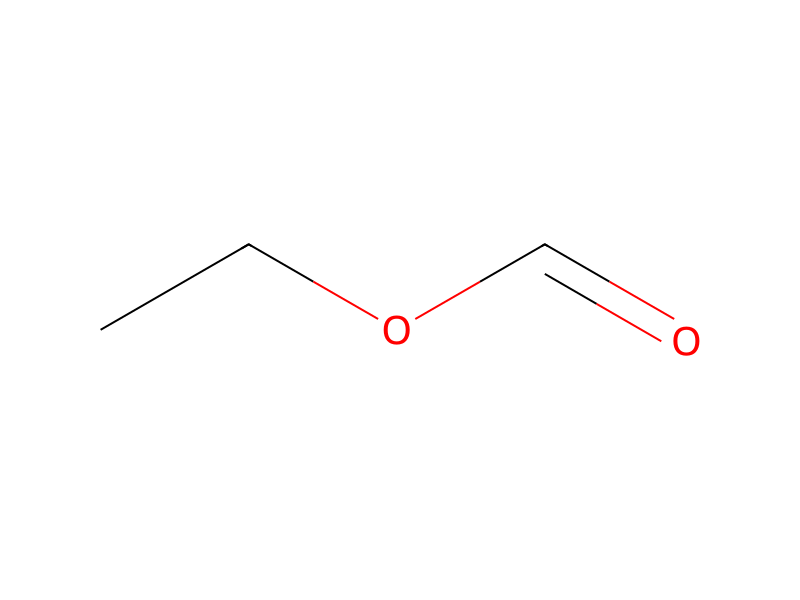
基本信息
- 标准SMILES
CCOC=O- InChIKey
WBJINCZRORDGAQ-UHFFFAOYSA-N- 分子式
- C3H6O2
- 平均分子量
- 74.08 g/mol
- 单同位素质量
- 74.03677943
概述
Ethyl formate appears as a clear colorless liquid with a pleasant odor. Flash point -4 °F. Less dense than water. Vapors heavier than air.
名称与标识
- 首选名称
- Ethyl formate
- IUPAC
- ethyl formate
- 中文名
- 甲酸乙酯
- 英文名
- Ethyl formate
- 分子式
- C3H6O2
- 分子量
- 74.08
名称与别名
ETHYL FORMATE109-94-4AreginalFormic acid, ethyl esterEthyl methanoateEthyl formic esterAethylformiatFormic etherEthylformiaatMrowczan etyluCarboxylic acid oxaethaneEthyle (formiate d')
展开更多名称
甲酸乙酯蚁酸乙酯甲酸乙烷基乙基甲酸酯天然甲酸乙酯甲酸乙酯CP甲酸乙酯超干甲酸乙酯/GC利扎曲坦杂质7甲酸(酯)乙烷基FORMIC ACID ETHYL ESTEREthyl forMatEthylformiatethyl formiateHCOOC2H5FEMA 2434
Etile (formiato di)FEMA No. 2434Ethyl ester of formic acidEthylester kyseliny mravenciDTXSID60401170K3E2L5553NSC-406578CHEBI:52342
数据库标识
- CAS
109-94-4- PubChem CID
- 8025
- DTXSID
DTXSID6040117- ChEMBL
CHEMBL44215、CHEMBL55595- ChEBI
CHEBI:52342- UNII
- 0K3E2L5553
- EC Number
- 203-721-0
- Nikkaji
- J1.971B
性质
结构计算性质
- XLogP
- 0.5
- 极性表面积
- 26.3 Ų
- 氢键供体
- 0
- 氢键受体
- 2
- 可旋转键
- 2
- 重原子
- 5
- 形式电荷
- 0
- 复杂度
- 26.1
实验与物化性质
Chemical ClassesFlammable agents - 3rd degree
SolventsSolvents -> Esters (<C12)
SpringerMaterials PropertiesCoriolis coupling
FragrancesFragrance Ingredient (Ethyl formate) -> IFRA transparency List
Pesticides
Insecticides
Active substance -> EU Pesticides database: Not approved
LogP
0.23
0.23
0.23
0.27
OdorFruity odor.
TasteSLIGHTLY BITTER TASTE
Food AdditivesFLAVORING AGENT OR ADJUVANT -> FDA Substance added to food
Density
0.922 at 68 °F (USCG, 1999) - Less dense than water; will float
0.9168 @ 20 °C
CONVERSION FACTORS: 1 MG/L EQUIV TO 330 PPM; 1 PPM EQUIV TO 3.03 MG/CU M; DENSITY OF SATURATED AIR: 1.25 (AIR= 1)
Relative density (water = 1): 0.92
0.917-0.922
0.92
Flavoring AgentsEU Flavoring substances
Color/Form
MOBILE LIQUID
WATER-WHITE LIQ
Colorless liquid.
物理化学性质
- 熔点
- -80 °C · -80 °C (lit.)
- 沸点
- 52 · 52-54 °C (lit.)
- 密度
- 0.921 g/mL · 0.921 g/mL at 20 °C (lit.)
- 蒸气密度
- 2.5 · 2.5 (vs air)
- 蒸气压
- 15.16 psi · 15.16 psi ( 55 °C)
- 折射率
- 20 · n20/D 1.359(lit.)
- FEMA
- 2434 · 2434 | ETHYL FORMATE
- 闪点
- 7 °F · 7 °F
- 储存条件
- 2 · 2-8°C
- 溶解度
- Miscible with alcohol, benzene, and ether (Hawley, 1981)
- 形态
- Liquid
- 颜色
- Clear
- 气味 (Odor)
- Characteristic; pleasant aromatic.
- 嗅觉阈值(Odor Threshold)
- 2.7 ppm · 2.7ppm
- 香型
- ethereal
- 生物来源
- synthetic
- 爆炸极限值(explosive limit)
- 16 % · 16%
- 水溶解性
- 11 g/100 · 11 g/100 mL (18 ºC)
- 比热容
- 2.02 J/ · Cp(liquid): 2.02 J/(g·K), at 25℃
- 热导率
- 0.16 W/ · 0.16 W/(m·K) at 25 ℃
- 敏感性
- Moisture Sensitive
- Merck
- 14 · 14,3807
- JECFA Number
- 26 · 26
- BRN
- 906769 · 906769
- Henry's Law Constant
- 0.097 · 0.097(x 10-3 atmm3/mol) at 5.00 °C, 0.13 at 10.00 °C, 0.17 at 15.00 °C, 0.23 at 20.00 °C, 0.29 at 25.00 °C (column stripping-UV, Kutsuna et al., 2005)
- 暴露限值
- 100 ppm · ACGIH:TLV-STEL 100 ppm (303 mg/m3)OSHA:PEL-TWA 100 ppm (300 mg/m3)NIOSH:REL-TWA 100 ppm
- 介电常数
- 8.4 · 8.4(6℃)
- 稳定性
- Stable. Extremely flammable. May form explosive mixtures with air. Note low flash point and wide explosive limits. Incompatible with strong oxidizing agents, strong bases, strong acids, nitrates.
- 主要应用
- agriculturecleaning productscosmeticsenvironmentalflavors and fragrancesfood and beveragespersonal care
- 化妆品成分功效
- PERFUMING
- InChI
- 1S/C3H6O2/c1-2-5-3-4/h3H,2H2,1H3
- InChIKey
- WBJINCZRORDGAQ-UHFFFAOYSA-N
- SMILES
- CCOC=O
- LogP
- 1.504 at · 1.504 at 25℃
- CAS 数据库
- 109 · 109-94-4(CAS DataBase Reference)
- NIST化学物质信息
- Formic acid, ethyl ester(109-94-4)
- EPA化学物质信息
- Ethyl formate (109-94-4)
化学性质
无色透明液体,易挥发,有类似于乙酸乙 酯的特有的辣的刺激味和菠萝样的香气,还有强烈朗姆酒似香气,并略带苦味。 熔点-80℃,沸点53~ 54℃,相对密度0.917,折光率1.3597,自燃温度455℃,蒸气压26.6kPa (20.6℃)、40.0kPa(30.2℃)。能溶于约10份水中,并逐渐分解成游离酸和醇,能混溶于乙醇、乙醚、苯和丙二醇,微溶于矿物油和水(在水中逐渐分解),不溶于甘油,在碱性中容易水解成游离酸和乙醇。其化学结构上具有活泼羰基和酯基性质,有还原性,能进行酯缩合反应。易燃烧,蒸气可与空气形成爆炸性混合物,爆炸极限3.5%~16.5%(体积)。密闭并加氯化钙保存。甲酸乙酯可用于日化香精配方中,但主要用于食用香精配方中。
安全与法规
GHS分类
GHS Classification
Danger
H225: Highly Flammable liquid and vapor [Danger Flammable liquids]
P210, P233, P240, P241, P242, P243, P261, P264, P264+P265, P270, P271, P280, P301+P317, P303+P361+P353, P304+P340, P305+P351+P338, P317, P319, P330, P337+P317, P370+P378, P403+P233, P403+P235, P405, and P501 (click each P-code to see the statement)
This chemical does not meet GHS hazard criteria for 0.6% (11 of 1923) of reports.
Danger
H225 (99.4%): Highly Flammable liquid and vapor [Danger Flammable liquids]
危害信息
Regulatory Information
Chemical: Formic acid, ethyl ester
Status: Active Update: 30-11-2022 https://echa.europa.eu/registration-dossier/-/registered-dossier/17274
Formic acid, ethyl ester: HSNO Approval: HSR001148 Approved with controls
The New Jersey Worker and Community Right to Know Act requires public and private employers to provide information about hazardous substances at their workplaces. (N.J.S.A. 34:5A-1 et. seq.)
Other Safety InformationIMAP assessments - Formic acid, ethyl ester: Human health tier I assessment
DOT LabelFlammable Liquid
Fire Hazards
Behavior in Fire: Vapor is heavier than air and may travel long distance to a source of ignition and flash back. (USCG, 1999)
· HIGHLY FLAMMABLE: Will be easily ignited by heat, sparks or flames.
Highly flammable. Vapour/air mixtures are explosive. Heating will cause rise in pressure with risk of bursting. Risk of fire and explosion on contact with strong oxidants.
Fire Potential
Burning Rate: 3.6 mm/min.
DANGEROUS, WHEN EXPOSED TO HEAT, FLAME, OR OXIDIZERS.
Health Hazards
Inhalation of vapor causes slight irritation of the eyes and rapidly increasing irritation of the nose. High concentrations cause deep narcosis within a few minutes followed by death within a few hours. Contact with liquid causes moderate irritation of eyes and mild irritation of skin. Ingestion causes irritation of mouth and stomach; may cause deep narcosis and death if not treated. (USCG, 1999)
· May cause toxic effects if inhaled or absorbed through skin.
Hazards Summary
Liquid causes second degree burns after contact for a few minutes. [CHRIS] The anesthetic potency of ethyl formate is greater than ethanol, acetone, and alkanes such as pentane, but less than chlorinated hydrocarbons and ethyl ether. TLV Basis = upper respiratory tract irritant; Reported to be irritating at 321 ppm; [ACGIH] Esters may induce narcosis in animals, but workers' exposures are limited by irritating effects. See appendix in: [Dick RB, et al. Chemicals in the workplace: incorporating human neurobehavioral testing into the regulatory process. Am J Ind Med. 1998 May;33(5):439-53.] Inhalation of high concentrations causes drowsiness and unconsciousness; A skin, eye, and respiratory tract irritant; [ICSC]
DOT ID and Guide
1190 129
1190 129
FDA RequirementsSubstance added directly to human food affirmed as generally recognized as safe (GRAS).
Reactive GroupEsters, Sulfate Esters, Phosphate Esters, Thiophosphate Esters, and Borate Esters
EC ClassificationSymbol: F, Xn; R: 11-20/22-36/37; S: (2)-9-16-24-26-33
UN ClassificationUN Hazard Class: 3; UN Pack Group: II
安全与防护
Fire Fighting
Excerpt from ERG Guide 129 [Flammable Liquids (Water-Miscible / Noxious)]:
Use powder, alcohol-resistant foam, water spray, carbon dioxide. In case of fire: keep drums, etc., cool by spraying with water.
First Aid Measures
Fresh air, rest. Refer for medical attention.
Remove contaminated clothes. Rinse skin with plenty of water or shower.
First rinse with plenty of water for several minutes (remove contact lenses if easily possible), then refer for medical attention.
Rinse mouth. Do NOT induce vomiting. Refer for medical attention .
Accidental Release Measures
· CALL 911. Then call emergency response telephone number on shipping paper. If shipping paper not available or no answer, refer to appropriate telephone number listed on the inside back cover.
· ELIMINATE all ignition sources (no smoking, flares, sparks or flames) from immediate area.
First Aid
Excerpt from NIOSH Pocket Guide for Ethyl formate:
General First Aid:
(General first aid procedures)
Safe StorageFireproof. Separated from strong oxidants. Cool.
Firefighting HazardsVapor is heavier than air and may travel long distance to a source of ignition and flash back.
Exposure Control and Personal Protection
· Wear positive pressure self-contained breathing apparatus (SCBA).
100.0 [ppm]
Fire Fighting ProceduresDry chemical, ... carbon dioxide.
Storage ConditionsKEEP TIGHTLY CLOSED & PREFERABLY IN CONTACT WITH CALCIUM CHLORIDE.
Cleanup Methods
1. REMOVE ALL IGNITION SOURCES. 2. VENTILATE AREA OF SPILL OR LEAK. 3. FOR SMALL QUANTITIES, ABSORB ON PAPER TOWELS. EVAPORATE IN A SAFE PLACE (SUCH AS A FUME HOOD). ALLOW SUFFICIENT TIME FOR EVAPORATING VAPORS TO COMPLETELY CLEAR THE HOOD DUCTWORK. BURN THE PAPER IN A SUITABLE LOCATION AWAY FROM COMBUSTIBLE MATERIALS. LARGE QUANTITIES CAN BE COLLECTED AND ATOMIZED IN A SUITABLE COMBUSTION CHAMBER. ETHYL FORMATE SHOULD NOT BE ALLOWED TO ENTER A CONFINED SPACE, SUCH AS A SEWER, BECAUSE OF THE POSSIBILITY OF AN EXPLOSION.
Nonfire Spill ResponseExcerpt from ERG Guide 129 [Flammable Liquids (Water-Miscible / Noxious)]:
Disposal Methods
SRP: At the time of review, criteria for land treatment or burial (sanitary landfill) disposal practices are subject to significant revision. Prior to implementing land disposal of waste residue (including waste sludge), consult with environmental regulatory agencies for guidance on acceptable disposal practices.
1. BY ABSORBING IT IN VERMICULITE, DRY SAND, EARTH OR A SIMILAR MATERIAL AND DISPOSING IN A SECURED SANITARY LANDFILL. 2. BY ATOMIZING IN A SUITABLE COMBUSTION CHAMBER.
毒理信息
Target OrgansEyes, respiratory system, central nervous system
Environmental Fate
TERRESTRIAL FATE: If released to soil, ethyl formate would readily volatilize from the surface layers of soil as well as leach. While no data were located concerning the degradation in soil, it would be expected to readily degrade by chemical hydrolysis, especially in alkaline soil, and biodegrade. (SRC)
AQUATIC FATE: Ethyl formate has a relatively high Henry's Law constant of 3.85X10⁻⁴ atm-cu m/mol(1) and if released to water, it will be lost due to evaporation. A volatilization half-life of 4.5 hrs was predicted for ethyl formate from a model river 1 m deep, flowing at 1 m/sec with a wind velocity of 3 m/sec(2,SRC). It would not be expected to sorb to sediment or bioconcentrate in aquatic organisms. Chemical hydrolysis will be an important fate process, especially in alkaline waters. The hydrolytic half-life is 3.1 days and 7.5 hr at pH 7 and 8, respectively(3,SRC). Based on limited data from screening tests supplemented by predictions of mathematical models and data on similar chemicals, ethyl formate should rapidly biodegrade(SRC).
ATMOSPHERIC FATE: The half-life of ethyl formate in the atmosphere is estimated to be 11 days as a result of reaction with photochemically-produced hydroxyl radicals(1). Being fairly soluble in water, it should be readily washed out of the air by rain(SRC).
Food Survey ValuesEthyl formate was identified, but not quantified, in roasted filberts(1), beer(2), wine(6,7), Korean chamchwi(3), blue cheese(4), and apples and pears(5).
Adverse EffectsNeurotoxin - Acute solvent syndrome
Exposure Routes
The substance can be absorbed into the body by inhalation of its vapour and by ingestion.
inhalation, ingestion, skin and/or eye contact
Signs and Symptoms
Cough. Shortness of breath. Headache. Drowsiness.
Redness.
Redness. Pain.
Sore throat. Further see Inhalation.
irritation eyes, upper respiratory system; In Animals: narcosis
Medical Surveillance
Employees should be screened for history of certain medical conditions which might place the employee at increased risk from ethyl formate exposure. /These include/ chronic respiratory disease ... skin disease ... liver disease ... kidney disease. ... Any employee developing the above-listed conditions should be referred for further medical examination.
Soil Adsorption/Mobility
Using a reported water solubility of 88.25 g/L(1) for ethyl formate, an estimated Koc of 8 was calculated using a regression equation(2,SRC). A Koc of 4 was estimated from molecular structure(3). According to a suggested classification scheme(3), this estimated Koc suggests that ethyl formate will be highly mobil in soil (SRC).
Natural Pollution Sources
/IT IS/ REPORTED IN OIL OF BORONIA DENTIGEROIDES. IT HAS BEEN IDENTIFIED IN FLORIDA ORANGE JUICE, SEVERAL VARIETIES OF HONEY, APPLES AND PEARS, & DISTILLED LIQUORS, SUCH AS RUM.
Ethyl formate occurs widely in fruit(1).
Human Toxicity Excerpts
/IT IS/ IRRITATING TO SKIN, MUCOUS MEMBRANES, & IN HIGH CONCENTRATIONS.../A CNS DEPRESSANT/.
No irritation was noted after a 48 hr closed-patch test of 4% ethyl formate on human subjects.
Slight eye irritation in human subjects and strong persistent nasal irritation were noted on exposure to 330 ppm in the air. ... The irritating effects on the eyes and respiratory tract are probably due to rapid hydrolysis of the ester on contact with water, with the formation of alcohol and formic acid.
THERE ARE NO REPORTS OF TOXIC EFFECTS ON HUMANS EXCEPT SLIGHT IRRITATION OF THE EYES AND NOSE...10,500 PPM CAUSES MODERATE BUT PROGRESSIVE IRRITATION OF EYES AND NOSE, REMAINING 4 HR AFTER EXPOSURE.
THE ANESTHETIC POTENCY /IS/ ... LESS THAN THAT OF CHLORINATED HYDROCARBONS & ETHYL ETHER, BUT IT /IS/ ... MORE ACTIVE ... THAN ETHANOL, ACETONE AND ALIPHATIC HYDROCARBONS ... .
Fish/Seafood ConcentrationsEthyl formate was found in mussels at 4.08 ppm(1).
Artificial Pollution Sources
Ethyl formate maybe released to the environment as a result of its production, transport, disposal and use as a synthetic flavoring agent in lemonades, chewing gum, ice cream, essences (apple, pineapple, banana, and peach flavors), artificial rum and arrac; as a fungicide and larvicide for tobacco, cereals, dried fruit, and other crops(1,3) and as a solvent for cellulose nitrate and acetate, as an acetone substitute and fumigant in packaged food, and in organic synthesis(2-4).
法规信息
FDA RequirementsSubstance added directly to human food affirmed as generally recognized as safe (GRAS).
FIFRA Requirements
The food additive ethyl formate may be safely used in or on specified dried fruits in accordance with the following conditions: it is used or intended for use in or on raisins and dried Zante currants as a bulk and package fumigant.
The food additive ethyl formate may be safely used in or on specified dried fruits in accordance with the following conditions: it is used in accordance with directions registered with the U.S. EPA, and so used that the total formic acid present free and combined, in the finished product shall not exceed 250 ppm.
The food additive ethyl formate may be safely used in or on specified dried fruits in accordance with the following conditions: to assure safe use of the additive, its label and labeling shall conform to that registered with the USEPA.
安全数据
- wgk
- 1
- tsca
- TSCA listed
- 毒性
- LD50 orally in rats: 4.29 g/kg (Smyth)
- RTECS号
- LQ8400000
- 包装类别
- II
- 危险等级
- 3
- 存储类别
- 3 - Flammable liquids
- 安全说明
- 9-16-24-26-33
- 海关编码
- 29151300
- 自燃温度
- 851 °F
- 危险品标志
- F,Xn
- 危险性类别
- Acute Tox. 4 InhalationAcute Tox. 4 OralEye Irrit. 2Flam. Liq. 2STOT SE 3
- 危险类别码
- 11-20/22-36/37
- 毒害物质数据
- 109-94-4(Hazardous Substances Data)
- 职业暴露等级
- A
- 职业暴露限值
- TWA: 100 ppm (300 mg/m3)
- 危险品运输编号
- UN 1190
- 立即威胁生命和健康浓度
- 1,500 ppm
毒性防护
毒性ADI O~3(FAO/WHO,1994)。GRAS(FDA,§184.1295,2000)。LD50 1850mg/kg(大鼠,经口)。根据有关资料报道,甲酸乙酯对大鼠和豚鼠的急性口服LD50值有三个不同的测试结果,分别是4.29g/kg、1.85g/kg和1.11g/kg。
急性毒性口服- 大鼠 LD50: 1850 毫克/ 公斤
刺激数据皮肤- 兔子 460 毫克 轻度; 眼睛- 兔子 100 毫克/ 24 小时 中度
职业标准TWA 300 毫克/ 立方米; STEL 450 毫克/立方米
包装储运
爆炸物危险特性与空气混合可爆
可燃性危险特性遇明火、高温、氧化剂易燃; 燃烧产生刺激烟雾; 水中缓慢水解为甲酸和乙醇
储运特性库房通风低温干燥; 与氧化剂分开存放
灭火剂干粉、二氧化碳、泡沫、1211灭火剂
化学与工业
药理信息
Mechanism of ActionIt has been assumed, but not proved, that hydrolysis and release of formic acid on the moist surfaces are responsible for the irritant action of ethyl formate.
Metabolism/Metabolites
A MUCH STRONGER IRRITANT THAN ETHYL ACETATE, PROBABLY BECAUSE OF HYDROLYSIS TO FORMIC ACID.
Ethyl formate is metabolized by esterases in Streptomyces nitrificans.
Absorption, Distribution and Excretion
BECAUSE OF RELATIVELY GOOD SOLUBILITY IN PLASMA, ETHYL FORMATE PASSES READILY THROUGH THE PULMONARY ALVEOLI AND, DUE TO HIGH WATER SOLUBILITY, HAS A HIGH BLOOD-AIR DISTRIBUTION COEFFICIENT.
ETHYL FORMATE IS ABSORBED BY THE LUNGS AND THE GI TRACT; SLIGHT PENETRATION OF THE SKIN IS SAID TO OCCUR...
Cellular LocationsCytoplasm
用途与制造
Uses
Used as flavoring agent, solvent for nitrocellulose, and reagent in organic synthesis; Also used as a fungicide/larvicide for tobacco, cereals, and dried fruit; [ACGIH]
Farming (Pesticides) [Category: Industry]
IN LACQUER INDUSTRY, IN ARTIFICIAL SILK MFR AS SOLVENT FOR CELLULOSE ACETATE; IN MFR OF SAFETY GLASS; IN SHOE INDUSTRY AS SOLVENT FOR CELLULOID
SOLVENT FOR OILS AND GREASES
FLAVOR FOR LEMONADE & ESSENCES; MFR OF ARTIFICIAL RUM & ARRAC; SOLVENT FOR NITROCELLULOSE; FUNGICIDE AND LARVICIDE; IN ORGANIC SYNTHESIS
ACETONE SUBSTITUTE; IN SYNTHETIC RESINS
U.S. Production
(1978) PROBABLY GREATER THAN 4.54X10+5 G
(1982) PROBABLY GREATER THAN 9.08X10+5 G
Methods of Manufacturing
ESTERIFICATION OF FORMIC ACID WITH ETHYL ALCOHOL IN THE PRESENCE OF SULFURIC ACID
/IT IS/...PREPARED BY ESTERIFICATION OF ETHYL ALCOHOL AND FORMIC ACID OR BY DISTILLATION OF ETHYL ACETATE & FORMIC ACID IN PRESENCE OF CONCN SULFURIC ACID.
Produced by carbonylation of ethanol with carbon monoxide...
Formulations/Preparations
AREGINAL.../IS/ MIXTURE OF METHYL FORMATE AND ETHYL FORMATE.
ASSAY: 95% MINIMUM.
GRADES: TECHNICAL; FCC.
Use Classification
Fragrance Ingredients
Flavouring Agent -> FLAVOURING_AGENT -> JECFA Functional Classes
Flavoring Agents -> JECFA Flavorings Index
Flavouring Agent -> FLAVOURING_AGENT -> JECFA Functional Classes
General Manufacturing Information
Formic acid, ethyl ester: ACTIVE
USE IN FOODS RESTRICTED TO 0.0015%.
NON-ALCOHOLIC BEVERAGES 9.4 PPM, ALCOHOLIC BEVERAGES 10 PPM, ICE CREAM, ICES, ETC 21 PPM, CANDY 50 PPM, BAKED GOODS 98 PPM, GELATINS AND PUDDINGS 0.35-11 PPM, CHEWING GUM 430 PPM.
OF DIRECT FOOD ADDITIVES: LIMITATIONS- SYNTHETIC FLAVOR.
应用领域
用途用作硝基纤维素、醋酸纤维素的溶剂,医药上用于脲嘧啶、胞嘧啶、胸腺嘧啶的中间体。
用途用作色谱分析标准物质、溶剂及杀菌剂,也用于香精的配制、丙酮代用品
用途在日用化学品香精中偶尔用于修饰花香型,在食用香精中主要用于果香型如樱桃、杏子、桃子、草莓、悬钩子、苹果、凤梨、香蕉、梅子、葡萄等。在酒用中常用于朗姆、白兰地、威士忌和白葡萄等型中。
用途甲酸乙酯用作硝酸纤维素、乙酸纤维素等的溶剂,以及食品、香烟、谷类、干燥果品等的杀菌剂、杀幼虫剂和熏蒸剂。甲酸乙酯作为香精可用于调合桃子、香蕉、苹果、杏、菠萝、浆果等香气,亦可作为黄油、白兰地酒、甜酒、威士忌酒等的香料。甲酸乙酯也是有机合成的中间体。例如在制药工业,用于抗肿瘤药物富雪定、维生素B1的生产;甲酸乙酯与丙酮在甲醇钠-二甲苯溶液中缩合可得乙酰基乙烯醇钠,与乙酰甘氨酸酯缩合再与硫氰化钾环合可得2-巯基咪唑-4-羧酸乙酯。甲酸乙酯用于生产鱼腥草素、痛惊宁、康复龙、噻嘧啶、噻啶苯芥、利血生、全合成法山莨菪等的药物。
制备方法
生产方法1. 硫酸酯化法:由乙醇和甲酸在硫酸存在下加热酯化后,用五氧化二磷或无水氯化钙脱水精馏而得。将甲酸与乙酸乙酯在浓硫酸存在下共蒸馏也制得甲酸乙酯。2. 三氯化铝催化酯化法:由甲酸和乙醇在结晶三氯化铝催化剂存在下酯化而得。
上下游产品信息
上游原料
下游产品
试剂价格
- A11113 · 500ml
- 甲酸乙酯, 98+% Ethyl formate, 98+% — 404元
- 42924 · 100ml
- 甲酸乙酯[用于分光光度测定法]Ethyl formate, 98+%, Extra Dry, AcroSeal™, Thermo Scientific Chemicals — 432元
相关反应
1,399 条

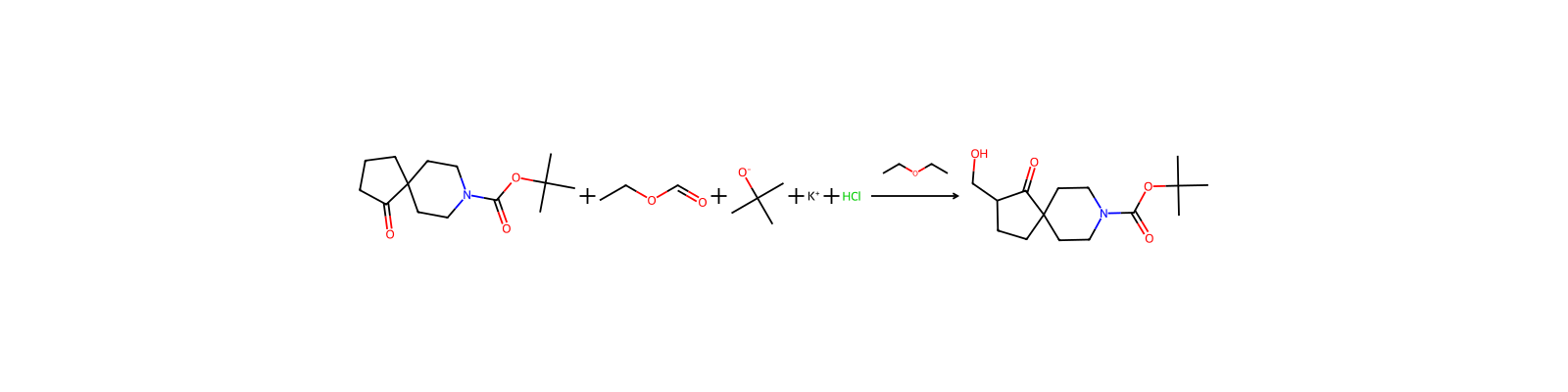
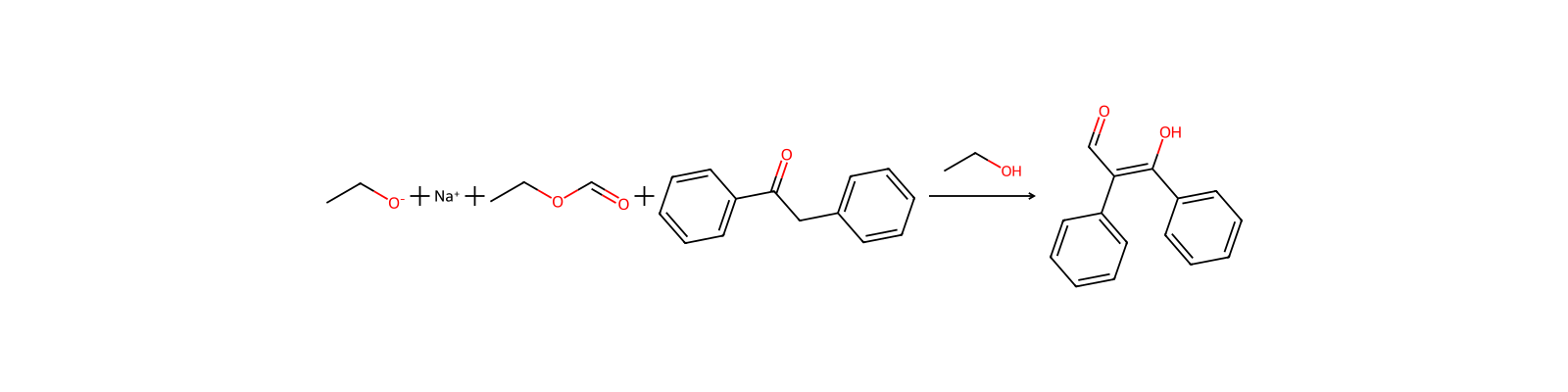


关联笔记
加载中…