
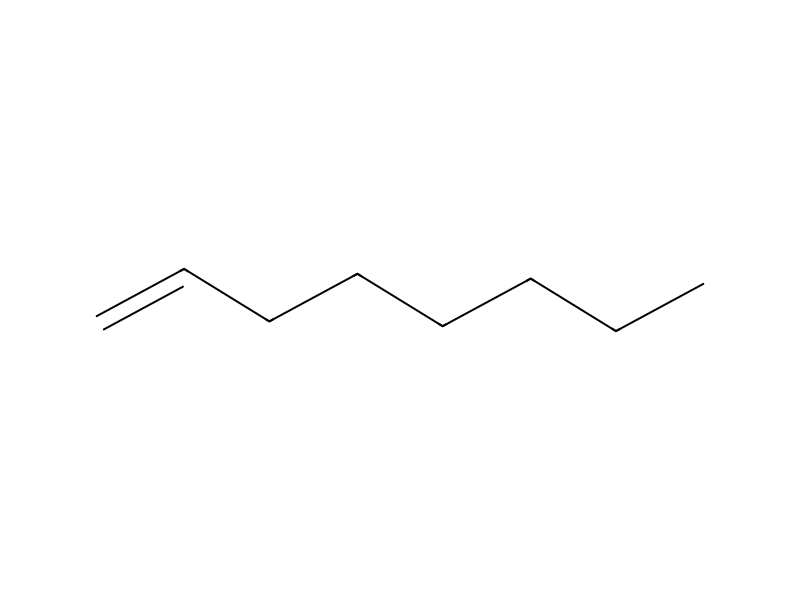
基本信息
- 标准SMILES
C=CCCCCCC- InChIKey
KWKAKUADMBZCLK-UHFFFAOYSA-N- 分子式
- C8H16
- 平均分子量
- 112.21 g/mol
- 单同位素质量
- 112.12520051
名称与标识
- 首选名称
- 1-Octene
- IUPAC
- oct-1-ene
- 中文名
- 1-辛烯
- 英文名
- 1-Octene
- 分子式
- C8H16
- 分子量
- 112.21
名称与别名
1-OCTENEOct-1-ene111-66-0Caprylene1-Octylenen-1-Octene1-CapryleneOctylenealpha-Octenealpha-OctyleneDTXSID6025804E5VK21B9RC
展开更多名称
辛烯1-辛稀1-辛烯Α-烯烃C81-辛烯标准品1-辛烯 危险品1-辛烯, 97+%1-辛烯[标准物质]1-辛烯, 98+%1-OCTENE标准品Neodene 8Octene-1 (99%OctenOCTEN-1n-Octen-1I-Octen
NSC-8457DTXCID705804CHEBI:46708RefChem:435206203-893-7OCTENE-1Octene.alpha.-Octene
数据库标识
- CAS
111-66-0、25377-83-7- PubChem CID
- 8125
- DTXSID
DTXSID6025804- ChEMBL
CHEMBL1376677- ChEBI
CHEBI:46708- UNII
- E5VK21B9RC
- EC Number
- 203-893-7、246-920-8
- Nikkaji
- J5.113F
性质
结构计算性质
- XLogP
- 4.6
- 极性表面积
- 0 Ų
- 氢键供体
- 0
- 氢键受体
- 0
- 可旋转键
- 5
- 重原子
- 8
- 形式电荷
- 0
- 复杂度
- 46
实验与物化性质
LogP
log Kow= 4.57
4.57
3.5/4.6
Density
0.715 at 68 °F (USCG, 1999) - Less dense than water; will float
0.7149 @ 20 °C/4 °C
Density: 0.7149 /1-Octene/; 0.7199 g/cu cm @ 20 °C /2-Octene (E)/; 0.7243 g/cu cm @ 20 °C /2-Octene (Z)/; 0.7152 g/cu cm @ 20 °C /3-Octene (E)/; 0.7159 g/cu cm @ 20 °C /3-Octene (Z)/; 0.7141 g/cu cm @ 20 °C /4-Octene (E)/; 0.7212 g/cu cm @ 20 °C /4-Octene (Z)/
Relative density (water = 1): 0.7
0.718-0.722
0.71 @25 °C
Viscosity0.656 cSt at 20 °C
Color/FormColorless liquid
Solubility
Miscible with ethanol, ether
Miscible in ethanol; soluble in ethyl ether and acetone
In water, 4.1 mg/l @ 25 °C
0.0041 mg/mL at 25 °C
Solubility in water, g/100ml at 25 °C: 0.0004
Practically insoluble to insoluble
Flash Point
70 °F (USCG, 1999)
10 °C
70 °F (21 °C) (OPEN CUP)
10 °C c.c.
Boiling Point
250.3 °F at 760 mmHg (USCG, 1999)
121.2 °C @ 760 mm Hg
Boiling point: 121.2 °C /1-Octene/; 125 °C /2-Octene (E)/; 125.6 °C /2-Octene (Z)/; 123.3 °C /3-Octene (E)/; 122.9 °C /3-Octene (Z)/ 122.3 °C /4-Octene (E)/; 122.5 °C /4-Octene (Z)/
123 °C
121 -122 °C
121.2 °C @760 [mm Hg]
Melting Point
-151 °F (USCG, 1999)
-101.7 °C
Melting point: -101.7 °C /1-Octene/; -87.7 °C /2-Octene (E)/; -100.2 °C /2-Octene (Z)/; -110 °C /3-Octene (E)/; -126 °C /3-Octene (Z)/; -93.8 °C /4-Octene (E)/; -118.7 °C /4-Octene (Z)/
-101.7 °C
-102 °C
-101.7 °C
Vapor Density
3.87 (AIR= 1)
Relative vapor density (air = 1): 3.9
Odor ThresholdOdor Threshold Low: 0.0005 [ppm];[ICSC] Odor threshold (detection) from CHEMINFO
Vapor Pressure
17.4 [mmHg]
2.03 [mmHg]
17.4 mm Hg @ 25 °C
Vapor pressure, kPa at 20 °C: 2
17.4 [mm Hg] @25 °C
Refractive Index
Index of refraction: 1.4062 @ 25 °C
Index of refraction: 1.4087 20 °C /1-Octene/; 1.4132 20 °C /2-Octene (E)/; 1.4150 20 °C /2-Octene (Z)/; 1.4126 20 °C /3-Octene (E)/; 1.4135 20 °C /3-Octene (Z)/; 1.4114 20 °C /4-Octene (E)/; 1.4148 20 °C /4-Octene (Z)/
1.413-1.416
物理化学性质
- 熔点
- -101 °C · -101 °C (lit.)
- 沸点
- 122 · 122-123 °C (lit.)
- 密度
- 0.715 g/mL · 0.715 g/mL at 25 °C (lit.)
- 蒸气密度
- 3.9 · 3.9 (vs air)
- 蒸气压
- 36 mm · 36 mm Hg ( 38 °C)
- 折射率
- 20 · n20/D 1.408(lit.)
- FEMA
- 4293 · 4293 | 1-OCTENE
- 闪点
- 70 °F · 70 °F
- 储存条件
- 30 °C · Store below +30°C.
- 溶解度
- Soluble in acetone, benzene, and chloroform (Weast, 1986). Miscible with alcohol, ether (Windholz et al., 1983), and many aliphatic hydrocarbons.
- 酸度系数(pKa)
- 14 · >14 (Schwarzenbach et al., 1993)
- 形态
- Liquid
- 颜色
- Clear
- 比重
- 0.714 · 0.714
- 气味 (Odor)
- gasoline
- 嗅觉阈值(Odor Threshold)
- 0.001 ppm · 0.001ppm
- 生物来源
- synthetic
- 爆炸极限值(explosive limit)
- 0.7 · 0.7-6.8%(V)
- 水溶解性
- Miscible with water, ether, alcohol and acetone.
- 热导率
- 0.1238 W/ · 0.1238 W/(m·K) at 25 ℃
- 比热容
- 2.15 J/ · Cp(liquid): 2.15 J/(g·K), at 25℃
- Merck
- 14 · 14,1764
- JECFA Number
- 2191 · 2191
- BRN
- 1734497 · 1734497
- Henry's Law Constant
- 0.952 at · 0.952 at 25 °C (Hine and Mookerjee, 1975)
- 介电常数
- 2.1 · 2.1(20℃)
- 稳定性
- Stable. Highly flammable. Incompatible with strong oxidizing agents, acids.
- 主要应用
- cleaning productscosmeticsenvironmentalflavors and fragrancesfood and beveragespersonal carepetroleum
- 化妆品成分功效
- SOLVENT
- InChI
- 1S/C8H16/c1-3-5-7-8-6-4-2/h3H,1,4-8H2,2H3
- InChIKey
- KWKAKUADMBZCLK-UHFFFAOYSA-N
- SMILES
- CCCCCCC=C
- LogP
- 4.47 at · 4.47 at 20℃
- CAS 数据库
- 111 · 111-66-0(CAS DataBase Reference)
- EPA化学物质信息
- 1 · 1-Octene (111-66-0)
化学性质
无色液体。熔点-102℃,沸点122℃,61.5-61.7℃(13.3kPa),相对密度0.7149(20/4℃),折光率1.4087,闪点21℃。能与醇、醚混溶,几乎不溶于水。
安全与法规
GHS分类
GHS Classification
This chemical does not meet GHS hazard criteria for 5.1% (102 of 2014) of reports.
Danger
H225 (94.9%): Highly Flammable liquid and vapor [Danger Flammable liquids];H304 (94.8%): May be fatal if swallowed and enters airways [Danger Aspiration hazard];H315 (17.7%): Causes skin irritation [Warning Skin corrosion/irritation];H411 (17.7%): Toxic to aquatic life with long lasting effects [Hazardous to the aquatic environment, long-term hazard]
P210, P233, P240, P241, P242, P243, P264, P273, P280, P301+P316, P302+P352, P303+P361+P353, P321, P331, P332+P317, P362+P364, P370+P378, P391, P403+P235, P405, and P501 (click each P-code to see the statement)
Aggregated GHS information provided per 2014 reports by companies from 23 notifications to the ECHA C&L Inventory. Each notification may be associated with multiple companies.;Reported as not meeting GHS hazard criteria per 102 of 2014 reports by companies.;There are 22 notifications provided by 1912 of 2014 reports by companies with hazard statement code(s).;Information may vary between notifications depending on impurities, additives, and other factors. The percentage value in parenthesis indicates the notified classification ratio from companies that provide hazard codes. Only hazard codes with percentage values above 10% are shown. For more detailed information, please visit ECHA C&L website.
危害信息
Regulatory Information
Chemical: 1-Octene
Commission Regulation (EC) No 1565/2000 (Repealed by Com. Implementing Reg. (EU) No 872/2012)
1-Octene is listed on the EPA's Chemical Data Reporting (CDR) system. Manufacturers and importers of 1-Octene are required to report information about their production and use of this chemical to the EPA under the Toxic Substances Control Act (TSCA). (40 eCFR Part 711)
Octene is listed on the EPA's Chemical Data Reporting (CDR) system. Manufacturers and importers of Octene are required to report information about their production and use of this chemical to the EPA under the Toxic Substances Control Act (TSCA). (40 eCFR Part 711)
Status: Active Update: 04-04-2023 https://echa.europa.eu/registration-dossier/-/registered-dossier/15355;Status: Active Update: 06-04-2022 https://echa.europa.eu/registration-dossier/-/registered-dossier/32465
Status: Active Update: 13-12-2021 https://echa.europa.eu/registration-dossier/-/registered-dossier/12223
Other Safety InformationIMAP assessments - 1-Octene: Environment tier I assessment;IMAP assessments - 1-Octene: Human health tier I assessment
DOT LabelFlammable Liquid
Fire Hazards
Excerpt from ERG Guide 128 [Flammable Liquids (Water-Immiscible)]:;HIGHLY FLAMMABLE: Will be easily ignited by heat, sparks or flames. Vapors may form explosive mixtures with air. Vapors may travel to source of ignition and flash back. Most vapors are heavier than air. They will spread along the ground and collect in low or confined areas (sewers, basements, tanks, etc.). Vapor explosion hazard indoors, outdoors or in sewers. Those substances designated with a (P) may polymerize explosively when heated or involved in a fire. Runoff to sewer may create fire or explosion hazard. Containers may explode when heated. Many liquids will float on water. Substance may be transported hot. For hybrid vehicles, ERG Guide 147 (lithium ion or sodium ion batteries) or ERG Guide 138 (sodium batteries) should also be consulted. If molten aluminum is involved, refer to ERG Guide 169. (ERG, 2024)
Highly flammable. Vapour/air mixtures are explosive.
Fire PotentialFIRE HAZARD: DANGEROUS, WHEN EXPOSED TO HEAT OR FLAME OR OXIDIZERS.
Health HazardsGenerally low toxicity. Mildly anesthetic at high vapor concentrations. May irritate eyes. (USCG, 1999)
Hazards Summary
Inhalation of high concentrations can cause CNS depression; [ICSC] Forms explosive mixtures with air and will ignite at room temperature; [CHEMINFO] May cause irritation; Defats the skin; Inhalation of high concentrations can cause CNS depression; [MSDSonline] In animal experiments, causes CNS depression after acute inhalation and evidence of liver and kidney injury after subchronic feeding; [AIHA]
May be a skin irritant; [HSDB] See 1-Octene.
Reactive GroupHydrocarbons, Aliphatic Unsaturated
UN ClassificationUN Hazard Class: 3; UN Pack Group: II
Reactivity AlertsHighly Flammable
Reactivity Profile
1-OCTENE may react vigorously with strong oxidizing agents. May react exothermically with reducing agents to release hydrogen gas. In the presence of various catalysts (such as acids) or initiators, may undergo exothermic addition polymerization reactions.
Chemical DangersThe substance can presumably form explosive peroxides. Reacts with strong oxidants. Attacks rubber, paints and lining materials.
安全与防护
Fire Fighting
Excerpt from ERG Guide 128 [Flammable Liquids (Water-Immiscible)]:;CAUTION: The majority of these products have a very low flash point. Use of water spray when fighting fire may be inefficient. CAUTION: For mixtures containing alcohol or polar solvent, alcohol-resistant foam may be more effective.;SMALL FIRE: Dry chemical, CO2, water spray or regular foam. If regular foam is ineffective or unavailable, use alcohol-resistant foam.;LARGE FIRE: Water spray, fog or regular foam. If regular foam is ineffective or unavailable, use alcohol-resistant foam. Avoid aiming straight or solid streams directly onto the product. If it can be done safely, move undamaged containers away from the area around the fire.;FIRE INVOLVING TANKS, RAIL TANK CARS OR HIGHWAY TANKS: Fight fire from maximum distance or use unmanned master stream devices or monitor nozzles. Cool containers with flooding quantities of water until well after fire is out. For petroleum crude oil, do not spray water directly into a breached tank car. This can lead to a dangerous boil over. Withdraw immediately in case of rising sound from venting safety devices or discoloration of tank. ALWAYS stay away from tanks in direct contact with flames. For massive fire, use unmanned master stream devices or monitor nozzles; if this is impossible, withdraw from area and let fire burn. (ERG, 2024)
Use dry powder, foam, carbon dioxide. In case of fire: keep drums, etc., cool by spraying with water.
First Aid Measures
Fresh air, rest.
Remove contaminated clothes. Rinse and then wash skin with water and soap.
First rinse with plenty of water for several minutes (remove contact lenses if easily possible), then refer for medical attention.
Rinse mouth. Do NOT induce vomiting.
First AidINHALATION: remove from exposure; support respiration.;INGESTION: do NOT induce vomiting. (USCG, 1999)
Safe StorageFireproof. Separated from strong oxidants. Keep in the dark. Cool. Store in an area without drain or sewer access.
Fire Fighting ProceduresFOAM, CARBON DIOXIDE, DRY CHEMICAL.
Storage Conditions... SHOULD BE STORED IN A COOL, WELL-VENTILATED PLACE, OUT OF THE DIRECT RAYS OF SUN, AWAY FROM AREAS OF HIGH FIRE HAZARD, AND SHOULD BE PERIODICALLY INSPECTED & MONITORED.
Nonfire Spill Response
Excerpt from ERG Guide 128 [Flammable Liquids (Water-Immiscible)]:;ELIMINATE all ignition sources (no smoking, flares, sparks or flames) from immediate area. All equipment used when handling the product must be grounded. Do not touch or walk through spilled material. Stop leak if you can do it without risk. Prevent entry into waterways, sewers, basements or confined areas. A vapor-suppressing foam may be used to reduce vapors. Absorb or cover with dry earth, sand or other non-combustible material and transfer to containers. Use clean, non-sparking tools to collect absorbed material.;LARGE SPILL: Dike far ahead of liquid spill for later disposal. Water spray may reduce vapor, but may not prevent ignition in closed spaces. (ERG, 2024)
Disposal Methods
SRP: At the time of review, criteria for land treatment or burial (sanitary landfill) disposal practices are subject to significant revision. Prior to implementing land disposal of waste residue (including waste sludge), consult with environmental regulatory agencies for guidance on acceptable disposal practices.
SRP: At the time of review, criteria for land treatment or burial (sanitary landfill) disposal practices are subject to significant revision. Prior to implementing land disposal of waste residue (including waste sludge), consult with environmental regulatory agencies for guidance on acceptable disposal practices.
Spillage Disposal
Personal protection: filter respirator for organic gases and vapours adapted to the airborne concentration of the substance. Ventilation. Remove all ignition sources. Collect leaking and spilled liquid in covered containers as far as possible. Absorb remaining liquid in dry sand or inert absorbent. Then store and dispose of according to local regulations. Do NOT wash away into sewer. Do NOT let this chemical enter the environment.
Preventive Measures
VENTILATION CONTROL: THE BASIC ... METHODS ARE LOCAL EXHAUST VENTILATION & DILUTION OR GENERAL VENTILATION.
SRP: The scientific literature for the use of contact lenses in industry is conflicting. The benefit or detrimental effects of wearing contact lenses depend not only upon the substance, but also on factors including the form of the substance, characteristics and duration of the exposure, the uses of other eye protection equipment, and the hygiene of the lenses. However, there may be individual substances whose irritating or corrosive properties are such that the wearing of contact lenses would be harmful to the eye. In those specific cases, contact lenses should not be worn. In any event, the usual eye protection equipment should be worn even when contact lenses are in place.
Isolation and Evacuation
Excerpt from ERG Guide 128 [Flammable Liquids (Water-Immiscible)]:;IMMEDIATE PRECAUTIONARY MEASURE: Isolate spill or leak area for at least 50 meters (150 feet) in all directions.;LARGE SPILL: Consider initial downwind evacuation for at least 300 meters (1000 feet).;FIRE: If tank, rail tank car or highway tank is involved in a fire, ISOLATE for 800 meters (1/2 mile) in all directions; also, consider initial evacuation for 800 meters (1/2 mile) in all directions. (ERG, 2024)
Eye PreventionWear safety spectacles.
毒理信息
Environmental Fate
TERRESTRIAL FATE: Based on a classification scheme(1), an estimated Koc value of 507(SRC), determined from a structure estimation method(2), indicates that 1-octene should have low to moderate mobility in soil(SRC). Volatilization of 1-octene from moist soil surfaces is expected to be an important fate process(SRC) given an estimated Henry's Law constant of 0.627 atm-cu m/mole(SRC) from its vapor pressure, 17.4 mm Hg(3), and water solubility, 4.1 mg/l(4). The potential for volatilization of 1-octene from dry soil surfaces may exist(SRC) based upon a vapor pressure of 17.4 mm Hg(3). However, adsorption to soil is expected to attenuate volatilization(SRC). Based on pure culture studies, 1-octene has the potential to biodegrade under aerobic conditions in soil(5,6).
AQUATIC FATE: Based on a classification scheme(1), an estimated Koc value of 510(SRC), determined from an estimation method(2), indicates that 1-octene should adsorb to suspended solids and sediment in water(SRC). Volatilization from water surfaces is expected(3) based upon an estimated Henry's Law constant of 0.627 atm-cu m/mole(SRC) from its vapor pressure, 17.4 mm Hg(4), and water solubility, 4.1 mg/l(5). Using this Henry's Law constant and an estimation method(3), volatilization half-lives for a model river and model lake are 3.1 hours and 4.2 days, respectively(SRC). The volatilization half-life from a model pond 2 m deep is estimated to be 37 hrs ignoring adsorption; when considering maximum adsorption, the volatilization half-life increases to 95 hrs(6). According to a classification scheme(7), a BCF of 660(SRC) estimated from its log Kow of 4.57(8) and a regression-derived equation(9), suggests the potential for bioconcentration in aquatic organisms is high. Based on pure culture studies, 1-octene has the potential to biodegrade under aerobic conditions in water(10,11).
ATMOSPHERIC FATE: According to a model of gas/particle partitioning of semivolatile organic compounds in the atmosphere(1), 1-octene, which has a vapor pressure of 17.4 mm Hg at 25 °C(2), is expected to exist solely as a vapor in the ambient atmosphere. Vapor-phase 1-octene is degraded in the atmosphere by reaction with photochemically-produced hydroxyl radicals(SRC); the half-life for this reaction in air is estimated to be 3.9 hrs(SRC), calculated from its rate constant of 3.X10-11 cu cm/molecule-sec at 25 °C(3) determined using a structure estimation method(3). Vapor-phase 1-octene is also degraded in the atmosphere by reaction with ozone molecules(SRC); the half-life for this reaction in air is estimated to be 23 hrs(SRC), calculated from its rate constant of 1.2X10⁻¹⁷ cu cm/molecule-sec at 25 °C(3) determined using a structure estimation method(3).
Food Survey Values1-Octene has been identified as a volatile in heated peanut oil(1), beef(2,3), chick peas(4), and fried chicken(5). 1-Octene was detected as an emission from hot rape seed oil(6).
Adverse Effects
Neurotoxin - Acute solvent syndrome;Occupational hepatotoxin - Secondary hepatotoxins: the potential for toxic effect in the occupational setting is based on cases of poisoning by human ingestion or animal experimentation.
Neurotoxin - Acute solvent syndrome;Occupational hepatotoxin - Secondary hepatotoxins: the potential for toxic effect in the occupational setting is based on cases of poisoning by human ingestion or animal experimentation.
Exposure RoutesThe substance can be absorbed into the body by inhalation of its vapour.
Signs and Symptoms
Drowsiness. Dizziness.
Dry skin.
Effluent Concentrations
1-Octene was detected in one of 10 influent samples at waste water treatment plants (POTWs) in the Great Lakes basin at a concn of <1 ppb(1). Exhaust from turbojet engines operated at simulated high-altitude flight conditions 0.06-36.1 ppmC (ppm carbon) of 1-octene(2). It was identified as a volatile emission from gasoline(3).
ICSC Environmental DataThe substance is toxic to aquatic organisms. Bioaccumulation of this chemical may occur in aquatic organisms.
Soil Adsorption/Mobility
Using a structure estimation method based on molecular connectivity indices(1), the Koc for 1-octene can be estimated to be 510(SRC). According to a classification scheme(2), this estimated Koc value suggests that 1-octene is expected to have a low to moderate mobility in soil.
Atmospheric Concentrations
URBAN/SUBURBAN: 1-octene was qualitatively detected in air samples collected in Riverside, CA, 1990(1). It was qualitatively detected in roadside ambient air samples, date and location not provided(2). 1-Octene was qualitatively detected in samples taken in the Allegheny Mountain Tunnel of the Pennsylvania Turnpike, 1979(3).
INDOOR AIR: 1-Octene was listed as a volatile organic compound frequently found in new and renovated buildings(1).
Human Toxicity Excerpts
In humans, they cause headache, inability to pay sustained attention, vertigo, nausea, and CNS depression. Octenes may be more irritant to mucous membranes, skin, and eyes than the lower homologues. /Octenes/
Octenes, when ingested, may rapidly be aspirated into the lungs and may act as a simple asphyxiant. /Octenes/
Artificial Pollution Sources
1-Octene's production and use in the manufacture of high density polyethylene, linear low density polyethylene, plasticizers and surfactants(1) may result in its release to the environment through various waste streams(SRC). 1-Octene is emitted in auto exhaust, by turbines, and in brewing(1). It is also a volatile emission from gasoline(2). 1-Octene was identified in emissions in which the field burning of agricultural plastic was simulated in laboratory experiments(3).
Environmental Biodegradation
AEROBIC: Pure culture studies using Cornynebacterium sp(1) and various strains of Pseudomonas(2-5) were found to oxidize 1-octene indicating that it has the potential to biodegrade under aerobic conditions(SRC). 1,2-Epoxyoctane was identified as a product of the pure culture oxidations(5,6).
法规信息
Regulatory Information
Chemical: 1-Octene
Commission Regulation (EC) No 1565/2000 (Repealed by Com. Implementing Reg. (EU) No 872/2012)
1-Octene is listed on the EPA's Chemical Data Reporting (CDR) system. Manufacturers and importers of 1-Octene are required to report information about their production and use of this chemical to the EPA under the Toxic Substances Control Act (TSCA). (40 eCFR Part 711)
Octene is listed on the EPA's Chemical Data Reporting (CDR) system. Manufacturers and importers of Octene are required to report information about their production and use of this chemical to the EPA under the Toxic Substances Control Act (TSCA). (40 eCFR Part 711)
Status: Active Update: 04-04-2023 https://echa.europa.eu/registration-dossier/-/registered-dossier/15355;Status: Active Update: 06-04-2022 https://echa.europa.eu/registration-dossier/-/registered-dossier/32465
Status: Active Update: 13-12-2021 https://echa.europa.eu/registration-dossier/-/registered-dossier/12223
安全数据
- wgk
- 1
- tsca
- TSCA listed
- 毒性
- LD50 orally in Rabbit: > 5000 mg/kg LD50 dermal Rabbit > 2000 mg/kg
- RTECS号
- RH2207000
- 包装类别
- II
- 危险等级
- 3
- 存储类别
- 3 - Flammable liquids
- 安全说明
- 16-60-62-61
- 海关编码
- 29012990
- 自燃温度
- 446 °F
- 危险品标志
- F,Xn,N
- 危险性类别
- Aquatic Acute 1Aquatic Chronic 1Asp. Tox. 1Flam. Liq. 2
- 危险类别码
- 11-51/53-65-10-66-50/53-38
- 毒害物质数据
- 111-66-0(Hazardous Substances Data)
- 危险品运输编号
- UN 3295 3/PG 2
包装储运
爆炸物危险特性与空气混合形成爆炸性混合物;
可燃性危险特性易燃; 火场排放辛辣刺激烟雾
储运特性库房通风低温干燥; 防止火缘; 与氧化剂分开储运存放
灭火剂泡沫, 干粉, 二氧化碳
化学与工业
药理信息
Metabolism/Metabolites
IN THE PRESENCE OF 4,5-EPOXY-N-OCTANE, 1,2-EPOXY-N-OCTANE AND N-OCTANE-1,2-DIOL WERE PRODUCED FROM N-1 OCTENE. THESE EPOXIDES WERE CAPABLE OF INHIBITING EPOXY HYDROLASE IN VITRO.
1-BUTANOL & GAMMA-BUTYROLACTONE INDUCED 1-OCTENE EPOXIDATION OF PSEUDOMONAS AERUGINOSA CELLS.
BINDING WAS INVESTIGATED OF DIFFERENT 1-ALKENES TO CYTOCHROME P450 IN MICROSOMES FROM F344 RATS.
Absorption, Distribution and ExcretionAll octenes are metabolically hydroxylated, conjugated, and excreted from the mammalian system. /Octenes/
Cellular LocationsMembrane
用途与制造
Uses
Used as a plasticizer, in surfactants, and as a co-monomer in the production of polyethylene; [HSDB]
Present in gasoline and emitted in exhausts of automobiles, turbines, and breweries; Detected in food, e.g., hot cooking oils; Octene includes the following isomers: 1-Octene, 2-Octene (E), 2-Octene (Z), 3-Octene (E), 3-Octene (Z), 4-Octene (E), 4-Octene (Z); Used to make polymers, surfactants, and detergents; 1-Octene used as a chemical intermediate, plasticizer, surfactant, and comonomer to produce polyethylene; [HSDB] Di-n-butene (25377-83-7) is a mixture of octenes with boiling points in the range of 116-126 deg C; [Ullmann].
Organic synthesis, plasticizer, surfactants
As a comonomer in the production of high density polyethylene and linear low density polyethylene. The addition of 1-octene is used to modify the density and other properties of the polymer.
Used in the polymer, surfactant and detergent industries
U.S. Exports
(1974) 3.4X10+10 G (ALL C6-C20 ALPHA-OLEFINS)
(1975) 2.27X10+10 G (EST-LINEAR ALPHA-OLEFINS)
U.S. Production
2023: 1,000,000,000 - <2,500,000,000 lb;2022: 550,000,000 - <700,000,000 lb;2021: 400,000,000 - <550,000,000 lb;2020: 400,000,000 - <550,000,000 lb
2023: 1,000,000 - <8,500,000 lb;2022: 1,000,000 - <8,500,000 lb;2021: 1,000,000 - <8,500,000 lb;2020: 1,000,000 - <8,500,000 lb
(1972) 1.6X10+11 G (ALL C6-C20 ALPHA-OLEFINS)
(1975) 1.7X10+11 G (EST-LINEAR ALPHA OLEFINS)
(1979) 6.8x10+9 G (ESTIMATED)
(1981) 6.8-9.1x10+9 G (ESTIMATED)
Consumer UsesLubricating agent;Monomers;Intermediate
Industry Uses
Intermediate;Lubricating agent;Monomers
Fuel;Not Known or Reasonably Ascertainable
Methods of Manufacturing
/Prepared/ ... from appropriate alkylmagnesium bromide & allyl bromide or chloride ... From formaldehyde or paraformaldehyde & triphenyl(phenylmethylene)phosphorane ...
/Prepared/ ... by catalytic dehydration of 2-octanol ...
REACTION OF BUTYLENES OR LOW MOLECULAR WEIGHT OLEFINIC REFINERY STREAMS (USUALLY CONTAINING BUTYLENES) OVER A PHOSPHORIC ACID CATALYST TO FORM POLYGAS, FOLLOWED BY FRACTIONATION
Formulations/PreparationsGrades: 95%, 99% research
Use Classification
Fragrance Ingredients
Flavouring Agent -> FLAVOURING_AGENT -> JECFA Functional Classes
Flavoring Agents -> JECFA Flavorings Index
Flavouring Agent -> FLAVOURING_AGENT -> JECFA Functional Classes
Flavouring Agent -> FLAVOURING_AGENT -> JECFA Functional Classes
Flavouring Agent -> FLAVOURING_AGENT -> JECFA Functional Classes
General Manufacturing Information
All Other Chemical Product and Preparation Manufacturing;Adhesive Manufacturing;Plastics Material and Resin Manufacturing;All Other Basic Organic Chemical Manufacturing;Petrochemical Manufacturing;Petroleum Lubricating Oil and Grease Manufacturing
Petroleum Refineries;Other (requires additional information);Petrochemical Manufacturing
1-Octene: ACTIVE
Octene: ACTIVE
应用领域
用途1-辛烯是一种重要的直链烯烃,常用作聚乙烯共聚单体及生产增塑剂、表面活性剂和合成润滑油的原料。1-辛烯作为共聚单体生产的聚乙烯具有优异的性能和高附加值。1-辛烯共聚生产的线性低密度聚乙烯((LLDPE)熔体强度大,具有良好的拉伸性能、抗冲击及耐环境应力开裂性,可以明显改善聚乙烯的机械加工性能、耐热性、柔软性以及透明性等特点。在改善LLDPE抗撕裂强度和破坏强度等方面,1-辛烯也明显优于其它а-烯烃。此外,1-辛烯还被用来生产高、中密度聚乙烯管材,1-辛烯共聚的聚乙烯管材具有更好的韧性和更优异的抗蠕变性能等。目前我国聚乙烯共聚产品多为1-丁烯共聚物,近年来齐鲁、天津、茂名等石化公司相继推出了1-己烯共聚产品,但乙烯与1-辛烯的共聚物还几乎是空白(近年来抚顺石化开发过1-辛烯共聚产品DP 900),导致我国高性能聚乙烯发展缓慢。
用途用于有机合成。
用途用作色谱分析标样
用途有机合成。气相色谱分析标准。
制备方法
生产方法由溴戊烷先与金属镁作用,再与溴丙烯反应制得。先用金属镁、无水乙醚、碘甲烷合成格氏试剂,再于沸腾下加入溴戊烷及无水乙醚混合物,加完后回流2h。然后逐渐加入溴丙烯的乙醚混合物,反应平稳时,再回流1h,然后加水使之分解。分离乙醚层之后再回收乙醚,分馏残余物,收集沸点115-123℃的馏分即为粗品。向粗品中加入金属钠回流2h,冷却过滤,再经高效分馏,收集点121-122.5℃的馏分即为成品。
上下游产品信息
上游原料
下游产品
试剂价格
- O0041 · 25ML
- 1-辛烯1-Octene — 190元
- S0338 · 5ML
- 1-辛烯[标准物质]1-Octene [Standard Material for GC] — 1040元
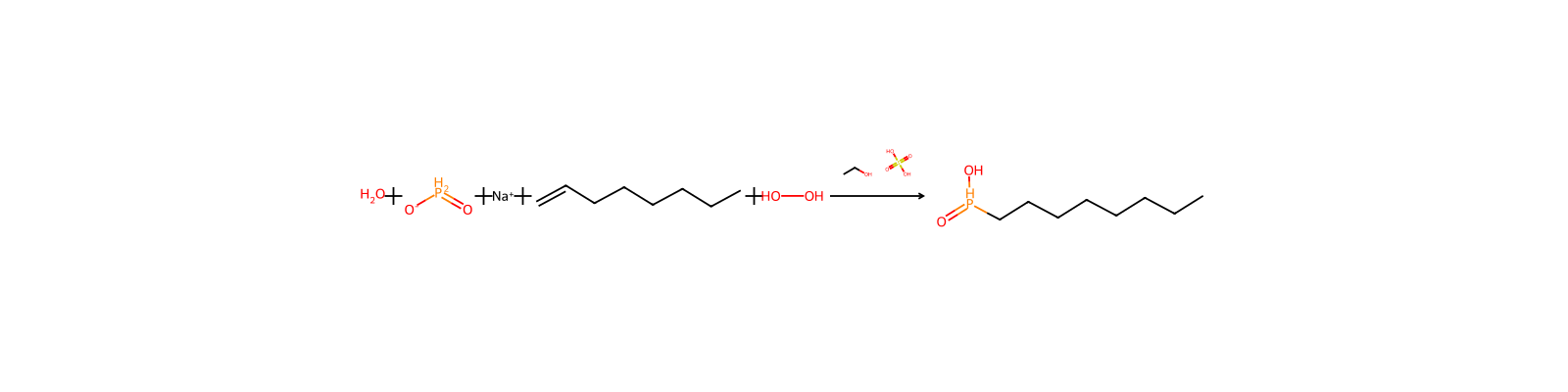
相关反应
313 条



关联笔记
加载中…