

基本信息
- 标准SMILES
C1CN2CCN1CC2- InChIKey
IMNIMPAHZVJRPE-UHFFFAOYSA-N- 分子式
- C6H12N2
- 平均分子量
- 112.17 g/mol
- 单同位素质量
- 112.10004839
名称与标识
- 首选名称
- Dabco
- IUPAC
- 1,4-diazabicyclo[2.2.2]octane
- 中文名
- 三乙烯二胺
- 英文名
- Triethylenediamine
- 分子式
- C6H12N2
- 分子量
- 112.17
名称与别名
1,4-Diazabicyclo[2.2.2]octaneTriethylenediamine280-57-9Dabco1,4-DIAZABICYCLO(2.2.2)OCTANEDabco 33LVDabco crystal1,4-EthylenepiperazineTEDATexacat TD 100Dabco EGN,N'-endo-Ethylenepiperazine
展开更多名称
三乙二胺三乙烯二胺环三乙二胺三乙撑二胺三乙基二胺三伸乙二胺三乙亞二胺三乙烯二铵三亚乙基二胺二疊氮雙環辛烷DBACOTEDBACO1,4-diazobicyclo[2.2.2]octane1,4-diazabicyclooctaneDiazabicyclooctane
1,4-Diazabicyclo-octaneD 33LVThancat TD 33DTXSID0022016X8M57R0JS5NSC-56362DTXCID902016CHEBI:151129
数据库标识
- CAS
280-57-9- PubChem CID
- 9237
- DTXSID
DTXSID0022016- ChEMBL
CHEMBL3183414- ChEBI
CHEBI:151129- UNII
- X8M57R0JS5
- EC Number
- 205-999-9
- Nikkaji
- J5.451H
性质
结构计算性质
- XLogP
- -0.2
- 极性表面积
- 6.5 Ų
- 氢键供体
- 0
- 氢键受体
- 2
- 可旋转键
- 0
- 重原子
- 8
- 形式电荷
- 0
- 复杂度
- 61
实验与物化性质
Density1.14 at 28 °C (Water = 1)[NITE; Chemical Risk Information Platform (CHRIP). Biodegradation and Bioconcentration. Ver 2006.01.30 Updated. National Institute of Technology and Evaluation. Tokyo, Japan. Thiodiethylene glycolBicyclo
Color/FormColorless hygroscopic crystals
Solubility
13 g/100 g acetone at 25 °C; 51 g/100 g benzene at 25 °C; 77 g/100 g ethanol at 25 °C; 26.1 g/100 g methyl ethyl ketone at 25 °C
Soluble in chloroform
45 g/100 g water at 25 °C
Flash Point62 °C
Boiling Point
174 °C
174 °C @760 [mm Hg]
DecompositionWhen heated to decomposition it emits toxic fumes of /nitrogen oxides/.
Melting Point158 °C
Vapor Pressure0.74 [mmHg]
Heat of Vaporization61.9 kJ/mol (heat of sublimation below 75 °C)
Physical Description
Liquid; Large Crystals
White crystals with an ammonia-like odour; Sublimes (goes directly from solid to vapour) readily at room temperature; Extremely hygroscopic (absorbs moisture from the air); [CHEMINFO]
Dissociation ConstantspKa1 = 3.0; pKa2 = 8.7
Kovats Retention Index
1018;1023;1040
1520;1531;1535;1548;1548
物理化学性质
- 熔点
- 156 · 156-159 °C(lit.)
- 沸点
- 174 °C · 174 °C
- 密度
- 1.02 g/mL · 1.02 g/mL
- 堆积密度
- 800 kg/m3 · 800kg/m3
- 蒸气压
- 2.9 mm · 2.9 mm Hg ( 50 °C)
- 折射率
- 20 · n20/D 1.4634(lit.)
- 闪点
- 198 °F · 198 °F
- 储存条件
- 30 °C · Store below +30°C.
- 溶解度
- 400 g/l · 400g/l
- 形态
- Hygroscopic Crystals
- 酸度系数(pKa)
- 3 · 3.0, 8.7(at 25℃)
- 颜色
- White to pale yellow
- 水溶解性
- 46 g/100 · 46 g/100 mL (26 ºC)
- 敏感性
- Hygroscopic
- Merck
- 14 · 14,9669
- BRN
- 103618 · 103618
- Henry's Law Constant
- 3.1 · 3.1×103 mol/(m3Pa) at 25℃, Du et al. (2017)
- 稳定性
- Stable, but very hygroscopic. Incompatible with strong oxidizing agents, strong acids. Highly flammable.
- InChI
- 1S/C6H12N2/c1-2-8-5-3-7(1)4-6-8/h1-6H2
- InChIKey
- IMNIMPAHZVJRPE-UHFFFAOYSA-N
- SMILES
- N12CCN(CC2)CC1
- LogP
- -0.49 at · -0.49 at 20℃
- CAS 数据库
- 280 · 280-57-9(CAS DataBase Reference)
- NIST化学物质信息
- Triethylenediamine(280-57-9)
- EPA化学物质信息
- 1 · 1,4-Diazabicyclo[2.2.2]octane (280-57-9)
化学性质
无水物为可燃性白色结晶体,极易潮解。 能溶于水、乙醇、丙酮和苯。25℃时在水中的溶解度为45g/100g,在乙醇中的溶解度为77g/100g,在丙酮中的溶解度为13g/100g,在苯中的溶解度为51g/100g。
安全与法规
GHS分类
GHS Classification
This chemical does not meet GHS hazard criteria for 0.7% (6 of 801) of reports.
Danger
H228 (82.6%): Flammable solid [Danger Flammable solids];H302 (96.5%): Harmful if swallowed [Warning Acute toxicity, oral];H315 (97.3%): Causes skin irritation [Warning Skin corrosion/irritation];H318 (50.7%): Causes serious eye damage [Danger Serious eye damage/eye irritation];H319 (44.2%): Causes serious eye irritation [Warning Serious eye damage/eye irritation];H335 (16.4%): May cause respiratory irritation [Warning Specific target organ toxicity, single exposure; Respiratory tract irritation];H412 (14.5%): Harmful to aquatic life with long lasting effects [Hazardous to the aquatic environment, long-term hazard]
P210, P240, P241, P261, P264, P264+P265, P270, P271, P273, P280, P301+P317, P302+P352, P304+P340, P305+P351+P338, P305+P354+P338, P317, P319, P321, P330, P332+P317, P337+P317, P362+P364, P370+P378, P403+P233, P405, and P501 (click each P-code to see the statement)
Aggregated GHS information provided per 801 reports by companies from 42 notifications to the ECHA C&L Inventory. Each notification may be associated with multiple companies.;Reported as not meeting GHS hazard criteria per 6 of 801 reports by companies.;There are 41 notifications provided by 795 of 801 reports by companies with hazard statement code(s).;Information may vary between notifications depending on impurities, additives, and other factors. The percentage value in parenthesis indicates the notified classification ratio from companies that provide hazard codes. Only hazard codes with percentage values above 10% are shown. For more detailed information, please visit ECHA C&L website.
危害信息
Regulatory Information
Chemical: 1,4-Diazabicyclo[2.2.2]octane
1,4-Diazabicyclo[2.2.2]octane is listed on the EPA's Chemical Data Reporting (CDR) system. Manufacturers and importers of 1,4-Diazabicyclo[2.2.2]octane are required to report information about their production and use of this chemical to the EPA under the Toxic Substances Control Act (TSCA). (40 eCFR Part 711)
Status: Active Update: 07-03-2023 https://echa.europa.eu/registration-dossier/-/registered-dossier/13591;Status: Active Update: 03-05-2018 https://echa.europa.eu/registration-dossier/-/registered-dossier/24495
1,4-Diazabicyclo[2.2.2]octane: Does not have an individual approval but may be used under an appropriate group standard
Hazards SummaryWorkers have reported visual disturbances--haloes around lights; [ACGIH] Corrosive to skin; [Quick CPC] Corrosive to skin and eyes; [CHEMINFO]
DOT Emergency Guidelines
/GUIDE 133: FLAMMABLE SOLIDS/ Fire or Explosion: Flammable/combustible material. May be ignited by friction, heat, sparks or flames. Some may burn rapidly with flare burning effect. Powders, dusts, shavings, borings, turnings or cuttings may explode or burn with explosive violence. Substance may be transported in a molten form at a temperature that may be above its flash point. May re-ignite after fire is extinguished. /Flammable solid, organic, NOS (1,4-Diazabicyclo(2.2.2)octane)/
/GUIDE 133: FLAMMABLE SOLIDS/ Health: Fire may produce irritating and/or toxic gases. Contact may cause burns to skin and eyes. Contact with molten substance may cause severe burns to skin and eyes. Runoff from fire control may cause pollution. /Flammable solid, organic, NOS (1,4-Diazabicyclo(2.2.2)octane)/
/GUIDE 133: FLAMMABLE SOLIDS/ Public Safety: CALL Emergency Response Telephone Number ... . As an immediate precautionary measure, isolate spill or leak area for at least 25 meters (75 feet) in all directions. Keep unauthorized personnel away. Stay upwind. Keep out of low areas. /Flammable solid, organic, NOS (1,4-Diazabicyclo(2.2.2)octane)/
/GUIDE 133: FLAMMABLE SOLIDS/ Protection Clothing: Wear positive pressure self-contained breathing apparatus (SCBA). Structural firefighters' protective clothing will only provide limited protection. /Flammable solid, organic, NOS (1,4-Diazabicyclo(2.2.2)octane)/
For more DOT Emergency Guidelines (Complete) data for 1,4-DIAZABICYCLO(2.2.2)OCTANE (8 total), please visit the HSDB record page.
Hazard Classes and Categories
Flam. Sol. 1 (82.6%);Acute Tox. 4 (96.5%);Skin Irrit. 2 (97.3%);Eye Dam. 1 (50.7%);Eye Irrit. 2 (44.2%);STOT SE 3 (16.4%);Aquatic Chronic 3 (14.5%)
Acute toxicity (Oral) - Category 4;Skin corrosion/irritation - Category 2;Serious eye damage/eye irritation - Category 2;Reproductive toxicity - Category 2;Specific target organ toxicity - Single exposure - Category 2 (central nervous system);Specific target organ toxicity - Repeated exposure - Category 1 (upper respiratory tract)
Hazardous Reactivities and Incompatibilities
... In paint manufacture, preliminary small-scale (12 g) tests in which ethyl acetate soln of cellulose nitrate and the other components were mixed in a lagged boiling tube showed large exotherms (which boiled the solvent off) with 1,4-diazabicyclo(2.2.2)octane ... Subsequent test in which small portions of ... undiluted /1,4-diazabicyclo(2.2.2.)octane/ and dried cellulose nitrate linters were contacted (with a little added butyl acetate for the solid phenol) under various condition ... ignition /occurred/ ...
Activated carbon showed an auto-ignition temp in flowing air of 452 to 518 °C. Presence of 5% of ... triethylenediamine adsorbed on the carbon reduced the autoignition temp (AIT) to 230 to 260 °C. At high air flow rates an exotherm was seen at 230 to 260 °C but ignition did not then occur until 500 °C.
A sample of the 1:1 complex /of 1.4-diazabicyclo(2.2.2)octane and hydrogen peroxide/exploded while being dried overnight in a desiccator.
安全与防护
Disposal Methods
SRP: The most favorable course of action is to use an alternative chemical product with less inherent propensity for occupational exposure or environmental contamination. Recycle any unused portion of the material for its approved use or return it to the manufacturer or supplier. Ultimate disposal of the chemical must consider: the material's impact on air quality; potential migration in soil or water; effects on animal, aquatic, and plant life; and conformance with environmental and public health regulations.
Protective Action Criteria (PAC)
14 [mg/m3]
23 [mg/m3]
140 [mg/m3]
毒理信息
Ecotoxicity ValuesLC50; Species: Pimephales promelas (Fathead minnow, size 17.5 mm, wt 0.085 g); Conditions: freshwater; flow-through; Concentration: 1730000 ug/L (95% confidence limit: 1510000 to 1980000 ug/L) for 4 days /active ingredient/
Environmental Fate
TERRESTRIAL FATE: Based on a classification scheme(1), an estimated Koc value of 3.4(SRC), determined from a water solubility of 450 g/L(2) and a regression-derived equation(3), indicates that triethylenediamine is expected to have very high mobility in soil(SRC). The pKa1 and pKa2 of triethylenediamine are 3.0 and 8.7, respectively(2), indicating that this compound will primarily exist in cation form in the environment and cations generally have lower mobility in soils than their neutral counterparts(4). Volatilization of triethylenediamine from moist soil surfaces is not expected to be an important fate process, since this compound is expected to primarily exist in the cation form in the environment(SRC). Triethylenediamine is expected to volatilize slowly from dry soil surfaces(SRC) based upon a vapor pressure of 0.742 mm Hg(5). A 0% theoretical BOD in 4 weeks using the Japanese MITI test(6) suggests that biodegradation is not an important environmental fate process in soil(SRC).[(1) Swann RL et al; Res Rev 85: 17-28 (1983) (2) O'Neil MJ, ed; The Merck Index. 13th ed, Whitehouse Station, NJ: Merck and Co., Inc., p. 1723 (2001) (3) Lyman WJ et al; Handbook of Chemical Property Estimation Methods. Washington, DC: Amer Chem Soc pp. 4-9 (1990) (4) Doucette WJ; pp. 141-188 in Handbook of Property Estimation Methods for Chemicals. Boethling RS, Mackay D, eds. Boca Raton, FL: Lewis Publ (2000) (5) Yaws CL; Handbook of Vapor Pressure. Volume 2 - C5 to C7 Compounds. Gulf Publishing Co.: Houston, TX, p. 190 (1994) (6) NITE; Chemical Risk Information Platform (CHRIP). Biodegradation and Bioconcentration. Ver 2006.01.30 Updated. National Institute of Technology and Evaluation. Tokyo, Japan. Thiodiethylene glycolbicyclo
AQUATIC FATE: Based on a classification scheme(1), an estimated Koc value of 3.4(SRC), determined from a water solubility of 450 g/L(2) and a regression-derived equation(3), indicates that triethylenediamine is not expected to adsorb to suspended solids and sediment(SRC). The pKa1 and pKa2 of triethylenediamine are 3.0 and 8.7, respectively(2), which indicate triethylenediamine will exist almost entirely in the cation form at pH values of 5 to 9 and therefore volatilization from water surfaces is not expected to be an important fate process(SRC). According to a classification scheme(4), a BCF values of <1.3 and <13(5), suggests the potential for bioconcentration in aquatic organisms is low(SRC). A 0% theoretical BOD in 4 weeks using the Japanese MITI test(6) suggests that biodegradation is not an important environmental fate process in water(SRC).[(1) Swann RL et al; Res Rev 85: 17-28 (1983) (2) O'Neil MJ, ed; The Merck Index. 13th ed, Whitehouse Station, NJ: Merck and Co., Inc., p. 1723 (2001) (3) Lyman WJ et al; Handbook of Chemical Property Estimation Methods. Washington, DC: Amer Chem Soc pp. 4-9, 15-1 to 15-29 (1990) (4) Franke C et al; Chemosphere 29: 1501-14 (1994) (5) NITE; Chemical Risk Information Platform (CHRIP). Biodegradation and Bioconcentration. Ver 2006.01.30 Updated. National Institute of Technology and Evaluation. Tokyo, Japan. Thiodiethylene glycolbicyclo
ATMOSPHERIC FATE: According to a model of gas/particle partitioning of semivolatile organic compounds in the atmosphere(1), triethylenediamine, which has a vapor pressure of 0.742 mm Hg at 25 °C(2), is expected to exist solely as a vapor in the ambient atmosphere. Vapor-phase triethylenediamine is degraded in the atmosphere by reaction with photochemically-produced hydroxyl radicals(SRC); the half-life for this reaction in air is estimated to be 18 hours(SRC), calculated from its rate constant of 2.2X10⁻¹¹ cu cm/molecule-sec at 25 °C(3). Triethylenediamine does not contain chromophores that absorb at wavelengths >290 nm and therefore is not expected to be susceptible to direct photolysis by sunlight(4).
Adverse EffectsDermatotoxin - Skin burns.
Soil Adsorption/Mobility
The Koc of triethylenediamine is estimated as 3.4(SRC), using a water solubility of 450 g/L(1) and a regression-derived equation(2). According to a classification scheme(3), this estimated Koc value suggests that triethylenediamine is expected to have very high mobility in soil(SRC). The pKa1 and pKa2 values of triethylenediamine are 3.0 and 8.7(1), respectively, indicating that this compound will primarily exist in the cation form in the environment and cations generally have lower mobility in soils than their neutral counterparts(4).
Human Toxicity Excerpts/SIGNS AND SYMPTOMS/ ...Can cause corneal disturbance in workers exposed to the vapor. It is reported to have induced fine corneal epithelial edema & to have caused people to see haloes around lights several hours after exposure.
Artificial Pollution SourcesTriethylenediamine's production and use as a catalyst in the manufacture of urethane foams(1,2) may result in its release to the environment through various waste streams(SRC).
Environmental Biodegradation
AEROBIC: Triethylenediamine, present at 100 mg/L, reached 0% of its theoretical BOD in 4 weeks using an activated sludge inoculum at 30 mg/L and the Japanese MITI test(1).[(1) NITE; Chemical Risk Information Platform (CHRIP). Biodegradation and Bioconcentration. Ver 2006.01.30 Updated. National Institute of Technology and Evaluation. Tokyo, Japan. Thiodiethylene glycolbicyclo
Environmental Bioconcentration
BCF values of <1.3 and <13 were measured using carp (Cyprinus carpio) which were exposed over an 6-week period(1). According to a classification scheme(2), these BCF values suggest the potential for bioconcentration in aquatic organisms is low(SRC).[(1) NITE; Chemical Risk Information Platform (CHRIP). Biodegradation and Bioconcentration. Ver 2006.01.30 Updated. National Institute of Technology and Evaluation. Tokyo, Japan. Thiodiethylene glycolbicyclo
Volatilization from Water/Soil
Volatilization from water and moist soil surfaces is not expected to occur since triethylenediamine will exist primarily in the cation form in the environment(SRC), based on its pKa1 and pKa2 values of 3.0 and 8.7, respectively(1). Triethylenediamine is expected to volatilize slowly from dry soil surfaces(SRC) based upon a vapor pressure of 0.742 mm Hg(2).
Non-Human Toxicity Excerpts
/LABORATORY ANIMALS: Acute Exposure/ The acute toxicologic and pharmacologic effects of two foam catalyst amines have been determined. This work has been undertaken with the view of elucidating the possible ocular hazard which may exist after excessive inhalation of vapor in industry. By several routes of administration, tetramethylbutanediamine (TMBDA) appears to be more toxic and irritating than triethylenediamine (TED). Exposure to concentrated vapor of each amine has indicated that TMBDA will produce marked pupillary dilation and loss of accommodation after inhalation periods as short as 15 minutes, whereas a 5-hour vapor inhalation of TED is without such effects. The two amines possess marked physiological properties at intravenous doses considerably lower than those considered fatal by any route of administration. In pentobarbitalized dogs and cats, TMBDA has been shown to exhibit a selective blockade of autonomic ganglia without an accompanying effect on more peripheral sites. Ganglion blockade after TMBDA was somewhat shorter than that observed with clinically useful blocking agents. Attempts have been made to correlate these animal findings with human experiences resulting in ocular disturbances after exposure to TMBDA vapor. The pharmacologic properties of TED have been described. This agent produced in appropriate doses an initial transient depressor effect followed by a sharp and more prolonged pressor response in anesthetized animals. Depressor activity was selectively eliminated by atropine. Pressor activity was abolished by hexamethonium or tolazoline, and diminished by adrenalectomy. A partial depletion of catechol amines by reserpine caused an apparent exaggeration of pressor activity of TED. Enhancement of activity was also observed in dogs treated with dichloroisoproterenol. Adrenalectomy of dogs partially depleted of catechol amines by reserpine or a more prolonged reserpine-pretreatment stage abolished pressor response entirely while apparent
/OTHER TOXICITY INFORMATION/ When tested on mice the vapor /SRP: aerosol/ appears to have had no effect on the pupils or accommodation.
Environmental Abiotic Degradation
The rate constant for the vapor-phase reaction of triethylenediamine with photochemically-produced hydroxyl radicals has been reported to be 2.2X10⁻¹¹ cu cm/molecule-sec at 25 °C(1). This corresponds to an atmospheric half-life of about 18 hours at an atmospheric concentration of 5X10+5 hydroxyl radicals per cu cm(2). Triethylenediamine is not expected to undergo hydrolysis in the environment due to the lack of functional groups that hydrolyze under environmental conditions(3). Triethylenediamine does not contain chromophores that absorb at wavelengths >290 nm and therefore is not expected to be susceptible to direct photolysis by sunlight(3).
Probable Routes of Human Exposure
Occupational exposure to triethylenediamine may occur through inhalation and dermal contact with this compound at workplaces where triethylenediamine is produced or used(SRC). Triethylenediamine concentrations in air in a polyurethane factory ranged from 0.017 to 0.110 ppm(1).
法规信息
Regulatory Information
Chemical: 1,4-Diazabicyclo[2.2.2]octane
1,4-Diazabicyclo[2.2.2]octane is listed on the EPA's Chemical Data Reporting (CDR) system. Manufacturers and importers of 1,4-Diazabicyclo[2.2.2]octane are required to report information about their production and use of this chemical to the EPA under the Toxic Substances Control Act (TSCA). (40 eCFR Part 711)
Status: Active Update: 07-03-2023 https://echa.europa.eu/registration-dossier/-/registered-dossier/13591;Status: Active Update: 03-05-2018 https://echa.europa.eu/registration-dossier/-/registered-dossier/24495
1,4-Diazabicyclo[2.2.2]octane: Does not have an individual approval but may be used under an appropriate group standard
安全数据
- F
- 3
- wgk
- 1
- tsca
- TSCA listed
- 毒性
- LD50 orally in Rabbit: 700 mg/kg
- RTECS号
- HM0354200
- 包装类别
- III
- 危险等级
- 8
- 存储类别
- 4.1B - Flammable solid hazardous materials
- 安全说明
- 26-60-37/39-3-16-36/37-61
- 海关编码
- 29335920
- 自燃温度
- 350 °C
- 危险品标志
- Xn,F
- 危险性类别
- Acute Tox. 4 OralEye Dam. 1Flam. Sol. 1Skin Irrit. 2
- 危险类别码
- 22-36/37/38-52/53-41-36/38-11
- 毒害物质数据
- 280-57-9(Hazardous Substances Data)
- 危险品运输编号
- UN 1325 4.1/PG 2
化学与工业
药理信息
MeSH Pharmacological ClassificationDrugs used to protect against ionizing radiation. They are usually of interest for use in radiation therapy but have been considered for other purposes, e.g. military.
用途与制造
Uses
Used as curing agent for urethane foams; used as a singlet oxygen trap and a radioiodine trap; [HSDB]
Plastic Composites Manufacturing [Category: Industry]
Catalyst in making urethane foams
The only important industrial use of triethylenediamine is as a hardener for polyurethane foams.
Anti-fade reagent that scavenges free-radicals produced by excitation of fluorochromes. Added to the mounting medium in fluorescence microscopy to retard photobleaching of fluorescein and other fluorescent dyes.[Sigma-Aldrich; D2522 Sigma 1,4-Diazabicyclo
Singlet oxygen trap used as diagnostic for singlet oxygen; trap for radioiodine
U.S. Production
2023: 1,000,000 - <2,500,000 lb;2022: 1,000,000 - <2,500,000 lb;2021: 1,000,000 - <2,500,000 lb;2020: 850,000 - <1,000,000 lb
This chemical is listed as a High Production Volume (HPV) (65FR81686). Chemicals listed as HPV were produced in or imported into the U.S. in >1 million pounds in 1990 and/or 1994. The HPV list is based on the 1990 Inventory Update Rule. (IUR) (40 CFR part 710 subpart B; 51FR21438).
Production volumes for non-confidential chemicals reported under the Inventory Update Rule. [Table#5434]
Consumer UsesCatalyst
Industry UsesAbsorbent;Filler;Catalyst;Intermediate
Methods of Manufacturing
KRAUSE ET AL, BRITISH PATENT 871,754 (1958 TO HOUDRY PROCESS).
Triethylenediamine can be produced from ethylenediamine or ethanolamine, diethanolamine, or diethylenetriamine with a variety of different catalysts.
General Manufacturing Information
Transportation Equipment Manufacturing;Oil and Gas Drilling, Extraction, and Support activities;Utilities;All Other Basic Organic Chemical Manufacturing;All Other Chemical Product and Preparation Manufacturing;Construction
1,4-Diazabicyclo[2.2.2]octane: ACTIVE
Triethylenediamine is used to impregnate the activated carbon found in respiratory protection against chemical weapon agents.
Certain low-molecular chemical weapon agents such as hydrogen cyanide and cyanogen chloride are poorly absorbed by active carbon. In order to improve protection against these substances, the carbon is impregnated with metallic salts of copper, chromium and sometimes silver. Further impregnation with organic substances also occurs, the most common additive being triethylenediamine.
应用领域
简介三乙烯二胺又名1,4-二氮杂二环〔2.2.2〕辛烷,或者三乙撑二胺,英文简写为DABCO或者TEDA,化学分子式为C6H12N2,是化工生产中一种非常重要的高效催化剂,并被广泛应用于缩合反应、聚氨酯发泡催化、农药合成以及电镀行业中。得益于其高度对称且紧凑的化学结构,TEDA在众多领域都受到广泛应用。
应用三乙烯二胺(DBACO)是一种重要的化工原料,用作聚氨酯的催化剂,亦用于油添加剂;在锅炉水处理中用作缓蚀剂,还用作聚氨酯发泡和聚合的催化剂,环氧树脂固化的促进剂,丙烯腈、乙烯和烷乙烯氧化物的催化剂;作为非亲核碱,分裂β一酮酸醋和偕二醋及脱卤化氢反应的试剂,与有机镁、锂、锌的化合物形成络合物,以增大活性并参与许多反应。
用途可用于聚氨酯泡沫体、弹性体及涂料等多种制品的生产
用途用于制取聚氨酯类泡沫塑料的催化剂和石油添加剂。
制备方法
制备(1)将哌嗪提前用甲醇溶解,向带机械搅拌装置的反应瓶内加入123.9g(1.05mol)草酸二甲酯,加入甲醇至完全溶解,加入4.3g甲醇钠,然后取86g(1mol)用甲醇溶解的哌嗪在40℃的温度下缓慢滴加,滴加后搅拌1~2小时后过滤,所得滤饼用甲醇洗涤,干燥,得中间产物双氧三乙烯二胺; (2)向高压反应釜内加入步骤(1)制得的双氧三乙烯二胺,加入四氢呋喃至完全溶解,加入4.3g钯炭,将釜盖盖紧密封,升温至175℃,向高压阀内充入氢气至压力达到5MPa,反应过程中持续充入氢气保持压力,直至压力不再明显下降,得三乙烯二胺粗品; (3)打开高压反应釜的排气阀排气,打开釜盖,降至室温,将步骤(2)制得的三乙烯二胺粗品过滤除去催化剂,精馏掉四氢呋喃后加入乙醇打浆,过滤,将所得滤饼干燥,得最终产物三乙烯二胺98.11g。 计算三乙烯二胺的摩尔收率为87.6%,气相检测三乙烯二胺的纯度为99.0%。
生产方法将1,2-二氯乙烷和氨水送入管式反应器中,于150-250℃、392kPa压力下进和热压氨化反应。反应液以碱中和得到混合游离胺,经浓缩除去氯化钠,然后将粗吕减压蒸馏,收集不同馏分进行分离。在获得该品同时,并联产乙二胺、二亚乙基三胺、三亚乙基四胺、四亚乙基五胺和多亚乙基多胺。从生产六水哌嗪的母液中经分馏可得该品,第生产100t六水哌嗪可得六水三亚乙基二胺约3-4t。
上下游产品信息
上游原料
下游产品
试剂价格
- D0134 · 25G
- 1,4-二氮杂二环[2.2.2]辛烷1,4-Diazabicyclo[2.2.2]octane — 210元
- D0134 · 100g
- 1,4-二氮杂二环[2.2.2]辛烷1,4-Diazabicyclo[2.2.2]octane — 520元
供应商50 家
国药集团化学试剂有限公司86-21-63210123 · [email protected]
梯希爱(上海)化成工业发展有限公司021-67121386 · [email protected]
衢州润东化工有限公司0570-8789886 18892685668 · [email protected]
上海阿拉丁生化科技股份有限公司400-6206333 13167063860 · [email protected]
上海如吉生物科技发展有限公司+86-21-65211385-8001 36031160 · [email protected]
韶远科技(上海)有限公司021-50795510 4000665055 · [email protected]
科瑞迪化学400-821-5857 021-64326257 · [email protected]
上海将来实业股份有限公司400-0066400 13621662912 · [email protected]
Syntechem Co.,Ltd[email protected]
上海迈瑞尔生化科技有限公司4006356688 18621169109 · [email protected]
天津中信凯泰化工有限公司022-66880623 · [email protected]
阿法埃莎(中国)化学有限公司400-6106006 · [email protected]
安耐吉化学&3A(安徽泽升科技股份有限公司)400-0056266 · [email protected]
石家庄斯迪亚诺精细化工有限公司0311-89250318 13582355795 · [email protected]
上海瀚鸿科技股份有限公司021-54306202 13764082696 · [email protected]
上海景颜化工科技有限公司13817811078 · [email protected]
嘉兴市艾森化工有限公司0573-85285100 18627885956 · [email protected]
合肥天健化工有限公司551-65418679 15856988503;15837135945 · [email protected]
上海忆嵘生物科技有限公司18049974220 · [email protected]
BOC Sciences1-631-485-4226; 16314854226 · [email protected]
玛雅试剂+86 (573) 82222445 (0)18006601000 452520369 · [email protected]
四川库利南科技有限公司400-1166-196 18981987031 · [email protected]
上海耐士化工科技有限公司400-188-0725 +86 21 34310725 13611771617
天津希恩思生化科技有限公司400 638 7771 · [email protected]
南京维奥化工有限公司Please Send Email 18652950785 · [email protected]
衡水昊业科技有限公司0318-2012300 +86-18632882519 · [email protected]
河南多贝化工有限公司0370-2785118 17550508557 · [email protected]
斯百全化学(上海)有限公司021-021-021-67601398-809-809-809 15221380277 · [email protected]
上海源叶生物科技有限公司13636370518 · [email protected]
艾科试剂4008-755-333 18080918076 · [email protected]
上海思域化工科技有限公司86-21-34053660 · [email protected]
赛默飞世尔科技(中国)有限公司800-810-5118 · [email protected]
北京伊诺凯科技有限公司400-810-7969 010-59572699 · [email protected]
上海遐瑞医药科技有限公司+86 21 61551611
江苏艾康生物医药研发有限公司025-66113011 13913916777 · [email protected]
上海健超生物科技有限公司150-2103-5486 18017383231 · [email protected]
TCI AMERICA800-4238616 · [email protected]
TOKYO CHEMICAL INDUSTRY CO., LTD.03-36680489 · [email protected]
TCI Europe320-37350700 · [email protected]
上海贤鼎生物科技有限公司4009209199 · [email protected]
深圳振强药物研发有限公司0755-66853366 13670046396 · [email protected]
苏州安尼康药物研发有限公司0512-69369885 · [email protected]
南京杜莱生物技术有限公司025-84699383-8003;025-846993838003-8003 18013301590 · [email protected]
北京环宇世纪化学科技有限公司hysj_bj.com
湖北鑫源顺医药化工有限公司13971561712, 13995564702, 027-50664929 · [email protected]
上海湄水化工科技有限公司021-60549325 18616193163
上海将来实业股份有限公司021-61552785 · [email protected]
安徽科迪达化工有限公司0554-2106669 · [email protected]
HBCChem, Inc.+1-510-219-6317 · [email protected]
日照力德士化工有限公司010-51268198 · [email protected]
相关反应
3,135 条
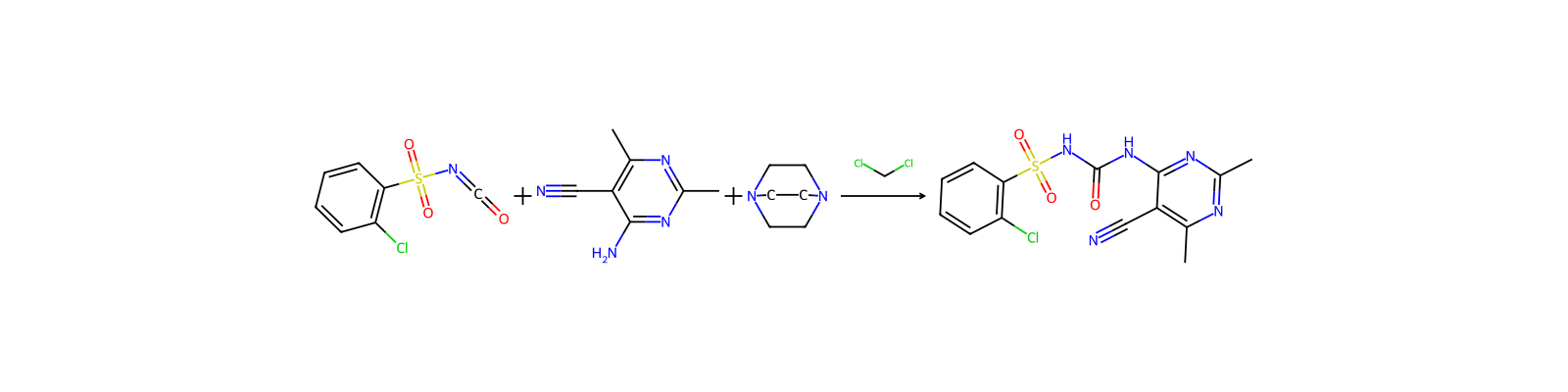


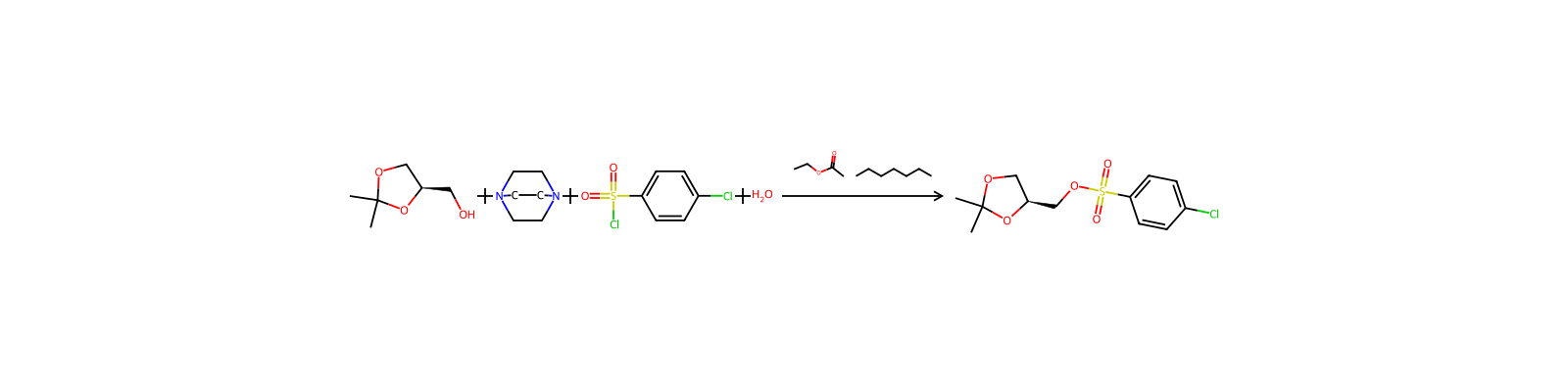


关联笔记
加载中…