HomeMCPWorkbenchSkills
HomeWorkbenchNotificationsMe
llms.txt · MCP GuidePrivacy Policy · Terms of Service · Supportv1.8.0
  1. Home
  2. /Compound

Thioacetic acid

HCID 10484
New noteNew reactionRequest quotes
Print preview
Basic informationOverviewNames & identifiersPropertiesSafety & regulationChemistry & industryRelated reactionsCompound notes
Substructure searchFind similar structures

Basic information

CAS
507-09-5
Standard SMILES
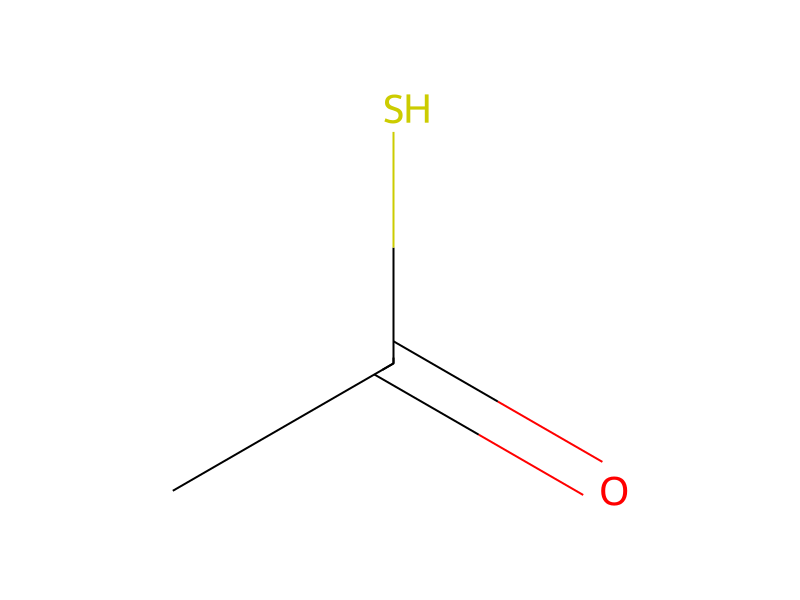
CC(=O)S
InChIKey
DUYAAUVXQSMXQP-UHFFFAOYSA-N
Molecular formula
C2H4OS
Average molar mass
76.12 g/mol
Monoisotopic mass
75.99828575

Overview

Thioacetic acid appears as a clear,yellow liquid with a strong, unpleasant odor. May be toxic by ingestion, inhalation and skin absorption. Irritating to skin and eyes. Used to make other chemicals.

Names & identifiers

Preferred name
Thioacetic acid
IUPAC
ethanethioic S-acid
English name
Thioacetic acid
Molecular formula
C2H4OS
Molecular weight
76.12

Names & synonyms

THIOACETIC ACID507-09-5Ethanethioic acidThiacetic acidThiolacetic acidEthanethiolic acidMethanecarbothiolic acidThionoacetic acidKyselina thiooctovaAcetic acid, thio-PS92MLC0FQDTXSID5060142
Show more names
TAACH3COSHthioaceticethanethioic O-acidliudaiyisuanTHIOESSIGSAEUREthionoaceticacid
FEMA NO. 4210RefChem:897757MONOTHIOACETIC ACIDDTXCID9040895CHEBI:26952208-063-8Ethanethioic S-acidAcetyl mercaptan

Database identifiers

CAS
507-09-5
PubChem CID
10484
DTXSID
DTXSID5060142
ChEBI
CHEBI:16555
UNII
PS92MLC0FQ
EC Number
208-063-8
Nikkaji
J35.909B

Properties

Computed structural properties

XLogP
0.3
Topological polar surface area
18.1 Ų
Hydrogen bond donors
1
Hydrogen bond acceptors
2
Rotatable bonds
0
Heavy atoms
4
Formal charge
0
Complexity
33

Experimental & physicochemical properties

Chemical Classes · 2 items

Other Classes -> Organic Acids

Flammable agents - 3rd degree

Food AdditivesFLAVORING AGENT OR ADJUVANT -> FDA Substance added to food
Density · 2 items

1.063-1.067

1.064 @25 °C

Solubility · 2 items

Soluble in water, diethyl ether and acetone

Soluble (in ethanol)

Boiling Point · 3 items

88.00 °C. @ 760.00 mm Hg

88-93 °C

93 °C @760 [mm Hg]

Melting Point17 °C
Refractive Index1.459-1.466
Physical Description · 5 items

Thioacetic acid appears as a clear,yellow liquid with a strong, unpleasant odor. May be toxic by ingestion, inhalation and skin absorption. Irritating to skin and eyes. Used to make other chemicals.

Liquid

Yellow liquid with a pungent odor; [Merck Index] Colorless or pale yellow liquid; [Alfa Aesar MSDS]

Safety & regulation

Safety information is for reference only and does not replace the supplier’s Safety Data Sheet (SDS), applicable regulations, or professional assessment.

GHS classification

GHS Classification · 4 items

Danger

H225 (100%): Highly Flammable liquid and vapor [Danger Flammable liquids]

P210, P233, P240, P241, P242, P243, P260, P261, P264, P264+P265, P270, P272, P280, P301+P316, P301+P317, P301+P330+P331, P302+P352, P302+P361+P354, P303+P361+P353, P304+P340, P305+P354+P338, P316, P317, P321, P330, P333+P317, P362+P364, P363, P370+P378, P403+P235, P405, and P501 (click each P-code to see the statement)

Aggregated GHS information provided per 176 reports by companies from 12 notifications to the ECHA C&L Inventory. Each notification may be associated with multiple companies.

Hazard information

Regulatory Information · 6 items

Chemical: Ethanethioic acid

Commission Regulation (EC) No 1565/2000 (Repealed by Com. Implementing Reg. (EU) No 872/2012)

Ethanethioic acid is listed on the EPA's Chemical Data Reporting (CDR) system. Manufacturers and importers of Ethanethioic acid are required to report information about their production and use of this chemical to the EPA under the Toxic Substances Control Act (TSCA). (40 eCFR Part 711)

Status: Active Update: 25-05-2021 https://echa.europa.eu/registration-dossier/-/registered-dossier/12473

Ethanethioic acid: HSNO Approval: HSR001051 Approved with controls

The New Jersey Worker and Community Right to Know Act requires public and private employers to provide information about hazardous substances at their workplaces. (N.J.S.A. 34:5A-1 et. seq.)

DOT LabelFlammable Liquid
Fire Hazards · 2 items

Excerpt from ERG Guide 129 [Flammable Liquids (Water-Miscible / Noxious)]:

· HIGHLY FLAMMABLE: Will be easily ignited by heat, sparks or flames.

Health Hazards · 2 items

Excerpt from ERG Guide 129 [Flammable Liquids (Water-Miscible / Noxious)]:

Chemistry & industry

Uses & manufacturing

UsesUsed to make other chemicals; [CAMEO] Used as a source of thiol groups in molecular synthesis and as a component of Schiff's reagent; [REPROTOX] Used as a flavoring agent; [FDA]
U.S. Production2023: <50,000 lb
Use Classification · 2 items

Flavouring Agent -> FLAVOURING_AGENT -> JECFA Functional Classes

Flavoring Agents -> JECFA Flavorings Index

General Manufacturing InformationEthanethioic acid: ACTIVE
Applications · 4 items

Uses1. This product can be used as organic synthesis acetylthio agent and mercapto agent, it is mainly used for lipoic acid, cystine and synthetic mercapto carboxylic acids, it can also be used for hormone antidote, cephalosporins sex and fungicides, modifiers and additives for synthetic polymers. For reagents, flavors and fragrances, cosmetics, synthetic captopril. 2. It can be used as pharmaceuticals, flavors and fragrances intermediates. 3. It can be used as chemical reagent, precipitation agent and catalyst.

UsesThioacetic acid is a reagent for introduction of the thiol group into organic molecules. It is used as flavor & Fragrance Intermediates. It is used to manufacture captopril(antihypertension) and spironolac-tone (diuretic).

UsesChemical reagent, lachrymator.

General DescriptionA clear,yellow liquid with a strong, unpleasant odor. May be toxic by ingestion, inhalation and skin absorption. Irritating to skin and eyes. Flash point near 50°F. Used to make other chemicals.

Upstream & downstream products

Upstream raw materials

Sodium sulfide nonahydrate

Related reactions

27 records
New reaction record
HRID 37255 reaction equation
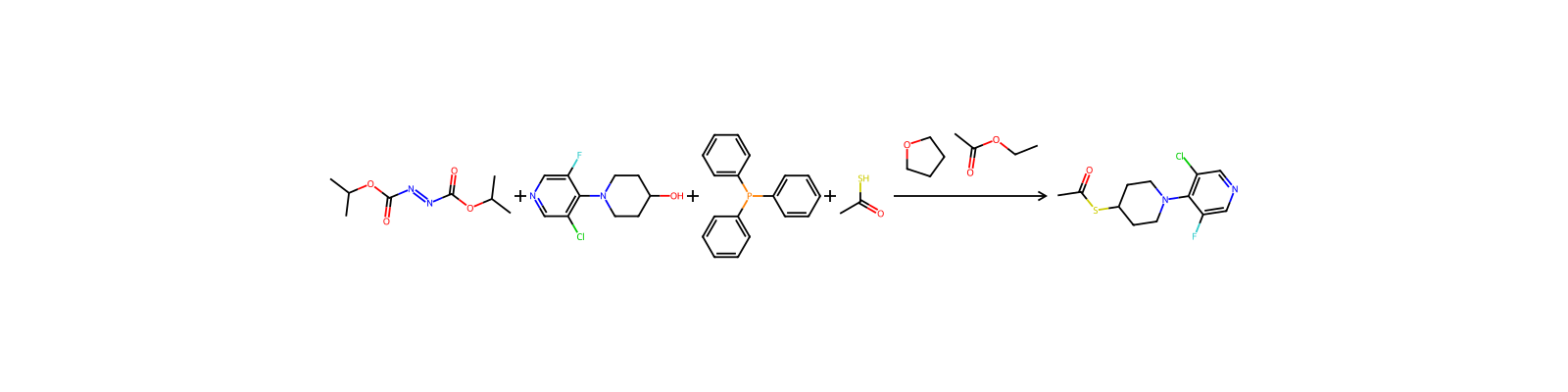
HRID 37255As reactantuspto-grants-1995_05
HRID 37267 reaction equation
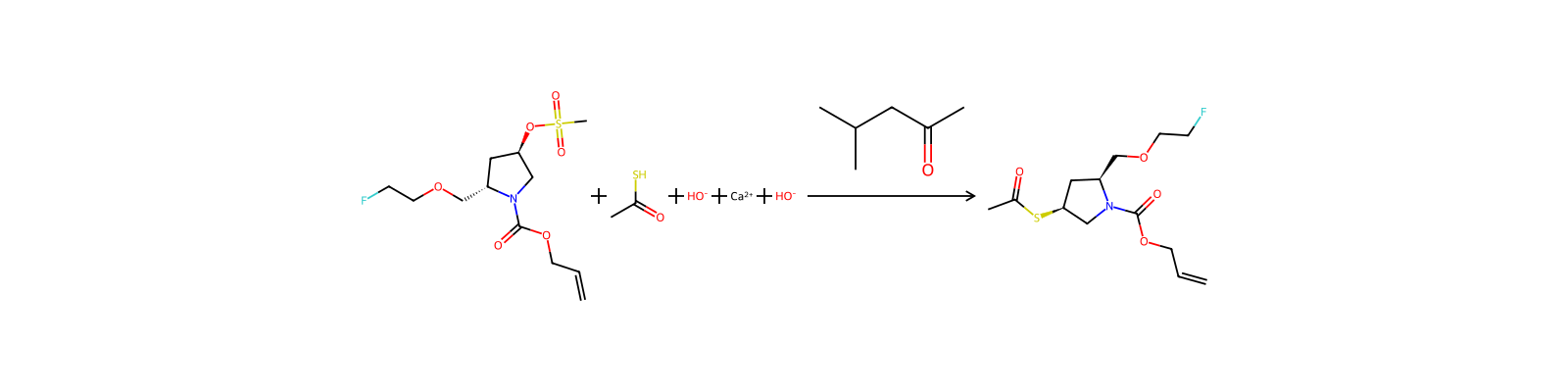
HRID 37267As reactantuspto-grants-1995_05
HRID 346355 reaction equation
HRID 346355As reactantuspto-grants-1991_10
HRID 346370 reaction equation
HRID 346370As reactantuspto-grants-1991_10
HRID 524905 reaction equation
HRID 524905As reactantuspto-grants-2016_05
HRID 620775 reaction equation
HRID 620775As reactantuspto-grants-1989_04
HRID 703577 reaction equation
HRID 703577As reactantuspto-grants-1991_01
HRID 703594 reaction equation
HRID 703594As reactantuspto-grants-1991_01
Page 1 of 4

Compound notes

Loading…

On this pageBasic informationOverviewNames & identifiersPropertiesSafety & regulationChemistry & industryRelated reactionsCompound notes
More actions
New noteNew reactionRequest quotes

Liquid

Pale yellow liquid; Cooked brown and roasted meat aroma

Physicochemical properties

Melting point
-17 °C · -17 °C
Boiling point
97 °C · 97 °C
Density
1.065 g/mL · 1.065 g/mL at 25 °C(lit.)
vapor pressure
1 hPa · 1 hPa (20 °C)
FEMA
4210 · 4210 | THIOACETIC ACID
refractive index
20 · n20/D 1.465(lit.)
Flash point
52 °F · 52 °F
storage temp.
30 °C · Store below +30°C.
solubility
27 g/l · 27g/l (slow decomposition)
form
Liquid
pka
3.33 · 3.33(at 25℃)
color
Clear colorless to pale yellow
PH
1.8 · 1.8 (100g/l, H2O, 20℃)Hydrolysis
Odor
0.01 % · at 0.01 % in propylene glycol. cooked roasted meaty burnt
Odor Type
meaty
biological source
synthetic
Water Solubility
27 g/L · 27 g/L (15 ºC) (hydrolyse)
Merck
14 · 14,9320
JECFA Number
1676 · 1676
BRN
773684 · 773684
Dielectric constant
13 · 13.0(20℃)
Stability
Stable. Flammable. Incompatible with metals, strong oxidizing agents.
InChI
1S/C2H4OS/c1-2(3)4/h1H3,(H,3,4)
InChIKey
DUYAAUVXQSMXQP-UHFFFAOYSA-N
SMILES
CC(S)=O
LogP
0.14 · 0.14
Substances Added to Food (formerly EAFUS)
THIOACETIC ACID
CAS DataBase Reference
507 · 507-09-5(CAS DataBase Reference)
FDA UNII
92 MLC0FQ · PS92MLC0FQ
NIST Chemistry Reference
Ethanethioic acid(507-09-5)
EPA Substance Registry System
Ethanethioic acid (507-09-5)
UNSPSC Code
41116107 · 41116107
NACRES
24 · NA.24
Symbol(GHS)
2 · GHS02,GHS05,GHS07
Signal word
Danger
Hazard statements
314 · H314-H317-H225
Precautionary statements
501 · P501-P261-P272-P240-P210-P233-P243-P241-P242-P264-P280-P370+P378-P362+P364-P303+P361+P353-P333+P313-P301+P330+P331-P304+P340+P310-P305+P351+P338+P310-P403+P235-P405
PPE
Faceshields, Gloves, Goggles, type ABEK (EN14387) respirator filter
Hazard Codes
F,C,Xn
Risk Statements
11 · 11-34-22-43-41
Safety Statements
9 · 9-16-26-36/37/39-45-28-23
RIDADR
2436 · UN 2436
WGK Germany
3 · 3
RTECS
5600000 · AJ5600000
F
13 · 13-19
TSCA
TSCA listed
HazardClass
3 · 3
PackingGroup
II
HS Code
29309070 · 29309070
Storage Class
3 · 3 - Flammable liquids
Hazard Classifications
3 OralAcute · Acute Tox. 3 OralAcute Tox. 4 InhalationEye Dam. 1Flam. Liq. 2Skin Sens. 1
Toxicity
50 orally · LD50 orally in Rabbit: 200 - 350 mg/kg
REACH Registrations
Active
Limited Quantities
1 L · 1.0 L (0.3 gallon) (liquid)
Excepted Quantities
Max Inner Pack (30g or 30ml) and Max Outer Pack (500g or 500ml)

· May cause toxic effects if inhaled or absorbed through skin.

Hazards Summary · 1 item

Causes other liver changes, changes in urine composition, and hypoglycemia in 10-week dermal studies of rats; [RTECS] A skin and eye irritant; [CAMEO] Safe when used as a flavoring agent in food; [JECFA] Causes severe skin burns and eye damage; [Sigma-Aldrich MSDS] May cause skin sensitization; May cause chemical pneumonitis; [Alfa Aesar MSDS] Search for (507-09-5[EC/RN Number]) AND (dermatitis OR allergic OR sensitizer OR sensitization): no results; [PubMed]

DOT ID and Guide2436 129
Reactive GroupAcids, Carboxylic
Reactivity AlertsHighly Flammable
Reactivity Profile · 1 item

THIOACETIC ACID is a thio organic acid. Organosulfides are incompatible with acids, diazo and azo compounds, halocarbons, isocyanates, aldehydes, alkali metals, nitrides, hydrides, and other strong reducing agents. Reactions with these materials generate heat and in many cases hydrogen gas. Many of these compounds may liberate hydrogen sulfide upon decomposition or reaction with an acid.

DOT Hazard Classification · 4 items

Thioacetic acid

UN2436

Class 3 Flammable and combustible liquid (49 eCFR § 173.120)

PG II: the degree of danger presented by the material is medium

Air and Water ReactionsHighly flammable. Water soluble.
Hazard Classes and Categories · 2 items

Flam. Liq. 2 (100%)

Flammable agents - 3rd degree

Safety & protection

Fire FightingExcerpt from ERG Guide 129 [Flammable Liquids (Water-Miscible / Noxious)]:
Accidental Release Measures · 2 items

· CALL 911. Then call emergency response telephone number on shipping paper. If shipping paper not available or no answer, refer to appropriate telephone number listed on the inside back cover.

· ELIMINATE all ignition sources (no smoking, flares, sparks or flames) from immediate area.

First Aid · 2 items

Excerpt from ERG Guide 129 [Flammable Liquids (Water-Miscible / Noxious)]:

General First Aid:

Exposure Control and Personal Protection· Wear positive pressure self-contained breathing apparatus (SCBA).
Nonfire Spill ResponseExcerpt from ERG Guide 129 [Flammable Liquids (Water-Miscible / Noxious)]:
Isolation and Evacuation · 2 items

Excerpt from ERG Guide 129 [Flammable Liquids (Water-Miscible / Noxious)]:

Immediate precautionary measure

Protective Action Criteria (PAC) · 3 items

1.1 [mg/m3]

12 [mg/m3]

69 [mg/m3]

Personal Protective Equipment (PPE)Excerpt from ERG Guide 129 [Flammable Liquids (Water-Miscible / Noxious)]:
Emergency Response Planning GuidelinesCAUTION: The majority of these products have a very low flash point. Use of water spray when fighting fire may be inefficient.

Toxicology

Adverse EffectsDermatotoxin - Skin burns.
Toxicity DataLC50 (rat) = 2,200 mg/m3/2hr

Safety data

F
13-19
PPE
Faceshields, Gloves, Goggles, type ABEK (EN14387) respirator filter
wgk
3
tsca
TSCA listed
rtecs
AJ5600000
ridadr
UN 2436
hs_code
29309070
Toxicity
LD50 orally in Rabbit: 200 - 350 mg/kg
risk_code
11-34-22-43-41
Signal word
Danger
Symbol(GHS)
GHS02,GHS05,GHS07
hazard_code
F,C,Xn
safety_code
9-16-26-36/37/39-45-28-23
hazard_class
3
Storage Class
3 - Flammable liquids
packing_group
II
Hazard statements
H314-H317-H225
Limited Quantities
1.0 L (0.3 gallon) (liquid)
Excepted Quantities
Max Inner Pack (30g or 30ml) and Max Outer Pack (500g or 500ml)
REACH Registrations
Active
Hazard Classifications
Acute Tox. 3 OralAcute Tox. 4 InhalationEye Dam. 1Flam. Liq. 2Skin Sens. 1
Precautionary statements
P501-P261-P272-P240-P210-P233-P243-P241-P242-P264-P280-P370+P378-P362+P364-P303+P361+P353-P333+P313-P301+P330+P331-P304+P340+P310-P305+P351+P338+P310-P403+P235-P405
Acetic anhydride
Sodium sulfide
Phosphorus pentasulfide
Sulfuric acid

Downstream products

Mercaptosuccinic acid1,3-Dimethyl-1H-thieno[2,3-c]pyrazole-5-carboxylic acidCaptoprilbrotianideIsobutyryl chlorideDimercaptosuccinic acidPotassium thioacetateSodiumthiolacetateMethyl N-acetylglycinate(S)-N-[3-(3-Fluoro-4-iodo-phenyl)-2-oxo-oxazolidin-5-ylmethyl]-acetamideβ-AcetamidonaphthaleneN-Acetyl-L-tryptophanThioacetanilideN-(2-Mercaptoethyl)acetamideS-Acetylthioacetic acid4-Morpholinecarboxylic acid, 2-[(acetylthio)methyl]-, 1,1-dimethylethyl ester

Additional notes

DefinitionChEBI: A thioacetic acid that is acetic acid in which the oxygen atom of the hydroxy group has been replaced by a sulfur atom.