
uspto-grants-2013_09 · 10.6084/m9.figshare.5104873.v1 · US08530667B2
查看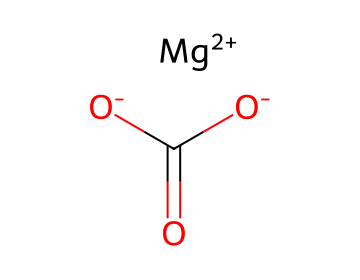
IDENTITY
COMPUTED
PROPERTIES
Odorless
2.96 (NIOSH, 2024) - Denser than water; will sink
3.0
Bulk density approximately 4 lb/cu ft
Colorless crystals; refractive index: 1.458, 1.473, 1.501; density: 2.83 g/cu-cm /Dihydrate/
White monoclinic crystals; density: 1.73 g/cu cm /Pentahydrate/
Relative density (water = 1): 2.95
Light, bulky, white powder
0.01 % (NIOSH, 2024)
0.1g/L
Practically insoluble both in water or ethanol
White, friable masses or bulky, white powder; at about 700 °C is converted to MgO; sol in about 3,300 parts CO2-free water; more sol in water containing CO2; sol in dilute acids with effervescence; insol in alcohol /Magnesium carbonate hydroxide/
0.0106 G/100 CC COLD WATER
SOL IN ACID, AQ CARBON DIOXIDE; INSOL IN ACETONE, AMMONIA
Decomposes (NIOSH, 2024)
Decomposes
decomposes
Decomposes
When heated to decomposition it emits acrid smoke and irritating fumes /of carbon dioxide/.
350 °C
662 °F (Decomposes) (NIOSH, 2024)
Decomposes at 350
990 °C
662 °F (decomposes)
990 °C
662 °F (Decomposes)
0 mmHg (approx) (NIOSH, 2024)
0 mmHg (approx)
0 mmHg (approx)
Index of refraction: 1.536 (alpha), 1.741 (beta)
Magnesite appears as white, yellowish, grayish-white or brown crystalline solid or crystalline powder. Density: 3-3.1 g cm-3. An important ore for magnesium. Used in the manufacture of materials capable of withstanding very high temperatures. Sometimes used to produce carbon dioxide.
Wet Solid; Other Solid; Dry Powder; CBI; Large Crystals; Other Solid; Large Crystals; Liquid
Odourless, light, white friable masses or as a bulky white powder
White, odorless, crystalline powder; [NIOSH]
WHITE POWDER.
White, odorless, crystalline powder.
STABLE IN AIR
HEATED ... MAGNESIUM BICARBONATE LOSES CARBON DIOXIDE & WATER & MAGNESIUM CARBONATE PPT. ... GENERALLY YIELDS LIGHT CARBONATE.
Heat of Formation = -1096 kJ/mol
Colorless to white crystals; density: 1.84 g/cu cm; MP: 165 °C (decomp); soluble in cold water (0.129 wt%) /Trihydrate/
GHS
This chemical does not meet GHS hazard criteria for 96.6% (982 of 1017) of all reports.
Not Classified;Reported as not meeting GHS hazard criteria by 982 of 1017 companies (only 3.4% companies provided GHS information). For more detailed information, please visit ECHA C&L website.
Aggregated GHS information provided per 1017 reports by companies from 8 notifications to the ECHA C&L Inventory.;Reported as not meeting GHS hazard criteria per 982 of 1017 reports by companies.;There are 5 notifications provided by 35 of 1017 reports by companies with hazard statement code(s).;Information may vary between notifications depending on impurities, additives, and other factors. The percentage value in parenthesis indicates the notified classification ratio from companies that provide hazard codes. Only hazard codes with percentage values above 10% are shown. For more detailed information, please visit ECHA C&L website.
This chemical does not meet GHS hazard criteria for 100% (104 of 104) of all reports.
Not Classified;Reported as not meeting GHS hazard criteria by 104 of 104 companies. For more detailed information, please visit ECHA C&L website.
Aggregated GHS information provided per 104 reports by companies from 1 notifications to the ECHA C&L Inventory.;Reported as not meeting GHS hazard criteria per 104 of 104 reports by companies.;There are 0 notifications provided by 0 of 104 reports by companies with hazard statement code(s).;Information may vary between notifications depending on impurities, additives, and other factors. The percentage value in parenthesis indicates the notified classification ratio from companies that provide hazard codes. Only hazard codes with percentage values above 10% are shown. For more detailed information, please visit ECHA C&L website.
HAZARDS
Chemical: Carbonic acid, magnesium salt (1:1)
Carbonic acid, magnesium salt (1:1) is listed on the EPA's Chemical Data Reporting (CDR) system. Manufacturers and importers of Carbonic acid, magnesium salt (1:1) are required to report information about their production and use of this chemical to the EPA under the Toxic Substances Control Act (TSCA). (40 eCFR Part 711)
Status: Active Update: 12-04-2022 https://echa.europa.eu/registration-dossier/-/registered-dossier/15234
Magnesite: Does not have an individual approval but may be used as a component in a product covered by a group standard. It is not approved for use as a chemical in its own right.
Magnesium carbonate: Does not have an individual approval but may be used under an appropriate group standard
Magnesite: Does not have an individual approval but may be used under an appropriate group standard
IMAP assessments - Carbonic acid, magnesium salt (1:1): Human health tier I assessment
Not combustible. Gives off irritating or toxic fumes (or gases) in a fire.
Excerpt from NIOSH Pocket Guide for Magnesite:;Exposure Routes: Inhalation, skin and/or eye contact;Symptoms: Irritation eyes, skin, respiratory system; cough;Target Organs: Eyes, skin, respiratory system (NIOSH, 2024)
Documentation and TLV withdrawn in 2006 because of insufficient data; [ACGIH] Symptoms: Irritation eyes, skin, respiratory system; cough; [CAMEO] See Magnesium carbonate hydroxide.
Substance added directly to human food affirmed as generally recognized as safe (GRAS).
Magnesium carbonate used as a general purpose food additive in animal drugs, feeds, and related products is generally recognized as safe when used in accordance with good manufacturing or feeding practice.
The Approved Drug Products with Therapeutic Equivalence Evaluations List identifies currently marketed prescription drug products, incl magnesium carbonate, approved on the basis of safety and effectiveness by FDA under sections 505 of the Federal Food, Drug, and Cosmetic Act.
Antacid products for over-the-counter (OTC) human use. Magnesium carbonate /is included in/ this list of specific active ingredients.
Carbonate Salts
Chemical: Magnesium carbonate; Green circle - The chemical has been verified to be of low concern based on experimental and modeled data.
Residues of magnesium carbonate are exempted from the requirement of a tolerance when used as an anticaking agent or conditioning agent in accordance with good agricultural practices as inert (or occasionally active) ingredients in pesticide formulations applied to growing crops or to raw agricultural commodities after harvest.
Magnesium carbonate is exempted from the requirement of a tolerance when used as a solid diluent or carrier in accordance with good agricultural practice as inert (or occasionally active) ingredients in pesticide formulations applied to animals.
Permissable Exposure Limit: Table Z-1 8-hr Time Weighted Avg: 15 mg/cu m (total dust).
Permissable Exposure Limit: Table Z-1 8-hr Time Weighted Avg: 5 mg/cu m (respirable fraction).
MAGNESITE has generally low chemical reactivity. Non-flammable and non-combustible. Reacts with acids and acidic salts to generate gaseous carbon dioxide with effervescence (bubbling). The reaction may be rapid and exothermic with concentrated solutions of acids. The effervescence can create foaming. Incompatible with formaldehyde.
Decomposes on heating. This produces irritating fumes. Reacts with acids. This produces carbon dioxide gas.
SAFETY
In case of fire in the surroundings: all extinguishing agents allowed.
Fresh air, rest.
Rinse skin with plenty of water or shower.
Rinse with plenty of water (remove contact lenses if easily possible).
Rinse mouth.
Excerpt from NIOSH Pocket Guide for Magnesite:;Eye: IRRIGATE IMMEDIATELY - If this chemical contacts the eyes, immediately wash (irrigate) the eyes with large amounts of water, occasionally lifting the lower and upper lids. Get medical attention immediately.;Breathing: FRESH AIR - If a person breathes large amounts of this chemical, move the exposed person to fresh air at once. Other measures are usually unnecessary. (NIOSH, 2024)
(General first aid procedures);Eye: Irrigate immediately - If this chemical contacts the eyes, immediately wash (irrigate) the eyes with large amounts of water, occasionally lifting the lower and upper lids. Get medical attention immediately.;Breathing: Fresh air
Separated from acids.
SRP: At the time of review, criteria for land treatment or burial (sanitary landfill) disposal practices are subject to significant revision. Prior to implementing land disposal of waste residue (including waste sludge), consult with environmental regulatory agencies for guidance on acceptable disposal practices.
Personal protection: particulate filter respirator adapted to the airborne concentration of the substance. Sweep spilled substance into covered containers. If appropriate, moisten first to prevent dusting.
SRP: The scientific literature for the use of contact lenses in industry is conflicting. The benefit or detrimental effects of wearing contact lenses depend not only upon the substance, but also on factors including the form of the substance, characteristics and duration of the exposure, the uses of other eye protection equipment, and the hygiene of the lenses. However, there may be individual substances whose irritating or corrosive properties are such that the wearing of contact lenses would be harmful to the eye. In those specific cases, contact lenses should not be worn. In any event, the usual eye protection equipment should be worn even when contact lenses are in place.
Wear safety spectacles.
A nuisance-causing concentration of airborne particles can be reached quickly when dispersed.
Protective gloves.
Residues of magnesium carbonate are exempted from the requirement of a tolerance when used as an anticaking agent or conditioning agent in accordance with good agricultural practices as inert (or occasionally active) ingredients in pesticide formulations applied to growing crops or to raw agricultural commodities after harvest.
Magnesium carbonate is exempted from the requirement of a tolerance when used as a solid diluent or carrier in accordance with good agricultural practice as inert (or occasionally active) ingredients in pesticide formulations applied to animals.
Do not eat, drink, or smoke during work.
TOXICITY
This study investigated the in vitro adsorption of halofantrine (Hf) by some antacids. Magnesium carbonate showed the highest adsorptive effect, the extent of adsorption being up to 83%. Only 4% of Hf adsorbed by the antacid could be eluted with 0.1 M HCl while no detectable elution occurred with water. Other antacids investigated were magnesium trisilicate and aluminium hydroxide and these had Hf-adsorption capacities of 23 and 43%, respectively. The effect of magnesium carbonate on the bioavailability of Hf was evaluated in seven healthy volunteers. The subjects were administered with 500 mg oral dose of Hf-HCl or the same dose of the drug in combination with 1 g of magnesium carbonate, in a crossover fashion. Blood samples were collected at predetermined time intervals and were analysed for Hf and its major metabolite, desbutylhalofantrine (Hfm), using high-performance liquid chromatography method. The results showed that magnesium carbonate significantly prolonged (P<0.05) the time to reach maximum plasma concentration (Tmax) of Hf. Also the maximum plasma concentrations (Cmax) of Hf and Hfm were significantly reduced (P<0.05). Furthermore, there was a reduction in the area under the curve (AUC) values of Hf and this was as high as 56% (range 1-56%). Results of this study suggest that it may not be advisable to concomitantly administer Hf with an antacid like magnesium carbonate.
The use of calcium carbonate (CaCO3) to bind phosphorus (P) in chronic hemodialysis patients has been a popular tactic in the past decade. Nonetheless, problems with hypercalcemia decrease its usefulness, particularly in patients treated with calcitriol. A P binder not containing calcium (Ca) would be of value in these circumstances. In short-term studies, ...magnesium carbonate (MgCO3) was well-tolerated and controlled P and Mg levels when given in conjunction with a dialysate Mg of 0.6 mg/dl. ...A prospective, randomized, crossover study /was performed/ to evaluate if the chronic use of MgCO3 would allow a reduction in the dose of CaCO3 and yet achieve acceptable levels of Ca, P, and Mg. We also assessed whether the lower dose of CaCO3 would facilitate the use of larger doses of calcitriol. The two phases were MgCO3 plus half the usual dose of CaCO3 and CaCO3 alone given in the usual dose. It was found that MgCO3 (dose, 465 +/- 52 mg/day elemental Mg) allowed a decrease in the amount of elemental Ca ingested from 2.9 +/- 0.4 to 1.2 +/- 0.2 g/day (P<0.0001). The Ca, P, Mg levels were the same in the two phases. The maximum dose of iv calcitriol without causing hypercalcemia was 1.5 +/- 0.3 ug/treatment during the MgCO3 phase and 0.8 +/- ug/treatment during the Ca phase (P<0.02). If these studies are confirmed, the use of MgCO3 and a dialysate Mg of 0.6 mg/dl may be considered in selected patients who develop hypercalcemia during treatment with iv calcitriol and CaCO3.
Effect of magnesium on iron and magnesium metabolism in rats was investigated. 96 male Wistar rats were divided into four groups received 2.5; 5.0 and 10.0 mg magnesium daily per kg of body weight--dissolved in 2%--solution of arabic gum (tests groups) or clear 2%--solution of arabic gum (test group) for 4 weeks and the next 4 weeks without supplements. Iron concentrations increased in the brain and kidney of the experimental rats, but decreased in the spleen, intestine and liver (2 and 4 weeks only) also in the heart and femur (only 8 wk). Percentage of iron retention decreased during the whole experiment. Magnesium concentrations increased in the spleen, liver and intestine of rats. It was shown that at 8 weeks of experiment the magnesium level of heart and femur decreased (only groups received 2.5 mg and 5.0 mg Mg/kg bw/24 hr), but in group received 10.0 mg Mg/kg bw/24 hr increased for all experiment. The apparent retention of magnesium increased in start of the experiment. This results show that oral magnesium supplementation disturbs metabolism of these elements, especially balance of iron.
Eyes, skin, respiratory system
AQUATIC FATE: Natural water systems acquire magnesium through weathering reactions, which involve the interaction of water and atmosphere with the earth's crust and subsequent leaching of magnesium compounds into water. The Mg2+ ion is the predominant form of dissolved magnesium. However, some magnesium complexes do form. The magnesium sulfate ion pair complex (MgSO4) is the most significant complex present, representing 2.6% and 11% of the total magnesium content in fresh and sea water, respectively. The concentrations of bicarbonate and carbonate complexes are significant but considerably less than sulfate complexes. Incorporation of magnesium compounds into sediment is an important removal process. For example, a small amount of magnesium is ion exchanged for calcium on clay minerals in ocean sediment. Also small amounts of magnesium carbonate (about 6% of the magnesium supplied by rivers) are deposited with calcite (CaCO3) in seawater. There is significant uptake of magnesium (about 24% of the river input of magnesium) by sediment in which sulfate reduction is taking place(1). The avg Kd value for magnesium sorption on Po River sediments is 1.3 cu m/kg, which suggests that magnesium ions are weakly sorbed on sediments(2). High-temperature alteration of basalts at hydrothermal vents apparently constitute the most important sink for magnesium in seawater(1).
The substance can be absorbed into the body by inhalation.
inhalation, skin and/or eye contact
The CIR Expert Panel concluded that the following 6 carbonate salts are safe in the present practices of use and concentration, as described in this safety assessment, when formulated to be non-irritating...Magnesium Carbonate...
Safe for use in cosmetics, with qualifications
Cough.
irritation eyes, skin, respiratory system; cough
MAGNESIUM CARBONATE OCCURS NATURALLY AS MAGNESITE, AND HAS 3 NATURALLY OCCURING HYDRATES; BARRINGTONITE, NESQUEHONITE, AND LANSFORDITE.
Magnesium is approx 2% of the earth's crust, eighth in elemental abundance, and widely distributed in the environment as a variety of compounds(1,2). Its concn is 1.8% and 1.6% in igneous and sedimentary rocks, respectively(2). In igneous rocks, magnesium is typically a constituent of the dark-colored ferromagnesium minerals (e.g., olivine, pyroxenes, amphiboles, and dark-colored micas), along with other less common minerals(2). In metamorphic rocks, magnesium minerals such as chlorite, montmorillonite, and serpentine occur(2). Sedimentary rocks of magnesium include carbonates (e.g., magnesite and hydromagnesite), hydroxides (e.g., brucite), and mixtures of magnesium and calcium carbonate (e.g., dolimite)(2). Magnesium is also found in silicate minerals (e.g., olivine, serpentine, and asbestos)(1). Rocks and minerals contain a higher percentage of magnesium than do soils as a result of the loss of magnesium due to weathering(1). Magnesium chloride, with makes up 17% of sea salt(1) is released to the atmosphere as sea spray(SRC).
The production and use of magnesium compounds as refractories, as chemical intermediates, and in construction materials(1,2) result in their release to the environment through various waste streams(SRC). The production and use of magnesium compounds in environmental applications and in agriculture(1,2) results in their direct release to the environment(SRC). About 69% of the magnesium compounds used in the United States were used for refractories (e.g., olivine)(1). The remaining 31% of magnesium compounds were used in agriculture as fertilizer or animal feed (e.g, magnesium oxide, magnesium sulfate), as chemical intermediates (e.g., magnesium chloride, magnesium hydroxide, magnesium carbonate, magnesium oxide) , construction materials (e.g., magnesium oxide), environmental (e.g., magnesium oxide, magnesium hydroxide), and industrial applications (e.g., magnesium oxide)(1,2). Other uses include road dust and ice control (e.g., magnesium chloride), pulp and paper applications (e.g.,magnesium sulfate), pharmaceuticals (e.g., magnesium sulfate, magnesium carbonate, magnesium oxide), and cosmetics (e.g., magnesium carbonate)(1,2).
/LABORATORY ANIMALS: Acute Exposure/ The effects of magnesium carbonate (MgCarb) on carcinogenesis and natural killer (NK) cell modulation by nickel subsulfide (Ni3S2) were studied. Male Fischer F344/NCr rats, 50-90 g body wt, 20 rats/group, received single im injections into both thigh muscles of 2.5 mg Ni3S2 alone or combined with different proportions of MgCarb; the Mg/Ni molar ratio ranged from 0.25 to 4.0. Control rats received im injections of normal saline or magnesium acetate (MgAcet), or sc MgCarb at a site distant from Ni3S2. The animals were observed over 79 weeks for the development of tumors. The NK cell activity was determined over the first 3 weeks of the experiment in separate groups of rats treated as above, with the use of the 51Cr/YAC-1 release assay for blood and spleen cells and the peroxidase localization of Ox-8-immunoreactive lymphocytes at the injection site. Im administration of MgCarb mixed with Ni3S2 up to the Mg/Ni molar ratio of 1.0 inhibited the carcinogenicity of Ni3S2 in a dose-related manner; final incidence of sarcomas decreased from 100 to 55% and the appearance of first tumors was delayed from 25 to 39 weeks. Higher doses of MgCarb did not exert further effect. Distant sc injection of MgCarb or local im application of MgAcet did not change the carcinogenic potency of im Ni3S2. MgCarb or saline alone did not produce any tumors. Im Ni3S2 had no significant influence on the activity of NK cells in blood and spleen, while im MgCarb alone did not affect the NK activity in blood but doubled it transiently in the spleen 24 hr after injection. In the injected muscle, Ox-8-positive cells became abundant around MgCarb but could not be found close to Ni3S2. This inhibitory effect of Ni3S2 was partially reversed by MgCarb. Also, numerous multinucleated giant cells infiltrated the sites of injection of MgCarb alone and MgCarb + Ni3S2 but not Ni3S2 alone. The results indicate a dose-dependent and strictly local character o
/LABORATORY ANIMALS: Acute Exposure/ Two reagent and two feed grade magnesium oxides and reagent grade magnesium carbonate, sodium bicarbonate, and calcium carbonate were evaluated to ascertain their ability to neutralize acid in the rumen. Rumen fluid pH was increased in vitro, compared to the control, by antacid compounds, and their increased ranked: calcium carbonate <feed grade magnesium oxide A <light magnesium oxide and feed grade magnesium oxide B <heavy magnesium oxide <magnesium carbonate <sodium bicarbonate. Titrations at constant pH's ranging from 3.0 to 7.5 indicated that these magnesium compounds were reactive at pH's normally in the rumen although reactivity decreased with increasing pH.
/LABORATORY ANIMALS: Chronic Exposure or Carcinogenicity/ Animal experiments with magnesium carbonate dust produce a slight fibrosis. After prolonged exposure to high concentrations, pulmonary deposition and retention of magnesium carbonate occurred.
Advanced treatment: Consider orotracheal or nasotracheal intubation for airway control in the patient who is unconscious or in severe respiratory distress. Positive pressure ventilation techniques with a bag valve mask device may be beneficial. Monitor cardiac rhythm and treat arrhythmias if necessary ... . Start an IV with D5W /SRP: "To keep open", minimal flow rate/. Use lactated Ringer's if signs of hypovolemia are present. Watch for signs of fluid overload. Consider drug therapy for pulmonary edema ... . For hypotension with signs of hypovolemia, administer fluid cautiously. Consider vasopressors for hypotension with a normal fluid volume. Watch for signs of fluid overload ... . Use proparacaine hydrochloride to assist eye irrigation ... . /Magnesium and Related Compounds/
Basic treatment: Establish a patent airway. Suction if necessary. Watch for signs of respiratory insufficiency and assist ventilations if necessary. Administer oxygen by nonrebreather mask at 10 to 15 L/min. Monitor for pulmonary edema and treat if necessary ... . Monitor for shock and treat if necessary ... . For eye contamination, flush eyes immediately with water. Irrigate each eye continuously with normal saline during transport ... . Do not use emetics. For ingestion, rinse mouth and administer 5 ml/kg up to 200 ml of water for dilution if the patient can swallow, has a strong gag reflex, and does not drool ... . /Magnesium and Related Compounds/
REGULATORY
Chemical: Carbonic acid, magnesium salt (1:1)
Carbonic acid, magnesium salt (1:1) is listed on the EPA's Chemical Data Reporting (CDR) system. Manufacturers and importers of Carbonic acid, magnesium salt (1:1) are required to report information about their production and use of this chemical to the EPA under the Toxic Substances Control Act (TSCA). (40 eCFR Part 711)
Status: Active Update: 12-04-2022 https://echa.europa.eu/registration-dossier/-/registered-dossier/15234
Magnesite: Does not have an individual approval but may be used as a component in a product covered by a group standard. It is not approved for use as a chemical in its own right.
Magnesium carbonate: Does not have an individual approval but may be used under an appropriate group standard
Magnesite: Does not have an individual approval but may be used under an appropriate group standard
Substance added directly to human food affirmed as generally recognized as safe (GRAS).
Magnesium carbonate used as a general purpose food additive in animal drugs, feeds, and related products is generally recognized as safe when used in accordance with good manufacturing or feeding practice.
The Approved Drug Products with Therapeutic Equivalence Evaluations List identifies currently marketed prescription drug products, incl magnesium carbonate, approved on the basis of safety and effectiveness by FDA under sections 505 of the Federal Food, Drug, and Cosmetic Act.
Antacid products for over-the-counter (OTC) human use. Magnesium carbonate /is included in/ this list of specific active ingredients.
Residues of magnesium carbonate are exempted from the requirement of a tolerance when used as an anticaking agent or conditioning agent in accordance with good agricultural practices as inert (or occasionally active) ingredients in pesticide formulations applied to growing crops or to raw agricultural commodities after harvest.
Magnesium carbonate is exempted from the requirement of a tolerance when used as a solid diluent or carrier in accordance with good agricultural practice as inert (or occasionally active) ingredients in pesticide formulations applied to animals.
PHARMACOLOGY
A - Alimentary tract and metabolism;A06 - Drugs for constipation;A06A - Drugs for constipation;A06AD - Osmotically acting laxatives;A06AD01 - Magnesium carbonate
A - Alimentary tract and metabolism;A02 - Drugs for acid related disorders;A02A - Antacids;A02AA - Magnesium compounds;A02AA01 - Magnesium carbonate
QA - Alimentary tract and metabolism;QA06 - Drugs for constipation;QA06A - Drugs for constipation;QA06AD - Osmotically acting laxatives;QA06AD01 - Magnesium carbonate
QA - Alimentary tract and metabolism;QA02 - Drugs for acid related disorders;QA02A - Antacids;QA02AA - Magnesium compounds;QA02AA01 - Magnesium carbonate
30% of magnesium is bound to proteins.
Neutralizes acid in the stomach.
Magnesium carbonate reacts with hydrochloric acid in the stomach to form carbon dioxide and magnesium chloride thus neutralizing excess acid in the stomach.
... Rapidly reacts with hydrochloric acid to form ... carbon dioxide /and magnesium chloride/.
Half life of 27.7 hours reported with overdose of 400mEq of magnesium in an adult.
Magnesium does not appear to be metabolized in any way.
Chemicals that are used to oxidize pigments and thus effect whitening.
Materials that readily absorb moisture from their surroundings.
About 40-60% of magnesium is absorbed following oral administration. Percent absorption decreases as dose increases.
Primarily eliminated in urine.
Vd for magnesium is 0.2-0.4L/kg. About 50% distributes to bone.
Maximum magnesium clearance is directly proportional to creatinine clearance.
IN SHEEP TRIAL REAGENT GRADE MATERIAL DEMONSTRATED 72% TRUE ABSORPTION VALUES, WHILE COMMERCIAL MAGNESITE HAD ONLY 14% VALUE DRAMATIZING NEED FOR MORE BIOLOGIC AVAILABILITY STUDIES ON MANY FEED INGREDIENTS.
USES
CIR ingredient: Magnesium Carbonate
Magnesium carbonate is added to table salt, and it is used as an antacid. [ACGIH] Used to make other compounds in the paint, ink, fireproofing, flooring, polishing, plastics, and rubber industries; [HSDB]
For magnesium carbonate (USEPA/OPP Pesticide Code: 073503) there are 0 labels match. /SRP: Not registered for current use in the U.S., but approved pesticide uses may change periodically and so federal, state and local authorities must be consulted for currently approved uses./
In foods as a drying agent, color retention agent, anticaking agent and a carrier.
ANTACID & CATHARTIC
MEDICATION
(1972) 1.26X10+8 G
(1974) 1.24X10+8 G
2023: 10,000,000,000 - <50,000,000,000 lb;2022: 10,000,000,000 - <50,000,000,000 lb;2021: 100,000,000 - <500,000,000 lb;2020: 10,000,000,000 - <50,000,000,000 lb
(1972) 4.6X10+9 G (SHIPPED & USED)
(1974) 5.4X10+9 G (SHIPPED AND USED)
Processing aids not otherwise specified;Other;Lubricating agent;Intermediate;Not Known or Reasonably Ascertainable;Filler;Catalyst
Abrasives;Processing aids not otherwise specified;Binder;Other;Alloys;Lubricating agent;Anti-adhesive/cohesive;Intermediate;Catalyst;Not Known or Reasonably Ascertainable;Filler
MIXING OF SOLUTIONS OF MAGNESIUM SULFATE AND SODIUM CARBONATE, FOLLOWED BY FILTERING AND DRYING
... FROM DOLOMITE ... BY ... CALCINING IT, SUSPENDING CALCINATED POWDER IN WATER & SATURATING WITH CARBON DIOXIDE ... SOME LIME ... DISSOLVES ... BUT WHEN TEMP, AFTER TREATMENT WITH CARBON DIOXIDE ... RAISED, NEARLY ALL ... LIME PPT ... SOLN ... HEATED ... MAGNESIUM BICARBONATE LOSES CARBON DIOXIDE & WATER & MAGNESIUM CARBONATE PPT. ... GENERALLY YIELDS LIGHT CARBONATE.
HEAVY CARBONATE ... PRODUCED BY PRECIPITATING HOT, CONCENTRATED SOLN OF MAGNESIUM CHLORIDE OR SULFATE WITH SOLN OF SODIUM CARBONATE.
Reaction of a soluble magnesium salt solution with sodium carbonate or bicarbonate.
GRADES: TECHNICAL, NF; FCC
MEDICINAL MAGNESIUM CARBONATE IS AVAILABLE IN LIGHT & HEAVY FORMS; THE LIGHT, WHICH IS 2 TO 2 1/2 TIMES AS BULKY AS THE HEAVY, IS MOST COMMONLY USED.
USP, reagent, technical, dense and light powder grades; ceramic grade; FCC grade; USP/NF grade in light and heavy powder
Powder containing 90% magnesium carbonate and 10% starch
Information on 62 consumer products that contain Magnesium carbonate in the following categories is provided:;• Home Maintenance;• Inside the Home;• Landscaping/Yard;• Personal Care;• Pesticides;• Pet Care
EPA Safer Chemical Functional Use Classes -> Processing Aids and Additives
Safer Chemical Classes -> Green circle - The chemical has been verified to be of low concern
Food additives
Food Additives -> ANTICAKING_AGENT; BLEACHING_AGENT; COLOUR_RETENTION_AGENT -> JECFA Functional Classes
Cosmetics -> Binding; Bulking; Absorbent; Cosmetic colorant; Opacifying
Plastics -> Other stabilisers
Machinery Manufacturing;All Other Chemical Product and Preparation Manufacturing;Not Known or Reasonably Ascertainable;Non-metallic Mineral Product Manufacturing (includes clay, glass, cement, concrete, lime, gypsum, and other non-metallic mineral product manufacturing);Paint and Coating Manufacturing;Fabricated Metal Product Manufacturing;Petroleum Lubricating Oil and Grease Manufacturing;Primary Metal Manufacturing;Printing and Related Support Activities;All Other Basic Inorganic Chemical Manufacturing;Rubber Product Manufacturing
Carbonic acid, magnesium salt (1:1): ACTIVE
Carbonic acid, magnesium salt (1:?): ACTIVE
SRP: Magnesium carbonate hydroxide is a mixture of magnesium hydroxide and magnesium carbonate, commonly used as an antacid. It is not a specific chemical compound.
Acts as desiccant dust for stored-product insects.
... SOURCE OF OTHER MAGNESIUM COMPOUNDS, BECAUSE OF ITS READY LIBERATION OF CARBON DIOXIDE, FORMING MAGNESIUM OXIDE, WHICH AS NOTED IS USED IN REFRACTORIES. AMONG ITS SEVERAL OTHER USES SIMILAR TO THOSE OF MAGNESIUM OXIDE, IT WAS USED TO MAKE FREE-RUNNING TABLE SALT, NOW REPLACED BY SODIUM SILICOALUMINATE.
ALIASES
REACTIONS
uspto-grants-2013_09 · 10.6084/m9.figshare.5104873.v1 · US08530667B2
查看
uspto-grants-2013_09 · 10.6084/m9.figshare.5104873.v1 · US08530667B2
查看
uspto-grants-2013_09 · 10.6084/m9.figshare.5104873.v1 · US08541594B2
查看
uspto-grants-1993_05 · 10.6084/m9.figshare.5104873.v1 · US05212159
查看
uspto-grants-1979_05 · 10.6084/m9.figshare.5104873.v1 · US04154802
查看
uspto-grants-1976_03 · 10.6084/m9.figshare.5104873.v1 · US03946134
查看
uspto-grants-1977_04 · 10.6084/m9.figshare.5104873.v1 · US04017599
查看
uspto-grants-1977_04 · 10.6084/m9.figshare.5104873.v1 · US04017599
查看