
uspto-grants-2008_09 · 10.6084/m9.figshare.5104873.v1 · US07422880B2
查看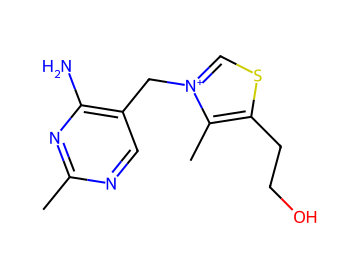
IDENTITY
COMPUTED
PROPERTIES
SLIGHT, CHARACTERISTIC
Crystals from water
500000
SLIGHTLY SOL IN ALC & CHLOROFORM /MONONITRATE/
MONONITRATE IS MUCH LESS SOL IN WATER THAN HYDROCHLORIDE
In water, approximately 5.0X10+5 mg/L, temp not specified
500.0 mg/mL
Soluble in water, propylene glycol; Insoluble in ether, benzene, hexane, chloroform
When heated to decomposition it emits very toxic fumes of /nitric oxide/, /sulfur oxide/, and /chlorine/.
248
164 °C
MP: 248 °C, DECOMP /HYDROCHLORIDE/
248 °C
Solid with a slight odor; [HSDB] Crystals; [Avocado Research MSDS]
Solid
Small white to yellowish crystals or crystalline powder; slight characteristic odour reminescent of thiazole
Stable under normal storage conditions; it is degraded in neutral and alkaline solutions (even at room temp)
Mononitrate is less hygroscopic and hence is more stable than the hydrochloride /Mononitrate and hydrochloride salts/
Stability is excellent in low pH fruit drinks, eg, losses in drinks are 6% after 12 mo at room temp
Stability in frozen drink concentrate is excellent
For more Stability/Shelf Life (Complete) data for Vitamin B1 (9 total), please visit the HSDB record page.
Positive
3.19
2.7
Agilent XCT
Electrospray ionization
formic acid (5.3nM)
162.8 Ų [M-H]- [CCS Type: DT; Buffer gas: N2; Ionization: ESI-; Dataset: TOXCAST; Source Identifier: DTXSID2023648];161.5 Ų [M+H]+ [CCS Type: DT; Buffer gas: N2; Ionization: APCI+; Dataset: TOXCAST; Source Identifier: DTXSID4038762];162.7 Ų [M+H]+ [CCS Type: DT; Buffer gas: N2; Ionization: ESI+; Dataset: TOXCAST; Source Identifier: DTXSID2023648]
155.9 Ų [M+H]+ [CCS Type: TW; Method: calibrated with polyalanine and drug standards]
155.66 Ų [M]+ [CCS Type: TW; Method: calibrated with polyalanine and drug standards]
159 Ų [M]+ [CCS Type: TW; Method: calibrated with polyalanine]
162.8 Ų [M]+ [CCS Type: DT; Method: single field calibrated with ESI Low Concentration Tuning Mix (Agilent)]
162.4 Ų [M+H]+ [CCS Type: DT; Method: single field calibrated with Agilent tune mix (Agilent)];160.3 Ų [M-H]- [CCS Type: DT; Method: single field calibrated with Agilent tune mix (Agilent)]
Monoclinic plates in rosette-like clusters. Slight thiazole odor; bitter taste; decomposes at 248 °C. One gram dissolves in approximately 1 mL water, 18 mL glycerol, 100 mL 95% alcohol, 315 mL absolute alcohol; more soluble in methanol. Soluble in propylene glycol. Practically insoluble in ether, benzene, hexane, chloroform. pH of 1% wt/vol solution in water 3.13; pH of 0.1% wt/vol solution in water 3.58. On exposure to air of average humidity, the vitamin absorbs an amount of water corresponding to nearly one mole, forming a hydrate.
HYGROSCOPIC; NUT-LIKE ODOR /HYDROCHLORIDE/
READILY SPLIT BY SULFITE INTO ITS PYRIMIDINE & THIAZOLE CONSTITUENTS
Crystals. MP: 196-200 °C, decomposes; practically nonhygroscopic; pKa = 4.9. Solubility in water (g/100 mL): 2.7 (25 °C); approximately 30 (100 °C). pH of 2% aqueous solution 6.5 to 7.1, more stable than the hydrochloride; suitable for enrichment of flours and feeds, multivitamin preparations /Mononitrate/
SMALL WHITE CRYSTALS OR CRYSTALLINE POWDER /HYDROCHLORIDE/
Thiamine hydrochloride in the dry state is stable. Acidic solutions having a pH below 5.5 preferably from 5.0 to 3.5 are also relatively stable. Alkalies destroy it. It is precipitated from solution by several of the alkaloidal reagents such as mercuric chloride, iodine, picric acid, tannin, and Mayer's reagent. It is sensitive to both oxidizing and reducing agents. /Hydrochloride/
GHS
This chemical does not meet GHS hazard criteria for 100% (6 of 6) of all reports.
Not Classified;Reported as not meeting GHS hazard criteria by 6 of 6 companies. For more detailed information, please visit ECHA C&L website.
Aggregated GHS information provided per 6 reports by companies from 1 notifications to the ECHA C&L Inventory.;Reported as not meeting GHS hazard criteria per 6 of 6 reports by companies.;There are 0 notifications provided by 0 of 6 reports by companies with hazard statement code(s).;Information may vary between notifications depending on impurities, additives, and other factors. The percentage value in parenthesis indicates the notified classification ratio from companies that provide hazard codes. Only hazard codes with percentage values above 10% are shown. For more detailed information, please visit ECHA C&L website.
HAZARDS
Chemical: Thiazolium, 3-[(4-amino-2-methyl-5-pyrimidinyl)methyl]-5-(2-hydroxyethyl)-4-methyl-, chloride (1:1)
Thiamine: Does not have an individual approval but may be used under an appropriate group standard
Evaluation - Chemicals that are unlikely to require further regulation to manage risks to environment
A water-soluble vitamin used to treat beriberi and Wernicke-Korsakoff syndrome; Anaphylactoid reactions were reported after intravenous injection--rare with new preparations; [Olson, p. 628] Hydrochloride: Safe when used as a flavoring agent in food; [JECFA] Occupational asthma confirmed with broncho-provocation testing in a worker manufacturing cereal; [Malo]
NAS, Food and Nutrition Board, Institute of Medicine; Dietary Reference Intakes for Thiamin, Riboflavin, Niacin, Vitamin B6, Folate, Vitamin B12, Pantothenic Acid, Biotin, and Choline. National Academy Press, Washington, D.C. (1998).[Available from, as of March 2, 2010: http://www.nap.edu/catalog/6015.html]
Not Classified
SAFETY
The drug is not highly susceptible to atmospheric oxidation but should be protected from air and light. Thiamine hydrochloride tablets should be stored in tight, light-resistant containers at a temperature less than 40 degrees C, preferably between 15-30 degrees C. Thiamine hydrochloride injection should be protected from light and stored at a temperature less than 40 degrees C, preferably between 15-30 degrees C; freezing should be avoided.
SRP: Criteria for land treatment or burial (sanitary landfill) disposal practices are subject to significant revision. Prior to implementing land disposal of waste residue (including waste sludge), consult with environmental regulatory agencies for guidance on acceptable disposal practices.
TOXICITY
Vitamin B1 concentration in a typical healthy human body is approximately 30 mg of vitamine B1 in all forms with about 40-50% of this being in the muscles. Normal human blood contains about 90 ng/mL(1).
Vitamin B1 occurs in the human body as free thiamine and as thiamine monophosphate, thiamine triphosphate, and thiamine pyrophosphate. Beriberi is the disease resulting from severe thiamine deficiency; inadequate consumption of thiamine is the main cause of thiamine deficiency in underdeveloped countries. Alcoholism is the primary cause of thiamine deficiency in industrialized countries. Conditions resulting in an increased need for thiamine include strenuous physical exertion, fever, pregnancy, breast-feeding, and adolescent growth. Certain plants contain anti-thiamine factors which react with thiamine to form an oxidized, inactive product. Consuming large amounts of tea and coffee (including decaffeinated) have been associated with thiamine depletion in humans. Habitual consumption of raw freshwater fish, raw shellfish and ferns increase the risk of thiamine deficiency(1).
... High dietary levels of thiamine hydrochloride have been reported to depress the metabolism of zoxazolamine and aminopyrine in rats without significantly altering the oxidative metabolism of hexobarbitone. /Thiamine hydrochloride/
In rats treated with PCB, vitamin B1 levels in blood, liver, and sciatic nerve decreased, transketolase activity decreased, and pyrophosphate effect increased. In DDT-treated rats, vitamin B1 levels decreased in blood, brain, and liver, as did transketolase activity, while pyrophosphate effect increased.
Although the clinical importance is unknown, thiamine reportedly may enhance the effect of neuromuscular blocking agents.
... Alcohol inhibits absorption of thiamine.
For more Interactions (Complete) data for Vitamin B1 (9 total), please visit the HSDB record page.
There are no reports available of adverse effects from consumption of excess thiamine by ingestion of food and supplements. [Wikipedia]
Dietary Sources of Vitamin B1(1). [Table#839]
Whole grain cereals, legumes such as beans and lentils, nuts, lean pork and yeast are rich sources of vitamin B1(1). [Table#840]
Asthma - Reversible bronchoconstriction (narrowing of bronchioles) initiated by the inhalation of irritating or allergenic agents.
Thiamine supplementation is reported to be well-tolerated and safe to use. A retrospective study on the adverse effects of thiamine supplementation among more than 300,000 patients found no serious side effects. However, some commonly reported adverse effects include nausea, urticaria, lethargy, ataxia, and impaired gut motility.;Drug-Drug Interactions;* Loop diuretics: Patients treated with a high dose of furosemide for a prolonged period are predisposed to thiamine deficiency. Furosemide increases the excretion of thiamine and can disrupt the reabsorption of thiamine in the kidneys.;* Macrolides: Clinical data obtained from electronic health records indicates a decrease in thiamine levels among patients prescribed erythromycin. The probable mechanism is due to the inhibition of thiamine transport mediated by the SLC19A2 protein.;* Patiromer: Patiromer can reduce the absorption of orally administered thiamine.
Oral; parenteral (intravenous, intramuscular). Absorbed mainly from duodenum, by both active and passive processes
Vitamin B1 concentration range of 18.2 to 212.1 ug/L was reported in breast milk samples from Manila in a 1962 study of apparently healthy mothers. In another study, the mean vitamin B1 content of breast milk in women from India, Thailand, and the US was 153, 93-149, and 142 ug/L, respectively(1).
The human body excretes excess thiamine in the urine. No toxicity from high thiamine intake from food or supplements is evident. Food and Nutrition Board (FNB) concluded that excessive thiamine consumption might cause adverse effects despite a lack of solid evidence of toxicity. According to the Institute of Medicine, no established upper limit for thiamine intake that causes toxicity is reported in the literature.
It is thought that the mechanism of action of thiamine on endothelial cells is related to a reduction in intracellular protein glycation by redirecting the glycolytic flux. Thiamine is mainly the transport form of the vitamin, while the active forms are phosphorylated thiamine derivatives. There are five known natural thiamine phosphate derivatives: thiamine monophosphate (ThMP), thiamine diphosphate (ThDP), also sometimes called thiamine pyrophosphate (TPP), thiamine triphosphate (ThTP), and the recently discovered adenosine thiamine triphosphate (AThTP), and adenosine thiamine diphosphate. Each derivative has unique functions, however, most are involved as coenzymes.
In the US, the average dietary intake for thiamine for young adult men is about 2 mg/day and for young women, approximately 1.2 mg/day; over age 60, the average daily intake is about 1.4 and 1.1 mg/day for men and women, respectively(1).
Natural sources of vitamin B1 include whole cereal grains althouth processing of grains greatly reduces their thiamin content(1)/
Vitamin B1 is found in all plants and animals; however, most organisms contain only low concentrations(1,2). It is found intracellularly in microorganisms, in plants (although unevenly distributed), and in tissue of animals, with the highest amounts occurring in the heart, kidney, liver, and brain(1). In plants, vitamin B1 occurs predominantly as free thiamine and in animals it occurs almost entirely in phophorylated forms, mainly thiamine pyrophosphate(2). It is biosynthesized by microorganisms and plants. Dietary sources include whole grains, meat products, vegetables, milk, legumes and fruit. Vitamin B1 is also present in rice husks and yeast(3).
/SIGNS AND SYMPTOMS/ Adverse reactions with thiamine are rare, but hypersensitivity reactions have occurred, mainly after parenteral doses. These reactions have ranged in severity from very mild to, very rarely, fatal anaphylactic shock ... The UK Committee on Safety of Medicines had received, between 1970 and July, 1988, 90 reports of adverse reactions associated with the use of an injection containing high doses of vitamins B and C. The most frequent reactions were anaphylaxis (41 cases, including 2 fatalities), dyspnea or bronchospasm (13 cases), and rash or flushing (22 cases); 78 of the reactions occurred during, or shortly after, intravenous injection and the other 12 after intramuscular injection.
/SIGNS AND SYMPTOMS/ Serious hypersensitivity/anaphylactic reactions can occur, especially after repeated administration. Deaths have resulted from IV or IM administration of thiamine.
/SIGNS AND SYMPTOMS/ Anaphylaxis. There have been occasional reports of serious and even fatal responses to the parenteral administration of thiamin. The clinical characteristics have strongly suggested an anaphylactic reaction. Symptoms associated with thiamin-induced anaphylaxis include anxiety, pruritus, respiratory distress, nausea, abdominal pain, and shock, sometimes progressing to death.
/SIGNS AND SYMPTOMS/ Allergic Sensitivity and Pruritus. One case of pruritus after an intake of 500 mg/day of thiamin intramuscularly /was reported/. Another study, which involved intravenous administration of 100 mg of thiamin hydrochloride to 989 patients, reported a burning effect at the injection site in 11 patients and pruritus in 1 patient. No reports of pruritus after thiamin ingestion were found.
For more Human Toxicity Excerpts (Complete) data for Vitamin B1 (13 total), please visit the HSDB record page.
REGULATORY
Chemical: Thiazolium, 3-[(4-amino-2-methyl-5-pyrimidinyl)methyl]-5-(2-hydroxyethyl)-4-methyl-, chloride (1:1)
Thiamine: Does not have an individual approval but may be used under an appropriate group standard
PHARMACOLOGY
A - Alimentary tract and metabolism;A11 - Vitamins;A11D - Vitamin b1, plain and in combination with vitamin b6 and b12;A11DA - Vitamin b1, plain;A11DA01 - Thiamine (vit B1)
QA - Alimentary tract and metabolism;QA11 - Vitamins;QA11D - Vitamin b1, plain and in combination with vitamin b6 and b12;QA11DA - Vitamin b1, plain;QA11DA01 - Thiamine (vit b1)
A11DA01
Persons who may have increased needs for thiamin include those being treated with hemodialysis or peritoneal dialysis, individuals with malabsorption syndrome, women carrying more than one fetus, and lactating women who are nursing more than one infant.
Heavy exercise under certain conditions may increase the requirement for thiamin as well as other vitamins, but the observations on the effects of physical activity on the thiamin requirement have been inconsistent, the effects small, and the experimental conditions highly variable. ... Under normal conditions, physical activity does not appear to influence thiamin requirements to a substantial degree. However, those who are engaged in physically demanding occupations or who spend much time training for active sports may require additional thiamin.
It has been observed that during periods of starvation such as in war, larger individuals present signs of beriberi more rapidly than do those with smaller body builds, indicating their greater needs for thiamin and other energy-related nutrients.
Thiamin ... functions as a coenzyme in the metabolism of carbohydrates and branched-chain amino acids ... The adult requirements for thiamin are based on the amount of the vitamin needed to achieve and maintain normal erythrocyte transketolase activity, while avoiding excessive thiamin excretion ... Dietary Reference Intakes (DRIs) are listed by life stage group in the table.;Table: DRI Values for Thiamin by Life Stage Group mg/day [Table#832]
For more Bionecessity (Complete) data for Vitamin B1 (43 total), please visit the HSDB record page.
90-94%
Thiamine is a vitamin with antioxidant, erythropoietic, cognition-and mood-modulatory, antiatherosclerotic, putative ergogenic, and detoxification activities. Thiamine has been found to protect against lead-induced lipid peroxidation in rat liver and kidney. Thiamine deficiency results in selective neuronal death in animal models. The neuronal death is associated with increased free radical production, suggesting that oxidative stress may play an important early role in brain damage associated with thiamine deficiency. Thiamine plays a key role in intracellular glucose metabolism and it is thought that thiamine inhibits the effect of glucose and insulin on arterial smooth muscle cell proliferation. Inhibition of endothelial cell proliferation may also promote atherosclerosis. Endothelial cells in culture have been found to have a decreased proliferative rate and delayed migration in response to hyperglycemic conditions. Thiamine has been shown to inhibit this effect of glucose on endothelial cells.
It is thought that the mechanism of action of thiamine on endothelial cells is related to a reduction in intracellular protein glycation by redirecting the glycolytic flux. Thiamine is mainly the transport form of the vitamin, while the active forms are phosphorylated thiamine derivatives. Natural derivatives of thiamine phosphate, such as thiamine monophosphate (ThMP), thiamine diphosphate (ThDP), also sometimes called thiamine pyrophosphate (TPP), thiamine triphosphate (ThTP), and thiamine triphosphate (AThTP), that act as coenzymes in addition to their each unique biological functions.
Metabolic control analysis predicts that stimulators of transketolase enzyme synthesis such as thiamin (vitamin B-1) support a high rate of nucleic acid ribose synthesis necessary for tumor cell survival, chemotherapy resistance, and proliferation. Metabolic control analysis also predicts that transketolase inhibitor drugs will have the opposite effect on tumor cells. This may have important implications in the nutrition and future treatment of patients with cancer.
The biological half-life of the vitamin is in the range of 9-18 days.
With higher pharmacological levels, namely repetitive 250-mg amounts taken orally and 500 mg given intramuscularly, nearly 1 week was required for steady state plasma concentrations to be reached; a mean elimination half-life of 1.8 days was estimated.
Total thiamin content of the adult human has been estimated to be approximately 30 mg, and the biological half-life of the vitamin is probably in the range of 9 to 18 days.
Hepatic
Converted in vivo to thiamine diphosphate, a coenzyme in the decarboxylation of alpha-keto acids.
Compound 3-(2'-methyl-4'-amino-5'-pyrimidylmethyl)-4-methylthiazole-5-acetic acid, ie thiamine acetic acid, 2-methyl-4-amino-5-formylaminomethylpyrimidine, and 5-(2-hydroxyethyl)-4-methylthiazole have been identified as important metabolites of thiamine, vitamin B1.
Biotransformation of thiamine in mammals is generally supposed to /yield/ thiochrome, thiamine disulfide, 5-(2-hydroxyethyl)-4-methyl-thiazole, and some form corresponding to pyrimidine residue of thiamine.
Thiamine is metabolized in the liver of animals. Several urinary metabolites of thiamine have been identified in humans. Little or no unchanged thiamine is excreted in urine following administration of physiologic doses; however, following administration of larger doses, both unchanged thiamine and metabolites are excreted after tissue stores become saturated.
Hepatic
A group of water-soluble vitamins, some of which are COENZYMES.
Absorbed mainly from duodenum, by both active and passive processes
Absorption of thiamin occurs mainly in the jejunum. At low concentrations of thiamin, absorption occurs by an active transport system that involves phosphyrylation; at higher concentrations, absorption occurs by passive diffusion. Only a small percentage of a high dose of thiamin is absorbed, and elevated serum values result in active urinary excretion of the vitamin.
Thiamin is transported in blood in both erythrocytes and plasma and is excreted in the urine.
Thiamine is absorbed from the small intestine and is phosphorylated in the intestinal mucosa.
The B vitamins are readily absorbed from the gastrointestinal tract, except in malabsorption syndromes. Thiamine is absorbed mainly in the duodenum.
For more Absorption, Distribution and Excretion (Complete) data for Vitamin B1 (8 total), please visit the HSDB record page.
Adipose Tissue;Adrenal Gland;Brain;Erythrocyte;Fibroblasts;Intestine;Kidney;Liver;Neuron;Placenta;Skeletal Muscle;Testis
Extracellular;Membrane;Mitochondria
Thiamine Metabolism
USES
An essential vitamin for carbohydrate metabolism and nerve function; Found in whole grains, meats, vegetables, milk, legumes, fruit, rice husks, and yeast; [Merck Index] Used as a nutritional supplement and flavoring agent for foods; [FDA] Used as a medicine, nutrient, in enriched flours, and other foods; [HSDB]
Prevention and treatment of vitamin B1 deficiency
Medicine, nutrition, enriched flours. Isolated usually as the chloride ... Available as thiamine hydrochloride and thiamine mononitrate
Reported uses;Table: Reported uses (ppm): (Flavor and Extract Manufacturers' Association) [Table#841]
THERAPEUTIC CATEGORY: Vitamin (enzyme cofactor)
For more Uses (Complete) data for Vitamin B1 (6 total), please visit the HSDB record page.
Heavy metals: not more than 10 mg/kg; water: not more than 5%.
(1972) 1.34 X 10+7 g
(1975) 5.78 X 10+6 g
(1984) 3.36 X 10+7 g
(1972) 1.09 X 10+8 g
(1975) 1.60 X 10+8 g (Vitamin B1)
(1984) 2.80X10+8 g /Vitamin B1, Thiamine hydrochloride or Thiamine Mononitrate, synthetic/
(1972) Probably > 4.54 x 10+5 grams
(1975) Probably > 4.54 x 10+5 grams
(1986) No data
100% in prevention and treatment of vitamin B1 deficiency (1975)
... /A method for the chemical synthesis of thiamine/ constructs the thiazole ring on a preformed pyrimidine intermediate. Thiamine manufacturers generally follow this approach. Some use malonitrile as the starting material for construction of the 4-amino-5-aminomethyl-2-methylpyrimidine ring (also called Grewe diamine). Others start with acrylonitrile but all proceed via the key Grewe diamine intermediate through to thiothiamine.
... /A method for the chemical synthesis of thiamine consists of separate syntheses of 4-amino-5-bromomethyl-2-methylpyrimidine hydrobromide and of the thiazole moiety or its acetate. Condensation of the two intermediate heterocycles gives thiamine bromide hydrobromide which is converted to thiamine chloride hydrochloride by treatment with silver chloride in methanol or with an ion-exchange resin.
Reaction of 5-(beta-hydroxyethyl)-4-methylthiazole with 2-methyl-4-amino-5-bromomethylpyrimidine, hydrogen bromide salt, followed by neutralization and reaction with hydrochloric acid
Bulk Powder, Oral: Tablets: 25 mg, 50 mg, 100 mg, 250 mg, 500 mg. Parenteral Injection: 100 mg/mL. NOTE: Available from one or more manufacturer, distributor, and/or repackager by generic (nonproprietary) name.
Flavoring Agents -> JECFA Flavorings Index
Thiazolium, 3-[(4-amino-2-methyl-5-pyrimidinyl)methyl]-5-(2-hydroxyethyl)-4-methyl-, chloride (1:1): ACTIVE
Most of the thiamine commercialy available is synthetic
Biosynthesized by microorganisms and plants. Dietary sources include whole grains, meat products, vegetables, milk, legumes and fruit. Also present in rice husks and yeast.
ALIASES
REACTIONS
uspto-grants-2008_09 · 10.6084/m9.figshare.5104873.v1 · US07422880B2
查看
uspto-grants-1998_10 · 10.6084/m9.figshare.5104873.v1 · US05821089
查看
uspto-grants-1998_10 · 10.6084/m9.figshare.5104873.v1 · US05821089
查看
uspto-grants-2012_01 · 10.6084/m9.figshare.5104873.v1 · US08088606B2
查看
uspto-grants-2010_08 · 10.6084/m9.figshare.5104873.v1 · US07771976B2
查看
uspto-grants-2005_08 · 10.6084/m9.figshare.5104873.v1 · US06927287B1
查看
uspto-grants-2005_08 · 10.6084/m9.figshare.5104873.v1 · US06927287B1
查看
uspto-grants-2005_10 · 10.6084/m9.figshare.5104873.v1 · US06955890B2
查看