HomeMCPWorkbenchSkills
HomeWorkbenchNotificationsMe
llms.txt · MCP GuidePrivacy Policy · Terms of Service · Supportv1.8.3
  1. Home
  2. /Compound

Nitrosobenzene

HCID 11473
New reaction
Print
Basic informationOverviewNames & identifiersPropertiesSafety & regulationChemistry & industryRelated reactionsCompound notes
Substructure searchFind similar structures

Basic information

CAS
586-96-9
Standard SMILES
O=Nc1ccccc1
InChIKey
NLRKCXQQSUWLCH-UHFFFAOYSA-N
Molecular formula
C6H5NO
Average molar mass
107.11 g/mol
Monoisotopic mass
107.03711378

Overview

Nitrosobenzene is a nitroso compound that is the nitroso derivative of benzene; a diamagnetic hybrid of singlet O2 and azobenzene. It has a role as a xenobiotic metabolite. It is a member of benzenes and a nitroso compound. It is functionally related to a benzene.

Names & identifiers

Preferred name
Nitrosobenzene
IUPAC
nitrosobenzene
English name
Nitrosobenzene
Molecular formula
C6H5NO
Molecular weight
107.11

Names & synonyms

NITROSOBENZENE586-96-9Benzene, nitroso-ZI9W9E8G2ZCHEBI:27986NSC-66479DTXSID7060417RefChem:166122DTXCID6042444209-591-1NOBMFCD00002059
Show more names
Niterosobenzenebenzene,nitroso-p-nitrosobenzene1-NitrosobenzeneNitrosobenzene>Nitrosobenzene,NOB
CHEMBL98797NSC66479EINECS 209-591-1NSC 66479UNII-ZI9W9E8G2Znitrosobenzolnitroso benzenenitroso-benzen

Database identifiers

CAS
586-96-9
PubChem CID
11473
DTXSID
DTXSID7060417
ChEMBL
CHEMBL98797
ChEBI
CHEBI:27986
UNII
ZI9W9E8G2Z
EC Number
209-591-1
Nikkaji
J71.610C

Properties

Computed structural properties

XLogP
2
Topological polar surface area
29.4 Ų
Hydrogen bond donors
0
Hydrogen bond acceptors
2
Rotatable bonds
0
Heavy atoms
8
Formal charge
0
Complexity
76.6

Experimental & physicochemical properties

SpringerMaterials Properties13C nuclear magnetic resonance spectrum
LogP1.86

Physicochemical properties

Melting point
65 · 65-69 °C (lit.)
Boiling point
59 °C/18 · 59 °C/18 mmHg (lit.)
Density
1.1697 · 1.1697 (rough estimate)
refractive index
1.5389 · 1.5389 (estimate)
storage temp.
2 · 2-8°C
solubility
Chloroform (Sparingly), Methanol (Slightly)
form
Solid
color
White to Brown
BRN
605688 · 605688
Stability
Stable. Incompatible with strong oxidizing agents.
InChI
1S/C6H5NO/c8-7-6-4-2-1-3-5-6/h1-5H

Safety & regulation

Safety information is for reference only and does not replace the supplier’s Safety Data Sheet (SDS), applicable regulations, or professional assessment.

GHS classification

GHS Classification · 4 items

Danger

H301 (100%): Toxic if swallowed [Danger Acute toxicity, oral]

P261, P264, P270, P271, P280, P301+P316, P302+P352, P304+P340, P317, P321, P330, P362+P364, P405, and P501 (click each P-code to see the statement)

Aggregated GHS information provided per 47 reports by companies from 4 notifications to the ECHA C&L Inventory. Each notification may be associated with multiple companies.

Hazard information

Regulatory InformationBenzene, nitroso-: Does not have an individual approval but may be used under an appropriate group standard
Hazard Classes and CategoriesAcute Tox. 3 (100%)

Safety data

F
9-23
PPE
Eyeshields, Faceshields, Gloves, type P2 (EN 143) respirator cartridges
wgk
3
tsca
TSCA listed
rtecs
DA6497525
ridadr
UN 2811 6.1/PG 3
hs_code
2904209090
risk_code
20/21-25
Signal word
Danger
Symbol(GHS)
GHS06
hazard_code
T
safety_code
26-36/37-45
hazard_class
6.1(b)

Chemistry & industry

Uses & manufacturing

General Manufacturing InformationBenzene, nitroso-: ACTIVE

Applications

UsesSpin trap reagent. Has been used in the study of oxidative DNA damage and nitroso-compound-induced respiratory burst in neutrophils3,4.

UsesSpin trap. Undergoes various addition, reduction, and oxidation reactions.

Upstream & downstream products

Upstream raw materials

(E)-1,2-DiphenyldiazeneAzoxybenzeneAnilineN-Phenylhydroxylamine

Downstream products

NitrobenzeneAnilineN-PhenylhydroxylamineBenzaldehyde[1,1':2',1''-Terphenyl]-4'-amine

Additional notes

DefinitionChEBI: A nitroso compound that is the nitroso derivative of benzene; a diamagnetic hybrid of singlet O2 and azobenzene.

Related reactions

54 records
New reaction record
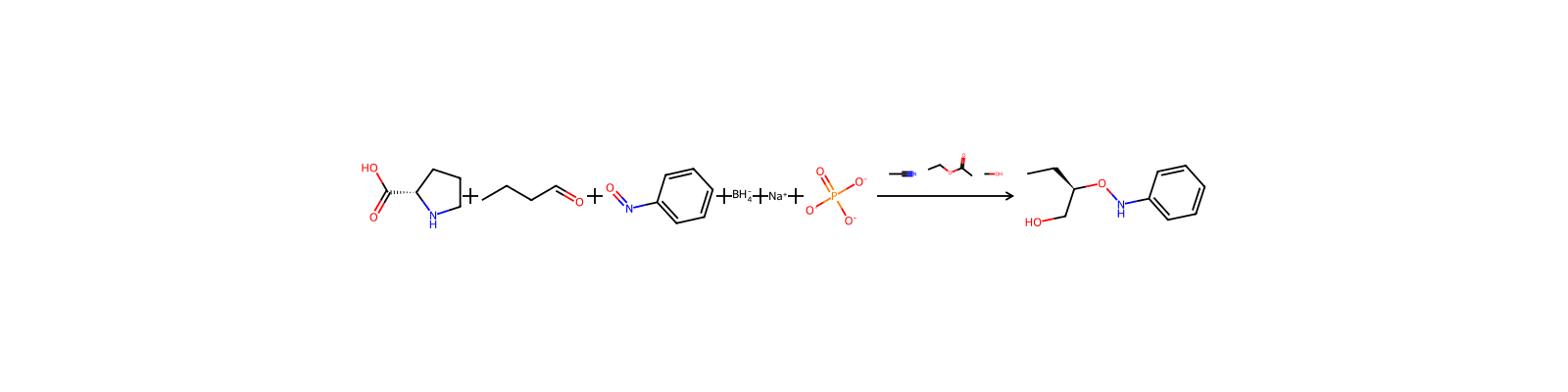
HRID 102459 reaction equation
HRID 102459As reactant
HRID 194121 reaction equation
HRID 194121As reactant
HRID 287865 reaction equation
HRID 287865As reactant
HRID 302101 reaction equation
HRID 302101As reactant
HRID 500053 reaction equation
HRID 500053As reactant
HRID 640816 reaction equation
HRID 640816As reactant
HRID 640828 reaction equation
HRID 640828As reactant
HRID 656556 reaction equation
HRID 656556As reactant
PreviousPage 1 of 7

Compound notes

On this pageBasic informationOverviewNames & identifiersPropertiesSafety & regulationChemistry & industryRelated reactionsCompound notes
InChIKey
NLRKCXQQSUWLCH-UHFFFAOYSA-N
SMILES
O=Nc1ccccc1
CAS DataBase Reference
586 · 586-96-9
FDA UNII
9 W9E8G2Z · ZI9W9E8G2Z
NIST Chemistry Reference
Benzene, nitroso-(586-96-9)
EPA Substance Registry System
Nitrosobenzene (586-96-9)
UNSPSC Code
12352100 · 12352100
NACRES
22 · NA.22
Symbol(GHS)
6 · GHS06
Signal word
Danger
Hazard statements
301 · H301-H312+H332
Precautionary statements
261 · P261-P264-P280-P301+P310-P302+P352+P312-P304+P340+P312
PPE
2 · Eyeshields, Faceshields, Gloves, type P2 (EN 143) respirator cartridges
Hazard Codes
T
Risk Statements
20 · 20/21-25
Safety Statements
26 · 26-36/37-45
RIDADR
2811 · UN 2811 6.1/PG 3
WGK Germany
3 · 3
RTECS
6497525 · DA6497525
F
9 · 9-23
TSCA
TSCA listed
HazardClass
6.1 · 6.1(b)
PackingGroup
III
HS Code
2904209090 · 2904209090
Storage Class
6.1 C · 6.1C - Combustible acute toxic Cat.3toxic compounds or compounds which causing chronic effects
Hazard Classifications
3 OralAcute · Acute Tox. 3 OralAcute Tox. 4 DermalAcute Tox. 4 Inhalation
Limited Quantities
5 kg · 5.0 kg (11 lbs) (solid)
Excepted Quantities
Max Inner Pack (30g or 30ml) and Max Outer Pack (1Kg or 1L)
Storage Class
6.1C - Combustible acute toxic Cat.3toxic compounds or compounds which causing chronic effects
packing_group
III
Hazard statements
H301-H312+H332
Limited Quantities
5.0 kg (11 lbs) (solid)
Excepted Quantities
Max Inner Pack (30g or 30ml) and Max Outer Pack (1Kg or 1L)
Hazard Classifications
Acute Tox. 3 OralAcute Tox. 4 DermalAcute Tox. 4 Inhalation
Precautionary statements
P261-P264-P280-P301+P310-P302+P352+P312-P304+P340+P312