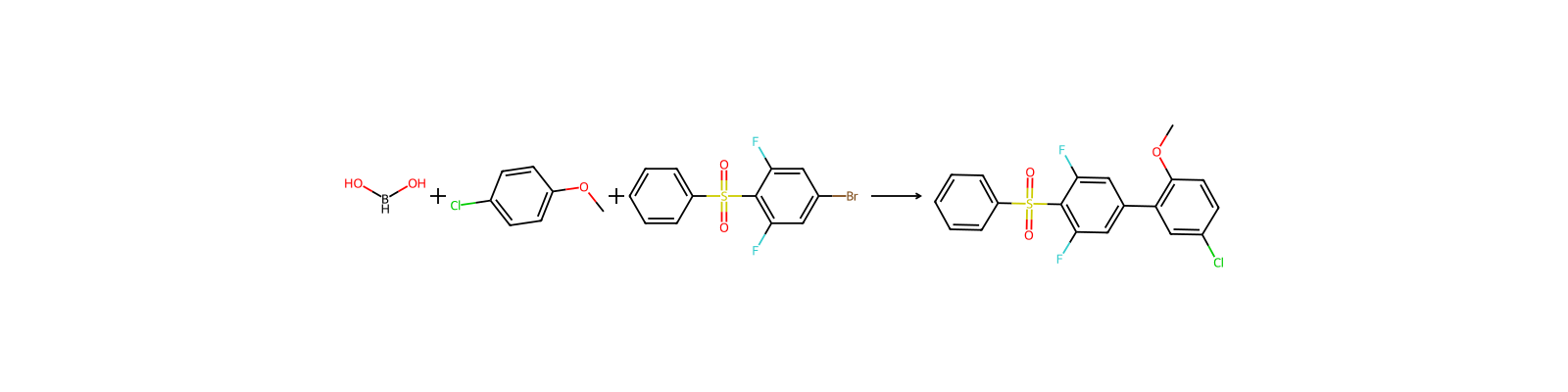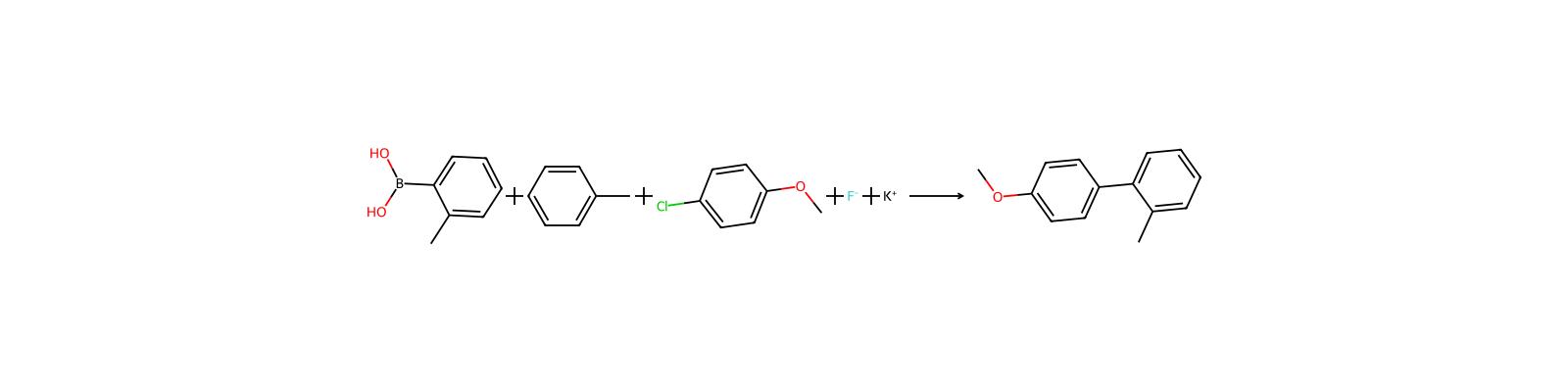
HRID 119722As reactant
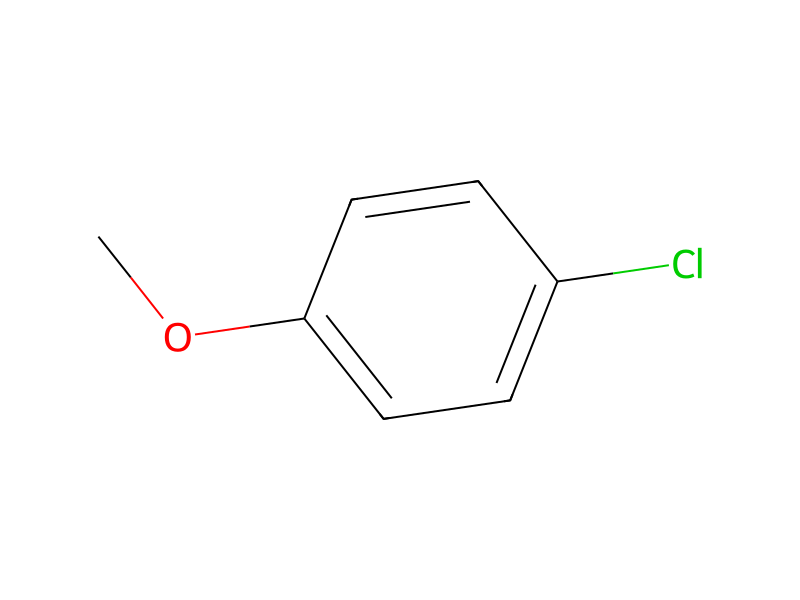
623-12-1COc1ccc(Cl)cc1YRGAYAGBVIXNAQ-UHFFFAOYSA-Nstructure in first source
623-12-1DTXSID1060764Safety information is for reference only and does not replace the supplier’s Safety Data Sheet (SDS), applicable regulations, or professional assessment.
This chemical does not meet GHS hazard criteria for 44.4% (4 of 9) of reports.
Warning
H302 (44.4%): Harmful if swallowed [Warning Acute toxicity, oral]
P261, P264, P264+P265, P270, P271, P280, P301+P317, P302+P352, P304+P340, P305+P351+P338, P317, P319, P321, P330, P332+P317, P337+P317, P362+P364, P403+P233, P405, and P501 (click each P-code to see the statement)
Aggregated GHS information provided per 9 reports by companies from 4 notifications to the ECHA C&L Inventory. Each notification may be associated with multiple companies.
Chemical: Benzene, 1-chloro-4-methoxy-
REACH registered substance: 4-chloroanisole (EC: 210-772-2)
Benzene, 1-chloro-4-methoxy-: Does not have an individual approval but may be used under an appropriate group standard
p-Chloroanisole
D*: Other compounds that may form peroxides
No amount of peroxides were found in new commerically available containers
Removal of Peroxides from Ethers with Cerous Hydroxide
Uses4-Chloroanisole was found to react with Cu (II)-smectite forming a blue clay-organic complex. 4-Chloroanisole was chosen as the main test substrate for the optimisation studies as it is electronically deactivated and thus resistant to oxidative addition and consequently very reluctant to enter a catalytic manifold.
General Description4-Chloroanisole is an electron-rich chloroarene. It undergoes Ullmann-type homocoupling catalyzed by in situ generated Pd colloids. Reaction of 4-chloroanisole with Cu(II)-smectite in n-hexane, carbon tetrachloride or dichloromethane has been studied. The nucleophilic photosubstitution reactions, photocyanation and photohydrolysis of 4-chloroanisole has been studied by time resolved spectroscopy.