Safety information is for reference only and does not replace the supplier’s Safety Data Sheet (SDS), applicable regulations, or professional assessment.
GHS classification
GHS Classification · 5 items
This chemical does not meet GHS hazard criteria for 6.1% (3 of 49) of reports.
Danger
H302 (79.6%): Harmful if swallowed [Warning Acute toxicity, oral]
P264, P264+P265, P270, P273, P280, P301+P317, P305+P354+P338, P317, P330, P391, and P501 (click each P-code to see the statement)
Aggregated GHS information provided per 49 reports by companies from 6 notifications to the ECHA C&L Inventory. Each notification may be associated with multiple companies.
Hazard information
Regulatory Information · 2 items
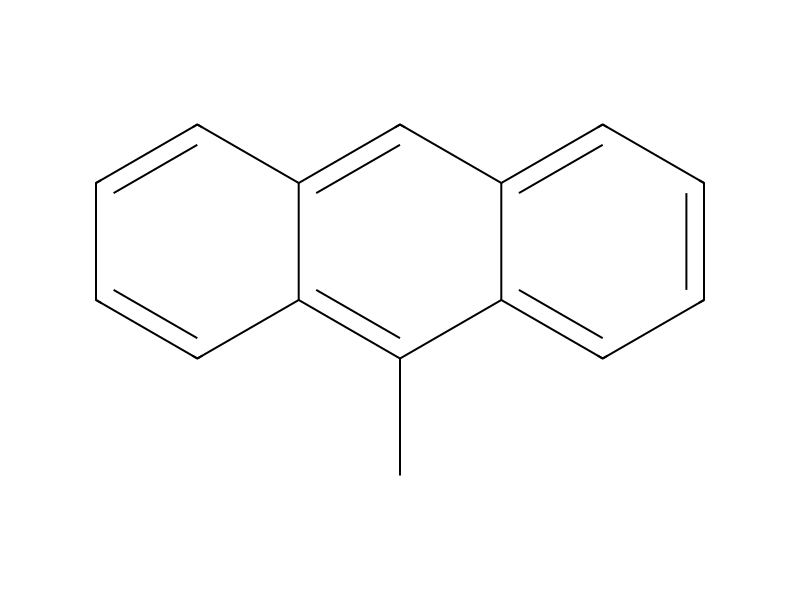
Chemical: Anthracene, 9-methyl-
Anthracene, 9-methyl-: Does not have an individual approval but may be used under an appropriate group standard
Hazards SummaryAn irritant that may cause serious eye injury; Harmful by ingestion; [Sigma-Aldrich MSDS] See POLYCYCLIC AROMATIC HYDROCARBONS.
Hazard Classes and CategoriesAcute Tox. 4 (79.6%)
Safety data
PPE
dust mask type N95 (US), Eyeshields, Gloves
wgk
3
tsca
TSCA listed
rtecs
CB0700000
ridadr
UN 3077 9/PG 3
hs_code
2902 90 00
risk_code
22-41-50/53
Signal word
Danger
Symbol(GHS)
GHS05,GHS07,GHS09
Chemistry & industry
Uses & manufacturing
General Manufacturing InformationAnthracene, 9-methyl-: ACTIVE
Applications
Description9-Methylanthracene is a reagent used to synthesize citalopram and to study the metabolism of Cunninghamella elegans and rat-liver microsomal.
Uses9-Methylanthracene used as a Intermediates for pharmaceutical and chemical research.