
HRID 248212As product

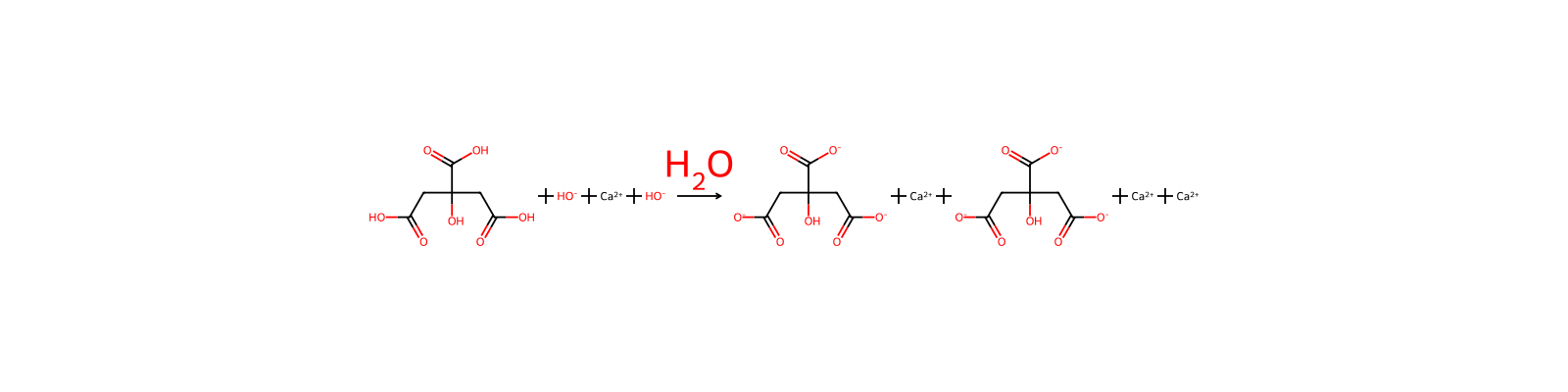
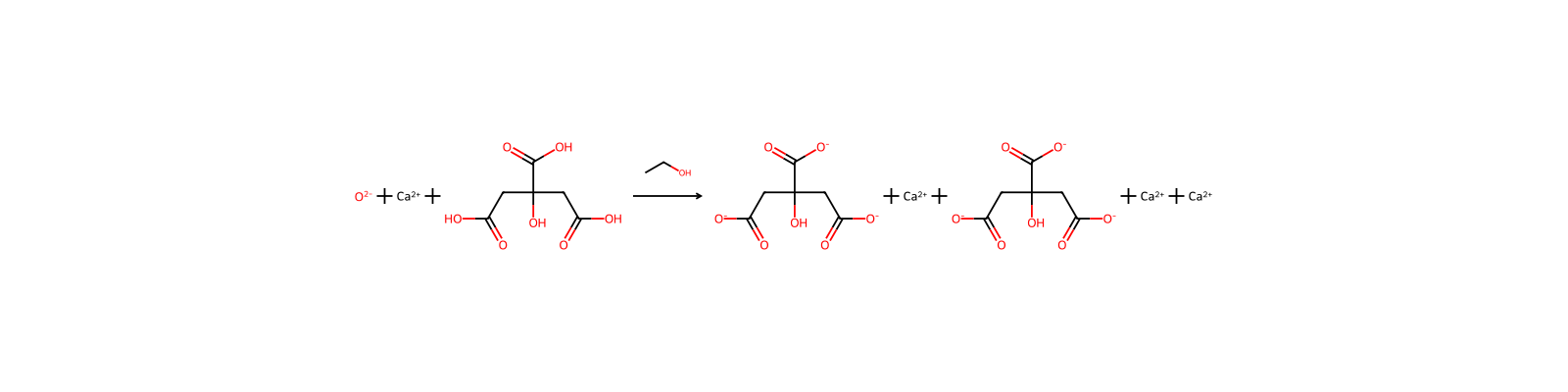
5785-44-4O=C([O-])CC(O)(CC(=O)[O-])C(=O)[O-].O=C([O-])CC(O)(CC(=O)[O-])C(=O)[O-].[Ca+2].[Ca+2].[Ca+2]FNAQSUUGMSOBHW-UHFFFAOYSA-HCalcium citrate is an organic calcium salt composed of calcium cations and citrate anions in a 3:2 ratio. It has a role as a flavouring agent, a nutraceutical, a food additive and a food preservative. It contains a citrate(3-).
5785-44-4、7693-13-2、813-94-5DTXSID7061148Other Uses -> Food Additives
Other Uses -> Food Additives
Cosmetic ingredients (Calcium Citrate) -> CIR (Cosmetic Ingredient Review)
Buffering
White powder, odorless. Insol in alcohol. Loses most of its water @ 100 °C and all @ 120 °C /Tetrahydrate/
Soluble in 1050 parts cold water; somewhat more sol in hot water; insoluble in alcohol. /Tetrahydate/
0.085 G & 0.096 G/100 CC WATER @ 18 °C & 23 °C
Odorless; loses most of its water @ 100 °C and all @ 120 °C; sol in 1050 parts cold water; somewhat more in hot water; insol in alc /Tetrahydrate/
Fine white powder
Tetrahydrate: White odorless solid; [HSDB]
Tetrahydrate: White odorless solid; [HSDB] White odorless crystalline powder; [MSDSonline]
WHITE NEEDLES /TETRAHYDRATE/
Safety information is for reference only and does not replace the supplier’s Safety Data Sheet (SDS), applicable regulations, or professional assessment.
This chemical does not meet GHS hazard criteria for 99% (97 of 98) of all reports.
Not Classified
Aggregated GHS information provided per 98 reports by companies from 2 notifications to the ECHA C&L Inventory.
Chemical: 1,2,3-Propanetricarboxylic acid, 2-hydroxy-, calcium salt (2:3)
Chemical: 1,2,3-Propanetricarboxylic acid, 2-hydroxy-, calcium salt
REACH registered substance: Tricalcium dicitrate (EC: 212-391-7)
Calcium citrate: Does not have an individual approval but may be used under an appropriate group standard
IMAP assessments - 1,2,3-Propanetricarboxylic acid, 2-hydroxy-, calcium salt (2:3): Human health tier I assessment
IMAP assessments - 1,2,3-Propanetricarboxylic acid, 2-hydroxy-, calcium salt: Human health tier I assessment
Generally regarded as safe (GRAS) for use in foods; [HSDB] See Tricalcium citrate. See Calcium.
Used in food and generally recognized as safe (GRAS); [HSDB] May cause irritation; Poses little or no danger to human health; [MSDSonline] See Calcium citrate. See Calcium.
Substance added directly to human food affirmed as generally recognized as safe (GRAS).
Calcium citrate used as a general purpose food additive is generally recognized as safe when used in accordance with good manufacturing or feeding practice.
Calcium citrate used as a nutrient and/or dietary supplement is generally recognized as safe when used in accordance with good manufacturing or feeding practice.
A - Alimentary tract and metabolism
QA - Alimentary tract and metabolism
Calcium citrate increases plasma calcium levels. This reduces calcium flux from osteocyte activity by reducing the secretion of parathyroid hormone (PTH). Calcium does this by stimulating a G-protein coupled calcium receptor on the surface of parathyroid cells. The reduction in calcium flux increases the amount of calcium deposited in bone resulting in an increase in bone mineral density. The reduction in PTH secretion also reduces the amount of vitamin D metabolized to its active form, calcidiol. Since calcidiol increases the expression of calcium dependent ATPases and transient receptor potential cation channel subfamily V member 6 (TRPV6) both of which are involved in calcium uptake from the gut, a reduction in calcidiol results in less calcium absorption. Additionally, TRPV5, the channel responsible for calcium reabsorption in the kidney, is downregulated when PTH secretion is reduced thus increasing calcium excretion via the kidneys. Another hormone, calitonin, is likely involved in the reduction of bone resorption during periods of high plasma calcium.
Substances used in the processing or storage of foods or animal feed including ANTIOXIDANTS; FOOD PRESERVATIVES; FOOD COLORING AGENTS; FLAVORING AGENTS; ANTI-INFECTIVE AGENTS; EXCIPIENTS and other similarly used substances. Many of the same substances are used as PHARMACEUTIC AIDS.
The percentage of calcium absorbed varies inversely with intake. Tmax of about 3.5-5h varying with formulation.
Cleared via the kidneys but largely reabsorbed (98-99%) under normal conditions.




CHEMBL2106123CHEBI:190513White powder /Tetrahydrate/
Calcium citrate used as a sequestrant is generally recognized as safe when used in accordance with good manufacturing or feeding practice.
Residues of calcium citrate are exempted from the requirement of a tolerance when used as a solid diluent, carrier in accordance with good agricultural practices as inert (or occasionally active) ingredients in pesticide formulations applied to growing crops or to raw agricultural commodities after harvest.
SRP: At the time of review, criteria for land treatment or burial (sanitary landfill) disposal practices are subject to significant revision. Prior to implementing land disposal of waste residue (including waste sludge), consult with environmental regulatory agencies for guidance on acceptable disposal practices.
SRP: At the time of review, criteria for land treatment or burial (sanitary landfill) disposal practices are subject to significant revision. Prior to implementing land disposal of waste residue (including waste sludge), consult with environmental regulatory agencies for guidance on acceptable disposal practices.
Residues of calcium citrate are exempted from the requirement of a tolerance when used as a solid diluent, carrier in accordance with good agricultural practices as inert (or occasionally active) ingredients in pesticide formulations applied to growing crops or to raw agricultural commodities after harvest.
Substance added directly to human food affirmed as generally recognized as safe (GRAS).
Calcium citrate used as a general purpose food additive is generally recognized as safe when used in accordance with good manufacturing or feeding practice.
Calcium citrate used as a nutrient and/or dietary supplement is generally recognized as safe when used in accordance with good manufacturing or feeding practice.
Calcium citrate used as a sequestrant is generally recognized as safe when used in accordance with good manufacturing or feeding practice.
Residues of calcium citrate are exempted from the requirement of a tolerance when used as a solid diluent, carrier in accordance with good agricultural practices as inert (or occasionally active) ingredients in pesticide formulations applied to growing crops or to raw agricultural commodities after harvest.
CIR ingredient: Calcium Citrate
Used as emulsifier, sequestering agent, and acidity regulator in foods; Also used to make citric acid, remove sulfur compounds from waste gases, and to treat scours in mammals; [HSDB]
Used to make citric acid and other citrates and to improve the baking properties of flour; Also used as dietary supplement, food additive (sequestrant, buffer, and firming agent), and medication; [HSDB]
DIETARY SUPPLEMENT FOOD ADDITIVE /TETRAHYDRATE/
Buffer and firming agent in foods /Tetrahydrate/
CHEM INT (CAPTIVELY) FOR CITRIC ACID; EMULSIFIER & SEQUESTERING AGENT IN FOODS
(1972) PROBABLY GREATER THAN 4.54X10+5 GRAMS
(1976) PROBABLY GREATER THAN 2.27X10+6 GRAMS
MOLD FERMENTATION OF SUGAR SOLUTIONS (OR CANDIDA YEAST FERMENTATION OF NORMAL PARAFFINS) FOLLOWED BY REACTION OF THE RESULTING CITRIC ACID WITH HIGH PURITY CALCIUM HYDROXIDE IN WATER
BY-PRODUCT IN MFR OF CITRIC ACID. /TETRAHYDRATE/
... from citrus fruit: Cole, US patent 2,389,766 (1945 to California Fruit Growers Exchange). Review: Rudy, Pharmazie 4: 393 (1949).
A BY-PRODUCT IN THE MFR OF CITRIC ACID. /TETRAHYDRATE/
Grades: Reagent, technical, FCC
Grades: reagent; technical; FCC. /Tetrahydrate/
EPA Safer Chemical Functional Use Classes -> Processing Aids and Additives
Safer Chemical Classes -> Green circle - The chemical has been verified to be of low concern
Food additives
Food Additives -> ACIDITY_REGULATOR; FIRMING_AGENT; SEQUESTRANT -> JECFA Functional Classes
Cosmetics -> Buffering
1,2,3-Propanetricarboxylic acid, 2-hydroxy-, calcium salt (2:3): ACTIVE
REPORTED USES: ARTIFICIALLY SWEETENED JELLIES, PRESERVES & JAMS CAN...CONTAIN CALCIUM CITRATE .../IT/ IS PERMITTED FOR FIRMING PEPPERS, POTATOES, TOMATOES & LIMA BEANS DURING PROCESSING.
Available commercially as the tetrahydrate.
UsesCalcium citrate tetrahydrate is mainly used for Calcium supplements.
UsesIn foods as calcium fortifier; as anticaking agent in dry mixes.
UsesCalcium citrate tetrahydrate may be used as raw material in the preparation of nanoparticle with the nominal composition Ca0.8 Ba0.2 Ti03 :Pr3+, via sol-gel process. It may be employed as carbon source in a simple and effective carbonization method to prepare porous carbon without any activation process. It is suitable for use in the preparation of bovine serum albumin (BSA) nanoparticles.
General DescriptionThermal decomposition of calcium citrate tetrahydrate in dynamic air or dry nitrogen has been investigated by by TG, DTA and DSC.