HomeMCPSkillsWorkbenchOpenChem
HomeWorkbenchNotificationsMe
llms.txt · skill.md · MCP GuidePrivacy Policy · Terms of Service · Supportv1.8.5
  1. Home
  2. /Compound

Phenylhydroquinone

HCID 14116
New reaction
Print
Basic informationOverviewNames & identifiersPropertiesSafety & regulationChemistry & industryRelated reactionsCompound notes
Substructure searchFind similar structures

Basic information

CAS
1079-21-6
Standard SMILES
Oc1ccc(O)c(-c2ccccc2)c1
InChIKey
XCZKKZXWDBOGPA-UHFFFAOYSA-N
Molecular formula
C12H10O2
Average molar mass
186.21 g/mol
Monoisotopic mass
186.06807956

Overview

major metabolite of o-phenylphenol; cleaves DNA; structure given in first source

Names & identifiers

Preferred name
Phenylhydroquinone
IUPAC
2-phenylbenzene-1,4-diol
English name
Phenylhydroquinone
Molecular formula
C12H10O2
Molecular weight
186.21

Names & synonyms

Phenylhydroquinone1079-21-62-Phenylhydroquinone[1,1'-Biphenyl]-2,5-diol2,5-DihydroxybiphenylBiphenyl-2,5-diolHydroquinone, phenyl-1,4-Benzenediol, phenyl-O-Phenylhydroquinone(1,1'-Biphenyl)-2,5-diolGPT41T80FJDTXSID7051553
Show more names
Phenylhydroquinolphenyl-hydroquinon
NSC-407988RefChem:861747DTXCID1030105214-091-12-phenylbenzene-1,4-diol2,5-BIPHENYLDIOLTFIIH Modulator-122-Phenyl-1,4-benzenediol

Database identifiers

CAS
1079-21-6
PubChem CID
14116
DTXSID
DTXSID7051553
ChEMBL
CHEMBL510600
UNII
GPT41T80FJ
EC Number
214-091-1
Nikkaji
J34.952F

Properties

Computed structural properties

XLogP
3.2
Topological polar surface area
40.5 Ų
Hydrogen bond donors
2
Hydrogen bond acceptors
2
Rotatable bonds
1
Heavy atoms
14
Formal charge
0
Complexity
175

Experimental & physicochemical properties

Endocrine DisruptorsPotential endocrine disrupting compound

Physicochemical properties

Melting point
98 · 98-100 °C(lit.)
Boiling point
280.69 °C · 280.69°C (rough estimate)
Density
1.228 · 1.228
refractive index
1.601 · 1.6010 (estimate)
storage temp.
Keep in dark place,Inert atmosphere,Room temperature
solubility
Chloroform (Slightly), DMSO (Slightly)
form
Solid
pka
10.46 · 10.46±0.18(Predicted)
color
Needles from EtOH (aq)
BRN
1949429 · 1949429
InChI
1S/C12H10O2/c13-10-6-7-12(14)11(8-10)9-4-2-1-3-5-9/h1-8,13-14H
InChIKey
XCZKKZXWDBOGPA-UHFFFAOYSA-N

Safety & regulation

Safety information is for reference only and does not replace the supplier’s Safety Data Sheet (SDS), applicable regulations, or professional assessment.

GHS classification

GHS Classification · 4 items

Warning

H315 (90.9%): Causes skin irritation [Warning Skin corrosion/irritation]

P261, P264, P264+P265, P271, P280, P302+P352, P304+P340, P305+P351+P338, P319, P321, P332+P317, P337+P317, P362+P364, P403+P233, P405, and P501 (click each P-code to see the statement)

Aggregated GHS information provided per 44 reports by companies from 4 notifications to the ECHA C&L Inventory. Each notification may be associated with multiple companies.

Hazard information

Hazard Classes and CategoriesSkin Irrit. 2 (90.9%)

Safety data

F
1-10
PPE
dust mask type N95 (US), Eyeshields, Gloves
wgk
3
tsca
TSCA listed
rtecs
DV4550000
hs_code
2907299090
Toxicity
dnd-esc 10 mmol/L CBINA8 76,163,90
risk_code
36/37/38
Signal word
Warning
Symbol(GHS)
GHS07
hazard_code
Xi
safety_code
26-36
Storage Class
11 - Combustible Solids
target organs
Respiratory system
Hazard statements
H315-H319-H335

Chemistry & industry

Pharmacology

Metabolism/Metabolites2,5-dihydroxybiphenyl is a known human metabolite of 2-phenylphenol.

Uses & manufacturing

General Manufacturing Information[1,1'-Biphenyl]-2,5-diol: ACTIVE

Applications

Uses2-Phenylhydroquinone (cas# 1079-21-6) is a compound useful in organic synthesis.

Upstream & downstream products

Upstream raw materials

3-Bromo-4-hydroxydiphenyl

Related reactions

3 records
New reaction record
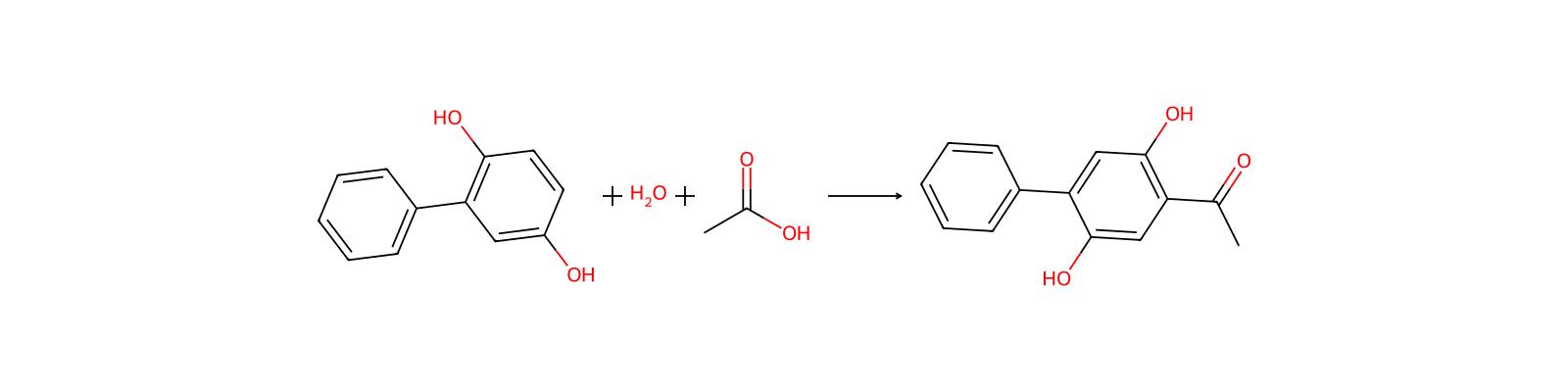
HRID 1030815As reactant
HRID 1758024As reactant
HRID 2166478As product

Compound notes

On this pageBasic informationOverviewNames & identifiersPropertiesSafety & regulationChemistry & industryRelated reactionsCompound notes
SMILES
Oc1ccc(O)c(c1)-c2ccccc2
CAS DataBase Reference
1079 · 1079-21-6(CAS DataBase Reference)
EWG's Food Scores
1 · 1
FDA UNII
41 T80FJ · GPT41T80FJ
EPA Substance Registry System
1 · [1,1'-Biphenyl]-2,5-diol (1079-21-6)
UNSPSC Code
12352100 · 12352100
NACRES
22 · NA.22
Symbol(GHS)
7 · GHS07
Signal word
Warning
Hazard statements
315 · H315-H319-H335
Precautionary statements
261 · P261-P264-P271-P280-P302+P352-P305+P351+P338
target organs
Respiratory system
PPE
95 · dust mask type N95 (US), Eyeshields, Gloves
Hazard Codes
Xi
Risk Statements
36 · 36/37/38
Safety Statements
26 · 26-36
WGK Germany
3 · 3
RTECS
4550000 · DV4550000
F
1 · 1-10
TSCA
TSCA listed
HS Code
2907299090 · 2907299090
Storage Class
11 · 11 - Combustible Solids
Hazard Classifications
2 Skin · Eye Irrit. 2Skin Irrit. 2STOT SE 3
Toxicity
10 mmol/L · dnd-esc 10 mmol/L CBINA8 76,163,90
Hazard Classifications
Eye Irrit. 2Skin Irrit. 2STOT SE 3
Precautionary statements
P261-P264-P271-P280-P302+P352-P305+P351+P338