
uspto-grants-2003_11 · 10.6084/m9.figshare.5104873.v1 · US06652901B2
查看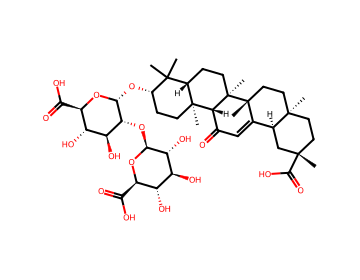
(2S,3S,4S,5R,6R)-6-[(2S,3R,4S,5S,6S)-2-[[(3S,4aR,6aR,6bS,8aS,11S,12aR,14aR,14bS)-11-carboxy-4,4,6a,6b,8a,11,14b-heptamethyl-14-oxo-2,3,4a,5,6,7,8,9,10,12,12a,14a-dodecahydro-1H-picen-3-yl]oxy]-6-carboxy-4,5-dihydroxyoxan-3-yl]oxy-3,4,5-trihydroxyoxane-2-carboxylic acid
IDENTITY
COMPUTED
PROPERTIES
2.8
log Kow = 2.80
Intensely sweet taste
The sweetness potency of glycyrrhizin is about 33X (10% sucrose solution sweetness equivalence).
Crystals from glacial acetic acid
PLATES OR PRISMS FROM ACETIC ACID
Easily soluble in hot water
Freely sol in hot water, alcohol; practically insol in ether
SLIGHTLY SOL IN ETHER
Decomposes at 200 ºC
220
220 °C decomposes
Specific optical rotation: +46.2 deg @ 17 °C/D (alcohol, 1.5%)
Solid with intensely sweet taste; [Merck Index] Crystalline plates or prisms; [MSDSonline]
288.9 Ų [M+H]+ [CCS Type: DT; Buffer gas: N2; Ionization: ESI+; Dataset: TOXCAST; Source Identifier: DTXSID8047006];286.8 Ų [M+H]+ [CCS Type: DT; Buffer gas: N2; Ionization: ESI+; Dataset: TOXCAST; Source Identifier: DTXSID5047243];294.4 Ų [M+Na]+ [CCS Type: DT; Buffer gas: N2; Ionization: ESI+; Dataset: TOXCAST; Source Identifier: DTXSID5047243];282.6 Ų [M-H]- [CCS Type: DT; Buffer gas: N2; Ionization: ESI-; Dataset: TOXCAST; Source Identifier: DTXSID5047243];296.2 Ų [M+Na]+ [CCS Type: DT; Buffer gas: N2; Ionization: ESI+; Dataset: TOXCAST; Source Identifier: DTXSID8047006];281.7 Ų [M-H]- [CCS Type: DT; Buffer gas: N2; Ionization: ESI-; Dataset: TOXCAST; Source Identifier: DTXSID8047006]
ON HYDROLYSIS IT YIELDS GLYCYRRHETIC ACID & 2 MOLES OF GLUCURONIC ACID
STRUCTURALLY & CHEMICALLY SIMILAR TO ALDOSTERONE & DESOXYCORTICOSTERONE
STRUCTURALLY SIMILAR TO MANY CYCLOPENTANOPHENANTHRENE STEROIDS
Needles from 75% aqueous ethanol, decomp 212-217 °C. Specific optical rotation: +46.9 deg @ 20 °C/D (c= 1.5 in 40% ethanol). UV max: 248 nm (e= 11400). Sol in ammonia water, glacial acetic acid. /Ammonium glycycrrhizinate pentahydrate/
GHS
This chemical does not meet GHS hazard criteria for 100% (93 of 93) of all reports.
Not Classified;Reported as not meeting GHS hazard criteria by 93 of 93 companies. For more detailed information, please visit ECHA C&L website.
Aggregated GHS information provided per 93 reports by companies from 1 notifications to the ECHA C&L Inventory.;Reported as not meeting GHS hazard criteria per 93 of 93 reports by companies.;There are 0 notifications provided by 0 of 93 reports by companies with hazard statement code(s).;Information may vary between notifications depending on impurities, additives, and other factors. The percentage value in parenthesis indicates the notified classification ratio from companies that provide hazard codes. Only hazard codes with percentage values above 10% are shown. For more detailed information, please visit ECHA C&L website.
HAZARDS
Chemical: .alpha.-D-Glucopyranosiduronic acid, (3.beta.,20.beta.)-20-carboxy-11-oxo-30-norolean-12-en-3-yl 2-O-.beta.-D-glucopyranuronosyl-
Commission Regulation (EC) No 1565/2000 (Repealed by Com. Implementing Reg. (EU) No 872/2012)
.alpha.-D-Glucopyranosiduronic acid, (3.beta.,20.beta.)-20-carboxy-11-oxo-30-norolean-12-en-3-yl 2-O-.beta.-D-glucopyranuronosyl-: Does not have an individual approval but may be used under an appropriate group standard
Emergency treatment: Liquorice; Hypokalemia, hypernatremia, and water retention are primary problems associated with chronic liquorice ingestion. Glycyrrhizin is the major active compound (triterpene glycoside) in licorice root. It has been used as an herbal remedy for ulcers, inflammation, and viral infections. After ingestion and hydrolysis, the compound inhibits an enzyme that results in increased serum cortisol levels. [Haddad, p. 485] No adverse effects in the majority of adults expected at doses <100 mg/day; A high intake of liquorice confectionery or herbal tea may exceed 100 mg/day; [JECFA]
Essential oils, oleoresins (solvent-free), and natural extractives (including distillates) that are generally recognized as safe for their intended use within the meaning of section 409 of the act. Licorice is included on this list. /Licorice/
Substance added directly to human food affirmed as generally recognized as safe (GRAS). /Licorice and licorice derivatives/
Not Classified
SAFETY
SRP: At the time of review, criteria for land treatment or burial (sanitary landfill) disposal practices are subject to significant revision. Prior to implementing land disposal of waste residue (including waste sludge), consult with environmental regulatory agencies for guidance on acceptable disposal practices.
TOXICITY
ADDITION OF 10-6 M GLYCYRRHETINIC ACID IN PRESENCE OF 10-8 M ALDOSTERONE STIMULATED SHORT-CIRCUIT SIGNIFICANTLY AS COMPARED WITH CONTROL SKIN TREATED WITH ALDOSTERONE ALONE.
ADMIN OF GLYCYRRHIZIN DEPRESSED EFFECT OF INJECTED CORTISONE ON GLYCOGEN STORAGE AND ENHANCED IMMUNOSUPPRESSIVE ACTION OF CORTISONE.
The pharmacokinetics of total and free prednisolone (PSL) in six healthy men, with or without pretreatment with oral glycyrrhizin (GL), was investigated to confirm whether oral administration of GL influences the metabolism of prednisolone in man. Each subject received an intravenous administration of 0.096 mg/kg of prednisolone hemisuccinate (PSL-HS) with or without pretreatment with 50 mg of oral glycyrrhizin four times. Blood samples were taken from a peripheral vein at 5, 10, 15, 30, 45 min and 1, 1.5, 2, 3, 4, 6, 8, 10, 12 and 24 hr after the start of prednisolone-HS infusion. The concentrations of total prednisolone in plasma were analyzed by high-performance liquid chromatography, and the free prednisolone was measured by an isocolloidosmolar equilibrium dialysis method. The pharmacokinetic parameters of prednisolone were determined by non-compartment analysis. Oral administration of glycyrrhizin was found to significantly increase the concentrations of total prednisolone at 6, 8 hr, and of free prednisolone at 4, 6 and 8 hr after prednisolone-hemisuccinate infusion. Moreover, oral administration of glycyrrhizin was also found to modify the pharmacokinetics of both total and free prednisolone. After oral administration of glycyrrhizin, the area under the curve (AUC) was significantly increased, the total plasma clearance (CL) was significantly decreased, and the mean residence time (MRT) was significantly prolonged. However, the volume of distribution (Vdss) showed no evident change. This suggests that oral administration of glycyrrhizin increases the plasma prednisolone concentrations and influences its pharmacokinetics by inhibiting its metabolism, but not by affecting its distribution.
To clarify whether glycyrrhizin, the aqueous extract of licorice root and a drug for treatment of chronic active hepatitis, prevents the development of hepatic injury induced by carbon tetrachloride, allyl formate, and endotoxin, the present study was undertaken in rats. The treatment with glycyrrhizin 20 hr before carbon tetrachloride administration protected the development of the pericentral hepatocellular necrosis. Glycyrrhizin treatment 2 hr prior to the administration of allyl formate also inhibited the development of the periportal hepatocellular necrosis. However, glycyrrhizin did not protect the development of endotoxin-induced focal and random hepatocellular necrosis. These experimental results suggest that glycyrrhizin has no protective effect on hepatic injury following sinusoidal circulatory disturbance as seen in the case of endotoxin and that glycyrrhizin can protect against hepatotoxicity induced by the direct action on the hepatocytes due to hepatotoxins, such as carbon tetrachloride and allyl formate.
To investigate the effects of Potenlini on nuclear factor-kappa B (NF-kappa B) binding activity in the livers of animals models with liver cirrhosis, and to delineate the molecular mechanism of the bioactivities of Potenlini. METHODS: Male SD rats were randomly allocated into a normal control group, a model control group, and a Potenlini group. Rats in the latter two groups were treated with CCl4 and Ethanol solution in order to induce chronic liver injury. Rats in Potenlini group were given Potenlini treatment at the same time. All rats were killed at the 9th week after CCl4 administration. Serum and liver specimens were collected, serum ALT activities and histological findings were assessed. Nuclear extracts from liver tissues were prepared and gel retardation assays were performed for the evaluation of NF-kappa B activity. RESULTS: (1) Serum ALT levels were significantly reduced in rats treated with Potenlini compared with those in rats of the model control group, which had dramatically increased ALT levels. (2) Histologically, liver steatosis and fibrosis were severe in the rats of the model group, but were significantly improved in rats of the Potenlini group. (3) NF-kappa B binding activity was markedly increased in the liver specimens taken from the rats of the model control group in comparison with the binding of normal livers, but the binding levels were nearly normal in the livers of the Potenlini group. CONCLUSION: Potenlini can inhibit the NF-kappa B binding activity in CCl4 and ethanol induced chronic liver injury, and that may partially be the mechanism by which Potenlini protects liver from hepatotoxin-induced liver injury and cirrhosis.
Safe in the present practices of use and concentration. Ingredient, concentration, and use information are available in documents discoverable at https://cir-reports.cir-safety.org
14 VOLUNTEERS ATE DAILY DOSES OF 100-200 G LIQUORICE, EQUIV TO O.7-1.4 G GLYCYRRHIZINIC ACID FOR 1-4 WK. PLASMA K CONCN FELL; PLASMA RENIN & URINARY ALDOSTERONE DEPPRESSED IN ALL SUBJECTS.
...TOXICITY OF THIS COMPOUND & ITS DERIVATIVES BY MOUTH IS PRESUMED TO BE LOW. /GLYCYRRHIZA AND ITS DERIVATIVES/
POTENTIAL SERIOUS METABOLIC EFFECTS MAY OCCUR IN SOME PEOPLE WHO EAT MODEST AMT OF LIQUORICE DAILY FOR LESS THAN A WEEK.
GLYCYRRHIZIC ACID COMPLETELY INHIBITED GROWTH & CYTOPATHIC EFFECTS OF VACCINIA, HERPES SIMPLEX TYPE 1, NEWCASTLE DISEASE & VESICULAR STOMATITIS VIRUSES IN CULTURES OF HUMAN ANEUPLOID HEP2 CELLS.
For more Human Toxicity Excerpts (Complete) data for GLYCYRRHIZIN (10 total), please visit the HSDB record page.
Drug-Induced Liver Injury Severity and Toxicity (DILIst)
Glycyrrhizin
DILI Positive
DOI:10.1016/j.drudis.2019.09.022
IN 10-WK DIETARY EXPOSURE, BODY WT GAIN OF RATS SHOWED DOSE-RESPONSE EFFECT. SIGNIFICANT INCR IN DEAD IMPLANTS DURING 1ST WK OF BREEDING AFTER 40,000 PPM IN DIET OF RATS.
GLYCYRRHIZIN PROMOTED SODIUM RETENTION BY INHIBITING CORTICOIDS IN LIVER AND INHIBITED METABOLISM OF PROGESTERONE AND ALDOSTERONE.
GLYCYRRHETINIC ACID & ITS DERIVATIVES INHIBITED 5BETA-REDUCTION OF CORTISOL, ALDOSTERONE, & TESTOSTERONE BY RAT LIVER PREPN IN VITRO TO GREATER EXTENT THAN 5ALPHA-REDUCTION.
A single parenteral and oral administration of ammonium glycyrrhizinate in rat and mice experiments showed that the compound is related to practically nontoxic drugs. Its repeated administration (30 times) into the stomach in a maximum daily therapeutic dose (7 mg/kg) and in a four-fold dose (28 mg/kg) did not cause signs of intoxication, essential changes in the hematological and integral parameters, shifts in the activity of serum enzymes, morphological changes in the cell structures of the internal organs. Administration of the drug in a dose of 28 mg/kg for a second time led to changes in the activity of some enzymes in the brain, the development of parenchymatous dystrophy of the liver which changed to acidophilic necrosis attended with signs of regeneration. Under conditions of a subacute experiment the maximum daily therapeutic dose of ammonium glycyrrhizinate may be considered practically nontoxic.
For more Non-Human Toxicity Excerpts (Complete) data for GLYCYRRHIZIN (6 total), please visit the HSDB record page.
REGULATORY
Chemical: .alpha.-D-Glucopyranosiduronic acid, (3.beta.,20.beta.)-20-carboxy-11-oxo-30-norolean-12-en-3-yl 2-O-.beta.-D-glucopyranuronosyl-
Commission Regulation (EC) No 1565/2000 (Repealed by Com. Implementing Reg. (EU) No 872/2012)
.alpha.-D-Glucopyranosiduronic acid, (3.beta.,20.beta.)-20-carboxy-11-oxo-30-norolean-12-en-3-yl 2-O-.beta.-D-glucopyranuronosyl-: Does not have an individual approval but may be used under an appropriate group standard
Essential oils, oleoresins (solvent-free), and natural extractives (including distillates) that are generally recognized as safe for their intended use within the meaning of section 409 of the act. Licorice is included on this list. /Licorice/
Substance added directly to human food affirmed as generally recognized as safe (GRAS). /Licorice and licorice derivatives/
PHARMACOLOGY
A - Alimentary tract and metabolism;A05 - Bile and liver therapy;A05B - Liver therapy, lipotropics;A05BA - Liver therapy;A05BA08 - Glycyrrhizic acid
QA - Alimentary tract and metabolism;QA05 - Bile and liver therapy;QA05B - Liver therapy, lipotropics;QA05BA - Liver therapy;QA05BA08 - Glycyrrhizic acid
Glycyrrhizic acid does not bind to any plasma proteins as it is not absorbed systemically. On the other hand, its main active metabolite, glycyrrhetinic acid presents a very large binding to serum proteins such as albumin.
Glycyrrhizic acid was reported to present antiallergic, antiviral and anti-inflammatory activities as well as improvements in glucose tolerance. The effect of glycyrrhizic acid in metabolic syndrome generates a significant decrease in blood glucose, fasting blood glucose and mean serum insulin concentration.
Glycyrrhizic acid can be found in the alpha and beta forms. The alpha form is predominant in the liver and duodenum and thus, it is thought that the anti-inflammatory liver effect of this drug are mainly due to the action of this isomer. Glycyrrhizic acid anti-inflammatory effect is generated via suppression of TNF alpha and caspase 3. It also inhibits the translocation of NFkB into the nuclei and conjugates free radicals. Some studies have shown a glycyrrhizic-driven inhibition of CD4+ T cell proliferation via JNK, ERK and PI3K/AKT. The antiviral activity of glycyrrhizic acid includes the inhibition of viral replication and immune regulation. The antiviral activity of glycyrrhizic acid seems to be of a broad spectrum and be able to cover several different viral types such as vaccinia virus, herpes simplex virus, Newcastle disease virus and vesicular stomatitis virus. The effect of glycyrrhizic acid on metabolism is thought to be related to its inhibitory activity towards 11-beta-hydroxysteroid dehydrogenase type 1 which in turn decreases the activity of hexose-6-phosphate dehydrogenase. On the other hand, some studies have shown a potential lipoprotein lipase induction in non-hepatic tissues and thus it is suggested to enhance dyslipidemic conditions.
GLYCYRRHIZIC ACID & ITS DERIVATIVES SHOWED PRONOUNCED ANTIINFLAMMATORY ACTION, INHIBITED DEVELOPMENT OF HISTAMINE-, SEROTONIN-, BRADKININ-, & FORMALIN-INDUCED EDEMA, & DECR VASCULAR PERMEABILITY.
Depending on the dose, the second elimination phase in humans has a half-life of 3.5 hours.
When orally administered, glycyrrhizic acid is almost completely hydrolyzed by intestinal bacteria for the formation of glycyrrhetinic acid, which is an active metabolite and can enter systemic circulation, and two molecules of glucuronic acid. This metabolite is transported and taken in the liver for its metabolization to form glucuronide and sulfate conjugates.
BOLUS INJECTION OF GLYCYRRHIZIN GIVEN RATS IN PORTAL VEIN, GAVE RISE IN BLOOD LEVEL OF SUBSTANCE WHICH APPEARS TO BE GLUCURONIC ACID CONJUGATE FORMED AS METABOLITE OF GLYCYRRHETINIC ACID.
Substances that reduce or suppress INFLAMMATION.
Glycyrrhizic acid is mainly absorbed after presystemic hydrolysis and formation of glycyrrhetinic acid. Therefore, after oral administration of a dose of 100 mg of glycyrrhizic acid, this major metabolite appears in plasma in a concentration of 200 ng/ml while glycyrrhizic acid cannot be found. The finding of a minimal amount of glycyrrhizic acid in urine suggests the existence of a partial absorption in the gastrointestinal tract.
Glycyrrhizic acid presents a biphasic elimination from the central compartment with a dose-dependent second elimination phase. The majority of the administered dose is eliminated by the bile in which glycyrrhizic acid can be eliminated unchanged and undergoes enterohepatic cycling. On the other hand, the major metabolite, glycyrrhetinic acid, forms glucuronide and sulfate conjugates. These conjugates are efficiently transported into the bile and duodenum where commensal bacteria hydrolizes the conjugate for the formation of glycyrrhetinic acid and further reabsorption. This reabsorption behavior seems to be related to the activity of 3-alpha-hydroxysteroid dehydrogenase which transports very efficiently the metabolite from the plasma to the bile. About 1.1-2.5% of the administered dose of glycyrrhizic acid can be found in urine which corresponds to the minimal cycling and reabsorption of this compound.
The apparent volume of distribution of glycyrrhizic acid either in the central compartment and in steady-state are in the range of 37-64 ml/kg and 59-98 ml/kg, respectively.
The constant reabsorption of glycyrrhetic acid in the duodenum causes a delay in the terminal plasma clearance. The reported total body clearance of glycyrrhizic acid is reported to be in the range of 16-25 ml.kg/h.
GLYCYRRHIZIN WAS ABSORBED IN RAT SMALL INTESTINE; THERE WAS NO DETECTABLE AMT OF GLYCYRRHETINIC ACID IN BLOOD AFTER BOLUS INJECTION OF GLYCYRRHIZIN INTO PORTAL VEIN; GLYCYRRHETINIC ACID WAS PRESENT IN DETECTABLE AMT IN BLOOD AFTER ORAL ADMIN.
Glycyrrhizic acid (GZA) and glycyrrhetinic acid (GRA) can be determined rapidly and precisely by high-performance liquid chromatography (HPLC) in biological fluids and tissues from experimental animals and humans. From plasma and tissues, glycyrrhizic acid and glycyrrhetinic acid are extracted by organic solvents and the extracts can directly be used for HPLC. From bile or urine, extraction and determination of glycyrrhizic acid and glycyrrhetinic acid are more difficult due to interfering endogenous compounds and conjugation of glycyrrhetinic acid with glucuronides or sulfates. Extraction of glycyrrhizic acid and glycyrrhetinic acid from urine or bile can be performed by ion-pairing followed by extraction with organic solvents or by solid phase extraction. Glycyrrhetinic acid conjugates can be determined by chromatographic separation or by pretreatment with beta-glucuronidase. The pharmacokinetics of glycyrrhetinic acid and glycyrrhizic acid can be described by a biphasic elimination from the central compartment with a dose-dependent second elimination phase. Depending on the dose, the second elimination phase in humans has a half-life of 3.5 hours for glycyrrhizic acid and between 10-30 hours for glycyrrhetinic acid. The major part of both glycyrrhetinic acid or glycyrrhizic acid is eliminated by the bile. While glycyrrhizic acid can be eliminated unmetabolized and undergoes enterohepatic cycling, Glycyrrhetinic acid is conjugated to glycyrrhetinic acid glucuronide or sulfate prior to biliary excretion. Orally administered glycyrrhizic acid is almost completely hydrolyzed by intestinal bacteria and reaches the systemic circulation as glycyrrhetinic acid.
USES
CIR ingredient: Glycyrrhizic Acid
The active principle extracted from licorice root; Used as a humectant in tobacco and as a flavor in confectionery and pharmaceuticals; [Hawley]
Foaming agent in root beer and mouthwashes, as sweetener in chocolate, cocoa, and chewing gum; and as a taste-masking agent in pharmaceuticals such as aspirin. /Ammoniated derivative/
In low-calorie foods (30-100 ppm effective); humectant in tobacco; flavoring in confectionary and pharmaceuticals
MEDICATION
Extraction from Glycyrrhiza glabra L., Leguminosae: Karrer, Chao, Helv Chim Acta 4,100 (1921); Ruzicka, Louenberger, ibid 19, 1402 (1936).
From commercial glycyrrhizinum ammoniacale: Tschirch, Cederberg, Arch Pharm 245, 97 (1907); Voss et al, Ber 70, 122 (1937).
Revised method of isoln: Conn, Conn, J Lab Clin Med 47, 20 (1965).
For improved water solubility, an ammoniated salt is commonly used. ... either ammonium glycyrrhizinate or monoammonium glycyrrhizinate.
...MAIN CONSTITUENT /OF LICORICE/ IS GLYCYRRHIZIN (THE POTASSIUM-CALCIUM-MAGNESIUM SALT OF GLYCYRRHIZIC ACID); COMMERCIAL GLYCYRRHIZIN IS AMMONIUM SALT OF THE ACID.
Information on 3 consumer products that contain Glycyrrhizic acid in the following categories is provided:;• Personal Care
Food Contaminant -> NATURALLY_OCCURRING_TOXICANT -> JECFA Functional Classes
Cosmetics -> Humectant; Skin conditioning
.alpha.-D-Glucopyranosiduronic acid, (3.beta.,20.beta.)-20-carboxy-11-oxo-30-norolean-12-en-3-yl 2-O-.beta.-D-glucopyranuronosyl-: ACTIVE
THIS WELL KNOWN ROOT /LICORICE/ CONTAINS 5 TO 7% OF THE SWEET PRINCIPLE GLYCYRRHIZIN, OR GLYCYRRHIZIC ACID...
INCOMPATIBILITIES; SWEETENING POWER OF LICORICE CANNOT BE EMPLOYED IN ACID FOODS BECAUSE OF ITS HYDROLYSIS TO THE NON-SWEET CONSTITUENTS OF THE GLYCOSIDE. /GLYCYRRHIZA/
GLYCYRRHIZIC ACID IS A GLUCOSIDE; ON HYDROLYSIS IT YIELDS GLYCYRRHETIC ACID AND 2 MOLES OF GLUCURONIC ACID.
Exerts strong synergistic action with sucrose.
For more General Manufacturing Information (Complete) data for GLYCYRRHIZIN (6 total), please visit the HSDB record page.
ALIASES
REACTIONS
