StartseiteMCPSkillsWorkbenchOpenChem
StartseiteWorkbenchBenachrichtigungenMein Bereich
llms.txt · skill.md · MCP-AnleitungDatenschutz · Nutzungsbedingungen · Supportv1.8.4
  1. Startseite
  2. /Verbindung

N-Allylthioharnstoff

Allylthiourea

HCID 1549517
Neue Reaktion
Drucken
GrundinformationenÜberblickNamen und BezeichnerEigenschaftenSicherheit und RegulatorischesChemie und IndustrieZugehörige ReaktionenNotizen zur Verbindung
TeilstruktursucheÄhnliche Strukturen suchen

Grundinformationen

CAS
109-57-9
Standard-SMILES
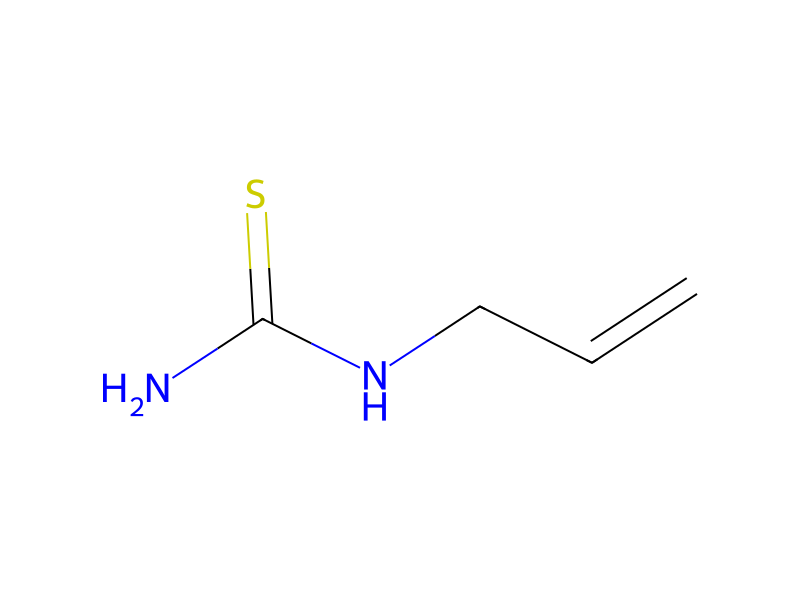
C=CCNC(N)=S
InChIKey
HTKFORQRBXIQHD-UHFFFAOYSA-N
Summenformel
C4H8N2S
Durchschnittliche Molmasse
116,19 g/mol
Monoisotopische Masse
116,04081926

Überblick

Allylthiourea is a white crystalline solid with a slight garlic odor. (NTP, 1992)

Namen und Bezeichner

Bevorzugter Name
Allylthiourea
IUPAC
prop-2-enylthiourea
Lokaler Name
N-Allylthioharnstoff
Englischer Name
N-Allylthiourea
Summenformel
C4H8N2S
Molmasse
116.18

Namen und Synonyme

ALLYLTHIOUREAN-Allylthiourea109-57-9Thiosinamine1-Allyl-2-thiourea1-AllylthioureaRhodallineThiosinaminAminosinRhodallinAllylthiocarbamideThiosinaminum
Weitere Namen anzeigen
u19571Rhodalin
ThiocynamineTiosinamine(2-Propenyl)thioureaAllylthioureeAliltioureaUrea, 1-allyl-2-thio-DTXSID3024449U 19571

Datenbank-Bezeichner

CAS
109-57-9
PubChem CID
1549517
DTXSID
DTXSID3024449
ChEMBL
CHEMBL1451910
ChEBI
CHEBI:74079
UNII
706IDJ14B7
EC Number
203-683-5
Nikkaji
J2.432E

Eigenschaften

Berechnete Struktureigenschaften

XLogP
0,2
Polarare Oberfläche (TPSA)
70,1 Ų
H-Brücken-Donoren
2
H-Brücken-Akzeptoren
1
Frei drehbare Bindungen
2
Schwere Atome
7
Formalladung
0
Komplexität
79,8

Experimentelle und physikochemische Eigenschaften

SpringerMaterials PropertiesCrystal structure
Density1.11 to 1.22 (NTP, 1992)
Solubility · 2 Einträge

10 to 50 mg/mL at 67.1 °F (NTP, 1992)

>17.4 [ug/mL] (The mean of the results at pH 7.4)

Melting Point158 to 172 °F (NTP, 1992)
Physical DescriptionAllylthiourea is a white crystalline solid with a slight garlic odor. (NTP, 1992)

Physikochemische Eigenschaften

Schmelzpunkt
70 · 70-72 °C(lit.)
Siedepunkt
191.3 · 191.3±33.0 °C(Predicted)
Dichte
1.11 g/mL · 1.11 g/mL at 25 °C(lit.)
Brechungsindex
1.5936 · 1.5936 (estimate)
storage temp.
30 °C · Store below +30°C.

Sicherheit und Regulatorisches

Sicherheitsangaben dienen nur zur Orientierung und ersetzen weder das Sicherheitsdatenblatt (SDB) des Lieferanten noch geltende Vorschriften oder eine fachliche Bewertung.

GHS-Klassifizierung

GHS Classification · 4 Einträge

Danger

H301 (99.5%): Toxic if swallowed [Danger Acute toxicity, oral]

P264, P270, P301+P316, P321, P330, P405, and P501 (click each P-code to see the statement)

Aggregated GHS information provided per 197 reports by companies from 6 notifications to the ECHA C&L Inventory.

Gefahrenhinweise

Regulatory Information · 2 Einträge

Chemical: Thiourea, 2-propenyl-

Allylthiourea: Does not have an individual approval but may be used under an appropriate group standard

DOT LabelPoison
Fire HazardsFlash point data are not available for this chemical, but it is probably combustible. (NTP, 1992)
Health HazardsSYMPTOMS: Contact eczema due to sensitization in humans has been reported. (NTP, 1992)
Reactive GroupAmides and Imides
Reactivity Profile · 1 Eintrag

ALLYLTHIOUREA may react vigorously with strong oxidizing agents. Can react exothermically with reducing agents (such as alkali metals and hydrides) to release gaseous hydrogen. May react exothermically with both acids and bases. May generate flammable gases in combination with aldehydes, nitrides, and hydrides. Incompatible with peroxides and acid halides.

Air and Water ReactionsSoluble in water.
Hazard Classes and Categories

Chemie und Industrie

Verwendung und Herstellung

General Manufacturing InformationThiourea, N-2-propen-1-yl-: ACTIVE
Anwendungen · 1 Eintrag

VerwendenN-Allylthiourea is a nitrification inhibitor used in the study on the transformation of diclofenac, naproxen and bisoprolol under aerobic and anaerobic conditions. It is also used in medicine to minimize scar tissue in order to fight against a type of dermatitis. Further, it inhibits the growth of transplanted tumors in mice. It acts as a chelating agent. In addition, it is used in cosmetics, preservative and in organic synthesis.

Darstellung · 1 Eintrag

synthetischeIn the presence of potassium iodide, in ethanol solution, chloropropene is reacted with sodium thiocyanide to form allyl isothiocyanate, which is then ammoniated in ammonium hydroxide solution, concentrated, cooled and crystallized, filtered, washed, and recrystallized in ethanol or water to produce Allylthiourea.
Vor- und nachgelagerte Produkte

Vorgelagerte Rohstoffe

KaliumiodidCalciumchloridNatriumthiocyanatSenföl3-ChlorpropenAllylthiocyanat2-PhenylacetamidAmmoniak, wssrige Lsung

Zugehörige Reaktionen

5
Reaktionsaufzeichnung erstellen
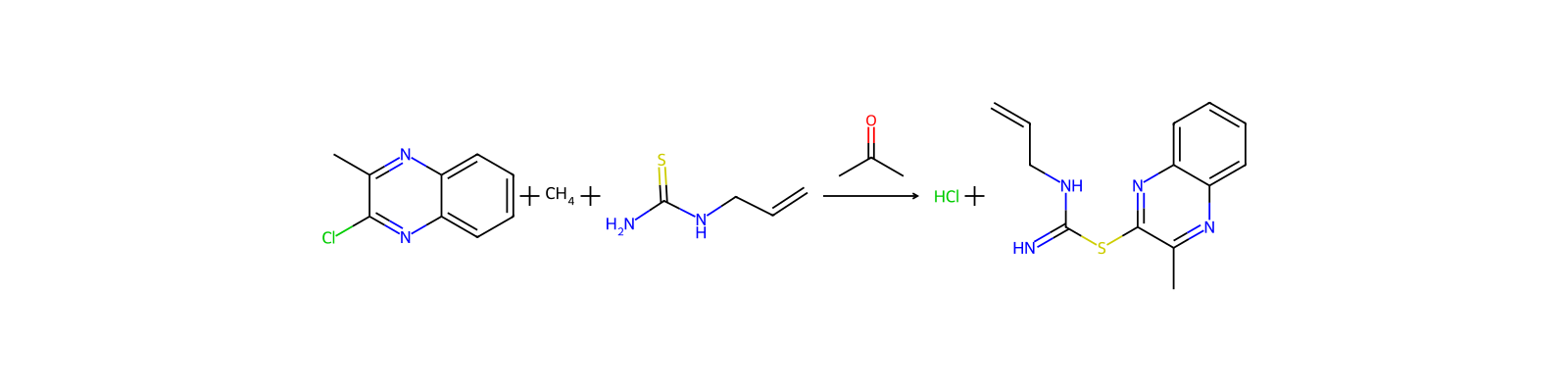
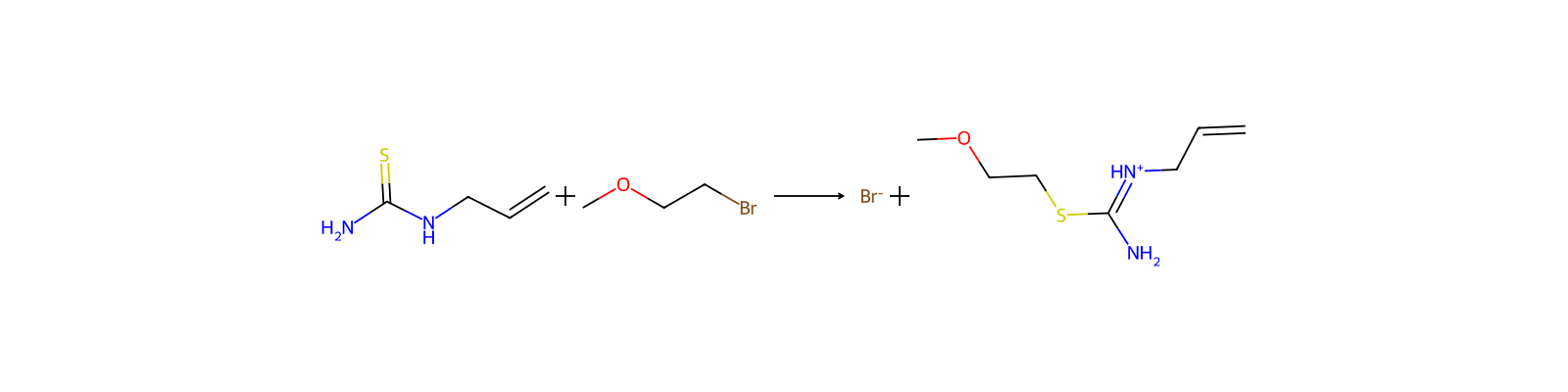
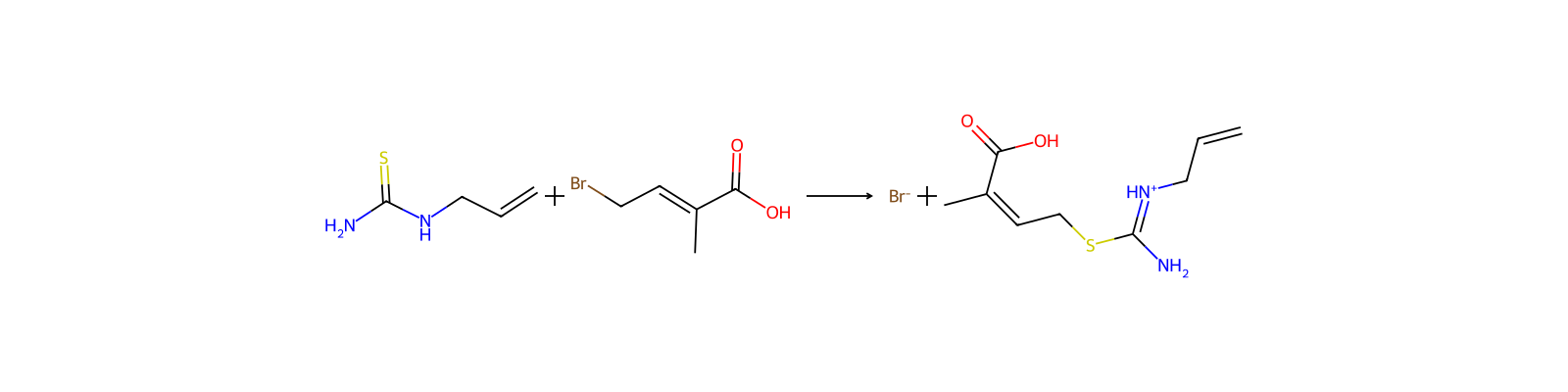
HRID 863724als Edukt
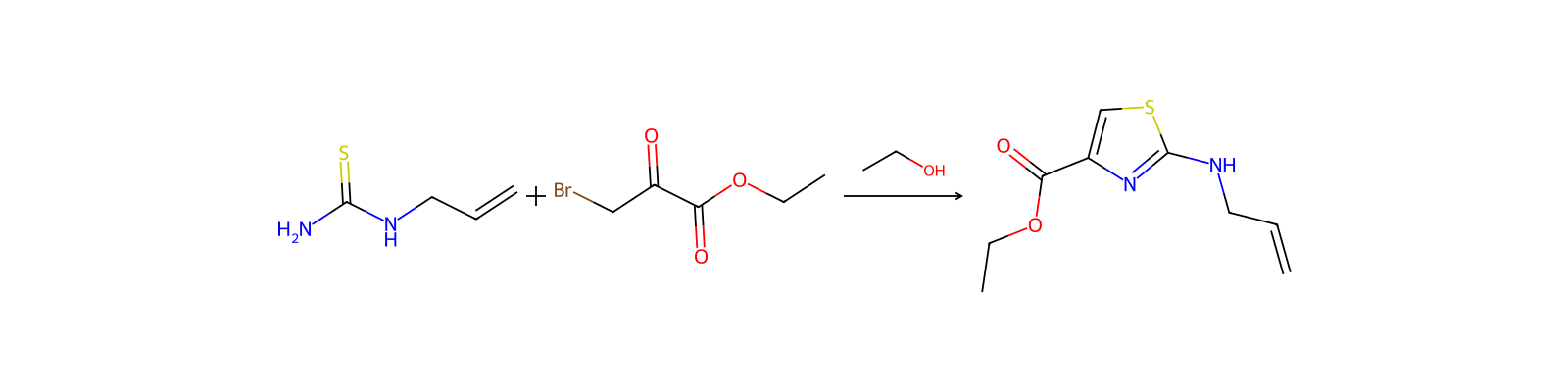
HRID 863725als Edukt
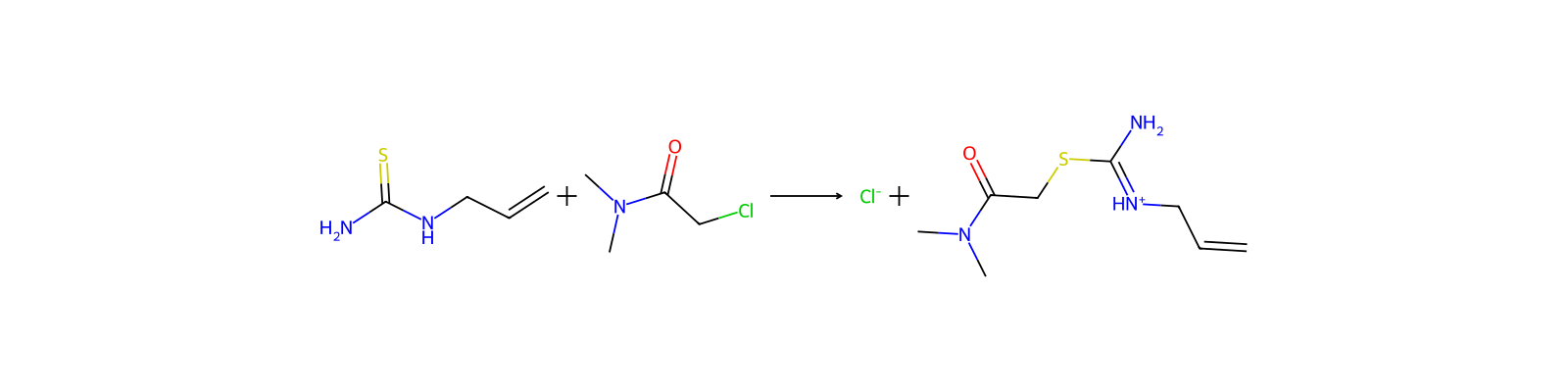
HRID 863726als Edukt
HRID 1702839als Edukt
HRID 2107281als Edukt

Notizen zur Verbindung

Auf dieser SeiteGrundinformationenÜberblickNamen und BezeichnerEigenschaftenSicherheit und RegulatorischesChemie und IndustrieZugehörige ReaktionenNotizen zur Verbindung
Löslichkeit
2 O: · H2O: soluble30 parts
Aggregatzustand
Powder, Crystals, Granules or Chunks
pka
14.57 · 14.57±0.70(Predicted)
Wichte
1.111 · 1.111.219 (20/20℃)
Farbe
White to light beige
Wasserlöslichkeit
67 g/L · 67 g/L (20 ºC)
Merck
14 · 14,9362
BRN
1071470 · 1071470
Stabilität
Stable. Incompatible with strong oxidizing agents.
InChI
1S/C4H8N2S/c1-2-3-6-4(5)7/h2H,1,3H2,(H3,5,6,7)
InChIKey
HTKFORQRBXIQHD-UHFFFAOYSA-N
SMILES
NC(=S)NCC=C
CAS Datenbank
109 · 109-57-9(CAS DataBase Reference)
NIST chemische Informationen
Allylthiourea(109-57-9)
EPA chemische Informationen
Allylthiourea (109-57-9)
Acute Tox. 3 (99.5%)

Sicherheit und Schutzausrüstung

Fire FightingFires involving this compound should be controlled using a dry chemical, carbon dioxide or Halon extinguisher. (NTP, 1992)
First Aid · 1 Eintrag

EYES: First check the victim for contact lenses and remove if present. Flush victim's eyes with water or normal saline solution for 20 to 30 minutes while simultaneously calling a hospital or poison control center. Do not put any ointments, oils, or medication in the victim's eyes without specific instructions from a physician. IMMEDIATELY transport the victim after flushing eyes to a hospital even if no symptoms (such as redness or irritation) develop.

Nonfire Spill Response · 1 Eintrag

SMALL SPILLS AND LEAKAGE: If you spill this chemical, you should dampen the solid spill material with water, then transfer the dampened material to a suitable container. Use absorbent paper dampened with water to pick up any remaining material. Seal your contaminated clothing and the absorbent paper in a vapor-tight plastic bag for eventual disposal. Wash all contaminated surfaces with a soap and water solution. Do not reenter the contaminated area until the Safety Officer (or other responsible person) has verified that the area has been properly cleaned.

Isolation and EvacuationExcerpt from ERG Guide 154 [Substances - Toxic and/or Corrosive (Non-Combustible)]:
Personal Protective Equipment (PPE) · 1 Eintrag

RECOMMENDED RESPIRATOR: Where the neat test chemical is weighed and diluted, wear a NIOSH-approved half face respirator equipped with an organic vapor/acid gas cartridge (specific for organic vapors, HCl, acid gas and SO2) with a dust/mist filter. (NTP, 1992)

Sicherheitsdaten

wgk
2
tsca
TSCA listed
ridadr
UN 2811 6.1/PG 3
hs_code
2930909099
RTECS-Nr.
YR8050000
risk_code
25
Toxizität
LD50 orally in rats: 200 mg/kg (Dieke)
hazard_code
T
safety_code
45-24/25
hazard_class
6.1
packing_group
III
Speicherklasse
6.1C - Combustible acute toxic Cat.3toxic compounds or compounds which causing chronic effects
Hazard Classifications
Acute Tox. 3 Oral
Ethanol

Nachgelagerte Produkte

Allylharnstoff2-Thiazolamine, 4,5-dihydro-5-methyl-N-Allyl-4-(2-Chlorophenyl)Thiazol-2-AmineAllyl-(4-phenyl-thiazol-2-yl)-amine

Ergänzende Hinweise

DefinitionChEBI: Allylthiourea is a thiourea with a prop-2-enyl group attached to one of the amines. It has a role as a metabolite. It is functionally related to a thiourea.