
HRID 40424As reactant

124-30-1CCCCCCCCCCCCCCCCCCNREYJJPSVUYRZGE-UHFFFAOYSA-NOctadecylamine appears as a white solid. Insoluble in water and less dense than water. Hence floats on water. Contact may irritate skin, eyes and mucous membranes. May be toxic by ingestion. Used to make other chemicals.
124-30-1、61788-45-2DTXSID1025801CHEMBL55860CHEBI:63866Cosmetic ingredients (Stearamine) -> CIR (Cosmetic Ingredient Review)
Personal care product
Antistatic
0.8618 at 68 °F (NTP, 1992) - Less dense than water; will float
0.8618 @ 20 °C/4 °C
0.86 g/cm³
less than 1 mg/mL at 72 °F (NTP, 1992)
Insol in water; sol in alcohol, ether, benzene; very sol in chloroform; miscible in acetone
Solubility in water: very poor
300 °F (NTP, 1992)
148 °C c.c.
660 °F at 760 mmHg (NTP, 1992)
346.8 °C @ 760 mm Hg
Safety information is for reference only and does not replace the supplier’s Safety Data Sheet (SDS), applicable regulations, or professional assessment.
Danger
H304: May be fatal if swallowed and enters airways [Danger Aspiration hazard]
P260, P264, P264+P265, P273, P280, P301+P316, P302+P352, P305+P354+P338, P317, P319, P321, P331, P332+P317, P362+P364, P391, P405, and P501 (click each P-code to see the statement)
This chemical does not meet GHS hazard criteria for 0.8% (7 of 907) of reports.
Danger
H302 (49.3%): Harmful if swallowed [Warning Acute toxicity, oral]
Chemical: 1-Octadecanamine
1-Octadecanamine is listed on the EPA's Chemical Data Reporting (CDR) system. Manufacturers and importers of 1-Octadecanamine are required to report information about their production and use of this chemical to the EPA under the Toxic Substances Control Act (TSCA). (40 eCFR Part 711)
REACH registered substance: Octadecylamine (EC: 204-695-3)
1-Octadecanamine: HSNO Approval: HSR001542 Approved with controls
This compound is combustible. (NTP, 1992)
Combustible. Gives off irritating or toxic fumes (or gases) in a fire.
A skin, eye, and respiratory tract irritant; [ICSC] May cause skin sensitization; A primary skin irritant in animals; A 2-year feeding study of rats showed no adverse effects to food consumption, hematology, or histopathology at 500 ppm; Effects at 3000 ppm include anorexia and some histological changes to GI tract, mesenteric nodes, and liver; [HSDB] A moderate skin irritant in rabbits; [RTECS] A skin irritant that may cause serious eye injury; Not likely to induce skin sensitization; No evidence of mutagenicity; Not likely to have carcinogenic potential or reproductive toxicity; [ECHA] An irritant; Harmful if swallowed; [Alfa Aesar MSDS]
CIR ingredient: Stearamine
Used as a corrosion inhibitor (steam systems), mold releasing agent (manufacturing of battery cases), anti-caking and flotation agent, anti-stripping agent (asphalt emulsions for highways), and chemical intermediate; Also used for various applications in the petroleum industry; [HSDB] Used for metal extraction, refining, and processing of metals; [IUCLID]
Petroleum Production and Refining [Category: Industry]
ANTICORROSIVE AGENT
MOLD RELEASE AGENT IN MFR OF BATTERY CASES; CORROSION INHIBITOR IN STEAM PLANTS; CHEMICAL INTERMEDIATE FOR OCTADECYL ISOCYANATE; CHEMICAL INTERMEDIATE FOR OTHER SURFACE-ACTIVE AGENTS; ANTICAKING AGENT; FLOTATION AGENT; AGENT IN VARIOUS ASPECTS OF PETROLEUM INDUSTRY; ANTISTRIPPING AGENT IN ASPHALT EMULSIONS FOR HIGHWAYS
Surface protection against condensate corrosion in steam systems.
2023: 550,000 - <1,000,000 lb
(1972) 2.46X10+8 GRAMS
(1975) PROBABLY GREATER THAN 1.36X10+6 GRAMS
(1984) 1.11X10+9 g
All Other Chemical Product and Preparation Manufacturing
1-Octadecanamine: ACTIVE
EIGHTEEN CARBON STRAIGHT CHAIN AMINE SOMETIMES USED AS ANTICORROSIVE AGENT IN LIVE STEAM LINES.




346.8 °C
120 to 126 °F (NTP, 1992)
52.9 °C
49 - 52 °C
52.9 °C
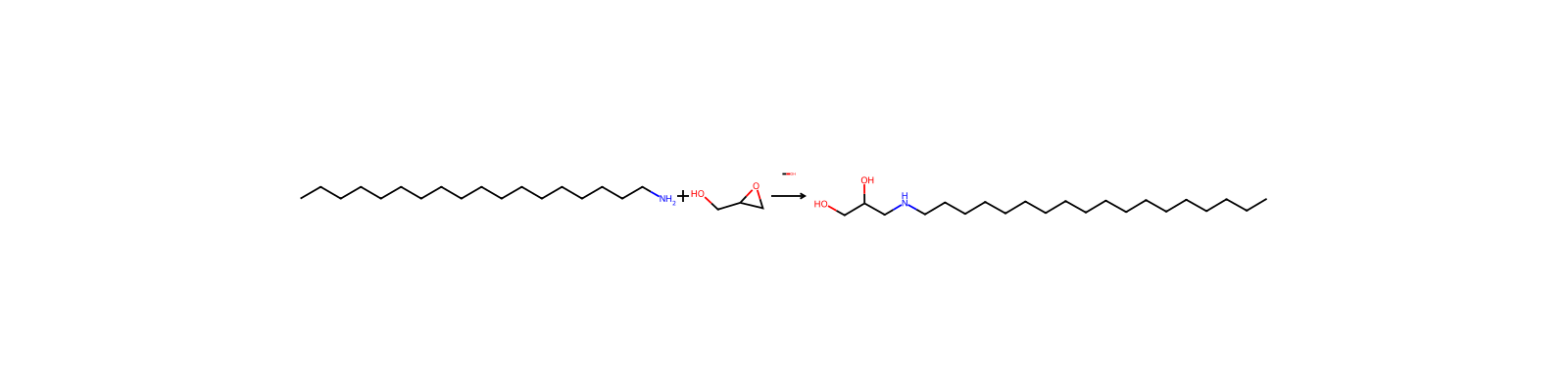
OCTADECYLAMINE neutralizes acids in exothermic reactions to form salts plus water. May be incompatible with isocyanates, halogenated organics, peroxides, phenols (acidic), epoxides, anhydrides, and acid halides. Flammable gaseous hydrogen may be generated in combination with strong reducing agents, such as hydrides.
Acute Tox. 4 (49.3%)
Aspiration hazard - category 1
Skin corrosion/irritation - Category 2
Serious eye damage/eye irritation - Category 1
Asp. Tox. 1
Fires involving this compound can be controlled with dry chemical, carbon dioxide or Halon extinguishers. (NTP, 1992)
Use water spray, powder, foam, carbon dioxide.
Fresh air, rest.
Rinse and then wash skin with water and soap.
First rinse with plenty of water for several minutes (remove contact lenses if easily possible), then refer for medical attention.
Rinse mouth. Give one or two glasses of water to drink.
EYES: First check the victim for contact lenses and remove if present. Flush victim's eyes with water or normal saline solution for 20 to 30 minutes while simultaneously calling a hospital or poison control center. Do not put any ointments, oils, or medication in the victim's eyes without specific instructions from a physician. IMMEDIATELY transport the victim after flushing eyes to a hospital even if no symptoms (such as redness or irritation) develop.
SMALL SPILLS AND LEAKAGE: If you spill this chemical, FIRST REMOVE ALL SOURCES OF IGNITION, then dampen the solid spill material with toluene, then transfer the dampened material to a suitable container. Use absorbent paper dampened with toluene to pick up any remaining material. Your contaminated clothing and absorbent paper should be sealed in a vapor-tight plastic bag for eventual disposal. Solvent-wash all contaminated surfaces with toluene followed by washing with a soap and water solution. Do not reenter the contaminated area until the Safety Officer (or other responsible person) has verified that the area has been properly cleaned.
SRP: At the time of review, criteria for land treatment or burial (sanitary landfill) disposal practices are subject to significant revision. Prior to implementing land disposal of waste residue (including waste sludge), consult with environmental regulatory agencies for guidance on acceptable disposal practices.
Personal protection: particulate filter respirator adapted to the airborne concentration of the substance. Sweep spilled substance into covered sealable containers. Carefully collect remainder. Then store and dispose of according to local regulations.
TERRESTRIAL FATE: Based on a classification scheme(1), an estimated log Koc value of 5.5(SRC), determined from an estimated log Kow of 7.7(2,SRC) and a regression-derived equation(3), indicates that octadecylamine is expected to be immobile in soil(SRC). A pKa value of 10.65(4) indicates that the protonated form will be the dominant species in moist soil surfaces and cationic molecules generally adsorb strongly to soils(SRC). Volatilization of octadecylamine from moist soil surfaces is not expected to be an important fate process since the protonated form is expected to be the dominant species based on the pKa value(4). Volatilization of octadecylamine from dry soil surfaces is not expected(SRC) based upon the estimated vapor pressure of 4.4X10⁻⁵ mm Hg at 25 °C(5). A 32% of theoretical BOD in an activated sludge inoculum was observed over a 15-day incubation period(6), suggesting that biodegradation may be rapid in the environment(SRC).
AQUATIC FATE: Based on a classification scheme(1), an estimated log Koc value of 5.5(SRC), determined from an estimated log Kow of 7.7(2,SRC) and a regression-derived equation(3), indicates that octadecylamine is expected to adsorb to suspended solids and sediment in water(SRC). A pKa value of 10.65(4) indicates that the protonated form will be the dominant species in water and volatilization from water surfaces is not expected to be an important fate process(SRC). According to a classification scheme(5), an estimated log BCF of 5.6(3,SRC), from its estimated log Kow(2,SRC), suggests the potential for bioconcentration in aquatic organisms is very high(SRC). A 32% of theoretical BOD in an activated sludge inoculum was observed over a 15-day incubation period(6), suggesting that biodegradation may be rapid in the environment(SRC).
ATMOSPHERIC FATE: According to a model of gas/particle partitioning of semivolatile organic compounds in the atmosphere(1), octadecylamine, which has an estimated vapor pressure of 4.4X10⁻⁵ mm Hg at 25 °C(2), is expected to exist in both the vapor and particulate phases in the ambient atmosphere. Vapor-phase octadecylamine is degraded in the atmosphere by reaction with photochemically-produced hydroxyl radicals(SRC); the half-life for this reaction in air is estimated to be 10 hours(SRC) from its estimated rate constant of 3.4X10⁻¹¹ cu cm/molecule-sec at 25 °C(SRC), determined from a structure estimation method(3). Particulate-phase octadecylamine will be removed from the atmosphere by wet and dry depostion(SRC).
The safety of Lauramine and Stearamine has not been documented and substantiated. The CIR Expert Panel cannot conclude whether these ingredients are safe for use in cosmetic products until the appropriate safety data have been obtained and evaluated.
The available data are insufficient to support safety
Cough. Sore throat.
Redness. Pain.
Redness. Pain.
The Koc of octadecylamine is estimated as approximately 3.198X10+5(SRC), using an estimated log Kow of 7.7(1,SRC) and a regression-derived equation(2). According to a classification scheme(3), this estimated Koc value suggests that octadecylamine is expected to be immobile in soil(SRC).
SAID TO BE PRIMARY SKIN SENSITIZER.
The effects of non-drug-containing liposomes of different compositions and sizes on the proliferation of nine cancer-derived and one normal cultured human cell lines were determined. Stearylamine- and cardiolipin-containing liposomes were toxic (ID50) at 200 uM liposomal lipid concentrations or less ...
An estimated log BCF of 5.6 was calculated for octadecylamine(SRC), using an estimated log Kow of 7.7(1,SRC) and a regression-derived equation(2). According to a classification scheme(3), this BCF suggests the potential for bioconcentration in aquatic organisms is low(SRC).
The Henry's Law constant for octadecylamine is estimated as 9.4X10⁻⁴ atm-cu m/mole(SRC), using a fragment constant estimation method(1). This Henry's Law constant indicates that the neutral form of octadecylamine is expected to volatilize from water surfaces(2). Based on this Henry's Law constant, the volatilization half-life from a model river (1 m deep, flowing 1 m/sec, wind velocity of 3 m/sec)(2) is estimated as approximately 6 hours(SRC). The volatilization half-life from a model lake (1 m deep, flowing 0.05 m/sec, wind velocity of 0.5 m/sec)(2) is estimated as approximately 167 hours(SRC). A pKa of 10.65(3) indicates octadecylamine will exist predominately in the protonated form at environmental pHs and therefore volatilization from water and moist soil surfaces is not expected to be an important fate process(SRC). Octadecylamine is not expected to volatilize from dry soil surfaces(SRC) based upon an estimated vapor pressure of 4.4X10⁻⁵ mm Hg at 25 °C(4).
DescriptionOctadecylamine, also known as N-stearylamine or 1-aminooctadecane, belongs to the class of organic compounds known as monoalkylamines. These are organic compounds containing an primary aliphatic amine group. Octadecylamine is a very strong basic compound (based on its pKa). An 18-carbon primary aliphatic amine.
UsesIt can be used as the intermediates of organic synthesis for the production of octadecyl quaternary ammonium salts and many kinds of additives such as cationic grease thickener, mineral flotation agents, pesticides and asphalt emulsifier, fabric antistatic agents, softeners, wetting agents and waterproofing agents, surfactants, biocides, color former of color photo and the corrosion inhibitor of the oil refining device. Putting the Octadecanamine in mixture with ethylene oxide in a molar ratio of 1: 2 for reaction at 150-190 ℃ can gives stearyl diethanolamine [10213-78-2] with a yield of 80%. Stearyl diethanolamine belongs to a non-ionic antistatic agent and can be applied to polypropylene, polystyrene and ABS resin.
UsesOctadecylamine is used in biological studies for the formation of ion pairing as alternative to improve encapsulation and stability and to reduce skin irritation of retinoic acid loaded in solid lipid nanoparticles.
UsesOctadecylamine is used to surface functionalize different carbon nanomaterials (graphene oxide, carbon nanotubes) for different applications which include thin film nanocomposite (TFN) nanofilteration and carbon fiber microelectrodes. It can be used for the preparation of butyrylcholinesterase/stearylamine films (Langmuir-Blodgett films) for use in enzymatic field effect transistor (ENFET) based biosensors. Octadecylamine also forms films which can be used in ion exachnge systems. It may also be used in the preparation of metal oxide nano crystals with controlled size and shape.
General DescriptionA white solid. Insoluble in water and less dense than water. Hence floats on water. Contact may irritate skin, eyes and mucous membranes. May be toxic by ingestion. Used to make other chemicals.
DefinitionChEBI: An 18-carbon primary aliphatic amine.