StartseiteMCPSkillsWorkbenchOpenChem
StartseiteWorkbenchBenachrichtigungenMein Bereich
llms.txt · skill.md · MCP-AnleitungDatenschutz · Nutzungsbedingungen · Supportv1.8.5
  1. Startseite
  2. /Verbindung

Cupric acetate monohydrate

HCID 165397
Neue Reaktion
Drucken
GrundinformationenÜberblickNamen und BezeichnerEigenschaftenSicherheit und RegulatorischesChemie und IndustrieZugehörige ReaktionenNotizen zur Verbindung
TeilstruktursucheÄhnliche Strukturen suchen

Grundinformationen

CAS
6046-93-1
Standard-SMILES
CC(=O)[O-].CC(=O)[O-].O.[Cu+2]
InChIKey
NWFNSTOSIVLCJA-UHFFFAOYSA-L
Summenformel
C4H8CuO5
Durchschnittliche Molmasse
199,65 g/mol
Monoisotopische Masse
198,96677

Überblick

See also: Copper (II) acetate, monohydrate (annotation moved to); Copper di(acetate) hydrate (annotation moved to).

Namen und Bezeichner

Bevorzugter Name
Cupric acetate monohydrate
IUPAC
copper;diacetate;hydrate
Englischer Name
Copper (II) acetate monohydrate
Summenformel
C4H8CuO5
Molmasse
199.65

Namen und Synonyme

Copper(II) acetate monohydrateCupric acetate monohydrateCopper(2+) acetate, monohydrate39J9V52S86DTXSID90209202RefChem:580026DTXCID701316936046-93-1Copper(II) acetate hydratecopper acetate monohydrate66923-66-8Copper (II) Acetate Monohydrate
Weitere Namen anzeigen
COPPER ACETATECuAcCu(OAc)2·H2O205-553-3CopperdiacetatemonohydrateVERDIGRIS
Copper diacetate monohydrateAcetic acid, copper(2+) salt, monohydratecopper;diacetate;hydrateCopper(II) acetate xhydrateCopper (II) acetate hydrateCopper(II)acetate monohydrateC4H8CuO5copper acetate hydrate

Datenbank-Bezeichner

CAS
6046-93-1
PubChem CID
165397
DTXSID
DTXSID90209202
UNII
39J9V52S86
EC Number
611-978-9

Eigenschaften

Berechnete Struktureigenschaften

Polarare Oberfläche (TPSA)
81,3 Ų
H-Brücken-Donoren
1
H-Brücken-Akzeptoren
5
Frei drehbare Bindungen
0
Schwere Atome
10
Formalladung
0
Komplexität
25,5

Experimentelle und physikochemische Eigenschaften

Chemical ClassesMetals -> Organic Acids, Metal Salts
Melting Point115 °C
Physical DescriptionDark green solid; [Merck Index] Blue-green odorless powder; [Alfa Aesar MSDS]

Physikochemische Eigenschaften

Schmelzpunkt
115 °C · 115 °C
Siedepunkt
240 °C · 240 °C
Dichte
1.88 · 1.88
Dampfdichte
6.9 · 6.9 (vs air)
storage temp.
5 °C · Store at +5°C to +30°C.
Löslichkeit
72 g/l · 72g/l
Aggregatzustand
Solid
Farbe
Dark Green
Wichte
1.882 · 1.882
PH
5.2 · 5.2-5.5 (20g/l, H2O, 20℃)
Geruch (Odor)
Slight acetic acid odor

Sicherheit und Regulatorisches

Sicherheitsangaben dienen nur zur Orientierung und ersetzen weder das Sicherheitsdatenblatt (SDB) des Lieferanten noch geltende Vorschriften oder eine fachliche Bewertung.

GHS-Klassifizierung

GHS Classification · 6 Einträge

Danger

H302 (100%): Harmful if swallowed [Warning Acute toxicity, oral]

P260, P261, P264, P264+P265, P270, P271, P273, P280, P301+P317, P301+P330+P331, P302+P352, P302+P361+P354, P304+P340, P305+P351+P338, P305+P354+P338, P316, P317, P319, P321, P330, P332+P317, P337+P317, P362+P364, P363, P391, P403+P233, P405, and P501 (click each P-code to see the statement)

Aggregated GHS information provided per 235 reports by companies from 16 notifications to the ECHA C&L Inventory. Each notification may be associated with multiple companies.

Warning

H302: Harmful if swallowed [Warning Acute toxicity, oral]

Gefahrenhinweise

Regulatory Information · 2 Einträge

Chemical: Acetic acid, copper(2+) salt, monohydrate

Regulation (EC) No 1831/2003 (amended)

Other Safety InformationIMAP assessments - Acetic acid, copper(2+) salt, monohydrate: Human health tier I assessment
Hazards SummaryA skin and strong eye irritant; Harmful by ingestion; [Alfa Aesar MSDS] See Copper(II) acetate.
Hazard Classes and Categories · 2 Einträge

Acute Tox. 4 (100%)

Acute toxicity (Oral) - Category 4

Sicherheit und Schutzausrüstung

Exposure Control and Personal Protection0.01 [mg/m3], respirable fraction (Cu, inorganic cmpnds)[German Research Foundation (DFG)]

Chemie und Industrie

Verwendung und Herstellung

Uses · 2 Einträge

Used to make Paris Green and Fehling's reagent, as a fungicide, catalyst, ceramic pigment, and in textile dyeing; [Merck Index]

Farming (Pesticides) [Category: Industry]

Darstellung · 1 Eintrag

synthetischeCopper(II) acetate monohydrate can easily be produced by the reaction of acetic acid solutions with copper(II) carbonate or copper(II) hydroxide or by the reaction of copper(II) oxide with hot acetic acid. Large-scale commercial production uses copper metal in the presence of air and refluxing acetic acid. Copper(II) acetate monohydrate is used as a catalyst in the polymerization of organic materials and as a mordant in the dying of textiles. It is also used as a ceramic pigment and as a fungicide.
Vor- und nachgelagerte Produkte

Vorgelagerte Rohstoffe

KupfersulfatEssigsureKupfer(II)-carbonat, basischNatriumcarbonat

Nachgelagerte Produkte

Adipinsure3-Fluoropyridine-2-carboxylic acid2,4-PentandionNabumetone3-(Methylthio)butanalDye-fixing agent M

Zugehörige Reaktionen

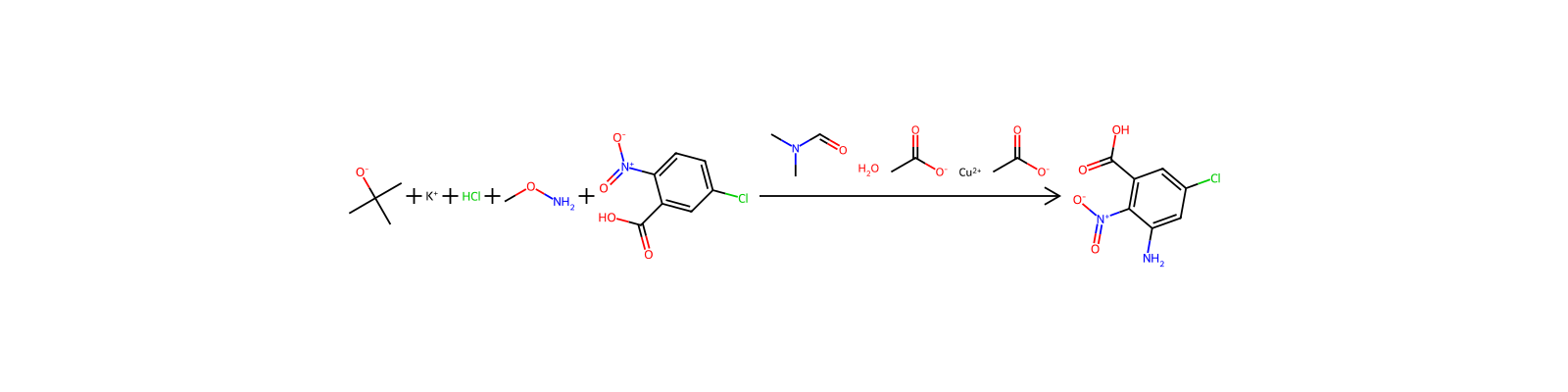
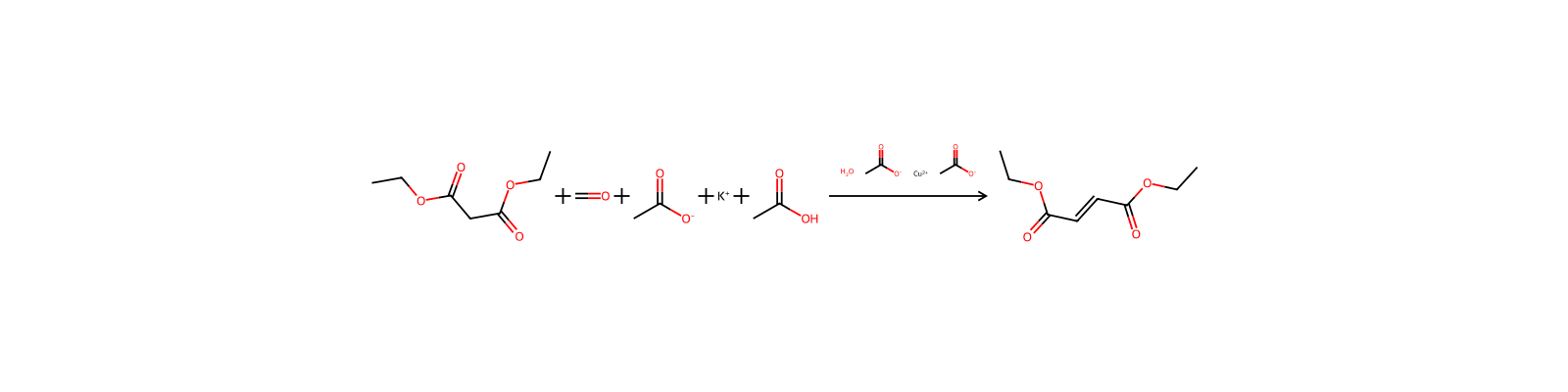
144
Reaktionsaufzeichnung erstellen
HRID 16042als Edukt
HRID 36498als Katalysator
HRID 65439als Katalysator
HRID 73492als Katalysator
HRID 85136als Katalysator
HRID 218103als Katalysator
HRID 240534als Katalysator
HRID 252295als Katalysator
ZurückSeite 1 von 18

Notizen zur Verbindung

Auf dieser SeiteGrundinformationenÜberblickNamen und BezeichnerEigenschaftenSicherheit und RegulatorischesChemie und IndustrieZugehörige ReaktionenNotizen zur Verbindung
Wasserlöslichkeit
72 g/L · 72 g/L (20 ºC)
Merck
14 · 14,2624
BRN
3730548 · 3730548
Stabilität
Stable. Incompatible with oxidizing agents.
InChI
1S/2C2H4O2.Cu.H2O/c2*1-2(3)4;;/h2*1H3,(H,3,4);;1H2/q;;+2;/p-2
InChIKey
NWFNSTOSIVLCJA-UHFFFAOYSA-L
SMILES
O.CC(=O)O[Cu]OC(C)=O
LogP
-0.285 · -0.285 (est)
CAS Datenbank
6046 · 6046-93-1(CAS DataBase Reference)
Threshold Limit Values (TLV)1.0 [mg/m3], as Cu
Permissible Exposure Limit (PEL)1.0 [mg/m3], as Cu
Protective Action Criteria (PAC) · 3 Einträge

9.4 [mg/m3]

23 [mg/m3]

140 [mg/m3]

Immediately Dangerous to Life or Health (IDLH)100.0 [mg/m3], as Cu

Toxikologische Informationen

Adverse EffectsOccupational hepatotoxin - Secondary hepatotoxins: the potential for toxic effect in the occupational setting is based on cases of poisoning by human ingestion or animal experimentation.

Sicherheitsdaten

wgk
3
tsca
Yes
ridadr
UN 3077 9/PG 3
hs_code
29152900
RTECS-Nr.
AG3500000
risk_code
22-36/37/38-50/53-34
Toxizität
LD50 orally in Rabbit: 501 mg/kg
hazard_code
Xn,N,Xi,C
safety_code
36/37/39-60-61-36-26-45
hazard_class
9
packing_group
III
Speicherklasse
8B - Non-combustible corrosive hazardous materials
Hazard Classifications
Acute Tox. 4 OralAquatic Acute 1Aquatic Chronic 2Eye Dam. 1Skin Corr. 1B
6-Methyl-2-(methylsulfanyl)pyrimidin-4-ylamine
a copper chelate
Hexan-3,4-dion
Iodessigsäure
Propionsure
3-(Methylthio)propionaldehyd
1,3-Diphenylguanidin
2-Amino-6-t-butyl-4-(trifluoromethyl)pyrimidine
trans-Crotonsure
DL-Methionin
calcium copper phosphate
Oxin-kupfer
Copper(II) sulfate pentahydrate
D-Streptamin, O-3-Deoxy-4-C-methyl-3-(methylamino)-β-L-arabinopyranosyl-(1-6)-O-[2,6-diamino-2,3,4,6-tetradeoxy-α-D-glycero-hex-4-enopyranosyl-(1-4)]-2-deoxy-N1-ethyl-, Sulfat (2:5) (Salz)
phthalogen auxiliary agent K
4-Chloro-6-methyl-2-(methylthio)pyrimidine
6-Methyl-2-(methylthio)pyrimidin-4-ol
Benzil
L-Methionin
2-Mercapto-6-methylpyrimidin-4-ol