
HRID 27134반응물로
11-Aminoundecanoic acid

2432-99-7NCCCCCCCCCCC(=O)OGUOSQNAUYHMCRU-UHFFFAOYSA-N11-aminoundecanoic acid appears as white crystalline solid or powder. (NTP, 1992)
2432-99-7、25035-04-5、25587-80-8DTXSID5020077CHEMBL1903820CHEBI:8238711-aminoundecanoic acid appears as white crystalline solid or powder. (NTP, 1992)
Dry Powder
White solid; [CAMEO] White powder; [MSDSonline]
안전 정보는 참고용이며, 공급업체의 물질안전보건자료(SDS), 관련 법규 및 전문가 평가를 대체하지 않습니다.
This chemical does not meet GHS hazard criteria for 100% (191 of 191) of all reports.
Not Classified
Aggregated GHS information provided per 191 reports by companies from 1 notifications to the ECHA C&L Inventory.
H402: Harmful to aquatic life [Hazardous to the aquatic environment, acute hazard]
P273, and P501 (click each P-code to see the statement)
Chemical: Poly[imino(1-oxo-1,11-undecanediyl)]
Chemical: Undecanoic acid, 11-amino-
Undecanoic acid, 11-amino- is listed on the EPA's Chemical Data Reporting (CDR) system. Manufacturers and importers of Undecanoic acid, 11-amino- are required to report information about their production and use of this chemical to the EPA under the Toxic Substances Control Act (TSCA). (40 eCFR Part 711)
S - indicates a substance that is identified in a final Significant New Use Rule.
REACH registered substance: 11-aminoundecanoic acid (EC: 219-417-6)
Undecanoic acid, 11-amino-: Does not have an individual approval but may be used under an appropriate group standard
Caused slight eye and no skin irritation in rabbits; Not a sensitizer in guinea pig testing; Histopathological lesions found in kidneys of rats and mice at 21000 ppm in a 13-week feeding studies; [Reference #1] May cause irritation; [MSDSonline]
Used as an initiator for type 11 Nylons; [HSDB]
Initiator for type 11 Nylons
2023: 5,000,000 - <10,000,000 lb
(1986) No Data
Four step processes: Step 1, castor oil reacts with methyl alcohol to form methyl ricinoleate; Step 2, pyrolysis of this ester at 450-500 °C to form 10-undecylenate; Step 3, hydrolysis to form 10-undecylenic acid; Step 4, bromination by hydrogen bromide in the presence of peroxides to form 11-bromoundecanoic acid which is then converted to 11-aminoundecanoic acid
Plastics Product Manufacturing
Undecanoic acid, 11-amino-: ACTIVE
Industrial manufacture of /Nylon 11 and 11-aminoundecanoic acid/ is primarily carried out in France where the /Nylon 11/ polymer is known as Rilsan
일반 설명White crystalline solid or powder.
|-Aminoundecanoic acid is normally prepared from castor oil (glycerol triricinoleate). Firstly the castor oil is subjected to methanolysis to yield the methyl ester of ricinoleic acid and then the following route is used: In the first step, the pyrolysis of methyl ricinoleate is carried out at about 500C; the principal products are n-heptaldehyde and methyl undecylenate. The latter is hydrolysed to give undecylenic acid which is treated with hydrogen bromide in a non-polar solvent in the presence of a peroxide. Under these conditions, reverse Markownikoff addition occurs and the main product is |-bromoundecanoic acid. This product is then treated with ammonia to give |-aminoundecanoic acid, which is a crystalline solid, m.p. 189C.


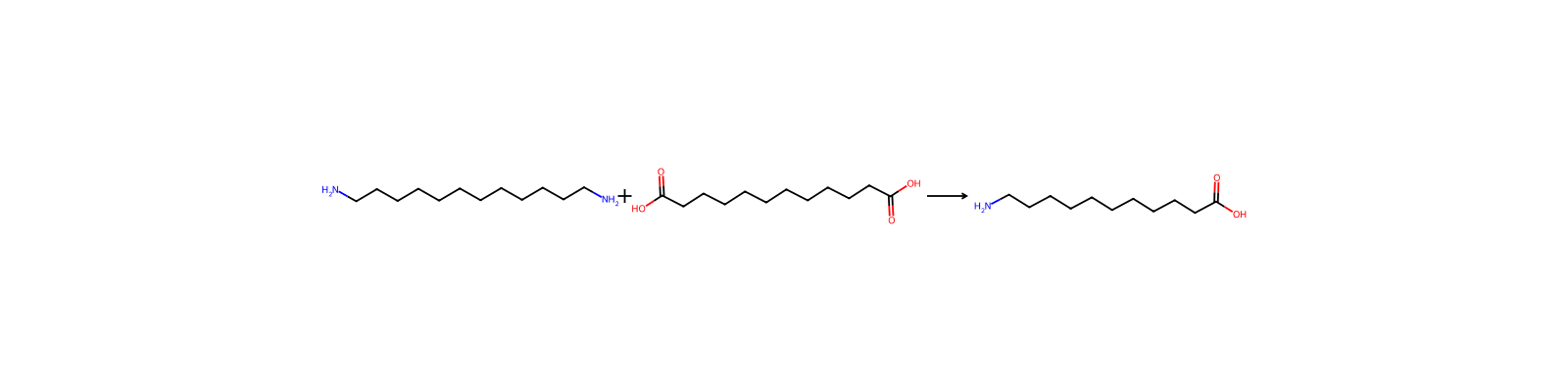

11-Aminoundecanoic acid is a solid.
Not Classified
Hazardous to the aquatic environment (Acute) - Category 3
EYES: First check the victim for contact lenses and remove if present. Flush victim's eyes with water or normal saline solution for 20 to 30 minutes while simultaneously calling a hospital or poison control center. Do not put any ointments, oils, or medication in the victim's eyes without specific instructions from a physician. IMMEDIATELY transport the victim after flushing eyes to a hospital even if no symptoms (such as redness or irritation) develop.
SMALL SPILLS AND LEAKAGE: If you spill this chemical, you should dampen the solid spill material with 5% acetic acid, then transfer the dampened material to a suitable container. Use absorbent paper dampened with 5% acetic acid to pick up any remaining material. Your contaminated clothing and the absorbent paper should be sealed in a vapor-tight plastic bag for eventual disposal. Wash all contaminated surfaces with 5% acetic acid followed by washing with a soap and water solution. Do not reenter the contaminated area until the Safety Officer (or other responsible person) has verified that the area has been properly cleaned.
RECOMMENDED RESPIRATOR: Where the neat test chemical is weighed and diluted, wear a NIOSH-approved half face respirator equipped with a combination filter cartridge, i.e. organic vapor/acid gas/HEPA (specific for organic vapors, HCl, acid gas, SO2 and a high efficiency particulate filter). (NTP, 1992)
The following link will take the user to the National Toxicology Program (NTP) Test Agent Search Results page, which tabulates all of the "Standard Toxicology & Carcinogenesis Studies", "Developmental Studies", and "Genetic Toxicity Studies" performed with this chemical. Clicking on the "Testing Status" link will take the user to the status (i.e., in review, in progress, in preparation, on test, completed, etc.) and results of all the studies that the NTP has done on this chemical. [http://ntp-apps.niehs.nih.gov/ntp_tox/index.cfm?fuseaction=ntpsearch.searchresults&searchterm=2432-99-7]
11-Aminoundecanoic acid
Group 3: Not classifiable as to its carcinogenicity to humans
Volume 39: (1986) Some Chemicals Used in Plastics and Elastomers
1987
1987
11-Aminoundecanoic acid
A carcinogenesis bioassay of 11-aminoundecanoic acid was carried out by administering diets containing 7,500 or 15,000 ppm 11-aminoundecanoic acid to F344 rats and B6C3F1 mice. Groups of 50 rats and 50 mice of either sex were administered the test chemical for 104 wk (rats) or 103 wk (mice). Controls consisted of 50 untreated rats and 50 untreated mice of each sex. ... Under the conditions of this bioassay, 11-aminoundecanoic acid was carcinogenic for male F344 rats, inducing neoplastic nodules in the liver and transitional cell carcinomas of the urinary bladder. The test chemical was not carcinogenic for female F344 rats. No clear evidence was found for the carcinogenicity of 11-aminoundecanoic acid in B6C3F1 mice of either sex, although the incr in malignant lymphoma in male mice may have been associated with administration of 11-aminoundecanoic acid.