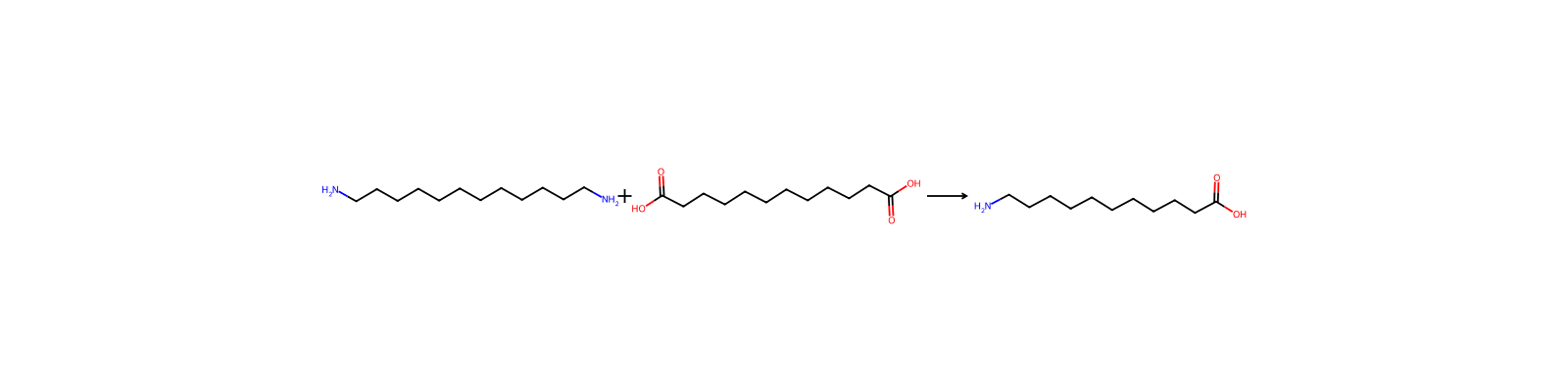
HRID 65830As reactant

2783-17-7NCCCCCCCCCCCCNQFTYSVGGYOXFRQ-UHFFFAOYSA-NDodecane-1,12-diamine is an alkane-alpha,-diamine that is dodecane substituted by amino groups at positions 1 and 12.
2783-17-7DTXSID2044636CHEMBL69590CHEBI:49385Safety information is for reference only and does not replace the supplier’s Safety Data Sheet (SDS), applicable regulations, or professional assessment.
This chemical does not meet GHS hazard criteria for 7.1% (4 of 56) of reports.
Danger
H302 (92.9%): Harmful if swallowed [Warning Acute toxicity, oral]
P260, P261, P264, P264+P265, P270, P271, P272, P273, P280, P301+P317, P301+P330+P331, P302+P352, P302+P361+P354, P304+P340, P305+P354+P338, P316, P317, P321, P330, P332+P317, P333+P317, P362+P364, P363, P391, P403+P233, P405, and P501 (click each P-code to see the statement)
Aggregated GHS information provided per 56 reports by companies from 8 notifications to the ECHA C&L Inventory. Each notification may be associated with multiple companies.
REACH registered substance: Dodecamethylenediamine (EC: 220-489-6)
1,12-Dodecanediamine: Does not have an individual approval but may be used under an appropriate group standard
A mild eye irritant; Causes hypermotility, weight loss, and respiratory depression in inhalation studies of rats; Causes inflammation of trachea and bronchi in 2-week intermittent inhalation studies of rats; [RTECS] Causes burns; May cause skin sensitization; Inhalation may cause corrosive injuries to upper respiratory tract and lungs; Harmful by ingestion; [Aldrich MSDS] See 1,8-Octamethylenediamine and 1,6-Diaminohexane.
UsesFeedstock for polymer synthesis. Source of twelve carbon chain for medicinal drugs.1
Uses1,12-Diaminododecane is used for synthesis of medicinal drugs, polymers.
DefinitionChEBI: An alkane-alpha,omega-diamine that is dodecane substituted by amino groups at positions 1 and 12.
DefinitionDiamines containing more than six carbon atoms can be obtained readily by hydrogenating the corresponding dinitriles over a Raney nickel catalyst in a batch procedure under pressure at up to 125 ℃. A five- to tenfold excess of liquid ammonia is used, with or without methanol solvent. Higher diamines can be prepared continuously, as described for the production of hexamethylenediamine.