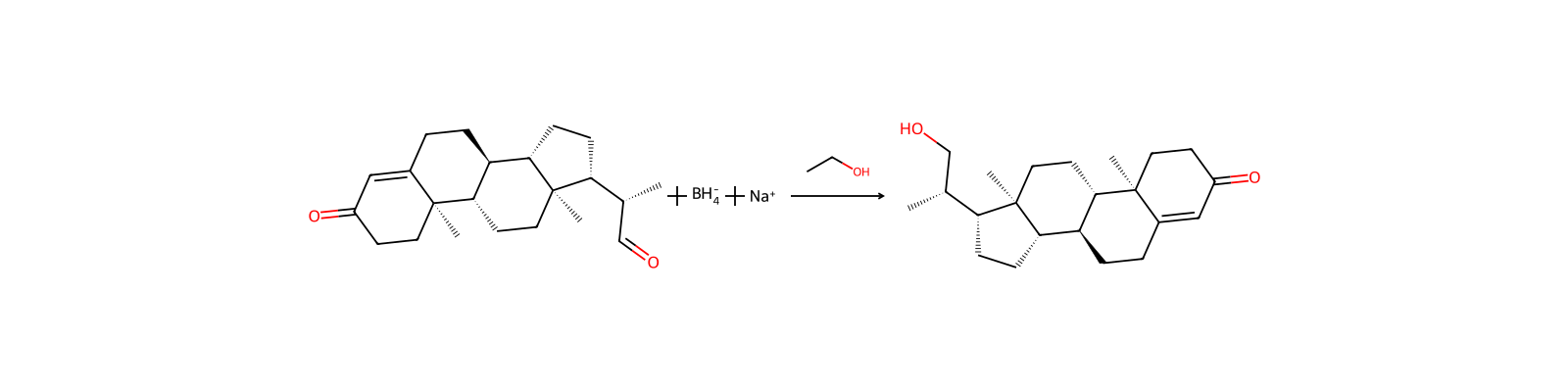
HRID 566883As reactant
Completing data — refresh the page later to see the latest

3986-89-8C[C@H](C=O)[C@H]1CC[C@H]2[C@@H]3CCC4=CC(=O)CC[C@]4(C)[C@H]3CC[C@]12CXVPJEGGIGJLDQK-HOFZUOGSSA-NSafety information is for reference only and does not replace the supplier’s Safety Data Sheet (SDS), applicable regulations, or professional assessment.
Danger
H351 (100%): Suspected of causing cancer [Warning Carcinogenicity]
P203, P260, P263, P264, P270, P280, P318, P405, and P501 (click each P-code to see the statement)
Aggregated GHS information provided per 2 reports by companies from 1 notifications to the ECHA C&L Inventory. Each notification may be associated with multiple companies.
DescriptionAndrostenedione is the main product after phytosterol fermentation by Mycobacteria. Bisnorcholenaldehyde (BA; 3-Oxopregn-4-ene-20-carboxaldehyde) is one of the by-products produced during fermentation. Bisnorcholenaldehyde is an essential intermediate in the production of progesterone, which is used to treat threatened abortion or habitual abortion disease caused by luteal insufficiency. It is a precursor of androgen, estrogen, glucocorticoid and intermediates of steroid hormone synthesis[1]. In addition, BA is used in magnetic-based graphene composites with steroidal diamine dimer as a potential drug in hyperthermia cancer therapy.
UsesBisnorcholenaldehyde is hydrocarbon derivatives and can be used as reference materials for medical impurities.
3986-89-8