HomeMCPSkillsWorkbenchOpenChem
HomeWorkbenchNotificationsMe
llms.txt · skill.md · MCP GuidePrivacy Policy · Terms of Service · Supportv1.8.5
  1. Home
  2. /Compound

Sodium Acetate Trihydrate

HCID 23665404
New reaction
Print
Basic informationOverviewNames & identifiersPropertiesSafety & regulationChemistry & industryRelated reactionsCompound notes
Substructure searchFind similar structures

Basic information

CAS
6131-90-4
Standard SMILES
CC(=O)[O-].O.O.O.[Na+]
InChIKey
AYRVGWHSXIMRAB-UHFFFAOYSA-M
Molecular formula
C2H9NaO5
Average molar mass
136.08 g/mol
Monoisotopic mass
136.03476767

Overview

Sodium acetate trihydrate is a hydrate. It contains a sodium acetate.

Names & identifiers

Preferred name
Sodium Acetate Trihydrate
IUPAC
sodium;acetate;trihydrate
English name
Sodium acetate trihydrate
Molecular formula
C2H9NaO5
Molecular weight
136.08

Names & synonyms

SODIUM ACETATE TRIHYDRATE6131-90-4Acetic acid, sodium salt, trihydrateTutofusinDTXSID2073986CHEBI:32138RefChem:887213DTXCID9043011612-115-9sodium;acetate;trihydrateC2H9NaO5Acetic acid sodium salt trihydrate
Show more names
NaAcSODA CAUSTICSodium acetate crystalSODIUM ACETATE 3H2OAcetic acid, sodium salt trihydrate, for analysisSODIUM ACETATE, TRIHYDRATE, REAGENT (ACS)SODIUM ACETATE, TRIHYDRATE, REAGENT (ACS)SODIUM ACETATE, TRIHYDRATE, REAGENT (ACS)lnkMabs9264KH2PO45Plasmafusin
Acetic acid,sodium salt trihydrateMFCD00071557Sodium acetate [USP:JAN]UNII-4550K0SC9Bsodium acetatetrihydrateSodium acetate (USP)sodium acetate-trihydratesodium acetate. trihydrate

Database identifiers

CAS
6131-90-4
PubChem CID
23665404
DTXSID

Properties

Computed structural properties

Topological polar surface area
43.1 Ų
Hydrogen bond donors
3
Hydrogen bond acceptors
5
Rotatable bonds
0
Heavy atoms
8
Formal charge
0
Complexity
34.6

Experimental & physicochemical properties

Chemical ClassesMetals -> Organic Acids, Metal Salts
Density1.528 @25 °C
Animal DrugsPharmaceuticals -> UK Veterinary Medicines Directorate List
Melting Point324 °C
Physical DescriptionTransparent solid; Efflorescent in warm air; [Merck Index] White crystalline solid; [Aldrich MSDS]

Physicochemical properties

Melting point
58 °C · 58 °C
Boiling point
400 °C · >400°C
bulk density
900 kg/m3 · 900kg/m3
Density
1 · 1,45 g/cm3
Flash point
250 °C · >250°C
storage temp.
5 °C · Store at +5°C to +30°C.
solubility
2 O: · H2O: 3 M at 20 °C, clear, colorless
form

Safety & regulation

Safety information is for reference only and does not replace the supplier’s Safety Data Sheet (SDS), applicable regulations, or professional assessment.

GHS classification

GHS Classification · 3 items

This chemical does not meet GHS hazard criteria for 98.4% (307 of 312) of all reports.

Not Classified

Aggregated GHS information provided per 312 reports by companies from 6 notifications to the ECHA C&L Inventory.

Hazard information

Regulatory Information · 3 items

Chemical: Acetic acid, sodium salt, trihydrate

Acetic acid, sodium salt, trihydrate is listed on the EPA's Chemical Data Reporting (CDR) system. Manufacturers and importers of Acetic acid, sodium salt, trihydrate are required to report information about their production and use of this chemical to the EPA under the Toxic Substances Control Act (TSCA). (40 eCFR Part 711)

Acetic acid, sodium salt, trihydrate: Does not have an individual approval but may be used under an appropriate group standard

Other Safety InformationIMAP assessments - Acetic acid, sodium salt, trihydrate: Human health tier I assessment
Hazards SummaryFound in plant and animal tissues; Generally regarded as safe (GRAS) for use in food; [FDA] May cause irritation; [Aldrich MSDS]
EPA Safer ChemicalChemical: Sodium acetate trihydrate
Hazard Classes and CategoriesNot Classified

Safety & protection

Protective Action Criteria (PAC) · 3 items

21 [mg/m3]

Chemistry & industry

Uses & manufacturing

Uses · 2 items

Used in photography, buffering reagents, bottle warmers, and animal medicines; Technical grades used as mordant in dyeing, acidulant in foods, and additive in dialysis solutions; [Merck Index] Used as a urinary alkalizer, diuretic, and expectorant; [ChemIDplus]

Photographic Processing [Category: Other]

U.S. Production2022: 78,043 lb
Industry UsesNot Known or Reasonably Ascertainable
Use Classification · 2 items

EPA Safer Chemical Functional Use Classes -> Processing Aids and Additives

Safer Chemical Classes -> Green circle - The chemical has been verified to be of low concern

General Manufacturing InformationNot Known or Reasonably Ascertainable
Applications · 2 items

UsesSodium acetate trihydrate is used in various applications. It is used as a buffer of a pH range in between to 4.0 to 6.0. It is also used in the purification and precipitation of nucleic acids and in protein crystallization. It is used as a mordant dyeing, as a pickling agent in chrome tanning, as a neutralizer in waste streams containing sulfuric acid, in the textile industry and as a photoresist while using aniline dyes. It plays an important role to retard vulcanization of chloroprene in synthetic rubber production. It is a precursor to prepare ester from alkyl halide. Other applications are in photography, as an additive to food, in purification of glucose, in preservation of meat, in tanning, and as a dehydrating agent. In analytical chemistry it is used to prepare buffer solution.

General DescriptionSodium acetate trihydrate can be obtained from the crystallization of sodium acetate in water. On heating at 75°C, it melts, while on heating above 120°C it loses water of crystallization and gets converted into anhydrous form. The hyperfine proton and 13C splittings have been evaluated by recording ESR spectra of its irradiated single crystals. ESR studies suggested the existence of trapped methyl radicals. Its crystals are monoclinic and its crystal structure has been investigated by photographic methods. Unit cell parameters were evaluated.

Related reactions

578 records
New reaction record
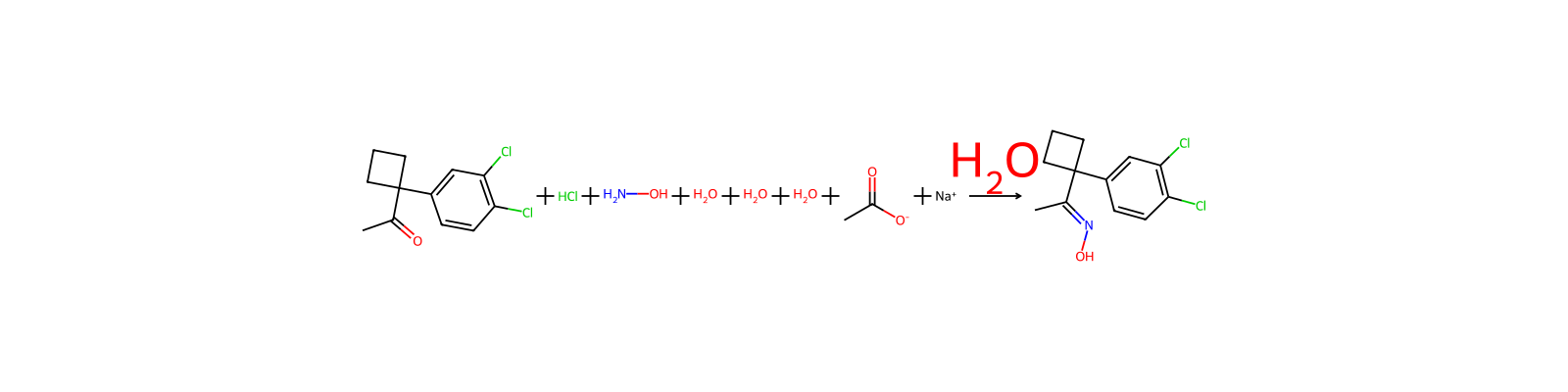
HRID 28293As reactant
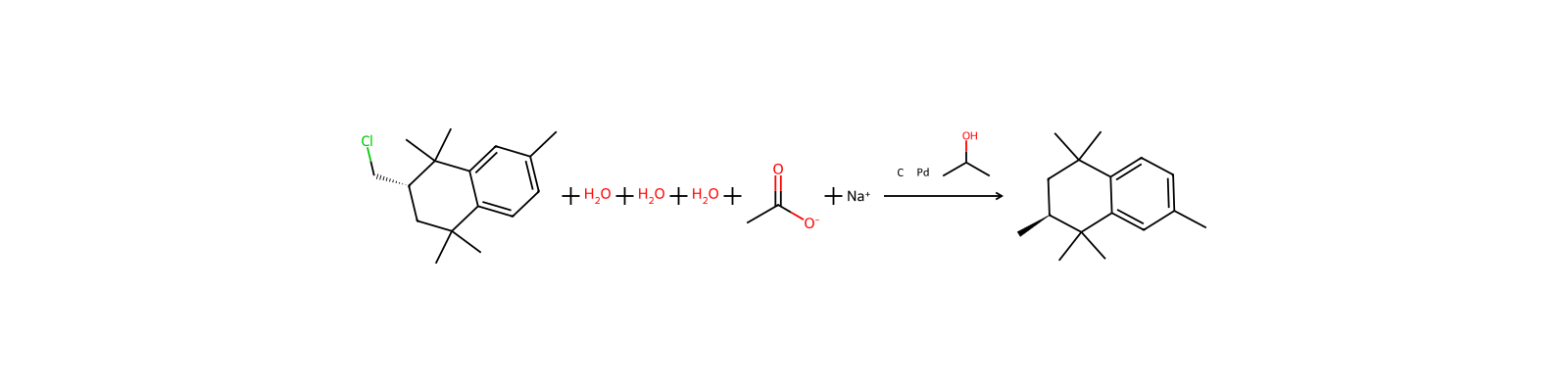
HRID 29793As reactant
HRID 35709As reactant
HRID 35750As reactant
HRID 45300As reactant
HRID 66026As reactant
HRID 66033As reactant
HRID 66034As reactant
PreviousPage 1 of 73

Compound notes

On this pageBasic informationOverviewNames & identifiersPropertiesSafety & regulationChemistry & industryRelated reactionsCompound notes
DTXSID2073986
ChEBI
CHEBI:32138
UNII
4550K0SC9B
EC Number
612-115-9
Solid
color
White
PH
7.5 · 7.5-9.0 (25℃, 50mg/mL in H2O)
pka
4.76 · 4.76 (acetic acid)(at 25℃)
Odor
Slight acetic acid
PH Range
8.5 · 8.5 - 10 at 408 g/l at 25 °C
Water Solubility
762 g/L · 762 g/L (20 ºC)
λmax
260 nm · λ: 260 nm Amax: ≤0.01λ: 280 nm Amax: ≤0.01
Merck
14 · 14,8571
BRN
3732037 · 3732037
Stability
Stable. Incompatible with strong oxidizing agents, halogens.
InChI
1S/C2H4O2.Na.3H2O/c1-2(3)4;;;;/h1H3,(H,3,4);;3*1H2/q;+1;;;/p-1
InChIKey
AYRVGWHSXIMRAB-UHFFFAOYSA-M
SMILES
O.O.O.[Na+].CC([O-])=O
LogP
-0.285 · -0.285 (est)
CAS DataBase Reference
6131 · 6131-90-4(CAS DataBase Reference)
FDA UNII
4550 K0SC9B · 4550K0SC9B
NIST Chemistry Reference
Sodium acetate trihydrate(6131-90-4)
EPA Substance Registry System
Acetic acid, sodium salt, trihydrate (6131-90-4)
UNSPSC Code
41116107 · 41116107
NACRES
21 · NB.21
Symbol(GHS)
7 · GHS07
Signal word
Warning
Hazard statements
302 · H302-H315-H319-H335
Precautionary statements
261 · P261-P301+P312-P302+P352-P304+P340-P305+P351+P338
Hazard Codes
Xi
Risk Statements
36 · 36/37/38
Safety Statements
24 · 24/25-36-26
WGK Germany
1 · 1
RTECS
4580000 · AJ4580000
Autoignition Temperature
607 °C · 607 °C
TSCA
Yes
HS Code
29152200 · 29152200
Storage Class
11 · 11 - Combustible Solids
Toxicity
50 orally · LD50 orally in Rabbit: 3530 mg/kg LD50 dermal Rabbit > 10000 mg/kg

230 [mg/m3]

1400 [mg/m3]

Safety data

wgk
1
tsca
Yes
rtecs
AJ4580000
hs_code
29152200
Toxicity
LD50 orally in Rabbit: 3530 mg/kg LD50 dermal Rabbit > 10000 mg/kg
risk_code
36/37/38
Signal word
Warning
Symbol(GHS)
GHS07
hazard_code
Xi
safety_code
24/25-36-26
Storage Class
11 - Combustible Solids
Hazard statements
H302-H315-H319-H335
Autoignition Temperature
607 °C
Precautionary statements
P261-P301+P312-P302+P352-P304+P340-P305+P351+P338
Preparation methods · 1 item

PreparationSodium acetate is prepared by reacting sodium hydroxide or sodium carbonate with acetic acid in aqueous solution. The solution is evaporated to obtain hydrated crystals of sodium acetate. NaOH + CH3COOH → CH3COONa + H2O Na2CO3 + CH3COOH → 2CH3COONa + CO2 + H2O

Upstream & downstream products

Upstream raw materials

Acetic acid solutionAcetic acidSodium hydroxideActivated carbonSodium carbonate

Downstream products

Gardenia blue pigmentPigment Yellow 835-Ethyl-2-thiophenecarboxaldehydeBispyrazoloneLEAD PHOSPHITE, DIBASIC6-Hydroxy-7-methoxycoumarinPigment Red 32Pigment Red 13Pigment Yellow 65o-Anisic acidVINYL STEARATE3-(2-Furyl)isoxazol-5-aminePigment Red 175RHODINYL ACETATEsoftener ISPhenethyl acetateSodium diacetate8-MethoxycoumarinD-alpha-Tocopheryl acetateGeranyl acetate3-Amino-5-phenylpyrazole2,6-DithiopurineAcid blue 92glyceryl ethercarboxylic acid salt3,3'-Dihydroxybenzidine6-MethoxycoumarinCefotaximePalmitic acid vinyl ester2-Acetyl pyrrole1,2,3,4-Tetrahydro-9-acridinamine2-Amino-4-(4-chloro-phenyl)-thiophene-3-carboxylic acid ethyl ester5-Methyl-4-isoxazolecarbonyl chloride4-Hydroxy-3-methoxystyreneC. I. Pigment Red 2587-isopropyl-4-methyloxepan-2-one5-[(1,3-Dioxo-1,3-dihydro-2H-isoindol-2-yl)methyl]-2-furaldehyde6-Amino-5-nitroso-3-methyluracilCephalothin sodiumCoumarin 30ISOXANTHOPTERIN

Additional notes

DefinitionChEBI: Sodium acetate trihydrate is a hydrate. It contains a sodium acetate.