
HRID 5269용매로
Sodium Hypochlorite
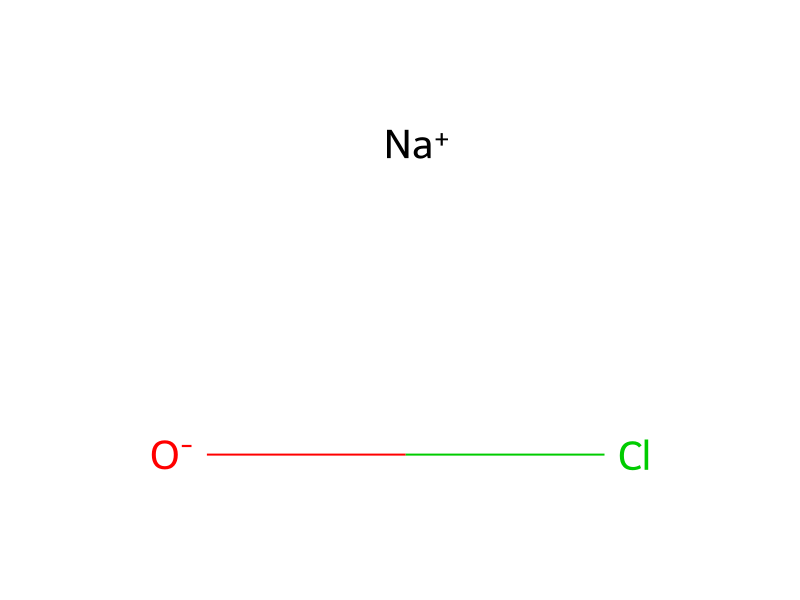
7681-52-9[Na+].[O-]ClSUKJFIGYRHOWBL-UHFFFAOYSA-NSodium hypochlorite appears as colorless or slightly yellow watery liquid with an odor of household bleach. Mixes with water. (USCG, 1999)
7681-52-9DTXSID8021276CHEMBL1334078CHEBI:32146Other Uses -> Biocides/Disinfectants
Corrosives
Bactericides
Active substance -> EU Pesticides database: Not approved
Fungicides
Active substance -> EU Pesticides database: Pending
Disagreeable, sweetish odor
Faint chlorine-like odor /sodium hypochlorite soln diluted/
1.093 for 5% solution (USCG, 1999) - Denser than water; will sink
1.21 (14% aqueous solution, 20 °C)
Saturated liquid density= 66.169 lb/cu ft @ 70 °F
Density should not exceed 1.025 /Sodium hypochlorite soln, diluted/
Relative density (water = 1): 1.1 (5.5% aqueous solution)
Density (at 20 °C): 1.20 - 1.25 g/ml
Greenish yellow liquid
Anhydrous
29.3 g/100 g (0 °C) in water
Solubility in water, g/l at 20 °C: 293 (good)
안전 정보는 참고용이며, 공급업체의 물질안전보건자료(SDS), 관련 법규 및 전문가 평가를 대체하지 않습니다.
Danger
H314: Causes severe skin burns and eye damage [Danger Skin corrosion/irritation]
P260, P264, P264+P265, P273, P280, P301+P330+P331, P302+P361+P354, P304+P340, P305+P354+P338, P316, P317, P321, P363, P391, P405, and P501 (click each P-code to see the statement)
Danger
H290 (32.2%): May be corrosive to metals [Warning Corrosive to Metals]
P234, P260, P261, P264, P264+P265, P271, P273, P280, P301+P330+P331, P302+P352, P302+P361+P354, P304+P340, P305+P354+P338, P316, P317, P319, P321, P332+P317, P362+P364, P363, P390, P391, P403+P233, P405, P406, and P501 (click each P-code to see the statement)
Chemical: Hypochlorous acid, sodium salt
Commission Regulation (EC) No 2229/2004
Hypochlorous acid, sodium salt (1:1) is listed on the EPA's Chemical Data Reporting (CDR) system. Manufacturers and importers of Hypochlorous acid, sodium salt (1:1) are required to report information about their production and use of this chemical to the EPA under the Toxic Substances Control Act (TSCA). (40 eCFR Part 711)
2008/127/EC, Reg. (EU) 2022/801, Reg. (EU) No 190/2013, Reg. (EU) No 540/2011
REACH registered substance: Sodium hypochlorite (EC: 231-668-3)
Sodium hypochlorite: HSNO Approval: HSR003698 Approved with controls
Special Hazards of Combustion Products: Store in a cool, dark place, away from combustible materials. Emits chlorine gas when burned.
· Non-combustible, substance itself does not burn but may decompose upon heating to produce corrosive and/or toxic fumes.
Not combustible. Gives off irritating or toxic fumes (or gases) in a fire. Heating will cause rise in pressure with risk of bursting.
D - Dermatologicals
QD - Dermatologicals
V07AV
Trichloroacetic acid was found in the gut contents & plasma of fasted & nonfasted rats 1 hr after dosing with sodium hypochlorite. Thus, the formation is not dependent on the interaction of sodium hypochlorite with foreign organic material in the gut. Dichloroacetic acid was also found in all treated animals. Chloroform generally was present when trichloroacetic acid was detected. Dichloroacetonitrile was found in the gut contents of 2 of 3 nonfasted rats treated with sodium hypochlorite. Addition of 8 mg sodium hypochlorite/ml to nonfasted rat gut contents in vitro produced dichloroacetic acid, trichloroacetic acid, dichloroacetonitrile, & trichloroacetonitrile.
Substances used on inanimate objects that destroy harmful microorganisms or inhibit their activity. Disinfectants are classed as complete, destroying SPORES as well as vegetative forms of microorganisms, or incomplete, destroying only vegetative forms of the organisms. They are distinguished from ANTISEPTICS, which are local anti-infective agents used on humans and other animals. (From Hawley's Condensed Chemical Dictionary, 11th ed)
Electron-accepting molecules in chemical reactions in which electrons are transferred from one molecule to another (OXIDATION-REDUCTION).
Used as a disinfectant and bleaching agent with applications in the chemical, paper, textile, water treatment, and dairy industries; it is used to disinfectant water in swimming pools and cooling towers of power plants. [HSDB] 5% solution used as a hypo eliminator in photo development; [www.ci.tucson.az.us/arthazards/medium.html] Used in the EU on mushroom crops; Also used in the paint, lime, glass, pharmaceutical, metal (detoxify cyanide baths), and synthetics industries; [EFSA]





The anhydrous solid obtained by dessication of the /sodium hypochlorite/ pentahydrate will decomp violently on heating or friction.
May decomp, generating irritating chlorine gas. /Monohydrate/
Decomposed by hot water
When heated to decomposition it emits toxic fumes of Na2O and /hydrogen chloride/.
MP: 18 °C /Pentahydrate/
-5 °C
-30 - -20 °C
18 °C
Sodium hypochlorite, NaOCl, is an air-unstable,pale green crystalline solid that is soluble in cold water, decomposes in hot water, and has a sweet aroma. It generally is available in one of two strengths. The household liquid bleach contains about 5.25 wt% NaCIO. The commercial product(sometimes called 15% bleach) contains 150g/L available chlorine. This is equivalent to about 13 wt% sodium hypochlorite. Sodium hypochlorite is used as a bleaching agent for paper pulp and textiles, as an oxidizing reagent, as a disinfectant, as a chemical intermediate,and in medicines.The hypochlorite ion (OCI-) is similar to wet chlorine gas in its effects on materials. Not many metals exhibit good resistance even at low temperatures and concentrations. Because hypochlorite solutions are unstable at neutral and lower pHs,they normally contain excess alkali,which modifies the aggressiveness somewhat.
Not combustible. Gives off irritating or toxic fumes (or gases) in a fire.
FIRE RISK IN CONTACT WITH ORG MATERIALS.
Not flammable /SRP: Acts as oxidizer with combustible material./
INHALATION: Will produce severe bronchial irritation and pulmonary edema. INGESTION: burning of mouth, nausea and vomiting, delirium, coma. EYES & SKIN: can be irritating if contact is maintained. (USCG, 1999)
· TOXIC and/or CORROSIVE; inhalation, ingestion or skin contact with material may cause severe injury or death.
Corrosive to skin; [Quick CPC] Addition of acid to hypochlorite solution releases chlorine gas; Addition of ammonia releases chloramine gas; High inhalation exposure, especially if in confined space, can cause pulmonary edema; Ingestion can cause methemoglobinemia; Ingestion or 3% to 5% solution will cause burning of mouth and throat without other injury expected; [HSDB] Household bleaches (approximately 5% sodium hypochlorite) are irritants; more concentrated bleaches (10-15% sodium hypochlorite) are corrosive. [ICSC] The pentahydrate is decomposed by carbon dioxide in the air; The anhydrous form is highly explosive; [Merck Index] Only commercially produced as an aqueous solution; [EFSA] See Hypochlorous acid.
Symbol: Xi; R: 31-36/38; S: (1/2)-28-45-50-61; Note: B
Symbol: C, N; R: 31-34-50; S: (1/2)-28-45-50-61; Note: B
UN Hazard Class: 8
UN Hazard Class: 8; UN Pack Group: II, III
Fire Extinguishing Agents Not to Be Used: Amines and oxidizable material such as oxalic acid. May produce explosive chloroamines with amines.
In case of fire in the surroundings, use appropriate extinguishing media.
In case of fire in the surroundings, use appropriate extinguishing media. In case of fire: keep drums, etc., cool by spraying with water.
Fresh air, rest. Refer for medical attention.
First rinse with plenty of water for at least 15 minutes, then remove contaminated clothes and rinse again. Refer for medical attention .
Rinse with plenty of water for several minutes (remove contact lenses if easily possible). Refer for medical attention.
Rinse mouth. Do NOT induce vomiting. Give one or two glasses of water to drink. Refer immediately for medical attention.
Fresh air, rest. Half-upright position. Artificial respiration may be needed. Administration of oxygen may be needed. Refer immediately for medical attention.
First rinse with plenty of water for at least 15 minutes, then remove contaminated clothes and rinse again. Refer immediately for medical attention.
· CALL 911. Then call emergency response telephone number on shipping paper. If shipping paper not available or no answer, refer to appropriate telephone number listed on the inside back cover.
· ELIMINATE all ignition sources (no smoking, flares, sparks or flames) from immediate area.
INHALATION: Sips of milk or other demulcent.
General First Aid:
Separated from acids. See Chemical Dangers. Cool. Keep in the dark. Well closed. Store only in original container.
Separated from combustible substances, reducing agents, acids and food and feedstuffs. See Chemical Dangers. Cool. Keep in the dark. Well closed. Store only in original container.
If material involved in fire: Extinguish fire using agent suitable for type of surrounding fire. (Material itself does not burn or burns with difficulty.) Use water in flooding quantities as fog. Cool all affected containers with flooding quantities of water. Apply water from as far a distance as possible. /Hypochlorite soln (containing more than 7% available chlorine, by wt)/
Cool exposed containers with water. /Monohydrate/
Store at a temp not exceeding 20 °C away from acids in well-fitted air-tight bottles, closed with a glass stopper or suitable plastic cap. Protect from light. /Strong sodium hypochlorite soln/
Vent caps should be checked with full personal protection, and material should be stored at 15-18 °C and out of direct sunlight. ...
Solutions in water are storage hazards due to oxygen evolution.
Environmental considerations-land spill: Dig a pit, pond, lagoon, holding area to contain liquid or solid material. /SRP: If time permits, pits, ponds, lagoons, soak holes, or holding areas should be sealed with an impermeable flexible membrane liner./ Dike surface flow using soil, sand bags, foamed polyurethane, or foamed concrete; absorb bulk liquid with fly ash or cement powder; neutralize with agricultural lime (CaO), crushed limestone (CaCO3), or sodium bicarbonate (NaHCO3) /Sodium hypochlorite soln (Hypochlorite soln containing not more than 7% available chlorine, by wt)/
Environmental considerations- water spill: Neutralize with agricultural lime (CaO), crushed limestone (CaCO3), or sodium bicarbonate (NaHCO3); if dissolved, in region of 10 ppm or greater concn, apply activated carbon at 10 times the spilled amt; use mechanical dredges or lifts to remove immobilized masses of pollutants and precipitates. /Sodium hypochlorite soln (Hypochlorite soln containing not more than 7% available chlorine, by wt)/
Environmental considerations- air spill: Apply water spray or mist to knock down vapors. /Sodium hypochlorite soln (Hypochlorite soln containing not more than 7% available chlorine, by wt)/
SRP: At the time of review, criteria for land treatment or burial (sanitary landfill) disposal practices are subject to significant revision. Prior to implementing land disposal of waste residue (including waste sludge), consult with environmental regulatory agencies for guidance on acceptable disposal practices.
Personal protection: filter respirator for inorganic gases and vapours adapted to the airborne concentration of the substance. Do NOT let this chemical enter the environment. Ventilation. Collect leaking and spilled liquid in covered non-metallic containers as far as possible. Wash away remainder with plenty of water.
Personal protection: complete protective clothing including self-contained breathing apparatus. Do NOT let this chemical enter the environment. Ventilation. Collect leaking and spilled liquid in sealable non-metallic containers as far as possible. Then wash away with plenty of water. Do NOT absorb in saw-dust or other combustible absorbents.
EYES: irrigate opened eyes for several minutes under running water. INGESTION: do not induce vomiting. Rinse mouth with water (never give anything by mouth to an unconscious person). Seek immediate medical advice. SKIN: should be treated immediately by rinsing the affected parts in cold running water for at least 15 minutes, followed by thorough washing with soap and water. If necessary, the person should shower and change contaminated clothing and shoes, and then must seek medical attention. INHALATION: supply fresh air. If required provide artificial respiration.
Chlorine Bleach is a strong corrosive material. Sodium hypochlorite solutions frequently produce small amounts of chlorine gas. If inhaled, chlorine can trigger cough, substernal pain, respiratory distress, shortness of breath, and wheezing. Symptoms may be delayed. Nausea and vomiting are reflex in origin, and headache and loss of consciousness are probably due to the hypoxia caused by pulmonary edema. Dermal contact can lead to redness, pain, and redness of the exposed surface. Eye contact can lead to watering of the eyes. Ingestion can cause pulmonary edema, vomiting or coma. Exposure to the skin may cause sensitization or other allergic responses. If the eye is not irrigated immediately after it has been exposed permanent eye damage may occur. Toxicity described in animals from single low-dose (1% solution) exposures by ingestion include muscular weakness, and hypoactivity. Long-term administration of compound in drinking water of rats caused depression of the immune system. No adverse changes were observed in an eight week dermal study of a 1% solution in guinea pigs. Tests in animals demonstrate no carcinogenic activity by either the oral or dermal routes.
The substance can be absorbed into the body by inhalation of its aerosol.
Serious local effects by all routes of exposure.
Dermal
Sodium hypochlorite is a strong oxidizer. Oxidation reactions are corrosive, solutions burn skin and cause eye damage, especially when used in concentrated forms. In particular, hypochorite (HOCl) is known to cause post-translational modifications to amino acids in proteins, the notable ones being cysteine and methionine oxidation. These oxidation reactions can lead to widespread protein aggregation and denaturation, leading to cell death and tissue damage. It is estimated that there are about 3300 accidents needing hospital treatment caused by sodium hypochlorite solutions each year in British homes. A recent European study indicated that sodium hypochlorite and organic chemicals (e.g., surfactants, fragrances) contained in several household cleaning products can react to generate chlorinated volatile organic compounds (VOCs). Some of these VOCs are toxic and probable human carcinogens. The study showed that indoor air concentrations significantly increase (8-52 times for chloroform and 1-1170 times for carbon tetrachloride, respectively, above baseline quantities in the household) during the use of bleach containing products. Sodium Hypochlorite reacts violently with amines and ammonium salts. Solutions are reactive with common cleaning products such as toilet bowl cleaners, rust removers, vinegar, acids, organics and ammonia products to produce hazardous gases such as chlorine and other chlorinated species.
Cough. Sore throat.
Redness. Pain.
Redness. Pain.
Burning sensation. Sore throat. Cough. Abdominal pain. Vomiting. Diarrhoea.
Burning sensation. Cough. Laboured breathing. Shortness of breath. Sore throat. Symptoms may be delayed.
Redness. Skin burns. Pain. Blisters.
The substance is very toxic to aquatic organisms. This substance does enter the environment under normal use. Great care, however, should be taken to avoid any additional release, for example through inappropriate disposal.
The substance is very toxic to aquatic organisms. The substance may cause long-term effects in the aquatic environment.
SYMPTOMATOLOGY: 1. PAIN & INFLAMMATION OF MOUTH, PHARYNX, ESOPHAGUS, & STOMACH. EROSION OF MUCOUS MEMBRANES, CHIEFLY OF STOMACH. 2. VOMITING ... HEMORRHAGE ... 3. CIRCULATORY COLLAPSE, WITH COLD & CLAMMY SKIN, CYANOSIS, & SHALLOW RESPIRATIONS. 4. CONFUSION, DELIRIUM, COMA. 5. EDEMA OF PHARYNX, GLOTTIS & LARYNX, WITH STRIDOR & OBSTRUCTION. 6. PERFORATION OF ESOPHAGUS OR STOMACH, WITH MEDIASTINITIS OR PERITONITIS. 7. INHALATION OF HYPOCHLOROUS ACID FUMES CAUSES SEVERE RESP TRACT IRRITATION & PULMONARY EDEMA. 8. SKIN CONTACT MAY CAUSE VESICULAR ERUPTIONS AND ECZEMATOID DERMATITIS. /HYPOCHLORITE/
INGESTION OF LETHAL DOSE OF SODIUM HYPOCHLORITE HAD CORROSIVE EFFECT & METHEMOGLOBINEMIA WAS PRESENT.
... An 18 month old girl who swallowed a "few tablespoons" /of liquid household bleach/ and immediately coughed, choked and vomited. Gastric lavage with a weak vinegar solution was performed within 10 min. Promptly thereafter she became lethargic and was admitted to a local hospital in a state of coma. Her temp was 103.2 °F, pulse 160, respirations 88, and blood pressure unobtainable. Rales and rhonchi were audible, & clonic convulsive movements persisted until death, which occurred, in spite of vigorous treatment, 19 hr after ingestion. Postmortem exam revealed focal necrosis, hemorrhage, and superficial erosion of the gastric mucosa, but the presumptive cause of death was an acute tracheobronchitis, & obstructive atelectasis secondary to bronchial exudates. /Hypochlorite/
A 61 yr old woman was completing a hemodialysis treatment when routine cleaning of the hemodialysis machine was started. Approx 2 l of undiluted sodium hypochlorite cleaning soln was added to the dialysis bath. For less than 2 min the chlorox soaked membrane was in contact with the blood returning to the pt. This led to massive hemolysis, hyperkalemia, cyanosis, & cardiopulmonary arrest.
For more Human Toxicity Excerpts (Complete) data for SODIUM HYPOCHLORITE (9 total), please visit the HSDB record page.
IN TESTS ON RABBIT EYES, 5% SOLN WHICH HAD PH 11.1 TO 11.6 CAUSED IMMEDIATE PAIN, BUT IF WASHED OFF WITH WATER WITHIN THIRTY SECONDS, LEFT ONLY SLIGHT TRANSIENT CORNEAL EPITHELIAL HAZE & CONJUNCTIVAL EDEMA, WITH RETURN TO NORMAL WITHIN A DAY OR LESS. ... INTERESTING DIFFERENCE BETWEEN RABBIT & MONKEY EYES IN RESPONSE TO EXPOSURE TO 5.5% SOLN HAS BEEN REPORTED ... INDICATING THAT MONKEY EYE RECOVERS MUCH MORE RAPIDLY, MAYBE MORE LIKE HUMAN. ... 1 DROP OF 15% SOLN @ PH 11.2 CAUSED IMMEDIATE SEVERE PAIN ... CAUSED HEMORRHAGES FROM CONJUNCTIVA AND NOSE, PLUS RAPID ONSET OF GROUNDGLASS APPEARANCE OF CORNEAL EPITHELIUM ... FOLLOWED BY MODERATE BLUISH EDEMA OF WHOLE CORNEA, CHEMOSIS ... NEOVASCULARIZATION OF CONJUNCTIVA ... /SCARRING/ OF NICTITATING MEMBRANE ... .
UNDILUTED LIQUID BLEACH (CLOROX) INSTILLED INTO UPPER ESOPHAGUS OF RABBITS & DOGS PRODUCED NO PERMANENT ESOPHAGEAL LESIONS UNLESS LOWER END OF ESOPHAGUS WAS OCCLUDED, IN WHICH CASE HALF OF DOGS DIED FROM ESOPHAGEAL PERFORATION, MEDIASTINITIS & PLEURISY.
SODIUM HYPOCHLORITE WAS AMONG CMPD SCREENED & FOUND POSITIVE ON ACTIVATION IN SYSTEM WITH RAT LIVER MICROSOME FRACTION & S9 MIXT APPLIED TO CHROMOSOMAL ABERRATION TESTS IN VITRO.
DISCHARGES IN NW SICILY WERE STUDIED. SAFETY LIMIT OF 0.1 PPM FOR SODIUM HYPOCHLORITE WAS DETERMINED. AT 0.02 PPM RESIDUAL CHLORINE, THERE WAS 50% INHIBITION OF PHYTOPLANKTON GROWTH.
For more Non-Human Toxicity Excerpts (Complete) data for SODIUM HYPOCHLORITE (12 total), please visit the HSDB record page.
Evaluation: There is inadequate evidence for the carcinogenicity of hypochlorite salts in experimental animals. No data were available from studies in humans on the carcinogenicity of hypochlorite salts. Overall evaluation: Hypochlorite salts are not classifiable as to their carcinogenicity to humans (Group 3). /Hypochlorite salts/
As the federal pesticide law FIFRA directs, EPA is conducting a comprehensive review of older pesticides to consider their health and environmental effects and make decisions about their future use. Under this pesticide reregistration program, EPA examines health and safety data for pesticide active ingredients initially registered before November 1, 1984, and determines whether they are eligible for reregistration. In addition, all pesticides must meet the new safety standard of the Food Quality Protection Act of 1996. Sodium hypochlorite is found on List A, which contains most food use pesticides and consists of the 194 chemical cases (or 350 individual active ingredients) for which EPA issued registration standards prior to FIFRA, as amended in 1988. Case No: 0029; Pesticide type: fungicide, antimicrobial (bactericide); Registration Standard Date: 02/01/86; Case Status: RED Approved 09/91; OPP has made a decision that some/all uses of the pesticide are eligible for reregistration, as reflected in a Reregistration Eligibility Decision (RED) document.; Active ingredient (AI): Sodium hypochlorite; AI Status: OPP has completed a Reregistration Eligibility Decision (RED) document for the case/AI.
Persons in charge of vessels or facilities are required to notify the National Response Center (NRC) immediately, when there is a release of this designated hazardous substance, in an amount equal to or greater than its reportable quantity of 100 lb or 45.4 kg. The toll free number of the NRC is (800) 424-8802; In the Washington D.C. metropolitan area (202) 426-2675. The rule for determining when notification is required is stated in 40 CFR 302.4 (section IV. D.3.b).
Electroplating [Category: Plate]
Textile arts [Category: Hobbies]
For Sodium hypochlorite (USEPA/OPP Pesticide Code: 014703) ACTIVE products with label matches. /SRP: Registered for use in the U.S. but approved pesticide uses may change periodically and so federal, state and local authorities must be consulted for currently approved uses./
BLEACHING AGENT; HOUSEHOLD & LAUNDRY BLEACHING AGENT; BLEACHING AGENT IN PAPER, PULP, TEXTILE INDUST; DISINFECTANT FOR GLASS, CERAMICS & WATER; ALGICIDE & MOLLUSCICIDE IN COOLING WATER FOR POWER STATIONS; BLEACH IN ALPHA-OLEFIN SULFONATE PRODUCTION, REACTANT IN HYDRAZINE MFR
In dairies for disinfecting utensils and apparatus. /Sodium hypochlorite soln/
2023: 1,000,000,000 - <2,500,000,000 lb
(1972) 5.77X10+10 G
(1975) 6.49X10+10 G
... Sanfourche, Gardent, Bull Soc Chim (4) 35, 1089 (1924); Schmeisser in Handbook of Preparative Inorganic Chemistry Vol 1, G Brauer, ed (Academic Press, NY, 2nd ed, 1963) pp 309-310. Anhydrous sodium hypochlorite may be obtained by freeze-drying in vacuum (over concn sulfuric acid). Addition of chlorine to cold dilute solution of sodium hydroxide.
Soln of sodium hypochlorite containing 0.45-0.50 g of the salt in 100 ml. Prepd by diluting with distilled water a soln of sodium hypochlorite, adding a 5% soln of sodium bicarbonate, nad adjusting to proper strength and concn according to procedure described in N.F. May be prepared also from 15.4 g chlorinated lime (30% available chlorine), 7.7 g anhydrous sodium carbonate, and 6.4 g sodium bicarbonate per liter; this soln is then adjusted ... /Sodium hypochlorite soln, diluted/
USEPA/OPP Pesticide Code 014703; Trade Names: Antiformin, B-K liquid, Chlorox, Dakin's solution, Hychlorite, Milton, Mera Industries 2MOM3B, Chloros, Javelle water, Piochlor, Purex.
Modified Dakin's soln; surgical chlorinated soda solution; Carrel-Dakin soln. /Sodium hypochlorite diluted/
Eau de Labarraque; Clorox; Dazzle /aq soln/
Strongly alkaline soln of sodium hypochlorite; 100 ml contains 5.68 g active chlorine, 7.8 g sodium hydroxide, 32 g sodium bicarbonate. /Sodium hypochlorite soln, alkaline/
For more Formulations/Preparations (Complete) data for SODIUM HYPOCHLORITE (10 total), please visit the HSDB record page.
Petrochemical Manufacturing
Hypochlorous acid, sodium salt (1:1): ACTIVE
IT IS OF PRIMARY IMPORTANCE THAT STRENGTH OF ... /DILUTED SODIUM HYPOCHLORITE/ BE ACCURATELY ADJUSTED & IT SHOULD BE RETESTED IF KEPT FOR MORE THAN A FEW DAYS.
용도화학적으로 굉장히 산화력이 강하기 때문에 표백작용과 살균작용이 있으며 보통 흰 의류를 표백하거나 화장실 청소할 때 주로 쓰이고 그 외에도.
역사Sodium hypochlorite exists as an aqueous solution from 5 15% NaOCl and is commonly called bleach. Household bleach is typically a 5.25% solution, and industrial bleach is sold as a 12% solution. When sodium hypochlorite is used in this entry, it is assumed to be the aqueous solution, which is clear, slightly yellow, corrosive, and has a distinctive chlorine smell. Chorine gas was discovered by Carl Wilhelm Scheele (1742 1786) in 1774 and known initially as depholgisticated salt spirit. In 1787, the French chemist Claude Louis Berthollet (1749 1822) experimented with aqueous solution of chlorine gas as bleaching agents. Based on Berthollet's work, the Javel Company located on the outskirts of Paris began to produce bleaches in 1788. Chlorine gas was dissolved in a solution of soda potash (potassium carbonate) to obtain a product called liqueur de Javel, which was potassium hypochlorite. Potash treated with chlorine gas was also used to produce bleaching powders. In 1820, Antoine Germaine Labarraque (1777 1850), an apothecary, substituted cheaper soda ash (sodium carbonate) for potash to produce Eau de Labarraque or Labarraque solution, which was sodium hypochlorite. Eau de Labarraque was used as a disinfectant and to bleach paper. Bleaching powders, borax, lye, and blueing were used as bleaches throughout the 19th century.Sodium hypochlorite is the primary hypochlorite used as a bleach and disinfectant, accounting for 83% of world hypochlorite use, with calcium hypochlorite accounting for the remaining 17%. Approximately 1 million tons of sodium hypochlorite was used globally in 2005, with about half this amount used in households for laundry bleaching and disinfection. The other half was used primarily for wastewater and drinking water treatment; other uses include pool sanitation, bleaching of pulp, paper, and textiles, and as an industrial chemical.
용도Sodium hypochlorite is marketed only as an aqueous solution because the anhydrous solid is highly unstable and can explode. The solid pentahydrate also is unstable in air, decomposed by reaction with carbon dioxide from air. Aqueous solutions are very stable. They are used for bleaching textiles and paper pulp; in cleaning solutions; in water purification; as a disinfectant for swimming pools; and as a germicide and topical antiinfective. The hypochlorite also is used as an oxidizing agent in many preparative reactions. It is an ingredient of commercial bleaching products such as Clorox and Dazzle.
일반 설명Green to yellow watery liquid with an odor of bleaching liquid odor. Sinks and mixes with water.
Sodium hypochlorite solution is obtained by passing chlorine into sodium hydroxide solution. The pentahydrate is obtained by crystallization.
확인시험(1) 이 품목은 염색반응시험법에 따라 시험할 때, 황색을 나타낸다. (2) 이 품목에 묽은염산을 가하면 가스가 발생한다. (3) 이 품목에 적색리트머스지를 넣으면 리트머스지는 청색으로 변하고 다음에는 퇴색한다.
정량법이 품목 3g을 정밀히 달아 이에 물 50mL을 가하고 요오드칼륨 2g 및 초산(1→4) 10mL을 가한 후 바로 밀봉하여 암소에 15분간 방치하고, 유리된 요오드를 0.1N 치오황산나트륨용액으로 적정한다(지시약 : 전분시액). 따로 같은 방법으로 공시험을 한다. 다만, 차아염소산나트륨수 제조장치를 통하여 제조되는 차아염소산나트륨수는 10mL을 정확히 취하여 이에 물 50mL을 가하고 요오드칼륨 1g 및 초산(1→4) 5mL을 가하여 유리된 요오드를 0.01N 치오황산나트륨용액으로 적정한다. 종말점은 액의 청색이 사라질 때로 한다.
정의정 의 이 품목은 차아염소산나트륨을 주성분으로 하는 것을 말하며, 식염수를 전기분해의 방법으로 얻어지는 것도 포함한다.
정의ChEBI: Sodium hypochlorite is an inorganic sodium salt in which hypochlorite is the counterion. It is used as a bleaching and disinfecting agent and is commonly found in household bleach. It has a role as a bleaching agent and a disinfectant. It contains a hypochlorite.