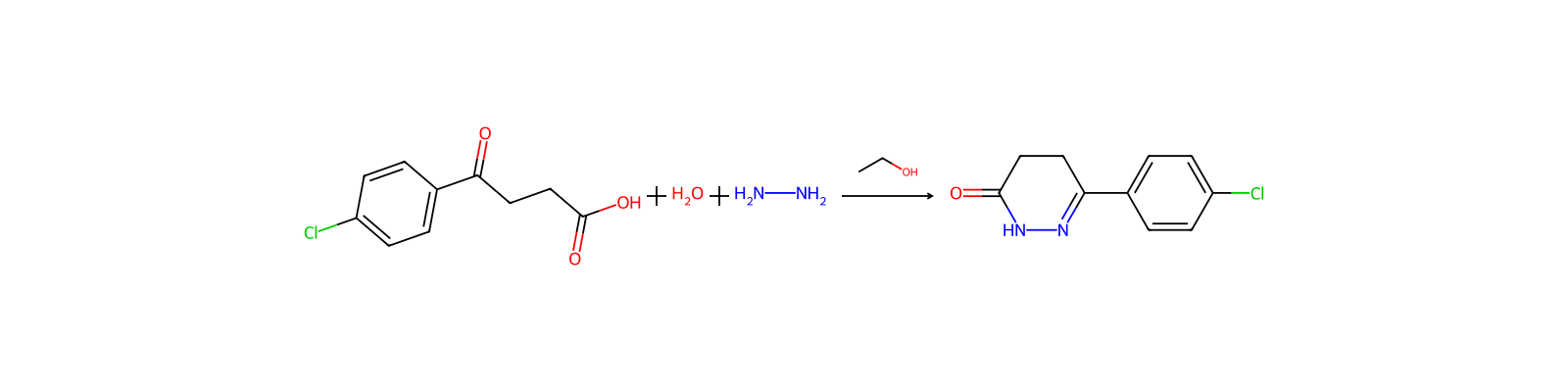
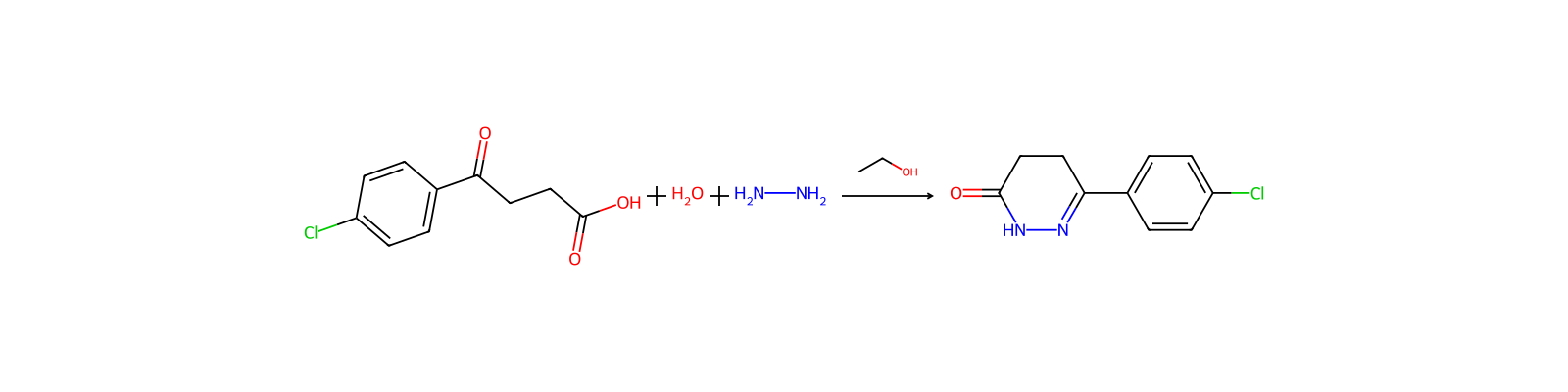
HRID 1078반응물로
Hydrazine hydrate (1:1)

10217-52-4NN.OIKDUDTNKRLTJSI-UHFFFAOYSA-NHydrazine hydrate is a hydrate. It contains a hydrazine.
10217-52-4、7803-57-8DTXSID9037240CHEBI:35511Nitrogen Compounds -> Hydrazines
Corrosives
Liquid; Other Solid; Liquid
A colorless fuming liquid with a faint ammonia-like odor; Corresponds to a 64% aqueous solution of hydrazine in water; [CAMEO]
clear colorless solution
안전 정보는 참고용이며, 공급업체의 물질안전보건자료(SDS), 관련 법규 및 전문가 평가를 대체하지 않습니다.
This chemical does not meet GHS hazard criteria for 0.5% (1 of 214) of reports.
Danger
H226 (95.3%): Flammable liquid and vapor [Warning Flammable liquids]
P203, P210, P233, P240, P241, P242, P243, P260, P261, P262, P264, P264+P265, P270, P271, P272, P273, P280, P284, P301+P316, P301+P330+P331, P302+P352, P302+P361+P354, P303+P361+P353, P304+P340, P305+P354+P338, P316, P317, P318, P320, P321, P330, P333+P317, P361+P364, P362+P364, P363, P370+P378, P391, P403+P233, P403+P235, P405, and P501 (click each P-code to see the statement)
Aggregated GHS information provided per 214 reports by companies from 14 notifications to the ECHA C&L Inventory. Each notification may be associated with multiple companies.
This chemical does not meet GHS hazard criteria for 11.1% (1 of 9) of reports.
Chemical: Hydrazine, monohydrate
Hydrazine, monohydrate is listed on the EPA's Chemical Data Reporting (CDR) system. Manufacturers and importers of Hydrazine, monohydrate are required to report information about their production and use of this chemical to the EPA under the Toxic Substances Control Act (TSCA). (40 eCFR Part 711)
Hydrazine, monohydrate: HSNO Approval: HSR007167 Approved with controls
Hydrazine, monohydrate: Does not have an individual approval but may be used under an appropriate group standard
The New Jersey Worker and Community Right to Know Act requires public and private employers to provide information about hazardous substances at their workplaces. (N.J.S.A. 34:5A-1 et. seq.)
Corrosive to skin; [Quick CPC] Highly toxic by inhalation, ingestion, or skin absorption; [CAMEO] A very strong reducing agent and violent poison; May cause delayed eye irritation; [Merck Index] Causes methemoglobinemia and liver injury in 28-day oral study of rats at 30 mg/kg/day; [JECDB] Causes excitement and muscle contraction or spasticity in oral lethal-dose studies of guinea pigs, mice, rabbits, and rats; [RTECS] Causes burns; Inhalation may cause corrosive injuries to upper respiratory tract and lungs; May cause skin sensitization; Toxic by ingestion, inhalation, and skin absorption; [Alfa Aesar MSDS] See Hydrazine.
Flam. Liq. 3 (44.4%)
Flam. Liq. 3 (95.3%)
Acute toxicity - category 3
Flammable liquids - Category 4
Carcinogenicity - Category 1B
Flammable liquids - Category 4
0.10 [ppm]
13 [ppm]
35 [ppm]
Substances that inhibit or prevent the proliferation of NEOPLASMS.
Substances that increase the risk of NEOPLASMS in humans or animals. Both genotoxic chemicals, which affect DNA directly, and nongenotoxic chemicals, which induce neoplasms by other mechanism, are included.
용도Hydrazine hydrate may be used to prepare: 3-(2-Benzyloxy-6-hydroxyphenyl)-5-styrylpyrazoles by reacting with 5-benzyloxy-2-styrylchromones.3,5-Diphenyl-2-pyrazoline derivatives by reacting with 1,3-diphenyl-2-propen-1-one.3′-Aryl-1,2,3,4,4′,5′-hexahydrospiro[quinoxalin-2,5′-pyrazol]-3-ones by reacting with 3-arylacylidene-3,4-dihydroquinoxalin-2(1H)-ones.It may also be used in the catalytic reduction of nitroarenes to aromatic amines.
일반 설명The addition of hydrazine hydrate to reduced graphene oxide (RGO) counter electrode improves its performance in dye-sensitized solar cells (DSSC).