
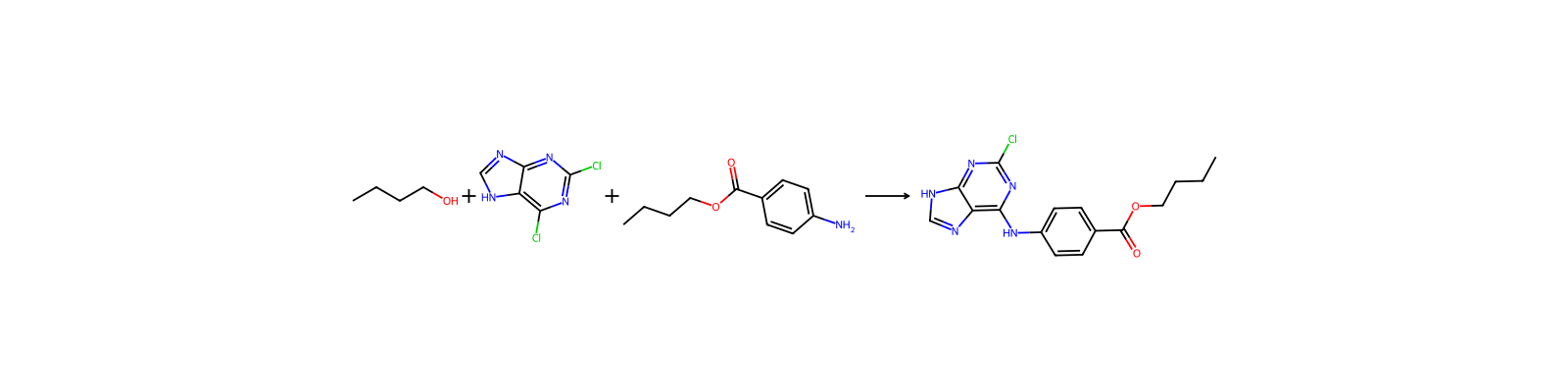
HRID 10480As reactant

94-25-7CCCCOC(=O)c1ccc(N)cc1IUWVALYLNVXWKX-UHFFFAOYSA-NN-butyl-p-aminobenzoate is a yellow powder. Insoluble in water. (NTP, 1992)
94-25-7DTXSID7022417CHEMBL127516CHEBI:3231log Kow= 2.87
3.05
Crystals from alc
White powder
White, amorphous powder
Insoluble (NTP, 1992)
1 g dissolves in about 7 liters water
Sol in dil acids, alc, chloroform, ether, and fatty oils.
Soluble in dilute acids, alcohol, chloroform, ether, and fatty oils.
Soluble in thanol, ethyl ether, and benzene.
Safety information is for reference only and does not replace the supplier’s Safety Data Sheet (SDS), applicable regulations, or professional assessment.
Warning
H315 (100%): Causes skin irritation [Warning Skin corrosion/irritation]
P261, P264, P264+P265, P271, P272, P280, P302+P352, P304+P340, P305+P351+P338, P319, P321, P332+P317, P333+P317, P337+P317, P362+P364, P403+P233, P405, and P501 (click each P-code to see the statement)
Aggregated GHS information provided per 43 reports by companies from 6 notifications to the ECHA C&L Inventory. Each notification may be associated with multiple companies.
Butamben has been shown to selectively inhibit dorsal root pain signal transmission for periods of months when administered as epidural suspensions. The effect of butamben is not related to any significant loss of motor function which indicates that it targets specifically the pain-sensing C fibers of the dorsal root. When administered topically, butamben produced anesthesia by accumulating in the nerve cell membrane causing it to expand and lose its ability to depolarize and blocking the impulse transmission.
Butamben acts by inhibiting the voltage-gated calcium channels in dorsal root ganglion neurons. The modification in this channels is thought to cause a disturbance of the channel kinetics acceleration. It is reported as well that butamben is an inhibitor of the sodium channels and a delayed rectifier of potassium currents. All the effects of butamben are performed in the root ganglion neurons which suggests that the related anesthetic effect may be caused by the reduced electrical excitability.
...ACTION IS TO INTERFERE WITH INITIATION & TRANSMISSION OF NERVE IMPULSE. PRESENT THEORY HOLDS THAT LOCAL ANESTHETICS PREVENT DEPOLARIZATION OF NERVE MEMBRANE &, HENCE, PROPAGATION OF IMPULSE. ...THOUGHT TO BE DUE TO INTERFERENCE WITH MUTUAL EXCHANGE OF SODIUM & POTASSIUM IONS ACROSS MEMBRANE. /LOCAL ANESTHETICS/


343 to 345 °F at 8 mmHg (NTP, 1992)
173-174 °C @ 8 mm Hg
136 °F (NTP, 1992)
58 °C
Manufacturers, packers, and distributors of drug and drug products for human use are responsible for complying with the labeling, certification, and usage requirements as prescribed by the Federal Food, Drug, and Cosmetic Act, as amended (secs 201-902, 52 Stat. 1040 et seq., as amended; 21 U.S.C. 321-392).
N-BUTYL-P-AMINOBENZOATE is an aminophenyl ester derivative. Amines are chemical bases. They neutralize acids to form salts plus water. These acid-base reactions are exothermic. The amount of heat that is evolved per mole of amine in a neutralization is largely independent of the strength of the amine as a base. Amines may be incompatible with isocyanates, halogenated organics, peroxides, phenols (acidic), epoxides, anhydrides, and acid halides. Flammable gaseous hydrogen is generated by amines in combination with strong reducing agents, such as hydrides. Esters react with acids to liberate heat along with alcohols and acids. Strong oxidizing acids may cause a vigorous reaction that is sufficiently exothermic to ignite the reaction products. Heat is also generated by the interaction of esters with caustic solutions. Flammable hydrogen is generated by mixing esters with alkali metals and hydrides.
EYES: First check the victim for contact lenses and remove if present. Flush victim's eyes with water or normal saline solution for 20 to 30 minutes while simultaneously calling a hospital or poison control center. Do not put any ointments, oils, or medication in the victim's eyes without specific instructions from a physician. IMMEDIATELY transport the victim after flushing eyes to a hospital even if no symptoms (such as redness or irritation) develop.
SMALL SPILLS AND LEAKAGE: Should a spill occur while you are handling this chemical, you should dampen the solid spill material with alcohol, then transfer the dampened material to a suitable container. Use absorbent paper dampened with alcohol to pick up any remaining material. Seal the absorbent paper, and any of your clothes, which may be contaminated, in a vapor-tight plastic bag for eventual disposal. Solvent wash all contaminated surfaces with alcohol followed by washing with a strong soap and water solution. Do not reenter the contaminate area until the Safety Officer (or other responsible person) has verified that the area has been properly cleaned.
SRP: At the time of review, criteria for land treatment or burial (sanitary landfill) disposal practices are subject to significant revision. Prior to implementing land disposal of waste residue (including waste sludge), consult with environmental regulatory agencies for guidance on acceptable disposal practices.
RECOMMENDED RESPIRATOR: Where the neat test chemical is weighed and diluted, wear a NIOSH-approved half face respirator equipped with an organic vapor/acid gas cartridge (specific for organic vapors, HCl, acid gas and SO2) with a dust/mist filter. (NTP, 1992)
These agents /cholinesterase inhibitors such as antimyasthenics; cyclophosphamide; demecarium; echothiophate; neurotoxic insecticides, possibly including large quantities of topical malathion; isoflurophate; thiotepa/ may inhibit metabolism of ester derivatives; absorption of significant quantities of ester derivatives in patients receiving a cholinesterase inhibitor may lead to increased risk of toxicity. /Topical anesthetics/
Metabolites of PABA-derivative topical anesthetics may antagonize antibacterial activity of sulfonamides, especially if the anesthetics are absorbed in significant quantities over prolonged periods of time. /Topical anesthetics/
Manufacturers, packers, and distributors of drug and drug products for human use are responsible for complying with the labeling, certification, and usage requirements as prescribed by the Federal Food, Drug, and Cosmetic Act, as amended (secs 201-902, 52 Stat. 1040 et seq., as amended; 21 U.S.C. 321-392).
Drugs that block nerve conduction when applied locally to nerve tissue in appropriate concentrations. They act on any part of the nervous system and on every type of nerve fiber. In contact with a nerve trunk, these anesthetics can cause both sensory and motor paralysis in the innervated area. Their action is completely reversible. (From Gilman AG, et. al., Goodman and Gilman's The Pharmacological Basis of Therapeutics, 8th ed) Nearly all local anesthetics act by reducing the tendency of voltage-dependent sodium channels to activate.
When butamben is administered epidurally in a suspension form, the physical characteristics of butamben allow a very slow release. When administered topically, butamben is also reported to have a very low systemic absorption which allows for a longer duration of action.
The metabolites found in plasma after cholinesterase processing are disposed of in the urine.
This pharmacokinetic property has not been determined.
Clearance is flow-limited and it highly depends on the state of protein-bound form.
Used as a local anesthetic and in burn treatment ointments and suntan preparations; [Hawley] Used essentially 100% as a local anesthetic; [HSDB]
MEDICATION
MEDICATION (VET)
(1977) No Data
(1979) No Data
(1977) No Data
(1979) No Data
(1978) GREATER THAN 1.36X10+6 G (INCL PICRATE)
(1979) GREATER THAN 1.36X10+6 G (INCL PICRATE)
ESTERIFICATION OF P-NITROBENZOIC ACID WITH N-BUTYL ALCOHOL FOLLOWED BY REDUCTION WITH IRON FILINGS AND HYDROCHLORIC ACID
PREPARED BY ESTERIFYING P-NITROBENZOIC ACID WITH N-BUTYL ALCOHOL & REDUCING NITRO GROUP TO AMINO GROUP WITH IRON FILINGS & HCL.
Prepn: Brill, J. Am. Chem. Soic. 43, 1322 (1921); Adams, Volwiler, U.S. pat 1,440,652 (1923 to Abbott); Brit. pat. 252,870; C.A. 17, 1243 (1923); C.A. 21, 2478 (1927).
Produced by the esterification of 4-nitrobenzoyl chloride with n-butanol and reduction of the resulting nitroester.
... MAY BE APPLIED AS DUSTING POWDERS, UNDIL OR DIL WITH STERILE TALC. THEY ARE SOL IN OIL & MAY BE INC IN OILY SOLN, OINTMENTS, & SUPPOSITORIES. /ANESTHETICS OF LOW SOLUBILITY/
Grade: NF
Benzoic acid, 4-amino-, butyl ester: ACTIVE
Available in the United States as a surface anesthetic in the form of a picrate.
Usesn-Butyl 4-aminobenzoate is used as pharmaceutical intermediate.
Usesantibacterial
General DescriptionYellow powder. Insoluble in water.
DefinitionChEBI: An amino acid ester resulting from the formal condensation of the carboxy group of 4-aminobenzoic acid with the hydroxy group of butan-1-ol. Its local anaesthetic properties have been used for surface anaesthesia of the skin and mucous membranes, and for r lief of pain and itching associated with some anorectal disorders.