HomeMCPWorkbenchSkills
HomeWorkbenchNotificationsMe
llms.txt · MCP GuidePrivacy Policy · Terms of Service · Supportv1.8.3
  1. Home
  2. /Compound

Sodium Tetraphenylborate

HCID 2723787
New reaction
Print
Basic informationNames & identifiersPropertiesSafety & regulationChemistry & industryRelated reactionsCompound notes
Substructure searchFind similar structures

Basic information

CAS
143-66-8
Standard SMILES
[Na+].c1ccc([B-](c2ccccc2)(c2ccccc2)c2ccccc2)cc1
InChIKey
HFSRCEJMTLMDLI-UHFFFAOYSA-N
Molecular formula
C24H20B.Na
Average molar mass
342.2 g/mol
Monoisotopic mass
342.15557532

Names & identifiers

Preferred name
Sodium Tetraphenylborate
IUPAC
sodium tetraphenylboranuide
English name
Sodium tetraphenylborate
Molecular formula
C24H20BNa
Molecular weight
342.21637

Names & synonyms

Sodium tetraphenylborate143-66-8Sodium tetraphenylboronTetraphenylboron sodiumKalignostKaliborDotite KaliborKariporu KTetraphenyl sodium borateSodium tetraphenylborideBorate(1-), tetraphenyl-, sodiumTetraphenyl boron sodium salt
Show more names
5A96KL5H1MBorate(1-), tetraphenyl-, sodium (1:1)DTXSID2059728NSC-203323tetraphenylborate sodium saltSodium, TetraphenylboronTetraphenylborate, SodiumRefChem:887941

Database identifiers

CAS
143-66-8
PubChem CID
2723787
DTXSID
DTXSID2059728
UNII
5A96KL5H1M
EC Number
205-605-5
Nikkaji
J1.494.104E

Properties

Computed structural properties

Topological polar surface area
0 Ų
Hydrogen bond donors
0
Hydrogen bond acceptors
1
Rotatable bonds
0
Heavy atoms
26
Formal charge
0
Complexity
308

Experimental & physicochemical properties

Chemical ClassesMetals -> Metalloid Compounds (Boron)
Physical DescriptionSnow-white solid; [Merck Index] White, light cream-colored, or pale grey powder; [Alfa Aesar MSDS]

Physicochemical properties

Melting point
300 °C · >300 °C
form
Solid
color
Off white to pale yellow
Odor
Odorless
PH Range
8 at · 8 at 50 g/l at 20 °C
Water Solubility
50 g/l · 50 g/l at 20 °C - soluble
Symbol(GHS)
6 · GHS06
Signal word
Danger
Hazard statements
301 · H301
Precautionary statements
301 · P301+P310
PackingGroup
III

Safety & regulation

Safety information is for reference only and does not replace the supplier’s Safety Data Sheet (SDS), applicable regulations, or professional assessment.

GHS classification

GHS Classification · 4 items

Danger

H301 (95.1%): Toxic if swallowed [Danger Acute toxicity, oral]

P261, P264, P264+P265, P270, P271, P280, P301+P316, P302+P352, P304+P340, P305+P351+P338, P319, P321, P330, P332+P317, P337+P317, P362+P364, P403+P233, P405, and P501 (click each P-code to see the statement)

Aggregated GHS information provided per 61 reports by companies from 9 notifications to the ECHA C&L Inventory. Each notification may be associated with multiple companies.

Hazard information

Regulatory Information · 2 items

Chemical: Borate(1-), tetraphenyl-, sodium

Sodium tetraphenyl borate: Does not have an individual approval but may be used under an appropriate group standard

Hazards Summary · 1 item

Causes muscle weakness and weight loss in oral lethal-dose studies of rats; [RTECS] Uncouples oxidative phosphorylation and forms complexes with biological materials; [ChemIDplus] A skin and strong eye irritant; Toxic by ingestion; [Alfa Aesar MSDS] See Sodium tetraethylborate. See Triphenylborane.

Hazard Classes and CategoriesAcute Tox. 3 (95.1%)

Safety & protection

Protective Action Criteria (PAC) · 3 items

0.86 [mg/m3]

9.5 [mg/m3]

57 [mg/m3]

Safety data

Signal word
Danger

Chemistry & industry

Pharmacology

MeSH Pharmacological Classification · 2 items

Substances used for the detection, identification, analysis, etc. of chemical, biological, or pathologic processes or conditions. Indicators are substances that change in physical appearance, e.g., color, at or approaching the endpoint of a chemical titration, e.g., on the passage between acidity and alkalinity. Reagents are substances used for the detection or determination of another substance by chemical or microscopical means, especially analysis. Types of reagents are precipitants, solvents, oxidizers, reducers, fluxes, and colorimetric reagents. (From Grant & Hackh's Chemical Dictionary, 5th ed, p301, p499)

Chemical agents that uncouple oxidation from phosphorylation in the metabolic cycle so that ATP synthesis does not occur. Included here are those IONOPHORES that disrupt electron transfer by short-circuiting the proton gradient across mitochondrial membranes.

Uses & manufacturing

UsesUsed as a reagent for the determination of potassium, ammonium, rubidium, and cesium ions; [Merck Index] Used in biological assays; [ChemIDplus]
General Manufacturing InformationBorate(1-), tetraphenyl-, sodium (1:1): ACTIVE

Related reactions

40 records
New reaction record
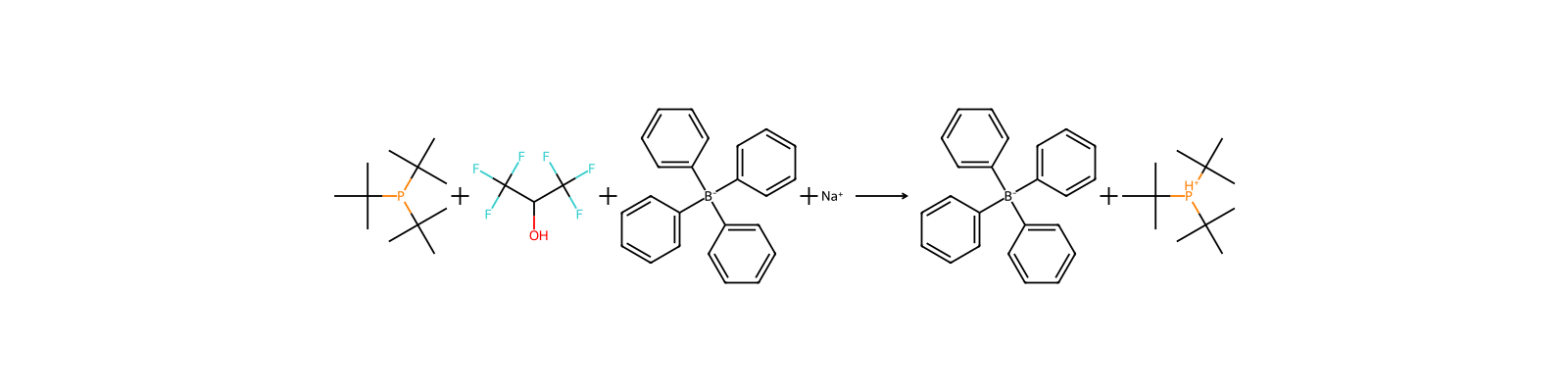
HRID 13866 reaction equation
HRID 13866As reactant
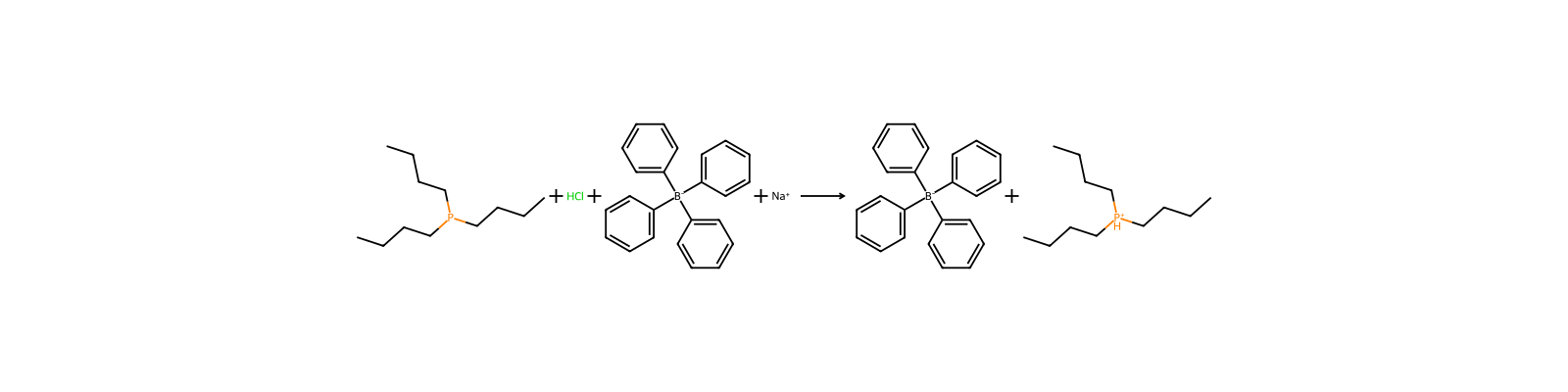
HRID 13867 reaction equation
HRID 13867As reactant
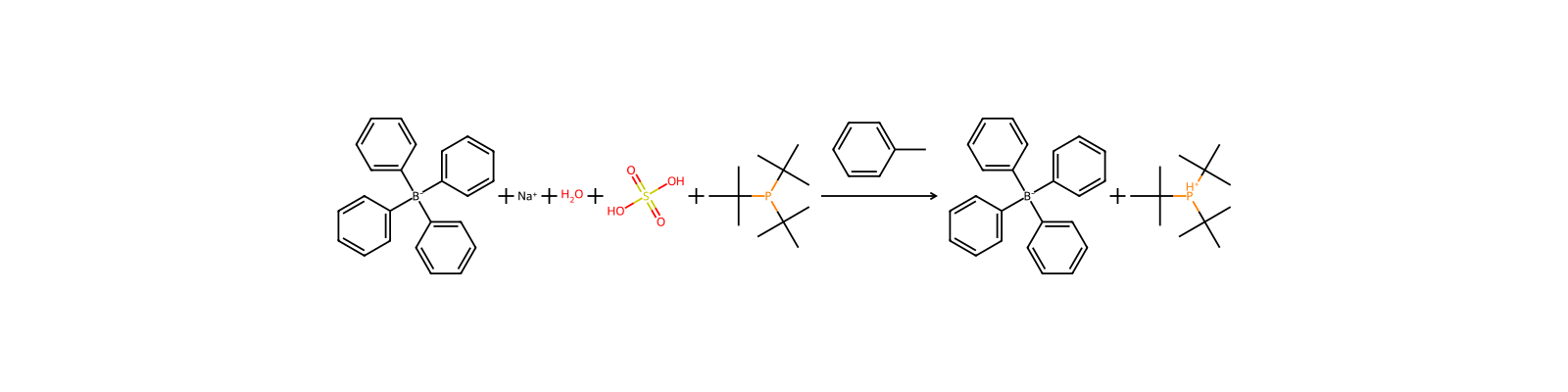
HRID 13868 reaction equation
HRID 13868As reactant
HRID 13869 reaction equation
HRID 13869As reactant
HRID 13870 reaction equation
HRID 13870As reactant
HRID 248791 reaction equation
HRID 248791As reactant
HRID 248794 reaction equation
HRID 248794As reactant
HRID 377624 reaction equation
HRID 377624As reactant
PreviousPage 1 of 5

Compound notes

On this pageBasic informationNames & identifiersPropertiesSafety & regulationChemistry & industryRelated reactionsCompound notes
Symbol(GHS)
GHS06
packing_group
III
Hazard statements
H301
Precautionary statements
P301+P310