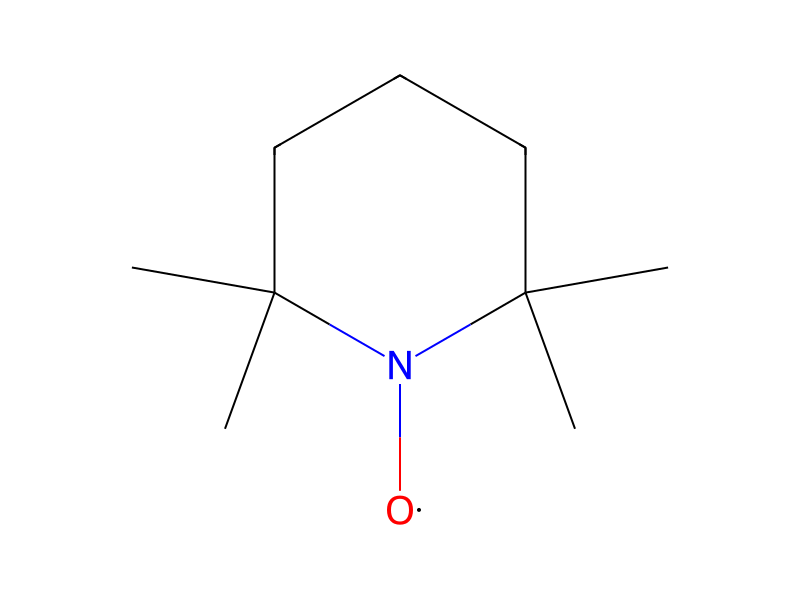
TEMPO is a member of the class of aminoxyls that is piperidine that carries an oxidanediyl group at position 1 and methyl groups at positions 2, 2, 6, and 6, respectively. It has a role as a ferroptosis inhibitor, a catalyst and a radical scavenger. It is a member of piperidines and a member of aminoxyls.
Chemical ClassesNitrogen Compounds -> Amine Oxides
Vapor Pressure0.000006 [mmHg]
Physical DescriptionDark red solid; [Merck Index] Red crystalline solid; mp = 32-37 deg C; [Alfa Aesar MSDS]
Physicochemical properties
Melting point
36 · 36-38 °C(lit.)
Boiling point
193 °C · 193°C
Density
1 g/cm3 · 1 g/cm3
vapor pressure
0.4 hPa · 0.4 hPa (20 °C)
refractive index
1.435 · 1.4350 (estimate)
Flash point
154 °F · 154 °F
storage temp.
30 °C · Store below +30°C.
solubility
9.7 g/l · 9.7g/l
form
Powder
color
Yellow to green
Safety & regulation
Safety information is for reference only and does not replace the supplier’s Safety Data Sheet (SDS), applicable regulations, or professional assessment.
GHS classification
GHS Classification · 5 items
This chemical does not meet GHS hazard criteria for 1.2% (5 of 403) of reports.
Danger
H314 (93.1%): Causes severe skin burns and eye damage [Danger Skin corrosion/irritation]
P260, P264, P264+P265, P273, P280, P301+P330+P331, P302+P361+P354, P304+P340, P305+P354+P338, P316, P317, P321, P363, P405, and P501 (click each P-code to see the statement)
Aggregated GHS information provided per 403 reports by companies from 12 notifications to the ECHA C&L Inventory. Each notification may be associated with multiple companies.
Hazard information
Regulatory Information · 3 items
PMN - indicates a commenced PMN (Pre-Manufacture Notices) substance.
2,2,6,6-Tetramethylpiperidine-1-oxyl: Does not have an individual approval but may be used under an appropriate group standard
Hazards SummaryA severe skin and eye irritant; Causes somnolence in dermal lethal-dose studies of rabbits; [RTECS] Causes burns; [Alfa Aesar MSDS]
Hazard Classes and CategoriesSkin Corr. 1B (93.1%)
Toxicology
Adverse EffectsDermatotoxin - Skin burns.
Toxicity DataLCLo (rat) = 4,500 mg/m3/2hr
Safety data
Chemistry & industry
Pharmacology
MeSH Pharmacological ClassificationNaturally occurring or synthetic substances that inhibit or retard oxidation reactions. They counteract the damaging effects of oxidation in animal tissues.
Uses & manufacturing
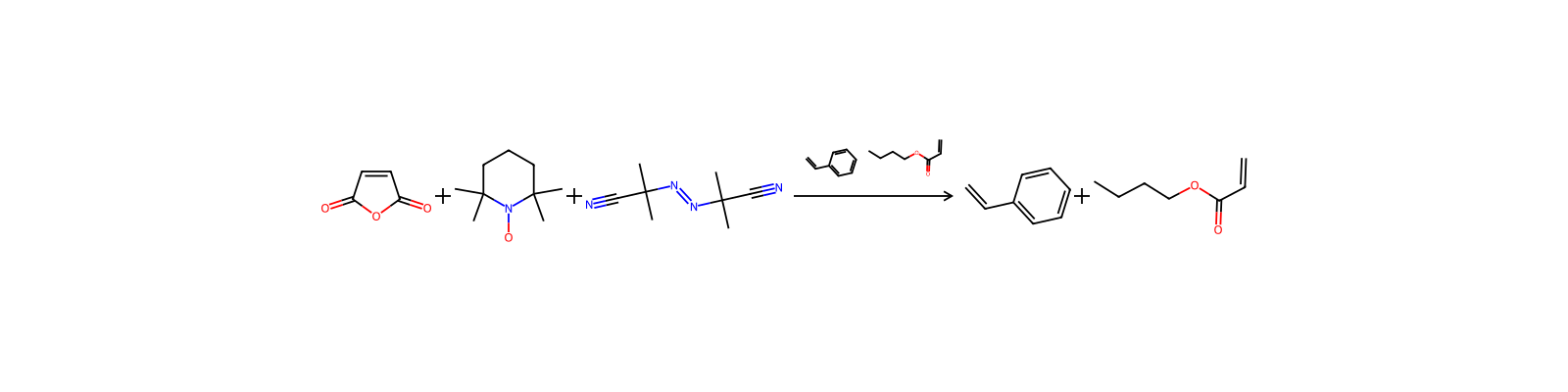
UsesUsed in organic chemistry (radical trap, catalyst, and polymerization mediator); [Merck Index] Used as a spin label in MRI; [REPROTOX]
General Manufacturing Information1-Piperidinyloxy, 2,2,6,6-tetramethyl-: ACTIVE
Applications · 5 items
Description2,2,6,6-Tetramethylpiperidine is a product that is used for the most diverse purposes because of its strong basicity, for example, as a light stabilizer for polyolefins, as a cocatalyst in olefin polymerizations (Ziegler catalysts), as a building block for the synthesis of pharmaceuticals and crop protection products, as a cocatalyst in the synthesis of dichloroacetyl chloride. The 4-unsubstituted 2.2.6,6-tetramethylpiperidine is generally prepared from the corresponding 4-oxo compound. It is known that triacetonamine can be converted by hydrazine to the hydrazone, which is then cleaved in the presence of alkali into 2,26,6-tetramethylpiperidine and nitrogen.
UsesTEMPO(2,2,6,6-Tetramethylpiperidinooxy) is a stable radical prepared through the oxidation of 2,2,6,6-tetramethylpiperidine. TEMPO has a wide range of applications including use as a free radical scavenger, a reagent in organic synthe sis and as a structural probe in electron spin resonance spectroscopy. TEMPO can also be used as a mediator in free radical polymerization.
UsesIn organic chemistry as a radical trap, 2,2,6,6-Tetramethylpiperidinooxy can be used as a catalyst and in polymerization mediation.
UsesTEMPO can be used:As a catalytic oxidant for copper-catalyzed, greener oxidation of alcohols under aerobic conditions.As a catalytic oxidant in the iodobenzene diacetae oxidation of nerol to neral.For trapping the styrenyl radical generated from benzoyl peroxide during nitroxide-mediated radical polymerization of styrene. In the carboxylation of water-resistant nanofibrillated cellulose (NFC) films.Copper(I)/TEMPO-catalyzed aerobic oxidation of primary alcohols to aldehydes with ambient air