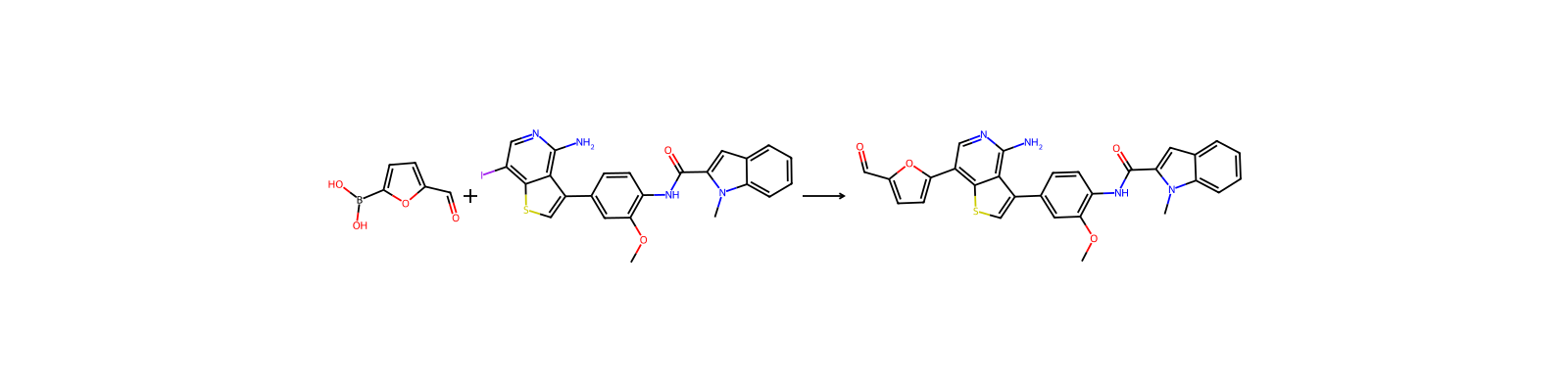
HRID 17200As reactant
Completing data — refresh the page later to see the latest
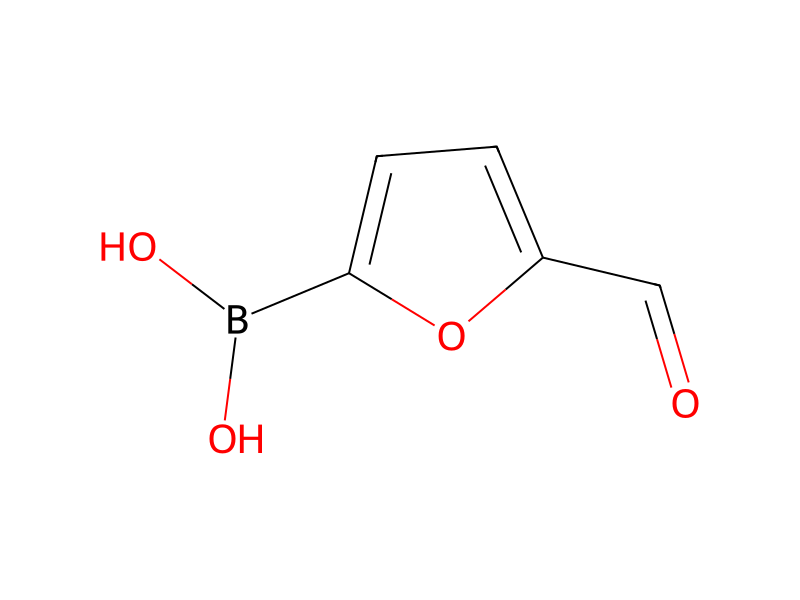
27329-70-0O=Cc1ccc(B(O)O)o1JUWYQISLQJRRNT-UHFFFAOYSA-N27329-70-0DTXSID50370245Safety information is for reference only and does not replace the supplier’s Safety Data Sheet (SDS), applicable regulations, or professional assessment.
Danger
H314 (87.2%): Causes severe skin burns and eye damage [Danger Skin corrosion/irritation]
P260, P261, P264, P264+P265, P271, P280, P301+P330+P331, P302+P352, P302+P361+P354, P304+P340, P305+P351+P338, P305+P354+P338, P316, P319, P321, P332+P317, P337+P317, P362+P364, P363, P403+P233, P405, and P501 (click each P-code to see the statement)
Aggregated GHS information provided per 47 reports by companies from 4 notifications to the ECHA C&L Inventory. Each notification may be associated with multiple companies.
Usessuzuki reaction
UsesAs a bifunctional reagent used in the synthesis of π -extended heteroarylfuran systems. Reactant involved in Suzuki coupling for synthesis of stable dye-sensitized solar cells. Reactant involved in synthesis of biologically active molecules including, heteroarylation for the synthesis of HIF-1 inhibitors, disalicylic acid-furanyl derivatives to inhibit ephrin binding, HIV-1 integrase inhibitors, epidermal growth factor receptor inhibitors.