HomeMCPWorkbenchSkills
HomeWorkbenchNotificationsMe
llms.txt · MCP GuidePrivacy Policy · Terms of Service · Supportv1.8.3
  1. Home
  2. /Compound

Potassium ethylxanthate

HCID 2735045
New reaction
Print
Basic informationNames & identifiersPropertiesSafety & regulationChemistry & industryRelated reactionsCompound notes
Substructure searchFind similar structures

Basic information

CAS
140-89-6
Standard SMILES
CCOC(=S)[S-].[K+]
InChIKey
JCBJVAJGLKENNC-UHFFFAOYSA-M
Molecular formula
C3H5KOS2
Average molar mass
160.3 g/mol
Monoisotopic mass
159.94188861

Names & identifiers

Preferred name
Potassium ethylxanthate
IUPAC
potassium ethoxymethanedithioate
English name
Potassium ethylxanthate
Molecular formula
C3H5KOS2
Molecular weight
160.3

Names & synonyms

POTASSIUM ETHYLXANTHATE140-89-6Potassium ethyl xanthateEthylxanthic acid potassium saltPotassium ethyl xanthogenatePotassium xanthogenatePotassium O-ethyl dithiocarbonatePotassium ethylxanthogenateEthyl potassium xanthateZ 3 (Pesticide)Ethyl potassium xanthogenatePotassium ethyl dithiocarbonate
Show more names
KEXPotassium O-ethyl xanthatePotassium ethylxanthogenatpotassium (ethoxymethanethioyl)sulfanide
DTXSID60423151A6K3Y576KDTXCID4022315NSC-4850RefChem:868188205-439-3potassium o-ethyl carbonodithioatePotassium xanthate

Database identifiers

CAS
140-89-6
PubChem CID
2735045
DTXSID
DTXSID6042315
ChEMBL
CHEMBL2380738
UNII
1A6K3Y576K
EC Number
205-439-3
Nikkaji
J2.025G

Properties

Computed structural properties

Topological polar surface area
42.3 Ų
Hydrogen bond donors
0
Hydrogen bond acceptors
3
Rotatable bonds
2
Heavy atoms
7
Formal charge
0
Complexity
56.9

Experimental & physicochemical properties

Chemical ClassesMetals -> Organic Acids, Metal Salts
Physical DescriptionWhite to light yellow solid; [Merck Index] Light yellow powder with an unpleasant odor; [Alfa Aesar MSDS]

Physicochemical properties

Melting point
209 · 209-214 °C
Boiling point
462.37 ℃[at · 462.37℃[at 101 325 Pa]
bulk density
400 · 400-600kg/m3
Density
1 · 1,558 g/cm3
vapor pressure
0 Pa · 0Pa at 25℃
Flash point
96 °C · 96°C
storage temp.
30 °C · Store below +30°C.
solubility
alcohol: soluble(lit.)
form
Crystalline Powder
color
Yellow
PH
9 · 9-10 (100g/l, H2O, 20℃)
Water Solubility
Soluble in water.
Merck
14 · 14,7696
BRN
3596974 · 3596974
Stability
Stable. Incompatible with strong acids, strong bases, strong oxidizing agents.
InChI
1S/C3H6OS2.K/c1-2-4-3(5)6;/h2H2,1H3,(H,5,6);/q;+1/p-1
InChIKey
JCBJVAJGLKENNC-UHFFFAOYSA-M
SMILES
[K+].CCOC([S-])=S
LogP
-2.24 at · -2.24 at 25℃
CAS DataBase Reference
140 · 140-89-6(CAS DataBase Reference)
FDA UNII
1 A6K3Y576K · 1A6K3Y576K
EPA Substance Registry System
Potassium ethyl xanthate (140-89-6)
UNSPSC Code
12352107 · 12352107
NACRES
22 · NA.22
Symbol(GHS)
2 · GHS02,GHS07
Signal word
Warning
Hazard statements
302 · H302-H315-H319-H252
Precautionary statements
501 · P501-P270-P235+P410-P264-P280-P302+P352-P337+P313-P305+P351+P338-P362+P364-P332+P313-P301+P312+P330-P407-P420-P413
target organs
Respiratory system
PPE
95 · dust mask type N95 (US), Eyeshields, Gloves
Hazard Codes
Xn,Xi,F
Risk Statements
36 · 36/37/38-22-20/22-11
Safety Statements
37 · 37/39-26-37-36-45-36/37-16
RIDADR
3342 · 3342
WGK Germany
3 · 3
RTECS
1575000 · FG1575000
TSCA
TSCA listed
HazardClass
4.2 · 4.2
PackingGroup
II
HS Code
2930909099 · 2930909099
Storage Class
4.2 · 4.2 - Pyrophoric and self-heating hazardous materials
Hazard Classifications
4 InhalationAcute · Acute Tox. 4 InhalationAcute Tox. 4 OralEye Irrit. 2Flam. Sol. 1Skin Irrit. 2STOT SE 3
Toxicity
50 orally · LD50 orally in Rabbit: 1700 mg/kg
REACH Registrations
Active
Excepted Quantities
Max Inner Pack (30g or 30ml) and Max Outer Pack (500g or 500ml)

Safety & regulation

Safety information is for reference only and does not replace the supplier’s Safety Data Sheet (SDS), applicable regulations, or professional assessment.

GHS classification

GHS Classification · 6 items

This chemical does not meet GHS hazard criteria for 2.3% (2 of 88) of reports.

Danger

H228 (52.3%): Flammable solid [Danger Flammable solids]

P210, P240, P241, P261, P264, P264+P265, P270, P271, P280, P301+P317, P302+P352, P304+P340, P305+P351+P338, P317, P319, P321, P330, P332+P317, P337+P317, P362+P364, P370+P378, P403+P233, P405, and P501 (click each P-code to see the statement)

Aggregated GHS information provided per 88 reports by companies from 16 notifications to the ECHA C&L Inventory. Each notification may be associated with multiple companies.

Danger

Hazard information

Regulatory Information · 3 items

Chemical: Carbonodithioic acid, O-ethyl ester, potassium salt

Carbonodithioic acid, O-ethyl ester, potassium salt (1:1) is listed on the EPA's Chemical Data Reporting (CDR) system. Manufacturers and importers of Carbonodithioic acid, O-ethyl ester, potassium salt (1:1) are required to report information about their production and use of this chemical to the EPA under the Toxic Substances Control Act (TSCA). (40 eCFR Part 711)

REACH registered substance: Potassium O-ethyl dithiocarbonate (EC: 205-439-3)

Other Safety InformationIMAP assessments - Sodium and Potassium xanthate salts: Human health tier II assessment
Hazards Summary · 1 item

Causes somnolence and respiratory depression in oral lethal-dose studies of mice; Causes excitement and muscle contraction or spasticity in oral lethal-dose studies of rats; Causes changes in erythrocyte counts in 26-week oral studies of rats; [RTECS] A skin and strong eye irritant; Toxic by ingestion; [Alfa Aesar MSDS]

Hazard Classes and Categories · 2 items

Flam. Sol. 1 (52.3%)

Skin irritation - category 2

CSL Reaction Information · 6 items

CSL00205

3-[Ethoxylthiocarbonylthio]quinoline; Carbonodithioic acid, O-ethyl S-3-quinolinyl ester + Potassium ethylxanthate + 3-Aminoquinoline

I was attempting to prepare 3-[ethoxy(thiocarbonyl)thio]quinoline by reacting the diazonium salt of 3-aminoquinine with potassium ethyl xanthate when an explosion occurred. Thankfully, the injury I received was minor. I was following the procedure described in the Journal of the Chemical Society, Part III [3, 2384 (1959)] on twice their scale. Jerry March's book "Advanced Organic Chemistry: Reactions, Mechanisms, Structure" (New York: John Wiley & Sons, 1992, 4th edition, page 670) lists the procedure as a customary route for the desired aryl xanthate ester and a convenient method for producing thiophenols. The same procedure is also described in "Organic Syntheses, Collective Volume III" (New York: John Wiley & Sons, page 809. DOI: 10.15227/orgsyn.027.0081), which contains a cautionary note about a reported explosion, although the editors found no unusual reactivity. Since diazo esters were present, the explosion most likely resulted from the diazo ester's tendency to decompose explosively. It is unclear whether the diazo ester is a precursor of the desired product or whether the diazo ester forms through a competitive reaction. The reaction proceeded without event. But unlike the literature preparations, precipitation occurred during product extraction with diethyl ether and was isolated by filtration. A 1H NMR of the wet cake was consistent with the desired structure. The solid was air-dried overnight and weighed 17 g. The detonation occurred when a metal spatula was inserted into the solid. Related work in Tetrahedron Letters [26, 6365 (1985)] successfully demonstrated the safe preparation of diaryl sulfides. However, this was done at 25 ºC (mine at 45 ºC) with care taken to avoid heat, since a reference is cited of an explosion at 60 ºC. Also, the disappearance of the suspected diazo sulfide was monitored by thin layer chromatography, and sluggish reactions were not pushed to conversion. Instead, chromatography was used to remove any intermediates." (reprint of full text)

Explosive

Not Available

In the safety letter above, one substance name - - 3-aminoquinine- may be misspelled. The correct name is 3-Aminoquinoline. See Discussion section of: Cragoe, Edward J., Jr.; Robb, Charles M. 3-Hydroxyquinoline. Org. Synth. 1960, 40, 54. DOI: 10.15227/orgsyn.040.0054

Safety data

PPE
dust mask type N95 (US), Eyeshields, Gloves
wgk
3
tsca
TSCA listed
rtecs
FG1575000
ridadr
3342
hs_code
2930909099
Toxicity
LD50 orally in Rabbit: 1700 mg/kg
risk_code
36/37/38-22-20/22-11
Signal word
Warning
Symbol(GHS)
GHS02,GHS07
hazard_code
Xn,Xi,F
safety_code
37/39-26-37-36-45-36/37-16
hazard_class
4.2
Storage Class
4.2 - Pyrophoric and self-heating hazardous materials
packing_group
II
target organs
Respiratory system
Hazard statements
H302-H315-H319-H252
Excepted Quantities
Max Inner Pack (30g or 30ml) and Max Outer Pack (500g or 500ml)
REACH Registrations
Active
Hazard Classifications
Acute Tox. 4 InhalationAcute Tox. 4 OralEye Irrit. 2Flam. Sol. 1Skin Irrit. 2STOT SE 3
Precautionary statements
P501-P270-P235+P410-P264-P280-P302+P352-P337+P313-P305+P351+P338-P362+P364-P332+P313-P301+P312+P330-P407-P420-P413

Chemistry & industry

Pharmacology

MeSH Pharmacological ClassificationSubstances that prevent infectious agents or organisms from spreading or kill infectious agents in order to prevent the spread of infection.

Uses & manufacturing

UsesUsed as a reagent in analytical chemistry; [Merck Index]
U.S. Production2022: 197,000 lb
General Manufacturing InformationCarbonodithioic acid, O-ethyl ester, potassium salt (1:1): ACTIVE
Applications · 3 items

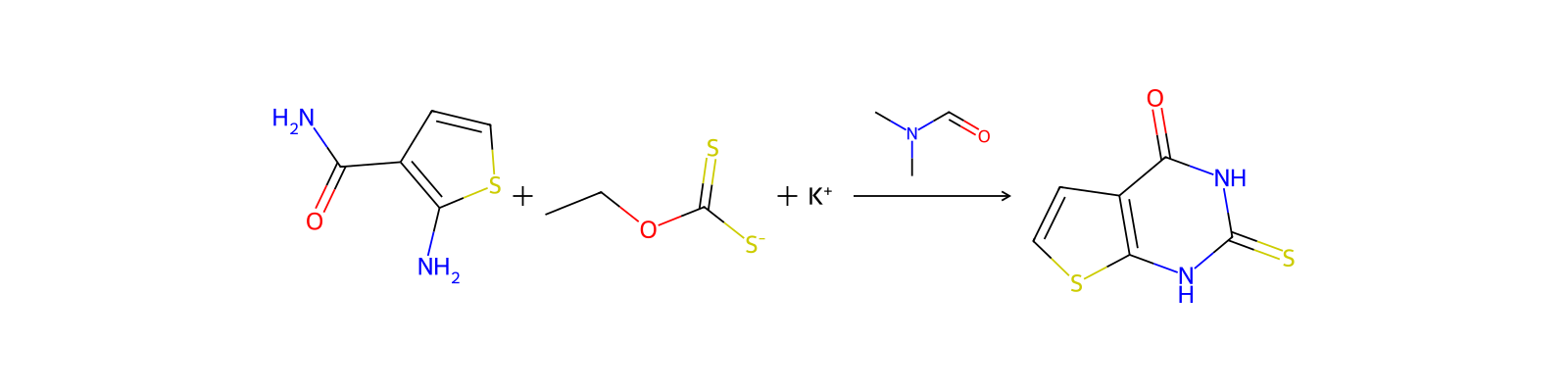
UsesPotassium ethyl xanthate is used as a reagent for extraction of metal ions into organic solvents and in the preparation of 2-mercapto benzimidazoles and 2-mercapto benzoxazoles by reacting with o-phenylenediamines and o-amino phenols respectively. It acts as a precursor in the production of unsymmetrical sulfides through cross-coupling reaction and as a floatation agent in the mining industry. It is involved in the determination of cadmium in water samples by substoichiometric radiochemical method and the adsorption of colloidal dye disperse Blue 3 onto pretreated polyester fabric.

UsesPotassium ethyl xanthogenate (ethyl potassium xanthogenate) has been used:in synthesis of unsymmetrical sulfides via cross-coupling reaction, using recyclable CuO nanoparticles under ligand-free conditionsas surfactant to investigate the adsorption of colloidal dye Disperse Blue 3 onto pretreated polyester fabricin determination of microgram amounts of cadmium in water samples by substoichiometric radiochemical method

UsesAs reagent in analytical chemistry.

Upstream & downstream products

Upstream raw materials

EthanolPotassium hydroxideCarbon disulfide

Downstream products

SULCONAZOLE2-((Ethoxythioxo methyl)thio)-2-methylpropanoic acid3-Bromothiophenol2-Mercaptoisobutyric acid2-MethoxybenzenethiolBis(4-nitrophenyl) sulfideOmeprazole2,4-Dichlorothiophenol6-Ethoxy-2-mercaptobenzothiazole4-(Ethylthio)benzoic acid4-Mercaptophenol(4-Fluorophenylthio)acetic acid6-Nitro-benzooxazole-2-thiol(S)-4-Phenyl-1,3-thiazolidine-2-thione4-Cyanothiophenol3-(Methylthio)benzoic acid2-Mercapto-5-methylbenzoxazoleBiphenyl-4,4'-dithiol

Additional notes

DefinitionColorless or light-yellow crystals. Soluble in water and alcohol; insol- uble in ether.

Related reactions

261 records
New reaction record
HRID 9576 reaction equation
HRID 9576As reactant
HRID 9578 reaction equation
HRID 9578As reactant
HRID 9767 reaction equation
HRID 9767As reactant
HRID 17437 reaction equation
HRID 17437As reactant
HRID 19568 reaction equation
HRID 19568As reactant
HRID 26555 reaction equation
HRID 26555As reactant
HRID 27449 reaction equation
HRID 27449As reactant
HRID 30891 reaction equation
HRID 30891As reactant
PreviousPage 1 of 33

Compound notes

On this pageBasic informationNames & identifiersPropertiesSafety & regulationChemistry & industryRelated reactionsCompound notes