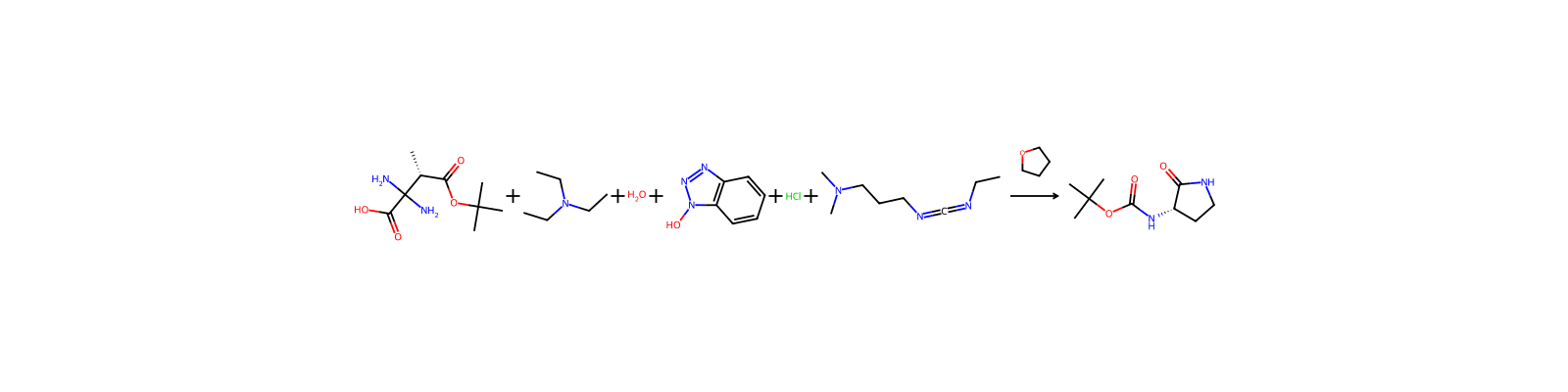
HRID 1907As reactant
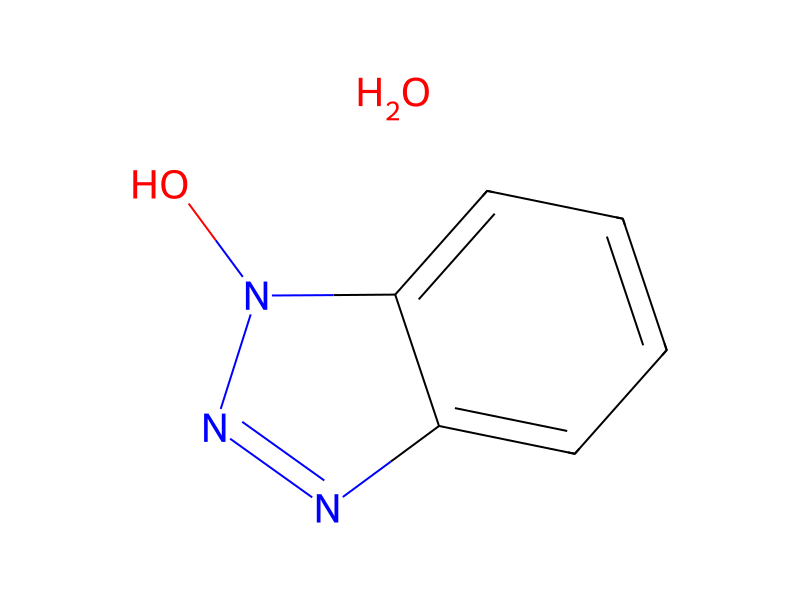
123333-53-9O.On1nnc2ccccc21PJUPKRYGDFTMTM-UHFFFAOYSA-N123333-53-9、80029-43-2DTXSID30924462Safety information is for reference only and does not replace the supplier’s Safety Data Sheet (SDS), applicable regulations, or professional assessment.
Danger
H203: (Deleted) Explosive; fire, blast or projection hazard [Danger Explosives]
P210, P230, P240, P250, P280, P370+P380, P372, P373, P401, and P501 (click each P-code to see the statement)
Danger
H203 (49.2%): (Deleted) Explosive; fire, blast or projection hazard [Danger Explosives]
P210, P230, P240, P241, P250, P280, P370+P378, P370+P380, P372, P373, P401, and P501 (click each P-code to see the statement)
Expl. 1.3 (49.2%)
Expl. 1.3 (50%)
Explosive - division 1.3
Expl. 1.3
Uses1-Hydroxybenzotriazole hydrate can be used as a condensation reagent to prepare: Poly-γ-glutamic acid methyl ester from a dimer of γ-glutamic acid. Oxadiazoles via cyclo condensation of amidoximes with trifluoroacetic anhydride or benzoic acid derivatives.
UsesA common additive for peptide coupling.
Uses1-Hydroxybenzotriazole hydrate is used as an additive for oligonucleotide couplings and in racemization-free peptide couplings.
General Description1-Hydroxybenzotriazole is a coupling reagent used to synthesize amides by the condensation reaction between the activated ester/acid and the amino group of protected amino acids. It is also used as a racemization suppressor during peptide synthesis.