
uspto-grants-2007_02 · 10.6084/m9.figshare.5104873.v1 · US07176297B2
查看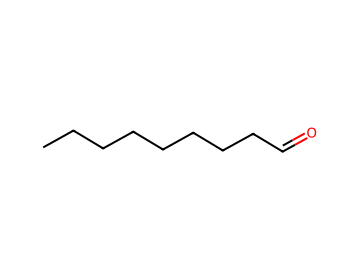
IDENTITY
COMPUTED
PROPERTIES
Orange-rose odor
Floral, waxy, green
0.8264 at 72 °F (NTP, 1992) - Less dense than water; will float
0.8264 g/cu cm at 22 °C
0.820-0.830
0.820-0.830 @25 °C
Colorless liquid
Insoluble (<1mg/ml) (NTP, 1992)
In water, 96 mg/L at 25 °C
Soluble in ethyl ether, chloroform
Soluble in three volumes 70% alcohol, in mineral oil; insoluble in glycerol
soluble in alcohol, most fixed oils, propylene glycol; insoluble in glycerol
1 ml in 3 ml of 70% alcohol (in ethanol)
182 °F (NTP, 1992)
64 °C (147 °F) - closed cup
374 to 378 °F at 760 mmHg (NTP, 1992)
195 °C
93 °C (23 mm Hg); 191 °C
When heated to decomposition it emits acrid smoke, and irritating fumes
145 °F (NTP, 1992)
-19.3 °C
0.37 [mmHg]
3.7X10⁻¹ mm Hg at 25 °C /Extrapolated/
Index of refraction = 1.4273 at 20 °C/D
1.422-1.429
Henry's Law constant = 7.34X10⁻⁴ atm-cu m/mole at 25 °C
Nonanal is a clear brown liquid characterized by a rose-orange odor. Insoluble in water. Found in at least 20 essential oils, including rose and citrus oils and several species of pine oil.
Liquid; CBI
Colorless liquid with a floral odor; Insoluble in water (96 mg/L at 25 deg C); [HSDB] Brown liquid; [CAMEO] Colorless liquid; [MSDSonline]
colourless to yellow liquid/fruity odour
GHS
This chemical does not meet GHS hazard criteria for 4.2% (83 of 1956) of reports.
Warning
H315 (19.3%): Causes skin irritation [Warning Skin corrosion/irritation];H319 (18.5%): Causes serious eye irritation [Warning Serious eye damage/eye irritation];H412 (92.9%): Harmful to aquatic life with long lasting effects [Hazardous to the aquatic environment, long-term hazard]
P264, P264+P265, P273, P280, P302+P352, P305+P351+P338, P321, P332+P317, P337+P317, P362+P364, and P501 (click each P-code to see the statement)
Aggregated GHS information provided per 1956 reports by companies from 21 notifications to the ECHA C&L Inventory. Each notification may be associated with multiple companies.;Reported as not meeting GHS hazard criteria per 83 of 1956 reports by companies.;There are 19 notifications provided by 1873 of 1956 reports by companies with hazard statement code(s).;Information may vary between notifications depending on impurities, additives, and other factors. The percentage value in parenthesis indicates the notified classification ratio from companies that provide hazard codes. Only hazard codes with percentage values above 10% are shown. For more detailed information, please visit ECHA C&L website.
HAZARDS
Chemical: Nonanal
Nonanal is listed on the EPA's Chemical Data Reporting (CDR) system. Manufacturers and importers of Nonanal are required to report information about their production and use of this chemical to the EPA under the Toxic Substances Control Act (TSCA). (40 eCFR Part 711)
Status: Active Update: 15-02-2023 https://echa.europa.eu/registration-dossier/-/registered-dossier/5471
Nonanal: Does not have an individual approval but may be used under an appropriate group standard
Combustible Liquid
This compound is combustible. (NTP, 1992)
Combustible liquid.
SYMPTOMS: This compound will cause skin and eye irritation; it is a strong irritant.;ACUTE/CHRONIC HAZARDS: Local irritant. (NTP, 1992)
Category of C7-C9 aliphatic aldehydes and carboxylic acids: Members and supporting chemicals demonstrate low acute toxicity by oral, dermal, and inhalation exposures; toxicity in repeated-dose studies only at relatively high levels; no evidence of reproductive toxicity, developmental toxicity, or mutagenicity; [EPA ChAMP: Hazard Characterization] A strong skin and eye irritant; [CAMEO] A skin irritant; [eChemPortal: ERMA] An irritant; Effects in high-dose animal studies include lacrimation; [MSDSonline]
Nonanal is a food additive permitted for direct addition to food for human consumption as a synthetic flavoring substance and adjuvant in accordance with the following conditions: a) they are used in the minimum quantity required to produce their intended effect, and otherwise in accordance with all the principles of good manufacturing practice, and 2) they consist of one or more of the following, used alone or in combination with flavoring substances and adjuvants generally recognized as safe in food, prior-sanctioned for such use, or regulated by an appropriate section in this part.
Aldehydes
EPA/Office of Pollution Prevention and Toxics; High Production Volume (HPV) Challenge Program's Robust Summaries and Test Plans. /C6-C10 Aliphatic Aldehydes and Carboxylic Acids/[Available from, as of July 26, 2004: http://www.epa.gov/hpv/pubs/hpvrstp.htm]
Section 8(a) of TSCA requires manufacturers of this chemical substance to report preliminary assessment information concerned with production, exposure, and use to EPA as cited in the preamble in 51 FR 41329. Effective date: 9/30/91; Reporting date: 11/27/91.
Pursuant to section 8(d) of TSCA, EPA promulgated a model Health and Safety Data Reporting Rule. The section 8(d) model rule requires manufacturers, importers, and processors of listed chemical substances and mixtures to submit to EPA copies and lists of unpublished health and safety studies. Nonanal is included on this list. Effective date: 9/30/91; Sunset date: 6/30/98.
NONANAL is an aldehyde. Aldehydes are frequently involved in self-condensation or polymerization reactions. These reactions are exothermic; they are often catalyzed by acid. Aldehydes are readily oxidized to give carboxylic acids. Flammable and/or toxic gases are generated by the combination of aldehydes with azo, diazo compounds, dithiocarbamates, nitrides, and strong reducing agents. Aldehydes can react with air to give first peroxo acids, and ultimately carboxylic acids. These autoxidation reactions are activated by light, catalyzed by salts of transition metals, and are autocatalytic (catalyzed by the products of the reaction). The addition of stabilizers (antioxidants) to shipments of aldehydes retards autoxidation. Polymerizes readily with sulfuric acid and oxidized to nonanoic acid. (NTP, 1992)
Sensitive to air. Insoluble in water.
SAFETY
Fires involving this compound should be controlled with a dry chemical, carbon dioxide or Halon extinguisher. (NTP, 1992)
EYES: First check the victim for contact lenses and remove if present. Flush victim's eyes with water or normal saline solution for 20 to 30 minutes while simultaneously calling a hospital or poison control center. Do not put any ointments, oils, or medication in the victim's eyes without specific instructions from a physician. IMMEDIATELY transport the victim after flushing eyes to a hospital even if no symptoms (such as redness or irritation) develop.;SKIN: IMMEDIATELY flood affected skin with water while removing and isolating all contaminated clothing. Gently wash all affected skin areas thoroughly with soap and water. If symptoms such as redness or irritation develop, IMMEDIATELY call a physician and be prepared to transport the victim to a hospital for treatment.;INHALATION: IMMEDIATELY leave the contaminated area; take deep breaths of fresh air. If symptoms (such as wheezing, coughing, shortness of breath, or burning in the mouth, throat, or chest) develop, call a physician and be prepared to transport the victim to a hospital. Provide proper respiratory protection to rescuers entering an unknown atmosphere. Whenever possible, Self-Contained Breathing Apparatus (SCBA) should be used; if not available, use a level of protection greater than or equal to that advised under Protective Clothing.;INGESTION: DO NOT INDUCE VOMITING. If the victim is conscious and not convulsing, give 1 or 2 glasses of water to dilute the chemical and IMMEDIATELY call a hospital or poison control center. Be prepared to transport the victim to a hospital if advised by a physician. If the victim is convulsing or unconscious, do not give anything by mouth, ensure that the victim's airway is open and lay the victim on his/her side with the head lower than the body. DO NOT INDUCE VOMITING. IMMEDIATELY transport the victim to a hospital. (NTP, 1992)
Advice for firefighters: Wear self-contained breathing apparatus for firefighting if necessary. Use water spray to cool unopened containers.
Suitable extinguishing media: Use water spray, alcohol-resistant foam, dry chemical or carbon dioxide.
Conditions for safe storage, including any incompatibilities: Keep container tightly closed in a dry and well-ventilated place. Containers which are opened must be carefully resealed and kept upright to prevent leakage.
ACCIDENTAL RELEASE MEASURES. Personal precautions, protective equipment and emergency procedures: Use personal protective equipment. Avoid breathing vapors, mist or gas. Ensure adequate ventilation. Remove all sources of ignition. Evacuate personnel to safe areas. Beware of vapors accumulating to form explosive concentrations. Vapors can accumulate in low areas.; Environmental precautions Prevent further leakage or spillage if safe to do so. Do not let product enter drains.; Methods and materials for containment and cleaning up: Contain spillage, and then collect with an electrically protected vacuum cleaner or by wet-brushing and place in container for disposal according to local regulations. Keep in suitable, closed containers for disposal.
SMALL SPILLS AND LEAKAGE: If you spill this chemical, use absorbent paper to pick up liquid spill material. Your contaminated clothing and absorbent paper should be sealed in a vapor-tight plastic bag for eventual disposal. Solvent-wash all contaminate surfaces with 70% ethanol followed by washing with a strong soap and water solution. Do not reenter the contaminated area until the Safety Officer (or other responsible person) has verified that the area has been properly cleaned.;STORAGE PRECAUTIONS: You should store this material in a refrigerator. (NTP, 1992)
SRP: Recycle any unused portion of the material for its approved use or return it to the manufacturer or supplier. Ultimate disposal of the chemical must consider: the material's impact on air quality; potential migration in air, soil or water; effects on animal, aquatic and plant life; and conformance with environmental and public health regulations. If it is possible or reasonable use an alternative chemical product with less inherent propensity for occupational harm/injury/toxicity or environmental contamination.
Waste treatment methods: Product: This combustible material may be burned in a chemical incinerator equipped with an afterburner and scrubber. Offer surplus and non-recyclable solutions to a licensed disposal company. Contact a licensed professional waste disposal service to dispose of this material. Contaminated packaging: Dispose of as unused product.
Gloves must be inspected prior to use. Use proper glove removal technique (without touching glove's outer surface) to avoid skin contact with this product. Dispose of contaminated gloves after use in accordance with applicable laws and good laboratory practices. Wash and dry hands.
Precautions for safe handling: Avoid contact with skin and eyes. Avoid inhalation of vapor or mist. Keep away from sources of ignition - No smoking. Take measures to prevent the build up of electrostatic charge.
Excerpt from ERG Guide 128 [Flammable Liquids (Water-Immiscible)]:;IMMEDIATE PRECAUTIONARY MEASURE: Isolate spill or leak area for at least 50 meters (150 feet) in all directions.;LARGE SPILL: Consider initial downwind evacuation for at least 300 meters (1000 feet).;FIRE: If tank, rail tank car or highway tank is involved in a fire, ISOLATE for 800 meters (1/2 mile) in all directions; also, consider initial evacuation for 800 meters (1/2 mile) in all directions. (ERG, 2024)
15 [mg/m3]
170 [mg/m3]
990 [mg/m3]
RECOMMENDED RESPIRATOR: Where the neat test chemical is weighed and diluted, wear a NIOSH-approved half face respirator equipped with an organic vapor/acid gas cartridge (specific for organic vapors, HCl, acid gas and SO2) with a dust/mist filter. (NTP, 1992)
Respiratory protection: Where risk assessment shows air-purifying respirators are appropriate use a full-face respirator with multipurpose combination (US) or type ABEK (EN 14387) respirator cartridges as a backup to engineering controls. If the respirator is the sole means of protection, use a full-face supplied air respirator. Use respirators and components tested and approved under appropriate government standards such as NIOSH (US) or CEN (EU).
Body Protection:impervious clothing, The type of protective equipment must be selected according to the concentration and amount of the dangerous substance at the specific workplace.
Skin protection: Handle with gloves.
Eye/face protection: Safety glasses with side-shields conforming to EN166 Use equipment for eye protection tested and approved under appropriate government standards such as NIOSH (US) or EN 166(EU).
TOXICITY
Kidney dialysis is usually needed to relieve the symptoms of uremic syndrome until normal kidney function can be restored.
Chronic exposure to uremic toxins can lead to a number of conditions including renal damage, chronic kidney disease and cardiovascular disease.
LC50; Species: Pimephales promelas (Fathead minnow) age 26-34 day juvenile; Conditions: continuous flow-through system; Concentration: 5.52 mg/L for 96 hr
LC50; Species: Nitocra spinipes; Conditions: static, natural brackish water; Concentration: 25 mg/L for 96 hr (95% confidence interval: 21-30 mg/L)
LC50; Species: Alburnus alburnus (Bleak); Conditions: static with no aeration, natural brackish water; Concentration: 18 mg/L for 96 hr (95% confidence interval: 16-20 mg/L)
LC50; Species: Xenopus sp. (Frog) embryos; Concentration: 32.7 mg/L for 96 hr (95% confidence interval: 29-36 mg/L) /Conditions of bioassay not specified in source examined/
EC50; Species: Xenopus sp. (Frog) embryos; Concentration: 6.5 mg/L for 96 hr (95% confidence interval: 6-7 mg/L); Effect: malformation /Conditions of bioassay not specified in source examined/
TERRESTRIAL FATE: Based on a classification scheme(1), an estimated Koc value of 40(SRC), determined from a structure estimation method(2), indicates that nonanal is expected to have very high mobility in soil(SRC). Volatilization of nonanal from moist soil surfaces is expected to be an important fate process(SRC) given a Henry's Law constant of 7.3X10⁻⁴ atm-cu m/mole(3). Even though the vapor pressure is low environmentally at standard temperature and pressure, 0.37 mm Hg(4), there is a detectable odor; therefore, nonanal may volatilize from dry soil. Utilizing the Japanese MITI test, 44% of the Theoretical BOD was reached in 4 weeks(5) indicating that biodegradation is an important environmental fate process in soil(SRC).
AQUATIC FATE: Based on a classification scheme(1), an estimated Koc value of 40(SRC), determined from a structure estimation method(2), indicates that nonanal is not expected to adsorb to suspended solids and sediment(SRC). Volatilization from water surfaces is expected(3) based upon a Henry's Law constant of 7.34X10⁻⁴ atm-cu m/mole(4). Using this Henry's Law constant and an estimation method(3), volatilization half-lives for a model river and model lake are 2 hours and 5 days, respectively(SRC). According to a classification scheme(5), an estimated BCF of 67(SRC), from an estimated log Kow of 3.27(2) and a regression-derived equation(2), suggests the potential for bioconcentration in aquatic organisms is moderate(SRC). Utilizing the Warburg respirometry test, a theoretical BOD range of 8 to 21% using activated sludge(6) indicating that biodegradation is an important environmental fate process in water(SRC).
ATMOSPHERIC FATE: According to a model of gas/particle partitioning of semivolatile organic compounds in the atmosphere(1), nonanal, which has a vapor pressure of 0.37 mm Hg at 25 °C(2), is expected to exist solely as a vapor in the ambient atmosphere. Vapor-phase nonanal is degraded in the atmosphere by reaction with photochemically-produced hydroxyl radicals(SRC); the half-life for this reaction in air is estimated to be 1 day(SRC), calculated from its rate constant of 3.31X10⁻¹¹ cu cm/molecule-sec at 25 °C(SRC) Nonanal does not contain chromophores that absorb at wavelengths >290 nm(3) and, therefore, is not expected to be susceptible to direct photolysis by sunlight(SRC).
Nonanal has been identified as a volatile component in the following food items: common pineapple guava, 0.10 ug/g(1); popcorn, 41 ug/kg(2); rice cakes, 9-11 ppb(3); detected, not quantified in raw but not roasted earth-almond (Cyperus esculentus L.)(4). Concentrations in bisbee delicious apples (1990 harvest date) were 435.5 (8/14), 1474.5 (8/21), 3288.0 (8/24), 222.6 (9/4), 361.2 (9/11), 274.8 (9/18), 83.6 (9/25), and 206.1 (10/2)(5). Nonanal has also been identified as a volatile component in heated peanut oil, with 0.15, 1.02, 1.11, and 2.01% identified in the GC peak area at 50, 100, 150, and 200 °C, respectively(6). It is a volatile component of Idaho Russet Burbank baked potatoes(7); fresh tree-ripened apricots (Prunus armeniaca L.), and plums (Prunus salicina), at not detected to 8, and 14 and 51 ug/kg, respectively(8); and in roasted filberts(9). Nonanal was identified as a volatile component in unpasteurized, fresh orange juice samples at concentrations of 0.022-0.082, 0.087, and 0.025 ppm in mechanically pressed valencia, pineapple, and ambersweet oranges, respectively(10). Concentrations of 0.001, 0.003, 0.003-0.004, 0.007-0.25, trace, and 0.007 ppm were measured in hand pressed valencia, pineapple, hamlin, navel, pera, and ambersweet oranges, respectively(10).
Nonanal has been identified in the head-space at concentrations of 8,880, 9,130, and 24,200 relative peak areas following analysis of frankfurters with 30%, 12%, and 5% fat content, respectively(1). Nonanal has been identified, not quantified as a volatile component in scrambled eggs(2). The compound is one of the aroma components identified in uncured beef and chicken at concentrations of 1.44 and 11.59 mg/kg, respectively(3). Nonanal is one of the volatile components of water-boiled duck meat, duck fat, Cantonese-style roasted duck, and Cantonese-style roasted duck gravy at concentrations of 31.79, 24.97, 8.04, and 48.87 ppb, respectively(4). Nonanal was identified as one of the characteristic odorants in fresh rhizomes of ginger (Zingiber officinale Roscoe)(5).
Endogenous, Ingestion, Dermal (contact)
IDENTIFICATION AND USE: Nonanal is a colorless liquid. It is not registered for current use in the U.S., but approved pesticide uses may change periodically and so federal, state and local authorities must be consulted for currently approved uses. It is used in perfume industry and as a flavoring agent. HUMAN EXPOSURE AND TOXICITY: Ozone exposure resulted in a significant early increase in nonanal in the airway epithelial lining fluid of humans. Nonanal levels returned to baseline by 18 hr after exposure. Nonanal produced in vitro by ozonation of liposomes induced hemolysis of human red blood cells, and combination of nonanal and H2O2 was significantly more hemolytic than nonanal alone. It was negative for unscheduled DNA synthesis in adult human hepatocytes assay at 3-100 mM. ANIMAL STUDIES: Single dermal dose of nonanal 5 g/kg applied on 3 rabbits with intact skin and 3 rabbits with abraded skin produced one death and severe edema and burns at site of application. There was no evidence of embryotoxicity, fetal toxicity, or teratogenesis when pregnant female rats were given 1500 mg/kg bw/day of nonanoic acid (metabolite of nonanal on days 6-15 of pregnancy. It was positive for sister chromatid exchange in rat hepatocytes at 0.1-100 uM, and negative for unscheduled DNA synthesis in adult rat hepatocytes assay at 3-100 mM. It was positive for forward mutation assay in V79 Chinese hamster lung cells at 0.1-0.3 mM and negative in modified Ames test (preincubation method) using S. typhmiurium TA98, TA100 and TA1535 at 1-666 ug/plate. It was also negative in Ames test using S. typhmiurium TA102 and TA104 at up to 1 mg/plate, and negative in the chromosomal aberration test using rat hepatocytes at 0.4 ug/mL.
Uremic toxins such as nonanal are actively transported into the kidneys via organic ion transporters (especially OAT3). Increased levels of uremic toxins can stimulate the production of reactive oxygen species. This seems to be mediated by the direct binding or inhibition by uremic toxins of the enzyme NADPH oxidase (especially NOX4 which is abundant in the kidneys and heart) (A7868). Reactive oxygen species can induce several different DNA methyltransferases (DNMTs) which are involved in the silencing of a protein known as KLOTHO. KLOTHO has been identified as having important roles in anti-aging, mineral metabolism, and vitamin D metabolism. A number of studies have indicated that KLOTHO mRNA and protein levels are reduced during acute or chronic kidney diseases in response to high local levels of reactive oxygen species (A7869).
Nonanal was identified as one of the plant volatiles emitted during the early May blooming period of rape (Brassica napus), with concentrations up to 0.67 ppb/volume reported(1). Nonanal is a volatile component of chickpea (Cicer arietinum L.) seed(2) and kiwi fruit flowers (Actinidia chinensis)(3). Nonanal was found to be a potent volatile from the Southeast Asian rambutan fruit (Nephelium iappaceum L.), present in the fruits juice at a concentration of 51.90 ug/L(4).
Using a branch enclosure experiment, nonanal was identified as a volatile from 11 of 19 vegetation species from Fernbank Forest, Atlanta, GA(1).[Table#6834]
Nonanal detections in various plants(1).[Table#6835]
As a uremic toxin, this compound can cause uremic syndrome. Uremic syndrome may affect any part of the body and can cause nausea, vomiting, loss of appetite, and weight loss. It can also cause changes in mental status, such as confusion, reduced awareness, agitation, psychosis, seizures, and coma. Abnormal bleeding, such as bleeding spontaneously or profusely from a very minor injury can also occur. Heart problems, such as an irregular heartbeat, inflammation in the sac that surrounds the heart (pericarditis), and increased pressure on the heart can be seen in patients with uremic syndrome. Shortness of breath from fluid buildup in the space between the lungs and the chest wall (pleural effusion) can also be present.
EPA has released the first beta version (version 0.5) of the Interactive Chemical Safety for Sustainability (iCSS) Dashboard. The beta version of the iCSS Dashboard provides an interactive tool to explore rapid, automated (or in vitro high-throughput) chemical screening data generated by the Toxicity Forecaster (ToxCast) project and the federal Toxicity Testing in the 21st century (Tox21) collaboration. /The title compound was tested by ToxCast and/or Tox21 assays; Click on the "Chemical Explorer" button on the tool bar to see the data./[USEPA; ICSS Dashboard Application; Available from, as of April 22, 2015: http://actor.epa.gov/dashboard/]
Nonanal has been detected in the exhaust of small, medium, and large commercial Chinese restaurant kitchens at concentrations ranging from 68.8 to 111, 15.0-17.4, and 23.7-71.1 ppb, respectively, and in the exhaust of Sichuan Spicy food kitchens at a concentration range of 49.9 to 60.0 ppb(1). Average concentrations for nonanal from Chinese cooking have been reported as 1365, 2281, 4501, and 1373 ng/mg in Cantonese, Sichuan, Dongbei, and Hunan style cooking, respectively(2). Nonanal was detected in the gases sampled from wells and cover soils at a landfill in Tuscany at concentrations ranging from <2 to 523 ppbv(3).
Using a structure estimation method based on molecular connectivity indices(1), the Koc of nonanal can be estimated to be 40(SRC). According to a classification scheme(2), this estimated Koc value suggests that nonanal is expected to have very high mobility in soil.
REGULATORY
Chemical: Nonanal
Nonanal is listed on the EPA's Chemical Data Reporting (CDR) system. Manufacturers and importers of Nonanal are required to report information about their production and use of this chemical to the EPA under the Toxic Substances Control Act (TSCA). (40 eCFR Part 711)
Status: Active Update: 15-02-2023 https://echa.europa.eu/registration-dossier/-/registered-dossier/5471
Nonanal: Does not have an individual approval but may be used under an appropriate group standard
Nonanal is a food additive permitted for direct addition to food for human consumption as a synthetic flavoring substance and adjuvant in accordance with the following conditions: a) they are used in the minimum quantity required to produce their intended effect, and otherwise in accordance with all the principles of good manufacturing practice, and 2) they consist of one or more of the following, used alone or in combination with flavoring substances and adjuvants generally recognized as safe in food, prior-sanctioned for such use, or regulated by an appropriate section in this part.
Section 8(a) of TSCA requires manufacturers of this chemical substance to report preliminary assessment information concerned with production, exposure, and use to EPA as cited in the preamble in 51 FR 41329. Effective date: 9/30/91; Reporting date: 11/27/91.
Pursuant to section 8(d) of TSCA, EPA promulgated a model Health and Safety Data Reporting Rule. The section 8(d) model rule requires manufacturers, importers, and processors of listed chemical substances and mixtures to submit to EPA copies and lists of unpublished health and safety studies. Nonanal is included on this list. Effective date: 9/30/91; Sunset date: 6/30/98.
PHARMACOLOGY
Aldehyde dehydrogenase (ALDH) specific activity was measured in crude homogenates, post-mitochondrial supernatants, cytosolic and microsomal fractions of /Rainbow trout (Oncorhynchus mykiss)/ liver, using a number of endogenous and xenobiotic aldehydes and both NAD+ and NADP+ as co-factors. All the activity found in the crude homogenate could be accounted for by the sum of the cytosolic and microsomal activities. Highest activities were found with the medium chain length substrates hexanal and nonanal in all fractions. The ,-unsaturated aldehydes, (E,E)-2,4-nonadienal-1-al, and trans, trans-2,4-decadienal, were also good substrates for both fractions, while the hydroxylated , unsaturated trans-4-hydroxy-2-nonenal was a good substrate only for the microsomal fraction. Short chain and aromatic xenobiotic substrates were metabolized at much lower rates, and only the microsomal fraction was effective against acetaldehyde, acrolein, and benzaldehyde. Neither fraction metabolized 2,5-dihydroxy benzaldehyde. NAD+ was the preferred co-factor for most substrates. Apparent affinity (Km) for hexanal and nonanal in the cytosolic fraction were comparable to that found in rats, but the theoretical maximal velocity (Vmax) for these substrates, and the specific activities for the other substrates, were much lower than found in mammals. The biochemical results suggest that trout are well adapted to detoxify products of endogenous lipid peroxidation, but are poorly adapted to detoxify xenobiotic aldehydes.
Uremic toxins tend to accumulate in the blood either through dietary excess or through poor filtration by the kidneys. Most uremic toxins are metabolic waste products and are normally excreted in the urine or feces.
Membrane
USES
Used in perfumes and foods (flavoring agent); [Hawley] Occurs in essential oils; [CAMEO] Occurs in citrus and rose oils; [Ullmann]
... used in the perfume industry.
Flavoring agent.
... used in floral compositions, particularly those with rose characteristics.
Nonanal is a synthetic flavoring substance and adjuvant permitted for direct addition to food for human consumption.
Reported uses (ppm):;Table: Reported uses (ppm): (Flavor and Extract Manufacturers' Association, 1994) [Table#6836]
2023: 10,000,000 - <50,000,000 lb;2022: 10,000,000 - <50,000,000 lb;2021: 10,000,000 - <50,000,000 lb;2020: 10,000,000 - <50,000,000 lb
Nonanal is listed as a High Production Volume (HPV) chemical (65FR81686). Chemicals listed as HPV were produced in or imported into the U.S. in >1 million pounds in 1990 and/or 1994. The HPV list is based on the 1990 Inventory Update Rule. (IUR) (40 CFR part 710 subpart B; 51FR21438).
Production volume for non-confidential chemicals reported under the 2006 Inventory Update Rule. Chemical: Nonanal. Aggregated National Production Volume: 10 to < 50 million pounds.
Non-confidential 2012 Chemical Data Reporting (CDR) information on the production and use of chemicals manufactured or imported into the United States. Chemical: Nonanal. National Production Volume: 21,932,784 lb/yr.
Fragrance
Intermediate
Nonanal is prepared by catalytic dehydrogenation of nonanol, by hydroformylation of 1-octene, or by reaction of formic acid and nonanoic acid on a titanium dioxide catalyst.
By catalytic oxidation of the corresponding alcohol (n-nonanol) or reduction of the corresponding acid.
Grade: Technical, Food Chemical Codex
Information on 18 consumer products that contain Nonanal in the following categories is provided:;• Auto Products;• Inside the Home;• Personal Care
Fragrance Ingredients
Flavouring Agent -> FLAVOURING_AGENT -> JECFA Functional Classes
Flavoring Agents -> JECFA Flavorings Index
Flavouring Agent -> FLAVOURING_AGENT -> JECFA Functional Classes
Flavouring Agent -> FLAVOURING_AGENT -> JECFA Functional Classes
Flavouring Agent -> FLAVOURING_AGENT -> JECFA Functional Classes
Petroleum Lubricating Oil and Grease Manufacturing;All Other Basic Organic Chemical Manufacturing
Nonanal: ACTIVE
ALIASES
REACTIONS
uspto-grants-2007_02 · 10.6084/m9.figshare.5104873.v1 · US07176297B2
查看
uspto-grants-1998_11 · 10.6084/m9.figshare.5104873.v1 · US05840732
查看
uspto-grants-1985_05 · 10.6084/m9.figshare.5104873.v1 · US04517128
查看
uspto-grants-1985_10 · 10.6084/m9.figshare.5104873.v1 · US04545912
查看
Test data from https://doi.org/10.1039/C8SC04228D · 10.1039/C8SC04228D
查看
uspto-grants-2015_03 · 10.6084/m9.figshare.5104873.v1 · US08969603B2
查看
uspto-grants-2005_07 · 10.6084/m9.figshare.5104873.v1 · US06921487B2
查看
uspto-grants-2014_05 · 10.6084/m9.figshare.5104873.v1 · US08716501B2
查看