HomeMCPWorkbenchSkills
HomeWorkbenchNotificationsMe
llms.txt · MCP GuidePrivacy Policy · Terms of Service · Supportv1.8.3
  1. Home
  2. /Compound

2,6-Bis(chloromethyl)pyridine

HCID 316654
New reaction
Print
Basic informationOverviewNames & identifiersPropertiesSafety & regulationChemistry & industryRelated reactionsCompound notes
Substructure searchFind similar structures

Basic information

CAS
3099-28-3
Standard SMILES
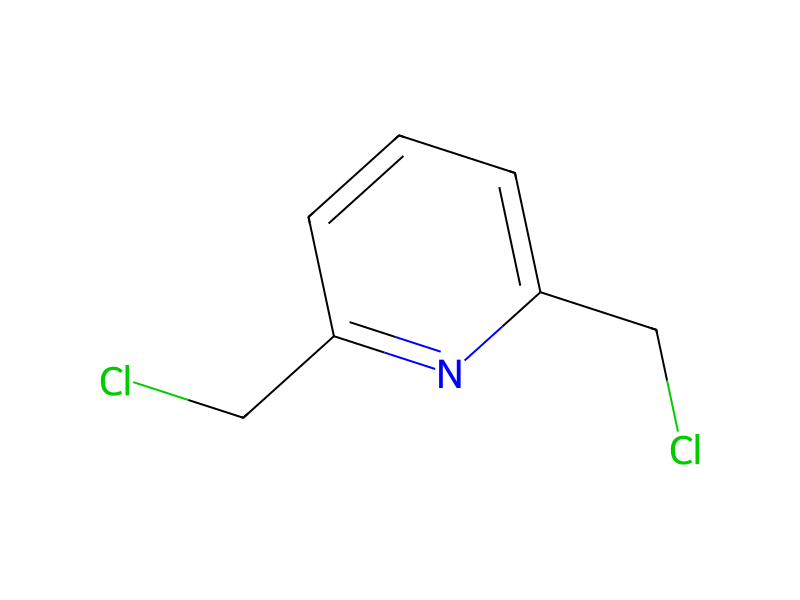
ClCc1cccc(CCl)n1
InChIKey
IWQNFYRJSVJWQA-UHFFFAOYSA-N
Molecular formula
C7H7Cl2N
Average molar mass
176.04 g/mol
Monoisotopic mass
174.99555458

Overview

structure in first source

Names & identifiers

Preferred name
2,6-Bis(chloromethyl)pyridine
IUPAC
2,6-bis(chloromethyl)pyridine
English name
2,6-Bis(chloromethyl)pyridine
Molecular formula
C7H7Cl2N
Molecular weight
176.04

Names & synonyms

2,6-Bis(chloromethyl)pyridine3099-28-3DTXSID30311712RefChem:83089DTXCID30262836627-975-0Pyridine, 2,6-bis(chloromethyl)-MFCD001428442,6-Bis-chloromethyl-pyridineNSC244982SCHEMBL7347282,6-Bis(chloromethyl)pyridine, 99%
Show more names
α,α'-dichloro-2,6-lutidine2,6-Bis(chloromethyl)pyridine >2,6-Bis(chloromethyl)pyridine 99%2,6-BIS(CHLOROMETHYL)PYRIDINE 98+%ALPHA,ALPHA'-DICHLORO-2,6-LUTIDINE2,6-Bis(chloromethyl)pyridine,α,α′-Dichloro-2,6-lutidine
NSC-244982SY053497EN300-6736672FT-07535612,6-Bis(cA820682SCHEMBL59253102,6-bis-(chloromethyl)pyridine

Database identifiers

CAS
3099-28-3
PubChem CID
316654
DTXSID
DTXSID30311712
EC Number
627-975-0
Nikkaji
J32.657G

Properties

Computed structural properties

XLogP
1.7
Topological polar surface area
12.9 Ų
Hydrogen bond donors
0
Hydrogen bond acceptors
1
Rotatable bonds
2
Heavy atoms
10
Formal charge
0
Complexity
87.6

Physicochemical properties

Melting point
73 · 73-78 °C (lit.)
Boiling point
110 °C · 110 °C / 3mmHg
Density
1.275 · 1.275±0.06 g/cm3(Predicted)
storage temp.
2 · under inert gas (nitrogen or Argon) at 2-8°C
form
powder to crystal
pka
2.19 · 2.19±0.24(Predicted)
color
White to Almost white
BRN
116355 · 116355
InChI
InChI=1S/C7H7Cl2N/c8-4-6-2-1-3-7(5-9)10-6/h1-3H,4-5H2
InChIKey
IWQNFYRJSVJWQA-UHFFFAOYSA-N
SMILES
C1(CCl)=NC(CCl)=CC=C1
CAS DataBase Reference
3099 · 3099-28-3(CAS DataBase Reference)
Comptox DTXSID
30311712 · DTXSID30311712
UNSPSC Code
12352100 · 12352100
NACRES
22 · NA.22

Safety & regulation

Safety information is for reference only and does not replace the supplier’s Safety Data Sheet (SDS), applicable regulations, or professional assessment.

GHS classification

GHS Classification · 4 items

Danger

H302 (97.6%): Harmful if swallowed [Warning Acute toxicity, oral]

P261, P264, P264+P265, P270, P271, P280, P301+P317, P302+P352, P304+P340, P305+P354+P338, P317, P319, P321, P330, P332+P317, P362+P364, P403+P233, P405, and P501 (click each P-code to see the statement)

Aggregated GHS information provided per 42 reports by companies from 4 notifications to the ECHA C&L Inventory. Each notification may be associated with multiple companies.

Hazard information

Hazard Classes and CategoriesAcute Tox. 4 (97.6%)

Safety data

PPE
dust mask type N95 (US), Eyeshields, Gloves
wgk
3
ridadr
UN 3335
hs_code
2933399090
risk_code
22-37/38-41
Signal word
Danger
Symbol(GHS)
GHS05,GHS07
hazard_code
Xn
safety_code
26-36/37/39
Storage Class
11 - Combustible Solids
Hazard statements
H302-H315-H318-H335
Hazard Classifications
Acute Tox. 4 OralEye Dam. 1Skin Irrit. 2STOT SE 3
Precautionary statements
P261-P280-P305+P351+P338

Chemistry & industry

Applications · 2 items

Uses2,6-Bis(chloromethyl)pyridine may be used in the following studies:Synthesis of a sensitive fluorescent chemosensor for Hg2+, composed of two aminonaphthalimide fluorophores and a receptor of 2,6-bis(aminomethyl)pyridine.Preparation of carbene pincer ligands, required for the preparation of palladium pincer carbene complex.Synthesis of 2-(di-tert-butylphosphinomethyl)-6-diethylaminomethyl)pyridine, PNN ligand.

General Description2,6-Bis(chloromethyl)pyridine is a heterocyclic building block for the synthesis of a variety of pyridine derivatives. It coordinates with metal ions through N-atom to form complexes. The conformational flexibility of the bromomethyl arms makes it an ideal choice for the generation of macrocycles. 2,6-bis(chloromethyl)pyridine crystals are monoclinic with space group P21/c. Its synthesis has been reported. The FT-IR and FT-Raman spectra of 2,6-bis(chloromethyl)pyridine (BCMP) have been recorded in the regions 4000-400cm-1 and 3500-100cm-1, respectively.

Upstream & downstream products

Upstream raw materials

2,6-Lutidine

Downstream products

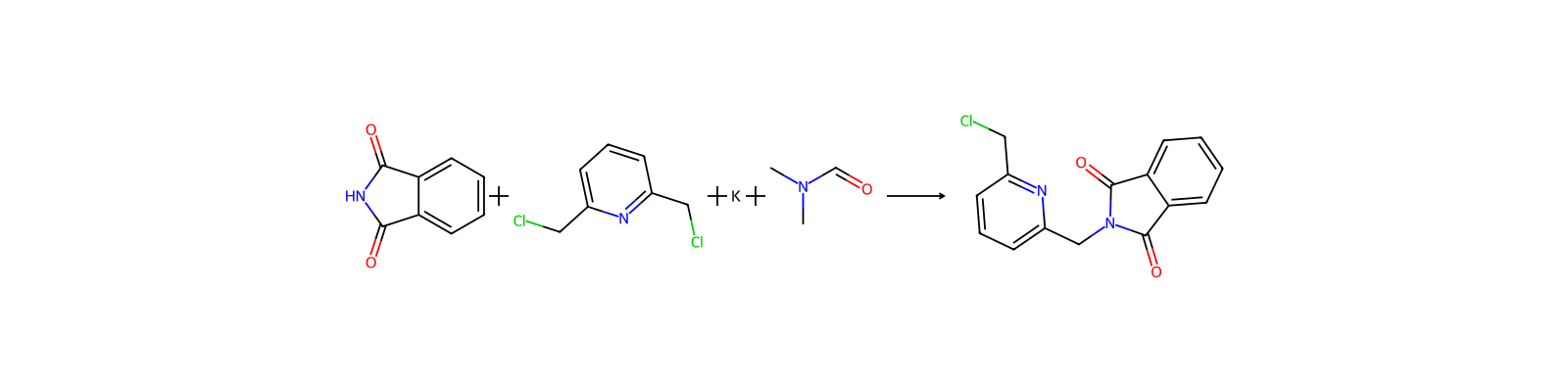
N-Methyl-N-({6-[(methylamino)methyl]-pyridin-2-yl}methyl)amine2,6-Pyridinedimethanamine1H-Isoindole-1,3(2H)-dione,2-[[6-(chloromethyl)-2-pyridinyl]methyl]-

Related reactions

13 records
New reaction record
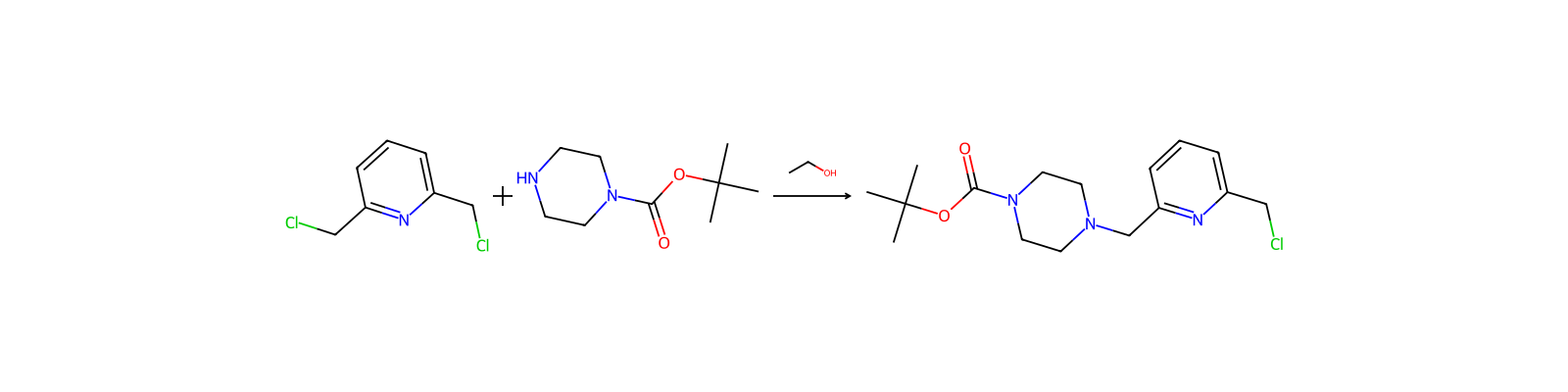
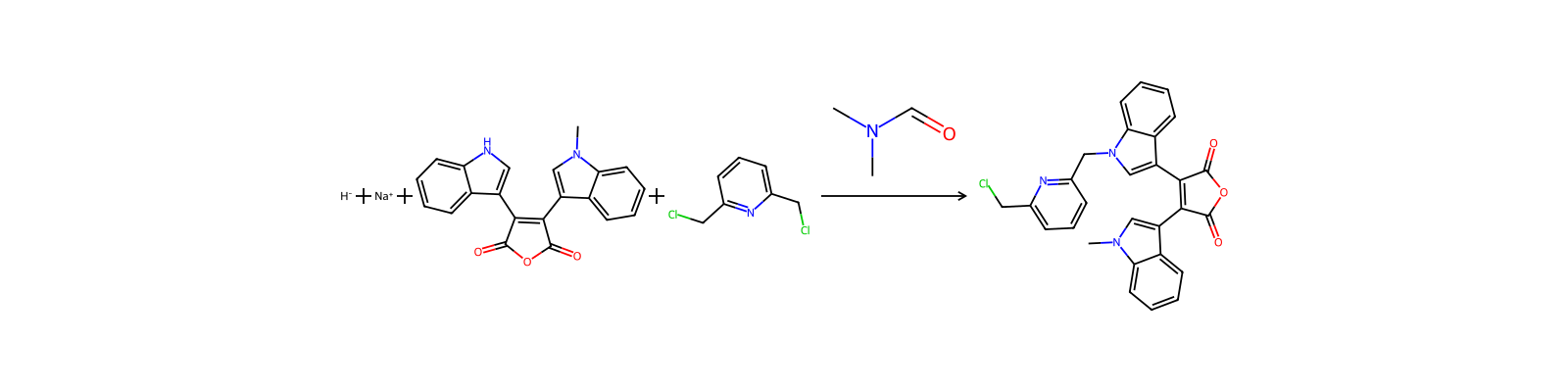
HRID 297807 reaction equation
HRID 297807As reactant
HRID 305550 reaction equation
HRID 305550As reactant
HRID 1154697 reaction equation
HRID 1154697As reactant
HRID 1166193 reaction equation
HRID 1166193As reactant
HRID 1172240 reaction equation
HRID 1172240As reactant
HRID 1258576 reaction equation
HRID 1258576As reactant
HRID 1668518 reaction equation
HRID 1668518As reactant
HRID 1859201 reaction equation
HRID 1859201As reactant
PreviousPage 1 of 2

Compound notes

On this pageBasic informationOverviewNames & identifiersPropertiesSafety & regulationChemistry & industryRelated reactionsCompound notes
Symbol(GHS)
5 · GHS05,GHS07
Signal word
Danger
Hazard statements
302 · H302-H315-H318-H335
Precautionary statements
261 · P261-P280-P305+P351+P338
PPE
95 · dust mask type N95 (US), Eyeshields, Gloves
Hazard Codes
Xn
Risk Statements
22 · 22-37/38-41
Safety Statements
26 · 26-36/37/39
RIDADR
3335 · UN 3335
WGK Germany
3 · 3
HS Code
2933399090 · 2933399090
Storage Class
11 · 11 - Combustible Solids
Hazard Classifications
4 OralEye · Acute Tox. 4 OralEye Dam. 1Skin Irrit. 2STOT SE 3