HomeMCPWorkbenchSkills
HomeWorkbenchNotificationsMe
llms.txt · MCP GuidePrivacy Policy · Terms of Service · Supportv1.8.3
  1. Home
  2. /Compound

Diethyl Maleate

HCID 5271566
New reaction
Print

Completing data — refresh the page later to see the latest

Basic informationOverviewNames & identifiersPropertiesSafety & regulationChemistry & industryRelated reactionsCompound notes
Substructure searchFind similar structures

Basic information

CAS
141-05-9
Standard SMILES
CCOC(=O)/C=C\C(=O)OCC
InChIKey
IEPRKVQEAMIZSS-WAYWQWQTSA-N
Molecular formula
C8H12O4
Average molar mass
172.18 g/mol
Monoisotopic mass
172.07355886

Overview

Diethyl maleate is a maleate ester resulting from the formal condensation of both carboxy groups of maleic acid with ethanol. A colourless liquid at room temperature (m.p. -10C) with boiling point 220C at 1 atm., it is commonly used as a dienophile for Diels-Alder-type cycloaddition reactions in organic synthesis. It has a role as a glutathione depleting agent. It is an ethyl ester and a maleate ester. It is functionally related to an ethanol.

Names & identifiers

Preferred name
Diethyl Maleate
IUPAC
diethyl (Z)-but-2-enedioate
English name
Diethyl maleate
Molecular formula
C8H12O4
Molecular weight
172.18

Names & synonyms

DIETHYL MALEATE141-05-9DiethylmaleateMaleic acid, diethyl ester2-Butenedioic acid (2Z)-, diethyl esterDiethylester kyseliny maleinoveDTXSID8020464G81WQB56OLSTAFLEX DEMNSC-8394DTXCID80464CHEBI:68508
Show more names
DEMETHYL MALEATEiethylmaleateDiethyl malcateDiethylMaleate>DiethylbutenedioateMaleic acid diethyl
diethyl maleic acid diesterRefChem:133422205-451-9Maleic acid diethyl esterdiethyl (Z)-but-2-enedioate2-Butenedioic acid (Z)-, diethyl esterDiethyl (Z)-2-butenedioatediethyl (2Z)-but-2-enedioate

Database identifiers

CAS
141-05-9、623-91-6
PubChem CID
5271566
DTXSID
DTXSID8020464
ChEMBL
CHEMBL2037000
ChEBI
CHEBI:68508
UNII
G81WQB56OL
EC Number
205-451-9
Nikkaji
J5.802E

Properties

Computed structural propertiesFilling in

XLogP
0.9
Topological polar surface area
52.6 Ų
Hydrogen bond donors
0
Hydrogen bond acceptors
4
Rotatable bonds
6
Heavy atoms
12
Formal charge
0
Complexity
163

Experimental & physicochemical properties

Chemical ClassesOther Classes -> Esters, Other
SpringerMaterials PropertiesBoiling point
FragrancesFragrance substance (Diethyl maleate) -> IFRA amendment 40
Flavoring AgentsEU Flavoring substances
Solubility1.40E+04 mg/L @ 30 °C (exp)
Boiling Point218.00 °C. @ 760.00 mm Hg
Melting Point1 - 2 °C
Physical Description · 3 items

Liquid

Water-white liquid; [Hawley] Colorless clear liquid; [MSDSonline]

Liquid

Physicochemical properties

Melting point
-10 °C · -10 °C (lit.)
Boiling point
225 °C · 225 °C (lit.)
Density
1.064 g/mL · 1.064 g/mL at 25 °C (lit.)
vapor density
5.93 · 5.93 (vs air)
vapor pressure
1 mm · 1 mm Hg ( 14 °C)
refractive index
20 · n20/D 1.441(lit.)
FLAVIS Number
9.351 · 09.351 | Diethyl maleate
Flash point
200 °F · 200 °F
storage temp.
Sealed in dry,Room Temperature
solubility
14 mg/l · 14mg/l
form
Liquid
color
Clear
Odor
100 % · at 100.00 %. fruity banana citrus
Odor Type
fruity
biological source
synthetic
Water Solubility
insoluble
Merck
14 · 14,3123
BRN
1100825 · 1100825
Dielectric constant
8.6 · 8.6(23℃)
Stability
Stable. Combustible. Incompatible with oxidizing agents, bases, acids, reducing agents.
Major Application
cleaning productscosmeticsfood and beveragespersonal care
InChI
1S/C8H12O4/c1-3-11-7(9)5-6-8(10)12-4-2/h5-6H,3-4H2,1-2H3/b6-5-
InChIKey
IEPRKVQEAMIZSS-AATRIKPKSA-N
SMILES
CCOC(=O)\C=C/C(=O)OCC
LogP
2.2 · 2.2
CAS DataBase Reference
141 · 141-05-9(CAS DataBase Reference)
Indirect Additives used in Food Contact Substances
ETHYL MALEATE
FDA 21 CFR
175.3 · 175.300; 176.170
FDA UNII
81 WQB56OL · G81WQB56OL
NIST Chemistry Reference
2 · 2-Butenedioic acid (Z)-, diethyl ester(141-05-9)
EPA Substance Registry System
2 · 2-Butenedioic acid (2Z)-, 1,4-diethyl ester (141-05-9)
UNSPSC Code
12352100 · 12352100
NACRES
24 · NA.24
Symbol(GHS)
7 · GHS07
Signal word
Warning
Hazard statements
317 · H317-H319-H412
Precautionary statements
280 · P280-P305+P351+P338
Hazard Codes
Xi
Risk Statements
36 · 36-43-52/53
Safety Statements
26 · 26-36/37-37-24-24/25
RIDADR
3334 · 3334
WGK Germany
2 · 2
RTECS
1225000 · ON1225000
Autoignition Temperature
662 °F · 662 °F
TSCA
TSCA listed
HS Code
29171990 · 29171990
Storage Class
10 · 10 - Combustible liquids
Hazard Classifications
3 Eye · Aquatic Chronic 3Eye Irrit. 2Skin Sens. 1
Toxicity
50 orally · LD50 orally in rats: 0.30 g/kg (Smyth)
REACH Registrations
Active

Safety & regulation

Safety information is for reference only and does not replace the supplier’s Safety Data Sheet (SDS), applicable regulations, or professional assessment.

GHS classification

GHS Classification · 6 items

This chemical does not meet GHS hazard criteria for 1.8% (5 of 281) of reports.

Warning

H317 (97.5%): May cause an allergic skin reaction [Warning Sensitization, Skin]

P261, P264+P265, P272, P273, P280, P302+P352, P305+P351+P338, P321, P333+P317, P337+P317, P362+P364, and P501 (click each P-code to see the statement)

Aggregated GHS information provided per 281 reports by companies from 10 notifications to the ECHA C&L Inventory. Each notification may be associated with multiple companies.

Warning

Hazard information

Regulatory Information · 5 items

Chemical: 2-Butenedioic acid, (Z)-, diethyl ester

Commission Regulation (EC) No 1565/2000 (Repealed by Com. Implementing Reg. (EU) No 872/2012)

2-Butenedioic acid (2Z)-, 1,4-diethyl ester is listed on the EPA's Chemical Data Reporting (CDR) system. Manufacturers and importers of 2-Butenedioic acid (2Z)-, 1,4-diethyl ester are required to report information about their production and use of this chemical to the EPA under the Toxic Substances Control Act (TSCA). (40 eCFR Part 711)

REACH registered substance: Diethyl maleate (EC: 205-451-9)

Diethyl maleate: Does not have an individual approval but may be used under an appropriate group standard

Other Safety InformationEvaluation - Maleic acid esters (short chain)
Hazards SummaryA skin and eye irritant; [Hawley] A mild skin irritant based an animal studies; [MSDSonline]
Hazard Classes and Categories · 2 items

Skin Sens. 1 (97.5%)

Flammable liquids - Category 4

Safety data

wgk
2
tsca
TSCA listed
rtecs
ON1225000
ridadr
3334
hs_code
29171990
Toxicity
LD50 orally in rats: 0.30 g/kg (Smyth)
risk_code
36-43-52/53
Signal word
Warning
Symbol(GHS)
GHS07
hazard_code
Xi
safety_code
26-36/37-37-24-24/25
Storage Class
10 - Combustible liquids
Hazard statements
H317-H319-H412
REACH Registrations
Active
Hazard Classifications
Aquatic Chronic 3Eye Irrit. 2Skin Sens. 1
Autoignition Temperature
662 °F
Precautionary statements
P280-P305+P351+P338

Chemistry & industry

Pharmacology

Cellular LocationsCytoplasm

Uses & manufacturing

UsesUsed in organic synthesis and as a flavoring agent; [Hawley]
U.S. Production2023: 250,000 - <400,000 lb
Consumer UsesNot Known or Reasonably Ascertainable
Industry UsesNot Known or Reasonably Ascertainable
IFRA Fragrance Standards · 6 items

Diethyl maleate

2-Butenedioic acid (2Z)-, diethyl ester; Ethyl maleate; Maleic acid, diethyl ester

IFRA_STD_130.pdf

40

IFRA 51st Amendment - Guidance for the use of IFRA Standards

Prohibition: This material should not be used as a fragrance ingredient

General Manufacturing Information · 2 items

Not Known or Reasonably Ascertainable

2-Butenedioic acid (2Z)-, 1,4-diethyl ester: ACTIVE

Applications · 4 items

OccurrenceHas apparently not been reported to occur in nature.

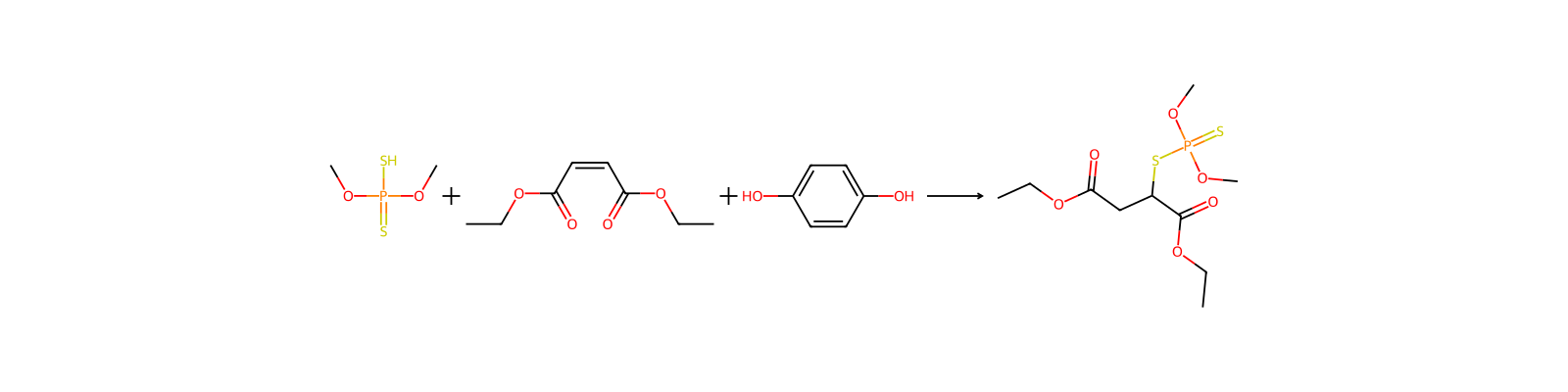
UsesDiethyl maleate can be used for the preparation of organophosphorus insecticide malathion. It is unsaturated polyester resins that are used in applications, such as reinforced glass fiber for boats, piping, bathtubs, roof panels, etc., and as protective coatings, finishes, and lacquers.

UsesDiethyl Maleate is used as a reagent in the synthesis of several organic compounds including that of polyaspartic acid ester based polyurea coatings. It was found to inhibit MCA and TPA transformed cell growth via modulation of glutathione, mitogen-activated protein kinase and cancer pathways.

General DescriptionDiethyl maleate is reported to occur in the cabernet sauvignon wine.

Preparation methods

PreparationDiethyl maleate is synthesized by the direct esterification of maleic anhydride and ethanol in the presence of sulfuric acid. Esterification is a commonly used reaction in organic synthesis.

Upstream & downstream products

Upstream raw materials

Phenyl esterMaleic anhydrideAMBERLITE(R) IRC-50Phenethyl alcoholEthanol 95%

Downstream products

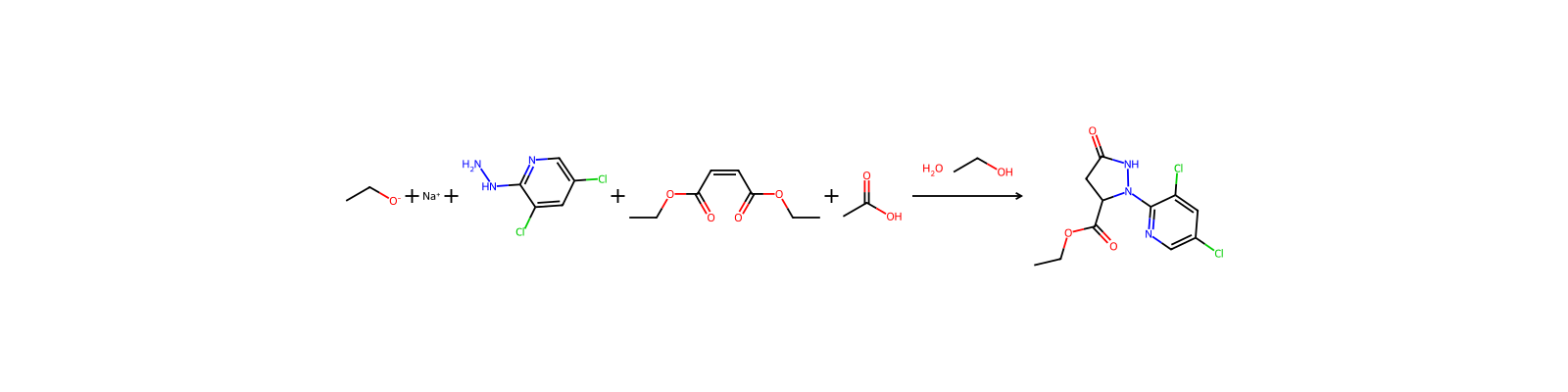
3-(2-Chlorophenyl)propionic acid5-Methoxymethyl-2,3-pyridinedicarboxylic acidDiethyl 2,3-dichlorobutanedioateFluorene-9-acetic acidMalathionMonoethyl fumarateDiethyl malateEthyl ethoxyacetateEthyl 1-(3-chloro-2-pyridinyl)-3-pyrazolidinone-5-carboxylate
Additional notes · 1 item

DefinitionChEBI: Diethyl maleate is a maleate ester resulting from the formal condensation of both carboxy groups of maleic acid with ethanol. A colourless liquid at room temperature (m.p. -10℃) with boiling point 220℃ at 1 atm., it is commonly used as a dienophile for Diels-Alder-type cycloaddition reactions in organic synthesis. It has a role as a glutathione depleting agent. It is a maleate ester and an ethyl ester. It derives from an ethanol.
Related reactions

76 records
New reaction record
HRID 41864 reaction equation
HRID 41864As reactant
HRID 41865 reaction equation
HRID 41865As reactant
HRID 57119 reaction equation
HRID 57119As reactant
HRID 227217 reaction equation
HRID 227217As reactant
HRID 252013 reaction equation
HRID 252013As reactant
HRID 373454 reaction equation
HRID 373454As reactant
HRID 453076 reaction equation
HRID 453076As reactant
HRID 464054 reaction equation
HRID 464054As reactant
PreviousPage 1 of 10

Compound notes

On this pageBasic informationOverviewNames & identifiersPropertiesSafety & regulationChemistry & industryRelated reactionsCompound notes