HomeMCPWorkbenchSkills
HomeWorkbenchNotificationsMe
llms.txt · MCP GuidePrivacy Policy · Terms of Service · Supportv1.8.3
  1. Home
  2. /Compound

Cryptoxanthin

HCID 5281235
New reaction
Print

Completing data — refresh the page later to see the latest
Basic informationOverviewNames & identifiersPropertiesSafety & regulationChemistry & industryRelated reactionsCompound notes
Substructure searchFind similar structures

Basic information

CAS
472-70-8
Standard SMILES
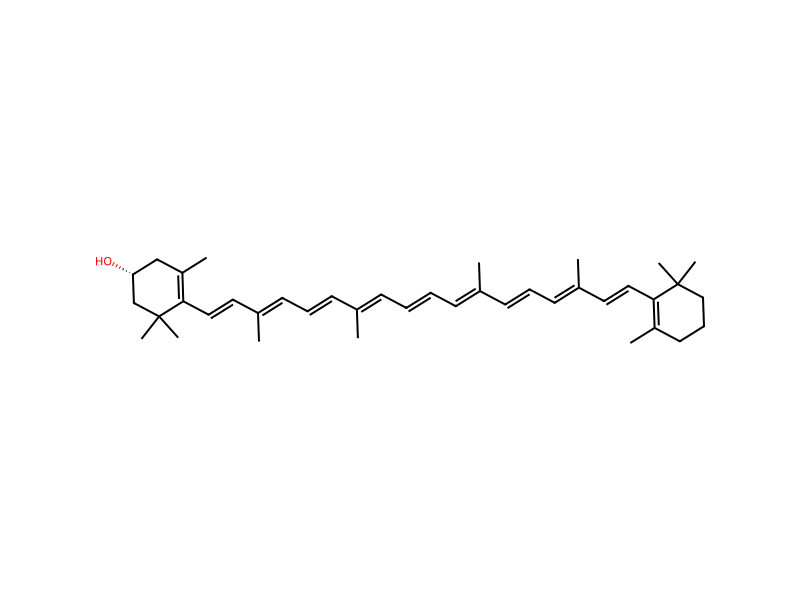
CC1=C(/C=C/C(C)=C/C=C/C(C)=C/C=C/C=C(C)/C=C/C=C(C)/C=C/C2=C(C)C[C@@H](O)CC2(C)C)C(C)(C)CCC1
InChIKey
DMASLKHVQRHNES-FKKUPVFPSA-N
Molecular formula
C40H56O
Average molar mass
552.9 g/mol
Monoisotopic mass
552.43311641

Overview

Beta-cryptoxanthin is a carotenol that exhibits antioxidant activity. It has been isolated from fruits such as papaya and oranges. It has a role as an antioxidant, a biomarker, a provitamin A and a plant metabolite. It derives from a hydride of a beta-carotene.

Names & identifiers

Preferred name
Cryptoxanthin
IUPAC
(1R)-3,5,5-trimethyl-4-[(1E,3E,5E,7E,9E,11E,13E,15E,17E)-3,7,12,16-tetramethyl-18-(2,6,6-trimethylcyclohexen-1-yl)octadeca-1,3,5,7,9,11,13,15,17-nonaenyl]cyclohex-3-en-1-ol
English name
B-CRYPTOXANTHIN
Molecular formula
C40H56O
Molecular weight
552.87

Names & synonyms

beta-CryptoxanthinCryptoxanthin472-70-8CryptoxanthineCryptoxantholbeta-Caroten-3-olCryptoxanthinsKryptoxanthinNeocryptoxanthinNeo-beta-cryptoxanthin3-Hydroxy-beta-carotene6ZIB13GI33
Show more names
β-CryptoxanthinE 161cCaricaxanthinβ-caroten-3-olB-CRYPTOXANTHIN
beta,beta-Caroten-3-ol, (3R)-(1R)-3,5,5-trimethyl-4-[(1E,3E,5E,7E,9E,11E,13E,15E,17E)-3,7,12,16-tetramethyl-18-(2,6,6-trimethylcyclohexen-1-yl)octadeca-1,3,5,7,9,11,13,15,17-nonaenyl]cyclohex-3-en-1-olCHEBI:10362DTXSID30912309Beta Caroten 3 olBeta Cryptoxanthin(1R)-3,5,5-trimethyl-4-((1E,3E,5E,7E,9E,11E,13E,15E,17E)-3,7,12,16-tetramethyl-18-(2,6,6-trimethylcyclohexen-1-yl)octadeca-1,3,5,7,9,11,13,15,17-nonaenyl)cyclohex-3-en-1-olRefChem:33778

Database identifiers

CAS
472-70-8
PubChem CID
5281235
DTXSID
DTXSID30912309
ChEBI
CHEBI:10362
UNII
6ZIB13GI33
Nikkaji
J5.952H

Properties

Computed structural propertiesFilling in

XLogP
12.3
Topological polar surface area
20.2 Ų
Hydrogen bond donors
1
Hydrogen bond acceptors
1
Rotatable bonds
10
Heavy atoms
41
Formal charge
0
Complexity
1,250

Experimental & physicochemical properties

LipidsLipids -> Prenol Lipids [PR] -> Isoprenoids [PR01] -> C40 isoprenoids (tetraterpenes) [PR0107]
Melting Point172 - 173 °C
Physical DescriptionSolid

Physicochemical properties

Melting point
167 ℃ · 167℃
Boiling point
563.32 °C · 563.32°C (rough estimate)
Density
0.974 · 0.974±0.06 g/cm3 (20 ºC 760 Torr)
refractive index
1.48 · 1.4800 (estimate)
storage temp.
-20 °C · -20°C
solubility
1 mg/mL · chloroform: soluble1mg/mL
pka
14.9 · 14.90±0.70(Predicted)
form
Solid
color
Red to dark red
InChIKey
DMASLKHVQRHNES-FKKUPVFPSA-N
SMILES
CC(=C\C=C\C=C(C)\C=C\C=C(C)\C=C\C1=C(C)C[C@@H](O)CC1(C)C)/C=C/C=C(C)/C=C/C2=C(C)CCCC2(C)C
LogP
13.67 · 13.670 (est)
FDA UNII
6 ZIB13GI33 · 6ZIB13GI33
UNSPSC Code
12352205 · 12352205
NACRES
79 · NA.79
Symbol(GHS)
7 · GHS07
Signal word
Warning
Hazard statements
315 · H315-H319-H335
Precautionary statements
261 · P261-P305+P351+P338
WGK Germany
3 · 3
HS Code
29062990 · 29062990
Storage Class
11 · 11 - Combustible Solids

Safety & regulation

Safety information is for reference only and does not replace the supplier’s Safety Data Sheet (SDS), applicable regulations, or professional assessment.

Hazard information

Regulatory Information · 2 items

Regulation (EC) No 178/2002 (amended)

.beta.,.beta.-Caroten-3-ol, (3R)-: Does not have an individual approval but may be used as a component in a product covered by a group standard. It is not approved for use as a chemical in its own right.

Safety data

wgk
3
hs_code
29062990
Signal word
Warning
Symbol(GHS)
GHS07
Storage Class
11 - Combustible Solids
Hazard statements
H315-H319-H335
Precautionary statements
P261-P305+P351+P338

Chemistry & industry

Pharmacology

MeSH Pharmacological ClassificationPrecursor forms of vitamins.
Cellular LocationsExtracellular
Applications · 3 items

UsesA natural caratenoid pigment that is converted to Vitamin A in the human body. It is an antioxidant and may help prevent free radical damage to cells and DNA, as well as stimulate the repair of oxidative damage to DNA. A potential chemopreventative agent against lung cancer as well as other types of cancer.

Usesβ-Cryptoxanthin has also been used to study its effect on the production of immunoglobulins in Peyer′s patch cells ex- vivo. It has also been used as a standard in high-performance liquid chromatography (HPLC analysis).(5)

General Descriptionβ-Cryptoxanthin is an oxygen-containing carotenoid and is a member of the xanthophyll family. It is one of the major sources of vitamin A and is present in fruits such as oranges, tangerines and papayas. In addition, it is also found in corn, peas and some animal products such as egg yolk and butter.

Upstream & downstream products

Upstream raw materials

12APOBETACAROTENALPhosphonium, [(2E,4E)-5-[(4R)-4-hydroxy-2,6,6-trimethyl-1-cyclohexen-1-yl]-3-methyl-2,4-pentadienyl]triphenyl-, chlorideAnhydrolutein IIAnhydrolutein I(1S)-3,5,5-trimethyl-4-[(1E,3E,5E,7E,9E,11E,13E,15E,17E)-3,7,12,16-tetramethyl-18-(2,6,6-trimethyl-1-cyclohexenyl)octadeca-1,3,5,7,9,11,13,15,17-nonaenyl]cyclohex-3-en-1-ol

Additional notes

DefinitionChEBI: A carotenol that exhibits antioxidant activity. It has been isolated from fruits such as papaya and oranges.

Related reactions

1 records
New reaction record
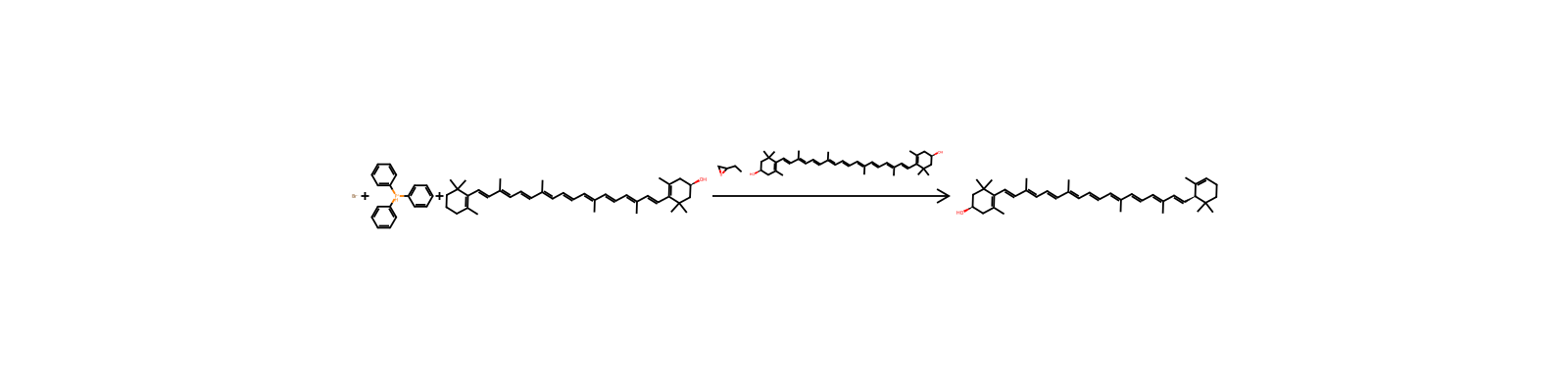
HRID 1981984 reaction equation
HRID 1981984As reactant

Compound notes

On this pageBasic informationOverviewNames & identifiersPropertiesSafety & regulationChemistry & industryRelated reactionsCompound notes