
uspto-grants-1998_03 · 10.6084/m9.figshare.5104873.v1 · US05726191
查看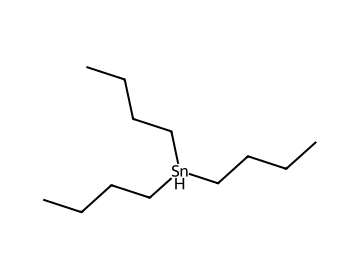
IDENTITY
COMPUTED
PROPERTIES
1.103 @ 20 °C
A liquid.
112.5-113.5 @ 8 mm Hg
When heated to decomposition it emits acrid smoke & irritating fumes.
Liquid; [Hawley] Colorless liquid; [MSDSonline]
GHS
Danger
H226 (13%): Flammable liquid and vapor [Warning Flammable liquids];H301 (100%): Toxic if swallowed [Danger Acute toxicity, oral];H312 (100%): Harmful in contact with skin [Warning Acute toxicity, dermal];H315 (100%): Causes skin irritation [Warning Skin corrosion/irritation];H319 (100%): Causes serious eye irritation [Warning Serious eye damage/eye irritation];H372 (100%): Causes damage to organs through prolonged or repeated exposure [Danger Specific target organ toxicity, repeated exposure];H400 (97.1%): Very toxic to aquatic life [Warning Hazardous to the aquatic environment, acute hazard];H410 (100%): Very toxic to aquatic life with long lasting effects [Warning Hazardous to the aquatic environment, long-term hazard]
P210, P233, P240, P241, P242, P243, P260, P264, P264+P265, P270, P273, P280, P301+P316, P302+P352, P303+P361+P353, P305+P351+P338, P317, P319, P321, P330, P332+P317, P337+P317, P362+P364, P370+P378, P391, P403+P235, P405, and P501 (click each P-code to see the statement)
Aggregated GHS information provided per 69 reports by companies from 11 notifications to the ECHA C&L Inventory. Each notification may be associated with multiple companies.;Information may vary between notifications depending on impurities, additives, and other factors. The percentage value in parenthesis indicates the notified classification ratio from companies that provide hazard codes. Only hazard codes with percentage values above 10% are shown. For more detailed information, please visit ECHA C&L website.
HAZARDS
Hazard Traits - Bioaccumulation; Environmental Persistence;Authoritative List - Canada PBiTs;Report - if used as a fragrance or flavor ingredient
Council Regulation (EEC) No 315/1993
Status: Active Update: 20-12-2021 https://echa.europa.eu/registration-dossier/-/registered-dossier/23311
Tributyltin hydride: Does not have an individual approval but may be used under an appropriate group standard
IMAP assessments - Stannane, tributyl-: Environment tier I assessment;IMAP assessments - Stannane, tributyl-: Human health tier I assessment
In inhalation lethal dose studies, causes lacrimation, dyspnea, and seizures; [ChemIDplus] Can cause skin burns; [Sullivan, p. 979] A skin and eye irritant; [eChemPortal: ERMA] Produces flammable gases on contact with water; An irritant; Can be absorbed through skin; [MSDSonline] See ORGANOMETALS. See Tin, organic compounds.
Flam. Liq. 3 (13%);Acute Tox. 3 (100%);Acute Tox. 4 (100%);Skin Irrit. 2 (100%);Eye Irrit. 2 (100%);STOT RE 1 (100%);Aquatic Acute 1 (97.1%);Aquatic Chronic 1 (100%)
UN 3146; Organotin cmpd, solid, not otherwise specified
UN 2788; Organotin cmpd, liquid, not otherwise specified
IMO 6.1; Organotin cmpd, liquid or solid, not otherwise specified
SAFETY
0.02 [mg/m3], inhalable fraction, as Sn[German Research Foundation (DFG)]
SRP: At the time of review, criteria for land treatment or burial (sanitary landfill) disposal practices are subject to significant revision. Prior to implementing land disposal of waste residue (including waste sludge), consult with environmental regulatory agencies for guidance on acceptable disposal practices.
0.1 [mg/m3], as Sn
0.2 [mg/m3], as Sn
8 hr Time Weighted Avg (TWA): 0.1 mg/cu m; 15 min Short Term Exposure Limit (STEL): 0.2 mg/cu m. Skin. /Tin, organic cmpd, as Sn/
A4; Not classifiable as a human carcinogen. /Tin, organic cmpd, as Sn/
0.1 [mg/m3], as Sn
25.0 [mg/m3], as Sn
TOXICITY
Breathing or swallowing, or skin contact with organotins, can interfere with the way the brain and nervous system work, causing death in severe cases. Organic tin compounds may also damage the immune and reproductive system. (L307, L308)
LC90 Schistosoma mansoni miracidia 32.0 ug/l/hr. /Conditions of bioassay not
TERRESTRIAL FATE: If tri-n-butyltin hydride is released to soil, it will be subject to hydrolysis based upon its reported water sensitivity(1) and reactivity with proton donors such as hydrogen halides and carboxylic acids(2). The hydrolysis product, tributyltin, will be expected to strongly bind to soil(3). Volatilization from moist soil surfaces is not expected to be an important fate process because the cation is not expected to volatilize(SRC). Tributyltin is susceptible to biodegradation and is reported to have a half-life in soil of 15-20 weeks(4). Tributyltin may slowly photodegrade on the soil surface(5) but will not volatilize from near-surface soil(6,7).
AQUATIC FATE: If tri-n-butyltin hydride is released to water, it will be expected to mainly exist as the cation, tributyltin(1). Volatilization from water surfaces is not expected to be an important fate process because the cation is not expected to volatilize(SRC). Tributyltin is stable (as defined by lack of debutylation) in distilled, deionized water kept in the dark at 20 °C for over 63 days at pH between 2.9 and 10.3(2) and no degradation of tributyltin was observed in 11 months in KCN-poisoned water sediment mixtures(3). Tributyltin is susceptible to biodegradation in water with half-lives of between 6 days and 35 weeks reported in water and water-sediment mixtures, many of which had been previously contaminated with tributyltin species(3,4). Results from experiments in water and water sediment mixtures have indicated that abiotic degradation of tributyltin species will be limited to direct photolysis in surface water(2,3,5). The half-life for sunlight photolysis of tributyltin was determined to be >89 days both in distilled water and lake water(2). Based upon measured Koc of up to 90,800, tributyltin may strongly bind to sediment(3,6,7). According to a classification scheme(8), a BCF of >6,000 for tributyltin(9) suggests the potential for bioconcentration in aquatic organisms is very high(SRC).
AQUATIC FATE: Radiolabeled tributyltin was added to a 13 cu m marine mesocosm with near natural water column and benthos in summer and monitored for 278 days to study the behavior of tributyltin and its degradation products(1). The removal of tributyltin from the water column was the result of biological degradation, scavenging to the sediment and presumed loss to the atmosphere with an overall removal half-life of 6-12 days(1). Tributyltin compounds in seawater are degraded in summer to give dibutyltins, hydroxylated tributyltins, hydroxylated dibutyltins, carboxylated derivatives and monobutyltin(2). Laboratory studies show that the half-life of tributyltin in sediment is in the range of years(3). Degradation is slower under anaerobic conditions than under aerobic conditions; half-lives in anaerobic sediment is in the range of 2-3 years(3).
ATMOSPHERIC FATE: According to a model of gas/particle partitioning of semivolatile organic compounds in the atmosphere(1), tri-n-butyltin hydride, which has an estimated vapor pressure of 0.04 mm Hg at 25 °C(SRC), determined from a fragment constant method(2), will exist solely as a vapor in the ambient atmosphere(SRC). Vapor-phase tri-n-butyltin hydride is degraded in the atmosphere by reaction with photochemically-produced hydroxyl radicals(SRC); the half-life for this reaction in air is estimated to be 9.0 hours(SRC), calculated from its rate constant of 43X10-12 cu cm/molecule-sec at 25 °C(SRC) determined using a structure estimation method(3). Tributyltin hydroxide may be susceptible to direct photolysis based upon the adsorption of UV light >290 um by tri-, di-, and monobutyltin compounds(4).
Neurotoxin - Other CNS neurotoxin;Occupational hepatotoxin - Secondary hepatotoxins: the potential for toxic effect in the occupational setting is based on cases of poisoning by human ingestion or animal experimentation.;Dermatotoxin - Skin burns.;ACGIH Carcinogen - Not Classifiable.
Oral (L308) ; inhalation (L308) ; dermal(L308)
Organotin compounds produce neurotoxic and immunotoxic effects. Organotins may directly activate glial cells contributing to neuronal cell degeneration by local release of pro-inflammatory cytokines, tumor necrosis factor-alpha, and/or interleukins. They may also induce apoptosis by direct action on neuronal cells. Organotin compounds stimulate the neuronal release of and/or decrease of neuronal cell uptake of neurotransmitters in brain tissue, including aspartate, GABA, glutamate, norepinephrine, and serotonin. This may be either a contributing factor to or result of the neuronal cell loss. The immunotoxic effects of organotins are characterized by thymic atrophy caused by the suppression of proliferation of immature thymocytes and apoptosis of mature thymocytes. Organotin compounds are believed to exert these effects by suppressing DNA and protein synthesis, inducing the expression of genes involved in apoptosis (such as nur77), and disrupting the regulation of intracellular calcium levels, giving rise to the uncontrolled production of reactive oxygen species, release of cytochrome c to the cytosol, and the proteolytic and nucleolytic cascade of apoptosis. The suppression of proliferation of immature thymocytes further results in the suppression of T-cell-mediated immune responses. Organotins are also endocrine disruptors and are believed to contribute to obesity by inappropriate receptor activation, leading to adipocyte differentiation. Inorganic tin triggers eryptosis, contributing to tin-induced anemia. (L308, A182, A184)
Inorganic or organic tin compounds placed on the skin or in the eyes can produce skin and eye irritation. (L308)
Based upon the moisture sensitivity of the chemical(1,2), adsorption of tri-n-butyltin hydride to sediments and suspended particulate matter in natural waters and to soil is not expected to be an important process(SRC). According to a classification scheme(3), its hydrolysis product, tributyltin, is expected to be immobile in soil(SRC). No leaching of tributyltin was observed in several soils (clay, sand, topsoil and silt) during periods as long as 16 weeks(4). Tributyltin binds strongly to sediment with the distribution constant for Toronto Harbor sediment and water as 2180 at 20 °C(5). Very little tributyltin or inorganic tin was released from unshaken sediment in 10 months. However, other studies have shown that tributyltin does not adsorb appreciably to suspended particulate matter and that it is primarily associated with the dissolved fraction of estuarine water(6,7). This is in line with the observation that addition of humic acids or kaolin clay material does not significantly affect the measured tributyltin BCF in mussels(8), suggesting that tributyltin species are only weakly bound to these materials(SRC). Studies on the adsorption of tributyltin to a wide variety of sorbents yield sorption coefficients ranging from 110 to 350,000 l/kg, but the majority of sorption coefficients are about 1,000 l/kg(9). Adsorption is relatively fast (hours) and reversible(9). In a 278-day marine mesocosm experiment, the transport rate from the water column to sediment was 0.045/day(10). The distribution coefficient between dissolved state and particulate matter calculated from data between days 2-19 was 60,000 (standard deviation 30,000)(10). Other investigators obtained distribution constants for adsorption of tributyltin to particulate matter and sediment of 3400-9300 l/kg and 200-55,000 l/kg, respectively; values were a function of sediment type and location(10). The Freundlich parameters, log k and 1/n, for tributyltin to sediment was 1.07 and 0.359, respectively(11).
Organic tin does not occur naturally. /Organic tin/
Tri-n-butyltin hydride's production and use as a reducing agent for the conversion of alkyl halides to hydrocarbons(1) and as a synthetic intermediate for other butyltin compounds(2,3), and its formation during the analysis for other tributyltin compounds(4) may result in its release to the environment through various waste streams(SRC). Potential sources of organotin compounds in the Rhine River in Germany are the manufacture and industrial use of organotin compounds and the effluents of municipal sewage treatment plants(5). Municipal wastewater has been shown to contain considerable quantities of tributyltin that may be released in surface water(6).
Tributyltin degraded with a half-life of 20 weeks in Toronto Harbor (Canada) water in the dark at 20 °C; dibutyltin, monobutyltin and inorganic tin was detected as products(1). The half-life of tributyltin present in sediment-water mixtures was shorter than in water alone, 16 weeks at 20 °C in the dark(1). The detection of small quantities of methyltributyltin in the experiments with non-sterile mixtures of lake water and sediment and in water alone indicates that microorganisms are present that can methylate tributyltin(1). Half-lives as low as 6 and 7 days have been reported for incubation in water from a harbor in San Diego Bay in the presence of light and absence of light, respectively; at a clean water site, the respective half-lives were 9 and 19 days(2). The experimenters ruled out direct photolysis in these experiments as a cause of the increased degradation rate(2). In a marine mesocosm experiment, the biodegradation rate calculated from the gross removal rate less adsorption and volatilization transport rates was 0.08/day (half-life 9 days) at 20 °C(2). Other reported degradation half-lives for tributyltin include: 5.5 mo (marine sediment); 4 mo (aerobic freshwater/sediment); 2 mo (seawater at 5 °F); 6-19 days (estuarine waters) 6 days (freshwater at 5 °F); 6-17 days estuarine water; 4-13 days (estuarine water)(3).
No indication of carcinogenicity to humans (not listed by IARC).
REGULATORY
Hazard Traits - Bioaccumulation; Environmental Persistence;Authoritative List - Canada PBiTs;Report - if used as a fragrance or flavor ingredient
Council Regulation (EEC) No 315/1993
Status: Active Update: 20-12-2021 https://echa.europa.eu/registration-dossier/-/registered-dossier/23311
Tributyltin hydride: Does not have an individual approval but may be used under an appropriate group standard
PHARMACOLOGY
The polymerization of actin, a basic component of the cystoskeleton, was evaluated in human neutrophilis after treatment with tributyltin /and/ triphenyltin for 2-30 min at 37 °C. Tributyltin and triphenyltin decreased the content of the polymerized form (F-actin) in resting neutrophils at all the times studied; in addition, after tributyltin and triphenyltin treatment the response of the cells to a polymerizing stimulus (chemotactic peptide) was no longer detectable. These effects were observed under conditions where a cytotoxicity marker such as lactate dehydrogensase leakage remained unaffected. These results may explain the observed inhibition by tributyltin and triphenyltin of basic cellular functions involving cell shape and motility, which are regulated by the cytoskeleton.
Flow cytometric and light/fluorescence microscopic analysis of murine erythroleukemic cells and electron microscopic investigation of porcine microsomal membrane preparations suggest that tributyltin toxicity is mediated through fixation processes (protein denaturation crosslinking, and so on) within the plasma membrane/ cytoplasm complex. This hypothesis was derived from the following observations: 1. Exposure of the murine erythroleukemic cells to micromolar concentrations of tributyltin results in increased resistance to detergent-mediated cytolysis; 2. Exposure of porcine renal microsomal membrane preparations to similar concentrations resulted in inhibition of vanadate-mediated crystallization of sodium=,potassium(+)-adenosine-triphosphatase, a process requiring protein moibility within the membrane; 3. Flow cytometric and fluorescene microscopic analyses indicate the murine erythroleukemic cells exposed to submicromolar concentrations of tributyltin exhibit increased cellular carboxyfluorescein retention; and 4. Nuclei prepared from tributyltin treated by detergent-mediated cytolysis exhibit increased axial light loss, 90 degrees light scatter, fluorescein isothiocyanate fluorescence, and the presence of adherent proteinaceous tags. The DNA distribution histogram of such nuclei also is perturbed.
The influence of in vivo tributyltin exposure on macrophage activation was compared to previously reported responses resulting from in vitro exposure. Oyster toadish (Opsanus tau) were treated weekly for six weeks with either sham, vehicle, 0.250, 0.750, or 2.5 mg/kg tributyltin. Resident peritoneal macrophages were isolated and chemiluminescence stimulated by tributyltin 50 ug/l and synergistic combination of the tumor promotor myristate acetate and calcium ionophore was compared between treatment groups. Chemiluminescence was reduced in dose-dependent manner in response to both promoter myristate acetate + calcium ionophore - and tributyltin (50 ug/l)-stimulation.
Due to the inacessibility of human nerve tissue for direct biochemical evaluation, there appears to be a need to identify peripheral markers which will reflect toxicity to the central nerous system by relatively non-invasive means. The aim of this study was to investigate whether the enzyme Na+/K+-ATPase in erythrocytes could be used as a marker for effects on the same enzyme in brain tissue. The compounds chosen to test this hypothesis were the pesticide chlordecone, the organotin compounds triethyltin and tributyltin, mercuric chloride and methyl mercury. All compounds were found to inhibit in vitro Na=/K+-ATPase activity in rat brain (IC50s =0.9-56 uM) and in rat erythrocytes (IC50s= 1.2= 66 um) with similar potencies. However, administration of these compounds in vivo at high doses produced no significant inhibition of either brain or erythrocyte Na+/K+-ATPase activity despite observed symptoms of neurotoxicity. Dialysis experiments indicated that dissociation of the compounds by dilution during tissue preparation was not responsible for the lack of detectable in vivo inhibition. Measurements of metal concentration in brain by atomic absorption spectrometry after in vivo administration of triethyltin, mercuric chloride and methyl mercury indicated that levels of these compounds were too low to inhibit significantly NA+/K+-ATPase activity. These results suggest that inhibition of Na+/K+-ATPase activity might not represent the mechanism responsible for the neurotoxicity of these compounds, and that erythrocyte Na+/K+-ATPase activity is not a useful marker for neurotoxicty following acute exposures. /Tributyltin/
For more Mechanism of Action (Complete) data for TRI-N-BUTYLTIN HYDRIDE (6 total), please visit the HSDB record page.
Organotin compounds are readily absorbed via oral, inhalation, or dermal routes. Tin may enter the bloodstream and bind to hemoglobin, where it is distributed and accumulates mainly in the kidney, liver, lung, and bone. Organotin compounds may undergo dealkylation, hydroxylation, dearylation, and oxidation catalyzed by cytochrome P-450 enzymes in the liver. Dealkylation of butyltin compounds produces di- and monobutyltin compounds, while oxidation of butyltin compounds produces the 3-hydroxybutyl, 4-hydroxybutyl, 3-oxobutyl, and 3-carboxy metabolites. The alkyl products of dealkylation are conjugated with glutathione and further metabolized to mercapturic acid derivatives. Tin and its metabolites are excreted mainly in the urine and feces. (L308)
An evaluation was conducted of the effects of trialkyltin compounds on murine erythroleukemic cell nuclei via flow cytometric analysis. The flow cytometric variables which were examined included the cellular DNA synthetic cycle, axial light loss, fluorescein- isothiocyanate fluorecence and 90 degree light scattering. The murine erythroleukemic cells were grown in a suspension culture with cell viability being determined by a carboxyfluorescein-diacetate/propidium-iodide assay. The murine erythroleukemic cells were exposed to trimethyltin, triethyltin, and tributyltin at various concentrations with the effects being assessed by monitoring cell viability, growth rate, and the various flow cytometric parameters. Based upon the carboxyfluorescein-diacetate/propidium-iodide assay, it was determined that toxicity increased in the order trimetyltin, triethyltin, and tributyltin. These alkyltin exposures resulted in mean cellular carboxyfluorescein fluorescent increases which were compound and dosage specific below a critical level. The fluorescence of 3,3'-dihexyloxacarbocyanine-iodide was used to determine plasma membrane potential and demonstrated that tributyltin was most effective in decreasing membrane potential, followed by triethyltin and then trimethyltin. Nuclei isolated from murine erythroleukemic cells were used to determine the effects of these trialkyltin compounds upon the cell cycle. DNA distribution during the cycle, as assessed by flow cytometry, demontrated that a 4 hour exposure to 1 uM tributyltin, 5 uM triethyltin, or 100 uM trimethyltin blocked a particular phase of the cell cycle. Exposures above these maximal levels for the three alkyltin compounds resulted in cell death which correlated with an influx of propidium-iodide. /It was/ concluded that murine erythroleukemic cell toxicity is related to compound lipophilicity and thus, tributyltin is the most toxic of the trialkyltin compounds investigated.
Accumulation & catabolism of tributyltin was measured in blue crabs (Callinectes sapidus) after 16-day exposures to tributyltin-contaminated prey. Tributyltin & the metabolites, dibutyltin & monobutyltin, were separated by gas chromatography & measured by atomic absorption in prey & crab tissues during the 16 day test. Crabs were fed grass shrimp Palaemonetes pugio contaminated with 1.8 ug tributyltin, 0.09 ug dibutyltin & 0.03 ug monobutyltin per gram wet weight tissue. Feeding rates for exposed & non-exposed crabs were equal during the 16 day test. In 16 days, exposed crabs consumed about 2.02 ug of tributyltin. Tributyltin was sequentially debutylated in a significant manner by blue crabs, but not by the grass shrimp. Tributyltin concns peaked in crabs after 4 days of feeding, at 0.12 ug/g wet weight tissue. Dibutyltin peaked at 8 days at 0.39 ug/g wet weight tissue, & monobutyltin peaked at 12 days at 0.35 ug/g wet weight tissue. Total butyltins reached equilibrium by 8 days, but the relative toxic burden declined from 8-16 days because the proportion of tributyltin continued to decline. Growth molting success & feeding rates were not affected in the juvenile crabs during the 16 day test. Catabolism of tributyltin reduces tissue concns of tributyltin, thereby incr the tolerance of blue crabs to tributyltin. /Tributyltin/
USES
Used as a biocide in paints for ships and fishnets; [ChemIDplus] Used as a reducing agent for the conversion of alkyl halides to hydrocarbons, a veterinary anthelmintic for poultry, and an intermediate to make other butyltin compounds; Use as a marine biocide is being phased out globally due to toxicity to aquatic organisms. [HSDB]
Painting (Pigments, Binders, and Biocides) [Category: Paint]
Reducing agent for the conversion of alkyl halides to hydrocarbons.
As synthetic intermediate for other butyltin compounds, such as unsymmetrical tetraorganotins; and compounds with tin-tin bonds.
MEDICATION
MEDICATION (VET)
Reaction of tributyltin chloride with lithium aluminum hydride or sodium borohydride.
Stannane, tributyl-: ACTIVE
The use of tributyltin compounds in antifoulants are restricted because of their toxicity to aquatic organisms and EPA is cooperating in international efforts for a global phase-out.
ALIASES
REACTIONS
uspto-grants-1998_03 · 10.6084/m9.figshare.5104873.v1 · US05726191
查看
uspto-grants-1998_03 · 10.6084/m9.figshare.5104873.v1 · US05731336
查看
uspto-grants-1998_03 · 10.6084/m9.figshare.5104873.v1 · US05731336
查看
uspto-grants-1998_03 · 10.6084/m9.figshare.5104873.v1 · US05731336
查看
uspto-grants-1993_09 · 10.6084/m9.figshare.5104873.v1 · US05242944
查看
uspto-grants-1993_09 · 10.6084/m9.figshare.5104873.v1 · US05244863
查看
uspto-grants-2006_08 · 10.6084/m9.figshare.5104873.v1 · US07098212B2
查看
uspto-grants-2010_06 · 10.6084/m9.figshare.5104873.v1 · US07727985B2
查看