StartseiteMCPSkillsWorkbenchOpenChem
StartseiteWorkbenchBenachrichtigungenMein Bereich
llms.txt · skill.md · MCP-AnleitungDatenschutz · Nutzungsbedingungen · Supportv1.8.4
  1. Startseite
  2. /Verbindung

4-Hydroxy-3-methoxybenzylalkohol

Vanillyl alcohol

HCID 62348
Neue Reaktion
Drucken
GrundinformationenÜberblickNamen und BezeichnerEigenschaftenSicherheit und RegulatorischesChemie und IndustrieZugehörige ReaktionenNotizen zur Verbindung
TeilstruktursucheÄhnliche Strukturen suchen

Grundinformationen

CAS
498-00-0
Standard-SMILES
COc1cc(CO)ccc1O
InChIKey
ZENOXNGFMSCLLL-UHFFFAOYSA-N
Summenformel
C8H10O3
Durchschnittliche Molmasse
154,16 g/mol
Monoisotopische Masse
154,06299418

Überblick

Vanillyl alcohol is a monomethoxybenzene that is 2-methoxyphenol substituted by a hydroxymethyl group at position 4. It has a role as a plant metabolite. It is a member of guaiacols and a member of benzyl alcohols.

Namen und Bezeichner

Bevorzugter Name
Vanillyl alcohol
IUPAC
4-(hydroxymethyl)-2-methoxyphenol
Lokaler Name
4-Hydroxy-3-methoxybenzylalkohol
Englischer Name
Vanillyl alcohol
Summenformel
C8H10O3
Molmasse
154.16

Namen und Synonyme

Vanillyl alcohol498-00-04-Hydroxy-3-methoxybenzyl alcohol4-(Hydroxymethyl)-2-methoxyphenolVanillin alcoholVanillic alcohol4-Hydroxy-3-methoxybenzenemethanolFEMA No. 3737X7EA1JUA6MNSC-3993DTXSID20198074V0018
Weitere Namen anzeigen
FEMA 3737VanillylVanillinolVANILLYL ALCOHOL(RG)4-Hydroxy-3-Methoxybenze-neMenthanol4-HYDROXY-3-METHOXYBENZYL ALCOHOL (VANILLYL ALCOHOL)
CHEBI:18353V-0018RefChem:901716DTXCID50120565207-852-4Benzenemethanol, 4-hydroxy-3-methoxy-vanillol4-Hydroxy-3-methoxyphenylmethanol

Datenbank-Bezeichner

CAS
498-00-0
PubChem CID
62348
DTXSID
DTXSID20198074
ChEMBL
CHEMBL4297450
ChEBI
CHEBI:18353
UNII
X7EA1JUA6M
EC Number
207-852-4
Nikkaji
J28.483A

Eigenschaften

Berechnete Struktureigenschaften

XLogP
0
Polarare Oberfläche (TPSA)
49,7 Ų
H-Brücken-Donoren
2
H-Brücken-Akzeptoren
3
Frei drehbare Bindungen
2
Schwere Atome
11
Formalladung
0
Komplexität
116

Experimentelle und physikochemische Eigenschaften

DrugsPharmaceuticals -> Listed in ZINC15
PolymersOther Classes -> Alcohols and Polyols, Other
LogP0.420
Food AdditivesFLAVORING AGENT OR ADJUVANT -> FDA Substance added to food
Flavoring AgentsEU Flavoring substances
Solubility · 3 Einträge

2 mg/mL at 20 °C

soluble in hot water, organic solvents, oils

soluble (in ethanol)

Boiling Point · 2 Einträge

312.00 to 313.00 °C. @ 760.00 mm Hg

(decomposes at the melting point)

Melting Point114 - 115 °C
Physical Description · 3 Einträge

Off-white powder; [Alfa Aesar MSDS]

Solid

white or colourless crystals with a mild, sweet, balsamic, vanilla-like odour

Physikochemische Eigenschaften

Schmelzpunkt
110 · 110-117 °C (lit.)
Siedepunkt
237.52 °C · 237.52°C (rough estimate)
Dichte
1.169 · 1.1690 (rough estimate)
Brechungsindex
1.462 · 1.4620 (estimate)
FEMA
3737 · 3737 | VANILLYL ALCOHOL
storage temp.
Inert atmosphere,Room Temperature
Löslichkeit
soluble in Methanol
Aggregatzustand
Fine Crystalline Powder
pka
9.75 · 9.75±0.18(Predicted)
Farbe
Off-white to beige
Geruch (Odor)
100 % · at 100.00 %. sweet creamy vanilla caramellic coconut graham cracker tonka milky powdery
Geruchsart
creamy
Biologische Quelle
synthetic
Wasserlöslichkeit
95 % · Soluble in 95% ethanol (5 %), water, and oils.
JECFA Number
886 · 886
BRN
1910044 · 1910044
Henry's Law Constant
9.6 · 9.6×104 mol/(m3Pa) at 25℃, McFall et al. (2020)
Stabilität
Stable. Incompatible with strong oxidizing agents, strong acids.
InChI
1S/C8H10O3/c1-11-8-4-6(5-9)2-3-7(8)10/h2-4,9-10H,5H2,1H3
InChIKey
ZENOXNGFMSCLLL-UHFFFAOYSA-N
SMILES
COc1cc(CO)ccc1O
LogP
0.42 · 0.42
CAS Datenbank
498 · 498-00-0(CAS DataBase Reference)
NIST chemische Informationen
4 · 4-Hydroxy-3-methoxybenzyl alcohol(498-00-0)

Sicherheit und Regulatorisches

Sicherheitsangaben dienen nur zur Orientierung und ersetzen weder das Sicherheitsdatenblatt (SDB) des Lieferanten noch geltende Vorschriften oder eine fachliche Bewertung.

GHS-Klassifizierung

GHS Classification · 5 Einträge

This chemical does not meet GHS hazard criteria for 58.6% (82 of 140) of all reports.

Warning

H315 (40.7%): Causes skin irritation [Warning Skin corrosion/irritation]

P261, P264, P264+P265, P271, P280, P302+P352, P304+P340, P305+P351+P338, P319, P321, P332+P317, P337+P317, P362+P364, P403+P233, P405, and P501 (click each P-code to see the statement)

Aggregated GHS information provided per 140 reports by companies from 9 notifications to the ECHA C&L Inventory. Each notification may be associated with multiple companies.

Gefahrenhinweise

Regulatory Information · 4 Einträge

Chemical: Benzenemethanol, 4-hydroxy-3-methoxy

Commission Regulation (EC) No 1565/2000 (Repealed by Com. Implementing Reg. (EU) No 872/2012)

Status: Active Update: 29-03-2023 https://echa.europa.eu/registration-dossier/-/registered-dossier/34654

Benzenemethanol, 4-hydroxy-3-methoxy-: Does not have an individual approval but may be used under an appropriate group standard

Hazards SummarySafe when used as a flavoring agent in food; [JECFA] A skin and strong eye irritant; [Alfa Aesar MSDS] See Vanillin.
Hazard Classes and CategoriesSkin Irrit. 2 (40.7%)

Sicherheitsdaten

wgk
3
hs_code
2909500000
risk_code
36/37/38
hazard_code
Xi
hazard_note
Irritant
safety_code
26-36
Speicherklasse
11 - Combustible Solids

Chemie und Industrie

Pharmakologische Informationen

Cellular LocationsCytoplasm

Verwendung und Herstellung

UsesUsed as a flavoring agent; [FDA]
Use Classification · 3 Einträge

Flavouring Agent -> FLAVOURING_AGENT -> JECFA Functional Classes

Flavoring Agents -> JECFA Flavorings Index

Flavouring Agent -> FLAVOURING_AGENT -> JECFA Functional Classes

Anwendungen · 2 Einträge

Beschreibung4-hydroxy-3-methoxybenzyl alcohol (also known as vanillyl alcohol) is often used as a deodorant component that is active in preventing the formation of body odor. It can also be used as a flavoring agent. Recent studies have also demonstrated that it has certain pharmacological effects. For example, it has been confirmed that it has certain neuro-protective effects through suppressing the oxidative stress and anti-apoptotic activity in toxin-induced dopaminergic MN9D cells, making it a potential candidate for the treatment of neurodegenerative diseases such as Parkinson’s disease.

VerwendenUsed as a flavoring agent. Other possible uses, vanilla, coconut, cream and other dairy nuances, coumarin.
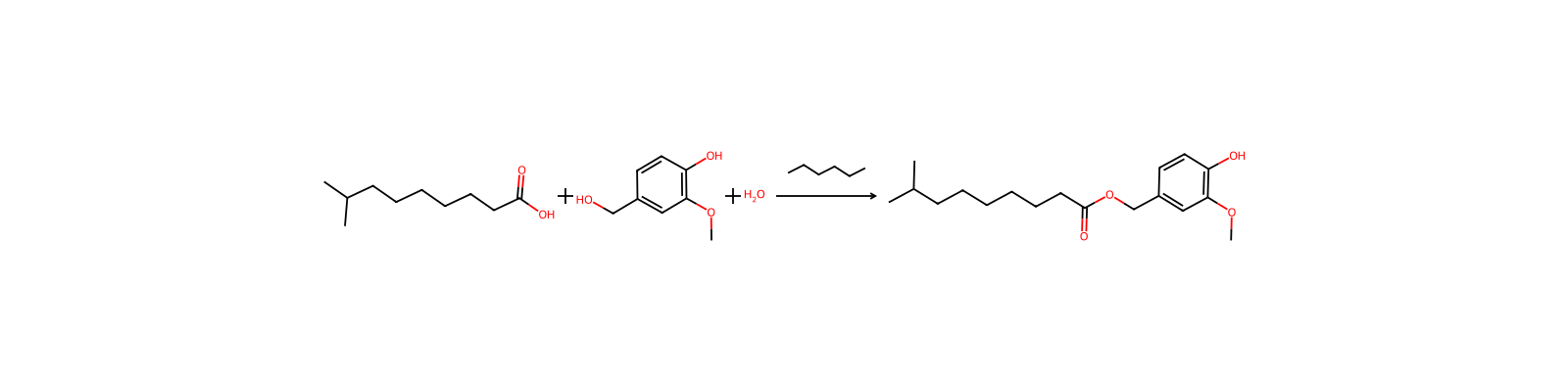
Vor- und nachgelagerte Produkte

Nachgelagerte Produkte

4-Hydroxy-3-methoxyphenylacetonitrilMethoxybenzoquinone4-Benzyloxy-3-methoxyphenylacetonitrile1-(4-Hydroxy-3-methoxyphenyl)decan-5-on3-Methoxybenzylalkohol3-Methoxysalicylalkoholp-Kresol

Zugehörige Reaktionen

31
Reaktionsaufzeichnung erstellen
HRID 167541als Edukt
HRID 643201als Edukt
HRID 643202als Edukt
HRID 643203als Edukt
HRID 643204als Edukt
HRID 643205als Edukt
HRID 643206als Edukt
HRID 643207als Edukt
ZurückSeite 1 von 4

Notizen zur Verbindung

Auf dieser SeiteGrundinformationenÜberblickNamen und BezeichnerEigenschaftenSicherheit und RegulatorischesChemie und IndustrieZugehörige ReaktionenNotizen zur Verbindung