HomeMCPWorkbenchSkills
HomeWorkbenchNotificationsMe
llms.txt · MCP GuidePrivacy Policy · Terms of Service · Supportv1.8.3
  1. Home
  2. /Compound

TITANIUM CHLORIDE (TiCl3)

HCID 62646
New reaction
Print
Basic informationNames & identifiersPropertiesSafety & regulationChemistry & industryRelated reactionsCompound notes
Substructure searchFind similar structures

Basic information

CAS
7705-07-9
Standard SMILES
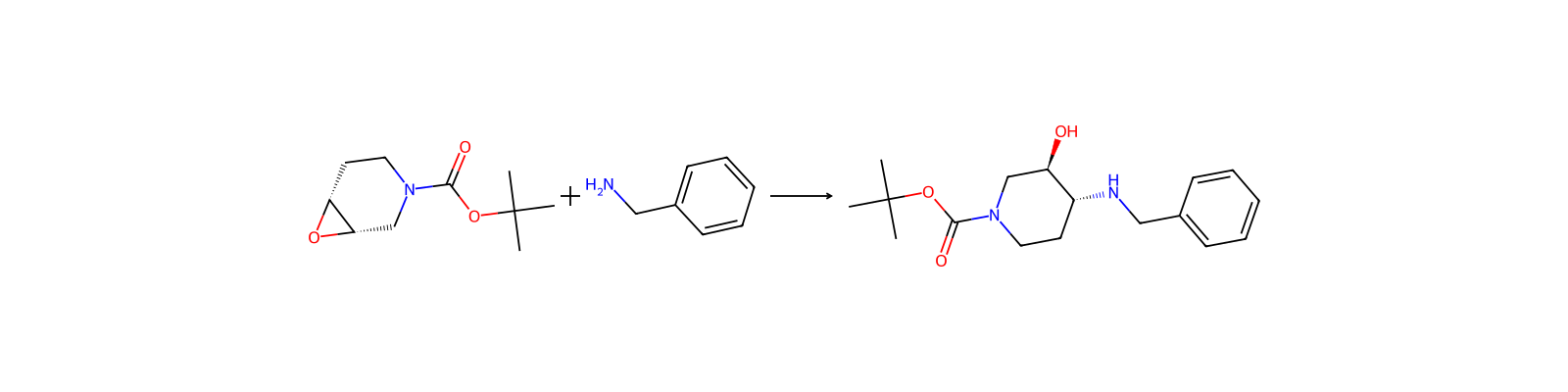
[Cl][Ti]([Cl])[Cl]
InChIKey
YONPGGFAJWQGJC-UHFFFAOYSA-K
Molecular formula
Cl3Ti
Average molar mass
154.22 g/mol
Monoisotopic mass
152.85450434

Names & identifiers

Preferred name
TITANIUM CHLORIDE (TiCl3)
IUPAC
trichlorotitanium
English name
Titanous chloride
Molecular formula
TiCl3
Molecular weight
154.22

Names & synonyms

TITANIUM TRICHLORIDETrichlorotitanium7705-07-9Titanium chloride (TiCl3)TiCl3TAC 121TAC 131Lynx 900GVD566MM7KTEN 12TGY 24TOS 17
Show more names
TITANIUM(III) CHLORIDETitanium (III) chloride (solid)Titanium(iii) chloride, 20% w/w solution in 2n hydrochloric acidtac121tac131
RefChem:190167TAC 140TAC 144TAS 101231-728-9LYNX-900TAC-121TAS-101

Database identifiers

CAS
7705-07-9
PubChem CID
62646
DTXSID
DTXSID1052870
EC Number
231-728-9

Properties

Computed structural properties

Topological polar surface area
0 Ų
Hydrogen bond donors
0
Hydrogen bond acceptors
0
Rotatable bonds
0
Heavy atoms
4
Formal charge
0
Complexity
8

Experimental & physicochemical properties

Chemical Classes · 2 items

Metals -> Metals, Inorganic Compounds

Flammable agents - 3rd degree

SpringerMaterials Propertiescrystal structure
Density1.772 @25 °C
Boiling Point136.4 °C @760 [mm Hg]
Melting Point-30 °C
Vapor Pressure10 [mm Hg] @21.3 °C
Physical DescriptionDark red-violet deliquescent solid; [Merck Index] Purple powder; [Sigma-Aldrich MSDS]

Physicochemical properties

Melting point
440 °C · 440 °C (dec.)(lit.)
Boiling point
100 °C · 100 °C
Density
1.192 g/mL · 1.192 g/mL at 25 °C

Safety & regulation

Safety information is for reference only and does not replace the supplier’s Safety Data Sheet (SDS), applicable regulations, or professional assessment.

GHS classification

GHS Classification · 6 items

Danger

H250 (96.6%): Catches fire spontaneously if exposed to air [Danger Pyrophoric liquids]

P210, P222, P231, P233, P260, P261, P264, P264+P265, P271, P272, P280, P284, P301+P330+P331, P302+P335+P334, P302+P352, P302+P361+P354, P304+P340, P305+P354+P338, P316, P317, P319, P320, P321, P333+P317, P362+P364, P363, P370+P378, P403+P233, P405, and P501 (click each P-code to see the statement)

Aggregated GHS information provided per 236 reports by companies from 9 notifications to the ECHA C&L Inventory. Each notification may be associated with multiple companies.

Danger

H250: Catches fire spontaneously if exposed to air [Danger Pyrophoric liquids]

Hazard information

Regulatory Information · 4 items

Chemical: Titanium chloride (TiCl3)

REACH registered substance: Titanium trichloride (EC: 231-728-9)

Titanium (III) chloride: Does not have an individual approval but may be used under an appropriate group standard

The New Jersey Worker and Community Right to Know Act requires public and private employers to provide information about hazardous substances at their workplaces. (N.J.S.A. 34:5A-1 et. seq.)

Fire Hazards· Non-combustible, substance itself does not burn but may decompose upon heating to produce corrosive and/or toxic fumes.
Health Hazards· TOXIC and/or CORROSIVE; inhalation, ingestion or contact (skin, eyes) with vapors, dusts or substance may cause severe injury, burns or death.
Hazards Summary · 1 item

Unstable and highly reactive; Powder is pyrophoric; Dissociates rapidly from moisture in air; A powerful reducing agent; [Merck Index] A strong reducing agent; Decomposed by moisture evolving hydrochloric acid; Dry powder is pyrophoric; Corrosive to skin and mucous membranes; [CAMEO] Pyrophoric; Reacts violently with water evolving hydrogen chloride gas; Causes burns; Inhalation may cause corrosive injuries to upper respiratory tract; [Sigma-Aldrich MSDS]

Chemistry & industry

Uses & manufacturing

UsesUsed as a reducing agent (nitrate to ammonia), laundry stain remover, and analytical reagent; [Merck Index]
General Manufacturing InformationTitanium chloride (TiCl3): ACTIVE
Applications · 4 items

UsesIt is mainly used as a strong reducing agent; as the catalyst of Α-olefin polymerization. It can be used for azo dye analysis. It can be used as the titrant of azo dye analysis and strong reducing agent.

UsesTitanium Chloride (≥12% HCl Solution) is ued in the optimized gas chromatography tandem mass spectrometry for 1,1''-sulfonylbis[2-(methylthio)ethane] quantification in human urine

UsesAs powerful reducing agent, Titanous chlorideb can reduces nitrate to ammonia; when boiled with aqueous SO2, sulfur is separated; hence is used as an aqueous solution for estimation of nitro groups, ferric ions, per-salts, etc. Removes stains, etc. (stripper) in laundering.

General DescriptionA dark violet crystalline solid. Denser than water. Contact may burn skin, eyes, and mucous membranes. May be toxic by ingestion, inhalation and skin absorption. Used to make other chemicals.

Preparation methods · 2 items

PreparationAluminum reduction process: apply an excess of titanium tetrachloride to react with aluminum powder at 136 °C with aluminum chloride being taken as the initiator to produce titanium trichloride and aluminum trichloride. Heat and steam out excess amount titanium tetrachloride for recycling usage. Meanwhile, the aluminum trichloride undergoes sublimation to get finished product of titanium trichloride. Its reaction equation is: 3TiCl4 + Al → 3TiCl3 + A1C13

PreparationTitanium trichloride may be prepared by reducing titanium tetrachloride with hydrogen at 600°C. The tetrachloride may alternatively be reduced with aluminum, zinc, magnesium, tin, or by electrolysis.

Related reactions

9 records
New reaction record
HRID 1839289 reaction equation
HRID 1839289As catalyst
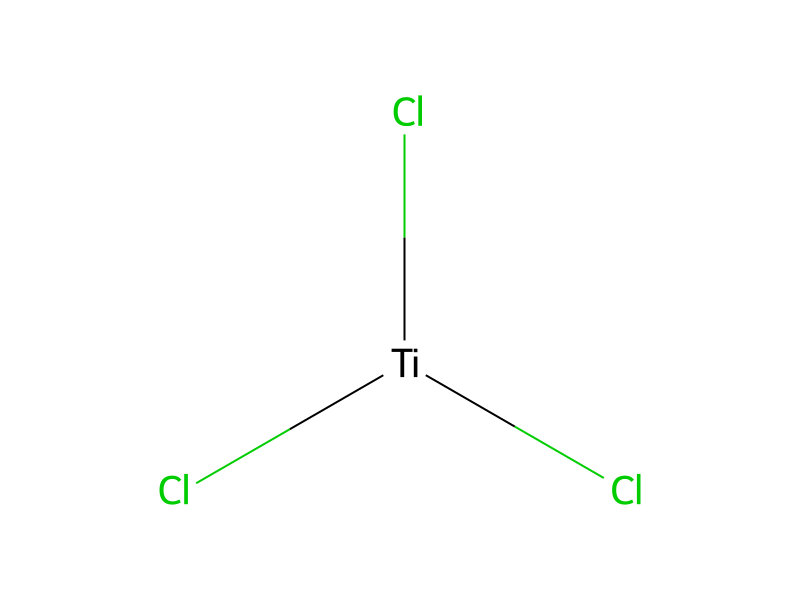
HRID 2000220 reaction equation
HRID 2000220As reagent
HRID 2000234 reaction equation
HRID 2000234As reagent
HRID 2000264 reaction equation
HRID 2000264As reagent
HRID 2000328 reaction equation
HRID 2000328As reagent
HRID 2033650 reaction equation
HRID 2033650As reagent
HRID 2033654 reaction equation
HRID 2033654As reagent
HRID 2033724 reaction equation
HRID 2033724As reagent
PreviousPage 1 of 2

Compound notes

On this pageBasic informationNames & identifiersPropertiesSafety & regulationChemistry & industryRelated reactionsCompound notes
solubility
2 O · reacts with H2O
form
powder
color
Purple
Water Solubility
Soluble
Specific Heat Capacity
0.63 J/ · Cp(crystal): 0.63 J/(g·K), at 25℃
Sensitive
Air Sensitive
Merck
14 · 14,9481
Stability
Stable, but reacts violently with water and is spontaneously flammable in air.
InChI
InChI=1S/2ClH.Ti/h2*1H;/q;;+2/p-2
InChIKey
ZWYDDDAMNQQZHD-UHFFFAOYSA-L
SMILES
Cl[Ti](Cl)Cl
CAS DataBase Reference
7705 · 7705-07-9(CAS DataBase Reference)
FDA UNII
566 MM7K · GVD566MM7K
NIST Chemistry Reference
Titanium(iii) chloride(7705-07-9)
EPA Substance Registry System
Titanium chloride (TiCl3) (7705-07-9)
UNSPSC Code
12352302 · 12352302
NACRES
22 · NA.22
Symbol(GHS)
2 · GHS02,GHS05,GHS06
Signal word
Danger
Hazard statements
252 · H252-H290-H301-H314-H318
Precautionary statements
210 · P210-P222-P231+P232-P233-P280-P235-P234-P260-P264-P370+P378-P390-P301+P330+P331-P303+P361+P353-P363-P304+P340-P310-P305+P351+P338-P407-P420-P406-P405-P501
target organs
Respiratory system
Hazard Codes
C,F
Risk Statements
34 · 34-37-35-17-14
Safety Statements
6 · 6-26-30-36/37/39-43-45
RIDADR
2441 · UN 2441
WGK Germany
3 · 3
RTECS
1924000 · XR1924000
F
10 · 10-23
TSCA
TSCA listed
HazardClass
4.2 · 4.2
PackingGroup
I
HS Code
28273990 · 28273990
Storage Class
8 B · 8B - Non-combustible corrosive hazardous materials
Hazard Classifications
1 Met · Eye Dam. 1Met. Corr. 1Skin Corr. 1BSTOT SE 3
REACH Registrations
Active
Limited Quantities
1 Kg · 1 Kg (2.2 lbs) (solid)
Excepted Quantities
Max Inner Pack (30g or 30ml) and Max Outer Pack (500g or 500ml)
DOT ID and Guide2869 157
DOT Hazard Classification · 5 items

Titanium trichloride, pyrophoric or Titanium trichloride mixtures, pyrophoric

UN2441

Div 4.2 Spontaneously combustible material (49 eCFR § 173.124)

Div 4.2 Spontaneously combustible material (49 eCFR § 173.124)

PG I: the degree of danger presented by the material is great

Hazard Classes and Categories · 4 items

Pyr. Sol. 1 (96.6%)

Pyrophoric solids - Category 1

Pyrophoric solids - Category 1

Flammable agents - 3rd degree, Reactive agents - 3rd degree

CSL Reaction Information · 6 items

CSL00173

Titanium chloride (TiCl3) + Water

Reaction vessel ruptured due to pressure increase

Not Available

User Reported

04/21/2022

Safety & protection

Accidental Release Measures · 2 items

· CALL 911. Then call emergency response telephone number on shipping paper. If shipping paper not available or no answer, refer to appropriate telephone number listed on the inside back cover.

· ELIMINATE all ignition sources (no smoking, flares, sparks or flames) from immediate area.

First AidGeneral First Aid:
Exposure Control and Personal Protection· Wear positive pressure self-contained breathing apparatus (SCBA).
Isolation and EvacuationImmediate precautionary measure
Protective Action Criteria (PAC) · 3 items

1.2 [mg/m3]

13 [mg/m3]

79 [mg/m3]

Emergency Response Planning Guidelines· Note: Some foams will react with the material and release corrosive/toxic gases.

Toxicology

Adverse EffectsDermatotoxin - Skin burns.

Safety data

F
10-23
wgk
3
tsca
TSCA listed
rtecs
XR1924000
ridadr
UN 2441
hs_code
28273990
risk_code
34-37-35-17-14
Signal word
Danger
Symbol(GHS)
GHS02,GHS05,GHS06
hazard_code
C,F
safety_code
6-26-30-36/37/39-43-45
hazard_class
4.2
Storage Class
8B - Non-combustible corrosive hazardous materials
packing_group
I
target organs
Respiratory system
Hazard statements
H252-H290-H301-H314-H318
Limited Quantities
1 Kg (2.2 lbs) (solid)
Excepted Quantities
Max Inner Pack (30g or 30ml) and Max Outer Pack (500g or 500ml)
REACH Registrations
Active
Hazard Classifications
Eye Dam. 1Met. Corr. 1Skin Corr. 1BSTOT SE 3
Precautionary statements
P210-P222-P231+P232-P233-P280-P235-P234-P260-P264-P370+P378-P390-P301+P330+P331-P303+P361+P353-P363-P304+P340-P310-P305+P351+P338-P407-P420-P406-P405-P501

Upstream & downstream products

Upstream raw materials

(S)-tert-Butyl 6-amino-2-((tert-butoxycarbonyl)amino)hexanoate hydrochlorideAluminumTitanium tetrachloride

Downstream products

ORNOPROSTILIndole-6-carboxaldehyde6-HydroxymethylindoleIndole-7-carboxaldehyde