
HRID 127293As reactant
Completing data — refresh the page later to see the latest
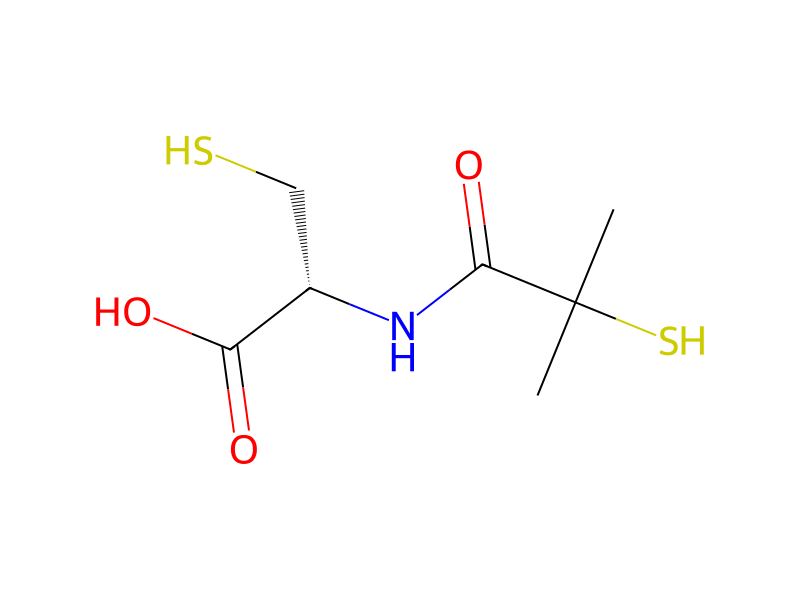
65002-17-7CC(C)(S)C(=O)N[C@@H](CS)C(=O)OVUAFHZCUKUDDBC-BYPYZUCNSA-NBucillamine is an organic molecular entity.
65002-17-7DTXSID2048587CHEMBL80830CHEBI:31312Safety information is for reference only and does not replace the supplier’s Safety Data Sheet (SDS), applicable regulations, or professional assessment.
Drug-Induced Liver Injury Severity and Toxicity (DILIst)
Bucillamine
DILI Positive
DOI:10.1016/j.drudis.2019.09.022
M - Musculo-skeletal system
QM - Musculo-skeletal system
Anti-inflammatory agents that are non-steroidal in nature. In addition to anti-inflammatory actions, they have analgesic, antipyretic, and platelet-inhibitory actions. They act by blocking the synthesis of prostaglandins by inhibiting cyclooxygenase, which converts arachidonic acid to cyclic endoperoxides, precursors of prostaglandins. Inhibition of prostaglandin synthesis accounts for their analgesic, antipyretic, and platelet-inhibitory actions; other mechanisms may contribute to their anti-inflammatory effects.
Naturally occurring or synthetic substances that inhibit or retard oxidation reactions. They counteract the damaging effects of oxidation in animal tissues.
DescriptionBucillamine is an orally active immunomodulator useful in the treatment of rheumatoid arthritis. Its potencies in inhibiting collagenase activity and inactivating rheumatoid factor far exceed those of penicillamine. In man, bucillamine reportedly brings about significant improvements over placebo in erythrocyte sedimentation, grip power, joint swelling and duration of morning stiffness.
UsesAn antirheumatic agent.


DefinitionChEBI: Bucillamine is an organic molecular entity.