Zinkiodid
Zinc iodide
HCID 66278
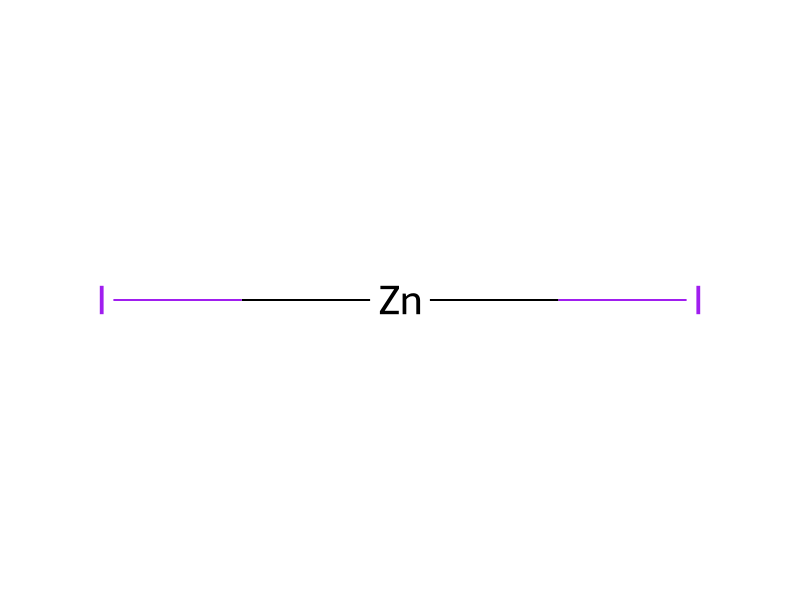
Grundinformationen
- CAS
10139-47-6- Standard-SMILES
[I][Zn][I]- InChIKey
UAYWVJHJZHQCIE-UHFFFAOYSA-L- Summenformel
- I2Zn
- Durchschnittliche Molmasse
- 319,2 g/mol
- Monoisotopische Masse
- 317,7380882
Überblick
Zinc iodide is a iodide of zinc. It is used in x-rays and electron microscopy. Zinc is a metallic element with the atomic number 30. It is found in nature most often as the mineral sphalerite. Though excess zinc in harmful, in smaller amounts it is an essential element for life, as it is a cofactor for over 300 enzymes and is found in just as many transcription factors. (L48, L49, L69)
Namen und Bezeichner
- Bevorzugter Name
- Zinc iodide
- IUPAC
- diiodozinc
- Lokaler Name
- Zinkiodid
- Englischer Name
- Zinc iodide
- Summenformel
- I2Zn
- Molmasse
- 319.2
Namen und Synonyme
DiiodozincZinc iodide (ZnI2)EpiphaniQEpiphaniQ ThroatEpiphaniQ SterileDTXSID5064968762R7A0O0BNSC-39113EpiphaniQ Sterile For Oral INhalation OnlyRefChem:57902DTXCID7032630233-396-0
Weitere Namen anzeigen
ZnI2Zinc IodidZinc iodineZINC IODIDE PUREzinciodide(zni2)Zinc iodide(8CI)ZINC IODIDE, 98+%
10139-47-6Zinc diiodideZinc iodideZincum IodatumZinc iodide anhydrousHydriodic acid zinc salt (2:1)NSC 39113; Zinc DiiodideZinc diiodide,99%
Datenbank-Bezeichner
- CAS
10139-47-6- PubChem CID
- 66278
- DTXSID
DTXSID5064968- EC Number
- 233-396-0
Eigenschaften
Berechnete Struktureigenschaften
- Polarare Oberfläche (TPSA)
- 0 Ų
- H-Brücken-Donoren
- 0
- H-Brücken-Akzeptoren
- 0
- Frei drehbare Bindungen
- 0
- Schwere Atome
- 3
- Formalladung
- 0
- Komplexität
- 2,8
Experimentelle und physikochemische Eigenschaften
Chemical ClassesMetals -> Metals, Inorganic Compounds
Physical DescriptionWhite odorless hygroscopic solid; Turns brown on contact with air or light; [Merck Index] White odorless crystalline solid; [MSDSonline]
Physikochemische Eigenschaften
- Schmelzpunkt
- 445 °C · 445 °C (lit.)
- Siedepunkt
- 624 °C · 624°C
- Dichte
- 4.74 g/mL · 4.74 g/mL at 25 °C (lit.)
- Flammpunkt
- 625 °C · 625°C
- storage temp.
- 5 °C · Store at +5°C to +30°C.
- Löslichkeit
- 4500 g/l · 4500g/l
- Aggregatzustand
- beads
- Farbe
- White to pale yellow
- Wichte
- 4.74 · 4.74
- PH
- 5.6 · 5.6 (50g/l, H2O, 20℃)
- Wasserlöslichkeit
- 333 g/100 · 333 g/100 mL
Sicherheit und Regulatorisches
Sicherheitsangaben dienen nur zur Orientierung und ersetzen weder das Sicherheitsdatenblatt (SDB) des Lieferanten noch geltende Vorschriften oder eine fachliche Bewertung.
GHS-Klassifizierung
GHS Classification
This chemical does not meet GHS hazard criteria for 1.7% (1 of 58) of reports.
Danger
H314 (93.1%): Causes severe skin burns and eye damage [Danger Skin corrosion/irritation]
P260, P264, P273, P280, P301+P330+P331, P302+P361+P354, P304+P340, P305+P354+P338, P316, P321, P363, P391, P405, and P501 (click each P-code to see the statement)
Aggregated GHS information provided per 58 reports by companies from 9 notifications to the ECHA C&L Inventory. Each notification may be associated with multiple companies.
Gefahrenhinweise
Regulatory Information
Chemical: Zinc iodide (ZnI2)
Zinc iodide: Does not have an individual approval but may be used under an appropriate group standard
Hazards SummaryCorrosive to skin and eyes; [eChemPortal: ERMA] An irritant; [MSDSonline] See Zinc. See Iodine for the TLV of Iodides.
Hazard Classes and CategoriesSkin Corr. 1B (93.1%)
Sicherheit und Schutzausrüstung
Exposure Control and Personal Protection0.1 [mg/m3] (respirable fraction), 2 mg/m3 (inhalable fraction)-for Zn inorg. compds[German Research Foundation (DFG)]
Minimum Risk LevelIntermediate Oral: 0.3 mg/kg/day (L134)
Chronic Oral: 0.3 mg/kg/day (L134)
Toxikologische Informationen
Chemie und Industrie
Pharmakologische Informationen
Metabolism/Metabolites
Zinc can enter the body through the lungs, skin, and gastrointestinal tract. Intestinal absorption of zinc is controlled by zinc carrier protein CRIP. Zinc also binds to metallothioneins, which help prevent absorption of excess zinc. Zinc is widely distributed and found in all tissues and tissues fluids, concentrating in the liver, gastrointestinal tract, kidney, skin, lung, brain, heart, and pancreas. In the bloodstream zinc is found bound to carbonic anhydrase in erythrocytes, as well as bound to albumin, _2-macroglobulin, and amino acids in the the plasma. Albumin and amino acid bound zinc can diffuse across tissue membranes. Zinc is excreted in the urine and faeces. (L49)
Verwendung und Herstellung
Uses
Used as a topical antiseptic and astringent; [Merck Index] Used as an analytical reagent; [Hawley]
Using Disinfectants or Biocides [Category: Clean]
Zinc iodide is used in x-rays and electron microscopy. (L69)
General Manufacturing InformationZinc iodide (ZnI2): ACTIVE
Anwendungen
VerwendenZinc Iodide is used in the morphological study of dendritic cells in human cervix by zinc iodide osmium method. It is also used in conjunction with osmium tetroxide as a stain in electron microscopy.
Darstellung
synthetischeZinc iodide is prepared by the interaction of zinc sulfate solution and barium iodide solution, filtering out the barium sulfate precipitate and evaporating the filtrate to make it crystallize or by directly combining zinc and iodine.
Vor- und nachgelagerte Produkte
Zugehörige Reaktionen
0
Noch keine zugehörigen Reaktionen