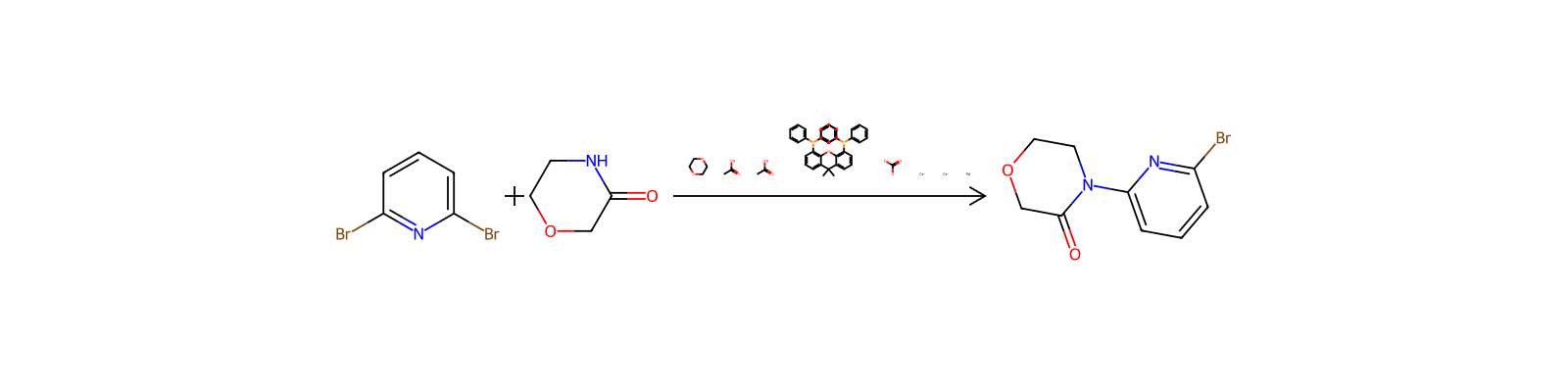
HRID 672As reactant

109-11-5O=C1COCCN1VSEAAEQOQBMPQF-UHFFFAOYSA-N109-11-5DTXSID3074444Safety information is for reference only and does not replace the supplier’s Safety Data Sheet (SDS), applicable regulations, or professional assessment.
This chemical does not meet GHS hazard criteria for 66.2% (104 of 157) of all reports.
Danger
H302 (33.1%): Harmful if swallowed [Warning Acute toxicity, oral]
P261, P264, P264+P265, P270, P271, P272, P280, P301+P317, P302+P352, P304+P340, P305+P354+P338, P317, P319, P321, P330, P332+P317, P333+P317, P362+P364, P403+P233, P405, and P501 (click each P-code to see the statement)
Aggregated GHS information provided per 157 reports by companies from 9 notifications to the ECHA C&L Inventory. Each notification may be associated with multiple companies.
Description3-ketomorpholine is also known as morpholin-3-one. It is useful pharmacological intermediate. Recent studies have shown that some morpholin-3-one derivatives could effectively cause cell cycle arrest at G1 phase, increase the levels of P53 and Fas, and induce A549 cell apoptosis in lung cancer. This indicates it might be a useful tool for elucidating the molecular mechanism of lung cancer cell apoptosis and might also be potential anti-cancer drugs. Some of its derivatives have been proven to be useful for the prevention and treatment of arteriosclerosis and hypertriglyceridemia.
Uses3-Morpholinone is used as a reactant in the synthesis of 3-Morpholinone derivates. An example of this is 4-(4-Aminophenyl)-3-morpholinone, the key intermediate in the synthesis of Rivaroxaban (an anticoagulant).


