HomeMCPWorkbenchSkills
HomeWorkbenchNotificationsMe
llms.txt · MCP GuidePrivacy Policy · Terms of Service · Supportv1.8.3
  1. Home
  2. /Compound

2,3-Dichloro-5,6-dicyano-1,4-benzoquinone

HCID 6775
New reaction
Print
Basic informationOverviewNames & identifiersPropertiesSafety & regulationChemistry & industryRelated reactionsCompound notes
Substructure searchFind similar structures

Basic information

CAS
84-58-2
Standard SMILES
N#CC1=C(C#N)C(=O)C(Cl)=C(Cl)C1=O
InChIKey
HZNVUJQVZSTENZ-UHFFFAOYSA-N
Molecular formula
C8Cl2N2O2
Average molar mass
227 g/mol
Monoisotopic mass
225.9336826

Overview

request from searcher

Names & identifiers

Preferred name
2,3-Dichloro-5,6-dicyano-1,4-benzoquinone
IUPAC
4,5-dichloro-3,6-dioxocyclohexa-1,4-diene-1,2-dicarbonitrile
English name
2,3-Dichloro-5,6-dicyano-1,4-benzoquinone
Molecular formula
C8Cl2N2O2
Molecular weight
227

Names & synonyms

84-58-22,3-Dichloro-5,6-dicyano-1,4-benzoquinoneDichlorodicyanobenzoquinone2,3-Dichloro-5,6-dicyano-p-benzoquinone2,3-Dichloro-5,6-dicyanobenzoquinoneDichlorodicyano-p-benzoquinone1,4-CYCLOHEXADIENE-1,2-DICARBONITRILE, 4,5-DICHLORO-3,6-DIOXO-2,3-Dichloro-5,6-dicyanoquinone4,5-Dichloro-3,6-dioxo-1,4-cyclohexadiene-1,2-dicarbonitrile2,3-Dichloro-5,6-dicyano-p-quinone2,3-Dicyano-5,6-dichlorobenzoquinone2,3-Dicyano-5,6-dichloro-1,4-benzoquinone
Show more names
DDQ2,3-dicyano-5,6-dichloro-p-benzoquinone4,5-dichloro-3,6-dioxocyclohexa-1,4-diene-1,2-dicarbonitrile1,2-Dichloro-4,5-Dicyanobenzoquinone2,3-Dicyano-5,6-dichlorobenzoquinone2,3-dichloro-5,6-dicyano-4-benzoquinone
5,6-Dichloro-2,3-dicyano-p-benzoquinone5,6-Dicyano-2,3-dichloro-p-benzoquinone1H5KD39UH7NSC-401087RefChem:1330572,3-DDQDTXCID10818133201-542-2

Properties

Computed structural properties

XLogP
1.6
Topological polar surface area
81.7 Ų
Hydrogen bond donors
0
Hydrogen bond acceptors
4
Rotatable bonds
0
Heavy atoms
14
Formal charge
0
Complexity
464

Experimental & physicochemical properties

Chemical ClassesNitrogen Compounds -> Other Aromatics (Nitrogen)
SpringerMaterials PropertiesNuclear quadrupole resonance spectroscopy
Physical DescriptionYellow to orange solid; [Merck Index] Dark yellow powder; [Alfa Aesar MSDS]

Physicochemical properties

Melting point
210 · 210-215 °C (dec.)(lit.)
Boiling point
301.8 · 301.8±42.0 °C(Predicted)
Density
1.75 · 1.7500 (estimate)
storage temp.
30 °C · Store below +30°C.
solubility
Soluble in benzene, methanol, acetic acid and dioxane.Slightly soluble in chloroform,, dichloromethane.
form
Crystalline Powder or Crystals
color
Yellow to orange
Water Solubility
reacts

Safety & regulation

Safety information is for reference only and does not replace the supplier’s Safety Data Sheet (SDS), applicable regulations, or professional assessment.

GHS classification

GHS Classification · 4 items

Danger

H301 (100%): Toxic if swallowed [Danger Acute toxicity, oral]

P261, P264, P264+P265, P270, P272, P280, P301+P316, P302+P352, P305+P351+P338, P321, P330, P333+P317, P337+P317, P362+P364, P405, and P501 (click each P-code to see the statement)

Aggregated GHS information provided per 77 reports by companies from 11 notifications to the ECHA C&L Inventory. Each notification may be associated with multiple companies.

Hazard information

Regulatory Information · 3 items

Chemical: 1,4-Cyclohexadiene-1,2-dicarbonitrile, 4,5-dichloro-3,6-dioxo-

REACH registered substance: 4,5-dichloro-3,6-dioxocyclohexa-1,4-diene-1,2-dicarbonitrile (EC: 201-542-2)

2,3-Dichloro-5,6-dicyano-p-benzoquinone: Does not have an individual approval but may be used under an appropriate group standard

Hazards Summary · 1 item

Intraperitoneal LD50 (mouse) = 31 mg/kg; Intravenous LD50 (mouse) = 13 mg/kg; [RTECS] Decomposed by water; [Merck Index] Reacts with water evolving toxic gases; An irritant; Toxic by ingestion; [Alfa Aesar MSDS] See Hydroquinone. See NITRILES.

Hazard Classes and CategoriesAcute Tox. 3 (100%)

Safety data

F
21
PPE
Eyeshields, Faceshields, Gloves, type P2 (EN 143) respirator cartridges
wgk
3
tsca
TSCA listed
rtecs
GU4825000
ridadr
UN 3439 6.1/PG 3

Chemistry & industry

Uses & manufacturing

UsesUsed in steroid synthesis (oxidizing agent); [Merck Index]
General Manufacturing Information1,4-Cyclohexadiene-1,2-dicarbonitrile, 4,5-dichloro-3,6-dioxo-: ACTIVE
Applications · 2 items

Description2,3-Dichloro-5,6-dicyano-1,4-benzoquinone (DDQ) has a variety of applications. DDQ is a deprotection agent for ketals, acetals, and thioacetals. It is a useful electron transfer reagent for synthesis of quinolones and an oxidizing agent used to synthesize steroids. Additionally, DDQ is used with Ph3P to synthesize 1,2-benzisoxazoles.

UsesAn oxidizing agent, especially in steroid synthesis.2,3-Dichloro-5,6-dicyano-1,4-benzoquinone is used as a reagent for oxidative couplings and cyclization reactions and dehydrogenation of alcohols, phenols and steroid ketones. It is also used in the synthesis of 1,2-benzisoxazoles. It is a useful electron-transfer reagent for synthesis of quinolines from imines and alkynes or alkenes.

Preparation methods · 1 item

PreparationThe first synthesis of 2,3-Dichloro-5,6-dicyano-1,4-benzoquinone (DDQ) was described by J.Thiele and F.Guntber in 1906. However, no interest was shown in the compound until Linstead and co-workers discovered its extraordinary potency as a dehydrogenating agent. Its oxidation potential is greater than that of any other known quinone.2,3-Dichloro-5,6-Dicyanobenzoquinone (DDQ). A New Preparation

Upstream & downstream products

Upstream raw materials

Carbon tetrachloride3,6-Dihydroxyphthalonitrile

Related reactions

1,314 records
New reaction record
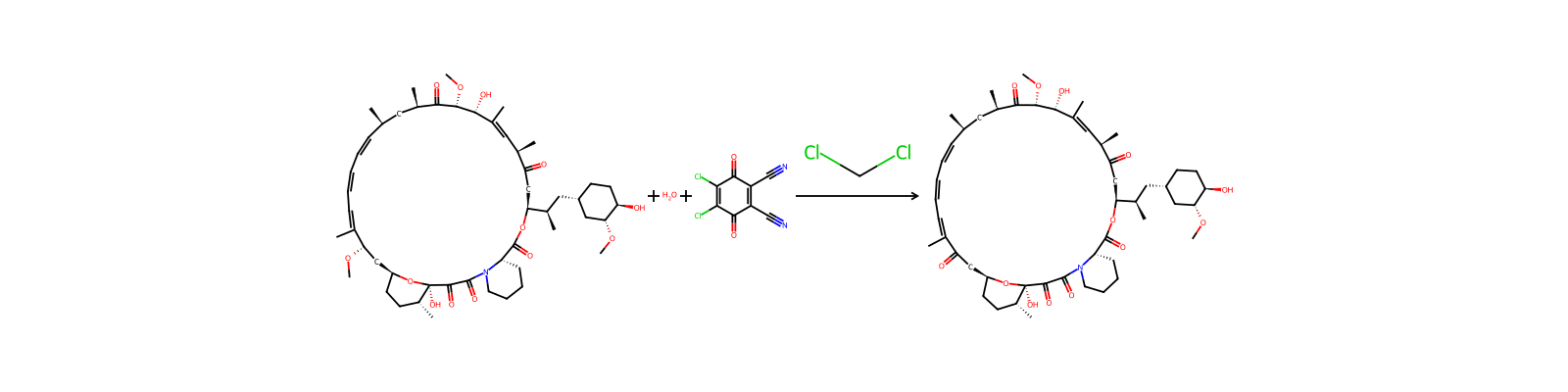
HRID 1617 reaction equation
HRID 1617As reactant
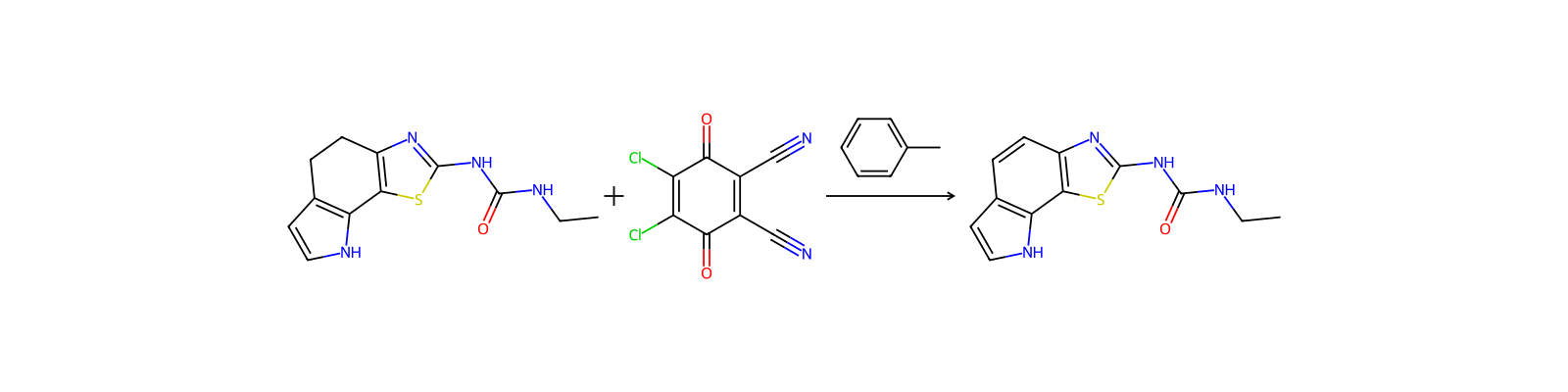
HRID 2147 reaction equation
HRID 2147As reactant
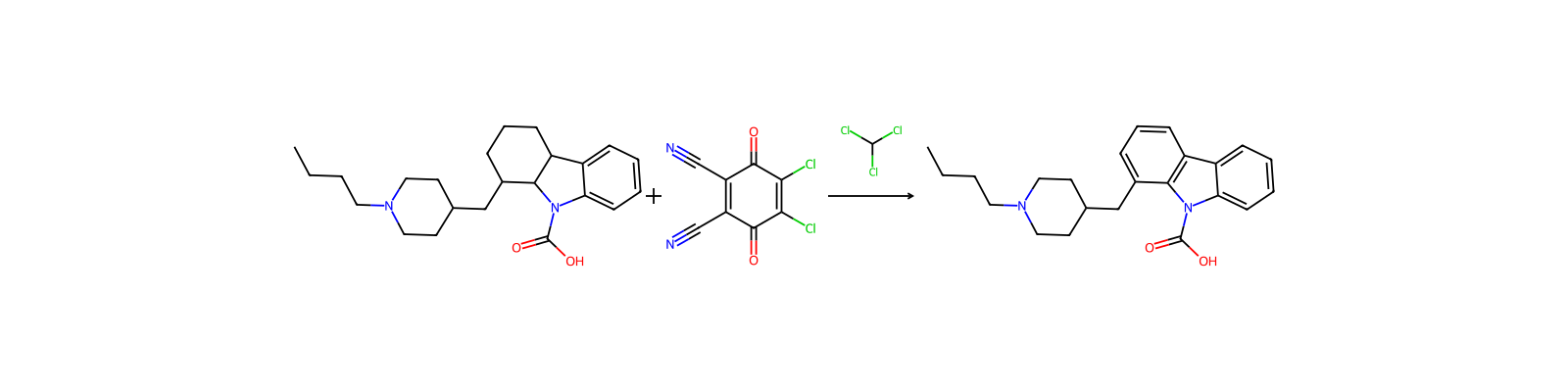
HRID 2318 reaction equation
HRID 2318As reactant
HRID 3146 reaction equation
HRID 3146As reactant
HRID 9152 reaction equation
HRID 9152As reactant
HRID 9154 reaction equation
HRID 9154As reactant
HRID 9156 reaction equation
HRID 9156As reactant
HRID 9157 reaction equation
HRID 9157As reactant
PreviousPage 1 of 165

Compound notes

On this pageBasic informationOverviewNames & identifiersPropertiesSafety & regulationChemistry & industryRelated reactionsCompound notes

Database identifiers

CAS
84-58-2
PubChem CID
6775
DTXSID
DTXSID7052577
ChEMBL
CHEMBL3759231
UNII
1H5KD39UH7
EC Number
201-542-2
Nikkaji
J4.898D、J510.000C
Sensitive
Moisture Sensitive
Merck
14 · 14,3063
BRN
747939 · 747939
InChI
1S/C8Cl2N2O2/c9-5-6(10)8(14)4(2-12)3(1-11)7(5)13
InChIKey
HZNVUJQVZSTENZ-UHFFFAOYSA-N
SMILES
ClC1=C(Cl)C(=O)C(C#N)=C(C#N)C1=O
CAS DataBase Reference
84 · 84-58-2(CAS DataBase Reference)
EWG's Food Scores
1 · 1
FDA UNII
1 H5KD39UH7 · 1H5KD39UH7
NIST Chemistry Reference
1 · 1,4-Cyclohexadiene-1,2-dicarbonitrile, 4,5-dichloro-3,6-dioxo-(84-58-2)
EPA Substance Registry System
1 · 1,4-Cyclohexadiene-1,2-dicarbonitrile, 4,5-dichloro-3,6-dioxo- (84-58-2)
UNSPSC Code
12352117 · 12352117
NACRES
22 · NA.22
Symbol(GHS)
6 · GHS06
Signal word
Danger
Hazard statements
301 · H301+H311+H331-H315-H319
Precautionary statements
501 · P501-P261-P270-P271-P264-P280-P337+P313-P305+P351+P338-P361+P364-P332+P313-P301+P310+P330-P302+P352+P312-P304+P340+P311-P403+P233-P405
PPE
2 · Eyeshields, Faceshields, Gloves, type P2 (EN 143) respirator cartridges
Hazard Codes
T
Risk Statements
25 · 25-29-41-37/38-20/21-23/24/25
Safety Statements
22 · 22-24/25-37-45-36/37-26-36/37/39
RIDADR
3439 · UN 3439 6.1/PG 3
WGK Germany
3 · 3
RTECS
4825000 · GU4825000
F
21 · 21
TSCA
TSCA listed
HazardClass
6.1 · 6.1
PackingGroup
II
HS Code
2926909090 · 2926909090
Storage Class
6.1 C · 6.1C - Combustible acute toxic Cat.3toxic compounds or compounds which causing chronic effects
Hazard Classifications
3 Oral · Acute Tox. 3 Oral
REACH Registrations
Active
Limited Quantities
5 kg · 5.0 kg (11 lbs) (solid)
Excepted Quantities
Max Inner Pack (30g or 30ml) and Max Outer Pack (1Kg or 1L)
hs_code
2926909090
risk_code
25-29-41-37/38-20/21-23/24/25
Signal word
Danger
Symbol(GHS)
GHS06
hazard_code
T
safety_code
22-24/25-37-45-36/37-26-36/37/39
hazard_class
6.1
Storage Class
6.1C - Combustible acute toxic Cat.3toxic compounds or compounds which causing chronic effects
packing_group
II
Hazard statements
H301+H311+H331-H315-H319
Limited Quantities
5.0 kg (11 lbs) (solid)
Excepted Quantities
Max Inner Pack (30g or 30ml) and Max Outer Pack (1Kg or 1L)
REACH Registrations
Active
Hazard Classifications
Acute Tox. 3 Oral
Precautionary statements
P501-P261-P270-P271-P264-P280-P337+P313-P305+P351+P338-P361+P364-P332+P313-P301+P310+P330-P302+P352+P312-P304+P340+P311-P403+P233-P405

Downstream products

1-Benzofuran-5-carbaldehyde2,6-Di-tert-butyl-p-benzoquinone2-Oxo-(2H)-furo(2,3-h)-1-benzopyranN-methylacridine9-Methylene-9H-fluorene2,7-Dibromophenanthrene4-Methyl-3-nitrobenzonitrile