HRID 46751als Produkt
Hexachlorobutadiene

87-68-3ClC(Cl)=C(Cl)C(Cl)=C(Cl)ClRWNKSTSCBHKHTB-UHFFFAOYSA-NHexachlorobutadiene is a colorless liquid with a turpentine-like odor. It is also called perchlorobutadiene. Hexachlorobutadiene is not found naturally in the environment. It is formed when other chemicals are made. Most hexachlorobutadiene used commercially in the United States is imported from Germany. It is mainly used to make rubber compounds. It is also used as a solvent, and to make lubricants, in gyroscopes, as a heat transfer liquid, and as a hydraulic fluid.
87-68-3DTXSID7020683CHEMBL389950CHEBI:5691Hazardous Air Pollutants (HAPs)
Other Classes -> Halogenated Aliphatics, Unsaturated
Carcinogens
Volatile Organic Compound (VOC)
log Kow = 4.78
4.90
4.74
1.675 at 59.9 °F (USCG, 1999) - Denser than water; will sink
1.556 @ 25 °C
Relative density (water = 1): 1.68
1.675
1.556 @25 °C
1.55
less than 0.1 mg/mL at 72 °F (NTP, 1992)
Sol in alc, ether
In water, 3.20 mg/l @ 25 °C
Solubility in water: none
Insoluble
90 °C
90 °C
419 °F at 760 mmHg (NTP, 1992)
215 °C @ 760 mm Hg
212 °C
419 °F
215 °C @760 [mm Hg]
419 °F
-6 °F (NTP, 1992)
-21 °C
-18 °C
-6 °F
-21 °C
-6 °F
Sicherheitsangaben dienen nur zur Orientierung und ersetzen weder das Sicherheitsdatenblatt (SDB) des Lieferanten noch geltende Vorschriften oder eine fachliche Bewertung.
This chemical does not meet GHS hazard criteria for 4.3% (2 of 47) of reports.
Danger
H301 (68.1%): Toxic if swallowed [Danger Acute toxicity, oral]
P203, P260, P261, P262, P264, P264+P265, P270, P271, P272, P273, P280, P284, P301+P316, P301+P317, P302+P352, P304+P340, P305+P351+P338, P305+P354+P338, P308+P316, P316, P317, P318, P320, P321, P330, P332+P317, P333+P317, P337+P317, P361+P364, P362+P364, P391, P403+P233, P405, and P501 (click each P-code to see the statement)
Aggregated GHS information provided per 47 reports by companies from 9 notifications to the ECHA C&L Inventory. Each notification may be associated with multiple companies.
Warning
Chemical: 1,3-Butadiene, 1,1,2,3,4,4-hexachloro-
Hazard Traits - Bioaccumulation; Carcinogenicity; Environmental Persistence; Hepatotoxicity and Digestive System Toxicity; Nephrotoxicity and Other Toxicity to the Urinary System; Respiratory Toxicity
R - indicates a substance that is the subject of a TSCA section 6 risk management rule.
Substance: Hexachlorobuta-1,3-diene
The New Jersey Worker and Community Right to Know Act requires public and private employers to provide information about hazardous substances at their workplaces. (N.J.S.A. 34:5A-1 et. seq.)
Special Hazards of Combustion Products: They contain highly toxic and irritating chloride fumes.
· Non-combustible, substance itself does not burn but may decompose upon heating to produce corrosive and/or toxic fumes.
Combustible. Gives off irritating or toxic fumes (or gases) in a fire.
Poisonous; may be fatal if inhaled, swallowed or absorbed through the skin. Inhalation causes repiratory difficulty and irritation of mucous membranes. Skin and eye irritant; may cause burns. (USCG, 1999)
· Highly toxic, may be fatal if inhaled, ingested or absorbed through skin.
Hexachlorobutadiene is a colorless liquid with a turpentine-like odor. It is also called perchlorobutadiene. Hexachlorobutadiene is not found naturally in the environment. It is formed when other chemicals are made. Most hexachlorobutadiene used commercially in the United States is imported from Germany. It is mainly used to make rubber compounds. It is also used as a solvent, and to make lubricants, in gyroscopes, as a heat transfer liquid, and as a hydraulic fluid.
Hexachlorobutadiene is used mainly as an intermediate in the manufacture of rubber compounds. No information is available on the health effects of hexachlorobutadiene in humans. Animal studies have reported effects on the kidney and respiratory system from acute inhalation exposure, and effects on the kidney from chronic oral exposure to hexachlorobutadiene. Animal studies have not reported developmental or reproductive effects, other than a reduction in fetal body weights, from inhalation exposure to hexachlorobutadiene. One study reported kidney tumors in rats exposed to hexachlorobutadiene orally. EPA has classified hexachlorobutadiene as a Group C, possible human carcinogen.
Kidney injury reported in chronic feeding and inhalation studies of experimental animals; [ACGIH] Liquid is corrosive. Vapor causes skin, eye, and respiratory tract irritation. May cause kidney injury; [ICSC] Irritating to skin; Toxic by ingestion, inhalation, or skin absorption; [MSDSonline]
2279 151
2279 151
Lock EA, Studies on the Mechanism of Nephrotoxicity and Nephrocarcinogenicity of Halogenated Alkenes, CRC Critical Reviews in Toxicol 1988.
DHHS/ATSDR; Toxicological Profile for Hexachlorobutadiene (Update) (1994) ATSDR/TP-93/08
NTP TR No 001; Route: oral in feed; Species: mice. NTIS No PB91185884.[NTP; Division of Toxicology Research and Testing; Management Status Report; 07/22/92; p.21]
U128; As stipulated in 40 CFR 261.33, when 1,3-butadiene, 1,1,2,3,4,4-hexachloro-, as a commercial chemical product or manufacturing chemical intermediate or an off-specification commercial chemical product or a manufacturing chemical intermediate, becomes a waste, it must be managed according to Federal and/or State hazardous waste regulations. Also defined as a hazardous waste is any residue, contaminated soil, water, or other debris resulting from the cleanup of a spill, into water or on dry land, of this waste. Generators of small quantities of this waste may qualify for partial exclusion from hazardous waste regulations (40 CFR 261.5).
D003; A solid waste containing hexachlorobutadiene may become characterized as a hazardous waste when subjected to testing for reactivity as stipulated in 40 CFR 261.23, and if so characterized, must be managed as a hazardous waste.
Excerpt from ERG Guide 151 [Substances - Toxic (Non-Combustible)]:
Use water spray, powder, foam, carbon dioxide. In case of fire: keep drums, etc., cool by spraying with water.
Fresh air, rest. Refer for medical attention.
Remove contaminated clothes. Rinse skin with plenty of water or shower. Refer for medical attention .
First rinse with plenty of water for several minutes (remove contact lenses if easily possible), then refer for medical attention.
Rinse mouth. Do NOT induce vomiting. Give one or two glasses of water to drink. Refer for medical attention .
· CALL 911. Then call emergency response telephone number on shipping paper. If shipping paper not available or no answer, refer to appropriate telephone number listed on the inside back cover.
· Do not touch damaged containers or spilled material unless wearing appropriate protective clothing.
EYES: First check the victim for contact lenses and remove if present. Flush victim's eyes with water or normal saline solution for 20 to 30 minutes while simultaneously calling a hospital or poison control center. Do not put any ointments, oils, or medication in the victim's eyes without specific instructions from a physician. IMMEDIATELY transport the victim after flushing eyes to a hospital even if no symptoms (such as redness or irritation) develop.
General First Aid:
(General first aid procedures)
· Wear positive pressure self-contained breathing apparatus (SCBA).
0.02 [ppm]
Generators of waste (equal to or greater than 100 kg/mo) containing this contaminant, EPA hazardous waste number U128, must conform with USEPA regulations in storage, transportation, treatment and disposal of waste.
Generators of waste (equal to or greater than 100 kg/mo) containing this contaminant, EPA hazardous waste number D003, must conform with USEPA regulations in storage, transportation, treatment and disposal of waste.
Incineration: Spray into a furnace with afterburner and alkali scrubber. Incineration will become easier by mixing with a more flammable solvent.
A potential candidate for rotary kiln incineration at a temperature range of 820 to 1,600 °C and residence times of seconds for liquids and gases, and hours for solids. A potential candidate for fluidized bed incineration at a temperature range of 450 to 980 °C and residence times of seconds for liquids and gases, and longer for solids. A potential candidate for liquid injection incineration at a temperature range of 650 to 1,600 °C and a residence time of 0.1 to 2 seconds. Hexachlorobutadiene is a waste chemical stream constituent which may be subjected to ultimate disposal by controlled incineration.
For more Disposal Methods (Complete) data for HEXACHLORO-1,3-BUTADIENE (8 total), please visit the HSDB record page.
Personal protection: complete protective clothing including self-contained breathing apparatus. Do NOT let this chemical enter the environment. Collect leaking and spilled liquid in sealable containers as far as possible. Absorb remaining liquid in sand or inert absorbent. Then store and dispose of according to local regulations.
SRP: The scientific literature for the use of contact lenses in industry is conflicting. The benefit or detrimental effects of wearing contact lenses depend not only upon the substance, but also on factors including the form of the substance, characteristics and duration of the exposure, the uses of other eye protection equipment, and the hygiene of the lenses. However, there may be individual substances whose irritating or corrosive properties are such that the wearing of contact lenses would be harmful to the eye. In those specific cases, contact lenses should not be worn. In any event, the usual eye protection equipment should be worn even when contact lenses are in place.
The worker should immediately wash the skin when it becomes contaminated.
Work clothing that becomes wet or significantly contaminated should be removed and replaced.
Excerpt from ERG Guide 151 [Substances - Toxic (Non-Combustible)]:
Immediate precautionary measure
ATSDR Toxicological Profile for Hexachlorobutadiene - Succinctly characterizes the toxicologic and adverse health effects information.
Ranking: 132 (total points: 1061.1500000000001)
Average hexachloro-1,3-butadiene concn in Canadian adipose tissue (human) was 0.004 ug/g(1). Hexachloro-1,3-butadiene was found at a concn of 13.7 ug/kg (wet tissue) in the liver of a 75 year old male and at 1.8 ug/kg in the body fat of a 48 year old male(2).
Urinary
[in animals: kidney tumors]
The effects of piperonyl butoxide were measured. The time course and severity of toxicity were affected. Glomerular filtration rate was decreased 5 hr after piperonyl butoxide or hexachloro-1,3-butadiene administration; at 24 hr, glomerular filtration rate had recovered for the piperonyl butoxide group but continued to fall in the hexachloro-1,3-butadiene group. The group treated with piperonyl butoxide and hexachloro-1,3-butadiene had the same glomerular filtration rate as the group treated not different from the oil-pretreated controls. At 48 hr after hexachloro-1,3-butadiene, reabsorption of water and glucose was more severely impaired in the group pretreated with piperonyl butoxide. These results support the hypothesis that hexachloro-1,3-butadiene metabolites are involved in renal tubular dysfunction.
Developmental (effects while organs are developing), Renal (Urinary System or Kidneys)
Eyes, skin, respiratory system, kidneys
LC50 Fathead minnow 0.09 mg/l/96 hr (confidence limit, 0.09-0.10 mg/l), age 31 days, 24.9 °C, 8.0 mg/l dissolved oxygen, 45.0 mg/l CaCO3 as water hardness, pH 7.42 /Sample 98% pure/ /Conditions of bioassay not specified/
TLm Carassius quratus (goldfish): 0.09 mg/l at 17.5 °C (Renewal bioassay)
LC50 Poecilia reticulata (guppy) 0.4 ppm/14 days /Conditions of bioassay not specified/
TERRESTRIAL FATE: Based on a classification scheme(1), Koc values ranging from 5.02X10+3 to 2.75X10+5(2-4), indicate that hexachloro-1,3-butadiene is expected to have low to no mobility in soil(SRC). Volatilization of hexachloro-1,3-butadiene from moist soil surfaces is expected to be an important fate process(SRC) given a Henry's Law constant of 1.03X10⁻² atm-cu m/mole(5). However, volatilization from moist soil surfaces is expected to be attenuated by adsorption to soil(SRC). One day and 1 month after a spring application of 250 kg hexachloro-1,3-butadiene/ha in a vineyard, the air contained 0.08 and 0.003 mg hexachloro-1,3-butadiene/cu m, respectively(4). After an application of 150 kg, corresponding values were 0.06 and 0.001 mg/ha, respectively(6). Hexachloro-1,3-butadiene vaporization from light (silty) soils was more rapid than from heavy (clayey) soils(6). Raising temperatures from 13 to 18 deg hastened hexachloro-1,3-butadiene vaporization 5-fold in static conditions, and its application on granulated superphosphate decreased vaporization in comparison with liquid application(6). In aerobic and anaerobic batch tests in aqueous systems, hexachloro-1,3-butadiene biodegrades(7-9); thus, hexachloro-1,3-butadiene may biodegrade in soil(SRC).
AQUATIC FATE: Based on a classification scheme(1), a range of Koc values from 5.02X10+3 to 2.75X10+5(2-4), indicate that hexachloro-1,3-butadiene is expected to adsorb to suspended solids and sediment(SRC). Volatilization from water surfaces is expected(5) based upon a Henry's Law constant of 1.03X10⁻² atm-cu m/mole(6). Using this Henry's Law constant and an estimation method(5), volatilization half-lives for a model river and model lake are 1.7 hours and 6.4 days, respectively(SRC). However, volatilization from water surfaces is expected to be attenuated by adsorption to suspended solids and sediment in the water column(SRC). The estimated volatilization half-life from a model pond is 201 days if adsorption is considered(7). According to a classification scheme(8), BCF values for hexachloro-1,3-butadiene from 5,800 to 17,000 suggest bioconcentration in aquatic organisms is very high(9-10). Hexachloro-1,3-butadiene may biodegrade in natural waters(11). Estimated half-lives for hexachloro-1,3-butadiene disappearance based on monitoring data are 3-30 days in river water and 30-300 days in lake and ground waters(12). Hexachloro-1,3-butadiene biodegrades under methanogenic conditions(13,14).
ATMOSPHERIC FATE: According to a model of gas/particle partitioning of semivolatile organic compounds in the atmosphere(1), hexachloro-1,3-butadiene, which has a vapor pressure of 0.22 mm Hg at 25 °C(2) is expected to exist solely as a vapor in the ambient atmosphere(SRC). Vapor-phase hexachloro-1,3-butadiene is degraded in the atmosphere by reaction with photochemically-produced hydroxyl radicals(SRC); the half-life for this reaction in air is estimated to be 534 days(SRC), calculated from its rate constant of 3.0X10⁻¹⁴ cu cm/molecule-sec at 25 °C(SRC) determined using a structure estimation method(3). Hexachloro-1,3-butadiene absorbs light in the environmental spectrum and has the potential for direct photolysis(4).
... FOUR MONTHS AFTER FUMIGATION, GRAPE BERRIES CONTAINED 0.006 MG HCBD/KG FRESH WT.
Hexachloro-1,3-butadiene concns (ug/kg) in United Kingdom foodstuffs were: Butter (2.0), vegetable cooking oil (0.2), ale (0.2), tomatoes (0.8), and black grapes (3.7)(1). Hexachloro-1,3-butadiene was also found in the following foodstuffs and feeds (country not specified) (ug/kg): evaporated milk (4.0), egg yolk (42), vegetable-oil margarine (33), chicken grain feed (39), and chicken laying rations (20)(2). Hexachloro-1,3-butadiene residues have been detected in must wine (< 0.01 to 0.45 ug/l) and grape juice in the USSR(3); however, no residues were detected in fermented wine or in pasteurized grape juices(3). In a study of foods collected within 25-mile (40-km) radius of factories producing tetrachloroethylene or trichloroethylene, no hexachloro-1,3-butadiene residues were found in any of 15 egg samples or 20 samples of a variety of vegetables(3); of 20 milk samples collected, only one contained residues (1.32 mg/kg on a fat basis)(3); in a later follow-up sample, no residues were detected(3).
The substance can be absorbed into the body by inhalation of its vapour, through the skin and by ingestion.
inhalation, skin absorption, ingestion, skin and/or eye contact
Oral (L94); inhalation (L94); dermal (L94)
U128; As stipulated in 40 CFR 261.33, when 1,3-butadiene, 1,1,2,3,4,4-hexachloro-, as a commercial chemical product or manufacturing chemical intermediate or an off-specification commercial chemical product or a manufacturing chemical intermediate, becomes a waste, it must be managed according to Federal and/or State hazardous waste regulations. Also defined as a hazardous waste is any residue, contaminated soil, water, or other debris resulting from the cleanup of a spill, into water or on dry land, of this waste. Generators of small quantities of this waste may qualify for partial exclusion from hazardous waste regulations (40 CFR 261.5).
D003; A solid waste containing hexachlorobutadiene may become characterized as a hazardous waste when subjected to testing for reactivity as stipulated in 40 CFR 261.23, and if so characterized, must be managed as a hazardous waste.
Pursuant to section 8(d) of TSCA, EPA promulgated a model Health and Safety Data Reporting Rule. The section 8(d) model rule requires manufacturers, importers, and processors of listed chemical substances and mixtures to submit to EPA copies and lists of unpublished health and safety studies. Hexachloro-1,3-butadiene is included on this list.
Listed as a hazardous air pollutant (HAP) generally known or suspected to cause serious health problems. The Clean Air Act, as amended in 1990, directs EPA to set standards requiring major sources to sharply reduce routine emissions of toxic pollutants. EPA is required to establish and phase in specific performance based standards for all air emission sources that emit one or more of the listed pollutants. Hexachloro-1,3-butadiene is included on this list.
Persons in charge of vessels or facilities are required to notify the National Response Center (NRC) immediately, when there is a release of this designated hazardous substance, in an amount equal to or greater than its reportable quantity of 1 lb or 0.454 kg. The toll free number of the NRC is (800) 424-8802; In the Washington D.C. metropolitan area (202) 426-2675. The rule for determining when notification is required is stated in 40 CFR 302.4 (section IV. D.3.b).
(FL) FLORIDA 0.5 ug/l
(ME) MAINE 4 ug/l
(MN) MINNESOTA 1 ug/l
(NH) NEW HAMPSHIRE 1 ug/l
(14)C-hexachlorobutadiene (HCBD), a mutagenic and nephrocarcinogenic pollutant, was administered by oral gavage /at a dose/ of 100 mg/kg to female rats, and the radioactivity in 24 hr urine pooled. The average amount of radioactivity recovered in urine was 5.4% of the total (14)C-activity ingested. Solvent extraction, high performance liquid chromatography (HPLC), radio gas chromatography and gas chromatography/mass spectrometry were used for separation and identification of metabolites. After solvent extraction and high performance liquid chromatography, four fractions were separated containing 1%, 5%, 15% and 80% of radioactivity. In the 80% fraction one metabolite was identified after derivatization and comparison with the authentic compound as the mercapturic acid of HCBD (N-acetyl-S-1,1,2,3,4-pentachlorobutadienyl-L-cysteine). The mercapturic acid accounts for 10% of the urinary (14)C-activity. ... The results identify the formation of the intermediary step in the metabolism of hexachlorobutadiene.
The genotoxic properties of hexachloro-1,3-butadiene (HCBD) and its monooxidation product pentachloro-3-butenoic acid (PCBA) were investigated by comparative induction of unscheduled DNA synthesis (UDS) and morphological transformation in the same cell system (Syrian hamster embryo fibroblasts). Hexachloro-1,3-butadiene and pentachloro-3-butenoic acid induce unscheduled DNA synthesis both in the presence and absence of an exogenous metabolizing system. The lowest ED (ED) for unscheduled DNA synthesis induction is smaller for pentachloro-3-butenoic acid (1 ug/ml) than for hexachloro-1,3-butadiene (2 ug/ ml). The intensity of unscheduled DNA synthesis induction is increased approx 3-fold for both cmpd after metabolic activation. Hexachloro-1,3-butadiene and pentachloro-3-butenoic acid induce morphologic transformation. The lowest ED for transformation differs considerably between pentachloro-3-butenoic acid (0.8 ug/ml) and HCBD (10 ug/ml).
The major metabolite was S-(pentachlorobutadienyl)glutathione, and the major urinary metabolites included S-(pentachlorobutadienyl)-L-cyteine, N-acetyl-S-(pentachlorobutadienyl)- L-cysteine, and 1,1,2,3-tetrachlorobutenoic acid. The /data suggests/ that relevant metabolic pathway for hexachloro-1,3-butadiene renal toxicity in mice is conjugation of hexachloro-1,3-butadiene with glutathione, renal procesing of the glutathione-S-conjugate and formation of reactive intermediates by beta-lyase.
An early event in the nephrotoxicity of haloalkene cysteine conjugates is their metab by cysteine conjugate beta-lyase to generate a reactive thiol moiety which binds to protein. This reactive metabolite(s) has been reported to cause mitochondrial dysfunction. ... The effect of 3 haloalkene cysteine conjugate on the activity of rat renal cortical cytosolic glutathione reductase & mitochondrial lipoyl dehydrogenase, 2 enzyme which have been reported to be inhibited by S-(1,2-dichlorovinyl)-L-cyteine in the liver /have been examined/. N-acetyl-(1,2,3,4,4-pentachloro-1,3-butadienyl)-L-cysteine produced a time- & concn-dependent inhibition of glutathione reductase & kinetic studies showed that the inhibition was noncompetitive with a Ki of 215 microM. The enzyme activity from male rat kidney was more sensitive to N-acetyl-S-(1,2,3,4, 4-pentachloro-1,3-butadienyl)-L-cysteine than that from female rat kidney. Amino-oxyacetic acid, an inhibitor of cysteine conjugate beta-lyase, & bis-p-nitrophenyl phosphate, an amidase inhibitor, blocked the effect of N-acetyl-S-(1,2,3,4,4-pentachloro-1,3-butadienyl)-L-cysteine on glutathion reductase, indicating that metab by the cytosol is required to produce enzyme inhibition. S-(1,1,2,2-tetrafluoroethyl)-L-cysteine & -(1,2-dichlorovinyl)-L-cysteine are also noncompetitive inhibitors of glutathione reductase but are less active than N-acetyl-S-(1,2,3,4,4-pentachloro-1,3-butadienyl)-L-cysteine with Ki's of 2.6 & 6.2 mM for S-(1,2-dichlorovinyl)-L-cysteine & S-(1,1,2,2-tetrafluoroethyl)-L-cysteine, respectively, S-(1,2-dichlorovinyl)-L-cysteine produced a time- & concn-dependent inhibition of lipoyl dehydrogense & kinetic studies showed that the inhibition was noncompetitive with Ki of 762 umol. S-(1,1,2,2-tetrafluoroethyl)-L-cysteine & S-(1,2,3,4,4-pentachloro-1,3- butadienyl)-L-cysteine also inhibit lipoyl dehydrogenase. Aminooxyacetic acid blocked the effect of S-(1,2-dichlorovinyl)-L-cysteine, S-(1,1,2,2-tetrafluoroethyl)-L-cysteine, & S-(1,2,3,4,4-pentachloro-1,3- butadienyl)-L-cysteine on lipoyl dehydrogenase, indicating that metab by the mitochondrial fraction is required to produce enzyme inhibition. Glutathione reductase activity in the renal cortex of male rats treated with 200 mg/kg hexachloro-1,3-butadiene was inhibited as early as 1 hr after dosing, before signs of marked morphological damage. The activity of lipoyl dehydrogenase was also reduced but was only statistically significant 8 hr after dosing when there was marked renal dysfunction. These findings indicate that reactive thiol moiety formed by cysteine conjugate beta-lyase cleavage of S-(1,2,3,4,4-pentachloro-1,3-butadienyl)-L-cysteine can inhibit both glutathione reductase & lipoyl dehydrogenase activities in vivo following hexachloro-1,3- butadiene admin. We suggest that such inhibition is a general phenomenon, occurring with diverse & as yet unidentified renal proteins.
The mutagenicity of hexachloro-1,3-butadiene and its S-conjugates 1-(glutathione-S-yl)1,2,3,4,4- penttachloro-1,3-butadiene, 1,4-(bis-glutathione-S-yl-1,2,3,4-tetrachloro-1,3- butadiene and 1,4-(bis-cystein-S-yl)-1,2,3,4-tetrachloro-1,3-butadiene was investigated in Salmonella typhimurium TA100 using a modified preincubation assay. 1-(glutathione-S-yl)-1,2,3,4,4-pentachloro-1,3-butadiene was a direct-acting mutagen; the mutagenic potency of 1-(glutathione-S-yl)-1,2,3,4,4- pentachloro-1,3-butadiene was markedly enhanced by rat kidney microsomes or mitochondria and less so by cytosol. The bis-conjugates 1,4-(bis-glutathione-S- yl-1,2,3,4-tetrachloro-1,3-butadiene and 1,4-(bis-cystein-S-yl)-1,2,3,4- tetrachloro-1,3-butadiene were not mutagenic in the strains TA100, TA2638 and TA98. Purified hexachloro-1,3-butadiene was not mutagenic either with exogenous metabolic activation or with rat liver microsomes fortified with NADPH. Preincubation with rat liver microsomes and glutathione resulted in an unequivocal mutagenic activity of hexachloro-1,3-butadiene which was increased by additional inclusion of rat kidney microsomes. The cysteine conjugate beta- lyase inhibitor aminooxyacetic acid decreased the mutagenicity of hexachloro-1,3-butadiene and its S-conjugates. These results provide strong evidence that formation of the corresponding monoglutathione S-conjugate from hexachloro-1,3-butadiene and subsequent cleavage of this conjugate by gamma-glutamylltranspeptidase and beta-lyase may be responsible for the nephrocarcinogenicity of the parent compound in vivo, whereas formation of the bis-glutathione S-conjugate probably plays no role in the organ specific effects of hexachloro-1,3-butadiene.
After absorption, most of the hexachlorobutadiene is carried to the liver, where it is metabolized by a glutathione-mediated pathway. It is initially bioactivated to S-glutathione conjugates which may later be metabolized further by beta-lyases and other enzymes. Hexachlorobutadiene and its metabolites preferentially distribute to the kidney, liver, adipose deposits, and possibly the brain. Metabolites are eventually excreted in the urine and faeces. (L94)
... /HEXACHLOROBUTADIENE/ IS ABSORBED THROUGH SKIN OF RABBITS. ...
IN RATS, HEXACHLOROBUTADIENE WAS FOUND IN LUNG, BLOOD, LIVER, BRAIN, KIDNEY, SPLEEN & MESENTERY AFTER A SINGLE INJECTION (UNSPECIFIED) & WAS EXCRETED WITH THE URINE FOR 7 DAYS. IN THE KIDNEY, THE HIGHEST CONCN WAS OBSERVED IN THE PROXIMAL SECTION OF THE NEPHRON.
Hexachlorobutadiene has been detected in post-mortem human tissue samples, at levels of 0.8 to 13.7 ug/kg (wet tissue). ...
Chronic daily administration of hexachlorobutadiene /in rats/ /SRP: results in tissue concn in the order/ adipose tissue > small and large intestine > stomach > skeleton > liver > kidney > brain > lung > spleen.
Hexachlorobutadiene is used mainly as an intermediate in the manufacture of rubber compounds. It is also used in the production of lubricants, as a fluid for gyroscopes, as a heat transfer liquid, and in hydraulic fluids.
Used as a solvent, heat transfer liquid in transformers, and hydraulic fluid; produced as a byproduct of hydrocarbon chlorination processes; [ACGIH] Used as a fumigant in parts of Europe against Phylloxera on grapes; [HSDB]
Farming (Pesticides) [Category: Industry]
Solvent for elastomers; heat-transfer liq; transformer and hydraulic fluid; wash liquor for removing C4 and higher hydrocarbons.
CHEM INT FOR FLUORINATED LUBRICANTS, RUBBER COMPOUNDS; FLUID FOR GYROSCOPES
/Used in/ the USSR ... as a fumigant against Phylloxera on grapes. It is also used as a fumigant in vineyards in France, Italy, Greece, Spain & Argentina.
In 1975, total USA production of hexachlorobutadiene (HCBD) was reported as 8.0 million pounds (3.6 million kg)/year.
(1978) AT LEAST 4.54X10+7 G
(1982) PROBABLY GREATER THAN 2.27X10+6 G
BY-PRODUCT OF TETRACHLOROETHYLENE, TRICHLOROETHYLENE, & CARBON TETRACHLORIDE MANUFACTURING PROCESSES.
Hexachlorobutadiene is produced chiefly as a by-product in the manufacture of chlorinated solvents and related products, in which it occurs in the heavy fractions.
Chemical Classes -> Volatile organic compounds
INDUSTRIAL
1,3-Butadiene, 1,1,2,3,4,4-hexachloro-: ACTIVE
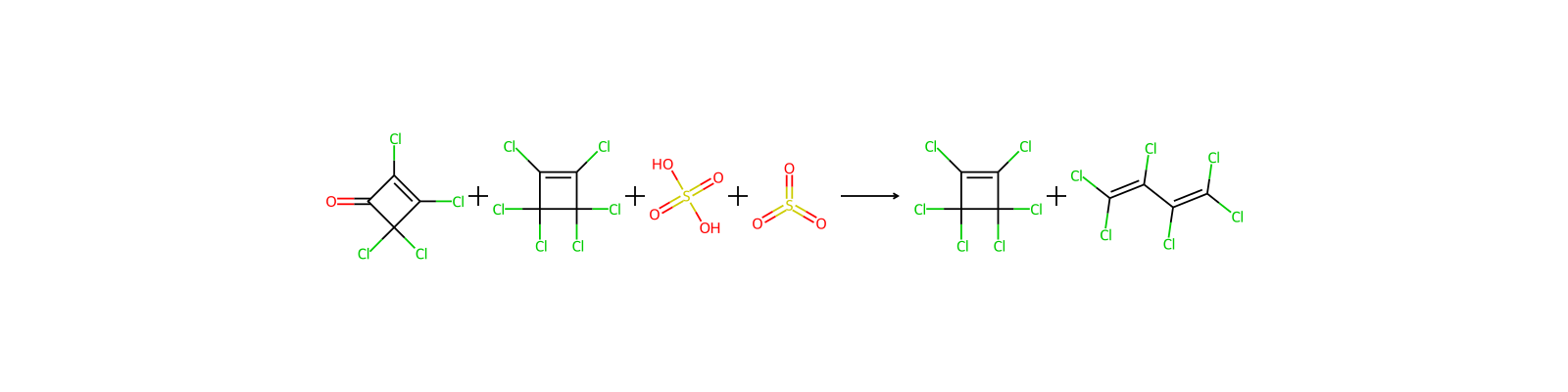
Hexachlorobutadiene was first prepared in 1877 by chlorination of hexyl iodide. ... Until about 1974, it was recovered as a by-product in the production of tetrachloroethylene. ... Since 1974, all hexachlorobutadiene used commercially in the USA has been imported from the Federal Republic of Germany. ... It is believed that all hexachlorobutadiene now produced as a by-product in the USA is disposed of. ... No data on its production in Europe were available; and no evidence has been found that hexachlorobutadiene has ever been produced or imported in Japan.
Information available in 1994 indicated that hexachlorobutadiene was produced only in Austria.
BeschreibungHexachlorobutadiene was first synthesized in 1877 by chlorination of hexyl iodide. It is an industrial by-product of tetrachloroethylene, trichloroethylene, and perchloroethylene production.
VerwendenHexachloro-1,3-butadiene is used as an urinary biomarker as a tool for early screening of potential kidney toxicity. Hexachloro-1,3-butadiene (HCBD) causes kidney injury.


